
Travel writing based on first-hand experience
During a trip to Jordan, exploring the Dead Sea is a must. But what to do after your swim? The northern shores of this vast salt lake, at the crossroads of ancient Moab and Canaan, offer stunning biblical sites and amazing natural views.
Surrounded by limestone mountains and patches of salt, the bright blue Dead Sea stands out against the barren land. Floating in its thick waters and covering yourself in its mineral-rich mud is fun and good for your skin. But after 20 minutes, the high salt starts to sting, so you’ll need a freshwater shower. Nearby, there are many amazing heritage and natural sites to explore. Here are essential things to do at the Dead Sea to make the most of your day, blending relaxation, sport, and culture, all within 30 minutes from the beach.
Table of Contents
Float on the Dead Sea
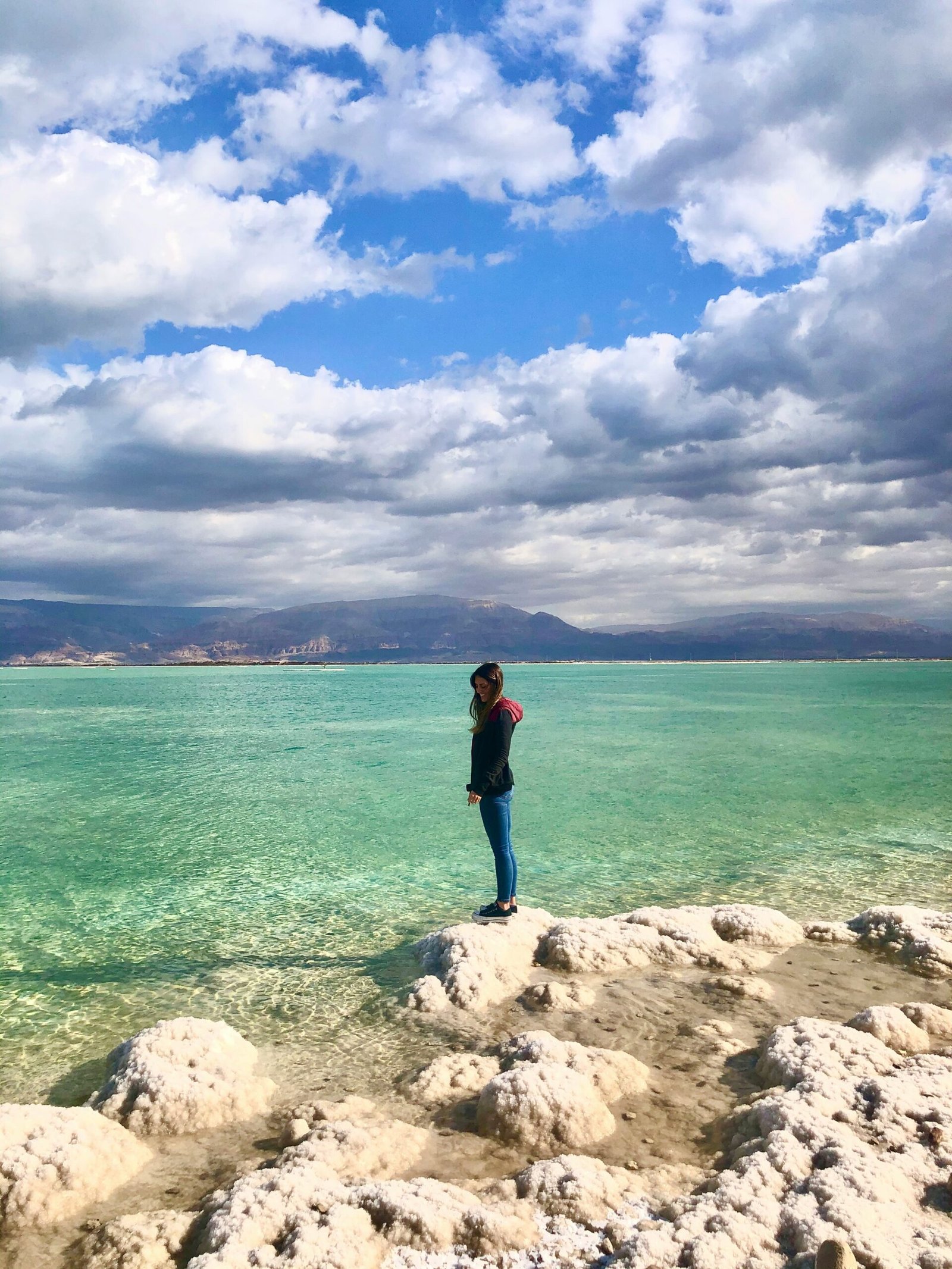
Who doesn’t want to float effortlessly in the salty waters or enjoy an adventure in the weightless salt bath of the Dead Sea? The saltiest sea in the world offers unique sensations. The dense waters create a buoyant force that makes the body float on the surface, with even the slightest movement causing imbalance. But be careful—between the intense sun and high salinity, it’s not safe to stay in too long. A freshwater shower is essential after swimming, and both public and hotel beaches are equipped with them.
The Dead Sea also offers numerous health benefits. Breathing the air, rich in bromine and sulfur, can calm the nervous system. Coating your body with its mineral-rich black mud may soothe rheumatism and some skin conditions like psoriasis, vitiligo, and eczema. Plus, it leaves your skin feeling as soft as a baby’s.
Where to swim? All hotels along the northern Dead Sea offer direct access to the sea for guests. Amman Dead Sea Beach is a paid private beach (€35) with umbrellas, a swimming pool, and a restaurant. The public beach is free; roadside “showers” (pipes) cost about €1.
Getting there: About 45–70 minutes’ drive from Amman via Route 35/Dead Sea Hwy. Hotels and day beaches cluster around Sweimeh; taxis and hotel transfers are common.
Highlights: Effortless floating, mineral mud mask, golden sunsets over the Israel/Palestine ridge, ultra-clear night skies.
Tips: Do not shave 24 hours before; avoid getting water in your eyes; limit floats to 10–15 minutes, rinse immediately; bring water shoes for sharp salt crystals; pack high-SPF sunscreen and drink lots of water.
Gain height on Mount Nebo
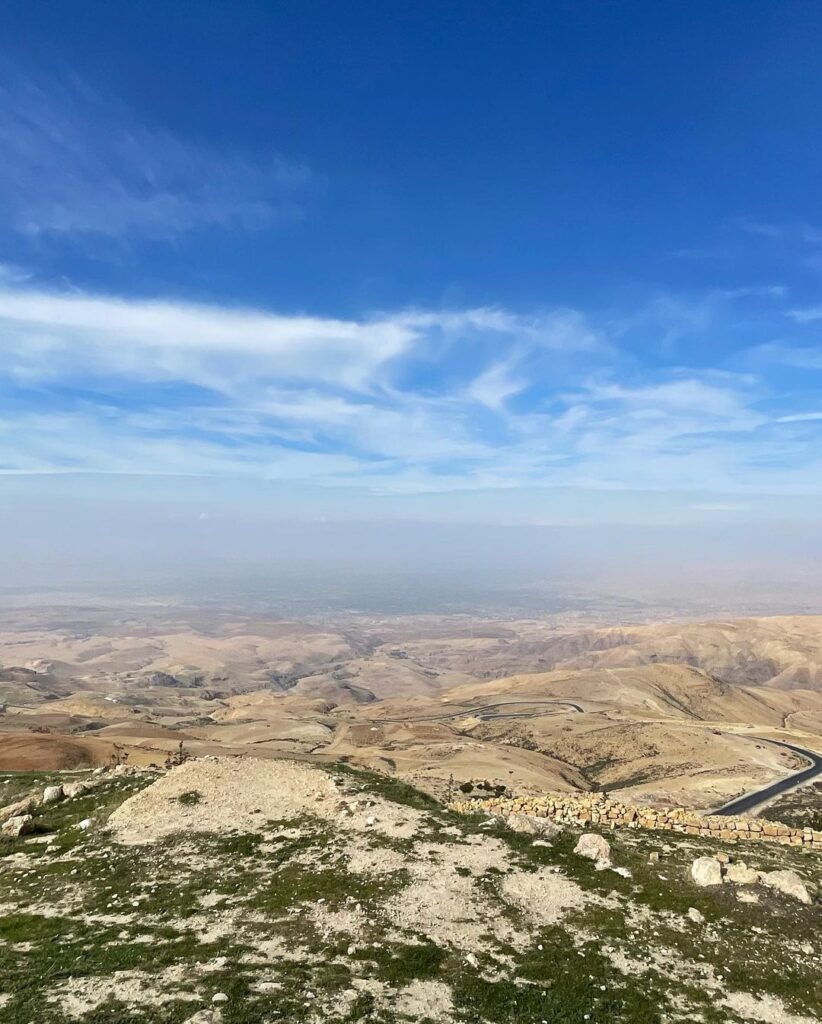
It was on this mountain overlooking the Dead Sea that Moses died at the age of 120. His journey from Egypt ended at Mount Nebo, from where he could see the Promised Land. Standing at 817 meters, the mountain offers views of the Dead Sea, the Jericho oasis, the Jordan Valley, and on clear days, the buildings of Jerusalem. The road to the top winds along a rocky mountainside where herds of goats graze.
The rolling hills stretch out in every direction, forming spectacular panoramas. At the summit, a small Franciscan community welcomes pilgrims and travelers to the Memorial Church of Moses and its stunning Byzantine mosaics—among the best preserved in Jordan.
Getting there: 15–20 minutes from Madaba; 45–60 minutes from Amman. Paved access road and on-site parking; easy to pair with Madaba mosaics or the Dead Sea in one day.
Highlights: Wide-angle views toward the Rift Valley, modern chapel over ancient mosaics, peaceful monastery grounds, sunset photography.
Tips: Arrive early or late for softer light; bring a light jacket in winter (windy on the ridge); carry water and respectful clothing for religious sites.
Moses Memorial and Mount Nebo. Open 8:00–18:00 (Apr–Oct) and 8:00–17:00 (Nov–Mar). Entrance: €4.20.
Immerse yourself in the Jordan River at the site of Christ’s baptism
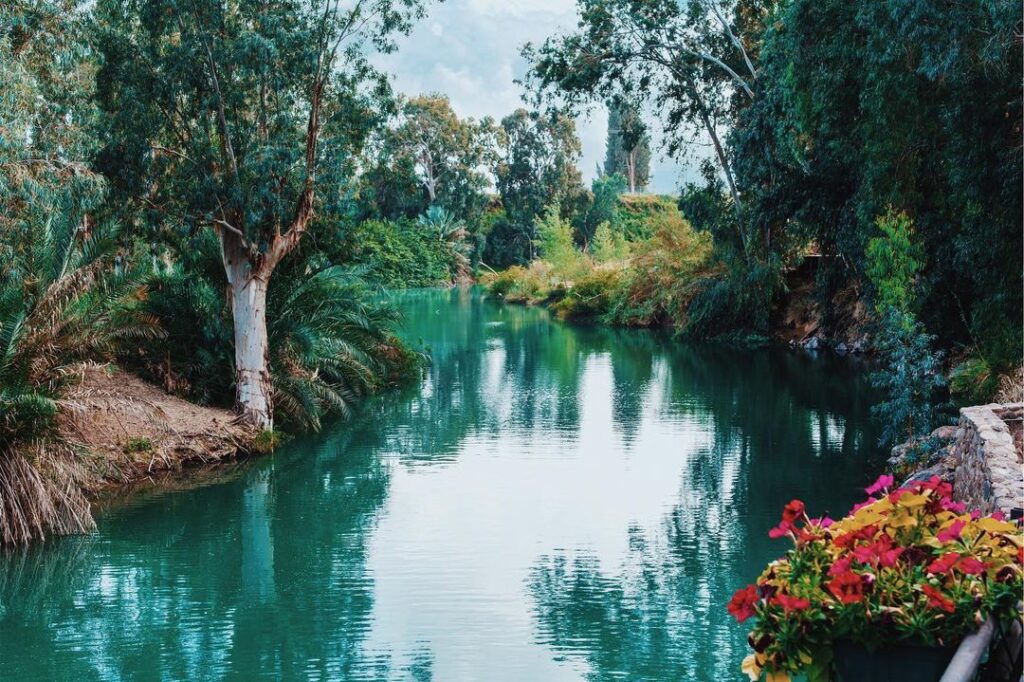
Jordan and Israel have long debated the exact baptism site, but Jordan’s side at Bethany-beyond-the-Jordan is supported by biblical references, pilgrim accounts, and archaeology. Several ancient churches and steps leading down to the river have been found, though the riverbed shifted west after medieval earthquakes.
Today, the river is a narrow, quiet stream beneath palms and reeds. Pilgrims still come to pray, sing, and receive baptismal blessings. Nearby are Elijah’s Hill and a cave chapel linked to Saint John the Baptist.
Getting there: About 60 minutes from Amman; signed turn-off from the Dead Sea Hwy. Park at the visitor center; shuttle buses take you to the archaeological area and river.
Highlights: Archaeological remains of early churches, riverside baptism platforms, interfaith significance, serene riverbank scenes.
Tips: Dress modestly; bring passport or ID (checkpoint area). Carry water/hat; summers are very hot. Photography is allowed in most areas—follow your guide’s cues.
Baptismal site of Jesus Christ. Open 8:00–18:00 (Apr–Oct) and 8:00–16:00 (Nov–Mar). Entrance: €16.50. Guided tour required from the visitor center.
Experience adventure at Wadi Mujib
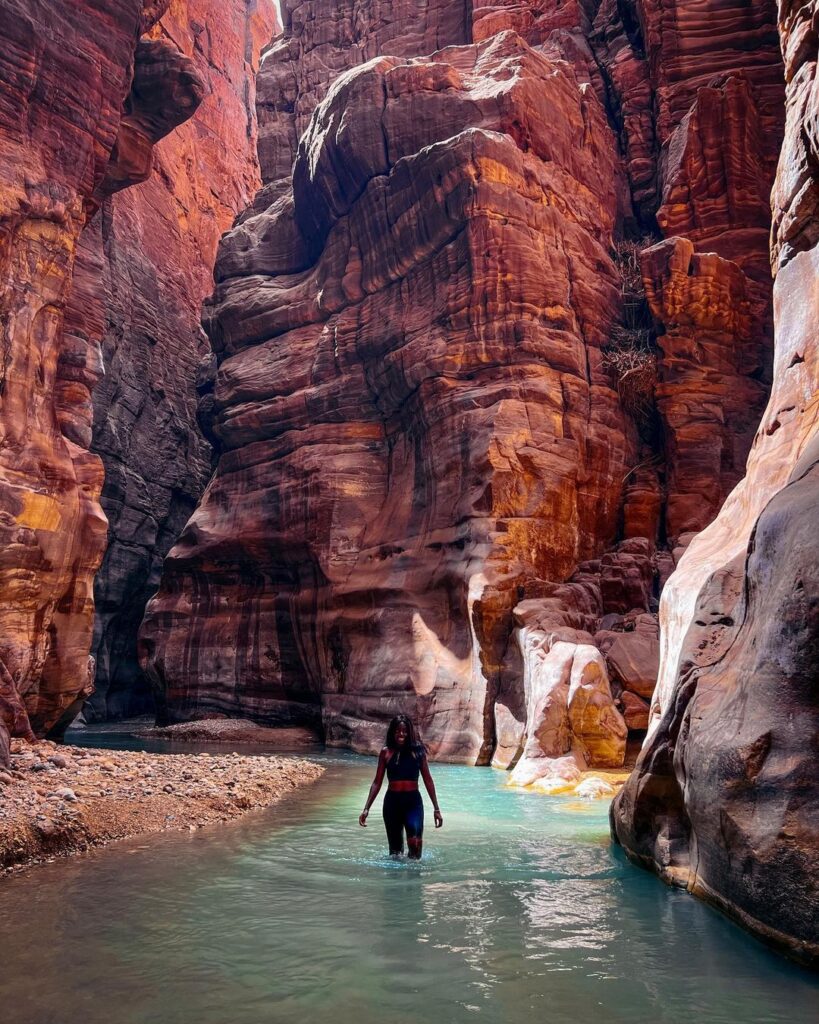
The mountains along the Dead Sea are scored with canyons; Wadi Mujib is the showstopper. A river from the eastern desert carved this slot through the high plateau before dropping to the Dead Sea. Access is near the canyon’s outlet; you’ll follow a footbridge to the stream and hike upstream against the current.
Expect ocher-and-rose sandstone cliffs, polished walls, and clear pools. You’ll cross natural basins with rope assists, climb small dams, and, after about a kilometer, reach a tall waterfall with a secret cave behind the spray. The return is a joyful float back with the current.
Getting there: Around 1 hr 15 min south of Amman on the Dead Sea Hwy; ~20–25 min south of main Dead Sea resorts. Parking at the Mujib Adventure Center.
Highlights: Shoulder-deep pools, rope-assisted scrambles, dramatic narrows, the final waterfall, and the float back down.
Tips: Wear sturdy water shoes and quick-dry clothes; secure glasses with a strap; rent a dry bag at the center; avoid carrying valuables; check conditions the morning of your hike; don’t attempt in storm forecasts.
Wadi Mujib. Open 8:00–17:00 (Apr–Oct). The canyon may close due to weather or high water. Under-18s not permitted. Entrance: €29.
FAQs: Things to Do at the Dead Sea (Jordan)
What are the must-do experiences at the Dead Sea?
Float in the salty water, slather on mineral mud, watch sunset on the shore, day-pass a resort beach, day-trip to Mount Nebo, Bethany Beyond the Jordan (baptism site), and hike Wadi Mujib in season.
Is it safe to float in the Dead Sea?
Yes—limit each float to 10–15 minutes, don’t put your face in the water, and rinse with fresh water right after.
Does the mud really help your skin?
Many visitors find the mineral-rich black mud soothing for dry skin; rinse thoroughly and moisturize after.
Public beach or hotel beach—what’s better?
Hotel/day-pass beaches cost more but include showers, shade, towels, and lifeguards. Public beaches are cheaper but basic.
What should I wear and bring?
Swimsuit, water shoes (salt crystals are sharp), high-SPF sunscreen, hat, sunglasses, and a reusable water bottle.
Can kids swim there?
Kids can float under close supervision—keep sessions short and eyes well protected.
Any medical precautions?
Avoid floating with open cuts, recent shaving, or eye infections. If you have heart/skin conditions, ask your doctor first.
When is the best time to visit?
October–April is cooler and more comfortable. Summers are extremely hot—plan early/late sessions.
How do I get there from Amman?
Drive 45–70 minutes via Route 35/Dead Sea Hwy. Taxis and hotel transfers are common; public transport is limited.
Can I visit the baptism site and Mount Nebo the same day?
Yes—pair them with a Dead Sea float for a full-day loop.
Is Wadi Mujib open year-round?
No—trails are typically open April–October and close for high water or weather. Age and safety rules apply.
Are drones allowed?
Often restricted around resorts, heritage, and border areas—check local rules before flying.
Do resorts take cards?
Yes, most do. Carry some cash for tips or small kiosks.
- 9 Best Rooftops in Dubai (2026 Edition)
- Where to Stay in Ankara (2026): The Best Areas and Hotels For Your Trip
- Nightlife in Marmaris (2026): 14 Best Bars and Clubs to Have Fun After Dark
- Best Things To Do In Tel Aviv (2026): 12+ Cool Things For First Time Travellers
- Middle East Honeymoon Guide (2026): 12 Dreamy Destinations for Romance & Adventure
