
Travel writing based on first-hand experience
Fez, Marrakech, Meknes, and Rabat are must-sees on your first trip to Morocco. These cities are the historical heart of the Cherifian kingdom. Let’s explore the 4 best cities in Morocco to visit and all the places you absolutely need to visit in these prestigious destinations.
From grand madrasas to renowned mosques, from mausoleums to lavish palaces, a journey through these imperial cities takes you deep into a rich history spanning over thirteen centuries. Since the creation of Morocco’s first kingdom in 789, various dynasties like the Idrissides, Almoravids, Almohads, Merinids, Saadians, and Alaouites have ruled the country. Each dynasty chose Fez, Marrakech, Rabat, or Meknes as their capital, and each city has preserved a significant religious, cultural, and architectural heritage.
| ➡️Planning your adventure? Check out our top tips for traveling in Morocco and make your journey smooth, safe, and unforgettable. ➡️Planning your adventure? Check out our top tips for traveling in Morocco and make your journey smooth, safe, and unforgettable. ➡️Wondering what to wear in Morocco? This guide cuts through the guesswork—what works in real streets, what feels comfortable, and what saves you from packing things you’ll regret by day two. ➡️Here’s our complete, practical guide to driving in Morocco—the stuff that actually keeps your trip smooth, safe, and unforgettable. ➡️If you wonder where Morocco’s coast is at its most beautiful, here are the 14 most beautiful beaches in Morocco worth putting directly onto your map. Swimsuits ready—this coastline does not encourage hesitation. |
Table of Contents
Fez, the Intellectual
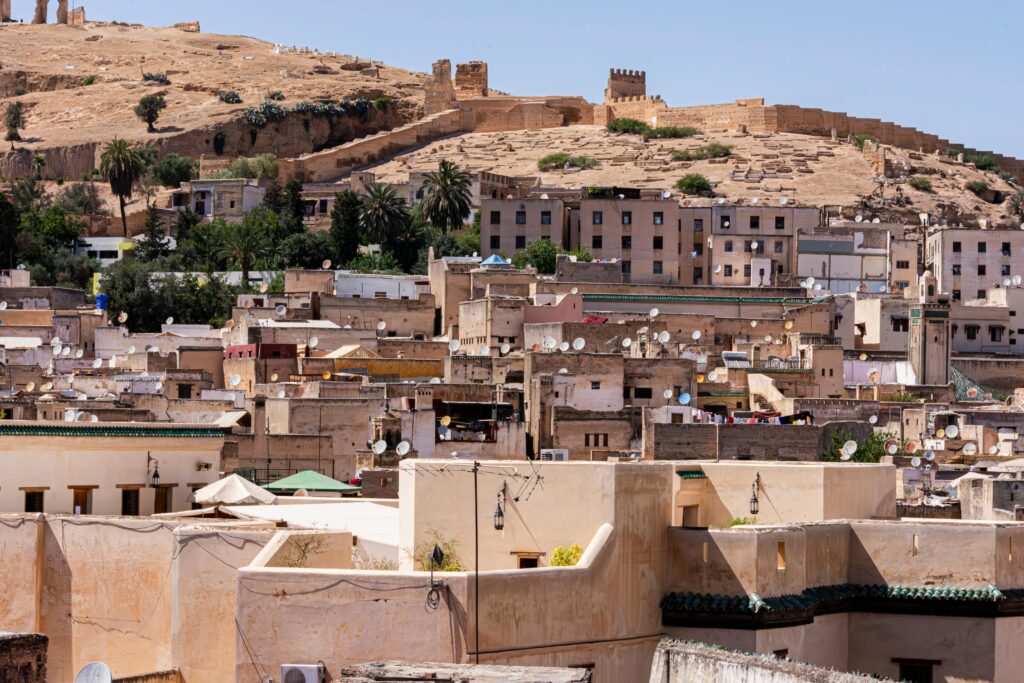
Known as “The City of Faith and Knowledge,” “The Athens of Africa,” and “The Cradle of Moroccan Tradition,” Fez holds a unique place in Morocco’s history. Nestled in the Middle Atlas Mountains, Fez is the oldest imperial city, founded in 789 by Idriss I, and it was the capital of Morocco’s first kingdom. Today, it boasts the country’s largest medina, where you’ll find the most important sites to visit.
Start at Bab Boujloud, with its three arches and blue ceramic façade, which serves as your gateway to the old medina.
From here, take Talaa Kebira street to reach the Bou Inania Madrasa. Established in 1350 by Sultan Abou Inan, this is the largest Muslim theological university in Fez and the only one open to non-Muslims. Admire the intricate Marinid art, with its exquisite façades adorned with cedar wood, stucco, and mosaics. Open Saturday to Thursday from 9 am to 6 pm. Entrance: 10 DH (€0.92).
Next, visit the Kairaouine Mosque, founded in the 9th century by Fatima al-Fihria. Although non-Muslims can’t enter the mosque, you can access the recently restored library.
Just next door, explore the Attarine Madrasa, a stunning piece of Marinid architecture, where the marble fountain in the courtyard is considered the most beautiful in Fez. Open daily from 9 am to 6 pm (except during prayer times). Entrance: 20 DH (€1.8).
Fez’s medina’s craftsmen are the city’s soul, keeping ancient traditions alive. Watch the meticulous work of carpet weavers, carpenters, leatherworkers, and coppersmiths in Seffarine Square. Don’t miss the Chouara Tannery, the largest in Fez. Grab some fresh mint at the entrance to help with the strong smells.
Marrakech, the Pearl of the South
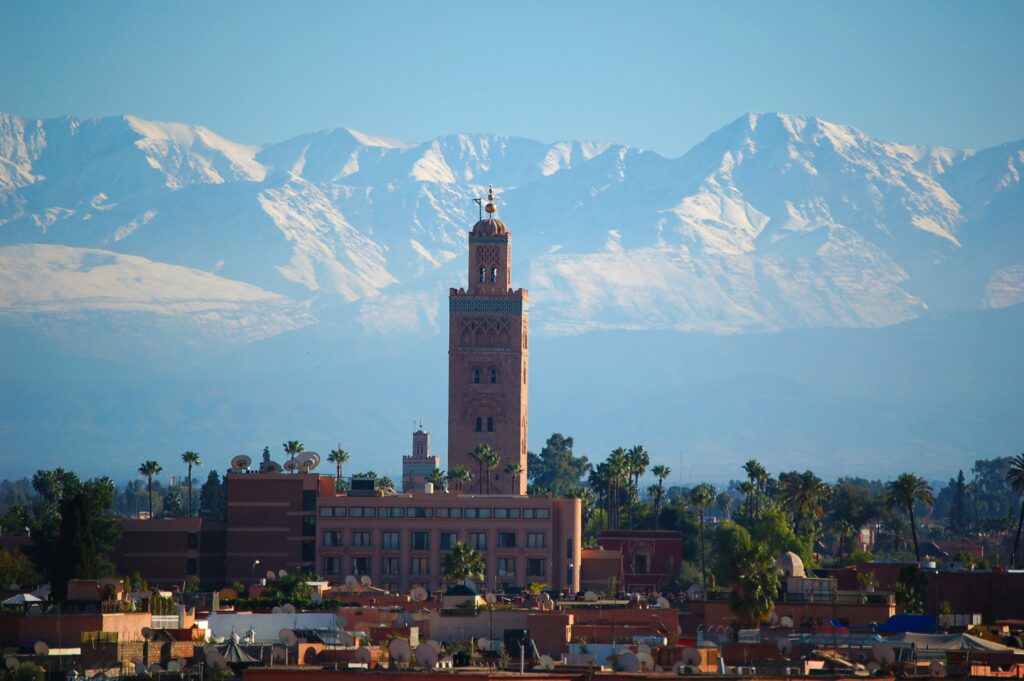
With its red walls, palm-lined avenues, and semi-arid climate, Marrakech is the gateway to the Moroccan South. From the rooftops, you can see the snow-capped peaks of the High Atlas, the last natural barrier before the vast Sahara. Founded in the 11th century by the Almoravids and later expanded under the Almohads in the 12th century, Marrakech became the capital of a vast empire stretching from Muslim Spain to the Senegal River.
Jemaa El-Fna Square is the beating heart of Marrakech. Soak up the vibrant atmosphere of this open-air theater: sip freshly squeezed orange juice, try tanjiya (a local dish), and listen to storytellers and snake charmers. Visit during the late afternoon or at night when the square is most lively.
Nearby, the Koutoubia Mosque stands as a symbol of the city with its 77-meter minaret. Though not open to visitors, you can stroll through its lovely gardens. The mosque, begun in 1120 under the Almoravids and completed 76 years later by the Almohads, later served as a model for Seville’s Giralda.
READ ALSO: Perfect 2 Days In Marrakech Itinerary
Rabat, the Fortress City
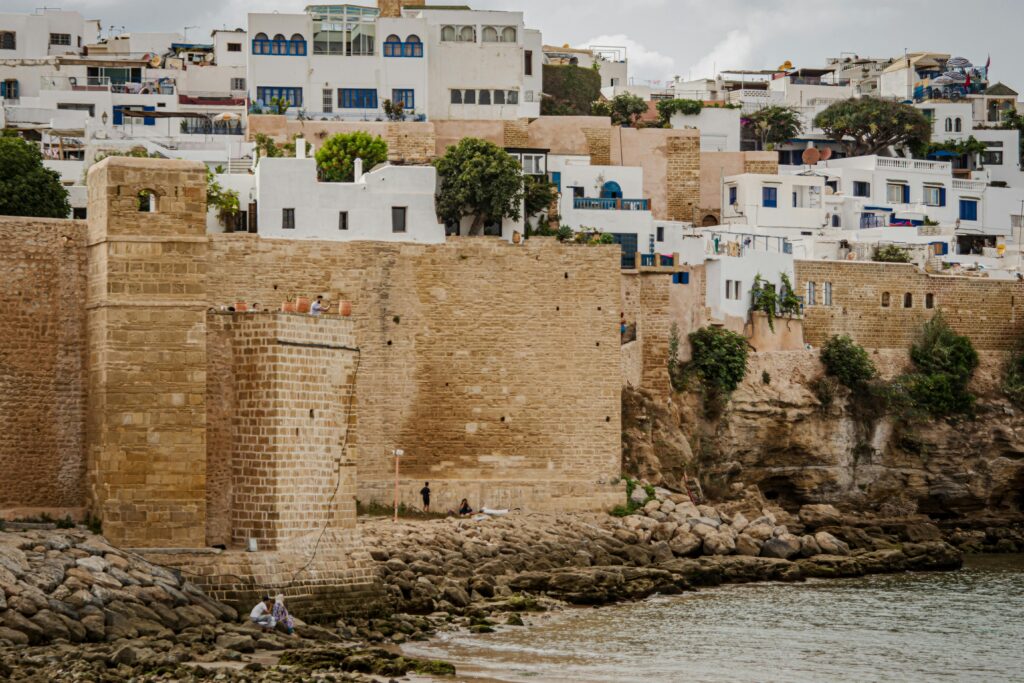
Quieter than Marrakech, Rabat offers a serene and pleasant stop during your journey. Its greatest asset is being the only imperial city on the ocean’s edge. Founded in 1150 by the Almohads as a military base, Rabat became an imperial city in the late 18th century under Alaouite Sultan Mohammed III. In 1912, General Lyautey made it the capital of Morocco during the French protectorate.
The Kasbah of the Oudayas, with its winding streets, wooden doors, and blue and white walls, evokes the Mediterranean villages of Tunisia or Greece. Perched above the Atlantic and the Bouregreg River, this military fortress was built in the 12th century by the Almohads as a launching point for their Andalusian expeditions.
The Hassan Tower and Mohammed V Mausoleum are Rabat’s most iconic landmarks. The Hassan Tower, with its sea of white columns, is all that remains of the grand mosque that Almohad Sultan Yacoub Al-Mansour intended to be the world’s largest. Nearby is the mausoleum of King Mohammed V, the father of Moroccan independence, an architectural masterpiece also housing the royal tombs of Moulay Abdellah and King Hassan II.
READ ALSO : Perfect Rabat Itinerary: 3 Days and 12 Best Things To Do In Rabat
Meknes, the “Versailles of Morocco”
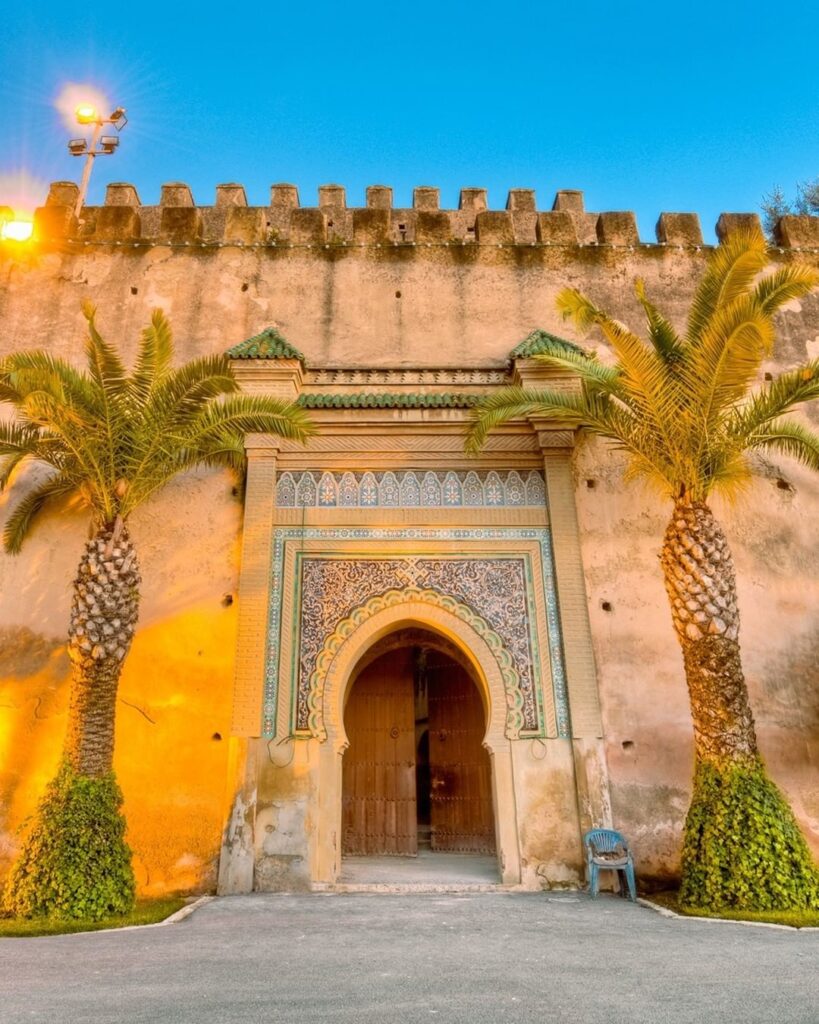
Less crowded and calmer than its neighbor Fez, Meknes is home to magnificent monuments, mostly the work of Sultan Moulay Ismaïl in the 17th century, who chose it as his capital. During his 55-year reign, this contemporary of Louis XIV had 40 kilometers of ramparts built and numerous palaces, mosques, and gardens.
Start your visit at Bab Mansour, the most imposing gate of the imperial city, with its beautiful marble columns.
Then, visit the mausoleum of Moulay Ismail, one of the few in Morocco open to non-Muslims.
Next head to Bassin Souani . The large, tranquil water basin, surrounded by lush greenery, offers a perfect escape for a peaceful stroll. Its historical significance and natural beauty make it a must-visit in Meknes, especially in the early morning or late afternoon when the atmosphere is particularly serene.
From Al-Hedim Square, explore the covered market, one of the most beautiful in Morocco.
Then, head to the Bou Inania Madrasa, a superb Koranic school from the 14th century. Don’t forget to climb to the terrace for a lovely view of the rooftops.
READ ALSO: Best Restaurants In Meknes and 30 Best Things To Do In Meknes
|
➡️Planning your first big Morocco adventure? This 10 days in Morocco itinerary is designed for travelers who want to see the country’s greatest hits without spending half the trip stuck on buses. Expect legendary stops like Marrakech, Fes, the Sahara Desert, and Chefchaouen—plus practical tips on getting between cities, choosing where to stay, and making the most of every day.
➡️Looking for something beyond the classic routes? Morocco is full of lesser-known treasures waiting to be explored. Discover these hidden gems in Morocco—from quiet mountain villages to unexpected landscapes that rarely make it into standard itineraries. ➡️And then there’s the food. Moroccan souks are a paradise for curious eaters, where every alley seems to hide a sizzling grill or a stall stacked with sweet and savory treats. Ready to explore some of the best street food in Morocco? Come hungry. |
- Perfect Morocco with kids Itinerary (2026): 25 Days from Tangier to the Anti-Atlas, Coast, and Marrakech
- Where To Stay In Agafay Desert in 2026: Luxury Moroccan Holidays
- 14 Most Beautiful Beaches In Morocco (2026)
- What To Wear In Morocco (2026): Real-World Travel Guide For Female Travellers
- 3 Best Places To Stay in Marrakech Medina [2026 Updated]