
Travel writing based on first-hand experience
If you think Tetouan is all about the medina, think again. Just beyond its blue-and-white walls lies El Ensanche Tetouan—the city’s refined, sunlit counterpart built during the Spanish Protectorate (1913–1956). Wide boulevards replace narrow lanes, white façades meet sea-green shutters, and the scent of coffee drifts from cafés that could belong in Madrid.
This lesser-known quarter is where Andalusian grace meets European geometry. Between Avenue Mohammed V and Place Moulay El Mehdi, you’ll find elegant architecture, Art Deco details, tranquil parks, and museums that tell the story of Tetouan’s unique dual soul. It’s a side of the city that feels both nostalgic and quietly cosmopolitan—perfect for travelers who love history, design, and slow urban wandering.
| ➡️Plan your dream trip with this 3 -14 days perfect Morocco itinerary — packed with can’t-miss sights, insider tips, and magical experiences. |
Table of Contents
About El Ensanche Tetouan
Southwest of the medina, the El Ensanche district is Tetouan’s modern, breezy face. Planned during the Spanish Protectorate (1913–1956), it stands out for its clean grid layout, wide avenues edged with white-and-sea-green façades, and a serene mood where Andalusian heritage meets colonial-era modernity.
As the symbol of modern Tetouan, El Ensanche offers a striking counterpoint to the medina’s maze. Here, symmetry, light, and clear lines rule—thanks to a Spanish-inspired grid plan that feels orderly and open.
Administrative hub, cultural crossroads, and shopping zone in one, El Ensanche is a harmonious meeting of European urbanism and Moroccan tradition. From Place Moulay El Mehdi to Avenue Mohammed V, you’ll find elegant architecture, small museums, gardens, churches, and period cafés that still whisper of Tetouan’s cosmopolitan past.
History of the El Ensanche District
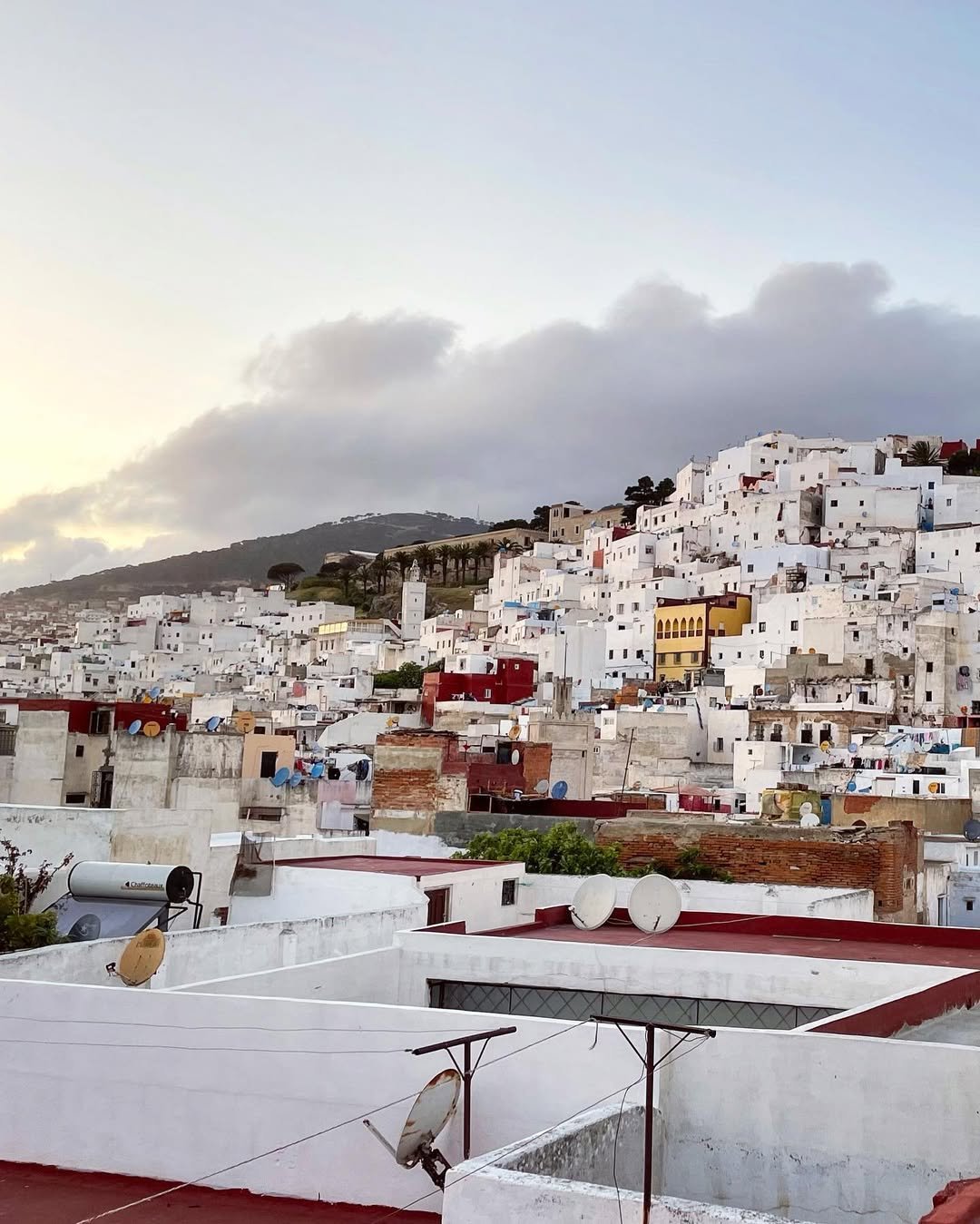
El Ensanche emerged after 1913, when Tetouan became the capital of Spanish Morocco. The city evolved into the Protectorate’s military and administrative center, prompting a new colonial quarter on land largely owned by the local Jewish bourgeoisie. It began with barracks for infantry, artillery, and cavalry built along the medina walls—initially without a master plan.
A first plan appeared in 1914 (revised in 1916), including the removal of 1,100 meters of ramparts between Bab Remouz and Bab Tout. This opened the way for the Ensanche—an urban extension inspired by 19th-century Spanish town planning (think Barcelona’s Eixample): orthogonal grid, street hierarchy, and a humane scale.
Planned south of the medina, the expansion would host Protectorate institutions and European residences. The goal: a modern city meeting early-20th-century hygienic and aesthetic standards, while respecting local topography and Mediterranean character. White villas, ornate balconies, and palm-shaded squares soon defined a prestigious residential area.
Architects like Carlos Ovilo Castelo and Julio Rodríguez Roda adapted designs to the Moroccan context, drawing on Andalusian motifs. The result was a distinctive neo-Arab style visible in several notable buildings.
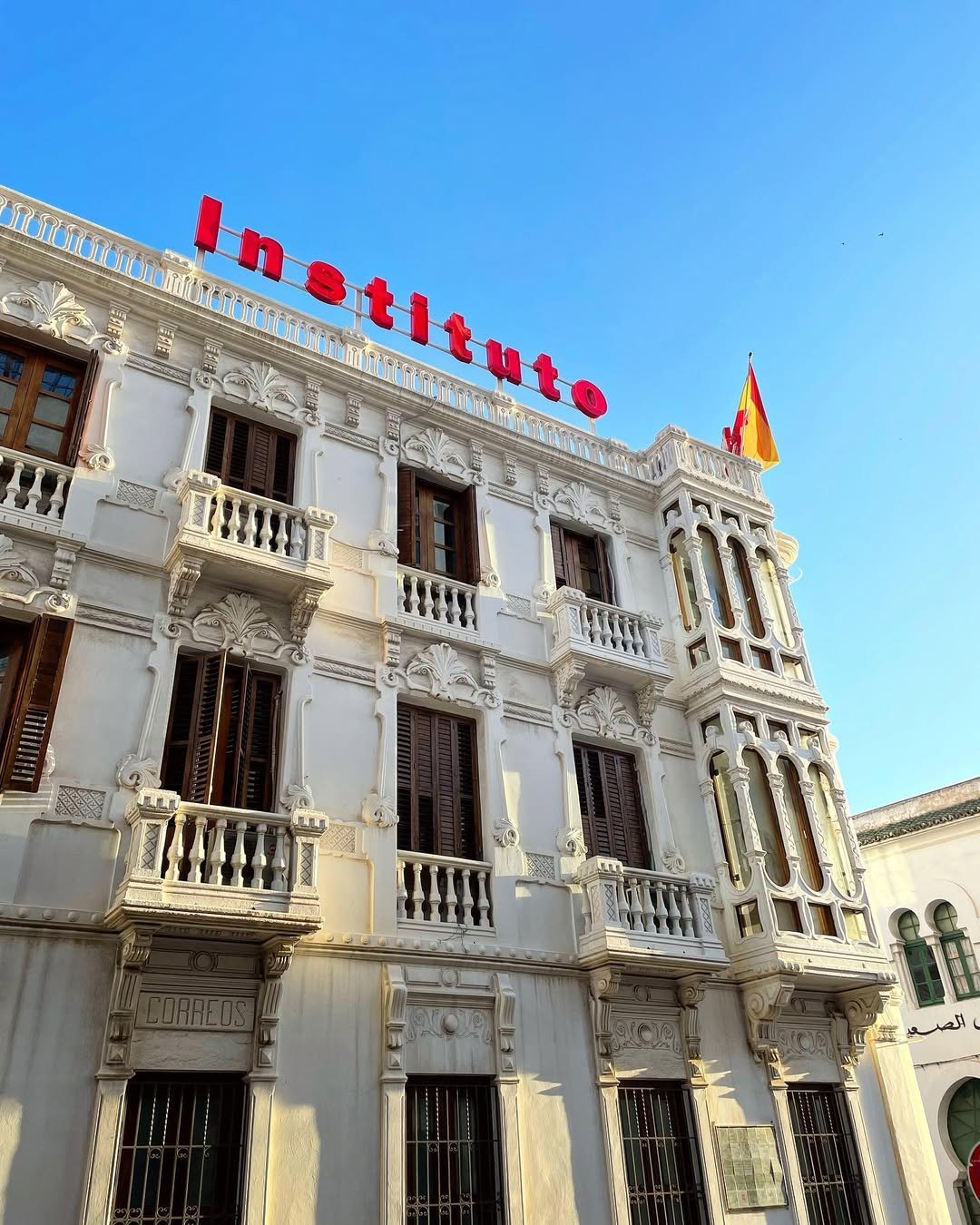
After independence (1956), El Ensanche retained its charm and consolidated its cultural and administrative role. Today, you’ll find leading institutions such as the Cervantes Institute, the Museum of Modern Art, and the Archaeological Museum.
El Ensanche preserves the 20th-century memory of Tetouan—a living intersection of Mediterranean, Arab, and European influences.
Things to See in the Ensanche District
Avenue Mohammed V
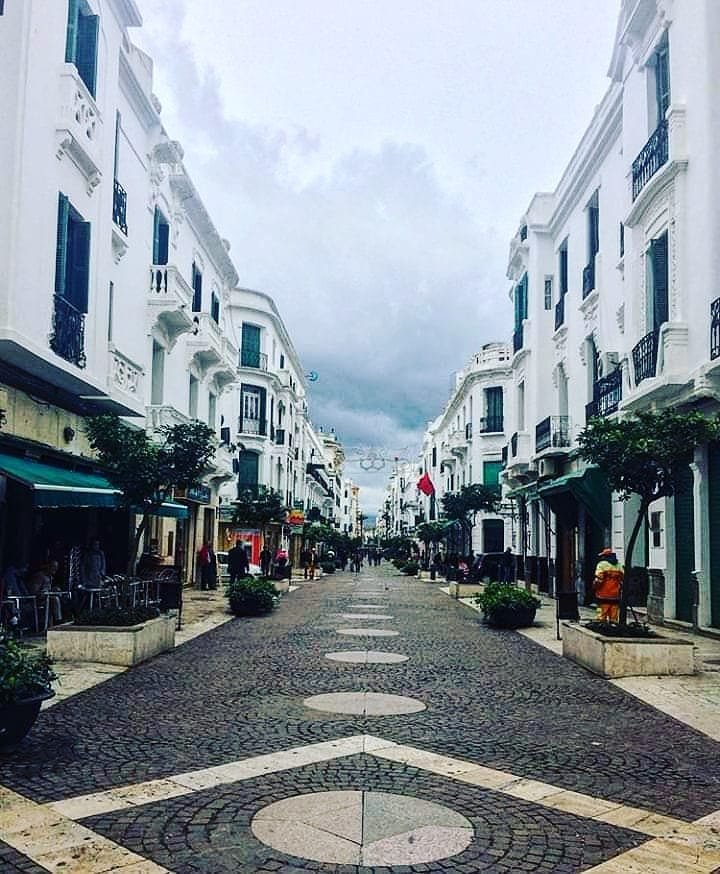
Avenue Mohammed V links the medina to Place Moulay El Mehdi, forming a major city axis. Lined with colonnades and modernist shopfronts, it was designed as Tetouan’s showcase of modernity.
Today it concentrates key boutiques, banks, and classic cafés. Façades with arabesques and azulejos echo the Hispano-Moorish refinement of the era. Come evening, the street hums with family strolls and people-watching.
Place Moulay El Mehdi (formerly Plaza Primo de Rivera)
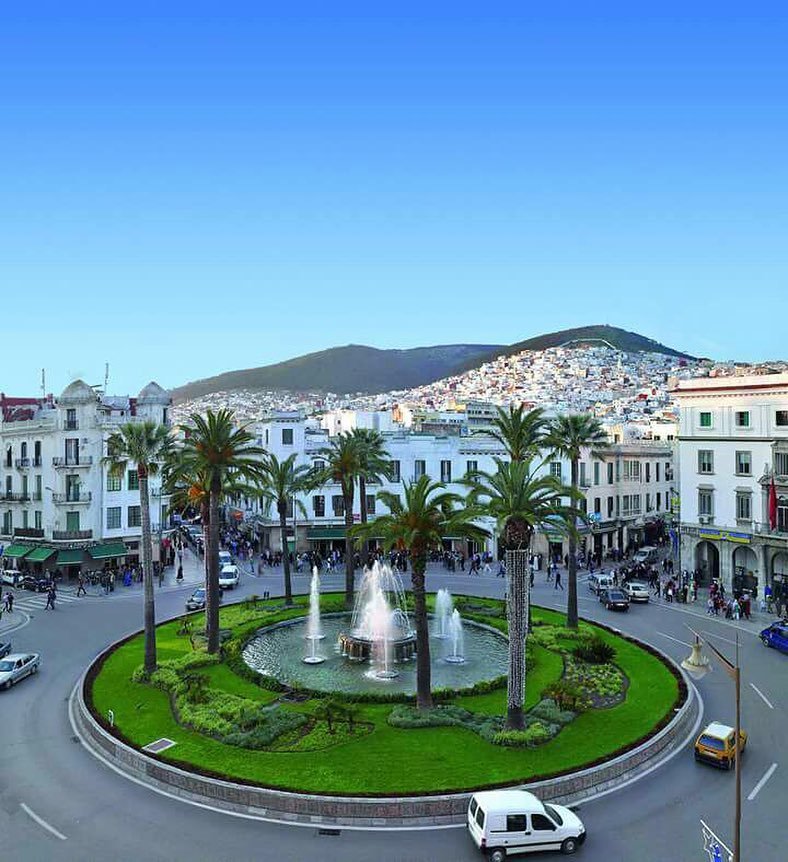
The district’s central stage is a broad circular square Place Moulay El Mehdi framed by harmonious façades and ornate balconies. It gathers the main avenues in a display of Spanish-style symmetry and order.
A central fountain and palms create an easygoing, elegant atmosphere. With historic cafés and refined storefronts, it’s a favorite local promenade and a natural waypoint for visitors.
Archaeological Museum of Tetouan
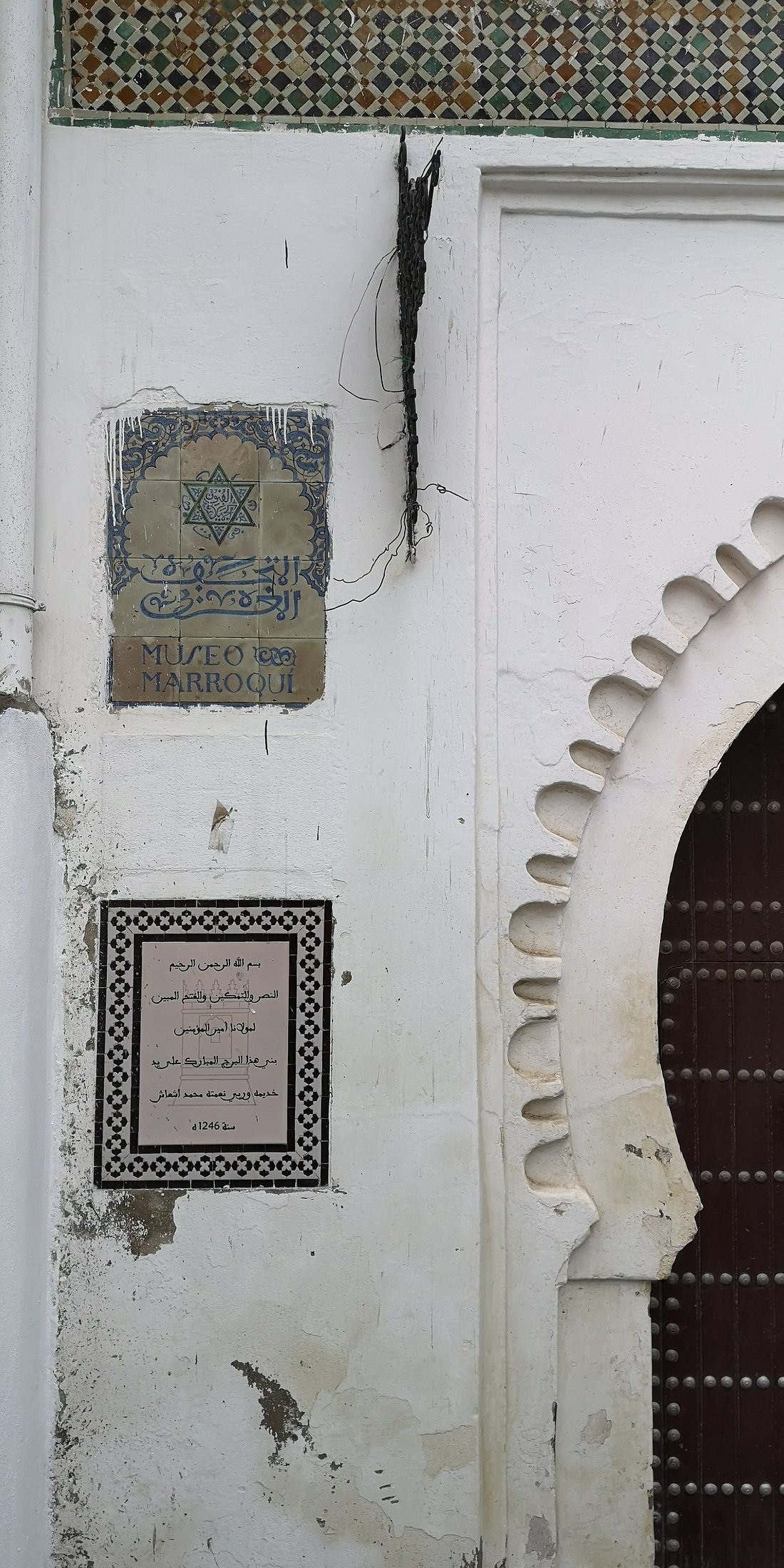
Founded in 1940, the Archaeological Museum of Tetouan holds a fine collection from ancient Tamuda, along with Roman mosaics, Punic pottery, and coins.
It’s a little old-school in presentation, but rewarding: look for the beautiful mosaics, the tranquil garden, and a model of the Cromlech of M’zora—Morocco’s “Stonehenge.”
Church of Our Lady of Victory
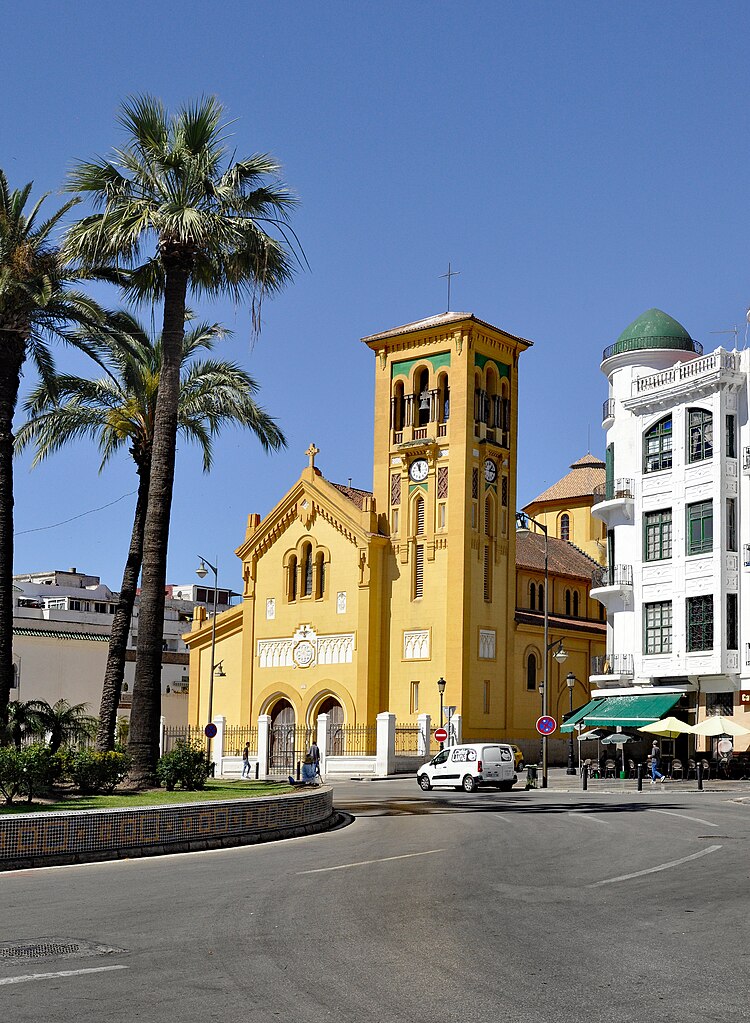
Overlooking Place Moulay El Mehdi, the Church of Our Lady of Victory (1930) served the Spanish Catholic community. Its neo-Mudéjar touches—horseshoe arches, brickwork—translate Andalusian cues into European sacred architecture. The slender bell tower is a local landmark; the interior nods to Toledo’s famed “white synagogue.”
Cervantes Institute
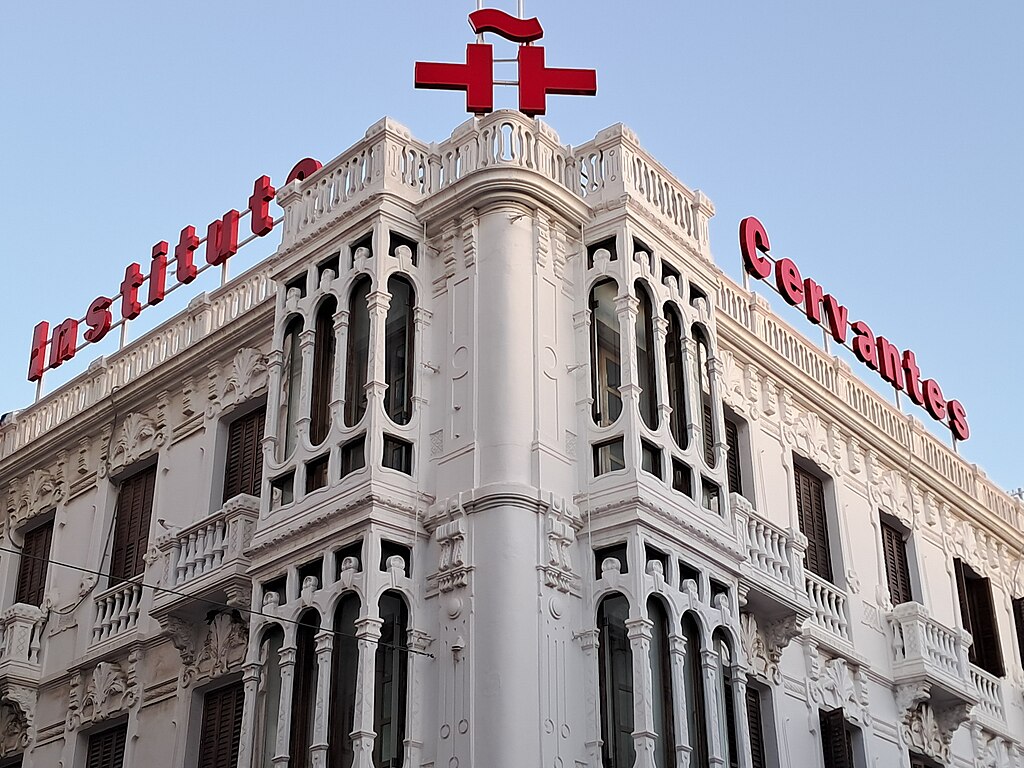
Tetouan’s Cervantes Institute promotes Spanish language and culture through courses, talks, screenings, concerts, and exhibitions. Architect Carlos Ovilo, a key figure in planning El Ensanche, is tied to its story.
Its library makes it a cosmopolitan meeting place for students, researchers, and artists. Some events are free—check the official program.
Museum of Modern Art of Tetouan
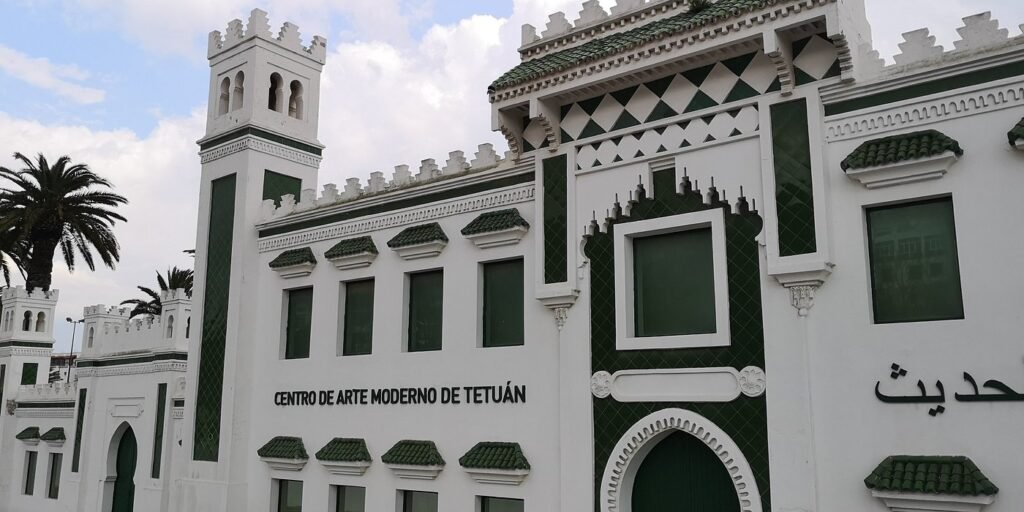
Set in a former railway station, the Museum of Modern Art of Tetouan is among Morocco’s most active. It highlights 20th-century Moroccan and Spanish work, emphasizing Mediterranean exchange. Rotating shows and the permanent collection map the north’s creative energy.
Feddan Park

Feddan Park is a generous, tree-lined square at the district’s southern edge—perfect for a breather. Shaded paths, flowerbeds, and stone benches draw families; recent upgrades host cultural events. Its vantage point over the medina makes it a great photo stop.
Hispano–Moroccan Architecture
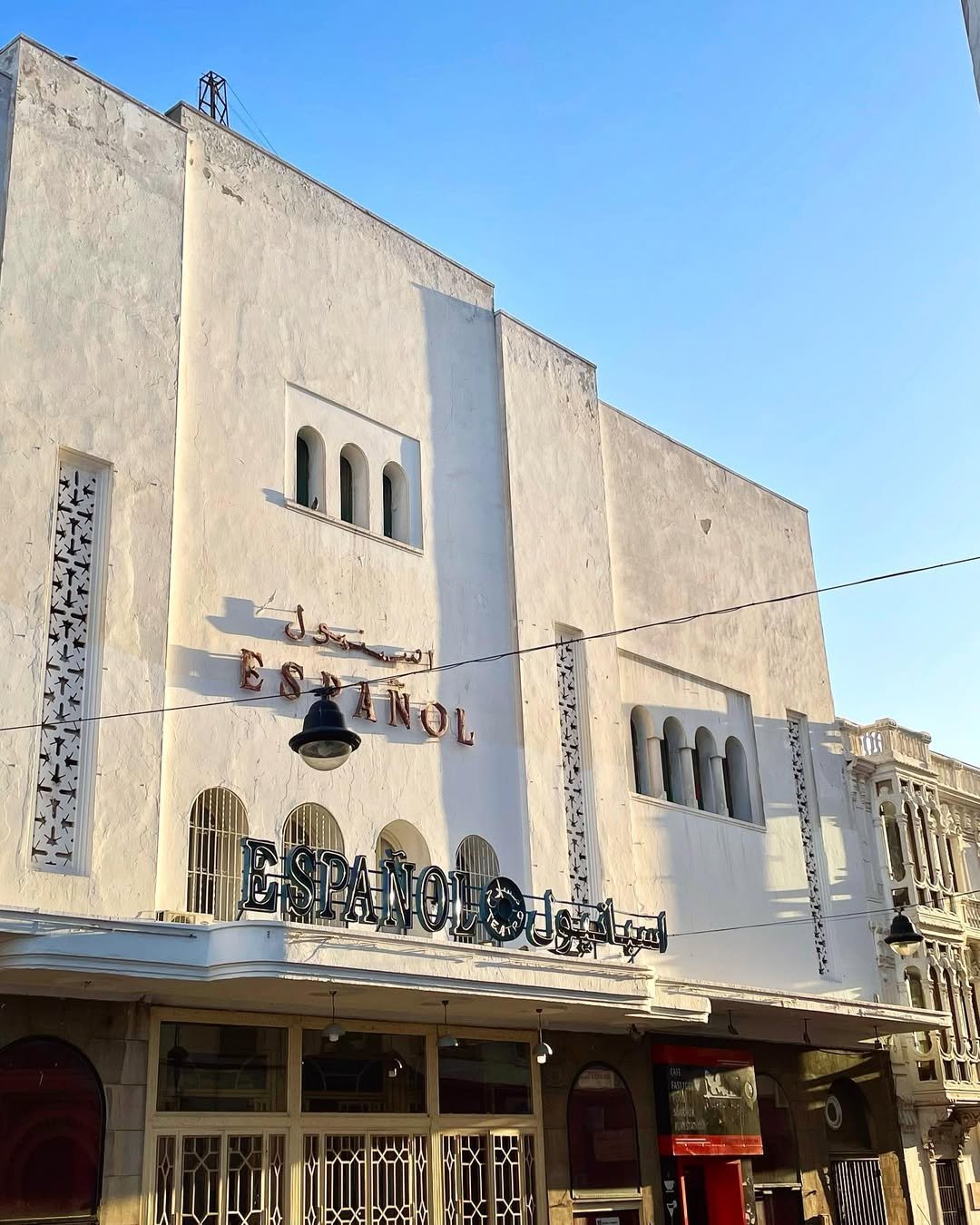
El Ensanche balances European rigor with Andalusian sensuality: whitewashed volumes, mashrabiyas, glazed tiles, wrought iron, and hidden patios. The result is a rich artistic dialogue between Spanish architects and Moroccan artisans—an open-air lesson in cultural coexistence.
Other Emblematic Spots in El Ensanche (with Addresses)
- School of National Arts and Crafts — Where local craft traditions meet Spanish modernity. (Avenue Hassan II, Tetouan)
- Former Railway Station — Now the Modern Art Center; a reminder of transport’s role in urban growth. (Rue de la Gare, Tetouan)
Examples of Art Deco and modern rationalism include:
- Equitativa Building — A showcase of modern rationalism. (Place Moulay El Mehdi, Tetouan)
- Former Bus Station — A representative Art Deco landmark. (Avenue Mohammed V, Tetouan)
- Tobacco Factory — Industrial heritage. (292 Av. Hassan II, Tetouan)
Key buildings in the military style:
- R’Kaina Barracks — Built 1915–1917, noted for brick construction. (Rue de la Caserne, Tetouan)
- Spanish Military Hospital — A clear imprint of Spanish military planning. (Avenue Hassan II, Tetouan)
Other landmarks shaping the district’s skyline:
- The Phoenix — (Rue Mohammed Torres, Tetouan)
- Cervantes Institute Headquarters — (Avenue Mohammed V, Tetouan)
- Bank Al-Maghreb Headquarters — (Avenue Hassan II, Tetouan)
- Former Nuestra Señora del Pilar College — (Place Moulay El Mehdi, Tetouan)
- Central Market — (Avenue Mohammed V, Tetouan)
Where to Eat in Tetouan — Top Places
Here’s a curated selection of five standout restaurants in Tétouan, each offering excellent reviews and unique dining experiences. Whether you’re after fresh Mediterranean seafood, modern Moroccan cuisine, or a quiet rooftop dinner, you’ll find something memorable.
1. Riad Blanco Restaurant

- Why visit: Located in a beautifully restored riad, this restaurant combines modern and traditional Moroccan cuisine in an elegant setting.
- What to order: Fish or seafood dishes prepared with Mediterranean flair, and light Moroccan desserts.
- Tip: Reservations recommended for dinner; ask for a table in the garden or rooftop for atmosphere.
- Address: 25 Rue Zawiya Kadiria, Tetouan 93000,
2. Riad El Reducto Restaurant

- Why visit: Found inside a charming riad near Avenue Mohammed V, it offers Moroccan cuisine with Andalusian décor.
- What to order: A classic Moroccan tagine, couscous, and a mint tea finale in the elegant courtyard.
- Tip: Ask for a table outside if the weather’s good — the ambiance is a highlight.
- Address: HJCJ+C2Q, Tetouan, Morocco
3. La Esquina del Pescado

- Why visit: If you love seafood, this spot in the Ensanche area serves fresh fish, good value, and a local feel.
- What to order: Choose your fish from the display, then have it grilled or baked with seasonal vegetables.
- Tip: It’s slightly outside the main tourist core — a short taxi from the medina is worth it.
- Address: : 43 Calle, Av. Chakib Arsalan, Tetouan 93000
Accommodation & Practical Info
El Ensanche sits steps from the historic core, reachable on foot via El Méchouar Square. Taxis and public transport are straightforward, and the local tourist map helps pinpoint main streets and monuments.
A walking route is best: start at Place Moulay El Mehdi, continue along Avenue Mohammed V, and add nearby museums and parks. Allow a half-day for a satisfying loop—longer if you’re keen on art and architecture.
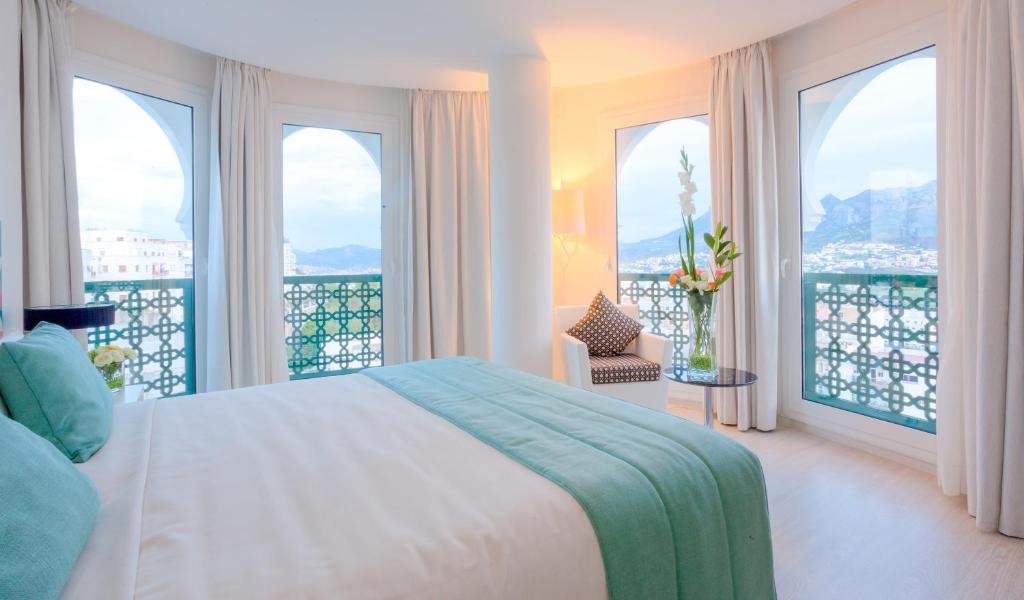
For overnight stays, El Ensanche is a smart, stress-free base. It’s more structured and accessible than the medina and well placed for getting around on foot or by bus/taxi.
Expect characterful hotels and guesthouses in refurbished colonial buildings across budgets—from polished boutique stays to good-value hostels.
The area is considered safe by day and night. Solo women generally move around comfortably; as always, basic awareness applies.
Foodies will find plenty to enjoy: El Ensanche has restaurants with Moroccan staples and Spanish-inspired plates, plus cafés that stay lively into the evening without being loud.
For convenience, aim to stay near Avenue Mohammed V or Place Moulay El Mehdi—both offer the densest mix of services, sights, and transport options.
Here are three recommended central stays a short stroll from Avenue Mohammed V and Place Moulay El Mehdi:
- Hotel Al Mandari (modern, great value)
- Why pick it: Contemporary rooms, handy location by the main boulevards; easy base for cafés and shops.
- Location: Listed steps from Av. Mohammed V and central sights.
- Prestige Hotel Tetouan (business-style comfort)
- Why pick it: Spacious rooms, on/near Av. Mohammed V; convenient for quick taxi pick-ups and evening promenades to Moulay El Mehdi.
- Location: 0.2 mi to Av. Mohammed V and 0.4 mi to Plaza Primo (Place Moulay El Mehdi).
- Riad El Reducto (character stay, boutique)
- Why pick it: Historic riad with strong reviews, rooftop and on-site dining; set by the Royal Palace in the medina yet walkable to the Ensanche squares.
- Location: near the Royal Palace (easy walk to the Ensanche).
- Perfect Morocco with kids Itinerary (2026): 25 Days from Tangier to the Anti-Atlas, Coast, and Marrakech
- Where To Stay In Agafay Desert in 2026: Luxury Moroccan Holidays
- 14 Most Beautiful Beaches In Morocco (2026)
- What To Wear In Morocco (2026): Real-World Travel Guide For Female Travellers
- 3 Best Places To Stay in Marrakech Medina [2026 Updated]