
Travel writing based on first-hand experience
We land in Agadir and immediately get why people call it the “white city” of southern Morocco: bright Atlantic light, wide boulevards, and a coastline that looks like it was designed for long, lazy walks (or competitive sunset-watching).
This is our complete guide to the best places to visit in Agadir- best sights, beaches, and experiences—plus the practical bits.
Planning more Agadir coast, souk, and Morocco adventures? Read these next
Table of Contents
1. Souk El Had
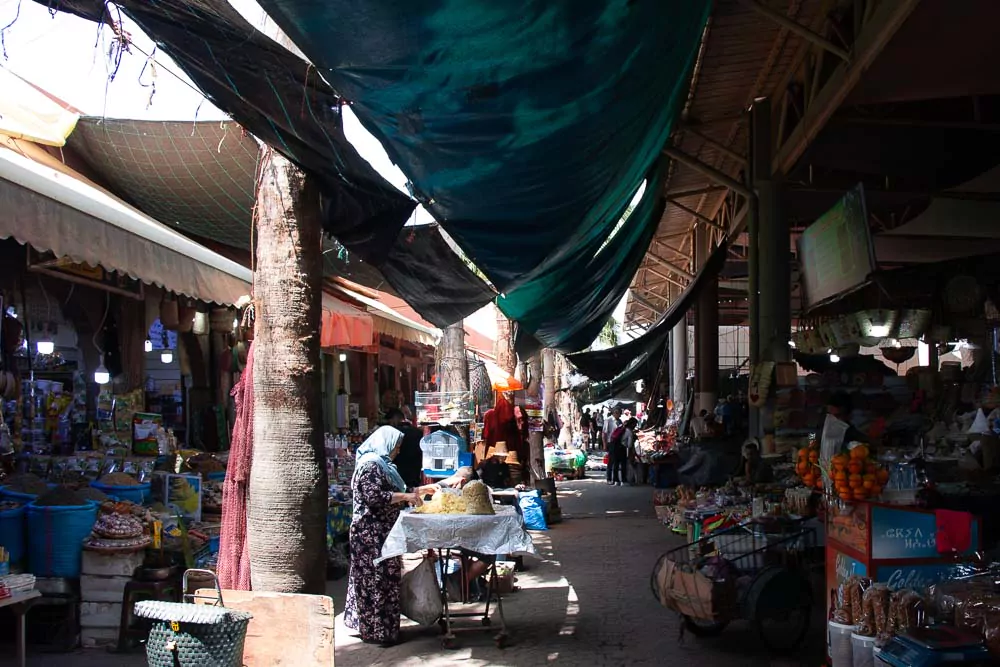
Souk El Had is the kind of market that swallows your sense of direction, your schedule, and—if you’re not careful—your luggage allowance.
Right in Agadir’s center, Souk El Had is one of Morocco’s largest markets, with thousands of stalls spread across a huge area. Expect tight alleyways, spice pyramids, leather slippers in every possible shade, carpets that look like wearable art, and little cafés where you “just sit for mint tea” and accidentally stay an hour.
Good to know (so you don’t arrive dramatically on the wrong day):
- It’s open daily except Monday (closed for cleaning).
- Entry is free—you pay only for whatever you can’t resist buying.
- If you want a guided intro, a 2-hour souk tour is priced 22€
What we actually buy here (and don’t regret later):
- Argan oil (only from reputable sellers), spice mixes, ceramics, woven blankets, lanterns, and small metalwork pieces that survive the flight home.
Micro-logistics:
- Bring cash in Moroccan dirhams—cards aren’t reliably accepted stall-to-stall.
- Go early (mid-morning) if you want breathing room; afternoons can get busy.
2. Kasbah (Agadir Oufella)
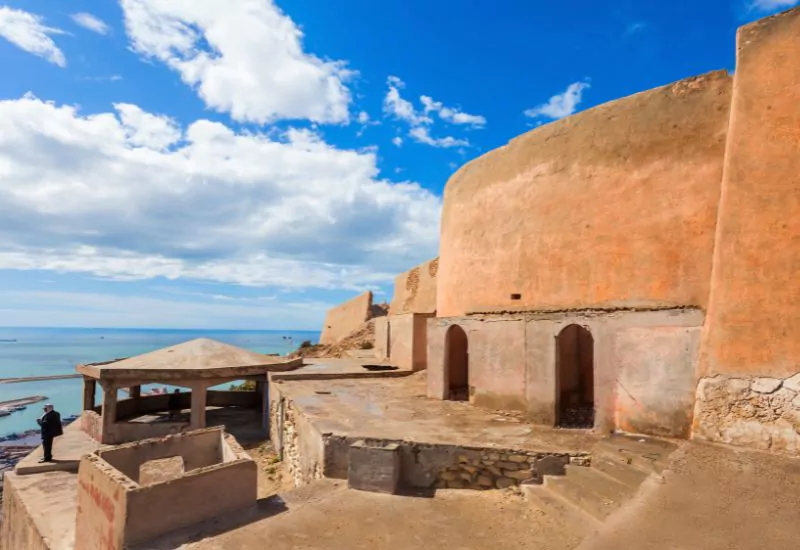
If you want the “movie trailer” view of Agadir—ocean, city, and sky in one clean sweep—this is where we go.
The Kasbah of Agadir Oufella sits above town, and yes, the 1960 earthquake is part of the story here. The ruins aren’t a polished fairytale fortress; they’re a viewpoint with history baked into the stone.
Entry fees:
- International visitors: 90 DH (adults 18+), 65 DH (ages 7–17), under 7 free.
Cable car: worth it?
- The new cable car has made getting up here much easier, and the round-trip ticket is around 80–100 MAD for adults
Opening hours:
- Typically 10:00–19:00, later in summer.
How we’d do it:
- Go up late afternoon → hang around for golden hour → watch the city turn on its lights → ride back down before you become a wind-blown philosopher.
3. Corniche
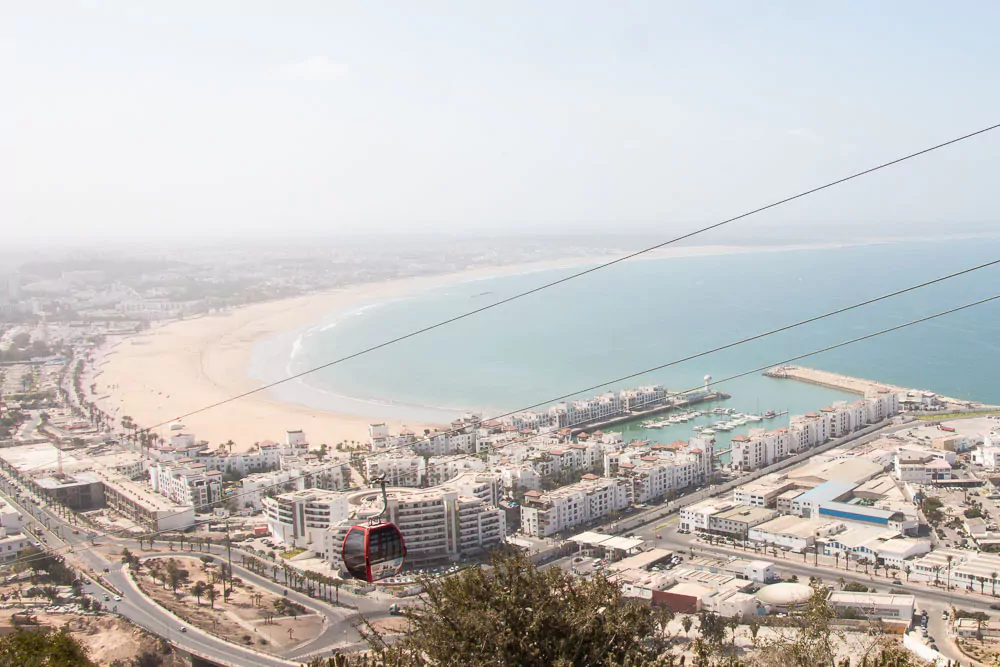
Agadir’s Corniche is basically the city’s social artery: a long seaside promenade where everyone is walking, rolling, jogging, flirting, snacking, or just staring at the Atlantic like it owes them money.
The bay is famous for its wide sandy beach and a promenade that makes it easy to enjoy the coast even if you’re not staying beachfront.
What you do here:
- Sunbathe, sip coffee with sea views, wander at sunset, and “just pop into one place” for dinner (then pop into three).
Reality check on sea temperature:
- This is the Atlantic, not a bathtub. Sea temps peak around 20–22°C, and can drop to 16–19°C in the cooler months.
Translation: some days you’ll want a quick dip; other days you’ll want a wetsuit and a pep talk.
4. Paradise Valley Tour
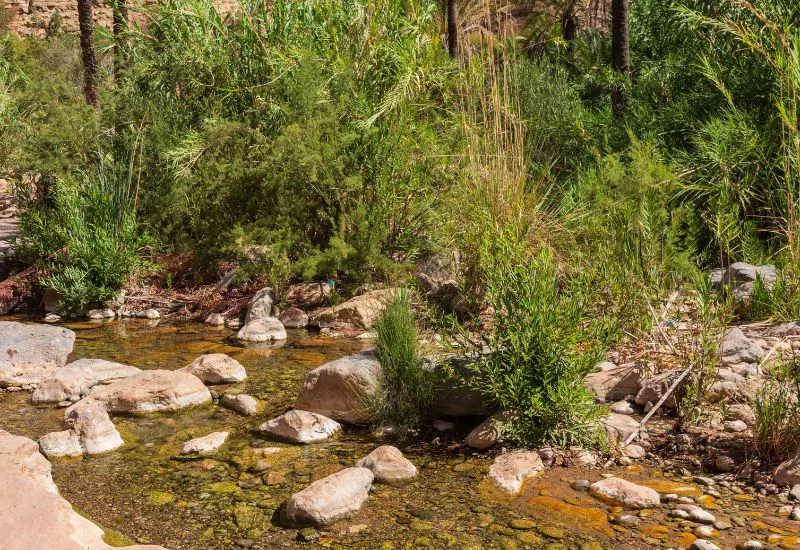
When Agadir feels sunny, bright, and a little too… coastal, we escape inland to Paradise Valley, about 20 km northeast—rocky gorge, palms, and natural pools.
On hot days it’s a lifesaver: you’ll see people picnicking, swimming, and hopping onto rock ledges to jump in (only if the water’s deep enough—use your eyes before your courage).
How to go (and what it costs):
- The easy option is a half-day guided trip from Agadir/Taghazout. Many tours start around $6–$23 per person depending on what’s included.
Timing tip:
- Weekends = local picnic energy (fun, louder). Weekdays = calmer, more nature.
Don’t skip:
- Small cooperatives selling honey and argan oil along the route—great for gifts, and you get a peek at rural life beyond the resort strip.
5. Beach holiday in Agadir
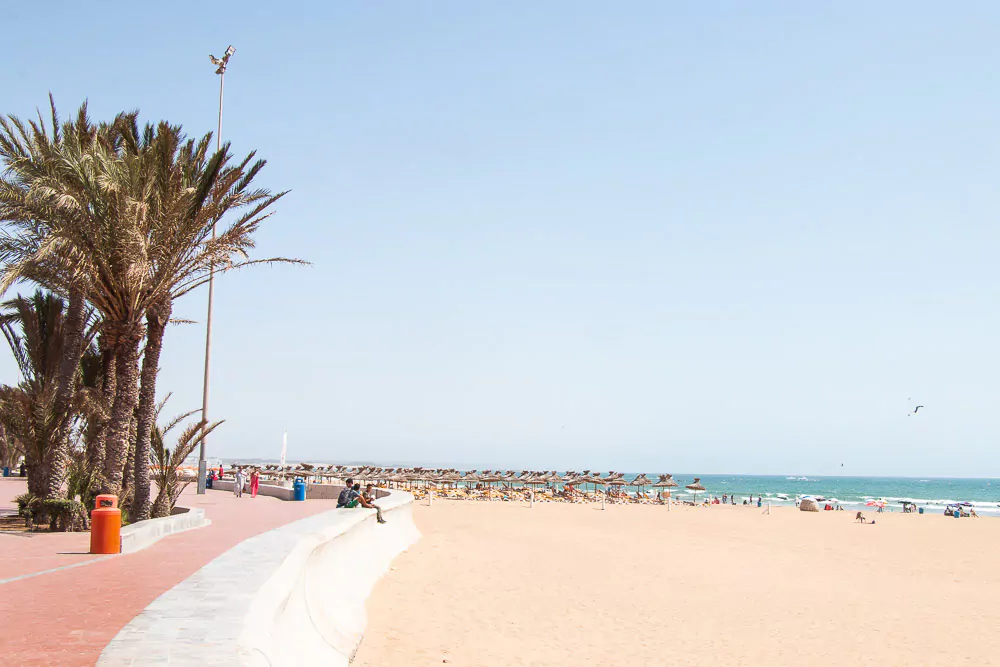
Agadir is built for beach holidays—but also for “we came for three days and accidentally stayed two weeks” workations.
You’ll find everything from all-inclusive resorts to small family hotels and apartments. The big advantage: Agadir is a major flight hub compared with other Moroccan beach cities, so it’s often easier to reach.
Quick list of beach escapes around Agadir:
- Aghroud (north): clear water, easy day trip.
- Tifnit (south): more rugged, good for surfers.
- Mirleft (farther south): white sand + waves.
- Aourir (“Banana Beach”): popular with couples, families, surfers.
- Plage Blanche: long, wild, quiet—ocean meets desert energy.
Practical note:
Even in warmer months, the Atlantic can feel cool (see sea temps above).
6. Taghazout and surfing
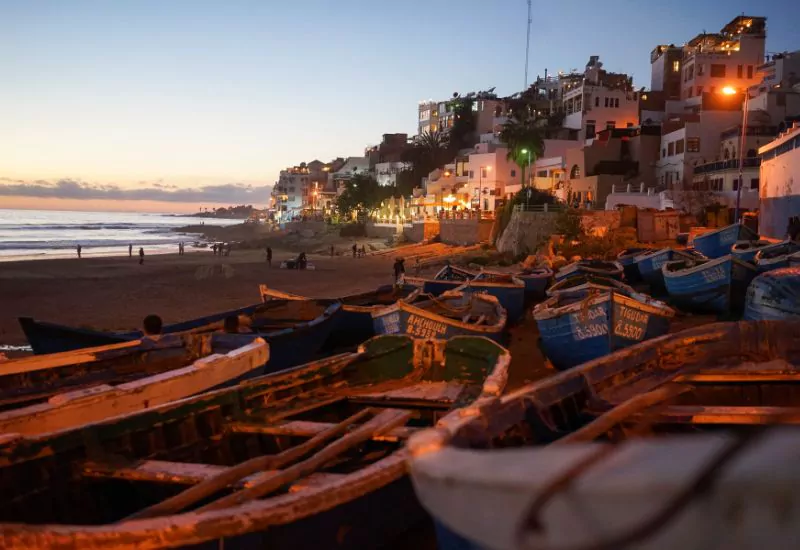
We’ll say it: if you like surfing (or even just the vibe of people who wake up at dawn willingly), Taghazout is the best side-quest near Agadir.
It’s about 23 km north, and it’s a former fishing village turned surf base—cafés with sea views, surf shops, relaxed guesthouses, and a rhythm that feels slower than Agadir’s center.
Best season for waves:
- Many surfers aim for October to April for consistent swell.
How much does a lesson cost?
- A common baseline for a 2-hour surf lesson is roughly $33–$37 per person (varies by school, group size, and inclusions).
Getting there:
- A private taxi from Agadir to Taghazout is around 230–290 MAD.
- If you’re budget-minded, shared transport exists, but it’s slower and less predictable.
7. Agadir Marina
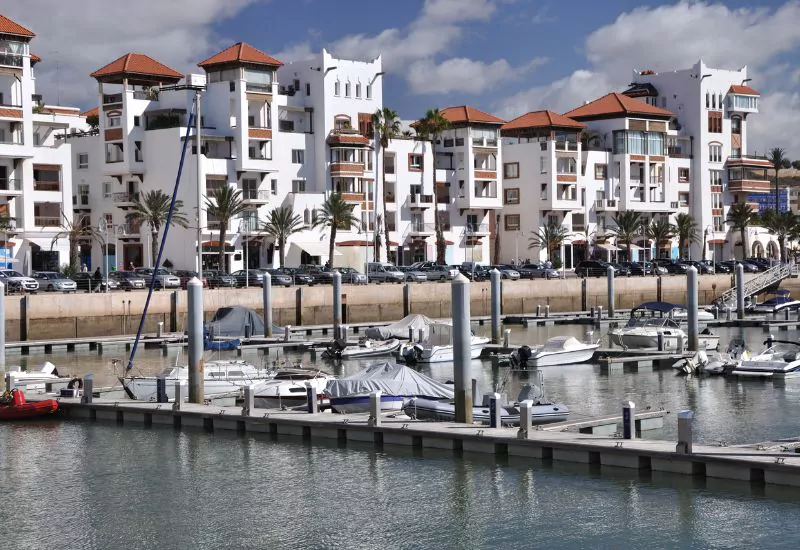
Agadir Marina is where the city puts on a cleaner shirt: a newer, more “stroll and gelato” area at the northern end of the Corniche.
You’ll find international brands (yes, Zara is here) plus cafés and restaurants when you want a break from the main beachfront strip.
Keep expectations calibrated:
- It’s pleasant, but it’s still developing—more “nice evening walk” than “historic must-see.”
8. Desert Tour
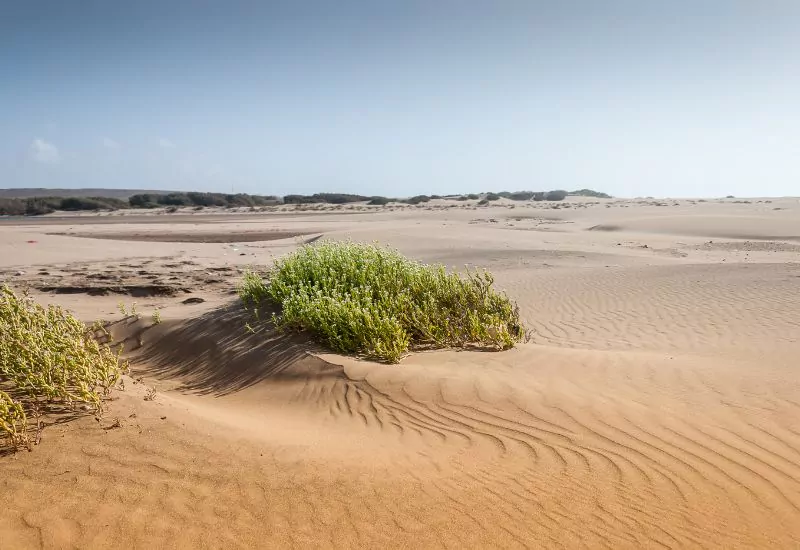
A desert-flavored day trip is basically a Morocco rite of passage. From Agadir, you can do a full-day loop that mixes dunes, Berber lunch, and walled towns.
A classic itinerary often includes:
- Countryside drive south
- Dam viewpoint (often Youssef Ben Tachfine area)
- Camel ride in sandy terrain
- Lunch in a Berber/Amazigh home (tagine, mint tea, the works)
- Stop in Tiznit (silver craft traditions)
- Nature sections around the Souss-Massa region
Typical price ballpark:
- Many full-day “small Sahara / desert + lunch + camel” style trips start around $50–$55 per person.
If you want adrenaline instead:
- Quad/ATV add-ons exist (prices swing wildly depending on duration and what’s bundled).
9. Dining in Agadir
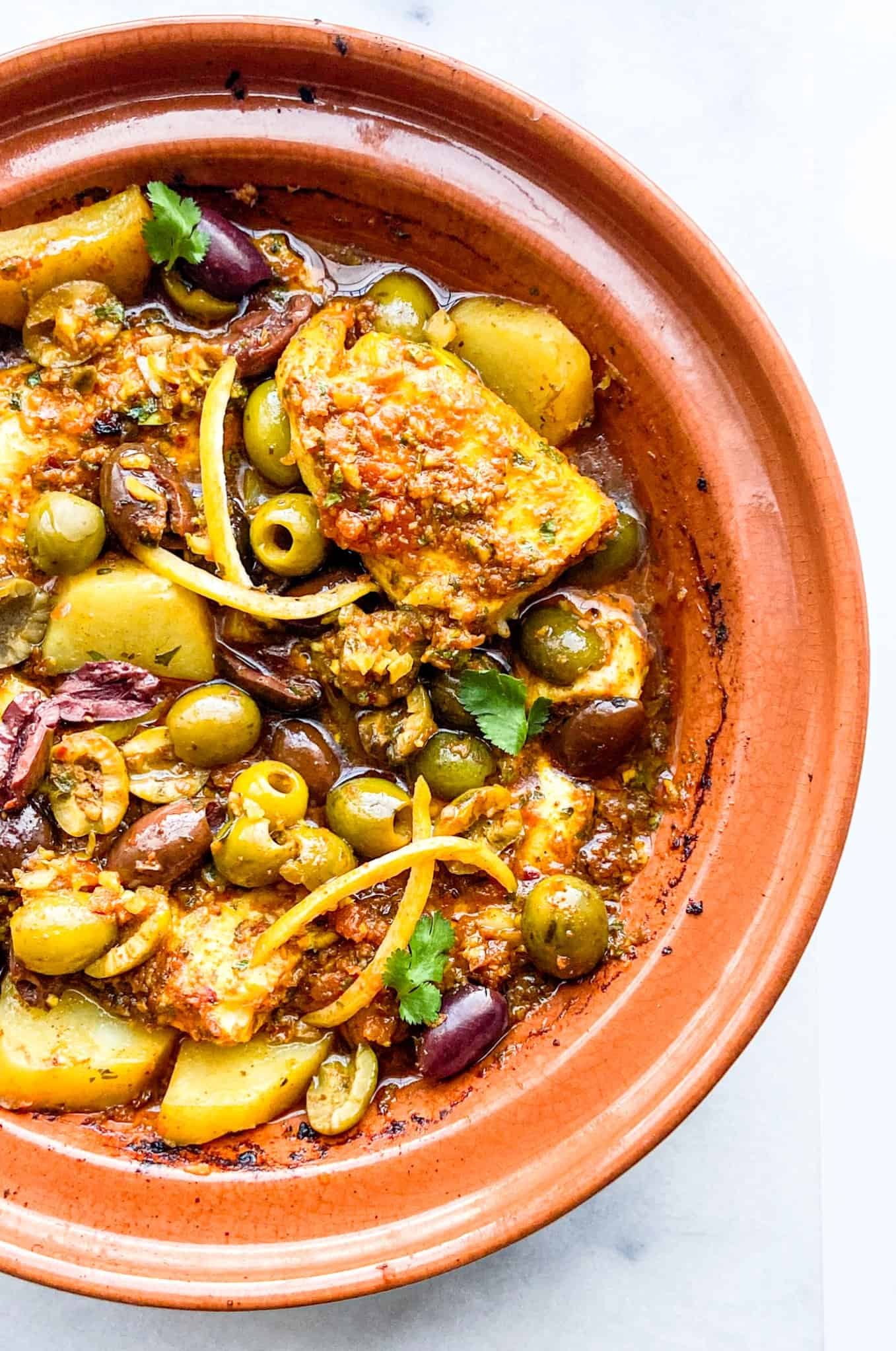
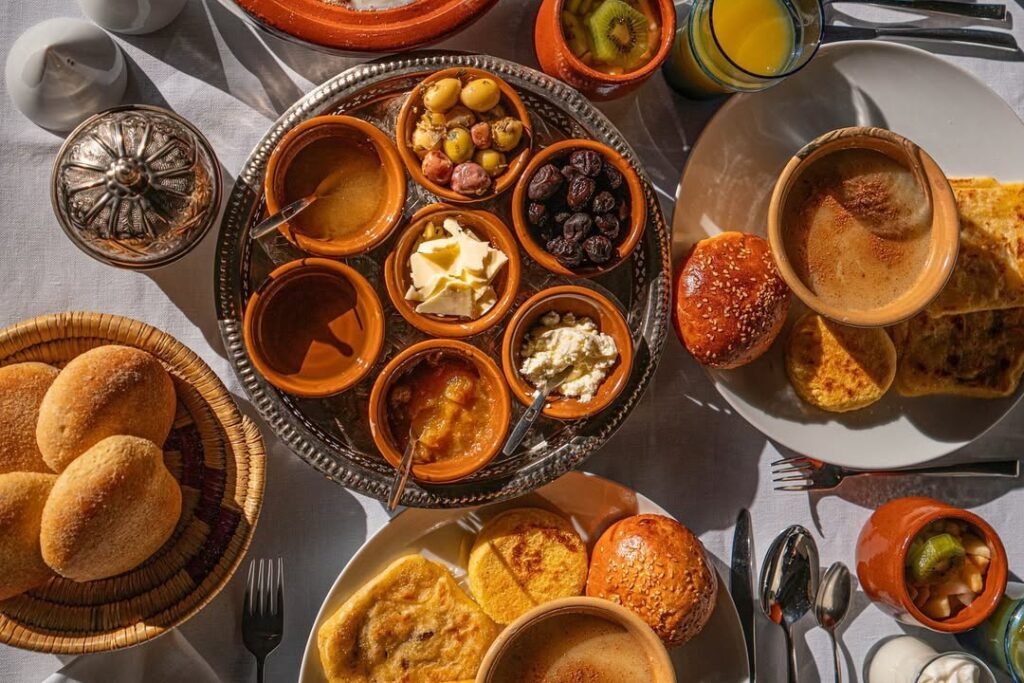
Agadir is a fishing city—so we eat like it.
The port is famously tied to sardines (you’ll hear locals talk about it with pride).
Our move: go for fish and seafood restaurants, order fresh grilled sardines, add lemon, and don’t overthink it.
What’s “local-Agadir” to look for:
- Fish tagine (often with argan oil), grilled whiting/sea bass when available, and anything that looks like it came off a boat this morning.
READ ALSO: Where to Eat in Agadir: Best Food, Local Specialties & Budget Guide
10. Agadir City Center
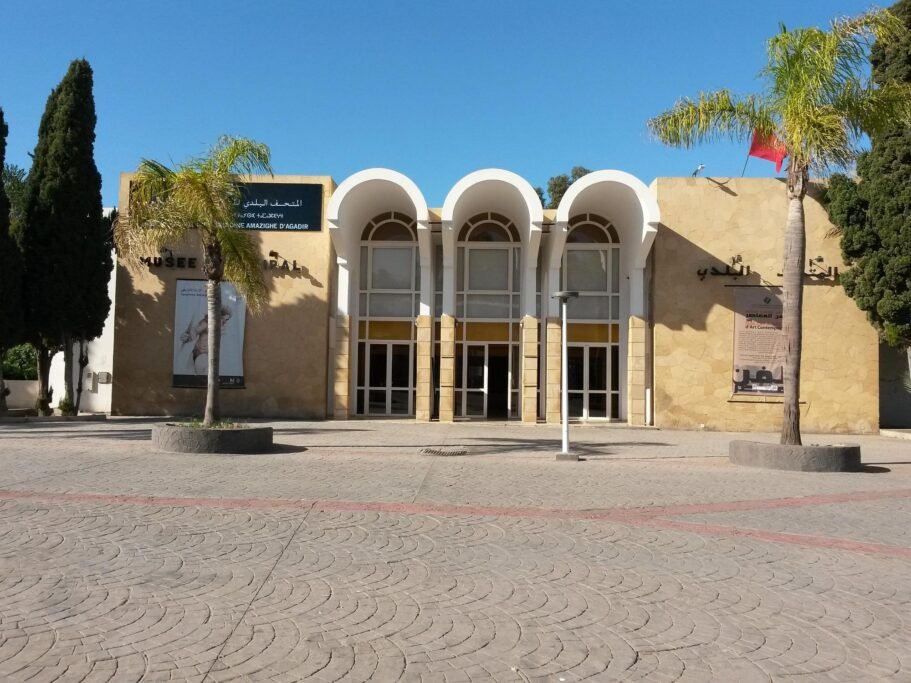
Here’s the key context that saves a lot of traveler confusion: Agadir doesn’t have an old medina-style historic center like Marrakech, because the city was largely destroyed in the 1960 earthquake and rebuilt.
So if you arrive expecting labyrinth alleys and centuries-old facades everywhere, you’ll be puzzled for five minutes… then you’ll relax and enjoy Agadir for what it is: modern, coastal, and easy.
Worth doing in the center:
- Small museums and memorial spots that explain the earthquake story (so the city makes sense).
- For a “classic Morocco architecture” moment, you can still visit major mosques from the outside (remember: in Morocco, non-Muslims usually can’t enter mosques).
11. Essaouira Tour
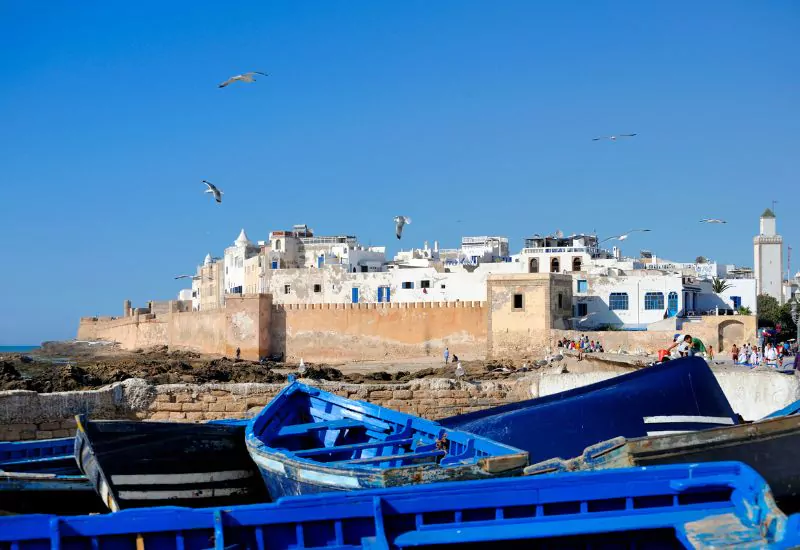
Want to see a Moroccan coastal city with a beautifully preserved historic core? We day-trip to Essaouira.
It’s the blue-and-white, wind-brushed port city with UNESCO medina vibes, art galleries, little souks, and fortress walls that make your camera very happy.
Getting there (budget + time):
- CTM buses are a common option; tickets are often quoted around 75–110 MAD, with a travel time around 3.5 hours.
Once you’re there:
- Walk the ramparts, watch the fishing boats, and lean into the slightly salty, artsy atmosphere.
12. Golf

Agadir is Morocco’s winter golf magnet: when courses in colder countries shut down, Agadir stays open and playable.
Typical costs (so you can budget like an adult, even if you don’t behave like one on holiday):
- Green fees at well-known courses can be around 900 MAD (example: Golf du Soleil pricing commonly cited).
- Add-ons can stack: buggy hire is often listed around €40 per buggy per 18 holes, with caddies and trolleys extra depending on the setup.
If you’re not playing, you can still go for the “green lawns against Atlantic light” contrast—it’s oddly soothing.
13. Taroudant Tour
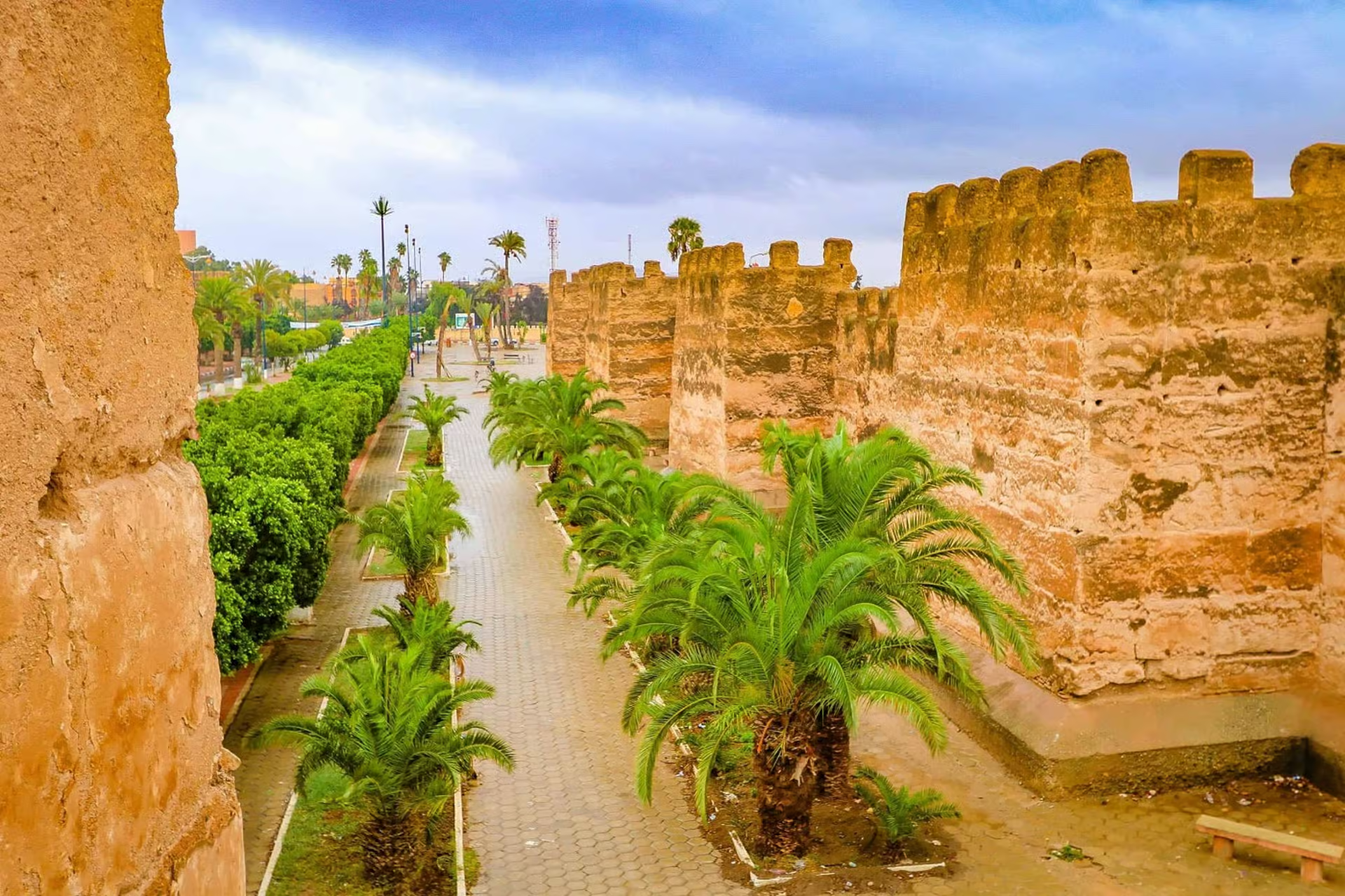
Taroudant is the Morocco postcard many people carry in their head: thick city walls, souks, and narrow lanes that reward getting lost (on purpose).
It’s inland, on the route toward Marrakech, and it makes a great day trip if you want something more traditional-feeling than Agadir.
How to get there:
- Bus tickets from Agadir to Taroudant are starting around 75 MAD (varies by operator and season).
Our honest advice:
- Tours sometimes rush Taroudant. If you really care about wandering the souks and wall viewpoints, independent travel (bus/rental car) usually gives you more time.
14. Crocoparc Agadir

Crocopark was created as a conservation project, helping crocodiles originally from the Nile region. They’re not necessarily meant to live out their entire lives here—the idea is rehabilitation and preparation, with the goal of eventual return to the wild.
But let’s be honest: while the conservation angle is reassuring, the main headline (especially if you’re traveling with kids) is that there are around 300 crocodiles doing what crocodiles do best—lying extremely still, looking prehistoric, and reminding you that nature does not do “cute.”
Why families love it:
- Those massive jaws are basically a live-action documentary.
- There are playgrounds and cafés, so you can bribe small humans with snacks and a slide while you recover from your first “that one is DEFINITELY moving” moment.
And it’s not just reptiles. The park doubles as a surprisingly lovely plant wander:
- Blue Garden with rare blue succulents
- Tropical garden
- Water garden
- Cactus garden
If you want practical details (tickets, hours, seasonal changes), check the official Crocoparc Agadir website before you go—because nothing ruins a crocodile day like turning up to a closed gate.
Essential Agadir tips
Getting from the airport to town
- ALSA Airport Shuttle (AE Aerobus): 50 MAD one-way, 80 MAD return, about 50 minutes.
- Taxi: typically ~200 MAD daytime to the city center (higher at night).
Getting around Agadir
- Petit taxis (red): many rides within the city fall in the 20–50 MAD range depending on distance and time.
- If someone refuses the meter or quotes something wild, we politely hop out and try the next car. (It works more often than you’d think.)
Money + budgeting
- You’ll use MAD (dirham) daily. Markets are cash-heavy; bigger restaurants and hotels often take cards.
- Costs can feel pleasantly low compared with Western Europe, but tourist zones (Corniche/Marina) are naturally pricier.
Our “no-Google” map of Agadir
- Corniche = the long beachfront strip and promenade
- Marina = northern end of the Corniche (newer, more upscale)
- Kasbah (Agadir Oufella) = hill above the city for panoramic views (cable car access) (
- Souk El Had = central city market zone (closed Mondays)
- Taghazout = north along the coast for surfing
- Paradise Valley = inland northeast for pools and gorge scenery
- 14 Best Places to Visit in Agadir in 2026: Beaches, Souks & Day Trips

- 7 Best Hotels in Agadir for a Perfect Beach Getaway (2026)
- Where to Stay in Agadir (2026): Best Areas & Hotels for Every Traveler
- Where to Eat in Agadir (2026): Best Food, Local Specialties & Budget Guide
- 21 Best Things to Do in Agadir, Morocco (2026): Beaches, Markets & Mountain Escapes