
Writing lived-in travel guides from long stays and real routes
Driving in Jordan as a tourist sounds a little intimidating at first, and we get it: unfamiliar roads, local driving habits, desert highways, and all those questions about safety. But once we know what to expect, it becomes one of the easiest and most rewarding ways to explore the country. From Petra and Wadi Rum to the Dead Sea and Amman, having a car gives you the freedom to travel at your own pace, stop for those absurdly beautiful views, and reach places tours often rush through. Here’s what you really need to know before getting behind the wheel in Jordan.
Table of Contents
Driving in Jordan as a tourist: dangerous or easy? Here’s the real on-the-road answer

Spoiler: driving in Jordan is not exactly dangerous, but it is not quite like driving in Europe either. It is simply… different. And once we know what kind of different we are dealing with, everything becomes much easier. The stress drops, the confidence goes up, and suddenly that Jordan road trip you were slightly nervous about starts looking like a very good idea indeed.
Myths vs. reality: what travelers expect… and what actually happens on Jordanian roads
A lot of travelers land in Jordan carrying the same set of assumptions in their heads. We hear them over and over again, and honestly, some of them sound far scarier than the reality on the ground.
- The roads are in poor condition.
Let’s clear this one up straight away: in most cases, that’s simply not true. Jordan has paved roads, and the main ones are often in very decent shape. Will you hit the occasional pothole? Probably. But no more than on plenty of back roads elsewhere in Europe. This is not a country made entirely of rough dirt tracks, unless you deliberately head deep into the desert, and even then, you usually would not be doing that alone anyway. - People drive in total chaos.
This one always makes us smile. Yes, there are reckless drivers, because of course there are. There are reckless drivers everywhere. But calling the whole thing pure chaos is a bit dramatic. It is more like organized chaos. Need to stop for bread? Someone pulls over, hops out, and nobody reacts as if civilization is collapsing. Cars simply glide around them and the world keeps turning. It is a different system, but it is still a system. - There are people everywhere on the roads.
Yes, that can absolutely feel true in Amman. But Amman is the capital, and capitals tend to do capital-city things. Once you leave the city, the atmosphere shifts. Roads feel calmer, emptier, looser. Sometimes you drive for stretches and feel like you have the whole landscape to yourself. - GPS will not be enough.
Nope. Wrong, wrong, and wrong again. Google Maps works very well across Jordan. We are not going to pretend it is perfect every second of the day, especially if it tries to send you into some tiny hillside village in the middle of nowhere, but most of the time it does the job just fine. For the vast majority of travelers, it is enough.
So yes, the reality is a lot more nuanced than the scary little myths people love repeating.
What you actually discover when driving in Jordan
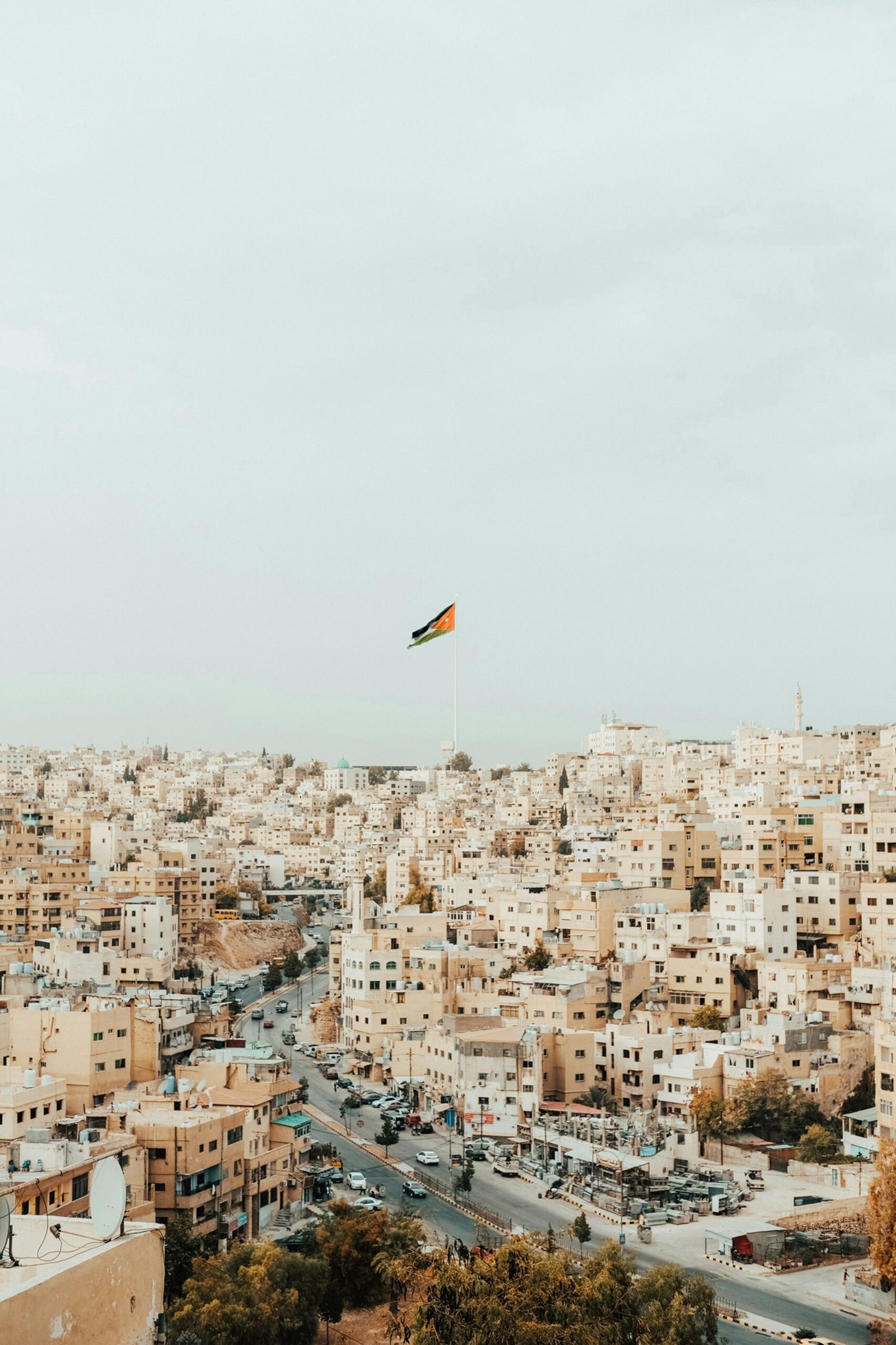
What surprises many travelers most is this: the main roads are often wide, clean, and well maintained. In reality, most people stick to three major roads in Jordan, and those are exactly the roads you will probably use for 90% of your trip.
The bigger surprise is usually the relationship between distance and travel time. On Google Maps, everything can look pleasingly manageable. In real life? Well. Let’s just say Jordan can pull the same trick as places like Corsica: the kilometers do not look like much, but then come the climbs, the bends, the descents, the photo stops, the scenery that practically demands you pull over every ten minutes. So yes, drives often take longer than they seem they should, and that is completely normal.
Then we have one of Jordan’s signature moves: speed bumps. And these things are not always politely announced in the way many European drivers are used to. Some are barely more obvious than a raised slab of pavement. In other countries, they would usually be painted, signposted, and impossible to miss. In Jordan? Not always. Here, the clues are often environmental: a school, a mosque, an intersection, a built-up area. That is your warning. Another thing to remember: roads can be very dark at night, so staying alert matters even more after sunset.
Local driving style is its own world too. Jordanians have a set of driving codes that may look mysterious from the outside, but they understand them perfectly. They anticipate a lot. They communicate constantly. A short honk, a flash of headlights, a quick hand gesture: here, the horn is not automatically aggression. Often, it is just communication.
And even when it looks like some people are multitasking their way through life behind the wheel, talking on the phone, smoking, kids not always strapped in, the overall pace is often surprisingly slow. Ideas about following distance, overtaking, and lane behavior can feel different from what many travelers are used to, so it helps not to expect a carbon copy of home.
The conclusion? Nothing here is insurmountable. In fact, driving in Jordan can be a real pleasure.
Car rental in Jordan: prices, insurance, and pitfalls to avoid
Renting a car is hands down one of the best ways to explore Jordan, especially if we like freedom, flexible days, and the option to veer slightly off the standard tourist path.
Average rental prices and the insurance you really need
Renting a car in Jordan is one of the keys to seeing the country properly, but it helps to understand the real cost before signing anything. In general, expect to pay around €25 to €50 per day for a compact car. Prices go up if you choose a 4×4, though for most classic Jordan itineraries, a 4×4 is not actually essential.
As for insurance, there are a few terms worth understanding. The deductible is the amount you may have to pay yourself in case of damage. Many rental companies offer a CDW (Collision Damage Waiver) or sometimes a Super CDW, which reduces your financial liability even further. We would not skimp here. Truly. This is not the glamorous part of trip planning, but paying a little extra upfront can save a lot of pain later.
One thing to watch for: some less-than-honest agencies may try to tack on extra charges at the end, whether that is for a mysterious scratch or some oddly creative interpretation of tire wear. So here is the practical bit that matters: inspect the car carefully before you leave, film it, photograph it, and make sure anything questionable is noted on the contract. Do that, and renting a car in Jordan becomes a lot simpler and a lot more enjoyable.
International driving permit: required or not?
Good news: you do not need an international driving permit in Jordan. Rental agencies normally ask for your national driving licence, and that is it.
So no need to add this to your pre-trip panic list. One less errand, one less piece of paperwork, one less thing to overthink before your flight.
Where to rent a car in Jordan: airport, city, or local agency?
Renting a car in Jordan is easy enough, but where you book it can make a real difference to price and experience.
At the airport: If you are landing in Amman or Aqaba, this is often the easiest option. Big international rental brands are available, and you can collect your car the minute you land. Very convenient, yes. Usually slightly more expensive, also yes.
Local agencies: These can offer better prices and have the added bonus of supporting the local economy. The trade-off is that standards vary more. Some are excellent. Some are the sort of place where you suddenly discover “fees” that seem to have materialized from the desert air. So again: inspect the car, take photos, film everything, and make sure all details are written into the agreement before driving off.
Alternatives: If you do not need a car every day, or perhaps at all, it is possible to combine taxis and local transport. It is not always the easiest solution and it will not suit every itinerary, but for certain sections of a trip it can work.
My advice: book in advance, choose the type of vehicle based on your actual route and comfort needs, and check every contract detail before accepting the keys. Do that, and your Jordan road trip has every chance of being a joy rather than a bureaucratic side quest.
Jordan traffic rules: speed limits, speed cameras, right of way, and local reality
Jordan does have a clear written highway code. Drivers, however, may sometimes interpret that code in ways that feel a little… creative. Still, the system works. The trick is knowing the official rules while also paying close attention to what is actually happening around you on the road.
Speed limits by road type
The official limits are straightforward:
- 60 km/h in urban areas
- 80 km/h on secondary roads
- 110 km/h on highways
In practice, the reality is often a bit looser. Many Jordanians drive slightly above the posted speed, especially on the larger roads. That said, speed cameras are common enough that blindly copying everyone else is not a master plan. The smarter move is to observe the general pace, stay vigilant, and keep your own margin of caution.
How do speed cameras work in Jordan?
Do not expect the exact same setup you might know from Europe. In Jordan, enforcement is often more visible and more physical. You may see obvious police checkpoints or cars monitoring traffic with binoculars rather than sleek anonymous roadside camera boxes.
The tricky bit is that you do not always feel sure what the “right” pace is. The simplest approach is often the best one: slow down, stay alert, and watch what locals are doing. Police presence is common around towns and on major roads, so awareness matters.
Right of way, traffic lights, and signs: what feels different
Overall, signs are easy enough to understand, but there are a few local quirks worth knowing.
- Stop signs: respected… much of the time.
- Right of way: often more intuitive than rigidly structured, so paying attention matters.
- Traffic lights: usually respected, though at night things can occasionally become a little more “flexible.”
And roundabouts? There are not that many. Which means if you miss your exit, congratulations, you may now be taking the scenic detour you never asked for. In Amman especially, one unwritten rule seems to dominate: the driver who merges most confidently often wins. It can look chaotic at first, but once you read the rhythm of it, it starts to make sense.
The most dangerous (and most beautiful) roads in Jordan: what you really need to know
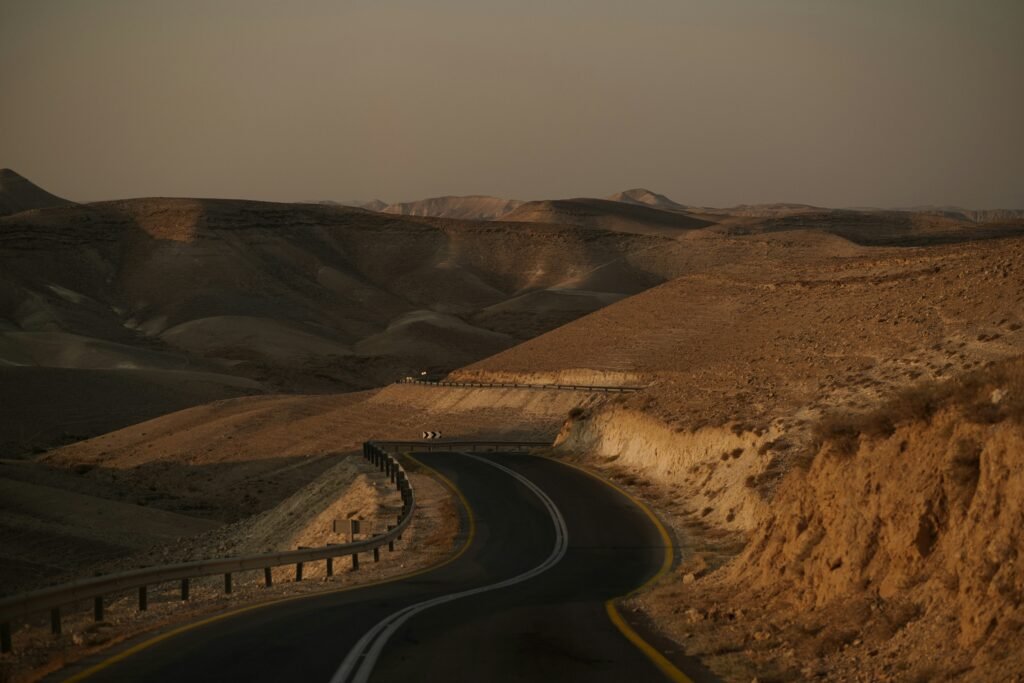
This is the sort of stuff Google Maps will not really tell you, and the sort of detail that makes much more sense once you have actually spent time on Jordanian roads.
Driving in Amman: organized chaos and how to survive it
If traffic stress gets to you quickly, here is the honest advice: avoid Amman during rush hour. The capital is dense, busy, layered, and full of intersecting roads where one missed exit can easily cost you 15 to 20 minutes on the ring road.
Amman has millions of inhabitants, and like most large cities, it fills up in the morning and again in the evening. The ring road can start clogging as early as Thursday evening because the Jordanian weekend falls on Friday and Saturday. So the practical move is simple: plan around rush hour and give yourself extra time. Watching how locals flow through traffic helps too. They know the dance. We just need to learn the steps.
The Desert Highway (Route 15): fast, busy, and tricky after dark
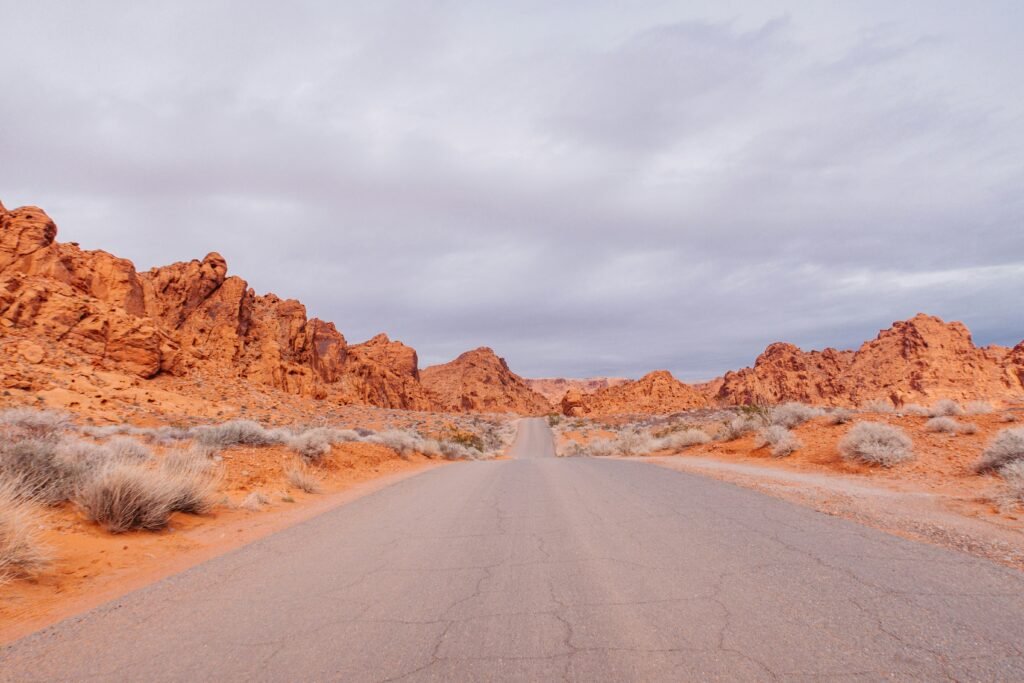
This is the main artery to the south and toward the port, and there are a few things worth knowing before you set off.
- Trucks: there are many of them, and they can be very slow, especially on descents toward the port.
- Night driving: the road is not fully lit, and some drivers use extremely powerful headlights or flashing lights that can be dazzling.
- Overtaking: some people drive very fast, so staying aware matters.
Our advice? Drive carefully, leave a good safety distance, and adapt your speed to visibility and truck traffic. It is a long road, but not a frightening one if you stay switched on.
The King’s Highway: the most beautiful road in Jordan… and the slowest
The King’s Highway is, without much competition, the most beautiful road in the country. Mountains, curves, drop-offs, villages, huge views, all of it. But it is also slow. Very slow in places. Expect tight bends, steep sections, and a road that asks for patience and attention rather than speed.
Still, we would absolutely recommend taking it. It is one of those drives that turns the road itself into part of the trip rather than just the thing between two sights.
Can you drive alone in the Wadi Rum desert?
The answer is both yes and no. Which sounds annoying, but stay with us.
Yes, technically, you can drive in the desert if all of the following are true:
- You have rented a real 4×4 with proper four-wheel drive.
- You have experience driving on sand.
- You are prepared to deal with the possibility of getting stuck in sand, because yes, that can happen fast.
- You understand that there is no reliable internet in the desert, which means no Google Maps miracle rescue, no smooth GPS guidance, no handy digital landmarks.
Driving alone in Wadi Rum requires serious preparation, a strong sense of direction, and ideally some local knowledge. If you do choose to go in with your own vehicle, you also need to pay the vehicle entrance fee at the Visitor Center.
No, though, for most travelers, it is not the best idea. Wadi Rum is vast, tracks branch off everywhere, some routes are barely visible, and locals know the terrain in a way visitors simply do not. Going with a guide removes a huge amount of stress. You just climb into the jeep and enjoy the landscape instead of wondering whether you are about to become one with the sand forever.
One thing people often forget: the desert begins before the Visitor Center.
- There are no gas stations after the Desert Highway, so fill up before heading in.
- The road stays paved until the last village, and then… that is it. You leave your car in the village parking area and continue by jeep.
If you want a timeless desert experience, far from noise, signal, and asphalt, I recommend Lif’Adventure. It is a beautiful way to experience the Wadi Rum protected area in its most peaceful and authentic form.
Road safety in Jordan: real risks, common dangers, and how to avoid them
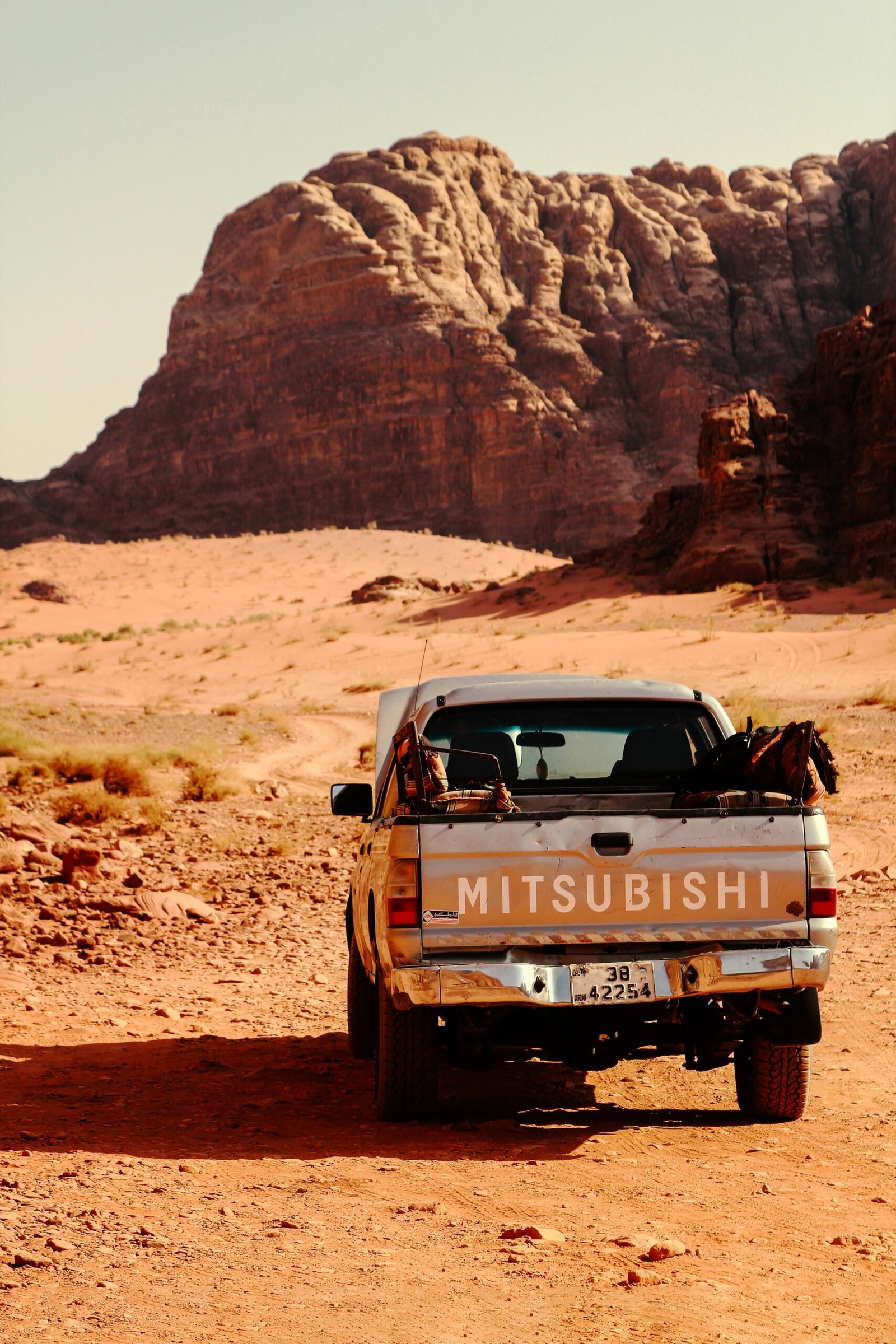
Before getting behind the wheel, it helps to know the real hazards on Jordanian roads. No need for drama, and no need for panic either. Roads are not impossible here. But there are a few very typical surprises that can catch visitors off guard if they are not prepared. So let’s talk about what actually matters, how to react, and how to make sure your road trip stays enjoyable.
Common hazards: animals and invisible speed bumps (yes, really)
In Jordan, there are two genuinely common road hazards, and they are probably not the ones first-time visitors tend to imagine.
- Animals. Camels, goats, sheep… everyone is out here living their best life and roaming freely. On rural roads, it is completely normal to see a herd crossing without warning. It is scenic, it is memorable, and yes, it may be the only traffic jam you get all trip, unless you are in Amman, in which case all bets are off.
- Invisible speed bumps. These deserve their own trophy. They are there. Absolutely there. But they often reveal themselves at the very last second, especially in villages and residential zones. The rule is simple: as soon as you enter a built-up area, assume a speed bump is coming. And on highways, do not be surprised if a posted limit drops from 110 km/h to 50 km/h with startling speed, with a bump helpfully waiting to make sure you noticed.
Driving at night in Jordan: why it is really not recommended
Most roads are very poorly lit. The Desert Highway is the main exception, as it has more continuous lighting in some stretches. Elsewhere, on mountain roads, country roads, around Wadi Rum, Dana, and other remote areas, it can be pitch dark. To avoid ending up driving after dark, make sure you:
- check sunset times in advance, because in winter darkness arrives early
- plan your route around daylight hours
Then there is what we might call… creative vehicle lighting. You may come across:
- trucks with flashing lights
- cars lit up like festive decorations
- pink or colored garlands that make the whole scene feel slightly nightclub-adjacent
It is amusing for about two minutes. Then it becomes extremely dazzling. Which is why, whenever possible, daytime driving is the move.
Police checkpoints: how to react and what to show
No need to panic here either. Jordan is not some tense militarized obstacle course, but there are plenty of checkpoints. Their main purpose is to keep roads secure and make sure everything is in order.
The first thing to know is that your rental car is easy to spot. The number plate format makes it obvious that you are a tourist vehicle.
If you are stopped, officers usually ask two things:
- Where are you from? (They may ask for your passport.)
- Car license, please (meaning the vehicle registration papers.)
And that is generally it. Unless, of course, you were driving like you were auditioning for a rally stage just before the checkpoint, in which case the conversation may become slightly longer.
My tips for a stress-free road trip in Jordan
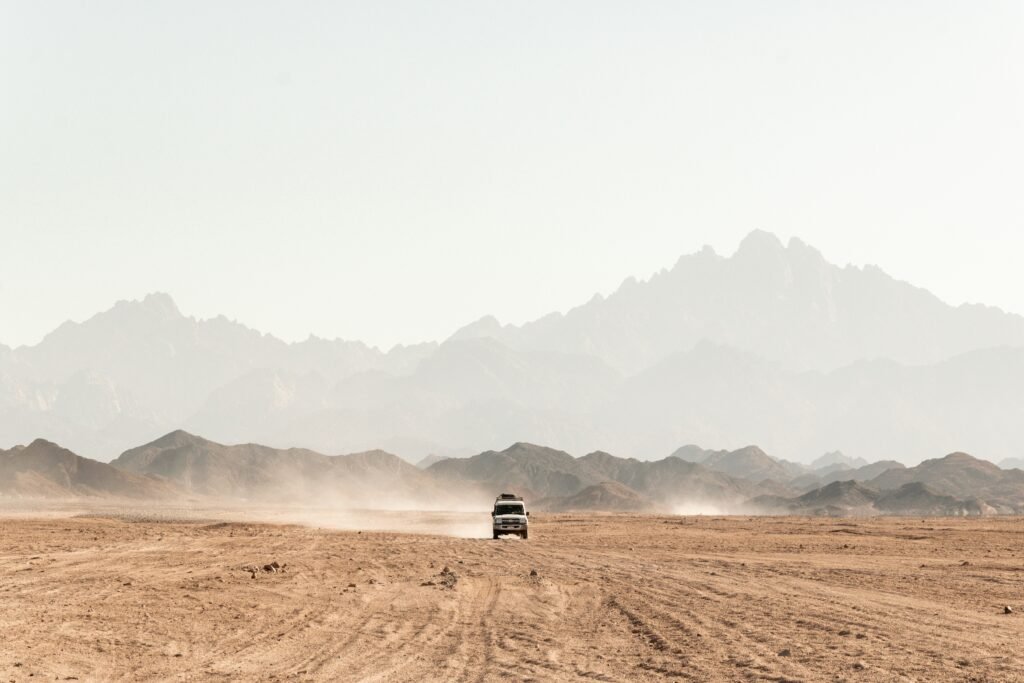
To really enjoy a Jordan road trip, having a car is only half the story. The other half is good planning and a few useful local habits. That is what makes the difference between a smooth, satisfying adventure and a day spent wondering why Google said this would only take 90 minutes.
How to plan your drives without ending up exhausted
In Jordan, distances can look short… but roads are not always fast. Between mountain sections, winding roads, herds crossing, sudden speed-limit changes, and irresistible viewpoints, it is smart to allow more time than you think you need.
A few practical ways to keep the driving side of your trip enjoyable:
- Avoid stacking too many hours of driving into one day, especially if you are also visiting somewhere demanding like Petra, which already eats up your energy in the best possible way.
- Add a 30 to 45 minute buffer to whatever Google Maps says.
- Drive in the morning when possible, when you are fresh and the light is better.
- Most importantly, do not plan to drive after sunset. Night falls fast, and night driving is best avoided.
In other words: your road trip should feel like an adventure, not an endurance sport.
Fuel management in remote areas
In cities, fuel is easy. In the south, things become less casual.
The golden rule is simple: once your tank reaches half full, fill up. Not at a quarter. Not once the dashboard starts threatening you emotionally. At half.
Why? Because in some areas gas stations are spread out, and sometimes they are closed. And few travel moments are less charming than being stranded in the middle of nowhere with only camels bearing witness.
So keep these habits in mind:
- Fill up before heading into remote areas.
- Do not count on a “next station” magically appearing 10 minutes later.
- Carry some cash, because not every station accepts cards.
How to avoid fines: the classic tourist mistakes
Fines in Jordan can sting a bit, but the good news is that they are usually very easy to avoid.
The most common mistakes include:
- Driving too fast, especially on roads with regular speed checks such as the Desert Highway.
- Missing sudden speed-limit changes.
- Not wearing a seatbelt, even in the back.
- Using your phone while driving.
- Parking randomly in Amman, which can lead to fines or even the car being impounded.
How to keep things simple?
- Stick to the posted limits, even when they feel abrupt or odd.
- Keep your seatbelt on at all times.
- Leave your phone alone while driving.
- In Amman, use underground parking or clearly marked parking areas.
Do that, and you avoid 99% of the usual headaches. Which is ideal, because no one wants their rental deposit disappearing into the horizon.
Mini checklist: what to remember before driving in Jordan
Main roads are generally reliable and in good condition. Most drives are straightforward, so do not arrive expecting disaster.
Speed bumps can be nearly invisible. Stay alert in villages and residential areas.
Animals do cross roads. Camels, goats, and sheep do not care about your schedule.
Manage your fuel carefully. Refill at half a tank in remote areas.
Avoid driving at night. Roads are dark and other vehicles can be dazzling.
Respect speed limits. Speed checks are common, especially on the Desert Highway.
Do not head into the desert alone unless you truly know what you are doing. A 4×4 is essential, and a guide is usually the better choice.
Carry some cash. Not every fuel station takes cards.
Choose an automatic if possible. It makes mountain driving and stop-start traffic much less tiring.
Inspect your rental car properly. Take photos, film it, and make sure every existing mark is noted before leaving.
FAQ: your questions about driving in Jordan
Still wondering whether driving in Jordan is a brilliant idea or a terrible one? Fair. These are the questions travelers ask most often before setting off, and the answers are much more reassuring than the internet sometimes makes them sound.
Is it dangerous to drive in Jordan?
No, as long as you stay attentive and know what to expect. Roads are generally decent, but there are a few things that can catch first-time visitors off guard:
- signage can occasionally be surprising
- speed limits can change very quickly
- and animals can appear at exactly the wrong moment, because of course they can
With a little preparation and a focused driver, it is absolutely manageable.
Do you need a 4×4 to visit Jordan?
For a classic Jordan road trip, no. A standard car is enough for most of the country. The big exception is Wadi Rum:
- To drive in the desert, a 4×4 is essential.
- Even then, going alone is strongly discouraged. There is no cell signal, navigation is difficult, and sand driving is a skill. In most cases, the best option is to leave your car in the village and continue with a local guide by jeep.
Are there tolls in Jordan?
Good news: there are no tolls on regular roads in Jordan. The only exception is Aqaba, which is a free trade zone and involves a customs toll. Elsewhere, no toll booths, no little coins drama, no problem.
Are the roads in good condition?
Overall, yes.
- Main roads like the Desert Highway and the Dead Sea Highway are decent to very good.
- Some mountain and rural roads are narrower and a bit older.
- The King’s Highway is wonderful, but it is also slow and winding.
Nothing about it is unmanageable. It simply means driving at your own pace and staying alert.
Can you pay for petrol by card?
Usually, yes. Most gas stations in Jordan accept cards, especially on the main highways and around large cities like Amman, Madaba, and Aqaba. But in more remote areas, cash may still be the only option.
My advice: keep around 20 to 30 JOD in cash in the car just in case.
Driving in Jordan: dangerous or easy? Here’s the real answer from the road
Spoiler: driving in Jordan is not dangerous in the dramatic, white-knuckle way some travelers imagine. It is simply different. And once we understand the rhythm of the road, the whole thing becomes far less intimidating and far more enjoyable.
It is not France. It is not Belgium. It is not one of those places where every sign, lane, and speed bump politely introduces itself three times before appearing. Jordan has its own logic. But that logic works. And when you know what to expect, driving here can actually become one of the best parts of the trip.
Myths vs. reality: what travelers imagine… and what really happens on Jordan’s roads
A lot of travelers land in Jordan carrying a suitcase full of assumptions. Some of them sound dramatic. Most of them fall apart the second we actually get behind the wheel.
- “The roads are in terrible condition.”
Not really. In fact, this is one of the biggest myths. Jordan has paved roads, and many of the main routes are in very good shape. Yes, you may hit a pothole now and then, but nothing more shocking than what we see on plenty of rural roads elsewhere in Europe. Outside of true desert terrain, this is not a country made up of rough dirt tracks. - “People drive like maniacs.”
That one always makes us smile. Are there reckless drivers? Of course. There are reckless drivers everywhere. But describing Jordan as pure road chaos is too simplistic. It is more like organized chaos. Someone stops to buy bread? They pull over, everyone gently goes around them, and life continues. The system may look improvised, but locals understand it perfectly. - “There are people everywhere on the roads.”
In Amman, yes. But that is the capital, not the whole country. Once we leave the city, traffic thins out quickly. The atmosphere changes. The pace softens. Sometimes the road feels almost empty. - “GPS won’t be enough.”
Also false. Google Maps works very well in Jordan. Is it perfect in every tiny village perched halfway up a hill in the middle of nowhere? Not always. But most of the time, it gets the job done just fine.
In other words, Jordanian roads are far more manageable than the horror stories suggest. The reality is more nuanced, more practical, and honestly much less frightening.
What you actually discover when you drive in Jordan
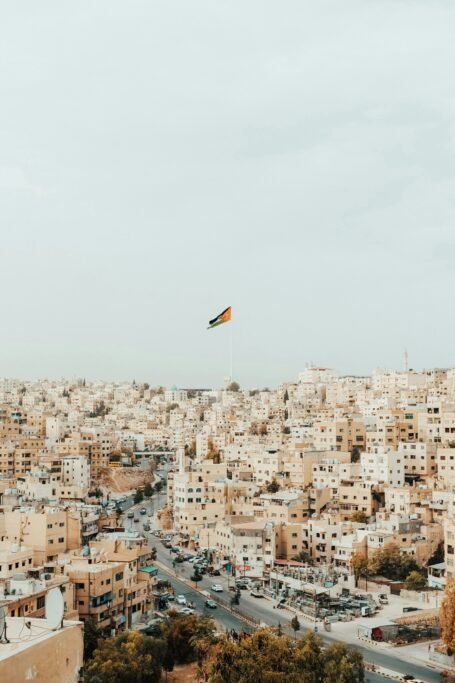
What surprises many travelers first is how good the main roads actually are. They are often wide, clean, and well maintained. Realistically, most visitors will spend the majority of their road trip on a handful of key routes anyway, and those are generally the easiest to handle.
The bigger surprise is not the condition of the roads. It is the difference between distance and travel time. On Google Maps, everything can look deceptively quick. In reality, Jordan can be a bit like Corsica: the map says one thing, the mountains say another. There are bends, elevation changes, scenic stops, and those irresistible moments where you suddenly pull over because the view is absurdly beautiful.
Then come the famous Jordanian speed bumps. These are not always the polite, highly visible, brightly painted versions we know from elsewhere. Some seem to materialize out of nowhere. Often, the clue is not the bump itself but the environment around it: a school, a village, a mosque, an intersection. That is your warning. Another detail worth knowing? The roads can be very dark at night, which makes staying alert even more important.
As for the local driving style, it follows its own language. Jordanians anticipate constantly. They communicate with headlights, small gestures, and short horn taps. Here, the horn is not always anger. Sometimes it is simply conversation.
And even when it looks as though people are doing everything except driving, talking on the phone, smoking, adjusting life, carrying children with heroic confidence, the surprising truth is that many drivers move quite slowly. Following distances and overtaking habits can feel different, but once we stop expecting European road manners in Middle Eastern packaging, the whole thing becomes easier to read.
Bottom line? Driving in Jordan is absolutely doable, and often genuinely enjoyable.
If you want to skip the itinerary stress and build a route that reflects actual travel times on the ground, I offer fully personalized Jordan itineraries designed to help you avoid common mistakes and travel with much more peace of mind.
I’m booking an appointment!
Car rental in Jordan: prices, insurance, and mistakes to avoid
If we like independence, flexibility, and the ability to veer off the obvious route, renting a car is hands down one of the best ways to explore Jordan.
Average rental prices and essential insurance
Before signing anything, it helps to know what car rental in Jordan actually costs. In general, expect to pay around €25 to €50 per day for a compact car. A 4×4 will cost more, but for a classic Jordan road trip, it is usually not necessary.
Insurance matters. A lot. The key thing to understand is the deductible, meaning the amount you may have to pay yourself if the car is damaged. Many agencies offer CDW (Collision Damage Waiver) or Super CDW to reduce that amount. This is not the moment to be heroic and frugal. Paying a bit more up front is usually better than discovering an unpleasant surprise later.
Also, let us talk about one of travel’s least glamorous traditions: rental company creativity. Some agencies may try to add extra charges at the end for mystery scratches, suspicious tire wear, or damage that suddenly appears to have happened only in your company. So before leaving, inspect the car carefully, take photos and videos from every angle, and make sure every existing issue is written into the contract. Do that, and the whole process becomes far smoother.
Do you need an international driving permit?
Good news: you do not need an international driving permit to rent a car in Jordan. In practice, rental agencies generally ask for your regular national driving license, and that is usually enough.
That means one less thing to worry about before departure and one less administrative hoop to jump through before the road trip begins.
Where to rent a car in Jordan: airport, city, or local agency?
Renting a car in Jordan is easy enough, but where you rent it can make a difference.
At the airport: if you land in Amman or Aqaba, this is often the simplest option. Big international companies are available on arrival, and picking up the car is straightforward. The trade-off? Airport rentals can be slightly more expensive.
With a local agency: prices can be better, and you are supporting the local economy. The catch is that quality varies, so this is where careful checks matter most. Inspect the vehicle, photograph everything, and make sure the contract is crystal clear before driving away.
Without renting at all: if you do not need a car every day, it is possible to combine taxis and local transport. It is not always the easiest option, but depending on your route, it can work for parts of a trip.
My best advice? Book ahead, choose the car based on your actual itinerary, and read the contract like someone who has been burned by tiny print before. Because many of us have.
Traffic rules in Jordan: speed limits, cameras, priority, and local reality
Jordan does have a written traffic code, and yes, the rules exist. But like in many countries, what happens in real life can be a slightly more interpretive performance. The trick is to know the rules, then watch how the road actually behaves around you.
Speed limits by road type
The official limits are fairly simple:
- 60 km/h in urban areas
- 80 km/h on secondary roads
- 110 km/h on motorways
In practice, things can be a little more fluid. Many drivers go slightly above the limit, especially on major roads. That said, speed cameras are common enough that it is not wise to treat the whole country like your personal rally stage. Watch the pace of surrounding traffic, stay cautious, and do not let confidence turn theatrical.
How speed cameras work in Jordan
Do not expect sleek futuristic European-style camera systems everywhere. In Jordan, enforcement can be much more visible. Sometimes it is a police checkpoint. Sometimes it is a car parked with officers observing traffic. The result is the same: if we are speeding, somebody may notice.
The easiest strategy is refreshingly simple: slow down when in doubt and follow the general local rhythm without pushing it. Police presence is common around towns and on the main roads, so vigilance really does pay off.
Priority, traffic lights, and signs: what feels different
Overall, signs are understandable. But local driving habits add a few twists.
- Stop signs: often respected, though not always with textbook enthusiasm
- Priority: sometimes intuitive rather than elegantly formal
- Traffic lights: generally followed, though nighttime interpretations can feel… flexible
And roundabouts? There are not many. So if you miss your turn, congratulations, you may be enjoying an accidental detour. In Amman especially, the unwritten rule often feels like this: whoever merges most convincingly wins. It looks intimidating at first, then strangely efficient.
The most dangerous, and most beautiful, roads in Jordan: what you really need to know
This is the part we do not always get from generic guidebooks: the lived-in, road-tested version of Jordan. The kind of information that makes a trip smoother because it comes from someone who has actually driven these routes, not just admired them from a bullet-point summary.
Driving in Amman: organized chaos and survival strategies
If we are easily stressed by city driving, Amman is not the place to test our emotional resilience for fun. Rush hour in the capital is dense, fast, and full of layered roads where one missed exit can cost 15 to 20 extra minutes very easily.
As in most large cities, traffic is heaviest in the morning and evening. Thursday evening can be especially busy because the Jordanian weekend falls on Friday and Saturday. The smartest move is to plan city drives outside peak hours and give yourself more time than you think you need. Amman rewards calm drivers, not impatient ones.
The Desert Highway (Route 15): fast, busy, and tricky after dark
This is the main route connecting much of the country to the south and the port area. It is practical, efficient, and absolutely worth respecting.
- Trucks are everywhere, and many move slowly, especially on descents toward the port.
- Night driving is harder, because not all stretches are well lit and some drivers use very strong headlights or flashing lights.
- Overtaking requires care, because some vehicles move much faster than expected.
Drive steadily, leave enough space, and adjust your speed to visibility and truck traffic. It is a safe road if we stay attentive and avoid unnecessary bravado.
The King’s Highway: the most beautiful road in Jordan, and the slowest
If there is one road that turns the drive itself into part of the trip, it is the King’s Highway. It is stunning. Mountains, viewpoints, curves, dramatic scenery, all of it. It is also slow. Very slow.
There are tight bends, elevation changes, and stretches that require concentration and patience. But it is one of those drives we remember long after the trip ends. If we have the time, it is absolutely worth doing.
Can you drive alone in Wadi Rum?
The honest answer is: yes in theory, not really for most travelers in practice.
Yes, it can be done if:
- you have a real 4×4 with proper all-wheel drive
- you have actual experience driving on sand
- you know how to handle getting stuck
- you are fully aware there is no reliable internet or GPS support in much of the desert
Driving independently in Wadi Rum requires preparation, confidence, and ideally local knowledge. If you choose this option, you will also need to pay the vehicle entry fee at the Visitor Center.
But for most travelers, no, it is not the best idea. Wadi Rum is vast, the tracks are numerous, and some are barely visible. A local guide removes the stress completely. You leave the logistics to someone who actually knows the desert, climb into the jeep, and enjoy the landscape instead of trying not to accidentally vanish into the sandstone horizon.
Also, remember this: the desert begins before the official desert experience begins.
- There are no gas stations after the Desert Highway, so fill up before heading in.
- The road stays paved until the last village, and then it does not. Usually, you leave your car parked in the village and continue by jeep.
If you want a peaceful, immersive, authentic desert experience, I recommend Lif’Adventure. It is a beautiful way to experience Wadi Rum in its calmest and most genuine form.
Road safety in Jordan: real risks, common dangers, and how to avoid them
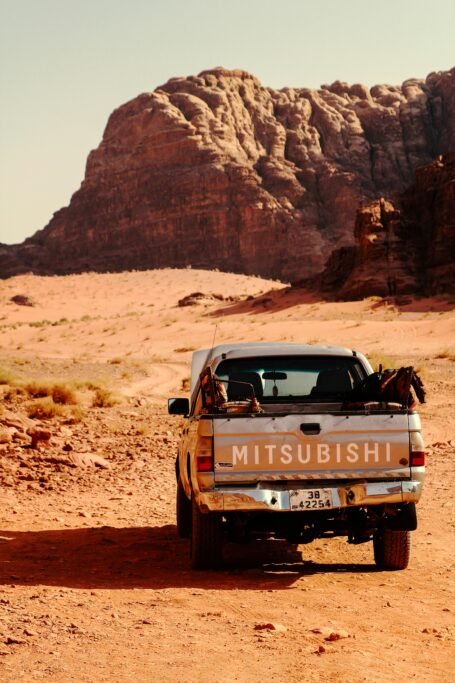
Before we grab the keys and dramatically declare ourselves ready for a Jordan road trip, it helps to know what the real risks actually are. The roads are not impossible. They are not inherently dangerous. But there are a few classic surprises that catch travelers off guard if they are not prepared.
The good news? Most of them are easy to manage once we know they exist.
Common hazards: animals and invisible speed bumps
In Jordan, the main hazards are often not what travelers expect.
- Animals. Camels, goats, and sheep do not care about our schedule. On rural roads, herds can cross without warning. It is scenic, local, and occasionally the only traffic jam we will meet all day.
- Invisible speed bumps. These deserve their own warning label. They often appear at the last moment, especially in villages, residential areas, and small towns. On some highways, the speed limit can suddenly drop from 110 km/h to 50 km/h, with a speed bump waiting to make sure we truly absorb the lesson.
Driving at night in Jordan: why it is really not recommended
Most roads in Jordan are poorly lit. Outside the main Desert Highway, many mountain roads, rural routes, and areas around places like Wadi Rum or Dana become genuinely dark after sunset.
To avoid finding yourself driving in conditions that feel more adventurous than necessary, it helps to:
- check sunset time in advance, especially in winter
- plan drives with enough buffer to arrive before dark
Then there is the lighting style of other drivers, which can best be described as wildly expressive. Trucks with flashing lights, cars glowing like festive decorations, unexpected bright beams, it can all become dazzling very quickly. Charming for ten seconds. Exhausting after that.
Police checkpoints: how to react and what to show
Checkpoints are common in Jordan, and they are usually nothing to worry about. They exist mainly for road security and routine checks.
Rental cars are easy for officers to identify, so tourists often get noticed immediately. If you are stopped, the process is usually simple. Expect something along these lines:
- They may ask where you are from and request your passport.
- They may ask for the car papers or registration document.
That is usually it. Unless, of course, we have been driving as though we personally invented speed.
My expat tips for a stress-free road trip in Jordan
A car alone does not guarantee a smooth trip. The real magic is in the planning, the pacing, and a few small local habits that make everything easier. These are the things that turn a road trip from tiring to enjoyable.
How to plan your drives without exhausting yourself
In Jordan, distances can look short on paper, but that does not always mean quick travel. There are curves, mountain roads, animal crossings, changing speed limits, and all the little pauses that happen naturally along the way.
A few simple rules help enormously:
- Do not overload your day with driving, especially if you are also visiting a major site like Petra.
- Add a 30 to 45 minute buffer to whatever Google Maps tells you.
- Drive in the morning when you are fresher and the light is better.
- Avoid planning anything after sunset. Night falls quickly and driving after dark is best avoided.
The goal is a road trip, not a punishment disguised as an itinerary.
Fuel management in remote areas
In cities, fuel is easy. In the south and in more isolated areas, things become less casual.
The golden rule is simple: when the tank hits half, fill it up. Not later. Not when the warning light starts hinting at drama. At half.
Why? Because stations can be far apart, and some may be closed when you need them most. It is much nicer to admire camels from a moving car than from the side of the road while wondering whose idea this was.
What helps:
- fill up before heading into remote areas
- do not assume the next station is close
- carry some cash, because not every station accepts cards
How to avoid fines: the classic tourist mistakes
Fines in Jordan are avoidable if we keep things simple.
The usual mistakes include:
- Driving too fast, especially on the Desert Highway
- Missing sudden speed changes, such as 110 km/h dropping to 50 km/h
- Not wearing a seatbelt, including in the back
- Using your phone while driving
- Parking badly in Amman, where fines and towing can happen
The easiest way to avoid trouble?
- follow posted speed limits, even when they seem abrupt
- keep your seatbelt on all the time
- leave the phone alone while driving
- use underground or clearly designated parking in Amman
Do that, and you will avoid the overwhelming majority of problems, which means your rental deposit remains exactly where it belongs.
If you want to avoid the planning headache entirely and travel with a realistic, safe, optimized route, I also create tailor-made Jordan itineraries.
Mini checklist: what to remember before driving in Jordan
Main roads are generally reliable and in good condition. Most drives are straightforward.
Speed bumps can be almost invisible. Stay alert in villages and built-up areas.
Animals cross the road. Camels, goats, and sheep are part of the equation.
Manage fuel carefully. Refill when the tank reaches half.
Avoid driving at night. Many roads are dark and other drivers’ lights can be dazzling.
Respect speed limits. Speed checks are common, especially on the Desert Highway.
Do not drive into the desert alone unless you truly know what you are doing. A 4×4 and experience are essential.
Carry some cash. Not every gas station accepts cards.
Choose an automatic car if possible. It is easier and less tiring, especially in the mountains and in Amman.
Inspect the rental car carefully. Take photos, record videos, and note every issue in the contract before leaving.
FAQ: your questions about driving in Jordan
Still wondering whether driving in Jordan is a brilliant idea or a mild form of self-inflicted chaos? Fair enough. These are the questions travelers ask most often before committing to a Jordan road trip.
Is it dangerous to drive in Jordan?
No, not if you stay attentive and understand a few local realities. The roads are generally good, but signage can sometimes be surprising, speed limits can change quickly, and animals may wander across the road without notice. With basic preparation and a focused driver, it is very manageable.
Do you need a 4×4 to visit Jordan?
For a classic Jordan road trip, no. A standard car is enough for most of the country. The exception is Wadi Rum. To drive in the desert itself, a real 4×4 is essential, and even then, going alone is strongly discouraged. For most travelers, it is easier and safer to leave the car in the village and continue by jeep with a local guide.
Are there tolls in Jordan?
No, there are no tolls on regular roads in Jordan. The only exception mentioned by travelers is around Aqaba, where you may encounter a customs-related charge because of its free trade zone status. Elsewhere in the country, regular road tolls are not part of the experience.
Are the roads in good condition?
Overall, yes. Main routes such as the Desert Highway and the Dead Sea Highway are usually in decent to very good condition. Some mountain and rural roads can be narrower and older, and the King’s Highway is slower and more winding. But nothing is unmanageable if we drive calmly and stay alert.
Can you pay for petrol by card?
Usually yes, especially on major roads and around larger cities such as Amman, Madaba, and Aqaba. But in more remote areas, some stations still accept cash only. Keeping 20 to 30 JOD in cash in the car is a very sensible idea.
What should you do if a rental car breaks down?
Call the rental agency immediately using the number on your contract. In Jordan, agencies are often quite responsive and may send assistance or a replacement vehicle even in more isolated areas. Before starting your trip, check that roadside assistance is included, and always document the car’s condition at pickup to avoid disputes later.
What happens if you get a fine during your trip?
In most cases, the fine is sent to the rental company, which then charges the amount to the card used for the booking, sometimes several days after the car has been returned. Travelers generally do not need to go to a police station to pay a fine in person. The easiest solution is simple: drive carefully and avoid one in the first place.
Is it better to rent an automatic or manual car?
Automatic, without hesitation. It is usually the easiest and most comfortable option in Jordan, especially with mountain roads, frequent elevation changes, speed bumps, and city stop-and-go traffic in places like Amman. Manual cars exist, but they are generally less convenient for most travelers.
Is there a risk of theft or vandalism in car parks?
The risk is generally very low. Jordan is widely considered one of the safer countries in the region, and theft from cars is uncommon. Still, normal precautions apply: do not leave valuables visible, use designated parking areas near tourist sites, and in cities like Amman, local parking attendants may help watch over vehicles in exchange for a small tip.
- Driving in Jordan as a Tourist (2026): What to Expect, Road Rules, and Tips for a Safe Trip
- How to Dress in Jordan as a Woman (2026): What to Wear for Comfort, Respect, and Real Life
- Perfect Jordan Itinerary 10 days (2026): From Amman To Aqaba
- What to Do in Madaba in 2026: Explore Near Jordan’s Mosaic City
- What to Do in Jerash Jordan (2026): A Walk Through One of the Best-Preserved Roman Cities on Earth