
Travel writing based on first-hand experience
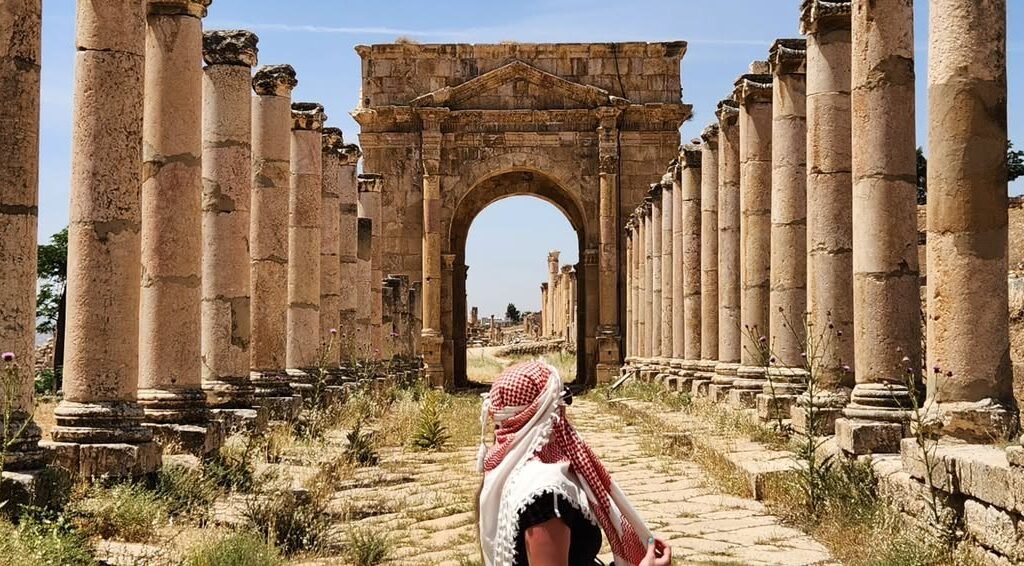
We arrive in Jerash expecting “some ruins.” You know, a couple of columns, a dusty path, a quick photo stop before lunch. Instead, we walk straight into a full-blown Roman city that refuses to stay in the past. Stone streets still curve exactly where chariots once rolled. Columns line up like they’re waiting for a parade. The acoustics in the amphitheatre? Still show-off good.
Jerash isn’t a side quest. It’s the kind of place where you slow down without meaning to, because every turn reveals another plaza, temple, or impossibly intact arch. Whether you’re here for history, photography, or just to feel very small in the best possible way, Jerash delivers — loudly, proudly, and with zero need for imagination.
In this guide, we’ll walk you through exactly what to do in Jerash Jordan, what not to rush, and how to make the most of your visit without turning it into a sweaty archaeological endurance test.
Planning more of your Jordan route?
Jerash is where Jordan suddenly goes full Roman Empire on us: colonnaded streets, temples, theatres, arches, and enough ancient stone drama to make us walk around whispering, “How is this still standing?” If you’re visiting Jerash from Amman or building it into a bigger Jordan road trip, these guides will help you connect the ruins with the rest of the adventure.
- Amman 1 Day Itinerary — perfect if you’re using the capital as your base before heading north to Jerash.
- 10 Best Things to Do in Amman — for more city sights, food stops, Roman ruins, viewpoints, and neighbourhood wandering.
- Ultimate Jordan Itinerary: 8 Days of History, Nature & Adventure — ideal if Jerash is part of a bigger route through Amman, Petra, Wadi Rum, and the Dead Sea.
- Perfect Jordan Itinerary: 10 Days from Amman to Aqaba — for a slower route with more time for ruins, desert landscapes, canyon adventures, and fewer “why are we rushing?” moments.
- What to Do in Madaba — another brilliant history stop near Amman, with mosaics, churches, Mount Nebo, and easy road-trip logistics.
- Top Things to Do at the Dead Sea, Jordan — because after marching around Roman ruins, floating like a salty little cork feels extremely well earned.
- Guide to Wadi Mujib — for canyoning, waterfalls, warm water, and the kind of adventure that makes Jordan feel wildly alive.
- Driving in Jordan as a Tourist — useful if you’re renting a car and linking Jerash with Amman, Madaba, the Dead Sea, Petra, or Wadi Rum.
- Essential Jordan Travel Tips — practical advice on routes, transport, safety, etiquette, money, and the little things that make the trip smoother.
- How to Dress in Jordan as a Woman — handy for hot ruins, city days, mosque visits, desert stops, and real-life Jordan packing.
Table of Contents
How to get to Jerash

Jerash sits in northern Jordan, about 48 km from Amman. In other words: close enough for a day trip, far enough that you’ll want a plan. Here are your best options:
Car
If we’re doing a Jordan road trip with a rental car, this is the gold standard. You get freedom, you save time, and you can stop wherever you want without negotiating your life story. Jerash is about 45 minutes from Amman and roughly 1 hour from Queen Alia International Airport. The archaeological site has free public parking.
Bus
Buses leave from Tabarbour (Amman’s North Bus Station). It’s cheap—1 JOD (€1.40) one way—and takes around one hour, traffic depending. The catch: you get off at the last stop in Jerash, then you’ll need to hop on another bus to reach the archaeological site.
Taxi
More comfortable than the bus, and usually faster. You’ll need to negotiate a round-trip price with the driver (Amman ↔ Jerash). Want to bring the cost down? Split it with other travelers.
Organized tour
After driving yourself, this is the next best option—especially if you want the logistics handled and your brain kept in airplane mode. Popular options from Amman include:
- Half-day excursion to Jerash from Amman
- Excursion to Jerash, Ajlun Castle and Umm Qais
- Excursion to Jerash, Ajlun Castle and the Dead Sea
Entrance to Jerash
The entrance fee is 10 JOD (just under €14). Entry is free with the Jordan Pass. If you haven’t bought it yet and you’re doing more than one major site in Jordan, it’s usually a smart move.
Visiting hours to Jerash
Opening hours change through the year:
- October to March: 8:00 a.m. to 4:00 p.m.
- March 22 to April 21 (Ramadan): 8:00 a.m. to 3:30 p.m.
- April and May: 8:00 a.m. to 5:30 p.m.
- June to September: 8:00 a.m. to 6:30 p.m.
How long you need in Jerash + precautions
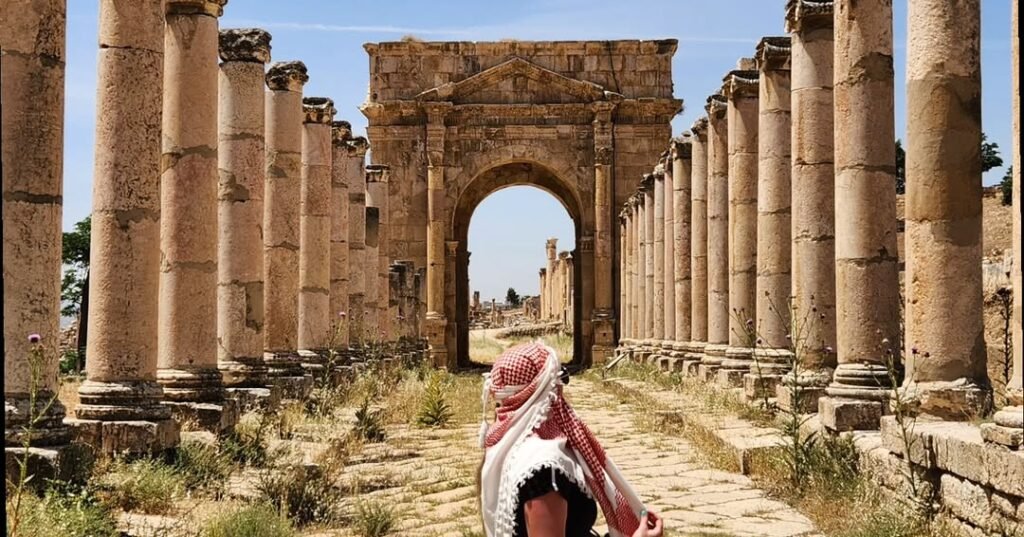
We spent about 3 hours exploring the Jerash Archaeological Site, hitting the main highlights without rushing.
Our biggest tip: if you’re visiting in summer (or even spring/early autumn), go first thing in the morning. There’s very little shade, and the heat ramps up fast. Bring:
- something to cover your head
- sunscreen (and actually reapply it)
- plenty of water (because Jerash is gorgeous, but it is not gentle)
Where to stay in Jerash
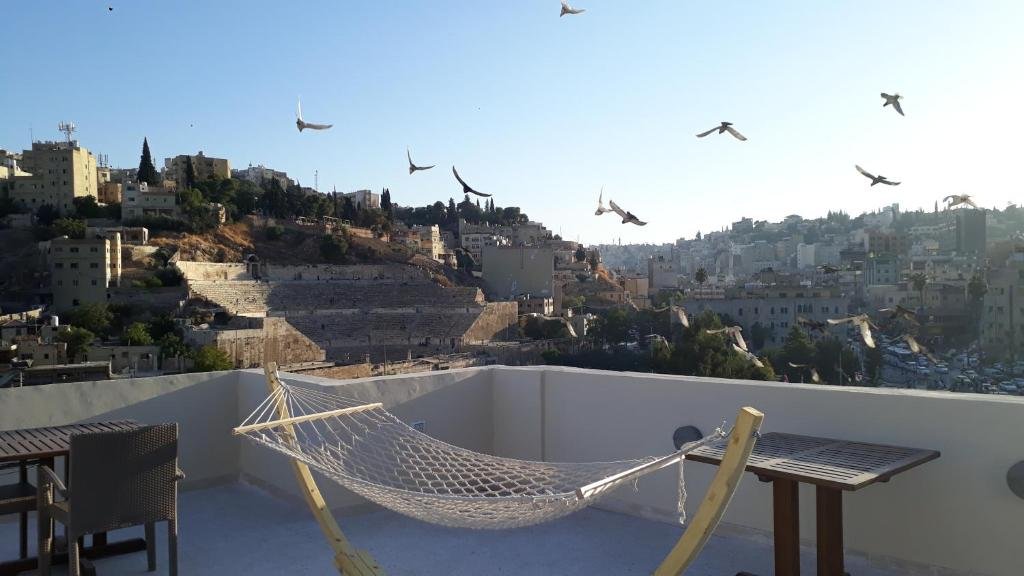
We visited Jerash during a 8-day Jordan trip and stayed the night before in Amman, at Layaali Amman Hotel, then drove to Jerash the next morning in our rental car.
If you’d rather stay closer, good news: the archaeological site sits inside the modern city of Jerash, so there are plenty of nearby places to sleep. Two good value options:
- Full Panorama To Archaeological Site Jarash: comfortable rooms, good price, about 2 minutes’ drive from the site, and views of the ruins
- Jasmine’s House: huge apartment, full amenities, terrace, and free parking
A brief history of Jerash
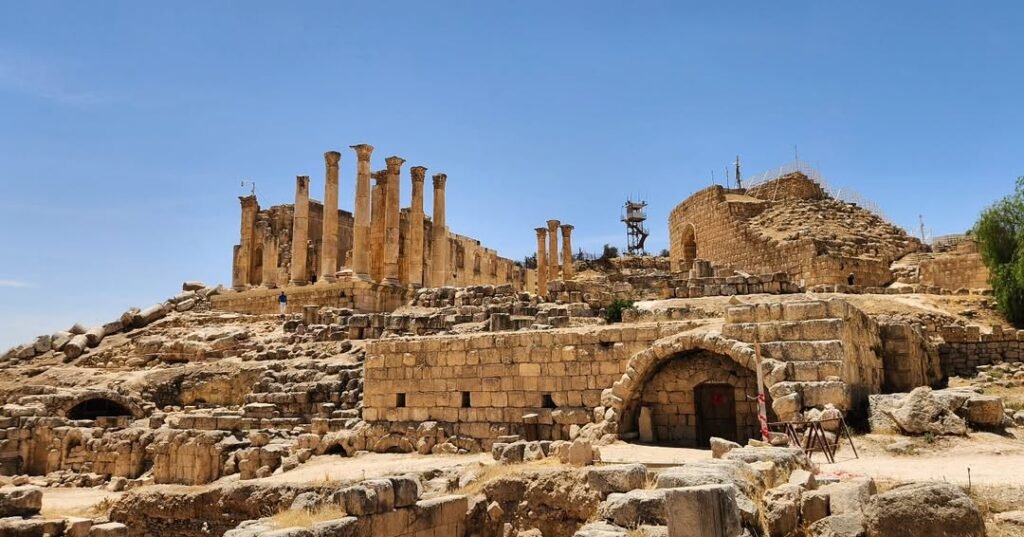
Jerash (ancient Gerasa) is one of the best-preserved Roman cities in the Near East—the kind of place that makes you stop mid-step and go, “Wait… this is still standing?” Excavations show the area was inhabited as far back as the Bronze and Iron Ages (3200–1200 BC).
Jerash hit its peak under the Romans, with nearly 20,000 inhabitants, and became one of the Decapolis cities—ten important Roman-era cities in the region.
Then came an 8th-century earthquake, and the city was largely abandoned. Because it stayed buried for centuries, it’s sometimes called the “Pompeii of Asia.” Jerash was rediscovered in the 19th century, with major excavations taking off in the mid-20th century.
What to do in Jerash: A complete guide
If you’re still planning your Jordan trip, read these posts:
- Essential Jordan Travel Tips: What to Know Before You Go
- Top Things to Do at the Dead Sea, Jordan: Float, Explore & Unwind
- Aqaba Itinerary: How to Spend Perfect 2 Days in Jordan’s Coastal City
- Top Places to Visit in Jordan: Ancient Cities, Deserts & Natural Wonders
- Ultimate Guide To Visiting Wadi Rum Jordan
Now, let’s get into Jerash properly. Follow this itinerary in order and you won’t miss the big highlights.
1. Hadrian’s Arch
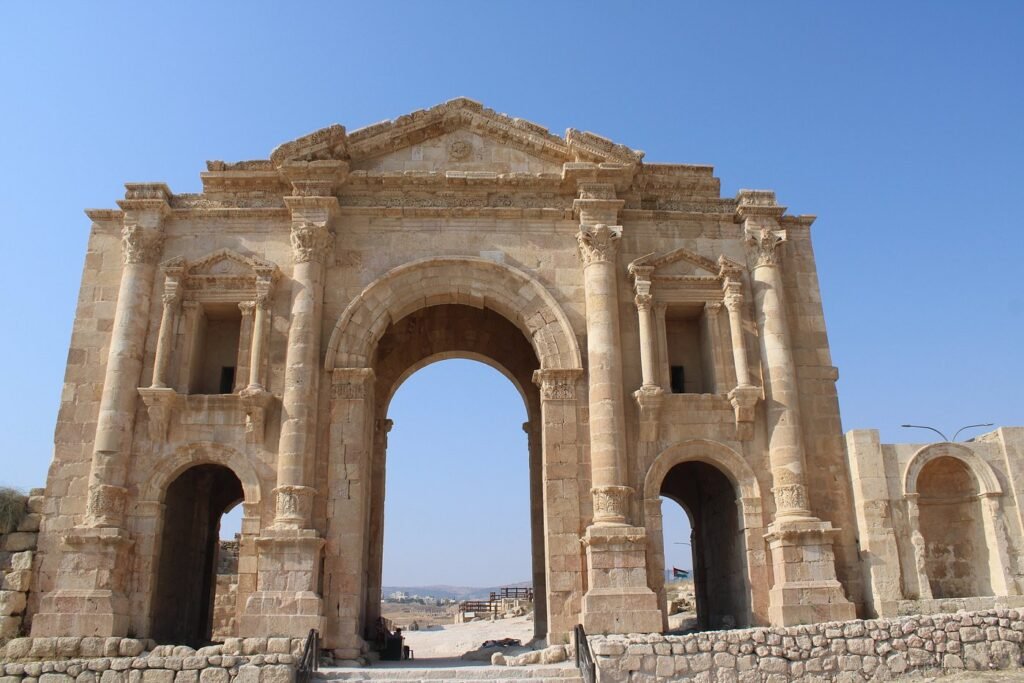
After you pass the entrance gate, you’ll walk about 300 meters through shops (and yes, you’ll probably be invited to buy things with impressive persistence). Then you hit your first “wow” moment: Hadrian’s Arch.
This triple-arched gateway was built in 130 AD to commemorate Emperor Hadrian’s visit. Today it stands about 11 meters tall, but it’s believed to have once reached 22 meters. It’s insanely well preserved and works as both a decorative monument and a symbolic entrance to the ancient city.
The fact that it sits away from the old city walls suggests Jerash may have planned to expand south—but that plan never happened.
2. Church of Marianos
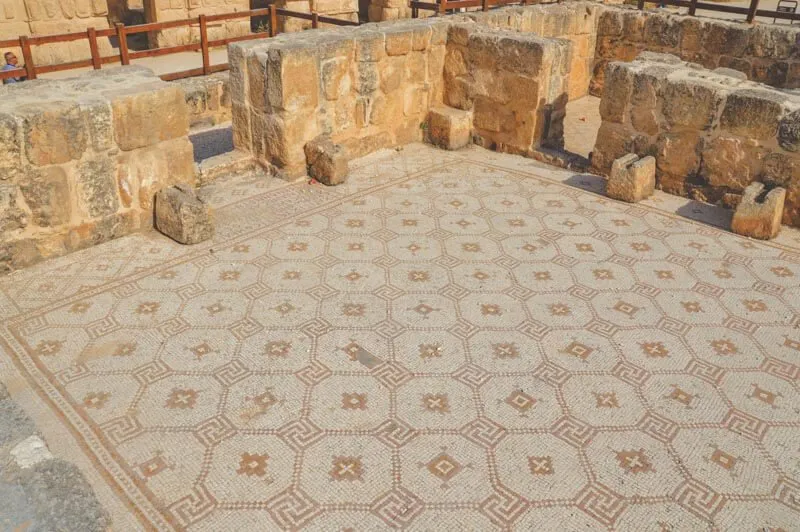
Right after Hadrian’s Arch, on the right, you’ll find the Church of Marianos. The main reason to stop: the mosaic floor, still beautifully preserved, with geometric patterns that once decorated the church interior. It was built in 560 AD during the time of Bishop Marianos.
3. Hippodrome, the largest building in Jerash
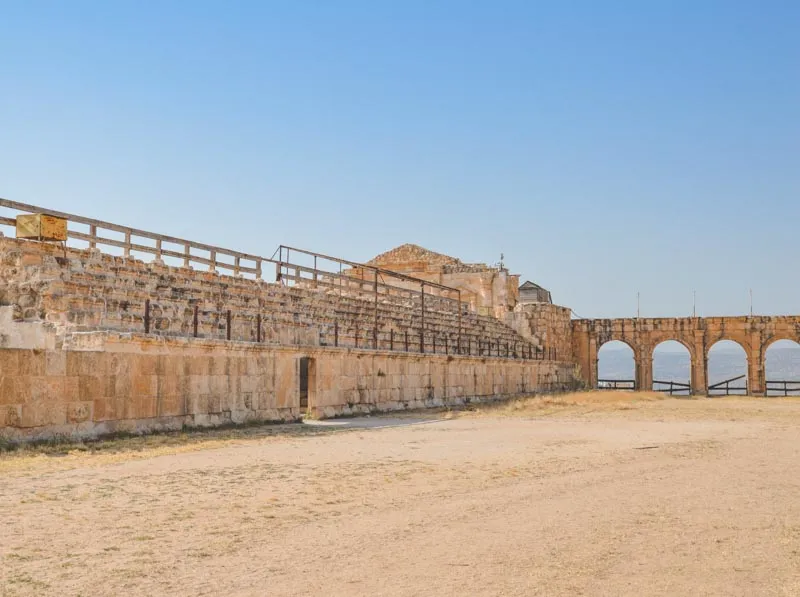
A few minutes after the church, you’ll see the entrance to the Hippodrome. Built between the 1st and 3rd centuries, it held up to 15,000 spectators and measures 245 meters long by 51 meters wide—massive.
It was originally used for chariot races (ancient Rome loved a good spectacle), and later functioned more like an amphitheater, hosting gladiator fights and other events.
4. South Gate
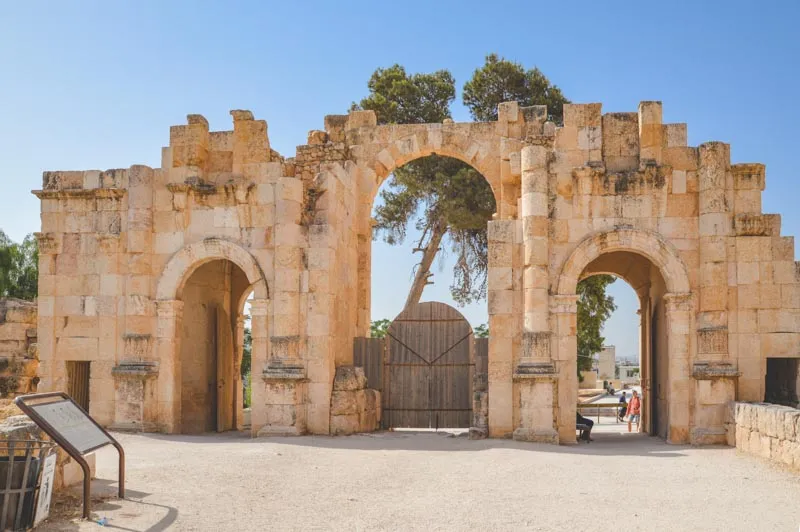
From the Hippodrome, we backtracked along the same street and reached the South Gate—another imposing triple-arch gateway, similar in style to Hadrian’s Arch.
This gate once marked the southern entrance to the city and formed part of the defensive walls. You’ll likely see guides offering tours here—if you want one, negotiate the price before you commit.
5. Oval Plaza, one of Jerash’s most iconic sights
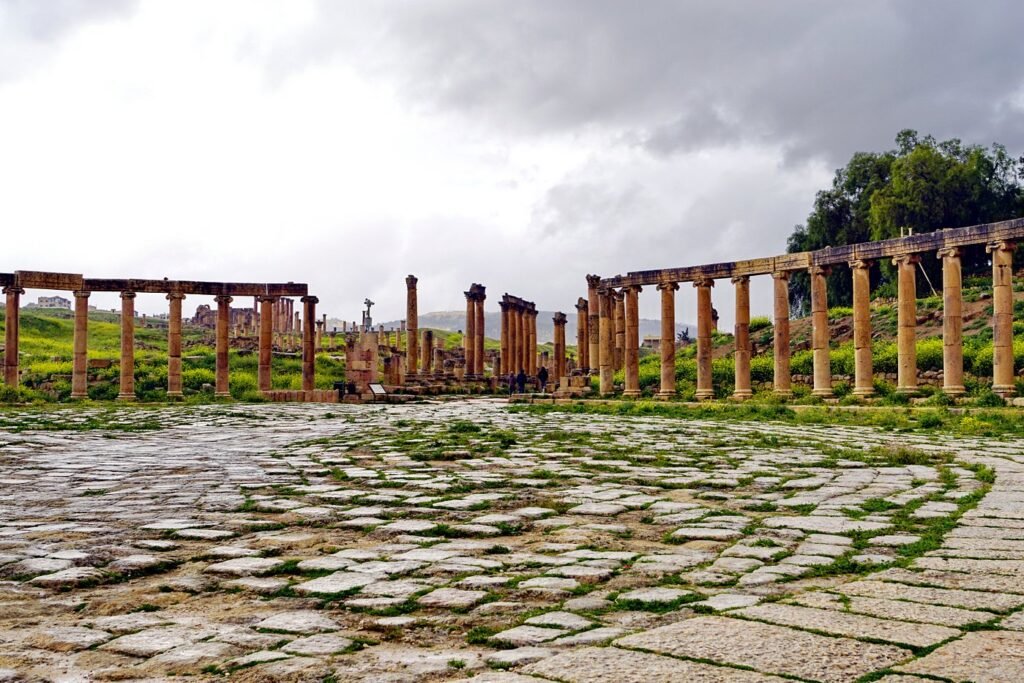
Next comes the Oval Plaza, and honestly, it’s one of the most unique spaces in the whole site. It exists because the Romans needed to connect the Cardo Maximus (main street) with the Temple of Zeus.
It measures roughly 90 meters by 80 meters, and its distinctive oval layout is what makes it so memorable. It’s thought to date from the early 2nd century AD (those Ionic columns are the clue), and in the 4th century, it was paved—what you see today is the original pavement.
In the center, keep an eye out for:
- a group of statues (likely priestesses)
- the base of a four-column monument, believed to have once protected a statue of Hadrian
6. Temple of Zeus
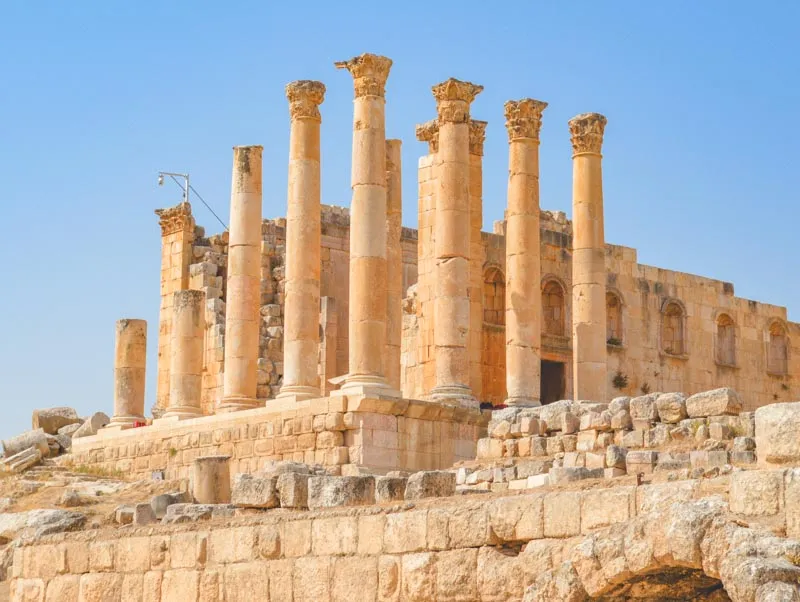
Climb the hill behind the Oval Plaza and you’ll reach the Temple of Zeus, built in honor of the king of the gods.
It dates to the mid-2nd century AD, built over an earlier 1st-century temple. The sanctuary had two levels connected by stairs, and today the biggest show-off feature is the row of colossal columns—over 15 meters high.
But let’s be honest: the real reason we loved this stop was the view. From up here, you get a stunning look down over the Oval Plaza and the Cardo Maximus.
7. South Theater
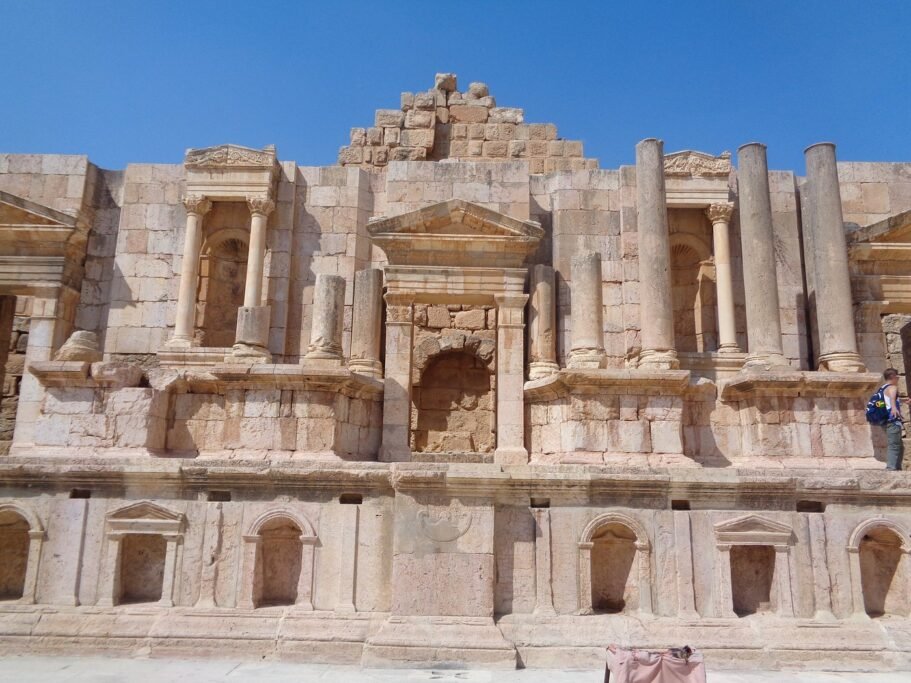
Right next to the Temple of Zeus is the South Theater, the larger of Jerash’s two theaters. It held about 5,000 people and is still in great condition. It used to have two seating tiers, but today only the lower tier remains.
The acoustics are excellent—sometimes you’ll even catch local musicians playing during visits, which is the perfect way to feel the space come alive.
8. Cardo Maximus, Jerash’s main street
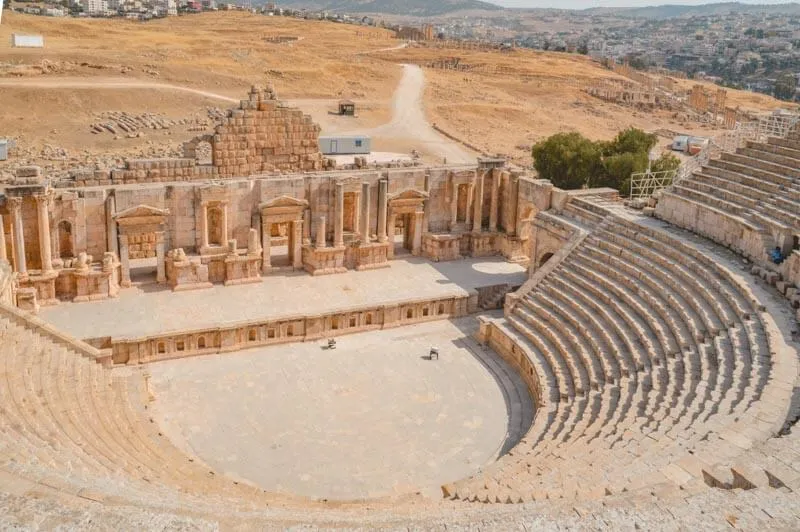
Back down in the Oval Plaza, it’s time for the Cardo Maximus—Jerash’s main avenue linking the North Gate and South Gate, cutting right through the city.
Built in the 1st century AD, it runs about 800 meters and still has much of its original paving. Look closely at the stones and you’ll see the grooves carved by ancient carts. The street is lined with columns—there were once around 500.
This road is the backbone of the site, and it leads you to several major monuments.
9. Macellum
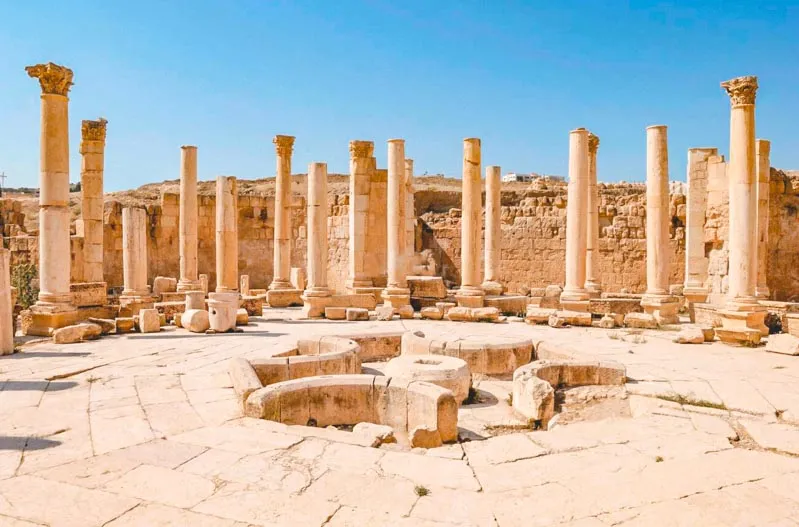
Near the start of the Cardo, on the left, is the Macellum, the old marketplace. Merchants and money changers did business here. It once had 24 Corinthian columns and a central fountain; today, only a handful of columns survive, but the layout still reads clearly.
10. The Cathedral, the oldest Byzantine church in Jerash
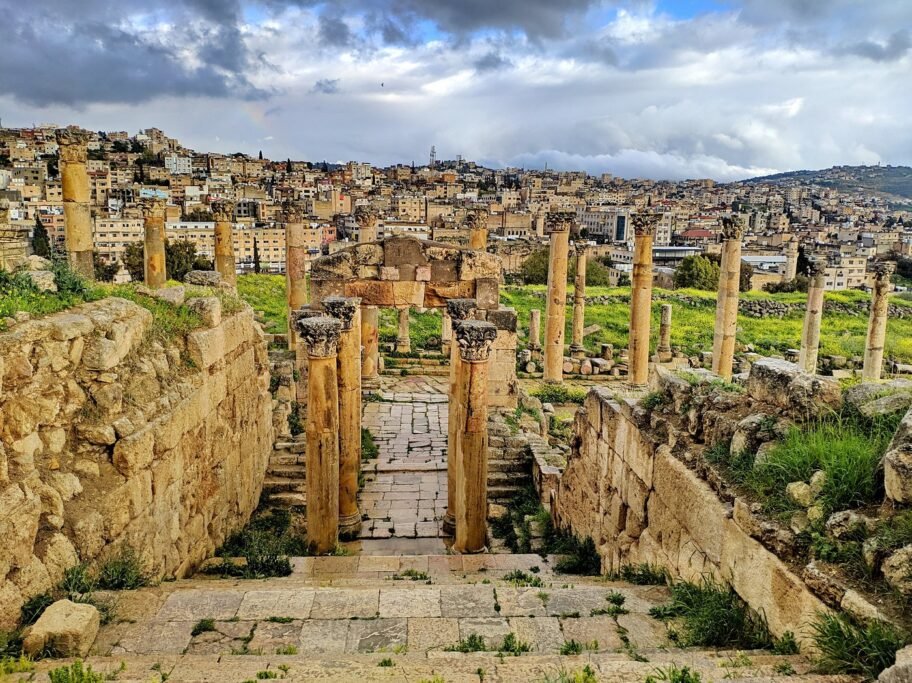
Further along the Cardo, you’ll see the remains of the Cathedral on the left. It’s believed to have been built around 450–455 AD, making it the oldest Byzantine church in Jerash, and it sits atop an earlier pagan shrine dedicated to Dionysus.
The entrance area is especially striking. Walk up the stairs and you’ll reach what was once the main nave. Behind it sits the Church of Saint Theodore, which we’ll reach later.
11. Nymphaeum

Next to the Cathedral is the Nymphaeum, a monumental public fountain built to support Jerash’s growing population and supply water to the city and public baths.
Even though it’s weathered, you can still imagine the original drama: it likely had seven lion-head spouts, with water flowing into a large basin below.
12. Propylaea of the Temple of Artemis
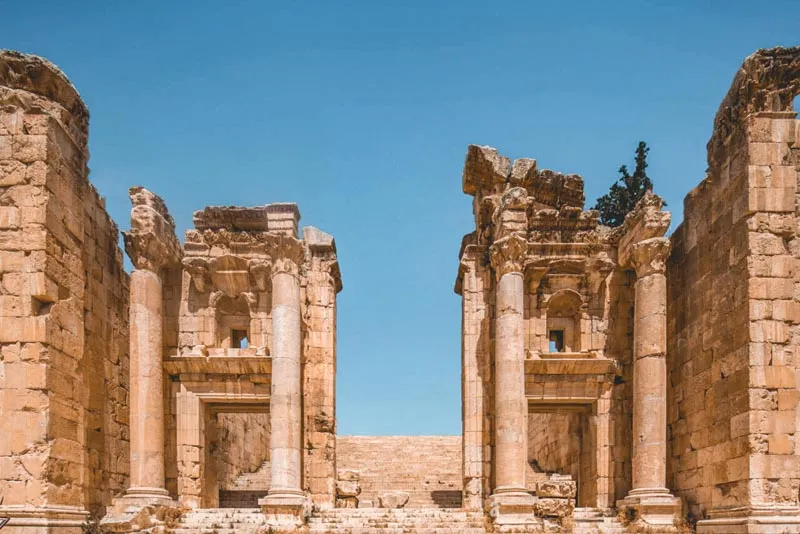
Beyond the Nymphaeum you’ll see the Propylaea—the grand entrance to the Temple of Artemis. It’s one of the most impressive monumental entrances in Jerash, richly decorated and built with three gates: a large central passage and two smaller side ones.
Our tip: enjoy it from the Cardo Maximus and keep moving. We’ll explore the Temple of Artemis properly later, and this helps you pace the day.
13. Tetrapylon North
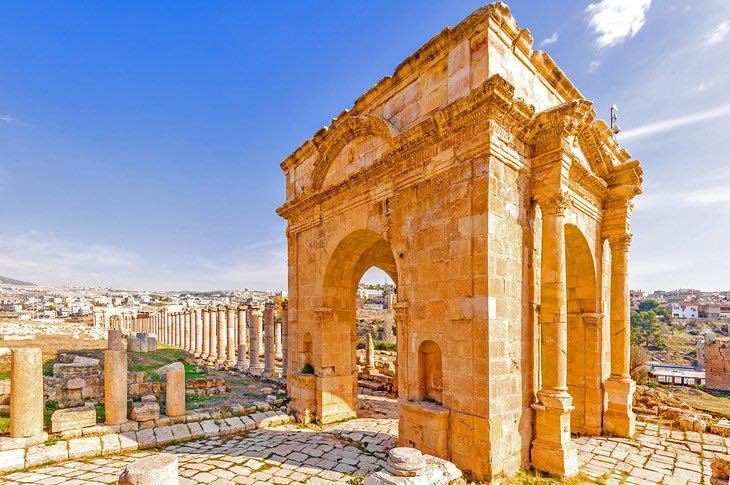
Keep walking along the Cardo and you’ll hit the North Tetrapylon, built in 165 AD before the Cardo was expanded.
Each side has a doorway, and the north/south faces feature Corinthian columns. There used to be lion-head fountains at the base. This structure was decorative, typical in Roman cities, marking an important road intersection.
14. North Theater (Odeon)
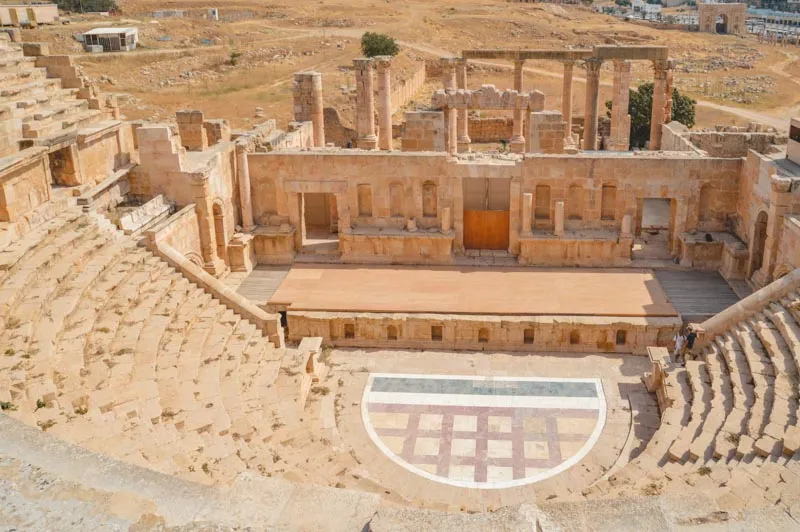
From the North Tetrapylon, take the path up the hill and you’ll reach the North Theater, also known as the Odeon.
It’s smaller than the South Theater and was used for music and poetry, though originally it served as a meeting place for the city council and the twelve tribes. You can still see inscriptions carved into the seats showing names and assigned places.
It was built in the 2nd century AD, expanded in the 3rd, and fell out of use by the 5th century—some of its stones were reused in other buildings.
15. Temple of Artemis
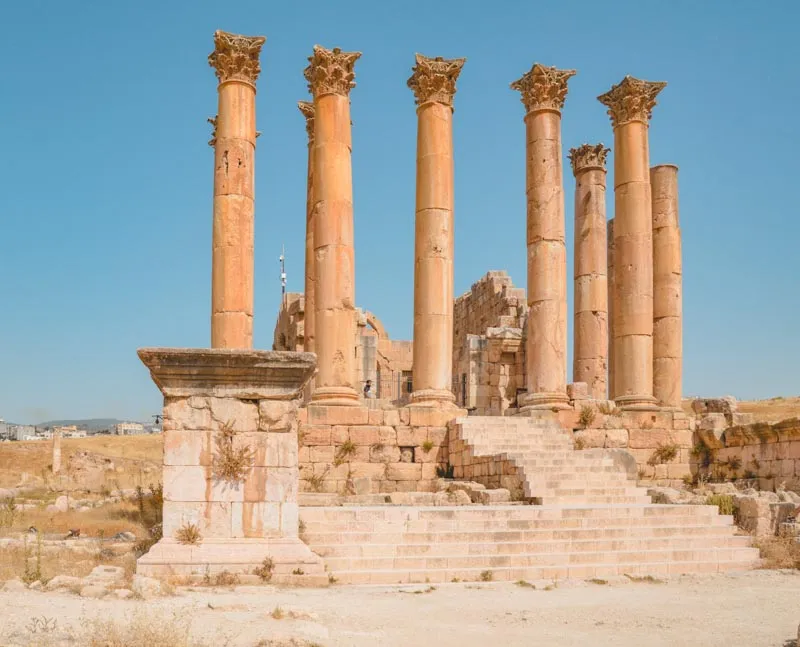
Close to the Odeon is the Temple of Artemis, connected via terraces back down toward the Propylaea we saw earlier.
This is one of Jerash’s most impressive temple ruins. Eleven of the twelve Corinthian columns from the portico still stand. In its prime, it was the city’s most important sanctuary, decorated with fine marble and home to a huge statue of Artemis—daughter of Zeus and twin sister of Apollo.
16. Byzantine Churches
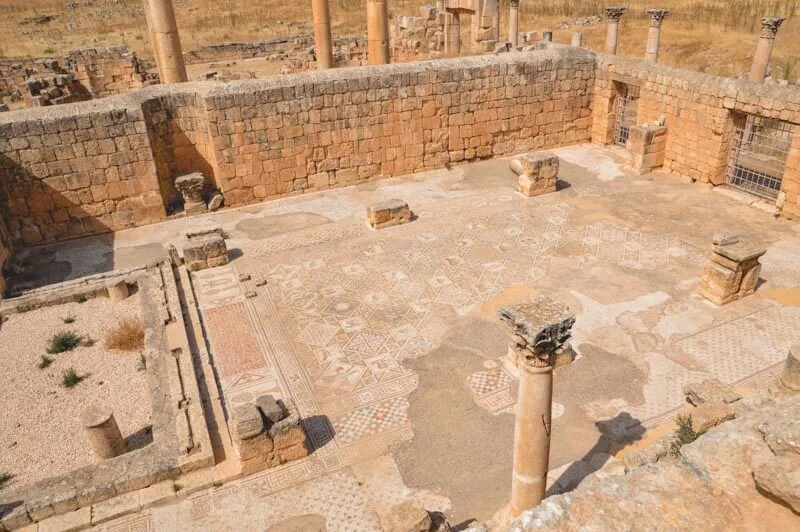
Next we visited a cluster of three Byzantine churches—Saint George, Saint John the Baptist, and Saints Cosmas and Damian—sharing the same entrance portico. They were built around 530 AD, and the floor mosaics here are some of the best-preserved you’ll see.
Fun fact: archaeologists have uncovered 23 Byzantine churches in Jerash so far. That is… a lot of churches.
17. Church of Saint Theodore
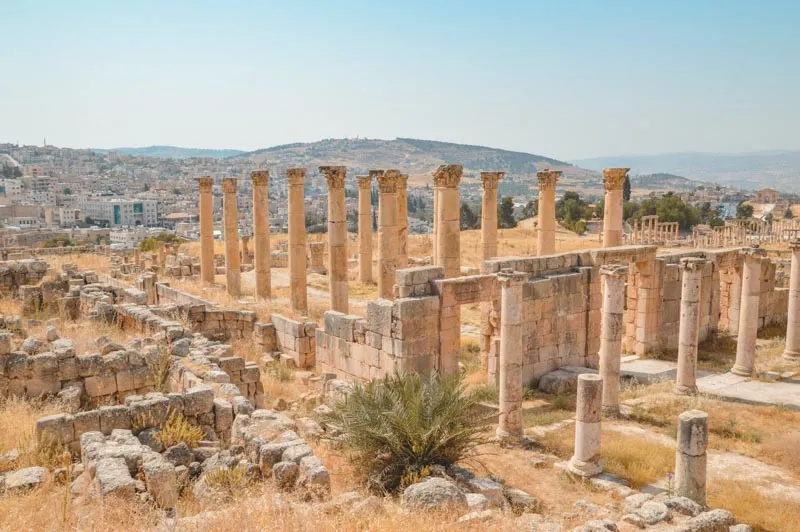
To the east of the Byzantine churches, heading back toward the Cardo, is the Church of Saint Theodore, built in 496 AD. Like many structures here, it reused materials from earlier Roman buildings.
The entrance opens into a paved courtyard lined with columns (remarkably well preserved), and there was once a fountain in the center. It’s believed this church was built as an extension of the Cathedral, and the courtyard functioned as its atrium.
From here, we crossed back down toward the Cardo Maximus—via the Cathedral—and wrapped up our Jerash circuit.
- Driving in Jordan as a Tourist (2026): What to Expect, Road Rules, and Tips for a Safe Trip
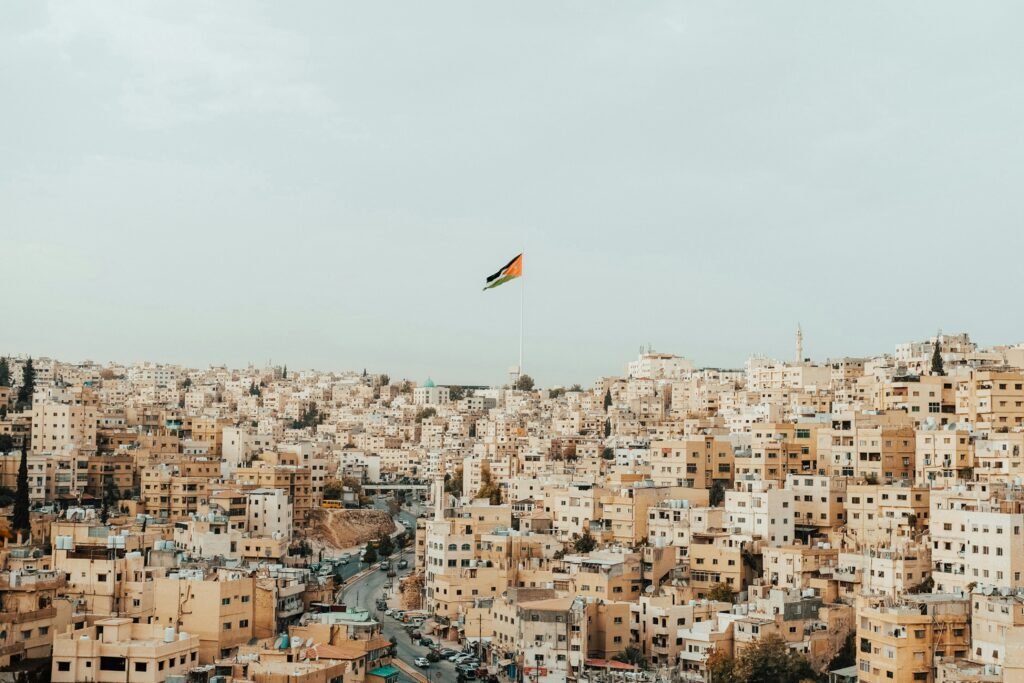
- How to Dress in Jordan as a Woman (2026): What to Wear for Comfort, Respect, and Real Life
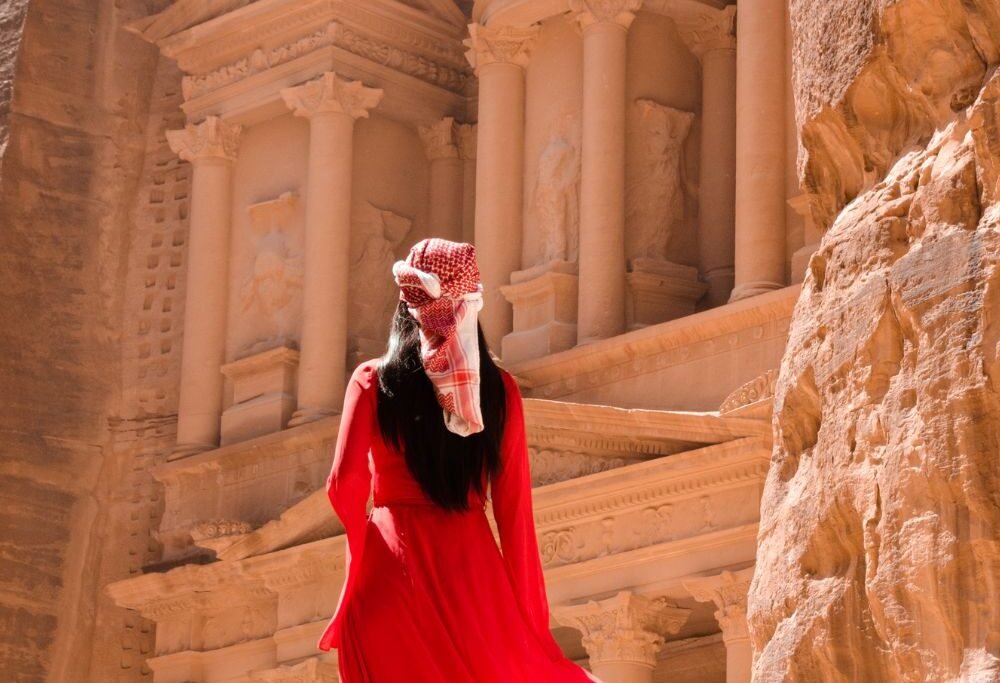
- Perfect Jordan Itinerary 10 days (2026): From Amman To Aqaba
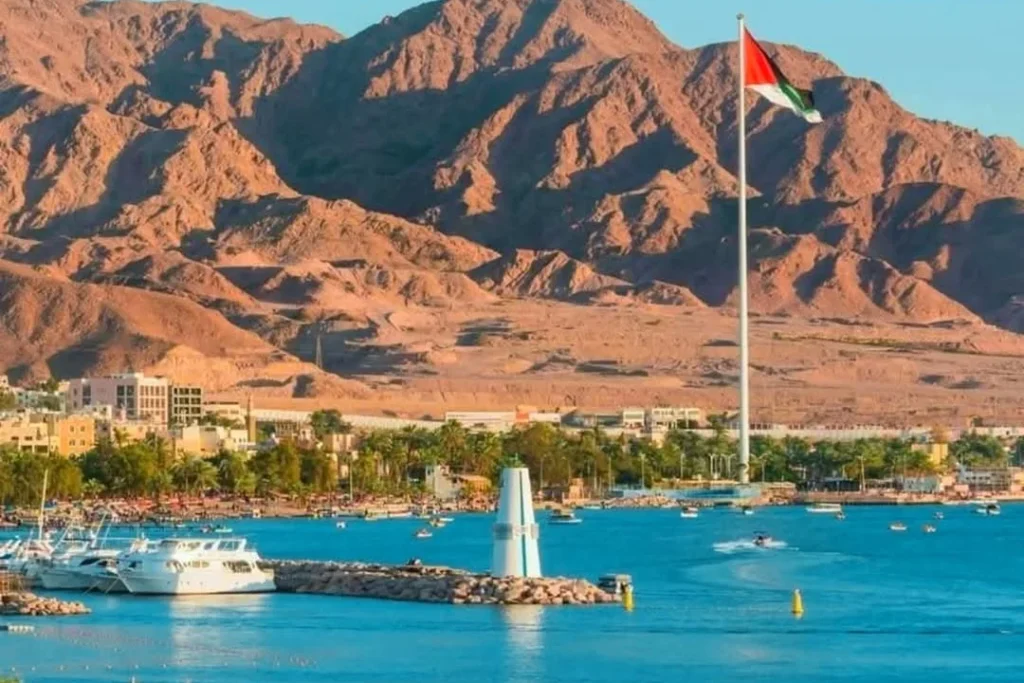
- What to Do in Madaba in 2026: Explore Near Jordan’s Mosaic City
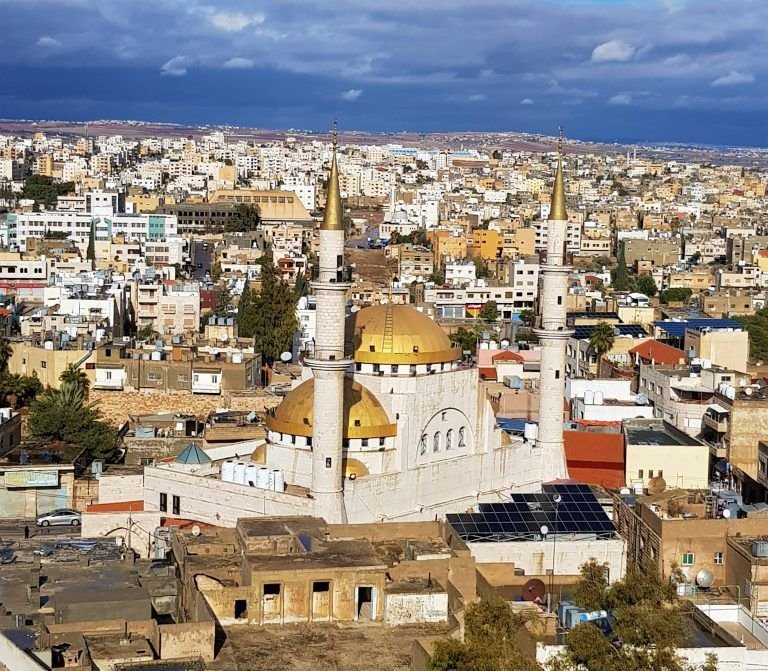
- What to Do in Jerash Jordan (2026): A Walk Through One of the Best-Preserved Roman Cities on Earth