
Travel writing based on first-hand experience
Just 10 days in Morocco is a bit like trying to eat an entire mezze platter by yourself: technically possible, wildly satisfying, and guaranteed to get messy if you don’t pace it. One minute we’re dodging motorbikes in a Marrakech alley that smells like orange blossom and charcoal… the next we’re watching the Sahara turn pink at sunset like it’s showing off.
This itinerary is built for first-timers who want the big hitters without spending half the trip in transit rage. We’ll hit the classics—Marrakech, Fes, the Sahara, Chefchaouen—and we’ll keep the logistics simple: how to move between cities, best activities and where to base yourself.
Expect a day-by-day plan and practical tips. You can follow it exactly, or use it like a playlist—swap tracks, skip a city, add a beach day, and still land with a trip that feels coherent instead of chaotic.
Ready? Let’s do Morocco properly—boldly, efficiently, and with just enough time to sit down for mint tea.
| ➡️Planning your adventure? Check out our top tips for traveling in Morocco and make your journey smooth, safe, and unforgettable. ➡️Wondering what to wear in Morocco? This guide cuts through the guesswork—what works in real streets, what feels comfortable, and what saves you from packing things you’ll regret by day two. ➡️Here’s our complete, practical guide to driving in Morocco—the stuff that actually keeps your trip smooth, safe, and unforgettable. ➡️Let’s explore the 4 best cities in Morocco to visit and all the places you absolutely need to visit in these prestigious destinations. ➡️If you wonder where Morocco’s coast is at its most beautiful, here are the 14 most beautiful beaches in Morocco worth putting directly onto your map. Swimsuits ready—this coastline does not encourage hesitation. ➡️Wondering what to buy in Morocco? Discover the best souvenirs, handmade treasures, and local gems you can’t leave behind. |
Table of Contents
5 Reasons to Take a Road Trip to Morocco
- The country is very safe, and the roads are generally in excellent condition. There are occasional police checkpoints, and outside of cities, traffic is quite manageable.
- It’s the quickest and easiest way to travel between Marrakech, the Atlas Mountains, and the Sahara Desert—one of the most beautiful areas to see on a trip to Morocco.
- It’s much more affordable than you might think, especially for groups or couples.
- Driving through the villages of the Atlas Mountains, amidst palm groves and dunes, is simply priceless.
- A road trip through Morocco lets you customize your route, enjoy the sunrise, or just get hypnotized by the views for hours. These are things you can only do with a rental car.
Renting a car in Morocco: everything you need to know
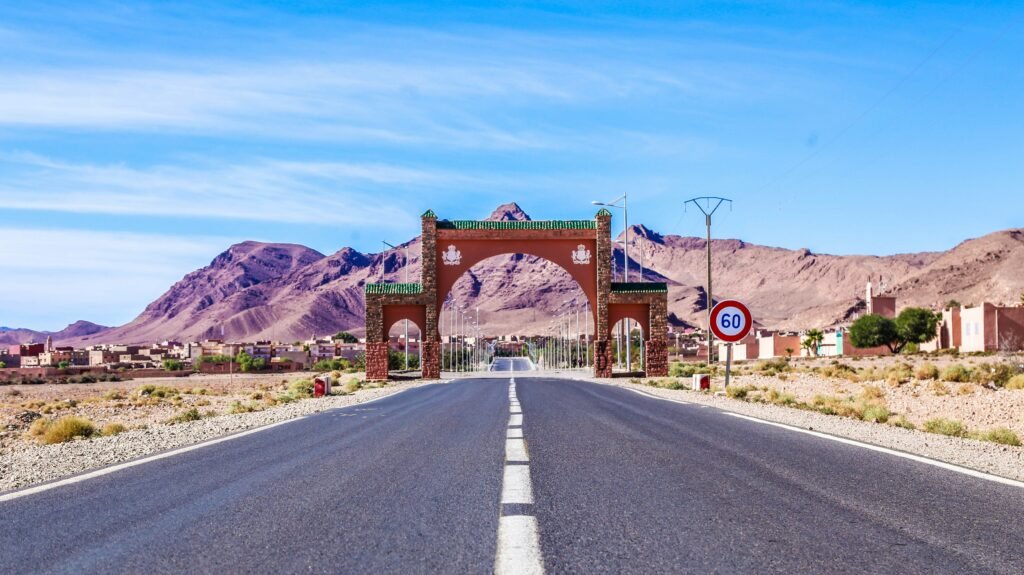
If you’ve visited our blog before, you’ll know we love discovering new countries by road. But this road trip through Morocco might just be the one we’ve enjoyed most in our travels. Here are our top tips to make your road trip a success:
Choose a local company over the big international chains.
It might sound strange, but the branches of large rental companies in Morocco don’t have the best reputation and may take advantage of any loophole to try and scam customers. Just use DiscoverCars.
The condition of the cars doesn’t meet European standards.
When renting a car in Morocco, you have to accept the car they give you. The cars are usually older and more worn than normal, so it’s important to take photos, record videos, and note any damage before you leave to avoid problems on return.
Your preference between manual and automatic transmission might not be respected.
So if it matters to you, insist on it clearly before you drive off.
Avoid driving at night.
Donkeys, children, bicycles, carts, vendors, hitchhikers, camels… all these can appear on some roads, day or night. For the driver’s peace of mind, it’s best to avoid driving after dark.
Avoid driving in the middle of large cities.
The labyrinthine medinas and their general chaos don’t mix well with cars—especially rental cars. It’s better to find accommodation at the entrance to the medina with decent parking and explore the center on foot whenever possible. In our itinerary, we detail the hotels we chose and where we were able to park without problems.
Plan your route in advance.
It’s important to know how long it will take you to reach your destination, adding a generous margin so you can travel relaxed, enjoy the views, and adapt to variable road conditions.
Watch out for speed checks and the police!
There’s practically a police checkpoint at every entrance and exit to town. Moroccan police officers are very friendly, especially to tourists. If they stop you, they’ll usually ask for your documents, make a friendly comment about where you’re from, and let you go. However, you must be very respectful of speed limits and overtaking rules, as they won’t hesitate to issue a fine for any infraction—very politely, of course.
10 days in Morocco itinerary: an unforgettable road trip
10 days, 2,000 kilometers, 8 cities, and countless adventures—that’s a good summary of our road trip through Morocco. Although we would have loved to spend more time in some places, our goal was to do a circular route and get to know a little bit of each region, so we can return in the future depending on what we liked best.
So, if you’re considering a complete tour of Morocco but don’t have much time, keep reading.
Day 0 – Arrival in Casablanca and pick up your rental car
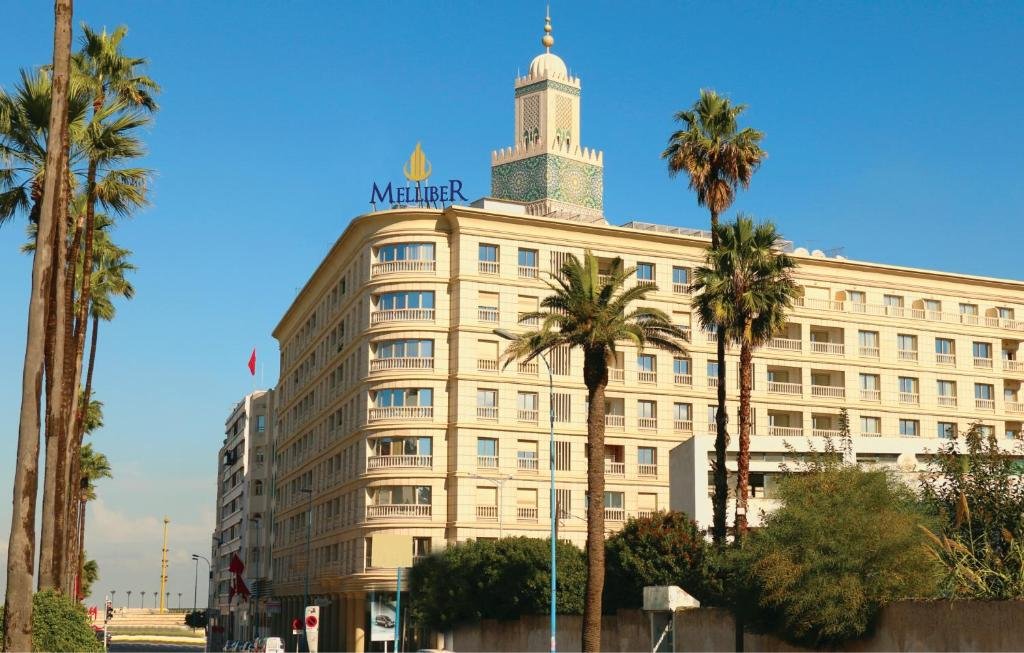
Our flight landed in Rabat, so as soon as we arrived we picked up our rental car and took the highway that leads directly to Casablanca.
| Accommodation in Casablanca: Melliber Apart Hotel, with magnificent views of the Hassan II Mosque and very convenient parking. |
Day 1 – Casablanca
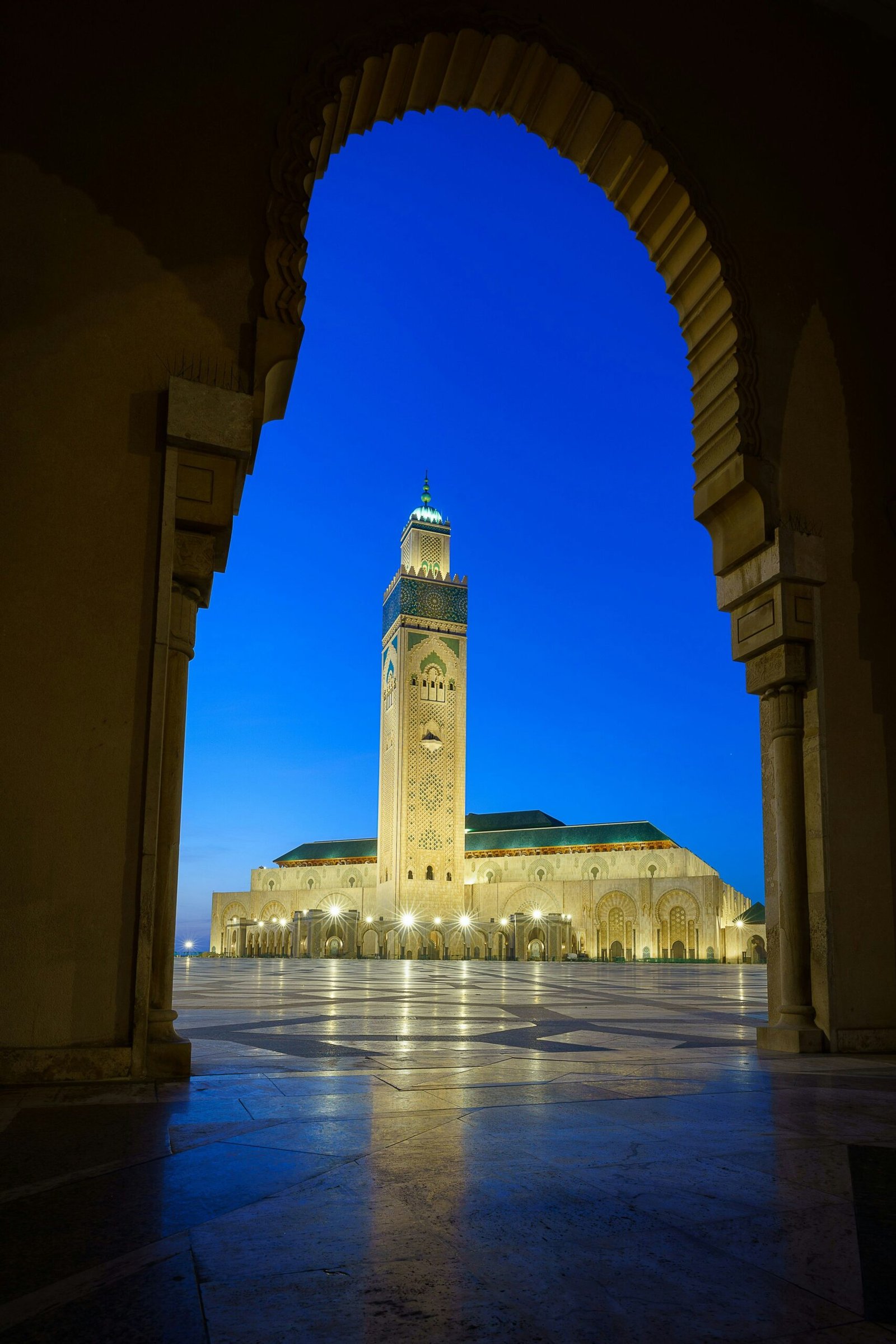
Any worthwhile visit to Casablanca must include the magnificent Hassan II Mosque. The tallest in the world and one of the largest, this grand mosque leaves no traveler indifferent—both inside and out.
It’s a great starting point for exploring the Corniche, Casablanca’s beautiful waterfront promenade, leading to the Medina and the famous Rick’s Café, featured in the iconic film Casablanca. Finally, you can visit the Sacré-Cœur Cathedral and Mohammed V Square, located in the modern part of the city. The best way to discover Casablanca in just a few hours is with this free walking tour. Half a day is enough to cover the main sights of Casablanca .
In the afternoon, after lunch, we set off for Marrakech. After a comfortable two-and-a-half-hour drive on the highway, we arrived in the Ochre City. An afternoon stroll through Jemaa el-Fna square and around the Koutoubia Mosque served as a perfect prelude to what the next two days of exploring Marrakech had in store for us.
| Accommodation in Marrakech: Dar Sholmes, a beautiful riad with a jacuzzi and terrace views. There is a nearby secure parking lot. Activities in Casablanca: – Free Tour of Casablanca |
Day 2 – Marrakech
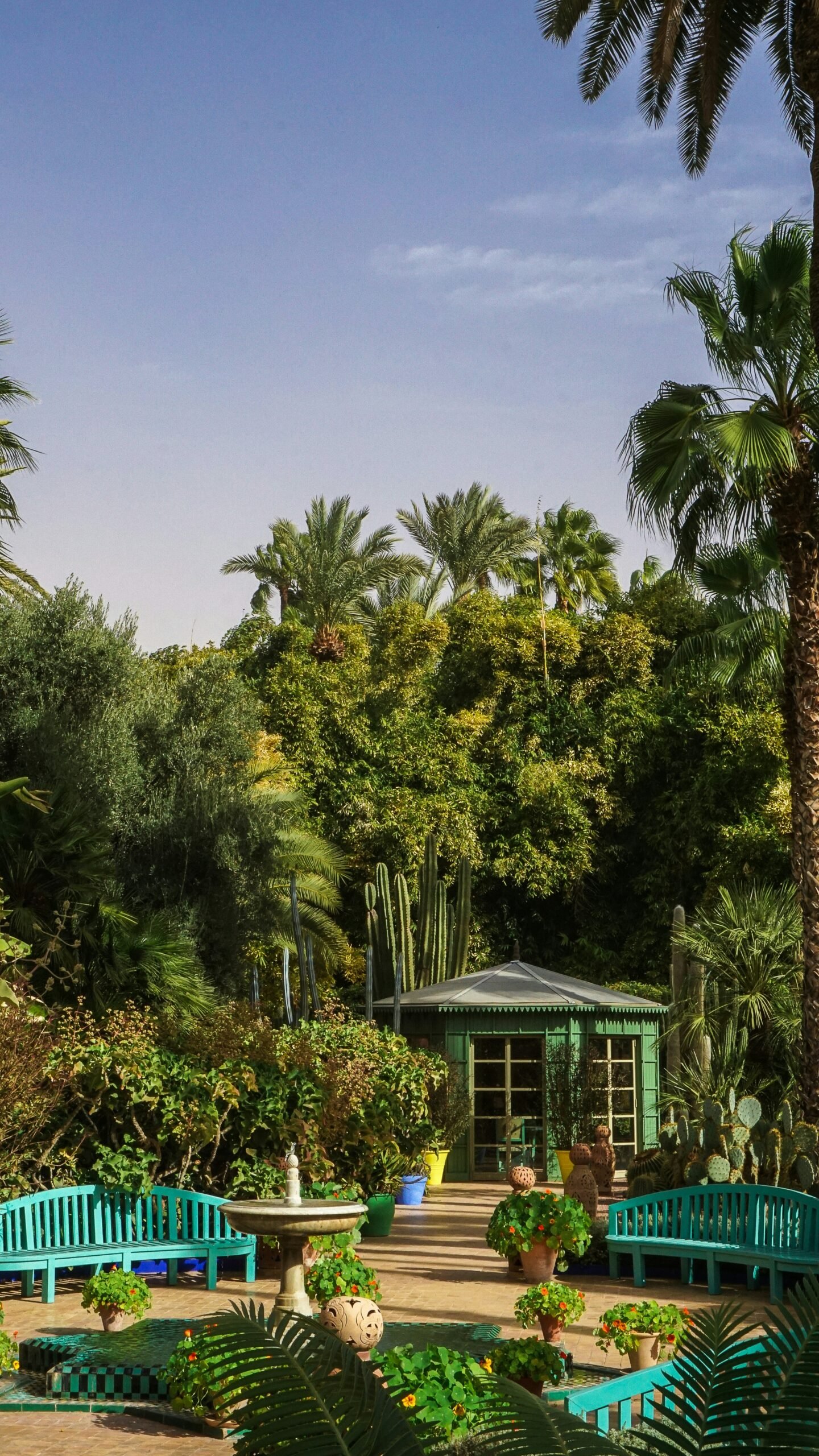
We stretched out in the colorful Majorelle Garden before the tourist crowds arrived, then wandered—and got lost, quite literally—in the Marrakech souk. The best thing to do is roam aimlessly and let yourself be surprised. Haggle and buy, in that order, without letting the insistent vendors push you.
In the middle of the noisy medina, we found a haven of peace: Le Jardin Secret, a small garden-museum that offers beautiful views of the city from its upper floor.
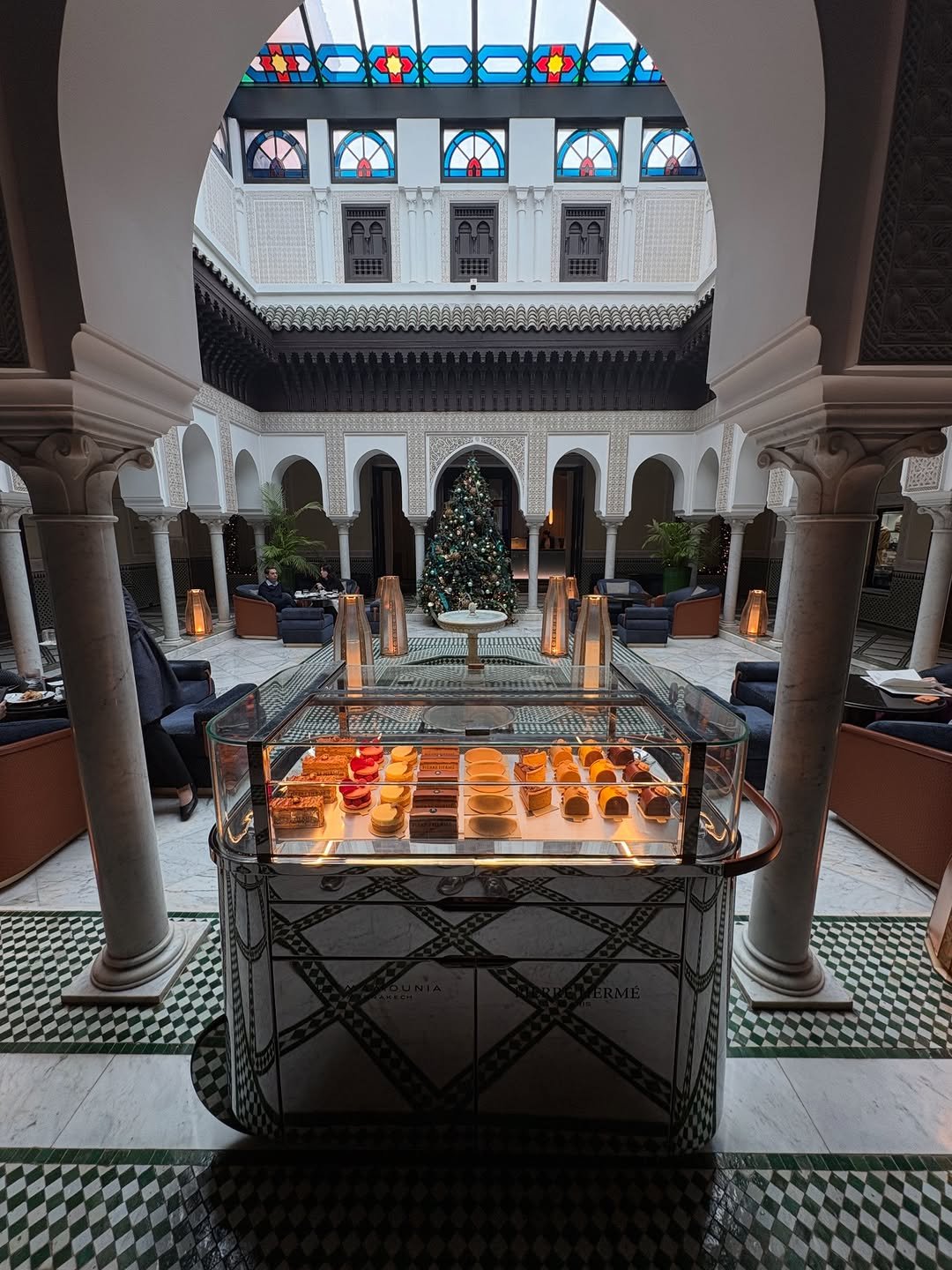
After lunch, we visited the colorful Bahia Palace. And honestly? It was also a good moment to have tea at one of the most luxurious hotels in the world, La Mamounia. A stroll through its gardens and halls leaves anyone speechless.
A fantastic option for discovering the Bahia Palace with a guide is to take this Free Tour of Marrakech, which also visits the Medina, Jemaa el-Fna square, and other key locations in the center of Marrakech.
| Accommodation in Marrakech: Dar Sholmes. Activities and tickets in Marrakech: – Free Tour of Marrakech – Majorelle Garden (tickets must be purchased online at the official website) – Le Jardin Secret (tickets are purchased at the ticket office) – Bahia Palace (entry ticket with digital audioguide) |
Day 3 – Marrakech
It’s a good idea to dedicate the first few hours of the day to one of Marrakech’s most popular and spectacular sites: the Saadian Tombs. Afterward, we can visit the Badi Palace, partially ruined but with some very photogenic spots. From its walls, the views of the city are splendid.
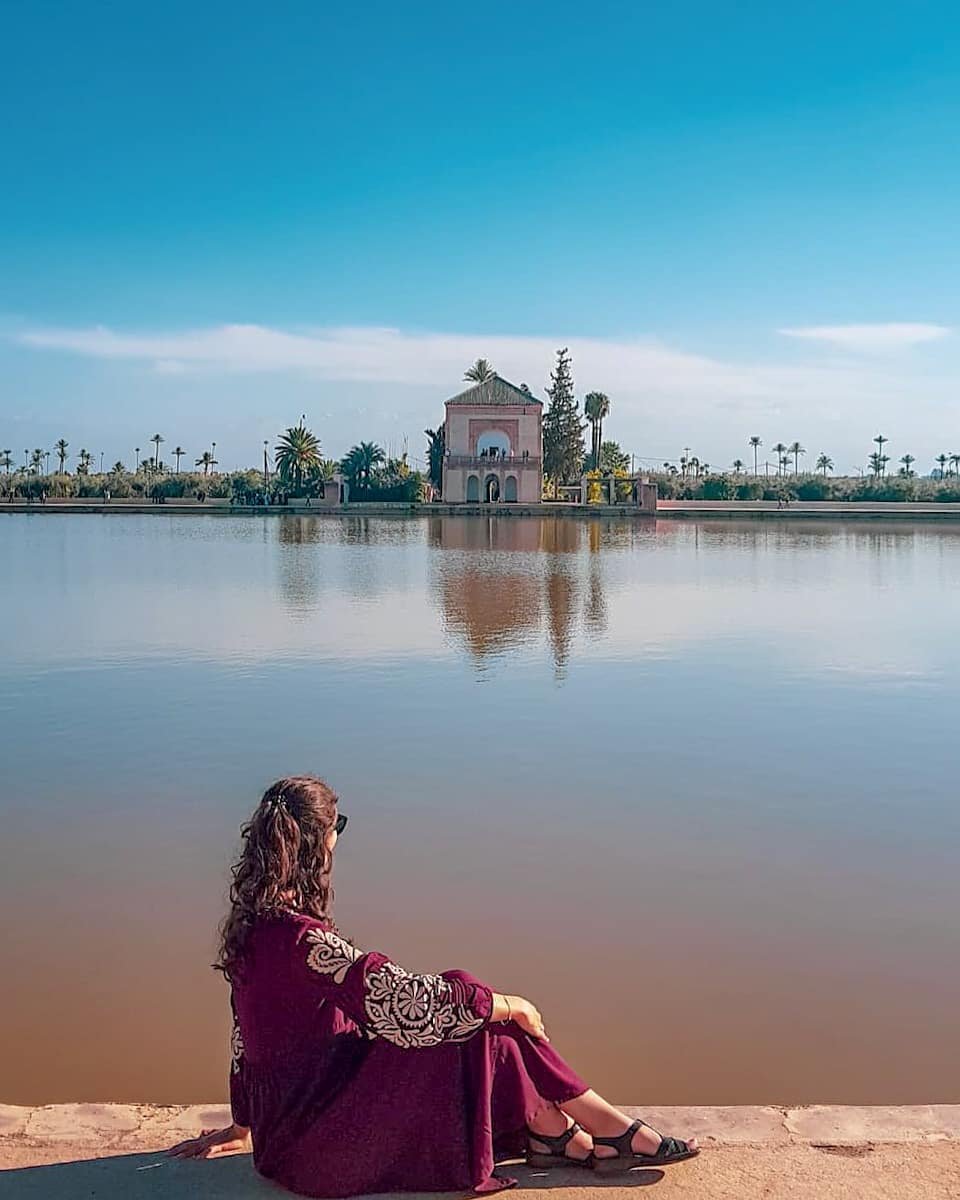
After lunch, we wander a bit more through the medina until we pass through the Bab Agnaou gate, where we can take a taxi to the Menara Gardens. The late afternoon light will let us take incredible photos of its pond with the Atlas Mountains in the background.
In the afternoon, we decided to take a food tour of Marrakech to enjoy typical Moroccan dishes with a local guide. We highly recommend it—it’s a top experience to have in Marrakech. Another great option to say goodbye to Marrakech is with a traditional massage in a hammam like this one.
To complete the experience, we bid farewell to Marrakech by enjoying the evening in the bustling Jemaa el-Fna square.
Day trips from Marrakech:
With an extra day in Marrakech, we recommend visiting the Ouzoud Waterfalls or the charming fishing village of Essaouira. Another super popular option is a quad bike or buggy tour through the desert palm grove—an adrenaline-filled experience.
Here are our top-rated excursions for each option:
– Day trip to Essaouira
– Excursion to the Ouzoud Waterfalls
– Buggy tour through the Marrakech Palm Grove
– Quad bike tour through the Marrakech Desert and Palm Grove
| Accommodation in Marrakech: Dar Sholmes. Activities and tickets in Marrakech: – Saadian Tombs (tickets can be also purchased directly at the ticket office) – Badi Palace (tickets can be purchased at the ticket office) – Menara Gardens (tickets can be purchased directly at the ticket office) – Food tour of Marrakech |
Day 4 – The Atlas Mountains, Ait-Ben-Hadou and Ouarzate
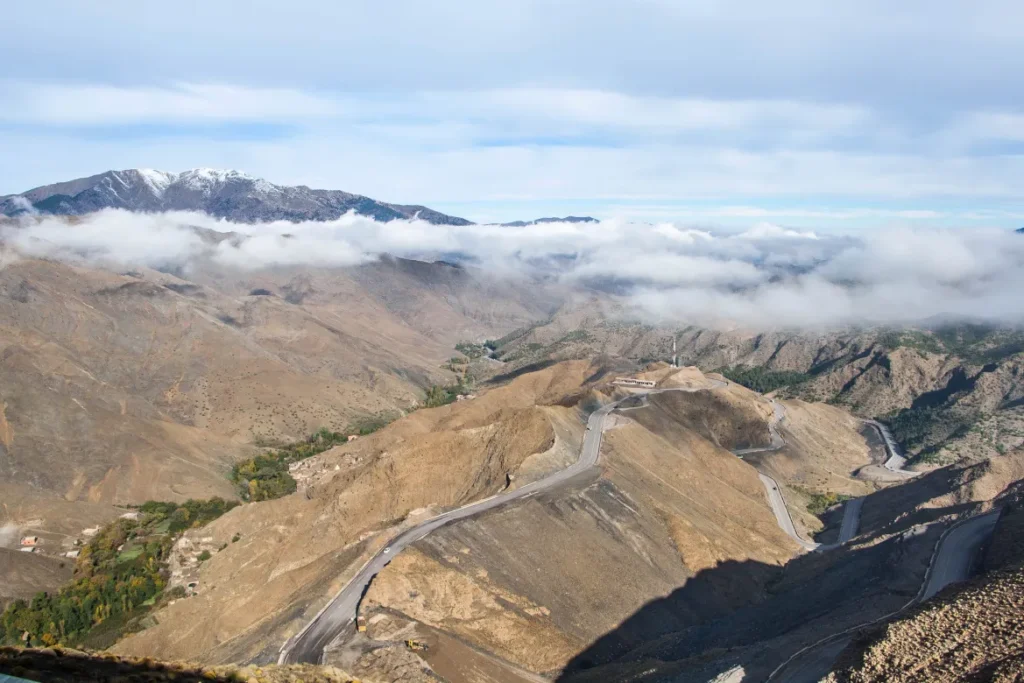
Today will be a long day, so it’s best to leave Marrakech at first light. After about two hours of winding rural roads, we reach the highest pass in this part of the Atlas Mountains, Tziz-n-Tichka. We stop here to take a deep breath and appreciate the views before starting the Route of a Thousand Kasbahs.
And without further delay, we head towards one of the most unique spots on this Moroccan road trip: Ait Ben Haddou. This adobe village, bisected by a river and nestled on a hill, still retains its magic despite the large number of tourists it receives.
Enjoying the drive and catching glimpses of more and more adobe villages, we arrive in Ouarzazate. It’s one of the largest towns in the region. With its film studios and the beautiful Taourirt Kasbah, it’s an essential stop on our route.
In the late afternoon, we shouldn’t miss the Skoura palm grove—a plain dotted with palm trees as far as the eye can see, surrounded by kasbahs. Watching the sunset from Kasbah Amridil is well worth it.
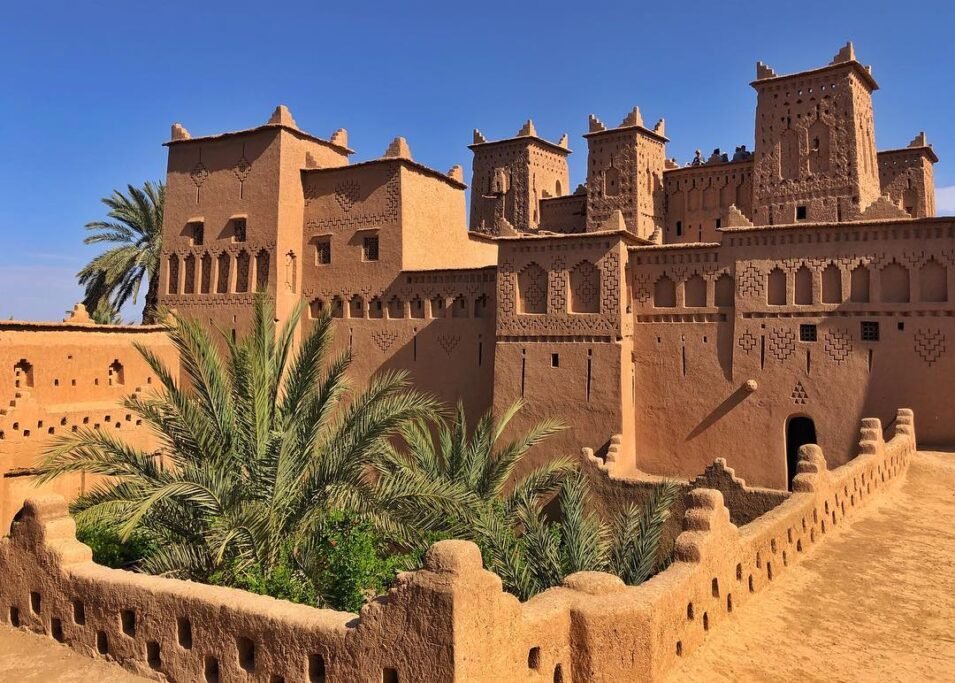
| Accommodation in Dades: La Porte du Dades. Years will pass, and this will be one of the accommodations we remember most fondly from all our trips. The owners, the food, the location—everything is wonderful. Activities and tickets in the Atlas Mountains and the desert: – 3-day excursion to the Merzouga Desert (route similar to ours, perfect if you don’t want to drive to Merzouga) – 3-day excursion to the Merzouga Desert ending in Fez (perfect for a circular route like ours) – Overnight stay in the Agafay Desert from Marrakech (if you only want desert for one night) |
Day 5 – Dades, Tinherir, Todra and arrival in Merzouga
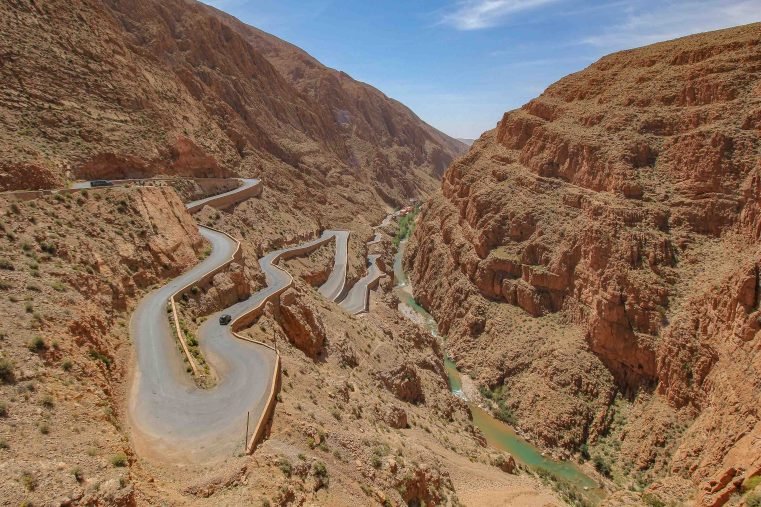
Another intense day lies ahead on this trip to Morocco, beginning with an early start to admire the Dades region. We travel through valleys of reddish earth dotted with kasbahs and incredible geological formations until we reach the famous winding road. The landscape, the views, and the peace of the early morning are priceless.
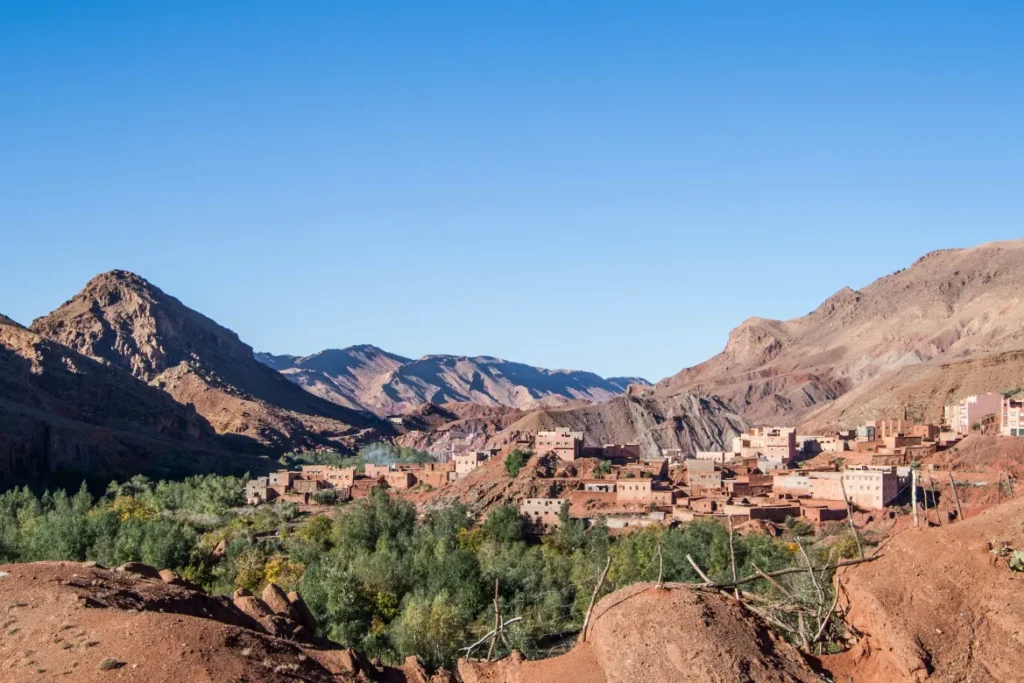
We continue to Tinghir, a large oasis of palm trees and water in the middle of the desert, surrounded by villages of picturesque houses clinging to the hillside. This is the gateway to the Todra Gorge, a very narrow canyon of steep, barren mountains—about 300 meters deep—with a clear, crystalline river flowing through it.
The route to the Merzouga Desert is especially beautiful, with small villages, kasbahs, and palm groves scattered along the way, which gradually give way to a more arid desert. In Merzouga, the experience isn’t complete without staying in a Bedouin camp in the heart of the desert. Comfortable tents nestled among the dunes and under a starlit sky will welcome you for the night.
| Accommodation in Merzouga: Sirocco Luxury Camp, highly recommended. Desert and Merzouga activities: At Sirocco Camp, they organize all desert activities with the accommodation: camel ride to the camp, dinner and music, etc. |
Day 6 – Route to Fez
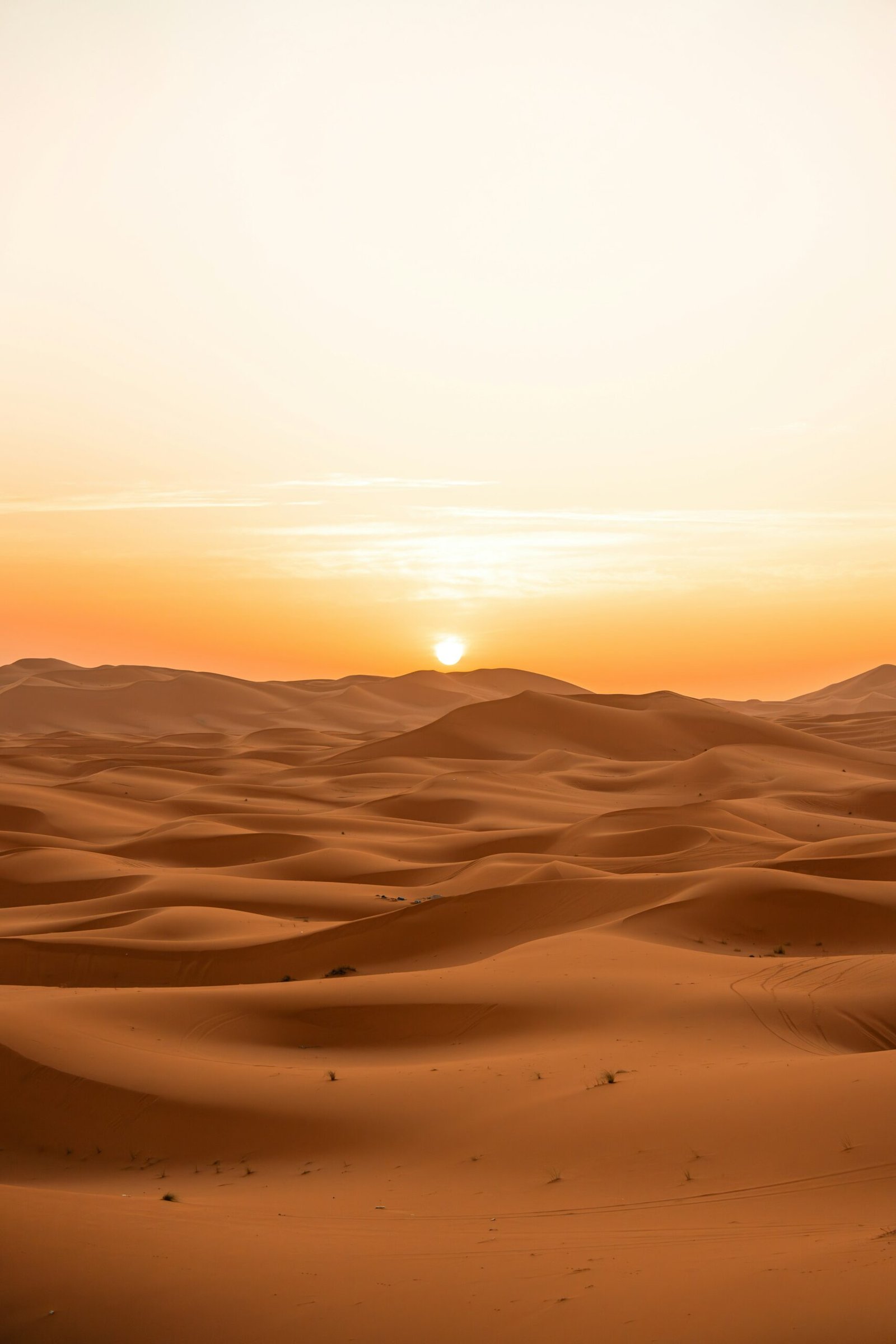
Sunrise in the desert is simply otherworldly. Watching the sun rise over the sand dunes, with camels wandering on the horizon, is something that stays with you forever.
The Sahara bids us a farewell as we begin our journey to Fez—our road trip through Morocco continue. Although long, the route from Merzouga to Fez is beautiful. After Er-Rachidia, we enter the Ziz Valley with its palm groves. Past Azrou, we see the cedar forests of the Middle Atlas Mountains, and just before reaching Fez, we’re surprised by the alpine village of Ifrane, which feels more Swiss than Moroccan.
Night begins to fall when we finally park our rental car on the edge of the vast Fez plateau.
| Accommodation in Fez: Riad Soleil d’Or, with secure parking nearby, perfectly located, and with a delicious breakfast. |
Day 7 – Fez
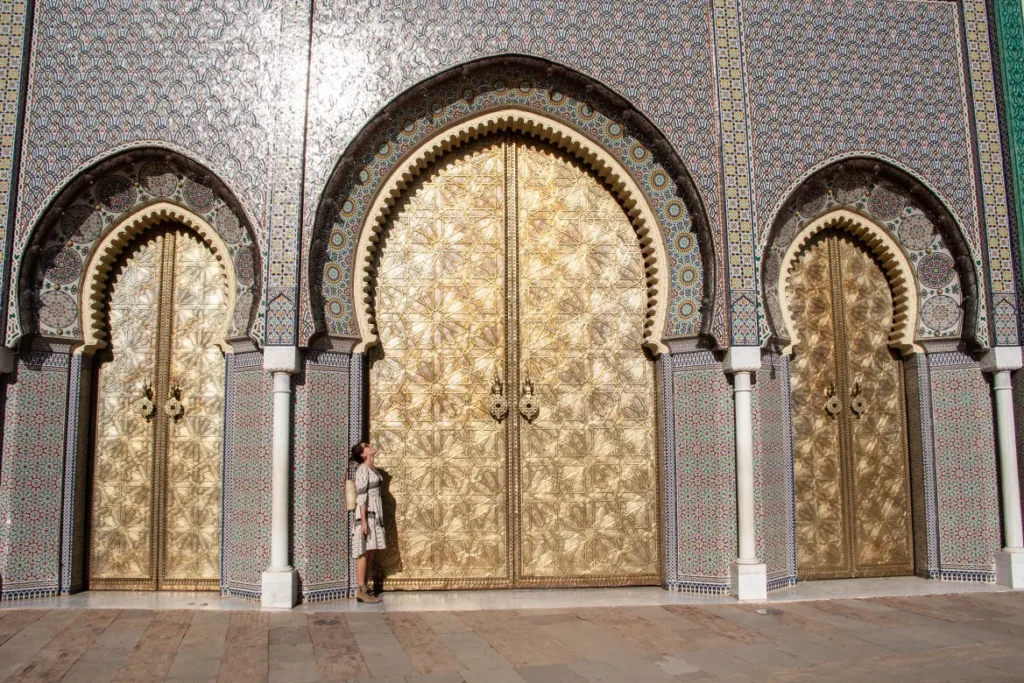
We woke up in Fez, a quintessential university city with a more conservative atmosphere than the rest of the country. We entered the impressive, labyrinthine medina through the Bab Boujloud gate, from which the most famous streets, Talra Kbira and Tala Saguira, branch off. Just a few meters away is the Bou Inania Madrasa.
Wandering aimlessly, you’ll easily stumble upon the renowned Kairaoine University, as it occupies a large part of the Fez medina. If you want to make the most of this visit and avoid getting lost, we recommend this Free Tour of Fez.
Sooner or later—and after a few moments of disorientation—we arrived at Seffarine Square, a kind of souk filled with metal objects and cauldrons, very authentic. Nearby are the famous Chouwara Tanneries. Tip: without paying, the large leather shops allow tourists to climb upstairs to get a better look at the tanneries.
Wandering through the streets, we stumbled upon other points of interest such as the Zaouia Sidi Ahmed Tijani and the Zaouia of Moulay Idriss, the henna souk, and the Nejjarine souk. From here, we can head to another of the medina’s gates, Bab Guissa, to catch a petit taxi to the Jnan Sbil Gardens and the Royal Palace, which can only be viewed from the outside.
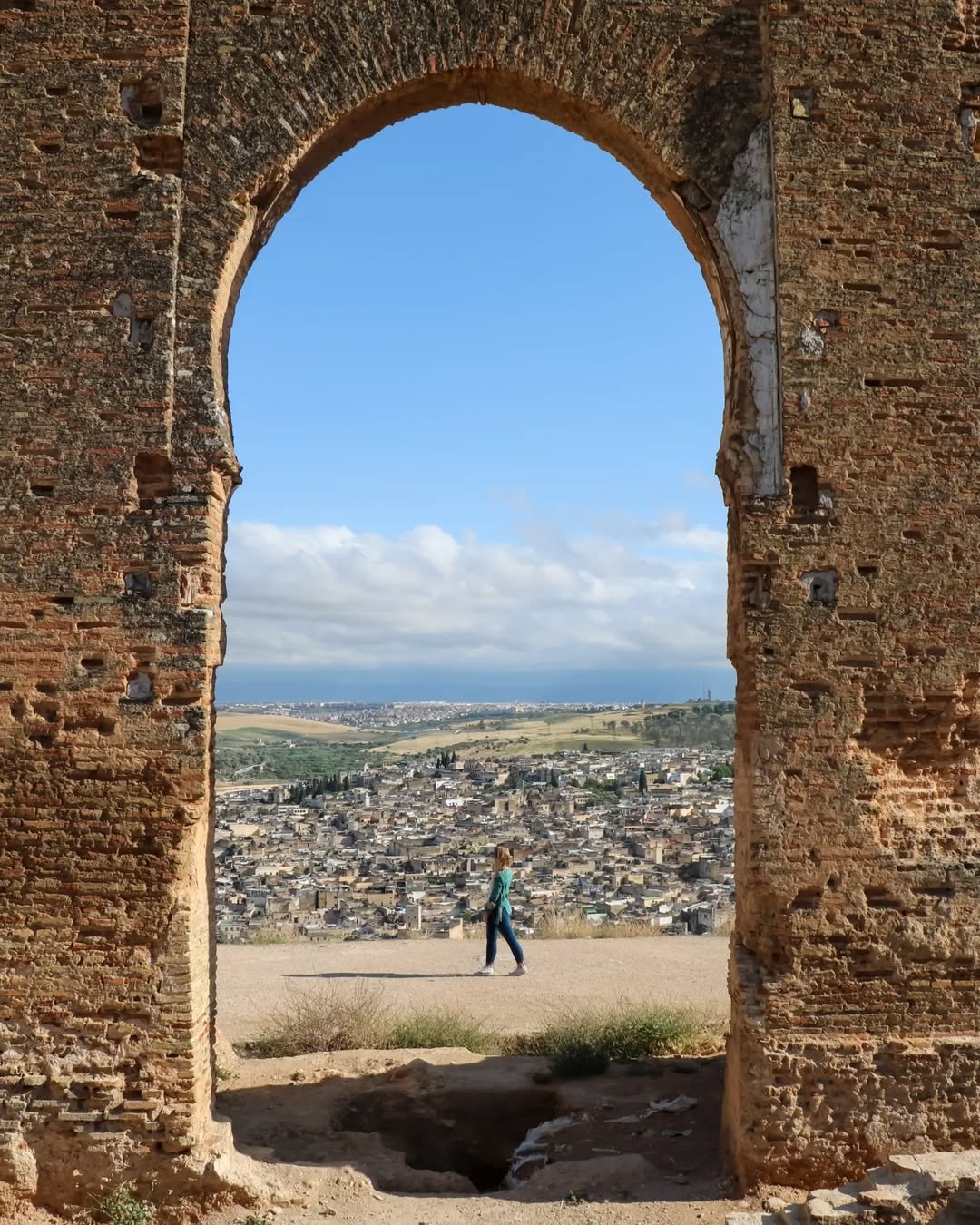
The best sunset views are from the hill of the Marinid Tombs, where we can also appreciate the sheer vastness of the Fez medina.
| Accommodation in Fez: Riad Soleil D’Or Activities and tickets in Fez: – Free Tour in Fez |
Day 8 – Meknes and Volubilis
We left our lovely riad in Fez to continue our road trip through Morocco.
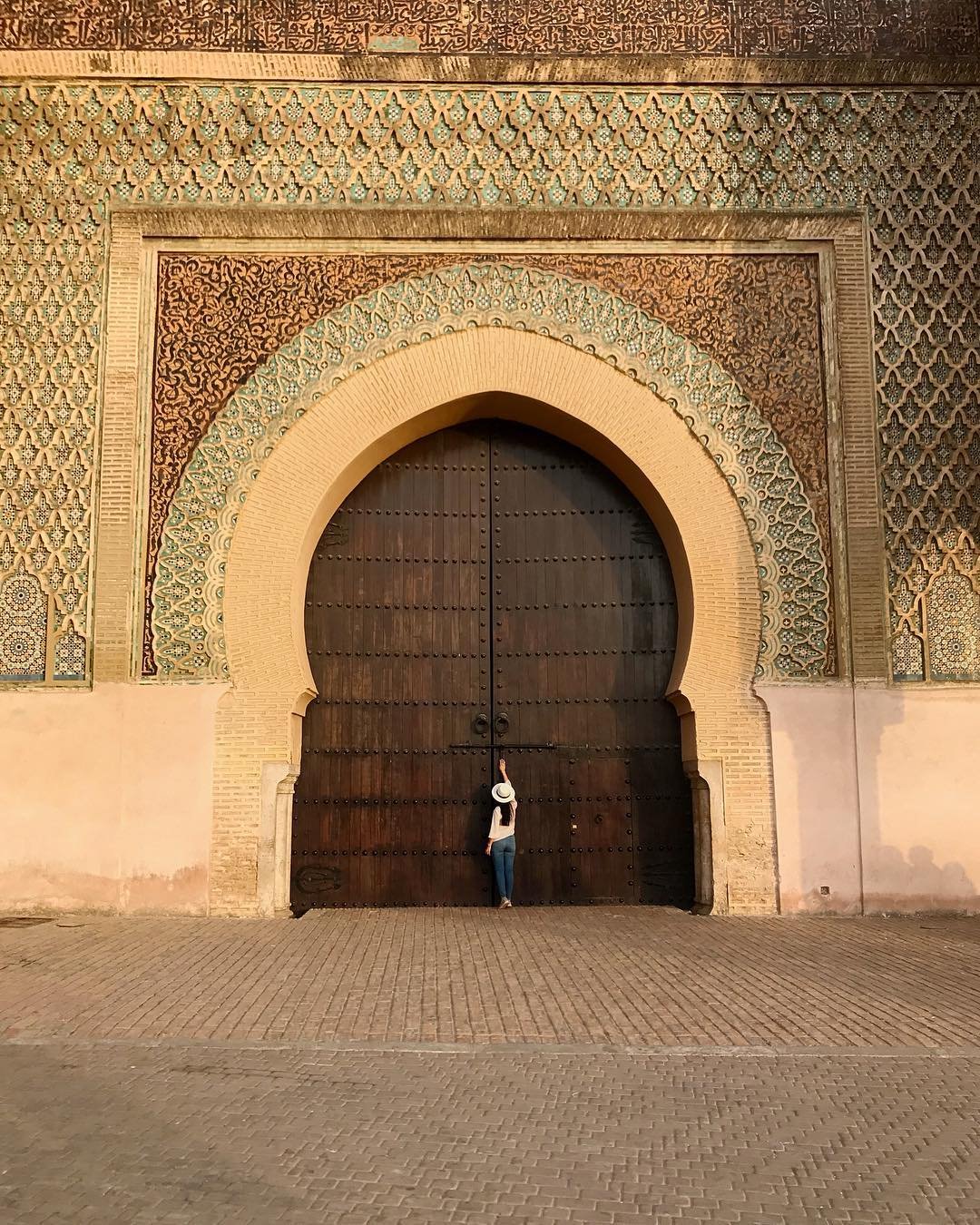
Strolling through Meknes is peaceful and tranquil, as it’s the least popular of Morocco’s imperial cities. The gigantic Hedim Square and its surrounding markets are the heart of the medina. Access is through the Bab el Mansour gate, one of the most beautiful in the world and the largest in North Africa.
Inside the medina are three imposing mosques: the Nejjarine Mosque, the Great Mosque, and the Jamai Roua Mosque, as well as the magnificent Bou Inania Madrasa, a must-see. Upon leaving the medina, a visit to the Mausoleum of Moulay Ismail, another architectural marvel of Meknes, is essential.
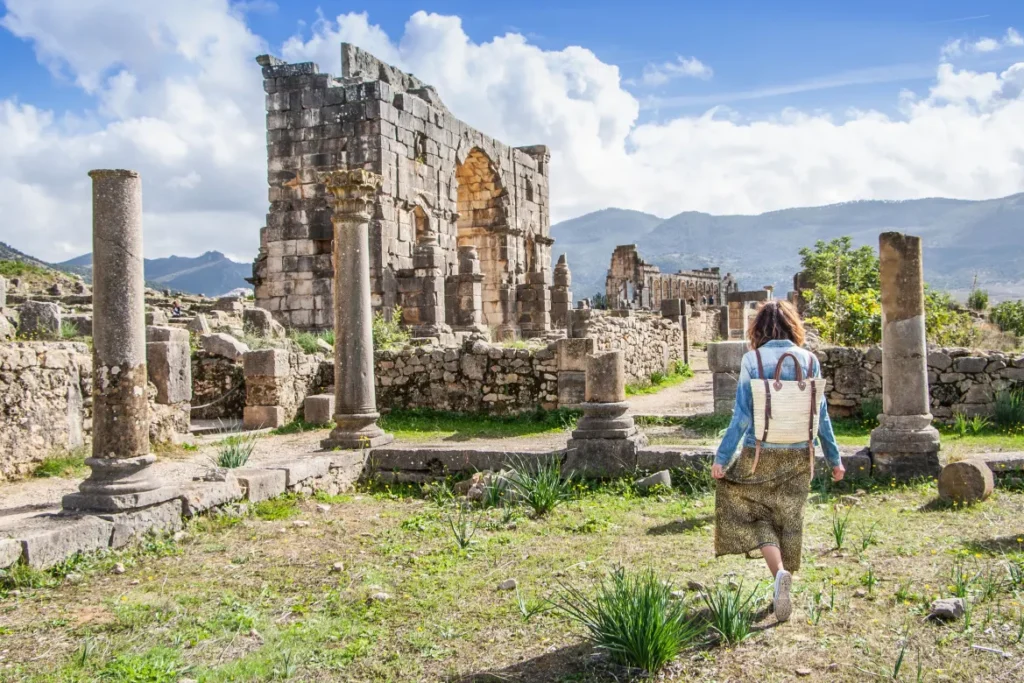
Volubilis is one of the many surprises a trip to Morocco holds. This ancient Roman city, with its incredibly well-preserved archaeological remains, once had over 20,000 inhabitants. It is a UNESCO World Heritage Site. Wandering through the Forum, the Basilica, and the Temple of Jupiter—passing baths, arches, and mosaics in almost complete solitude—never ceases to amaze us.
We leave Volubilis and continue our road trip through Morocco towards Chefchaouen, where we will spend two nights.
| Accommodation in Chefchaouen: Résidence Hoteliere Chez Aziz, a colorful hotel with wonderful hosts. Its terrace is amazing. Activities and tickets in Meknes and Volubilis: – Day trip to Volubilis, Moulay Idriss, and Meknes (perfect if you want to leave your car in Fez and explore these cities on your own) |
Day 9 – Chefchaouen
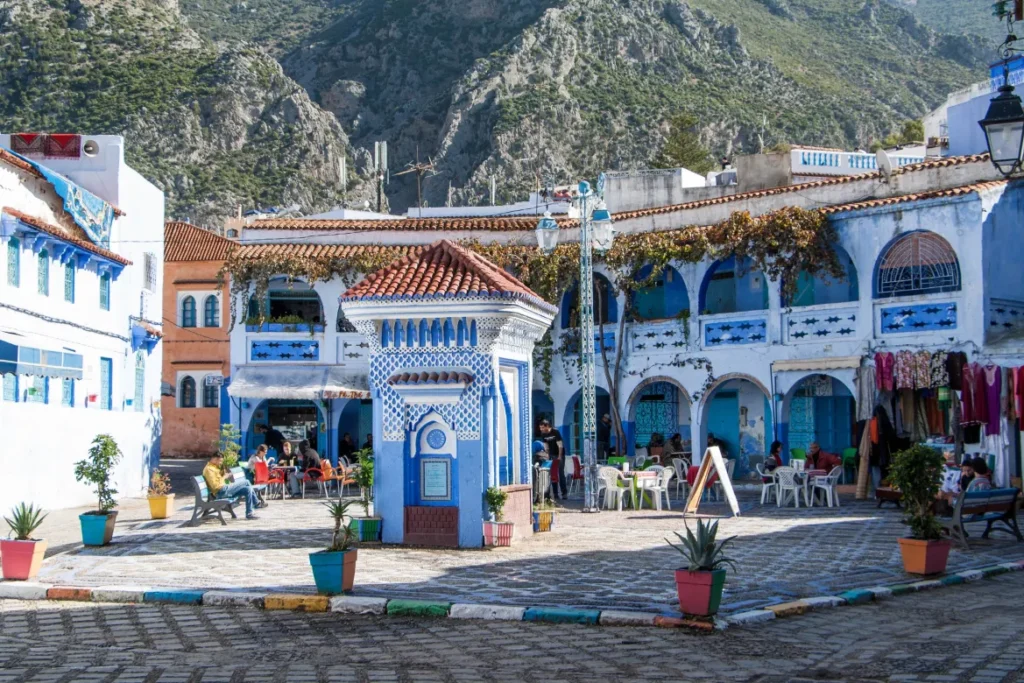
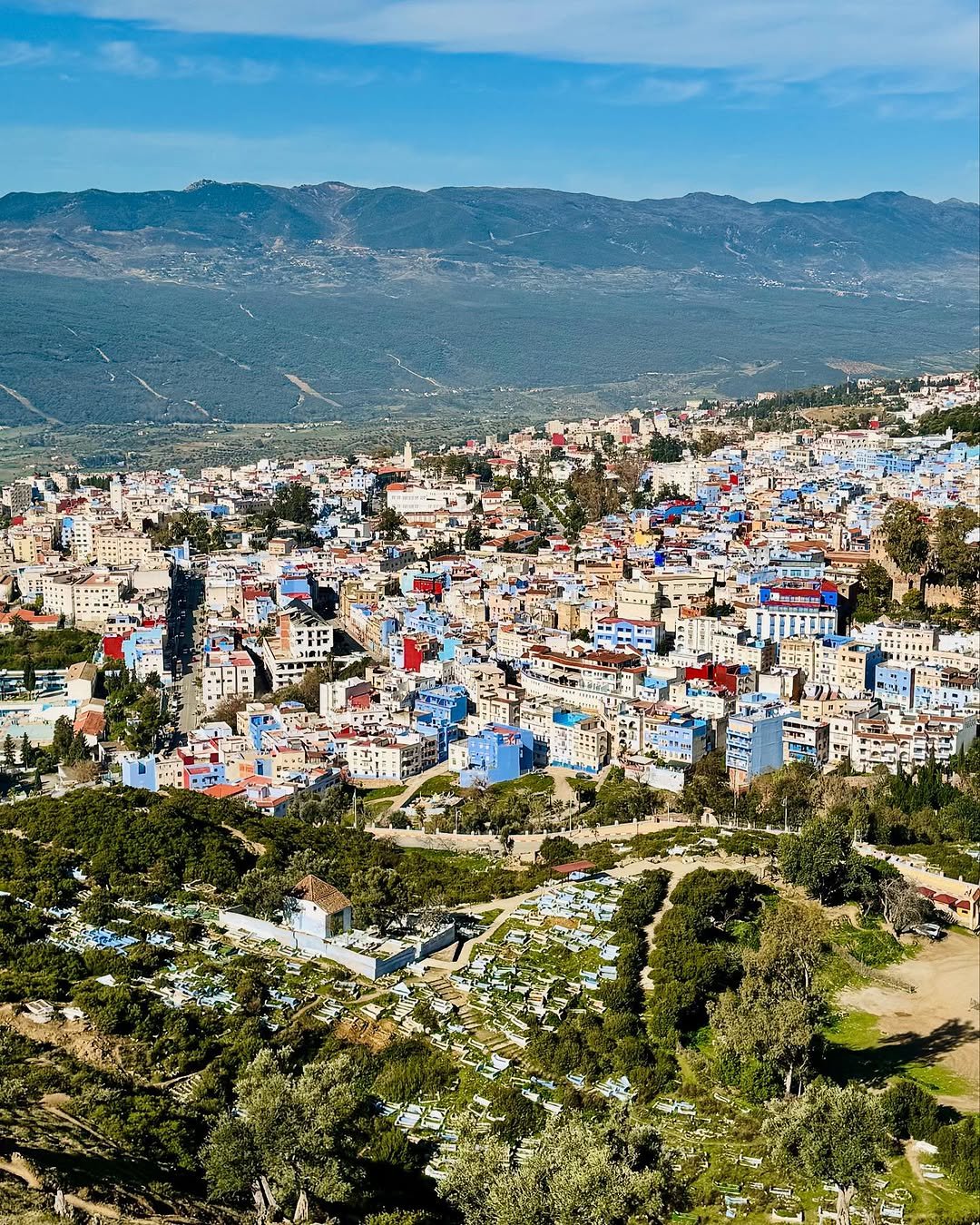
A city bathed in blue, with an Andalusian flair and signs in Spanish—yet nestled in the heart of the Western Rif Mountains—Chefchaouen is a traveler’s dream. Every corner is a photo opportunity. Every facade is adorned with colorful flowers and pots. Small artisan shops and narrow alleyways suggest that the best way to experience this city is simply to get lost in its charm.
However, there are certain spots you absolutely must visit: El Hauta Square with its arcades and fountain, and Outa el Hamman Square with its grand mosque and kasbah. At the small Ras el Ma waterfall, you might spot women doing their laundry. From here, a path winds its way up the mountain to the Spanish Mosque, offering breathtaking views of the city along the way.
| Accommodation in Chefchaouen: Résidence Hoteliere Chez Aziz |
Day 10 – Tangier
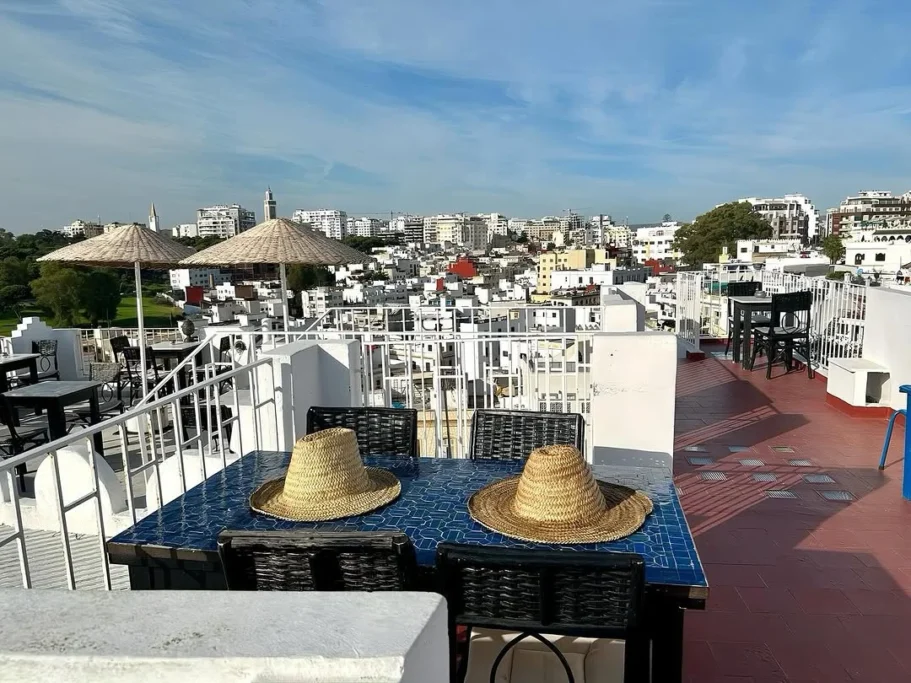
We left the blue city of Chefchaouen to continue our road trip through Morocco, to visit Tangier.
It’s easy to see why Tangier had its heyday during the 1940s and 50s, as it was a breeding ground for spies, con artists, artists, and millionaires. Today, the modern Mohammed VI Avenue runs along the beach to the medina, but the Place 9 Avril, with its famous Cinema Rif and the Mendoubia Gardens, still whispers colonial-era history.
From here, you enter the medina through the Bab El-Fas gate, arriving first at the Central Market. Further on is the Petit Socco square. From here, you can see the Grand Mosque. A short walk takes you to the labyrinthine Kasbah (Alcazaba), from where you can admire the walls and views of the port. Having tea on one of the terraces overlooking the city is the perfect way to end the day in Tangier.
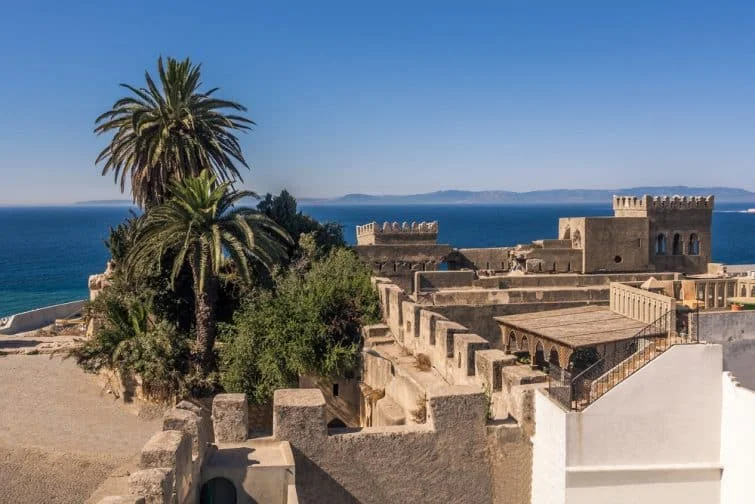
| Accommodation in Tangier: The Oumnia Puerto & Spa |
And with a final farewell to a country that captivated us, surprised us, and to which we will surely return, we say goodbye to this road trip through Morocco. We hope this guide will help—and inspire you to plan your own independent experience in Morocco.
|
➡️Planning your first big Morocco adventure? This 10 days in Morocco itinerary is designed for travelers who want to see the country’s greatest hits without spending half the trip stuck on buses. Expect legendary stops like Marrakech, Fes, the Sahara Desert, and Chefchaouen—plus practical tips on getting between cities, choosing where to stay, and making the most of every day.
➡️Looking for something beyond the classic routes? Morocco is full of lesser-known treasures waiting to be explored. Discover these hidden gems in Morocco—from quiet mountain villages to unexpected landscapes that rarely make it into standard itineraries. ➡️And then there’s the food. Moroccan souks are a paradise for curious eaters, where every alley seems to hide a sizzling grill or a stall stacked with sweet and savory treats. Ready to explore some of the best street food in Morocco? Come hungry. |
- Perfect Morocco with kids Itinerary (2026): 25 Days from Tangier to the Anti-Atlas, Coast, and Marrakech
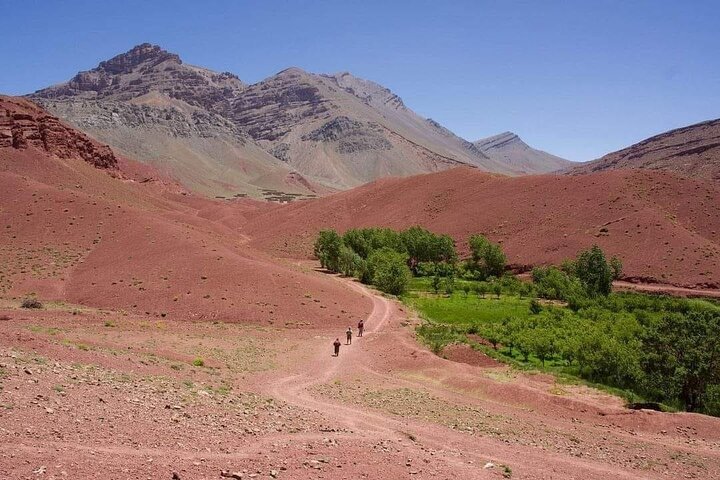
- Where To Stay In Agafay Desert in 2026: Luxury Moroccan Holidays
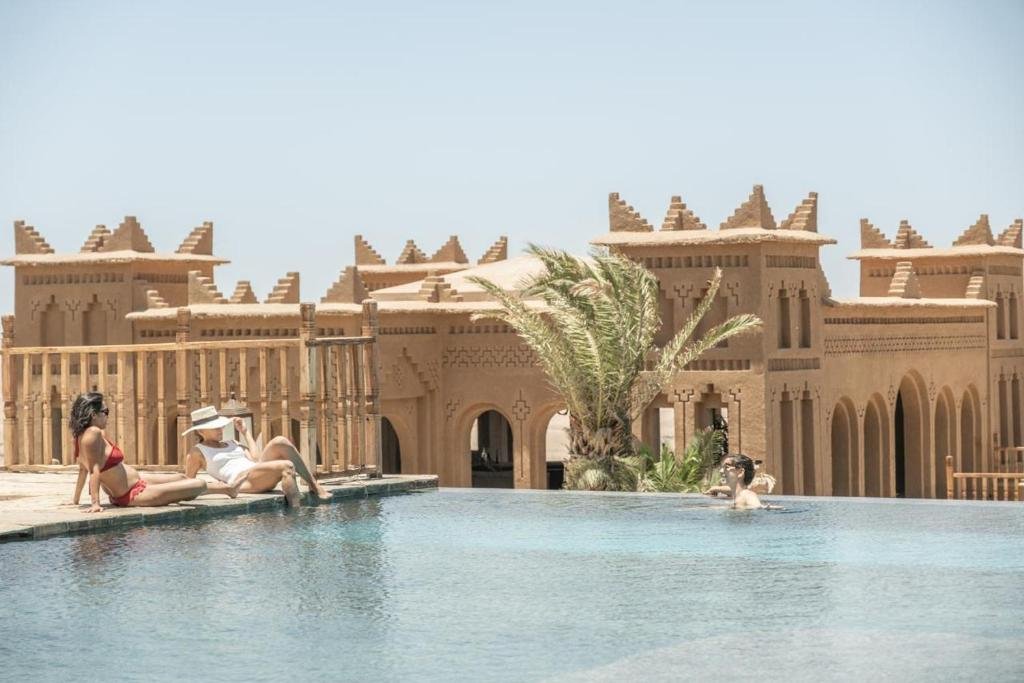
- 14 Most Beautiful Beaches In Morocco (2026)
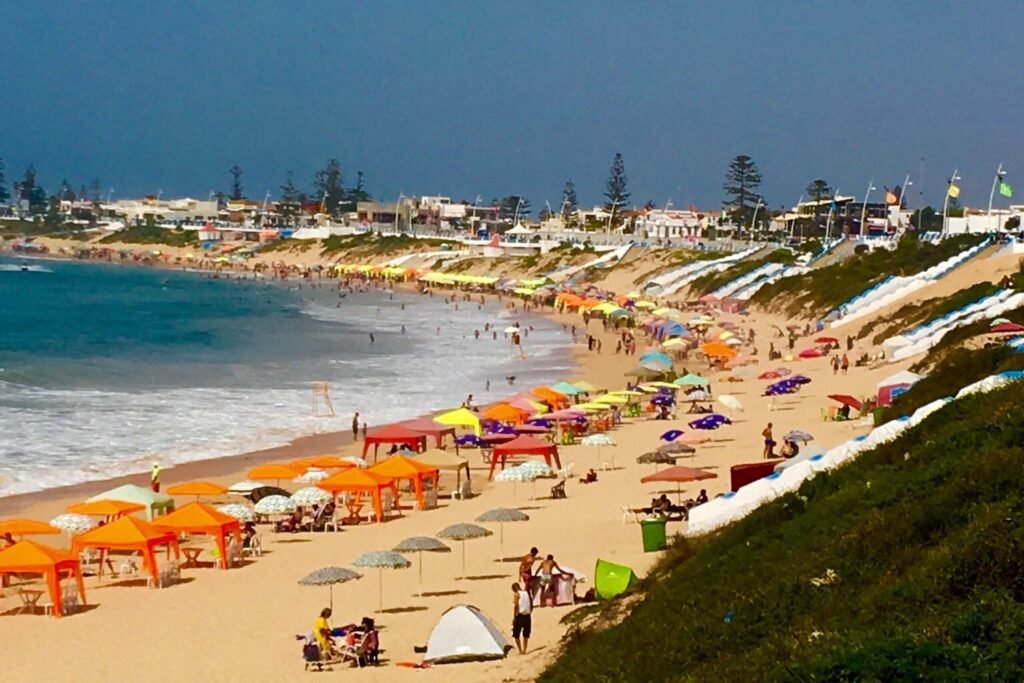
- What To Wear In Morocco (2026): Real-World Travel Guide For Female Travellers
- 3 Best Places To Stay in Marrakech Medina [2026 Updated]