
Travel writing based on first-hand experience
Explore the best things to do in Casablanca, Morocco—from iconic landmarks and beaches to cultural sites, souks, and local food spots. Plan your perfect Casablanca itinerary.
| ➡️ Casablanca surprised us more than expected — here are hidden gems in Casablanca. ➡️ Before you book anything, read our guide to where to stay in Casablanca. ➡️ Need food ideas? These Casablanca restaurants saved several hungry afternoons ➡️Discover the best places for shopping in Casablanca, Morocco—from luxury malls and historic souks to authentic local markets. Find out where to buy spices, leather goods, tagines, and more. ➡️There are plenty of reasons to visit , including some great rooftop bars in Casablanca. Read our post to discover them. |
Table of Contents
Visiting Casablanca: Travel Tips
When to go
- Best months: March–June and September–November (warm days, cooler nights).
- Hotter period: July–August (plan indoor breaks midday).
- Ramadan note: Restaurants may adjust hours; evenings are vibrant with iftar.
Getting around
- Tram: Clean, cheap, and easy for central axes (e.g., Gare Casa-Voyageurs ↔ city center ↔ Ain Diab).
- Taxis:
- Petits taxis (red) for within-city rides; insist on the meter or agree a fare before moving.
- Grands taxis (white) for longer hops or shared routes.
- Ride-hailing: Careem/Heetch operate in the city and are convenient.
- Walking: Great along Corniche Ain Diab, the Habous quarter, and Art Deco downtown; use crossings and watch traffic.
Pro tip: For the Hassan II Mosque, taxis drop off at the main entrance; check guided tour times and dress modestly.
Neighborhood cheat sheet
- Center-Ville (Art Deco): Architecture strolls, cafés, Marché Central.
- Habous (New Medina): Crafts, bookshops, olive and spice stalls.
- Ain Diab / La Corniche: Seafront promenade, beach clubs, sunset dining.
- Maarif / Gauthier: Boutiques, bakeries, and casual restaurants.
- Anfa / Racine: Leafy residential, upscale dining.
Money & connectivity
- Currency: Moroccan dirham (MAD). ATMs are common; cards widely accepted in hotels/malls.
- Tipping: 5–10% in restaurants if service isn’t included; round up for taxis.
- SIM cards: Maroc Telecom/Orange/Inwi kiosks at airport and malls—bring passport.
Safety & etiquette
- General safety: Casablanca is busy and generally safe. Use normal city awareness, especially at night in quiet streets.
- Dress code: Cosmopolitan but modest is respectful (covered shoulders/knees for mosque visits).
- Photography: Ask before photographing people; avoid security sites.
Pro tip: Keep small change for trams, market snacks, and taxi tips.
Food & coffee basics
- Must-try: Pastilla, grilled sardines, harira soup, bissara, mint tea, kaab el ghzal (almond crescents).
- Seafood: Head to Marché Central stands or Corniche restaurants; pick your fish and ask for grill “au sel et citron.”
- Cafés: Table service is the norm; pay after.
Key sights (quick plan)
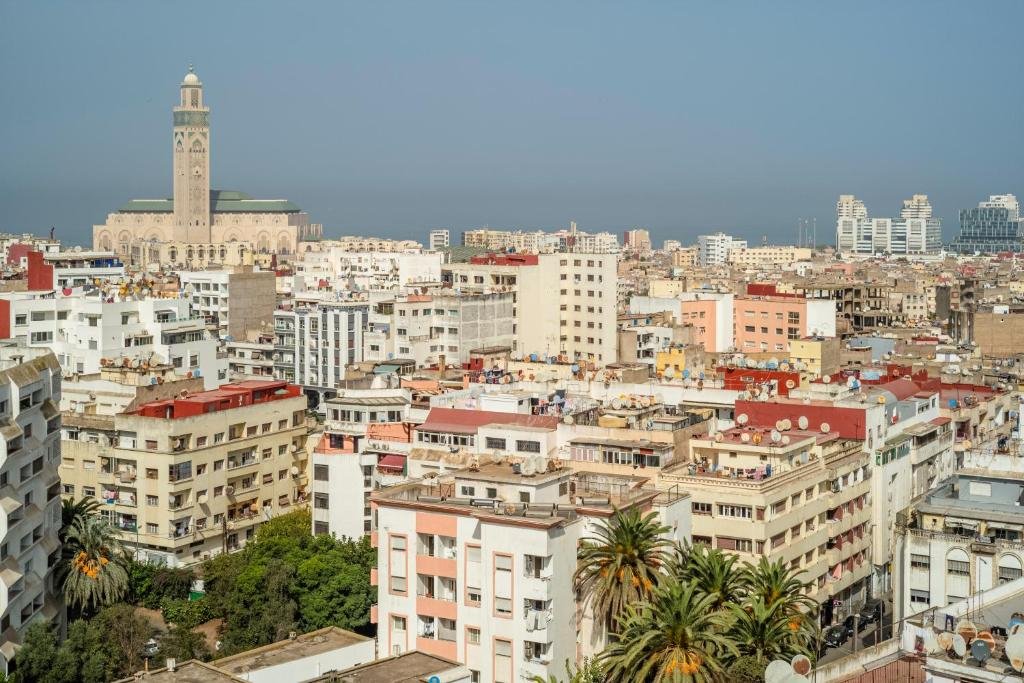
- Hassan II Mosque: One of the largest in the world; guided interior visits at set hours.
- Art Deco walk: Mohammed V Square → Boulevard Mohammed V → Cinema Rialto → Immeuble Liberté.
- Habous quarter: Royal Palace gates (exterior), olive souk, pastry shops (try Makrout and Chebakia).
- Villa des Arts / Museums: For rotating art shows and cultural events.
- Corniche at sunset: Stroll or dine with ocean views.
Market smarts
- Bargaining: Polite, friendly, and incremental. Know your max price.
- Quality check: For leather, ceramics, and carpets, inspect stitching/glaze; ask about origin.
- Spices & olives: Buy by weight; seal bags well for flights.
Day trips (easy wins)
- Rabat (train ~1h): Oudayas Kasbah, Hassan Tower, clean medina.
- El Jadida (train/car ~1.5h): Portuguese cistern and seaside ramparts.
- Azemmour (near El Jadida): Quiet medina and river views.
Pro tip: Trains (ONCF/Al Boraq connection via Casa) are comfortable; buy tickets online or at stations.
Practical packing
- Light layers, a scarf for mosque/sea breeze, comfy walking shoes, sunscreen, sunglasses, and a small cross-body bag. Winter evenings can be cool—pack a light jacket.
Do & Don’t (at a glance)
- Do: Book mosque tour times, carry cash for small purchases, learn “Salam” and “Shukran.”
- Don’t: Rely on ultra-tight schedules—traffic can add delays; don’t drink tap water if you have a sensitive stomach (bottled is easy to find).
Quick 1-day template
- Morning: Hassan II Mosque → Art Deco coffee stop.
- Midday: Marché Central seafood.
- Afternoon: Habous shopping and pastry tasting.
- Sunset: Corniche Ain Diab walk.
- Evening: Dinner in Gauthier/Racine or ocean-view spot on the Corniche.
Best Things to Do in Casablanca
1. Discover the diversity of styles in the historic center
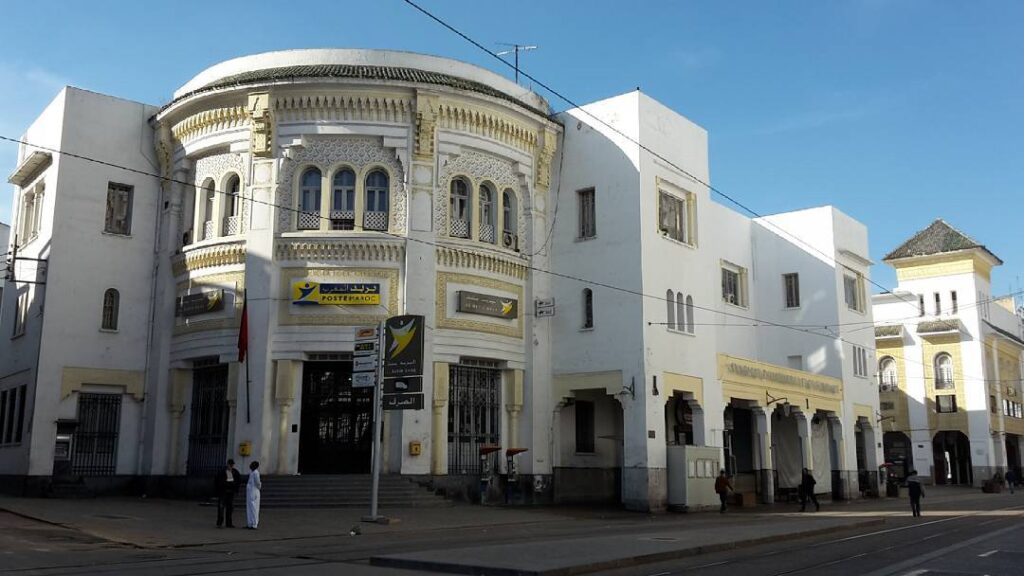
The heart of Casablanca, shaped during French rule (1912 to 1956), is a time capsule of the 20th century’s architectural evolution. Imagine starting your journey at Place Mohammed V, where buildings from the early 1900s, inspired by Moroccan tradition, sit next to the modern, almost futuristic design of a theater by Christian de Portzamparc and Rachid Andaloussi, which hasn’t opened yet.
Walking down Boulevard Mohammed V is like walking through an open-air museum showcasing a mix of styles. Look up to see the Glaoui Palace, which stands out with its Art Deco elegance. Then, there’s The Liberty Building, or Immeuble Liberté, which stands out in Casablanca, Morocco, as a shining example of Art Deco design. Built when France had a strong influence in the area.
Each step takes you through a different era, inviting you to explore Casablanca’s rich architectural diversity with wide eyes.
2. Return to origins in the Medina
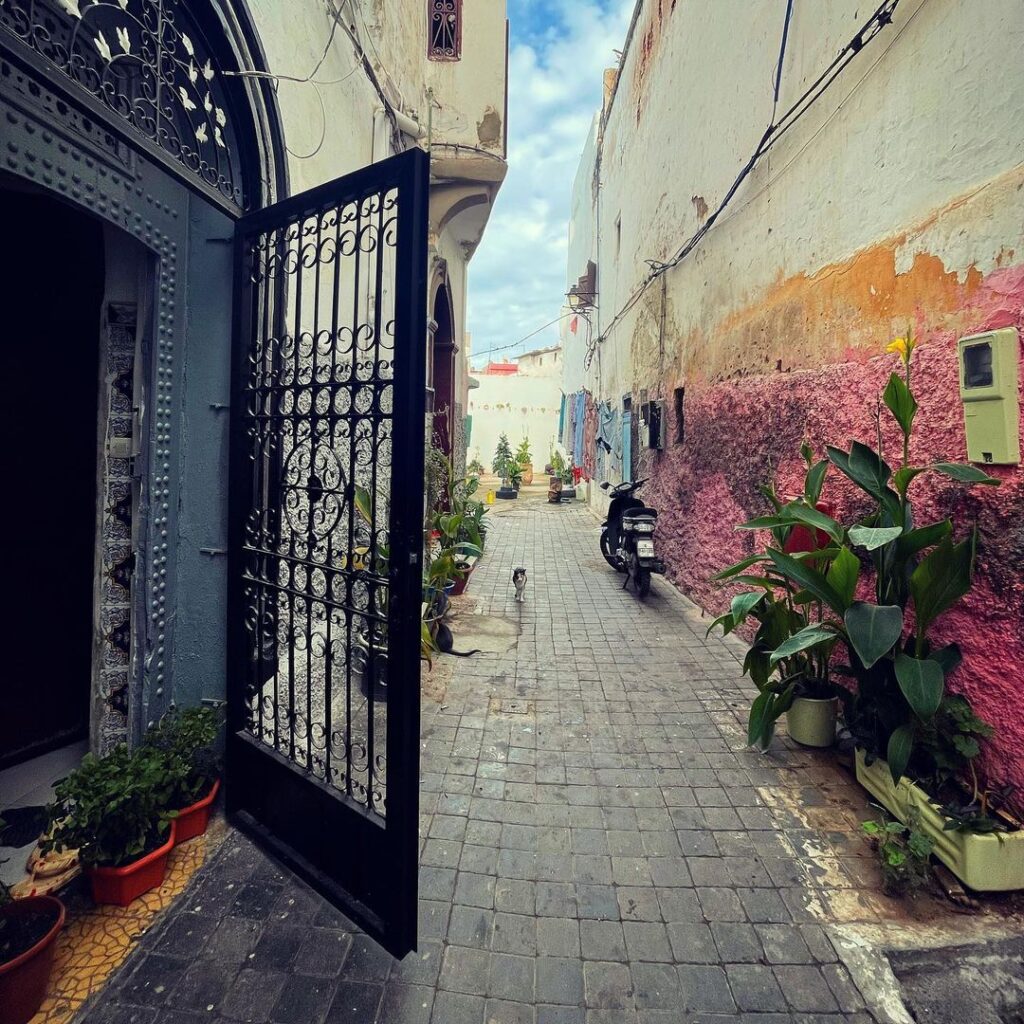
Redone in the 1700s, Medina in Casablanca is a mix of cultures that creates a vibe that feels a bit Mediterranean. It’s got all kinds of buildings—from old-style houses with inner courtyards to buildings inspired by new classic, Hispano-Moorish, or Art Deco designs. When you wander past the market areas, you might find streets that look a bit worn out but hide cool places. For example, there’s this place called the Heritage Interpretation Center that shows the city’s history in a terrific, new way. Or Al Makane, a pretty riad turned into a café and a sort of fancy market showcasing local craftspeople’s work. Not far from there, you’ll find the Sqala ramparts. Théodore Cornut built them in the 1700s, and they’re a great example of the kind of military architecture Morocco had at the time.
Heritage Interpretation Center – Abdellaouia School. Monday to Friday from 9 a.m. to 4:30 p.m. Free admission.
Al Makane , Place de Belgique. Tuesday to Sunday from 10 a.m. to 8 p.m.
3. Visit Medina of Habbous, the new city of the 20th century
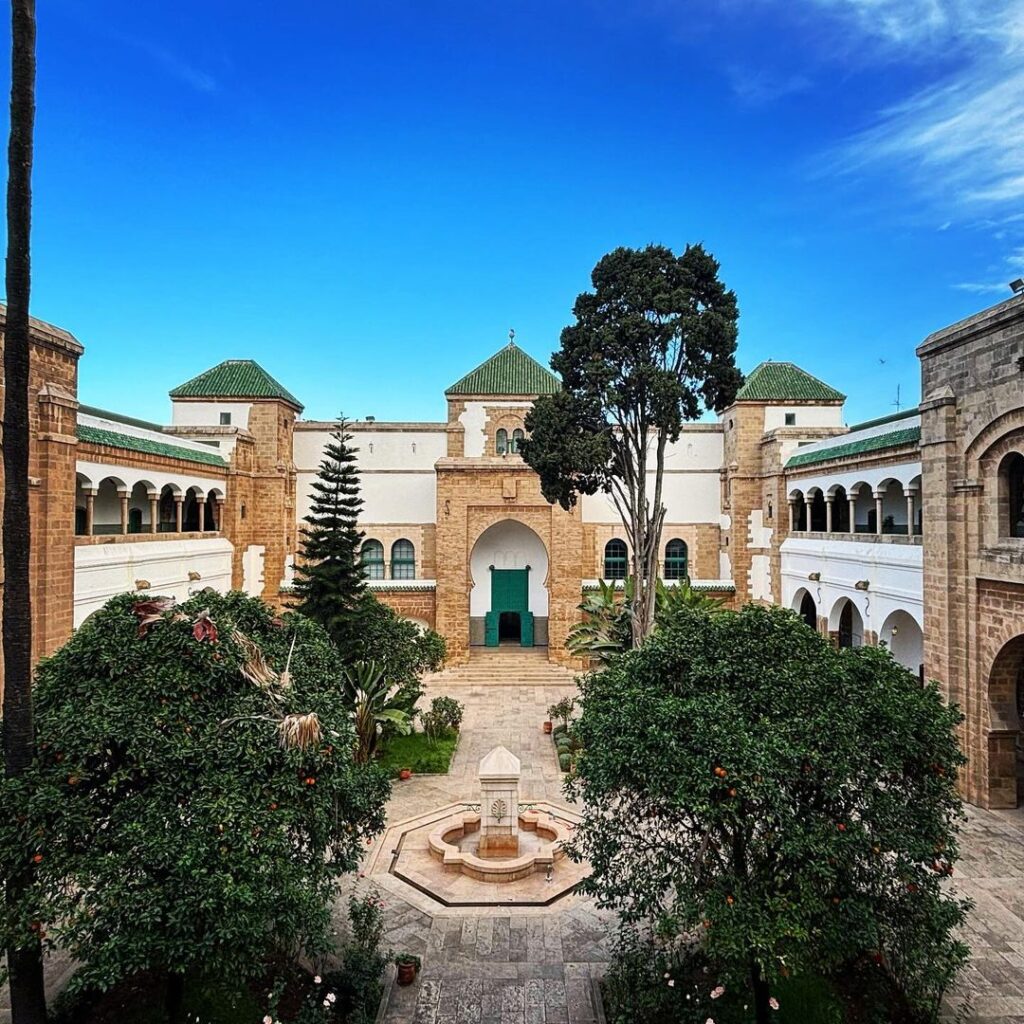
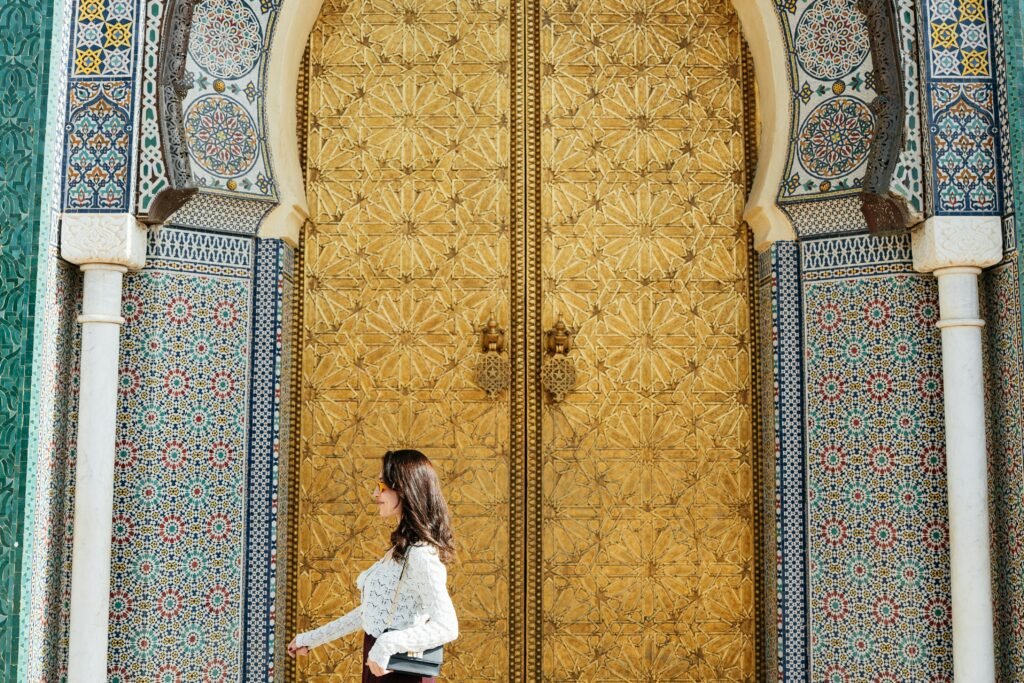
Created in 1917, this new part of town is designed like traditional medinas, creating a beautifully preserved area that feels charming. It’s a joy to wander through the streets with arches, check out the foundouks (which are like old-timey inns for traders), and browse the traditional markets, where you can find everything from carpets to tasty olives.
One spot you can’t miss is the Mahkama du Pacha, built between 1942 and 1948. It’s used as a courthouse and a place for fancy gatherings, and it’s stunning inside. Imagine walking into a courtyard lined with elegant columns that remind you of the Alhambra in Granada, or exploring a big, sweet-smelling garden enclosed by buildings made of glowing golden stone, kind of like the old monasteries from medieval times. The best artisans from all over the kingdom worked together to create this breathtaking place!
✦Tip : visit the Habbous Medina and the Mahkama du Pacha with the Casamémoire association (see below).
4. Decipher Casablanca heritage with Casamémoire
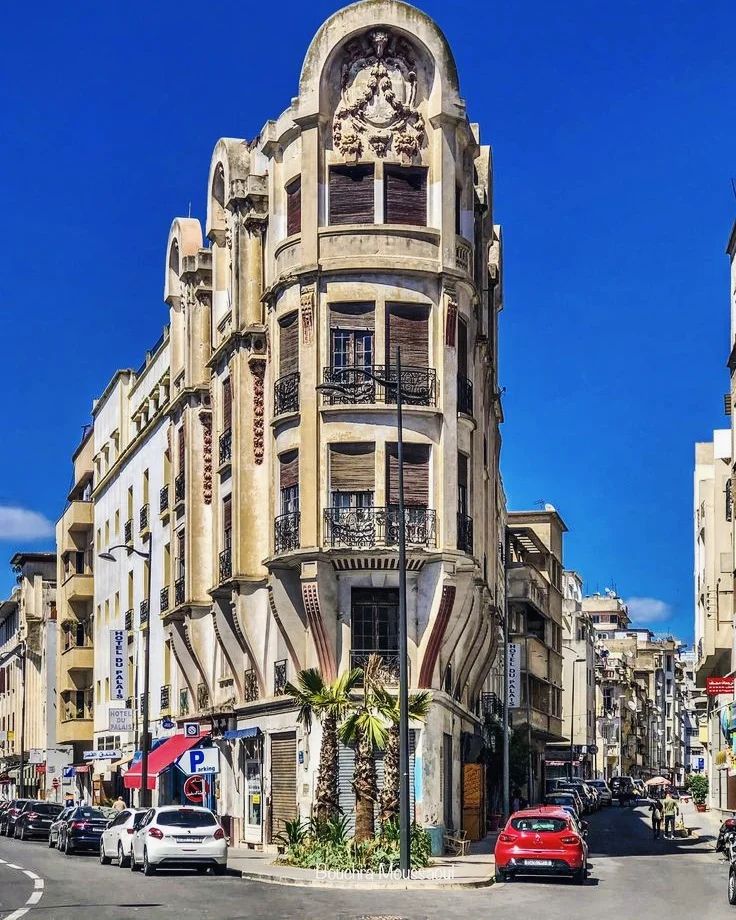
Founded in 1995, this energetic group leads thrilling architecture-focused tours. They offer four different routes that last between 2 and 3 hours: there’s a walk through the old medina, a stroll around the new Art Deco area, a tour of the Habous medina, and a visit to Hay Mohammadi, a unique area known for its collective housing, where you’ll ride a bus or tram to get around. Plus, every spring, they host Heritage Days to showcase spots that are typically not open to the public.
✦Tip: Book in advance because reservations must be made at least 10 days in advance, and make a donation to the association, as visits are voluntary.
5. Discover Abderahmane Slaoui Foundation Museum, a cabinet of curiosities
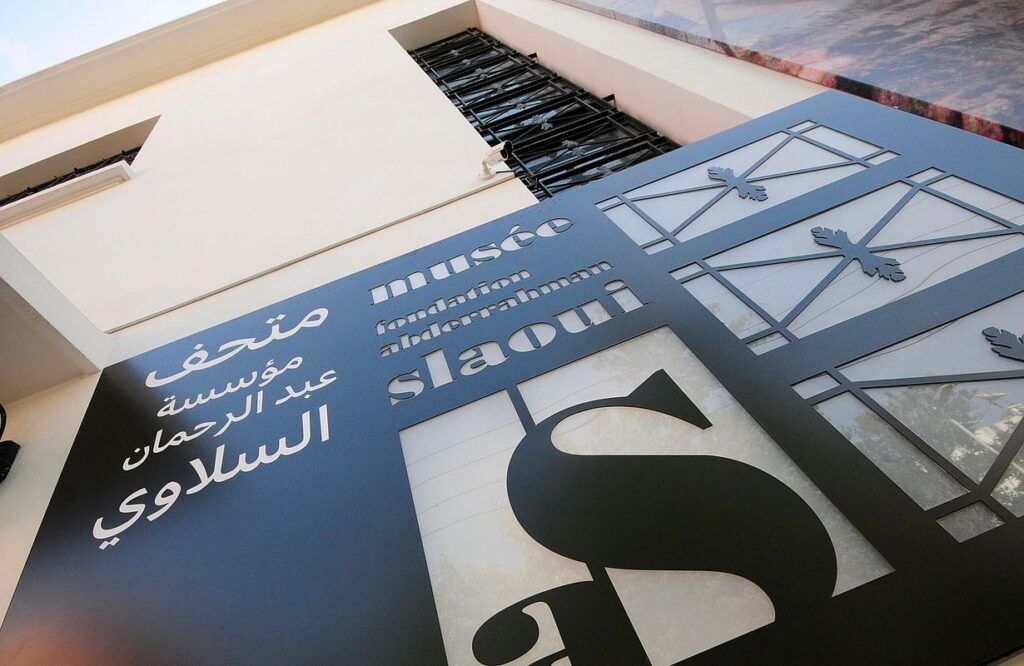
Nestled among Art Deco villas near the Arab League park, this museum is a gem within a 1940s house. It holds the collections of Abderrahmane Slaoui, a lover of beauty and humanity. Inside, you’ll find Orientalist posters, gold jewelry, beautiful manuscripts, and chests of Bohemian crystal… all displayed in a way that feels like you’re peeking into a wonder-filled curiosity cabinet. They also put on some pretty special temporary exhibits.
Abderrahman Slaoui Foundation Museum , Tuesday to Saturday, 10 a.m. to 6 p.m. Price: €5.45. Guided tours by reservation (€9 supplement)
6. Explore Villa des Arts, art in all its forms
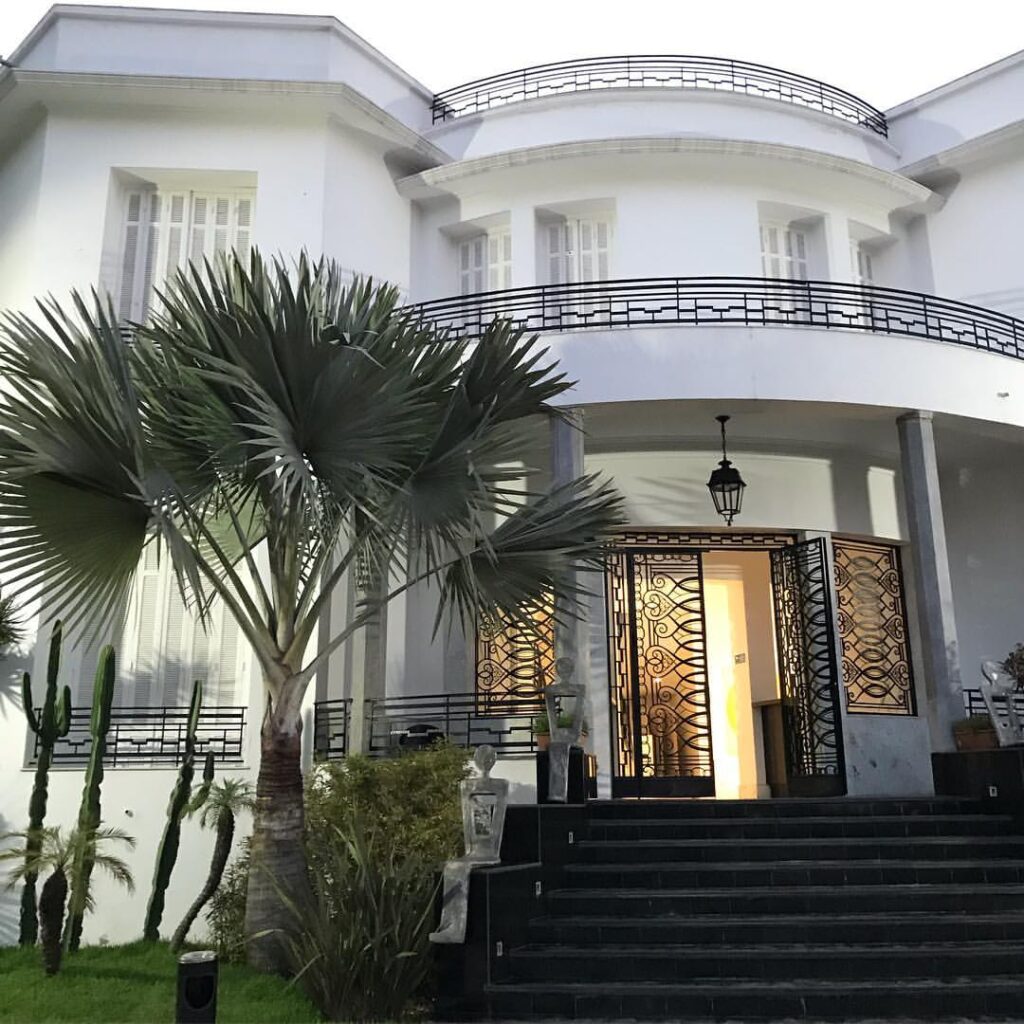
Tucked away in a stunning garden, this gorgeous 1930s house has been beautifully restored by the AL MADA Foundation into a hub for contemporary art. Their goal is to bring culture to everyone, and the villa serves as a stage for all kinds of art: theater, movies, books, and visual arts, all through top-notch events.
Villa des Arts , 30 boulevard Brahim Roudani. Tuesday to Sunday, 9 a.m. to 7 p.m., free entry.
7. Visit Hassan II Mosque, the emblem of Casablanca
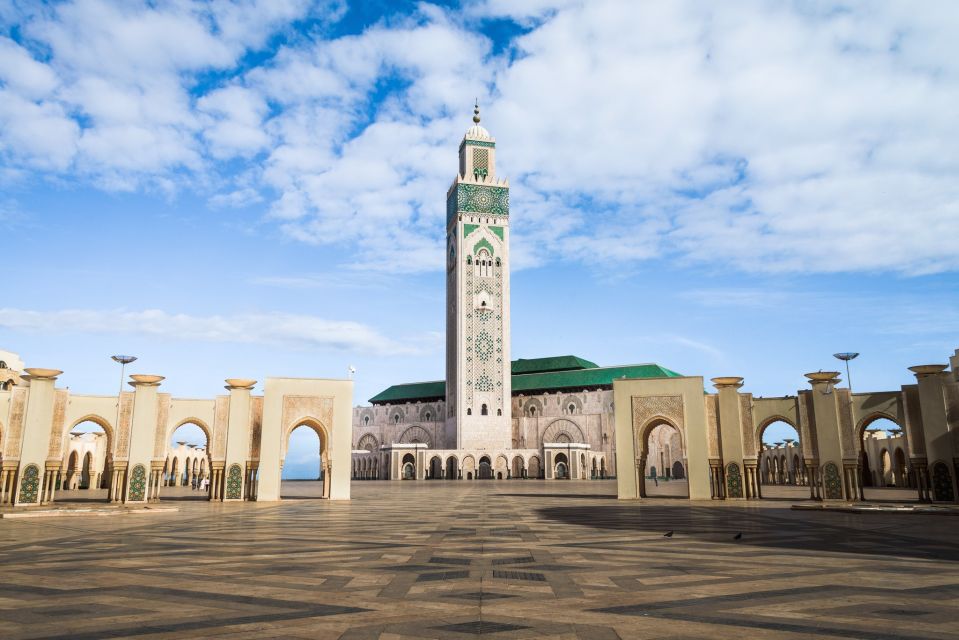
This iconic building, now a symbol of Casablanca, has stood majestically on the shoreline for 30 years, with much of it extending over the ocean. Visiting it, you must be guided, and you’ll hear a lot of amazing facts. The prayer room alone spans two hectares, showing off lavish designs with its incredible ceilings and domes (using 40,000 m3 of cedar!), Murano glass chandeliers, and columns made from marble, granite, and onyx. Plus, it’s got some pretty advanced features: heated floors and a massive roof weighing 1100 tonnes that can open in just 5 minutes!
BOOK HASSAN II MOSQUE PREMIUM TOUR
Please note: this is currently the only mosque open to non-Muslims in Morocco. Entrance: €11.80.
✦ Tip: consult the timetables on the site because the frequency varies according to the seasons and arrive in advance because entry tickets can be purchased at the museum located on Rue de Tiznit.- fmh2.ma.
8. Discover Amazing Street art: the colors of Casablanca
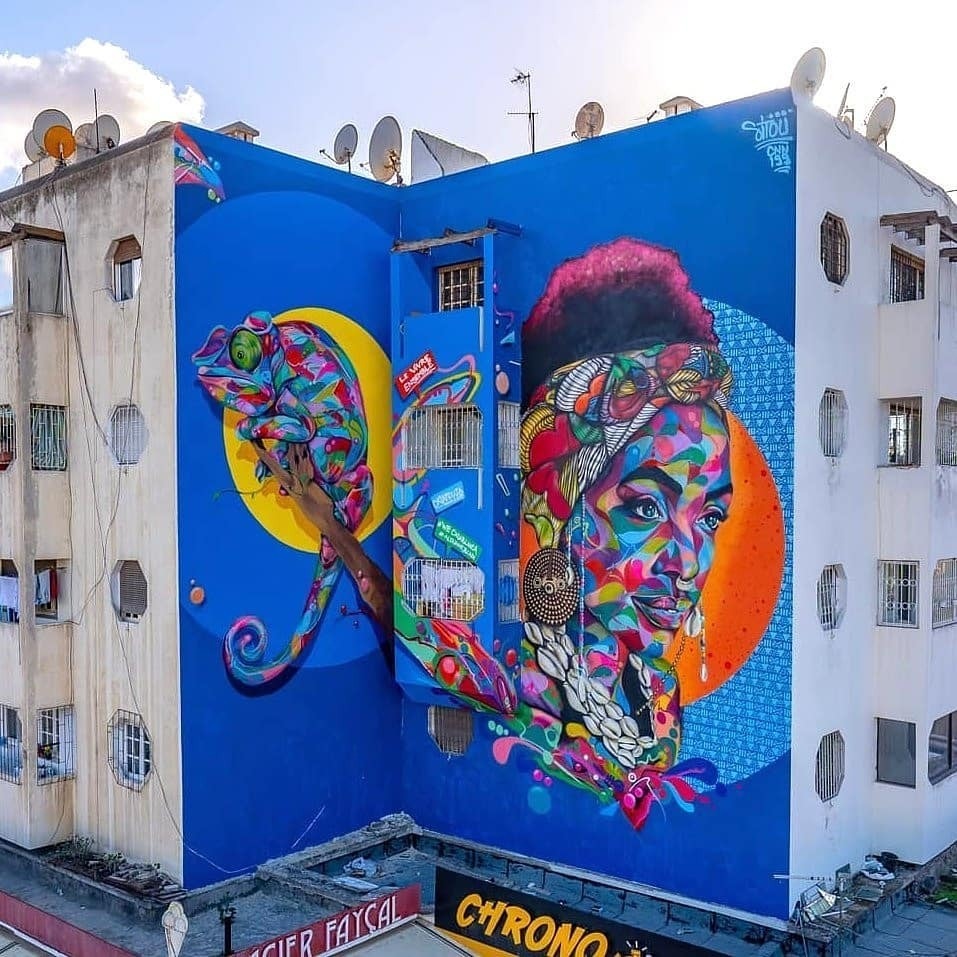
In Casablanca, from the Corniche to Boulevard Roudani, colorful graffiti brings the city’s walls to life, making it a hotspot for street art.
A vibrant group of young local artists is behind these masterpieces. Their art is more than just decorations; it leads the way for wonderful tours arranged by the Alouane Bladi association, meaning “the colors of my country.” This group, led by Amine Hannaoui, does an amazing job of promoting the art and engaging with the youth.
Whether you’re exploring by bus or bike, you’re in for a visual treat!
9. Taste Grilled fish feast at the Central Marketplace
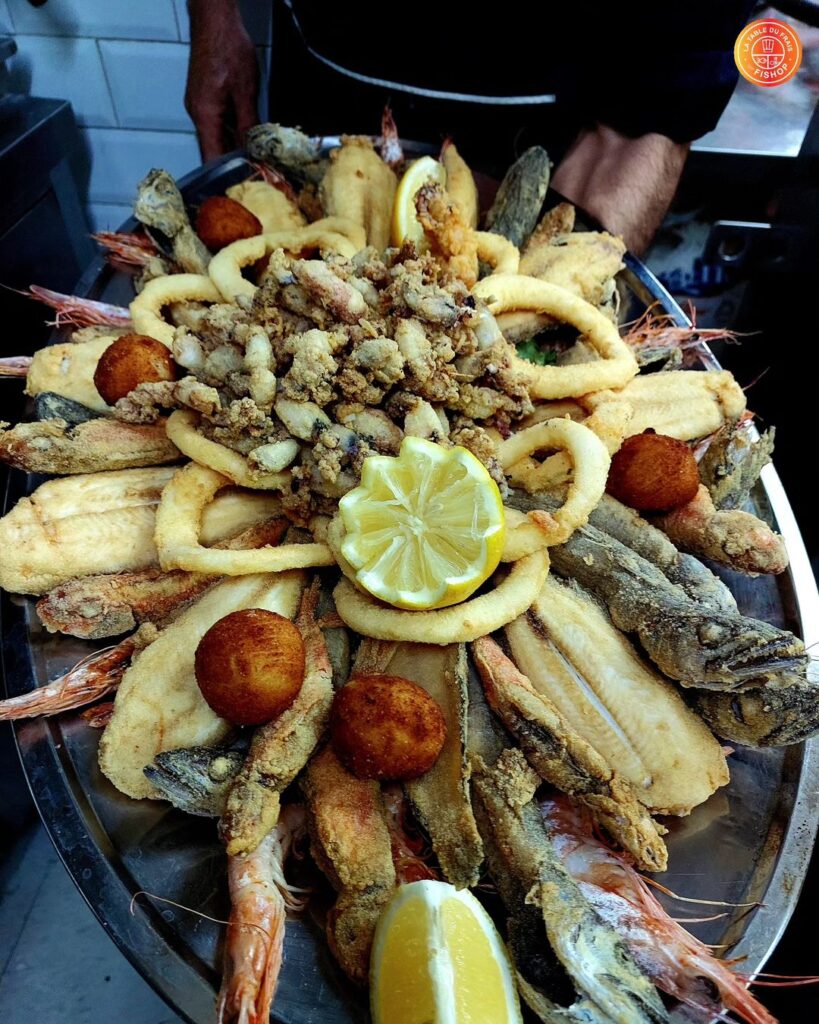
Walking through that big, fancy door with green tile work, we step into a spot that folks from Casablanca really love. It’s like diving into a sea of smells and colors with flowers, fruits, veggies, and spices all over. We head to the Central Marketplace where you can find all sorts of goodies from the ocean, like oysters and fish.
When it’s time to eat, it’s super easy. Just pick out some seafood by how much it weighs and take it to one of the nearby places to get it cooked. You get lemon, bread, and salads (both cooked and fresh) to go with it. And the price? Totally fair – it’s about €15 for a kilo of sea bass.
10. Chill out on the Corniche
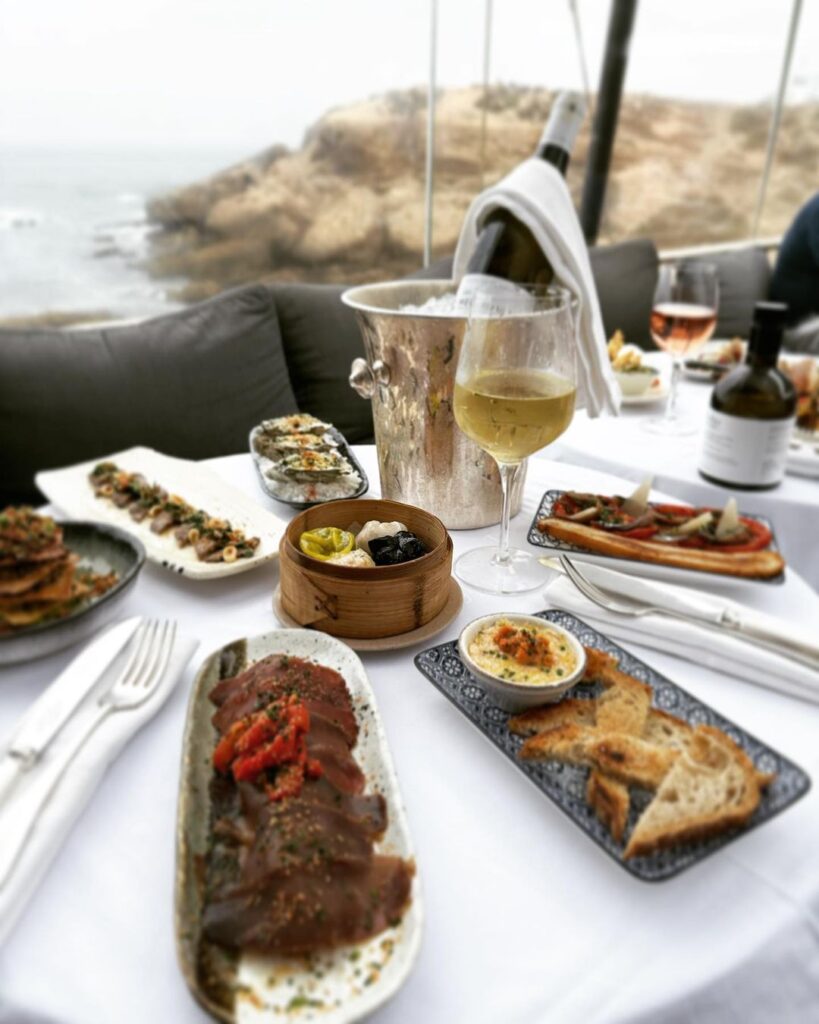
This spot is like the heart of Casablanca, a favorite place for locals to enjoy some fresh air by the Atlantic. By day, chill under the sun at Tahiti Beach, a famous club with eight pools overlooking the sea. Come evening, eat at fancy restaurants near the El Hank lighthouse. Over at Corniche by Palmeraie, nine different places offer tastes from all around the world, from Nikkei fusion to classic French dishes.
Right by the lighthouse, there’s a place you can’t miss called Cabestan Ocean View. It’s fancy with private spots to sit facing the sea and top-notch food, including aged meats and fish like sea bass cooked in salt crust. Plus, you can try dishes from two other places next door, Lily’s with its Asian menu, and Ummaya, known for Eastern Mediterranean dishes.
Top Hotels in Casablanca for Every Budget
Casablanca has a bit of everything: oceanfront resorts on the Corniche, business classics around United Nations Square, and design-forward stays in Gauthier/Maârif. Here’s a clear, budget-sorted list with neighborhoods and why each place works.
Typical nightly ranges (before tax):
Luxury: 2,200–4,500 MAD+ • Upscale: 1,200–2,200 MAD • Mid-range: 750–1,200 MAD • Budget: 400–750 MAD
(Quick guide: 1 USD ≈ 10 MAD, 1 EUR ≈ 11 MAD, approximate.)
LUXURY (5★)
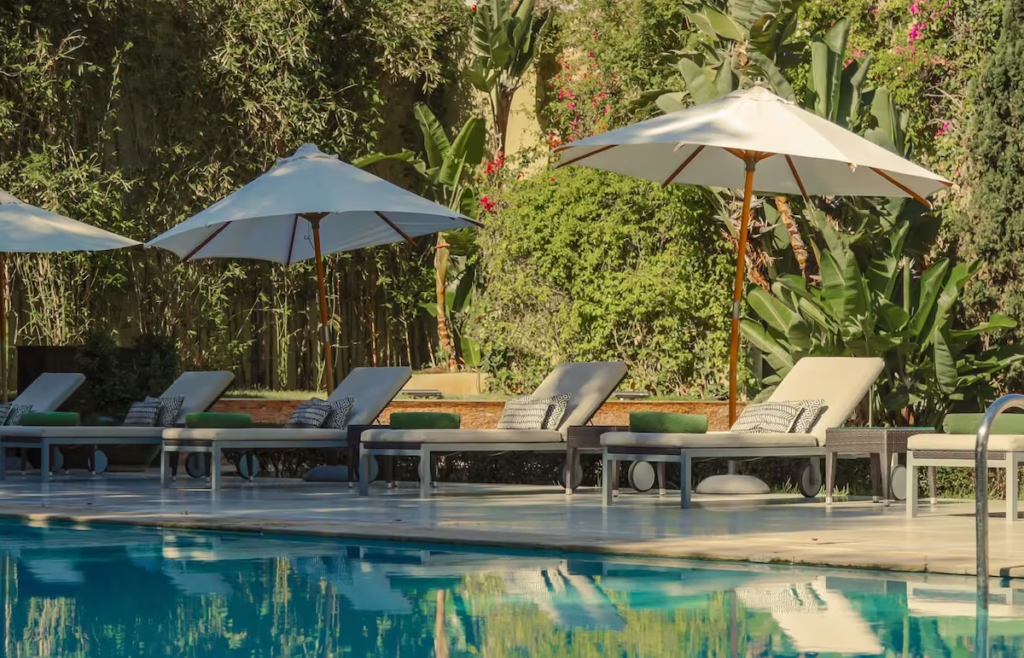
Four Seasons Hotel Casablanca (Ain Diab / La Corniche)
Why pick it: Oceanfront setting, spa, and quiet rooms steps from the Atlantic. Easy sunsets, seaside cafés, and the beach clubs of the Corniche.
Best for: Couples, relaxed business stays, anyone who wants sea air over city noise.
Le Casablanca Hotel (Anfa / Gauthier edge)
Why pick it: Boutique-luxury with gardens, polished service, and a calm residential feel close to fine dining in Anfa/Racine.
Best for: Discreet luxury, design lovers, low-key evenings.
Hyatt Regency Casablanca (United Nations Square / Downtown)
Why pick it: A business classic with strong dining and a central location for the Old Medina, Art Deco walk, and tram connections.
Best for: Work trips, first-timers who want to walk to sights.
UPSCALE
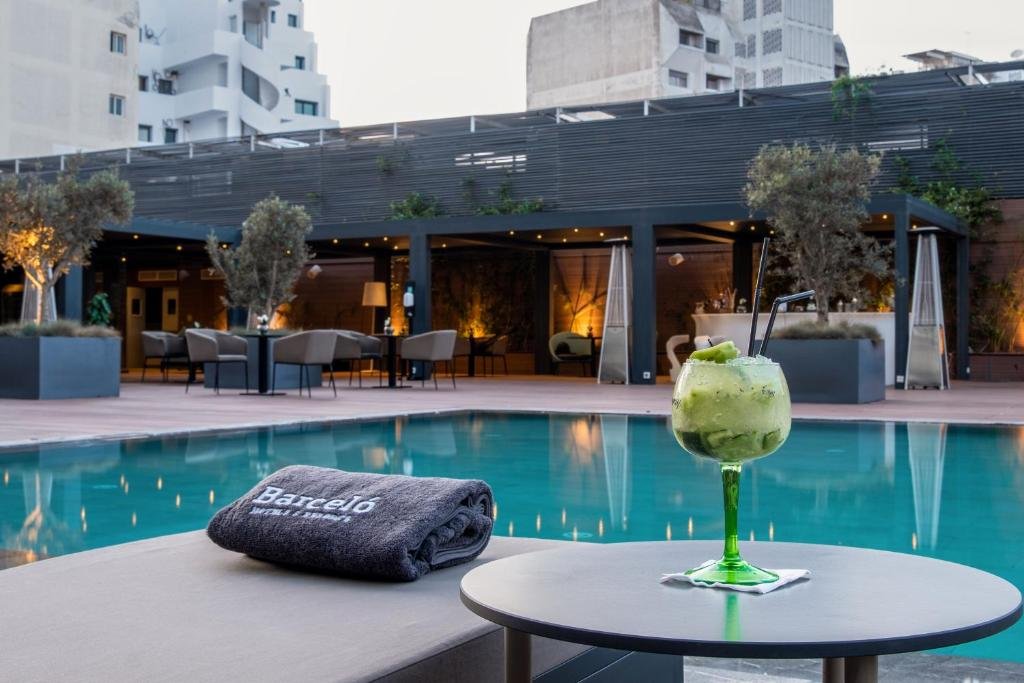
Barceló Anfa Casablanca (Maârif / Gauthier)
Why pick it: Fresh, design-forward interiors near boutiques, bakeries, and casual restaurants.
Best for: Weekend city breaks, food-focused trips.
Kenzi Tower Hotel (Twin Center / Maârif)
Why pick it: Skyline views from a landmark tower, spacious rooms, and easy shopping nearby.
Best for: View seekers, shoppers, families who want larger rooms.
Gray Boutique Hotel & Spa (Triangle d’Or / Racine)
Why pick it: Suite-style rooms with living areas in a leafy, upscale quarter close to cafés.
Best for: Longer stays, travelers who want more space.
MID-RANGE
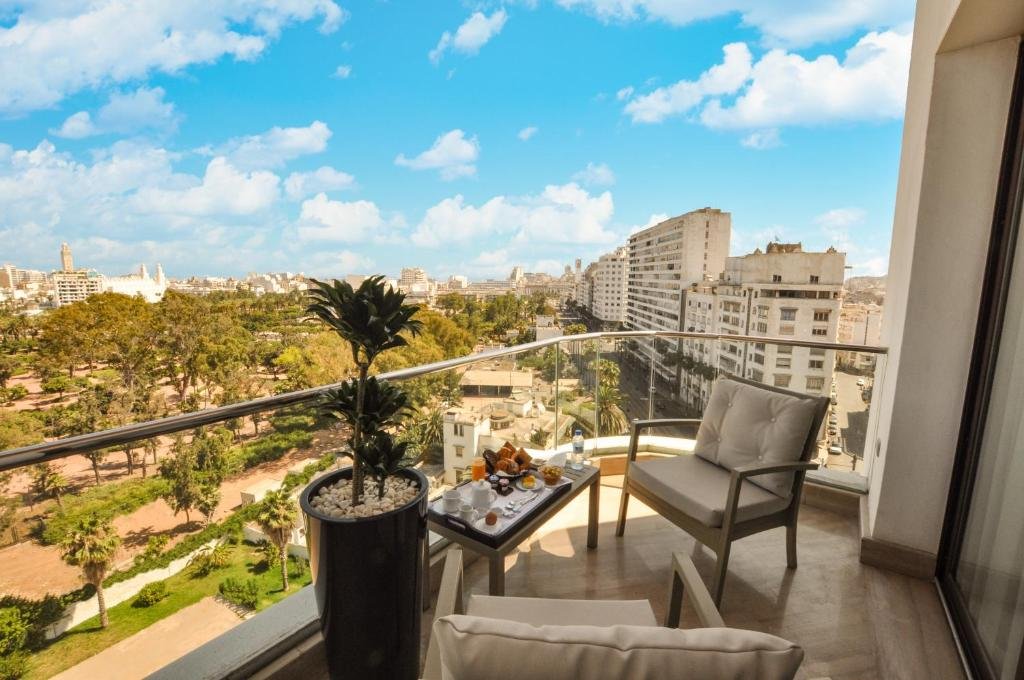
Odyssee Center Hotel (Marina / Downtown fringe)
Why pick it: Clean, modern rooms within easy reach of the marina walk, Casa Port, and the Old Medina.
Best for: Short breaks, walkers who like a central base.
Melliber Appart Hotel (Near Hassan II Mosque / Seafront road)
Why pick it: Apartment-style rooms with kitchenettes and many units facing the mosque/sea.
Best for: Families and longer stays on a mid-range budget.
Suite Hotel Casa Diamond (Downtown axis)
Why pick it: Junior-suite layouts at mid-range pricing; practical for work weeks.
Best for: Business travelers who want space to spread out.
BUDGET & SMART-VALUE
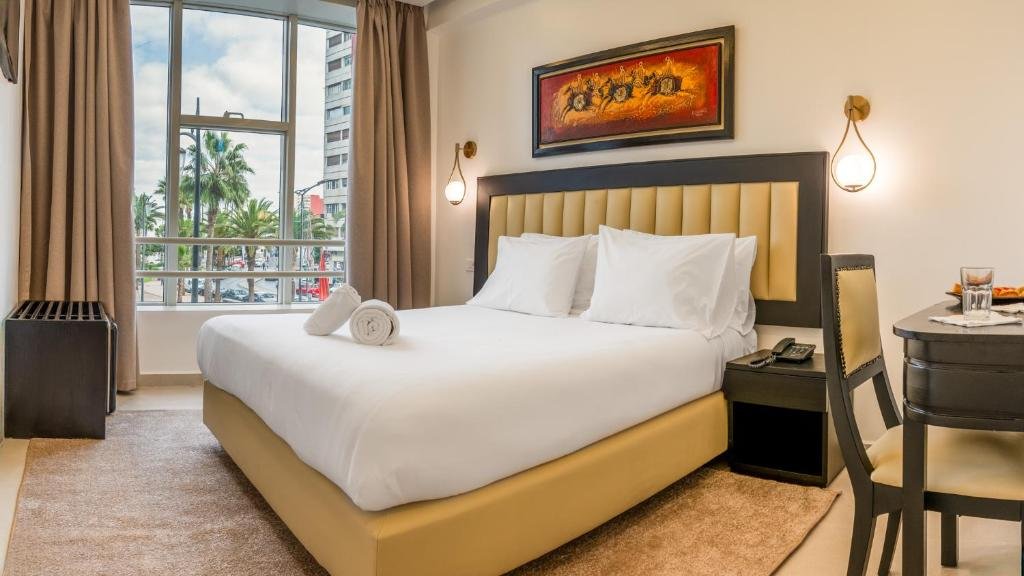
Première Classe Casablanca Centre Ville (Casa Voyageurs area)
Why pick it: Very sharp prices, compact rooms, and quick tram access.
Best for: Solo travelers and anyone prioritizing cost.
Hotel Al Walid (Casa Voyageurs area)
Why pick it: Budget rooms a short walk to the station; convenient for transit days.
Best for: Short, no-frills stays.
Relax Hotel Casa Voyagers (Casa Voyageurs area)
Why pick it: Newer budget option by the station with simple, bright rooms.
Best for: Easy logistics and early departures.
FAQs — Best Things to Do in Casablanca
What are the absolute must-see sights?
The Hassan II Mosque, the Art Deco downtown around Mohammed V Square, the Habous (New Medina), the Corniche Ain Diab seafront, and the Central Market (Marché Central) for seafood.
Can I visit inside the Hassan II Mosque?
Yes, by guided tour at set times. Dress modestly; women should bring a scarf. Check the day’s schedule when you arrive.
What are the best neighborhoods for a walking tour?
Center-Ville (Art Deco façades), Habous (crafts, bookshops, pastry stalls), and the Corniche (sunset promenade). Gauthier/Maârif are good for cafés and dinner.
What unique experiences does Casablanca offer?
An Art Deco architecture walk, seafood lunch where you choose your fish at Marché Central, sunset on the Corniche, and a cultural stop at Villa des Arts or a museum exhibit.
Is Rick’s Café worth a stop?
It’s a film-inspired restaurant/bar with live music some evenings. Go for the ambience and a drink or meal; reserve ahead for dinner.
What are good family-friendly things to do?
Guided mosque visit (older kids), tram ride, Villa des Arts gardens, seaside time on the Corniche, and pastry tasting in Habous.
Best time of day for photos at the mosque and seafront?
Early morning or golden hour before sunset for softer light and fewer crowds.
Are there worthwhile day trips from Casablanca?
Rabat (about 1 hour by train), El Jadida (Portuguese Cistern and ramparts), and Azemmour for a quiet riverside medina.
What foods should I try?
Grilled sardines, pastilla, harira, bissara, olive tastings in Habous, and mint tea. For dessert, try chebakia or kaab el ghzal.
How do I get around the main sights?
Use the tram for downtown/Corniche axes, petit taxis within neighborhoods, and ride-hailing for convenience. Walking works well in compact areas.
Is bargaining expected?
Yes in markets and small shops (politely). Malls and big stores have fixed prices.
What about safety and dress?
Casablanca is busy and generally safe; use normal city awareness. Dress modestly for mosques and conservative areas; casual smart attire works elsewhere.
What museums or galleries are worth a look?
Villa des Arts for rotating exhibitions, plus smaller galleries around Gauthier and the city center.
Where can I see the best Art Deco buildings?
Start at Place Mohammed V, then walk Boulevard Mohammed V toward Cinema Rialto and Immeuble Liberté—classic façades and signage abound.
What’s a simple 1-day plan?
Morning: Hassan II Mosque → Art Deco coffee stop. Midday: Seafood at Marché Central. Afternoon: Habous shopping & pastry tasting. Sunset: Corniche walk. Dinner: Gauthier/Maârif.
Do I need to book tours in advance?
Architecture or food tours can be booked a day or two ahead. For mosque tours, check same-day times; for popular restaurants, reserve.
Any tips for visiting during Ramadan?
Some restaurants adjust hours; evenings are lively with iftar. Be discreet with eating/drinking in public during daylight.
What souvenirs should I bring home?
Spices, olives, ceramics, leather goods, and local pastries. Inspect quality and ask about origin.
- Perfect Morocco with kids Itinerary (2026): 25 Days from Tangier to the Anti-Atlas, Coast, and Marrakech
- Where To Stay In Agafay Desert in 2026: Luxury Moroccan Holidays
- 14 Most Beautiful Beaches In Morocco (2026)
- What To Wear In Morocco (2026): Real-World Travel Guide For Female Travellers
- 3 Best Places To Stay in Marrakech Medina [2026 Updated]