
Travel writing based on first-hand experience
Discover the perfect and detailed 3 days in Fez itinerary. Explore the historic medina, vibrant souks, ancient landmarks, and hidden gems with this detailed travel guide.
| ➡️Read our guide with the best things to do in Fez and nearby, along with practical tips to help you move through the city more easily, choose where to stay, and find places worth sitting down for a proper meal. ➡️Discover the best places to stay in Fez, Morocco — from the historic Medina’s charming riads to Ville Nouvelle’s modern hotels. Find top neighborhoods, handpicked stays, and insider tips to make your trip unforgettable. ➡️These are the places that stayed with us most, along with the practical tips that make choosing where to eat in Fez much easier. |
Table of Contents
Introduction: Why Visit the City of Fez, Morocco?
At first glance, one might wonder: why choose Fez? After all, Marrakech is often regarded as the primary destination for first-time visitors to Morocco.
However, Fez is far from an ordinary city. It is, and has long been, the cultural capital of Morocco, located approximately 200 kilometers from the political capital, Rabat. Since its founding in the 8th century, Fez has borne witness to the evolution of the nation’s history and identity.
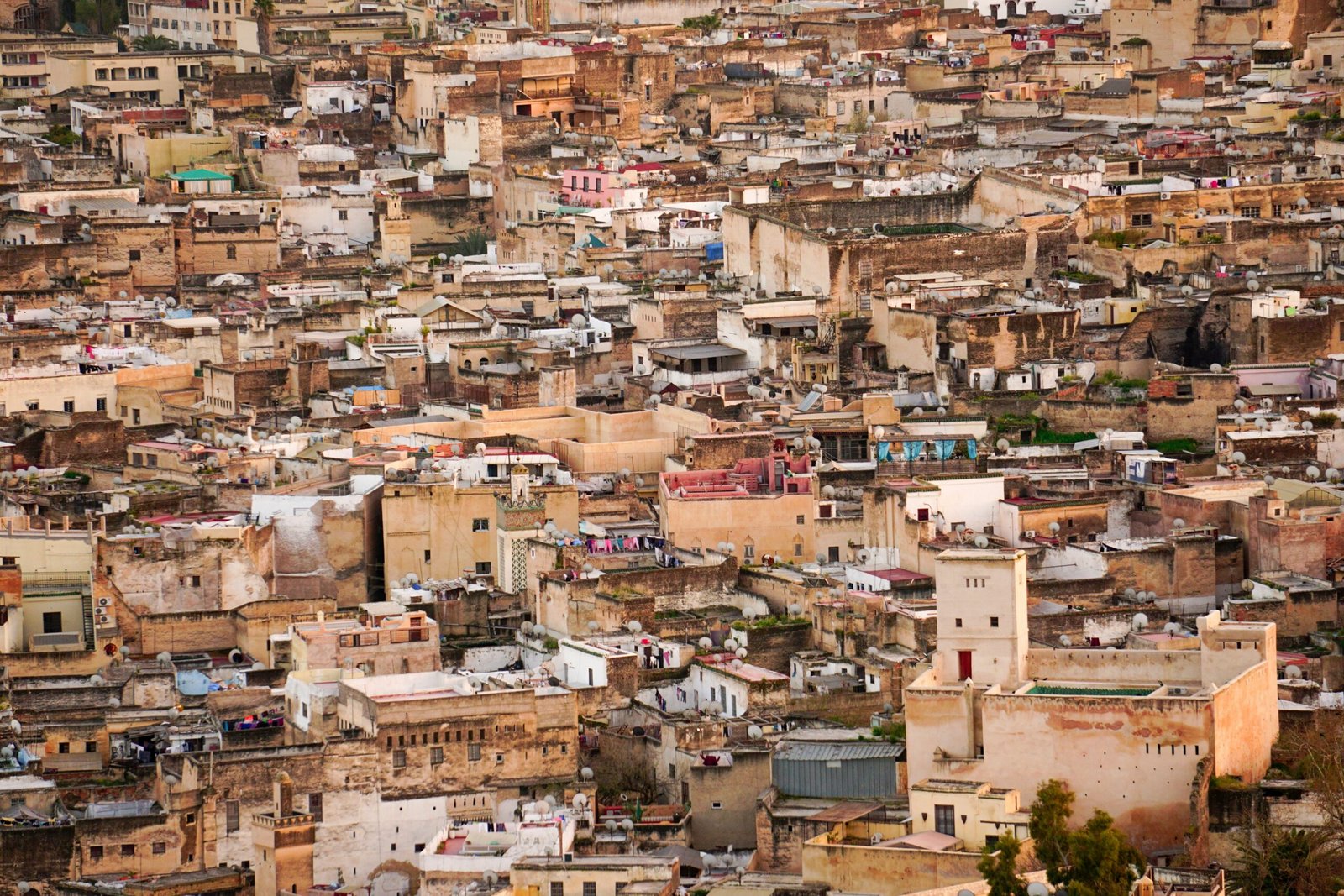
Today, the city presents a vibrant, modern atmosphere seamlessly interwoven with its ancient heritage. A simple walk through its streets reveals a unique blend of the past and the present. Its medina — the old city — stands as a vast, living museum, attracting travelers from all corners of the globe.
It was an experience we, too, found impossible to resist.
The Medina: The Beating Heart of the City

Visiting Fez without getting lost in its medina is almost impossible — and that is part of the charm. This historic quarter, composed of el-Bali and el-Jedid, is enclosed within towering ramparts. In 1981, it was recognized as a UNESCO World Heritage Site, and since then, strict regulations have been in place to preserve its authenticity. Restorations must use traditional materials: cedar wood, hand-cut paving stones, and traditional zellige tiling. No modern concrete structures are permitted.
The medina itself is a labyrinth of narrow alleyways. Each souk (market) specializes in different trades: meat, fish, vegetables, electronics, ceramics, copperwork, carpentry, leather goods, weaving, and more. Good footwear is essential for exploring the medina, especially since its tall, close-packed buildings offer a welcome shade during the hottest months.
Fez’s rich and complex history is tangible throughout the medina. Andalusian, Berber, and Middle Eastern influences blend seamlessly, creating a vibrant cultural identity.
5 Fascinating Facts About the Medina of Fez
Rather than listing a few reasons to visit Fez, it is more appropriate to recognize that every corner of the medina offers a reason in itself. However, to highlight its unique character, here are five notable facts:
- Hidden Windows: Above many front doors, barred windows allow women to observe visitors discreetly. In private, Moroccan women do not wear veils, and these architectural features offered them privacy while maintaining modesty.
- An Abundance of Mosques: Fez is home to 264 mosques. Contrary to popular belief, they are not all grand structures. Many are small, discreet, and integrated into the urban landscape.
- Public Fountains: Numerous fountains are scattered throughout the medina. Historically, they provided drinking water to residents before the installation of modern plumbing systems. Many of these fountains remain functional today.
- Traditional Transportation: In the medina, automobiles are impractical. Although a few scooters navigate the wider streets, donkeys remain the primary means of transporting goods. Traders also use handcarts. When hearing shouting in the streets, it is customary to step aside promptly.
- Green Rooftops: The rooftops of the medina are predominantly covered with green stone tiles, a local material. These rooftops are particularly beautiful when viewed from the North and South Borj.
Bonus tip: If you’re getting excited and planning your trip, you might wanna check out this guide with Tips For Traveling In Morocco Like a Pro: 30 Essential Things to Know.
When to Visit Fez
Fez is a destination that can be visited throughout the year. In winter, temperatures rarely fall below 0°C. For instance, in February, mornings are typically around 11°C, while afternoons can reach up to 20°C under clear skies. Rainfall is relatively low, with November and December being the wettest months, although the precipitation remains moderate.
In summer, however, temperatures can rise sharply, often reaching 35°C to 40°C during the day.
How Many Days to Spend in Fez?
Three days are more than sufficient to explore the city. This duration allows visitors not only to discover the main attractions but also to take time for shopping and relaxation, especially within the medina. In this article, a detailed itinerary outlines all the activities that can be comfortably enjoyed over three days.
Where to Stay in Fez
As a tourist destination, Fez offers a wide range of accommodations to suit all preferences and budgets. Options include traditional riads, hotels, guesthouses, and entire homes, catering to both Moroccan and Western tastes.
Most accommodations are located within the medina itself, which provides an ideal base for immersing oneself in the city’s atmosphere. Many establishments offer an escort service to help guests navigate the medina’s complex streets — a highly appreciated service for first-time visitors.
Our Experience at Dar Hidaya
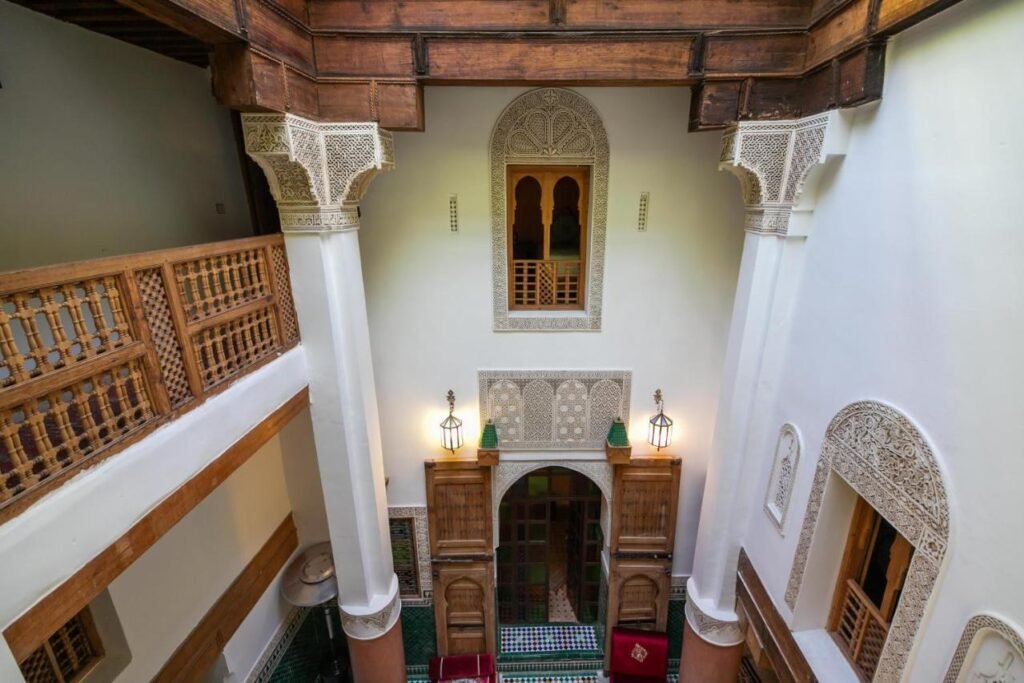
For this visit, accommodation was arranged at Dar Hidaya, a charming and reasonably priced riad. The welcome was exceptionally warm and the stay very comfortable. Upon arrival, Mohamed, the young manager, personally picked us up from the parking lot where our airport driver (arranged through the riad) had dropped us off. He then guided us to the riad where we would stay for three nights.
The ground-floor room was spotless, with clean bathrooms, fresh bath linens, and a comfortable bed. The air conditioning was efficient and reversible. On the top floor, two terraces provided a space to relax, often accompanied by a glass of sweetened mint tea. Breakfasts, served each morning in the patio, were hearty and typically Moroccan.
Throughout our stay, Mohamed and Hassan proved to be gracious and attentive hosts, conversing easily in both French and English. Their kindness and hospitality made a lasting impression.
A particularly noteworthy moment occurred when we had to depart on an early flight: Mohamed woke up at 4:30 a.m. to prepare breakfast and accompanied us back to the parking area to ensure a smooth transfer to the airport. An example of exceptional service.
- €39 per night for a room accommodating three people (double bed and single bed) as of April 2025.
- Moroccan breakfast included.
- Optional airport transfer available.
What to Do in Fez
As mentioned earlier, most of a visit to Fez revolves around the medina. Wandering through its labyrinthine streets is one of the highlights of the trip. Visitors can immerse themselves in daily local life, passing through various souks, artisan workshops, tourist shops, and narrow alleys filled with surprises.
A stay in Fez promises a journey steeped in culture, history, and craftsmanship, which has made the city famous. Not to mention its exceptional photogenic charm.
Visiting Fez with a Guide
Initially, the idea of hiring a guide had not occurred to us. Typically, we prefer exploring cities on our own, map in hand. However, in Fez, given the medina’s complexity, we heeded the advice of our host and hired a guide for a morning.
The cost was €25 for half a day and €40 for a full day. We were accompanied by Yassin for the morning, although, as later sections will explain, our collaboration did not end there.
In Morocco, being a guide is highly regulated. To prevent scams, the government has implemented strict measures: guides must be professionally trained, display an official badge, and follow fixed pricing. Impersonating a guide is punishable by imprisonment, and with the significant police presence, unauthorized guiding is strongly discouraged. While minor incidents may still occur, overall, the system is well-enforced.
Contact for Yassin:
Phone: +212 6 61 92 71 49
Email: [email protected]
Day 1: First Impressions in the Medina, Jnan Sbil Garden, and the Blue Gate
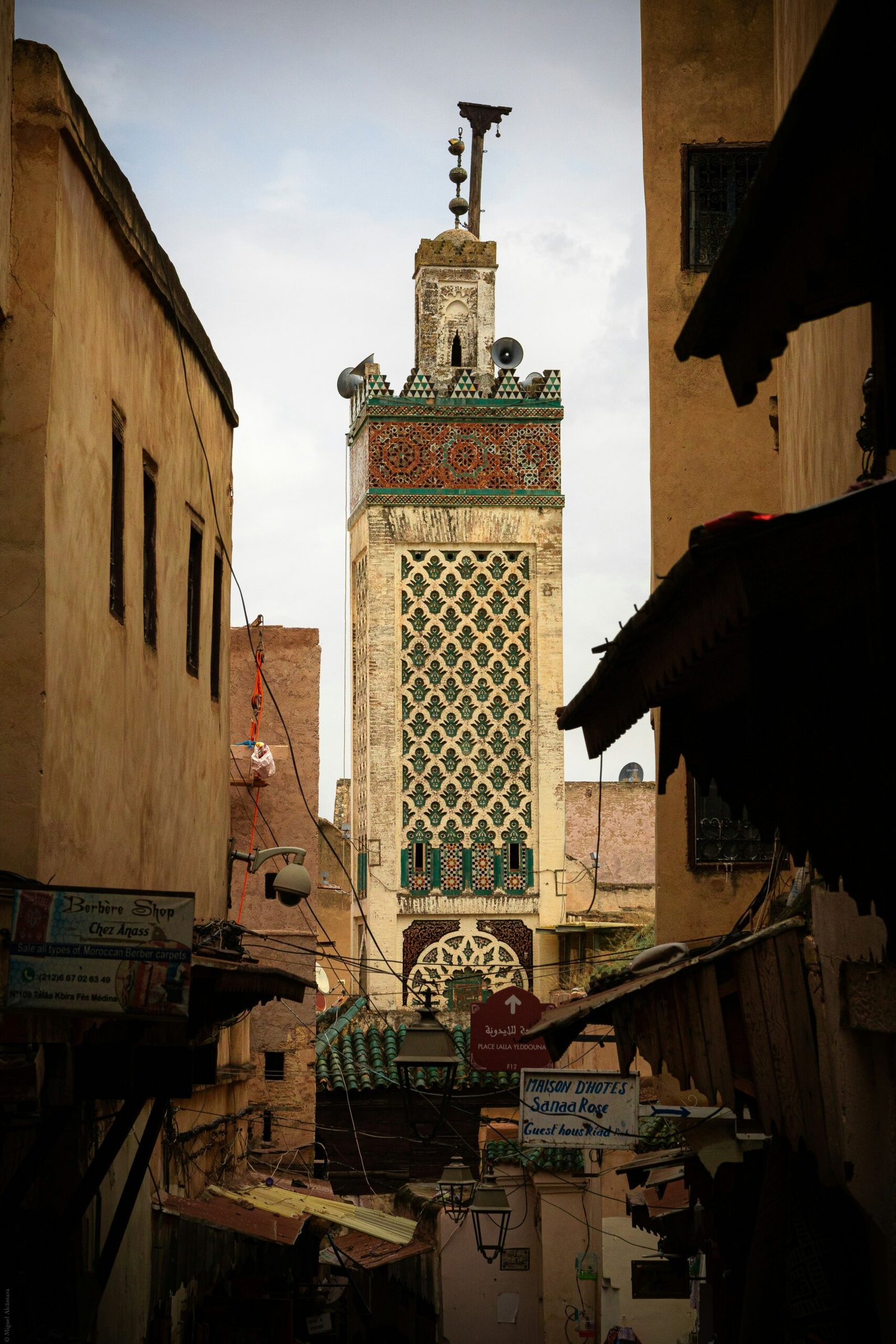
Upon arrival, a gentle warmth enveloped us. Our driver awaited us at the airport, courteous, cheerful, and highly skilled. Moroccan traffic, it seemed, was an adventure in itself.
Our initial steps in Fez took us straight into the heart of the Medina, where our hotel was located. After a welcoming mint tea, we set off for an initial exploration. Wandering at random, we followed one of the main arteries of the souk. The vibrant energy of the medina was immediately palpable.
In the covered sections of the souk, dedicated to meats and vegetables, the contrast with European markets was striking: goat and camel heads hung in open-air stalls, caged chickens awaited their fate for the evening tagine, and stray kittens fought over scraps. Spices in vibrant piles drew the eye, creating a scene both disconcerting and fascinating.
The Jnan Sbil Garden
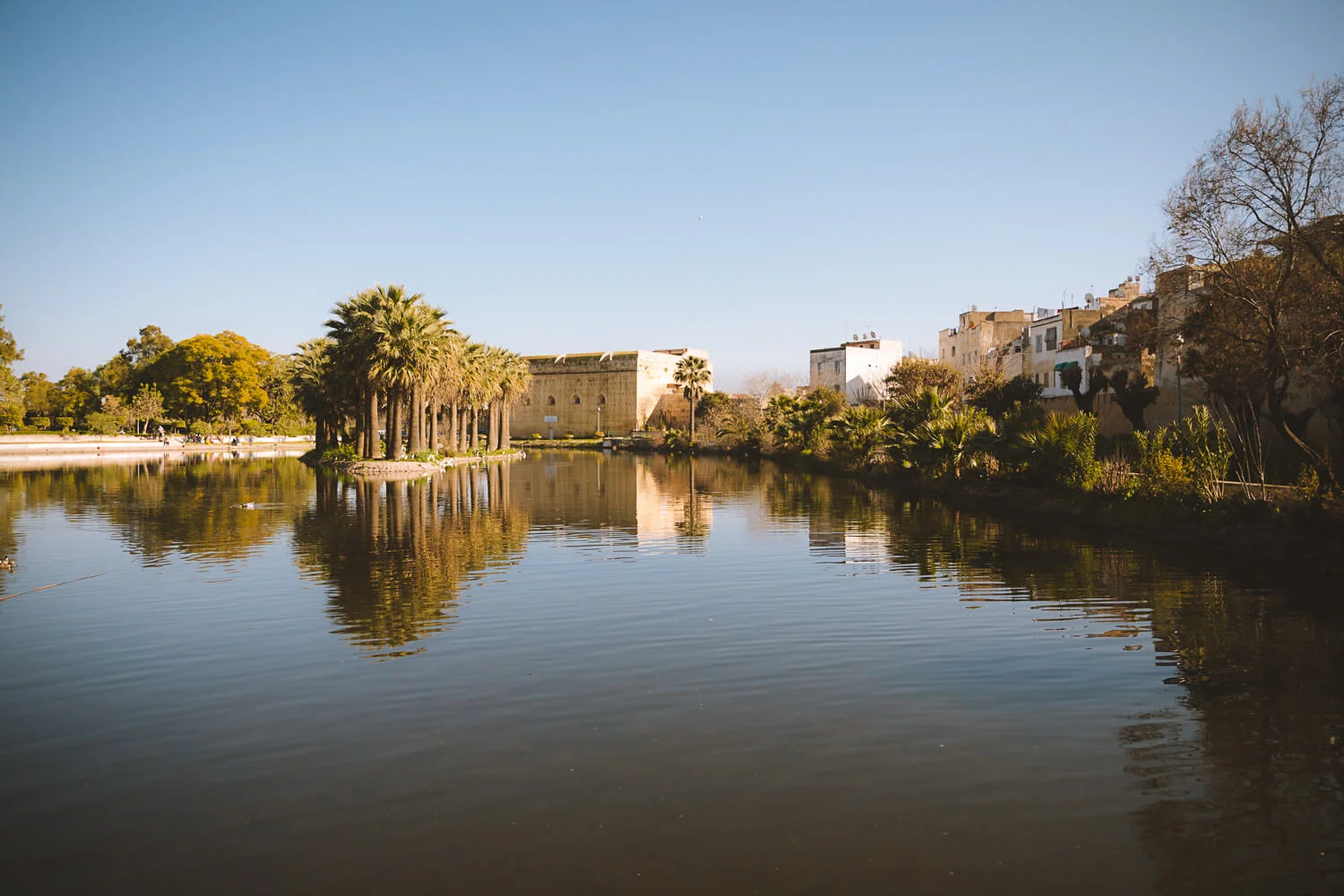
For a gentler introduction to Fez, we visited the Jnan Sbil Garden (also known as Jnane Sbil). Located across Avenue de l’Unesco, near the Chems Gate, admission is free.
The seven-hectare park offers a refreshing escape, with palm trees, orange trees, bamboo, and fountains. Its Andalusian influences reflect the deep historical ties between Spain and Morocco. The garden, crossed by the Oued Zbal, is the oldest in Fez and home to hundreds of egrets — a delight for children and adults alike.
Practical Information:
- Open daily, except Mondays
- Opening hours from 10 a.m.
Bab Boujloud: The Blue Gate
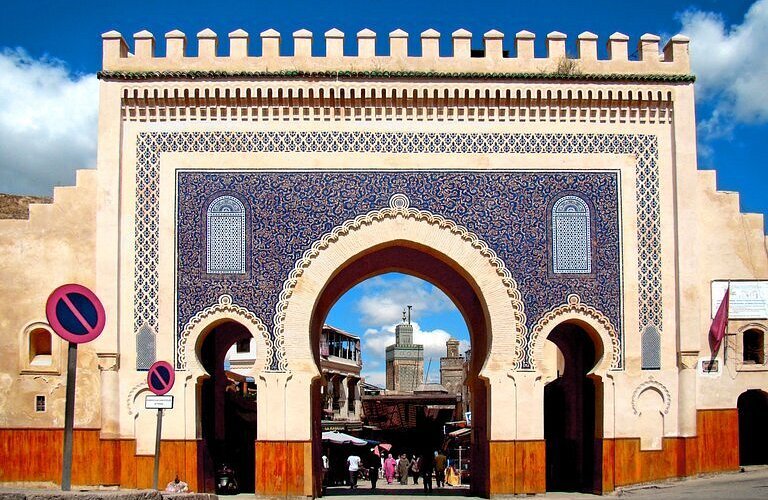
Returning to the medina, we crossed the bustling Boujloud Square to find the famous Bab Boujloud, also known as the Blue Gate — the main entrance to the medina. Here, taxis, police officers, vendors, and travelers created a lively, sometimes chaotic scene.
The gate itself, bathed in the soft light of late afternoon, was beautiful. To admire it at leisure, we recommend enjoying a mint tea at Café La Kasbah, located directly opposite, offering an excellent view for just a few dirhams.
Day 2: Guided Tour, Artisans’ Quarters, and Shopping
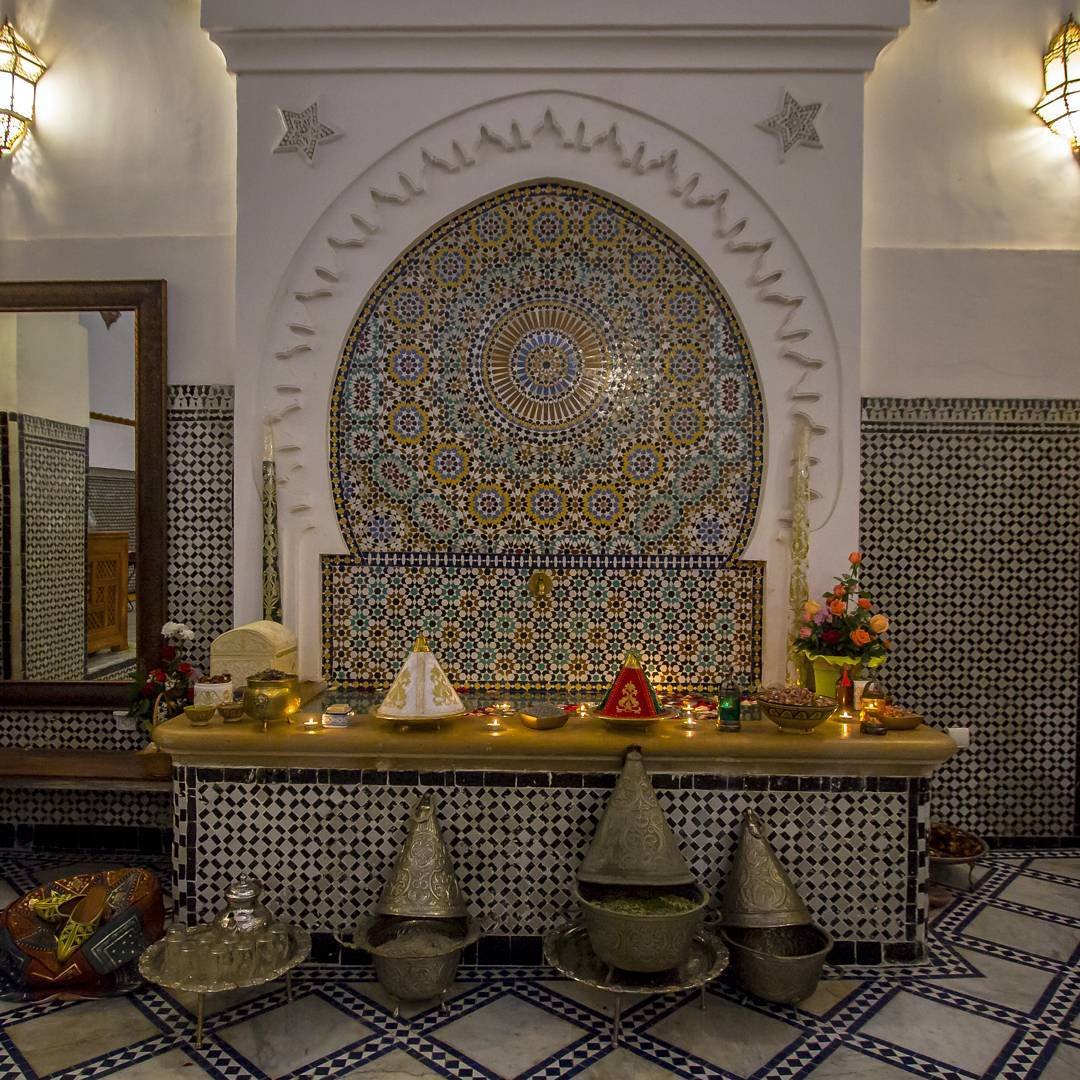
On our second day in Fez, we took advantage of Yassin’s services for a customized morning tour of the medina.
We began our visit at the Royal Medina Spa Hammam, one of the few authentic Moroccan hammams remaining in Fez. Its décor is typical, hygiene is impeccable, and the atmosphere is warm and welcoming. Services offered include massages, hot and cold lounges, black soap treatments, and relaxation areas. Although the prices are high compared to the local standard of living, the experience is tailored to the local elite and travelers seeking an authentic spa experience.
Continuing deeper into the medina, we stopped at the Barka Fondouq — a beautiful 18th-century building. Originally a “caravanserai” for merchants and peasants, where men and their donkeys rested after long journeys, it has now been converted into a shopping center.
Al-Attarine Madrasa
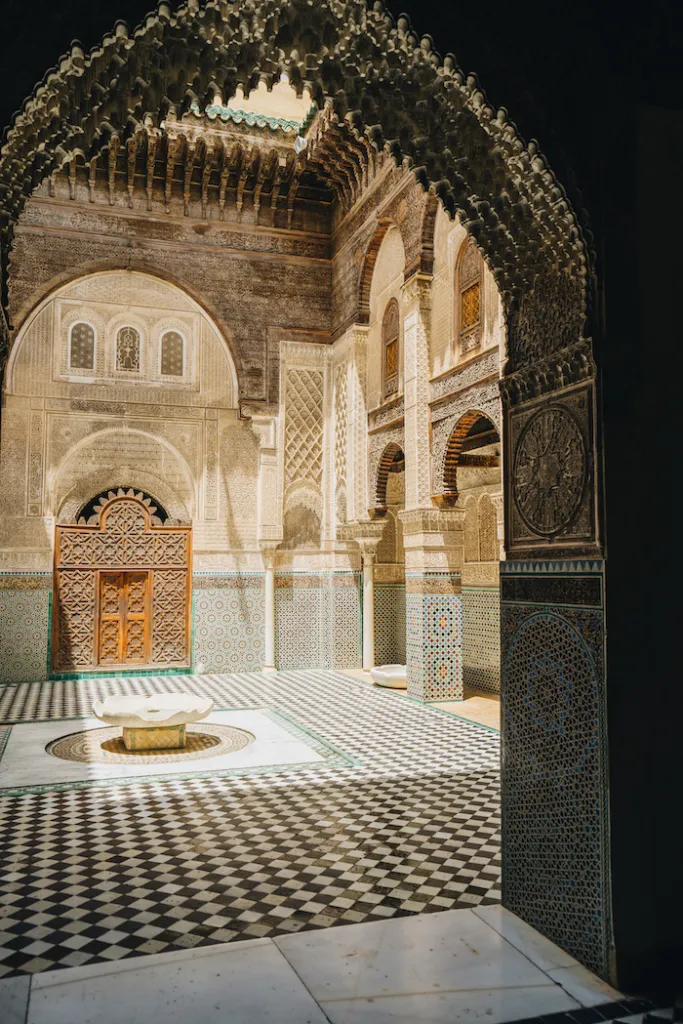
Our next stop was the Al-Attarine Madrasa, a Koranic school built in the 14th century. Open to visitors for a modest fee of 20 dirhams (about €1.80), it offers an insight into traditional Quranic education.
The madrasa’s architecture is stunning, with intricate zellige tile work and carved wooden ceilings. Visitors can explore the former student and teacher quarters, where subjects like mathematics, writing, philosophy, and religion were taught. Visiting early in the morning is advisable to avoid large tourist groups.
Practical Information:
- Open daily from 8 a.m. to 6 p.m.
- Entrance fee: 20 dirhams
Al Quaraouiyine University
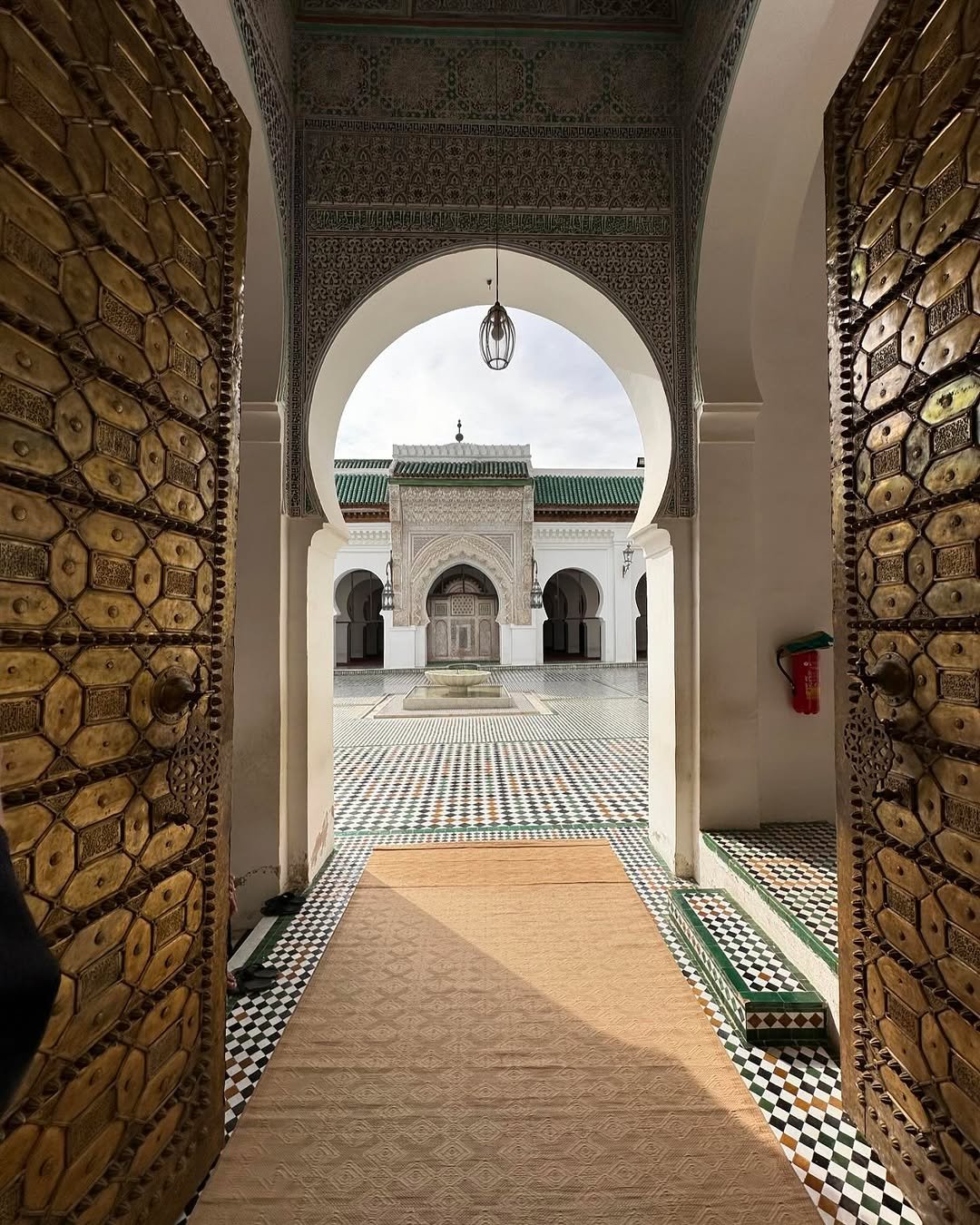
Nearby stands Al Quaraouiyine University, recognized as the oldest university in the world. Although entry is restricted to Muslims, it is still possible to admire its stunning interiors from the entrance: intricately decorated fountains, dazzling tiled walls, and beautiful ceilings.
A curious detail near one entrance: a wall splitting the street into two narrow passages. This architectural feature was designed to prevent donkeys from wandering into the sacred precincts.
We also passed by the Mausoleum of Moulay Idriss II, founder of Fez. Although non-Muslims cannot enter, it is worth pausing to admire its exterior — a place of significant spiritual importance where members of the royal family are buried.
Immersion in the World of Fez Crafts
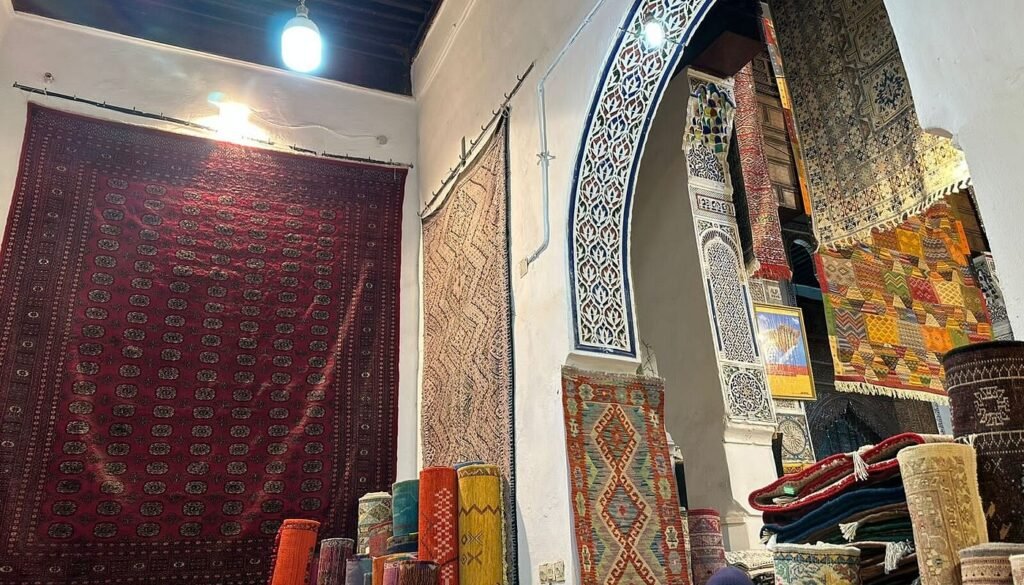
Our exploration then took us to a carpet-making workshop, Ibn Khaldoun, also known as Aux Merveilles du Tapis. Here, carpets are handmade by local women using traditional techniques. Some rugs can take several months to complete, which explains their high price. Interestingly, authentic Moroccan carpets are sold after being washed and aged — a guarantee of quality.
Purchasing a rug involves a time-honored ritual: tea is served, and the shopkeeper passionately explains the quality, origin, and craftsmanship behind each piece. Once chosen, the carpets are expertly packed into canvas bags, perfect for carry-on luggage, and delivered directly to hotels.
Following the carpet workshop, we visited the ceramic artisans’ souk and the metalworkers’ area in Nejjarine Square. The clanging sounds of craftsmen working copper and brass filled the air. It is also here that visitors will find the Nejjarine Museum of Wood Arts and Crafts, housed in a restored fondouk.
Practical Information:
- Open daily from 10 a.m. to 5 p.m.
- Entrance fee: 20 dirhams
In a nearby weaving workshop, men spun silk threads made from cactus fibers into colorful scarves and pashminas. With countless colors and patterns, it is impossible not to find something to take home.
The Tannery of Chouara
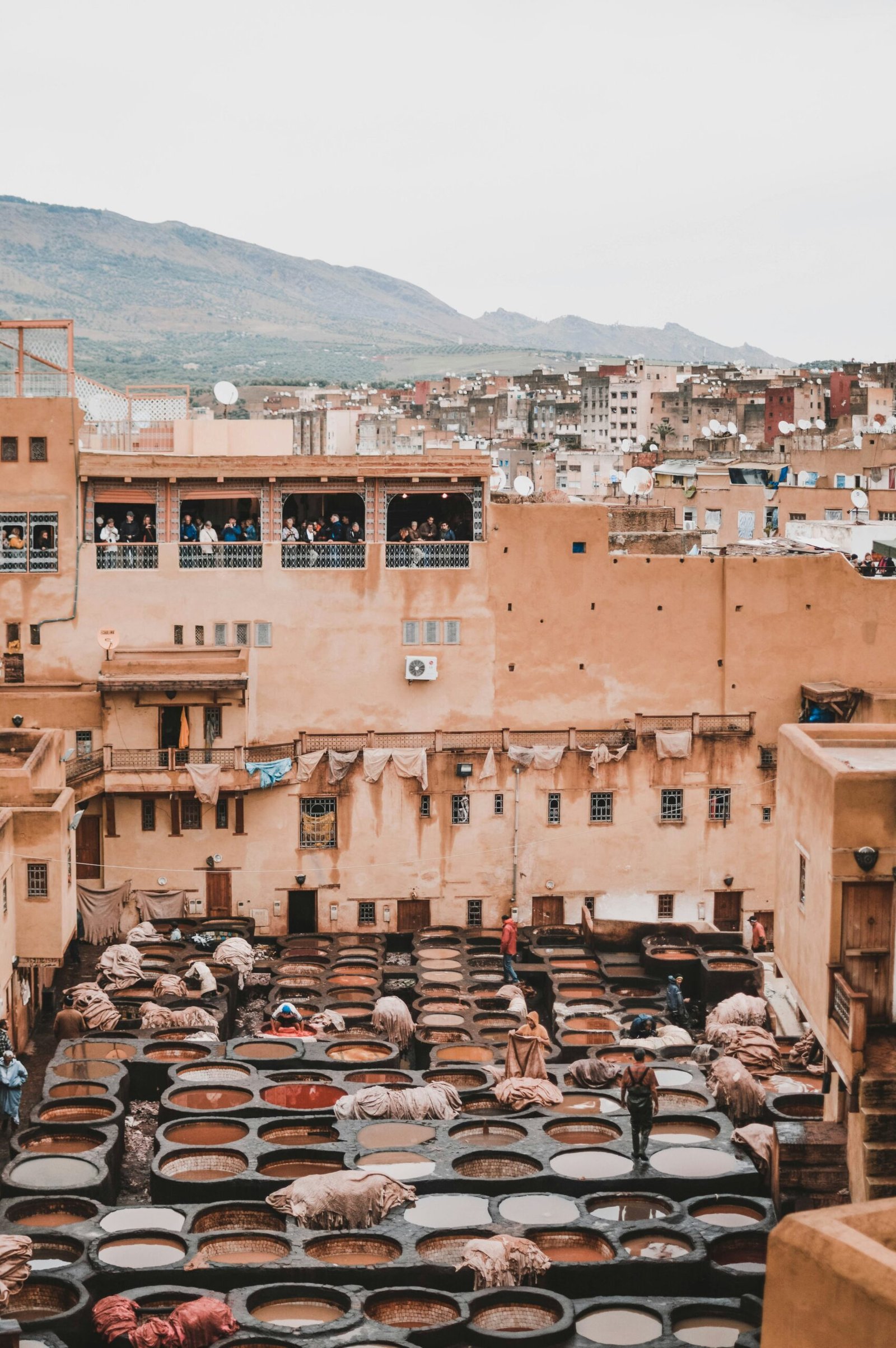
Next, we ventured into the famous tanners’ district to see the Chouara Tannery, one of Fez’s most iconic sites. It is a very popular destination, even outside the peak tourist seasons.
To admire the famous view over the tannery pits, we accessed a terrace two floors above a leather goods shop. At the entrance, a helpful attendant handed out sprigs of fresh mint to mask the strong smells rising from the vats below. However, the much-feared odor was quite manageable, likely because of the moderate February temperatures. It is worth noting that during the summer months, when the heat intensifies, the smell is reportedly much stronger.
The process for visiting is well organized but inevitably passes through the large leather shop. Here, all kinds of leather products — from slippers and handbags to jackets and coats — are on display. Prices vary significantly depending on the quality of the leather. We each purchased a pair of traditional Moroccan slippers before retreating from the bustle of the store.
Day 3: Deepening Discovery of the Medina
By our third day, we had grown more familiar with the labyrinthine alleys of Fez’s medina. Navigating had become easier, and a final morning stroll allowed us to revisit and delve even deeper into areas we had previously glimpsed. This time, we explored the fish souk, the shoe market, the electronics quarter, and the second-hand booksellers’ market.
Naturally, we also indulged in a bit of shopping, which I will discuss later.
Chergui Palace
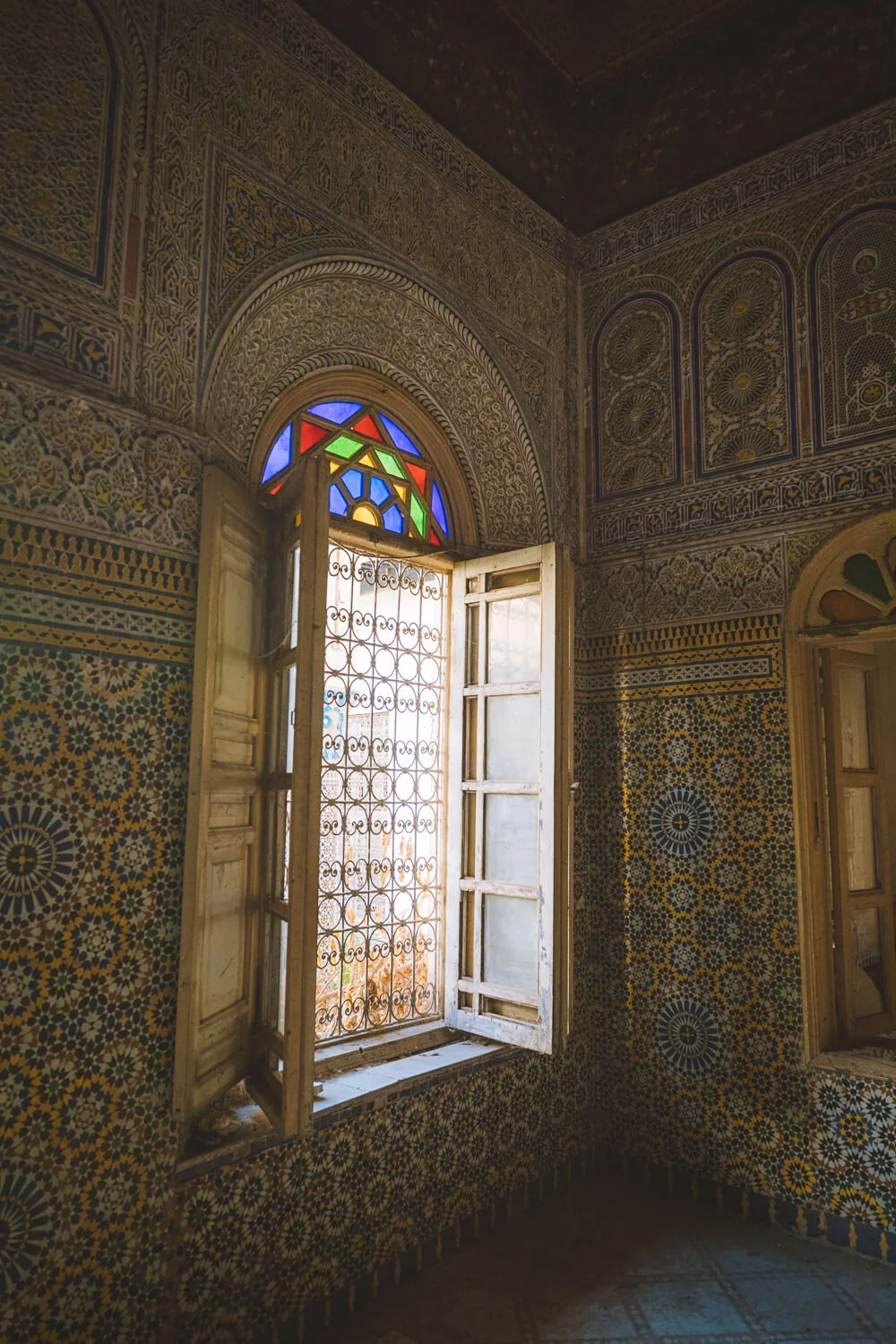
Close to our accommodation at Dar Hidaya, we found the Dar Ba Mohammed Chergi, a once-splendid early 20th-century palace. Although in a state of disrepair, it had recently been purchased by foreign investors with plans to transform it into a luxury hotel. Despite the scaffolding and overgrown plants, the building’s former grandeur remains visible.
The Royal Palace and the Jewish Quarter
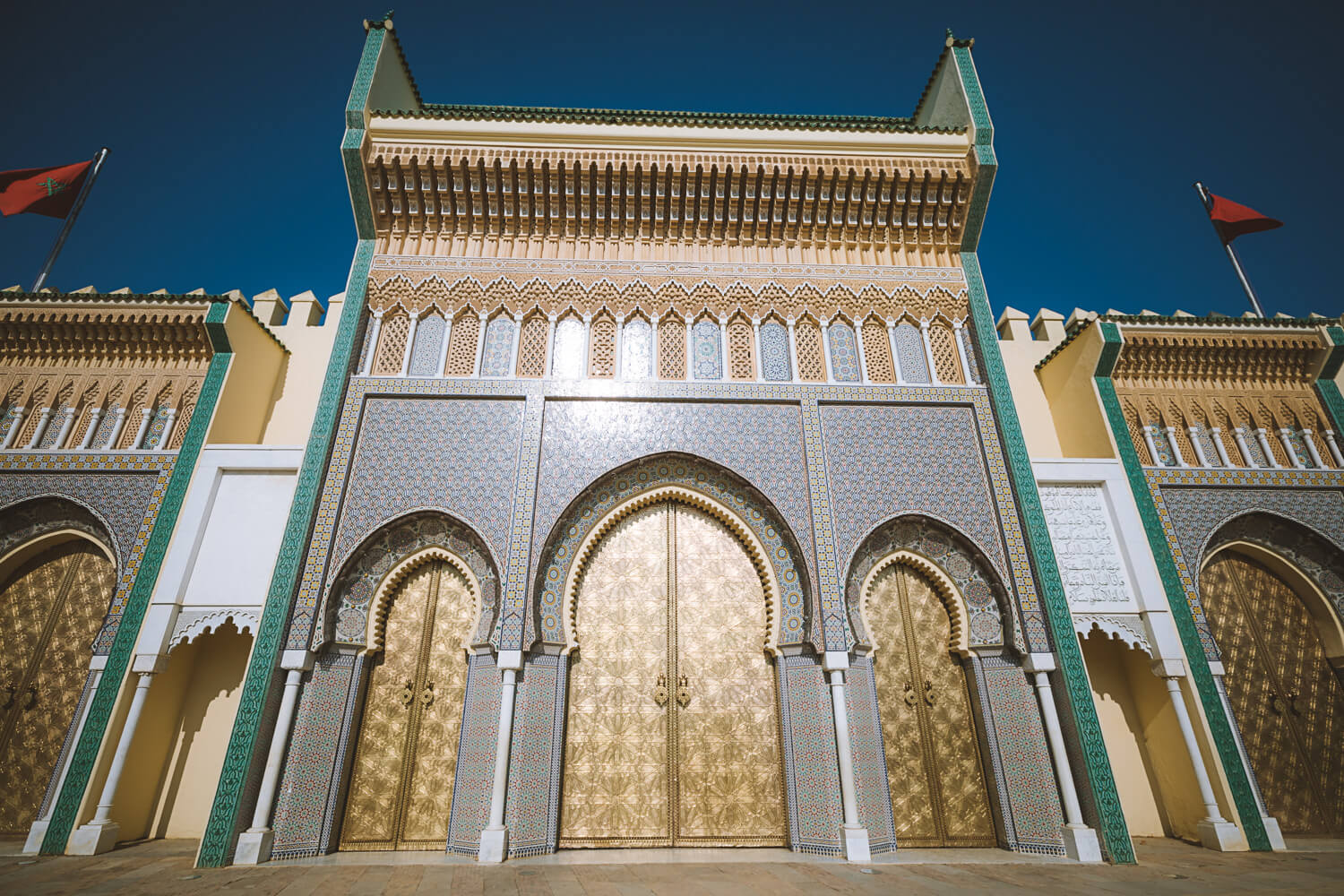
Later we arranged a taxi for the afternoon, costing 200 dirhams. Our first destination was the majestic Royal Palace of Fez. This vast 80-hectare complex is unfortunately closed to the public. It houses a self-sufficient small town within its walls, where palace staff — gardeners, electricians, cooks — live year-round. Only the most skilled craftsmen are selected to maintain the palace, ensuring its splendor endures.
The secrecy surrounding Morocco’s royal residences is significant. Although the King possesses palaces in each major city, access is highly restricted. This strict control also partly explains Morocco’s national ban on the use of drones.
Bordering the Royal Palace is the Jewish Quarter, known locally as the Mellah. Historically, the King’s personal cooks were Jewish, a testament to their renowned culinary expertise. Moroccan cuisine, and Maghreb cuisine more broadly, owes much to these Jewish influences.
Walking through the Mellah today, one notices the distinct architectural style — elegant wooden facades and charming balconies — although the cultural distinctions between Muslim and Jewish communities have largely faded over time.
The Tomb of the Merinids (Borj Nord)
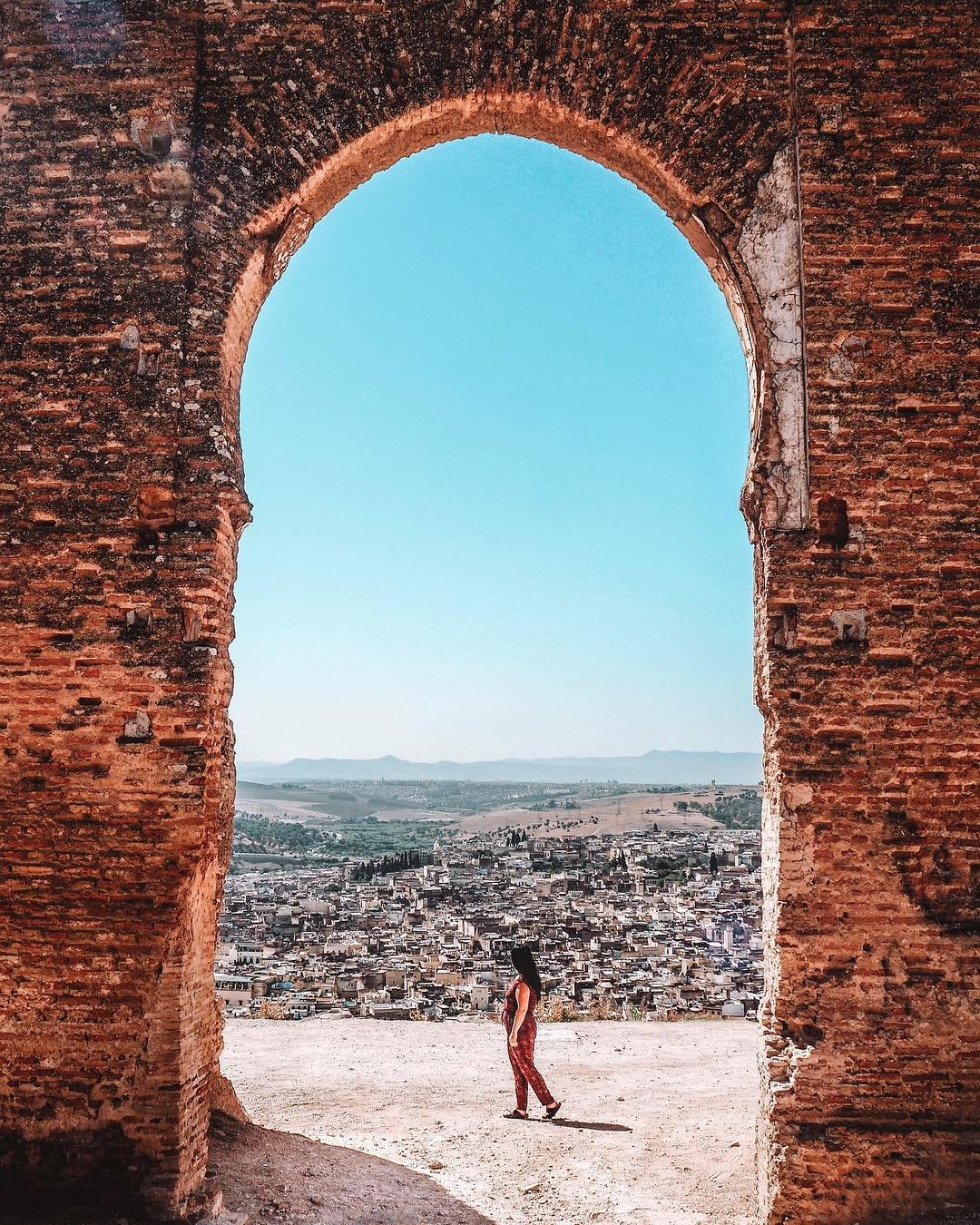
Our taxi then drove us to the Tomb of the Merinids, located near Borj Nord. In the past, the site was somewhat neglected, but today mounted police patrol the area, enhancing security for visitors.
From this vantage point, the view of Fez is nothing short of spectacular. One can truly grasp the vastness of the medina and its surrounding olive groves. While the tomb itself is in ruins — with little more than a few crumbling walls left standing — the panoramic scenery more than compensates for the site’s dilapidation.This location is particularly recommended for sunset visits, when the fading light casts a golden glow over the ancient city.
Clay Art Tour: Visiting a Ceramics Workshop
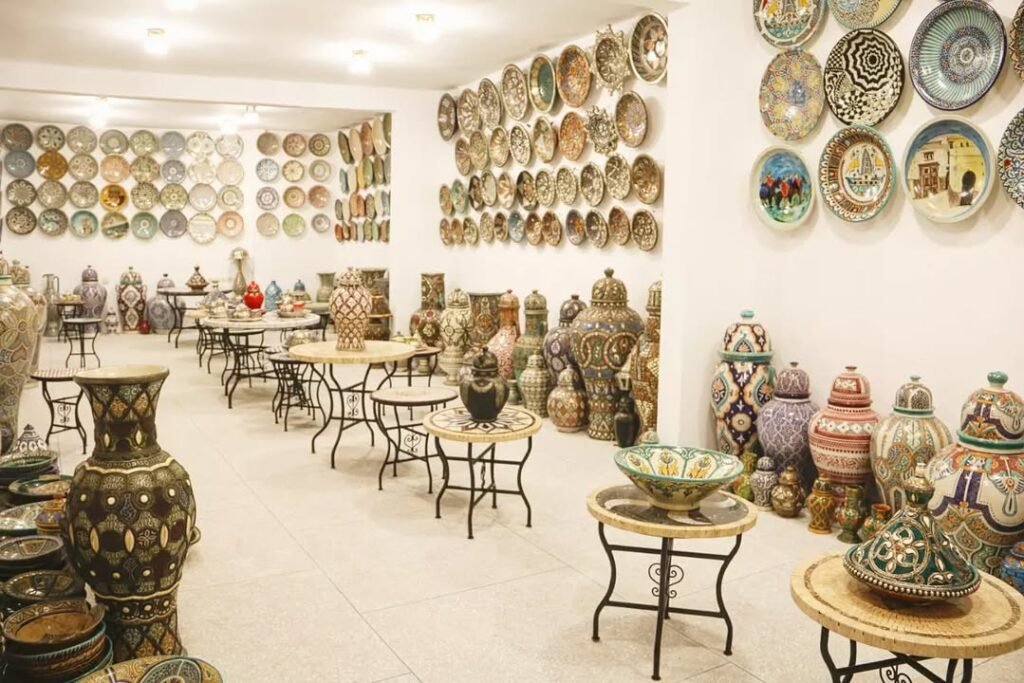
Our next stop was Art d’Argile, a ceramics workshop located just outside the city. The manager welcomed us warmly and took the time to explain the entire process behind traditional Moroccan pottery and tile-making.
The crafting of pottery begins with careful hand-shaping of the clay, which is then left to dry for several hours. After this, it undergoes a six-hour firing at 860 degrees Celsius. Traditionally, olive pits served as fuel for the kilns; today, however, gas is preferred for being less polluting and more efficient.
Once fired, the pieces are hand-painted using cobalt, a mineral abundant in the region. Intriguingly, cobalt is initially purple and only turns the famous blue after a second firing at 1,200 degrees Celsius. After glazing, the final products are ready for sale.
The workshop also demonstrated the making of zellige, the intricate mosaics so characteristic of Moroccan architecture. First, artisans draw patterns on large tiles with chalk. One craftsman breaks the tile roughly, and another meticulously refines each piece by hand using a hammer and chisel, ensuring a perfect fit into the final composition. The precision and patience involved are astonishing.
The craftsmen also explained the traditional technique used to create fountains. The rounded shape of a fountain is achieved by assembling zellige pieces on a round mold coated in black soap. This soap prevents the plaster from sticking, allowing the finished mosaic basin to be removed cleanly once the structure sets.
The expertise displayed was remarkable, a testament to Morocco’s proud artisanal heritage.
Panorama of the City from Borj Sud
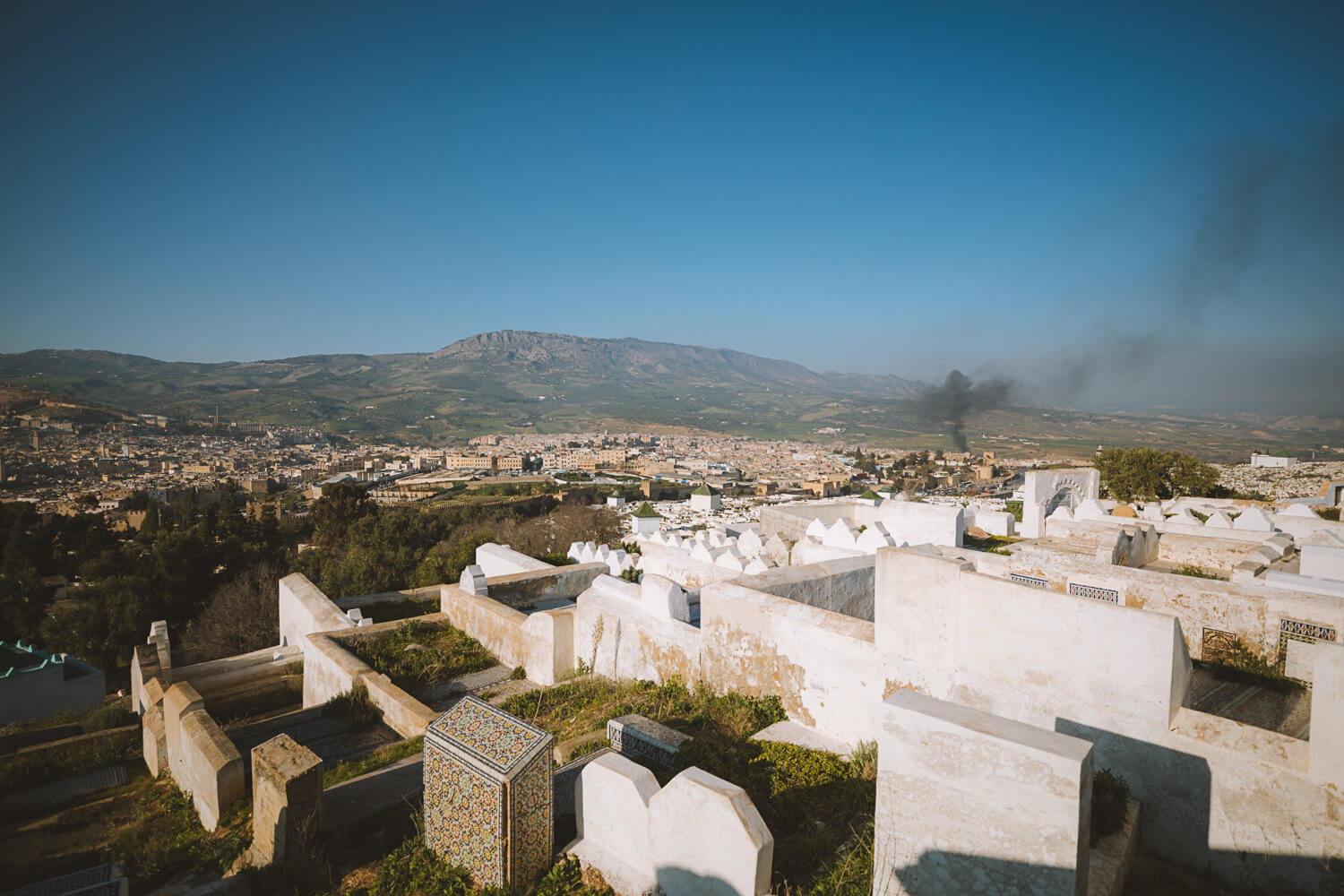
To conclude our exploration of Fez, we headed to another panoramic viewpoint — the Borj Sud. From here, the difference between the ancient medina and the more modern parts of the city is striking. The white tombstones of the sprawling cemetery below create a striking visual contrast against the earthy tones of the medina and the surrounding landscape.
From this high vantage point, the protective ramparts encircling the medina are clearly visible, as is the ring road that outlines the city’s limits. This spot offers a beautiful final perspective on Fez, especially in the soft light of the late afternoon.
Where to Eat: Recommended Restaurants and Places to Avoid
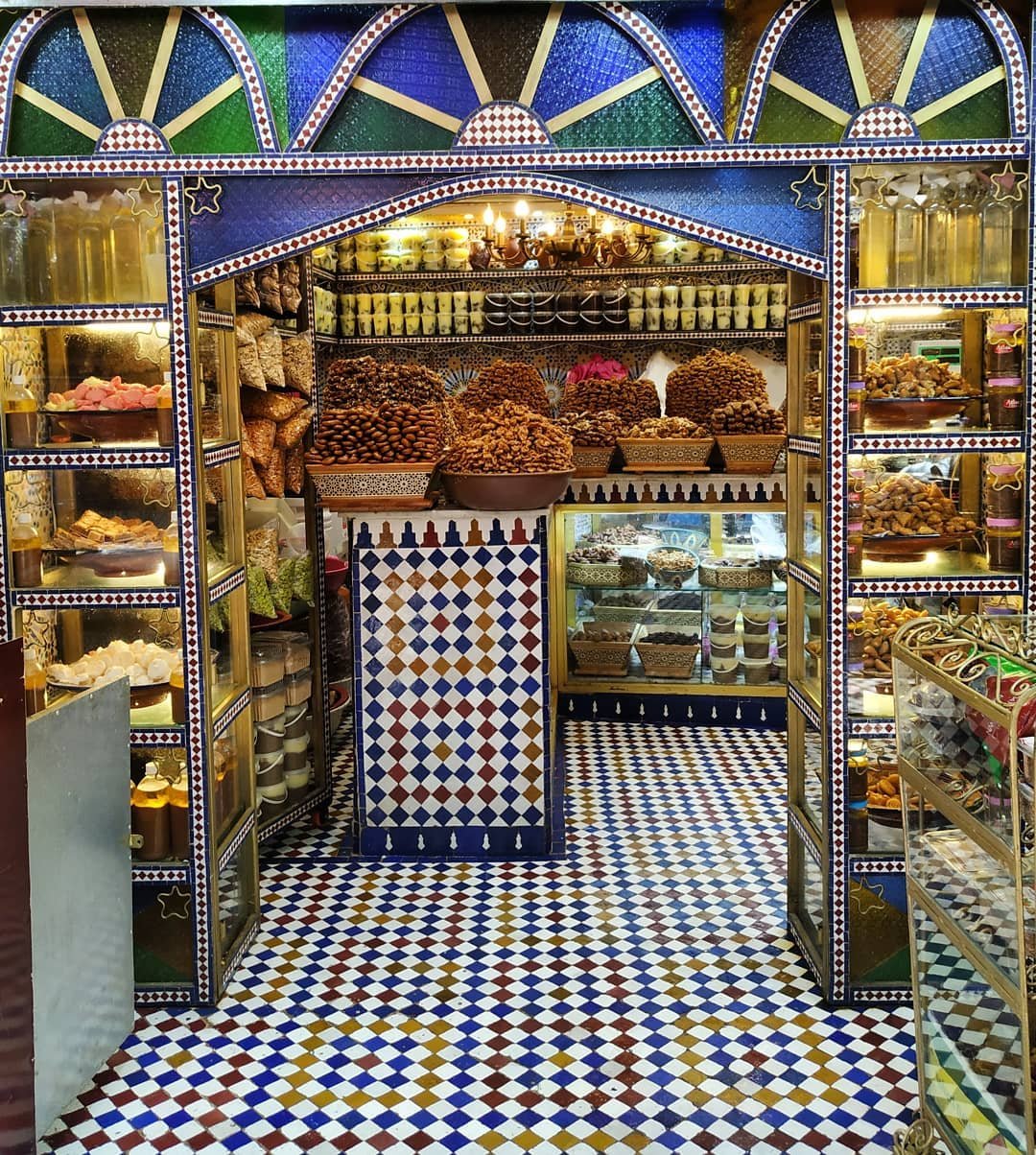
Fez offers a wide variety of dining experiences, particularly around Bab Boujloud. Some establishments are worth seeking out, while others are best avoided.
Recommended Restaurants:
- Chez Saïd: Located on the main artery of the old market, this family-run restaurant is renowned for its delicious couscous. Due to its popularity, expect to wait for a table.
- Chez Hakim: A restaurant with tasteful decor and excellent dishes such as meat skewers and prune tagine. The service is impeccable.
- Café La Kasbah de Fes: Perfectly situated opposite Bab Boujloud, this café offers good service and affordable mint tea. A pleasant place to rest while watching the bustling life of the medina.
- Palais des Goûts Fassie: A paradise for sweet lovers. Choose from a wide selection of pastries sold by weight.
- El Khmissa: Slightly away from the main crowd, this restaurant offers good food and the rare option of beer. The pastilla is highly recommended.
Places to Avoid:
- La Terrassa: Despite its strategic location and promising decor, the food is overpriced and the ambiance disappointing.
- Chez Thamis: Aggressive touts, average food, and questionable hygiene standards make this an unappealing option.
- La Palma: Located near Bab Boujloud, this restaurant offers uninspiring, non-local cuisine and poor service.
Where to Go Shopping
Shopping in the Fez medina can be both thrilling and overwhelming. With countless vendors selling rugs, slippers, jewelry, spices, and cosmetics, distinguishing authentic craftsmanship from mass-produced imitations requires some attention.
How to Tell Authentic Goods from Fakes:
- Prefer established shops over street stalls for better quality assurance.
- For silver jewelry, a simple lighter test can reveal authenticity: silver darkens but does not burn.
- Genuine leather does not burn easily and withstands direct flame.
- Check seams on bags and slippers; sturdy stitching is a mark of quality craftsmanship.
- Be cautious with cheap rugs sold on the street, often chemically dyed and poorly made.
Tip:
Bargaining is an essential part of shopping in Morocco. Traders are usually more flexible early in the morning when the first sale of the day is considered good luck.
Recommended Shops:
- Silver Jewelry on Derb Serraj Street: Run by an honest elderly man, offering quality silverware and lanterns.
- Les Merveilles du Tapis: Specializing in authentic handmade carpets.
- Arganouira: A shop offering cosmetics and spices, run by a friendly and knowledgeable owner.
Practical Information for Visiting Fez
Getting to and from the Airport
Upon arrival, it is necessary to complete an immigration form. Having a pen ready will speed up the process considerably. Passing through customs usually does not take long.
Tip:
If traveling in winter, it is wise to pack lighter shoes in your carry-on. While mornings and evenings can be chilly, daytime temperatures are often pleasant enough for lighter clothing.
Taking a Taxi in Fez
The journey from the airport to the medina usually takes about 30 minutes, depending on traffic. Many accommodations offer pre-arranged taxi services for approximately €15, which is a convenient option. Alternatively, taxis are available directly outside the airport.
If you choose a local taxi, make sure to agree on the fare before starting the journey to avoid surprises. When moving around within Fez, taxis can be found near the medina gates. Always negotiate the price beforehand, as meters are not commonly used.
ATMs and Withdrawing Money in the Medina
Cash is still king in Morocco. Though card payments are becoming more accepted, especially in modern establishments, it is safer to have cash on hand for most transactions, especially in the medina.
Using ATMs is generally cheaper than exchanging currency at the airport or hotels. Banks in the medina have ATMs, but be aware that on Sundays, they might not be refilled, and cash availability can be limited due to high tourist demand.
Travelers with cards like N26, Revolut, or Max benefit from favorable exchange rates and lower withdrawal fees.
Security in Fez
While stories about theft and scams circulate, it is clear that Morocco has made significant efforts to secure tourist areas. In Fez, you will notice a strong police and military presence, particularly around the medina. Plainclothes officers patrol as well, contributing to a sense of safety.
Of course, normal precautions apply: stay alert, guard your belongings, and avoid isolated areas late at night.
Overall, we found Fez to be a safe and welcoming city for travelers.
What Women Should Wear When Traveling to Morocco
Before traveling, many women worry about appropriate dress codes in Morocco. While each city and region varies, Fez is relatively traditional.
In winter, dressing modestly is straightforward due to cooler temperatures: jeans or loose trousers, sweaters, and scarves are common choices. In summer, when temperatures soar, loose-fitting clothing such as long dresses, capri pants, and light scarves are advisable to stay respectful and comfortable.
Despite concerns, during our visit, we did not experience inappropriate behavior or excessive staring. Moroccan women are stylish and fashion-conscious, blending tradition with modernity, offering good inspiration for visitors looking to fit in.
- Perfect Morocco with kids Itinerary (2026): 25 Days from Tangier to the Anti-Atlas, Coast, and Marrakech
- Where To Stay In Agafay Desert in 2026: Luxury Moroccan Holidays
- 14 Most Beautiful Beaches In Morocco (2026)
- What To Wear In Morocco (2026): Real-World Travel Guide For Female Travellers
- 3 Best Places To Stay in Marrakech Medina [2026 Updated]