

Writing lived-in travel guides from long stays and real routes
Having served as a cultural and political center for various civilizations throughout history, Istanbul boasts significant historical structures in every corner. In this travel guide, we examine fascinating architecture in Istanbul.
Read More Turkey Guides
Table of Contents
An overview of Ottoman architecture
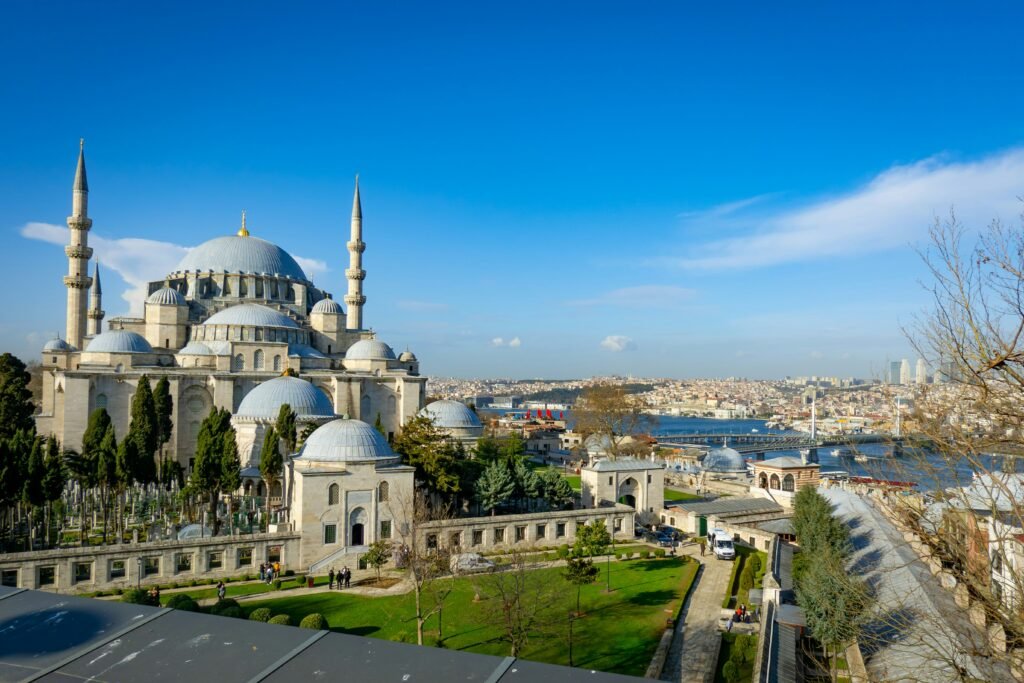
Few cities wear history as dramatically as Istanbul. One minute we are standing beneath a dome so perfectly balanced it feels weightless; the next, we are staring at a palace façade that seems to have decided subtlety was for other empires. Ottoman architecture is not one single style, but a long, shape-shifting story told through mosques, palaces, fountains, pavilions, fortresses, bazaars, and waterfront mansions.
Broadly speaking, Ottoman architecture unfolds across several major phases: the Early Period, the Classical Period, the Tulip Era, the Westernization Period (including Baroque, Rococo, and Empire influences), and the First National Architectural Movement. Each one reflects a shift in taste, politics, materials, and ambition. The earliest works are concentrated in Iznik, Bursa, and Edirne, while the classical and later masterpieces are found primarily in Istanbul, where the empire eventually staged its grandest architectural performance.
Early period | 13th century – 16th century
Early Ottoman architecture, sometimes called the Bursa style because of the monumental buildings constructed in the empire’s first capital, covers the period from the founding of the Ottoman state to the beginning of the construction of the Bayezid Mosque. Some scholars instead mark the end of this phase with the completion of the Üç Şerefeli Mosque in Edirne. Either way, this era laid the foundations for what would come later, especially the growing use of domes that would eventually define Ottoman monumental architecture.
After the conquest of Istanbul, Sultan Mehmed the Conqueror launched a huge urban transformation and shifted the capital from Edirne to Istanbul. A new palace was built in Beyazıt Square, replacing the older palace in Edirne. During this same period, construction began on both the Fatih Complex and Topkapi Palace. The original Fatih Mosque was destroyed in the earthquake of 1766 and rebuilt in 1771, which is why the structure we see today reflects a later form rather than its first design.
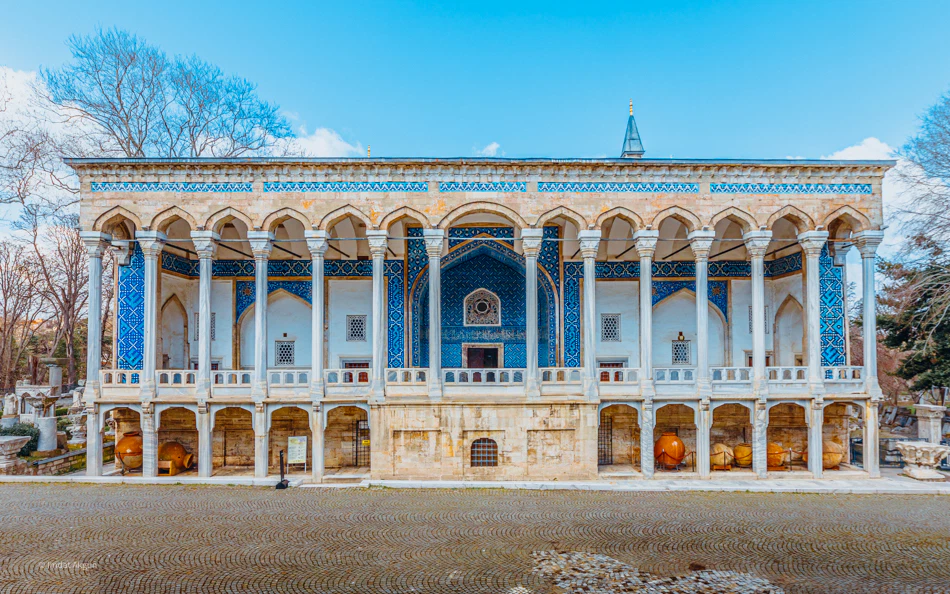
One of the most important surviving examples from this early period is the Çinili Köşk or Tiled Pavilion, originally built as the summer palace of Topkapi Palace and now part of the Istanbul Archaeological Museums. Strongly influenced by Seljuk architecture, it preserves one of the last echoes of that earlier tradition through the mosaic tiles covering the entrance iwan. As a landmark of Ottoman civil architecture in Istanbul, it is one of those places that quietly proves the empire was doing much more than simply building mosques.
Classical period | 16th century – 18th century
This is the era when Ottoman architecture truly found its most confident voice. In some sources, the classical period is divided into three phases: the Early Classical Period, the Mimar Sinan Period, and the Late Classical Period. It was during this time that the empire refined its signature language of domes, semi-domes, courtyards, soaring interiors, and carefully orchestrated space.
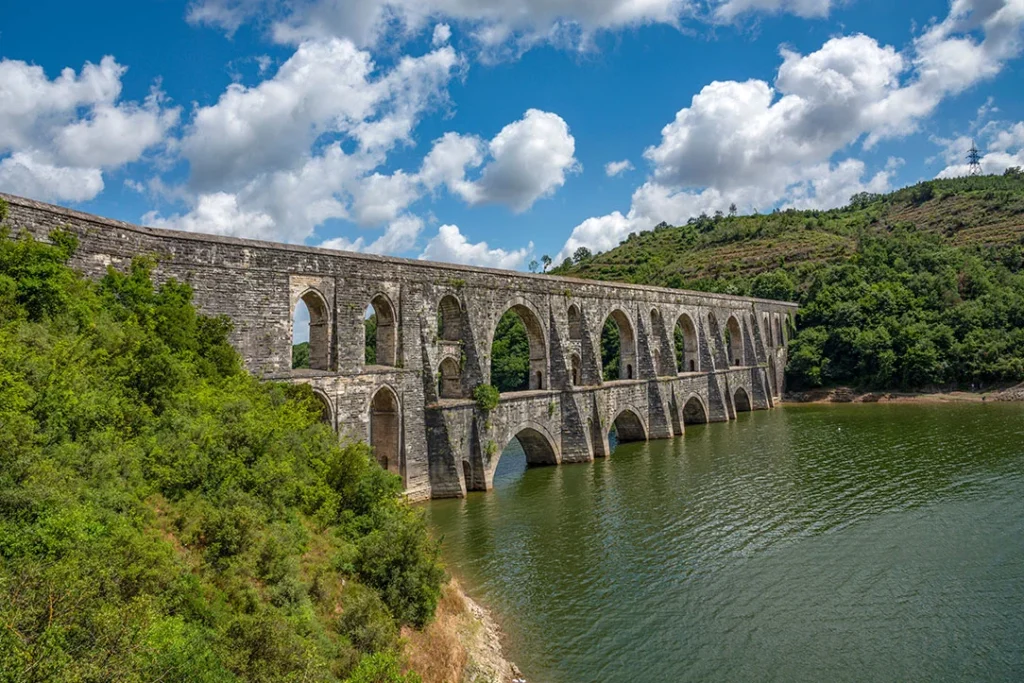
The single most important name here is, of course, Mimar Sinan, who gave Istanbul some of its defining landmarks, including the Süleymaniye Mosque, the Şehzade Mosque, and the Mihrimah Sultan Mosque. He also designed the Mağlova Aqueduct, one of the most extraordinary works of Ottoman water architecture. Later in the period came the Sultanahmet Mosque, famous today as the Blue Mosque, built by Sedefkâr Mehmed Ağa and widely considered the last great mosque of the classical tradition. The Yeni Mosque, also from this broader era and often seen as the final major work by architects trained in Sinan’s style, still commands the Eminönü waterfront beside the Golden Horn.
The Yeni Mosque has its own dramatic backstory. Construction began under Safiye Sultan, but the deaths of the architect, Mehmed III, and Safiye Sultan left it unfinished. The structure deteriorated and was later damaged in the great fire of 1660. After the fire, Turhan Sultan, who was touring the city to aid its people, saw the abandoned building and decided to complete it, partly out of her own desire to commission a mosque. The result was the last grand imperial mosque built by the Ottoman dynasty in Istanbul, accompanied by the Sultan’s Pavilion and the Spice Bazaar.
Architecturally, the great innovation of this period was the widespread use of the domed central plan, in which the entire space is gathered beneath a single large central dome. This approach, often favored by Sinan, sought to eliminate visual obstacles inside the building. Rather than crowding the interior with walls or heavy supports, he used columns and structural elements that held up the building without chopping the space into awkward pieces. The result is that unmistakable Ottoman effect: grand, luminous, and surprisingly serene.
Tulip Era | 18th century
The Tulip Era refers to the period between 1718 and 1730, during the reign of Sultan Ahmed III. Since tulips became fashionable to an almost comical degree during these years, the era naturally took its name from the flower. But this was not just about gardening obsessions and elite aesthetics. It was also a period of stylistic transition in architecture, especially in decoration.
Rather than radically transforming spatial planning, the Tulip Era focused on ornament. Fruit bowls, flower vases, and floral motifs became popular decorative elements, while tulips appeared constantly in tiles and carved embellishments. It was also a period when civil architecture gained prominence. Ornate public fountains replaced the simpler wall fountains of earlier centuries, and elaborate mansions, pavilions, palaces, and pleasure residences rose along the Bosphorus and in Sadabad (today’s Kağıthane).
Most of these residences were built in wood and have not survived, but a few important examples remain, including Aynalıkavak Pavilion and the Library of Ahmed III inside Topkapi Palace. Architecturally, the era favored wide eaves, which served both practical and aesthetic purposes, shading buildings from sun and rain while softening their profiles. Sharp geometric lines gave way to more curved, flowing forms.
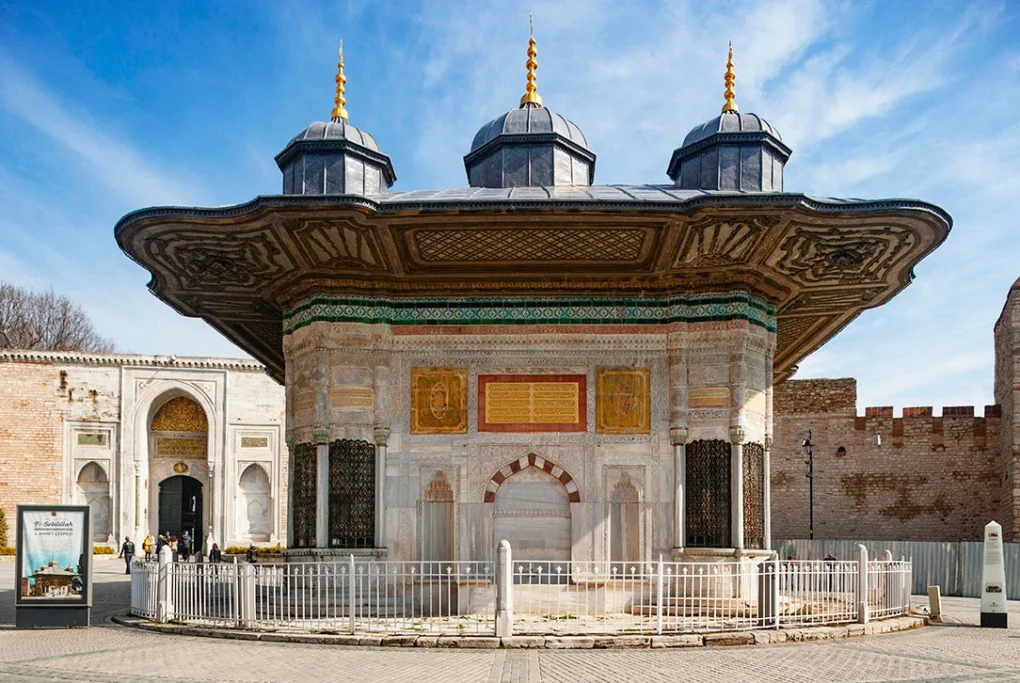
The most famous surviving monument of the Tulip Era is the Ahmed III Fountain at the entrance to Topkapi Palace. It is also one of the earliest Ottoman structures to show Rococo influence. With its gleaming white marble, colored stones, and gold leaf ornament, it feels like architecture dressed for a party—and not remotely shy about it.
The Westernization period (Baroque, Rococo, and Empire) | 19th century
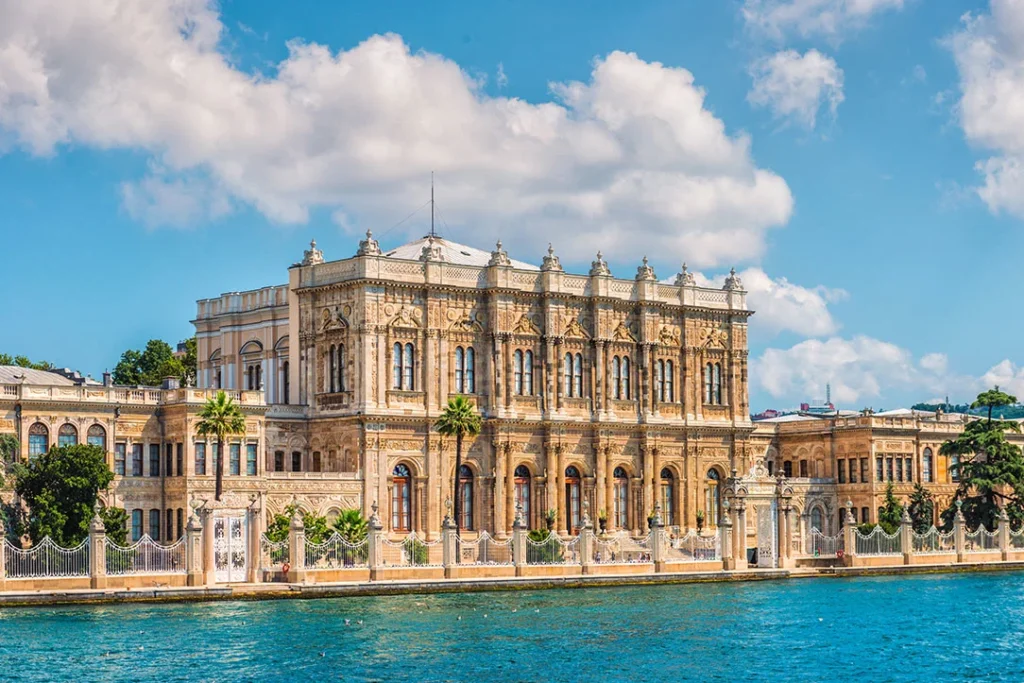
By the 18th century, Western influences had begun to enter Ottoman architecture, and by the 19th century they were impossible to miss. Styles that had developed in Europe—especially Baroque, Rococo, and later Empire—were absorbed into the Ottoman architectural vocabulary and reinterpreted in distinctly local ways.
Baroque brought grandeur, movement, and visual drama. Rococo favored elegance, asymmetry, and lighter decorative rhythms. Ottoman architects did not simply copy these styles, but folded them into existing traditions. Good examples of Ottoman Baroque include the Nuruosmaniye Mosque and the Laleli Mosque, both marked by dynamic curved forms. The Nuruosmaniye Mosque, the first and largest Ottoman Baroque mosque, is also notable for being the first mosque in the empire to have a semi-circular courtyard. The Laleli Mosque, meanwhile, combines Baroque dynamism with Rococo-style decorative curves in the shapes of C and S.
For Ottoman Rococo, some of the best examples can be found in the interiors of the Grand Mecidiye Mosque, Dolmabahçe Palace, and various Ottoman mansions. In practice, Rococo was often used most heavily in interior decoration and ornament, usually alongside Baroque rather than separately.
The Empire style also became visible in Istanbul, first appearing at the Nusretiye Mosque in Tophane. Its greatest champions were the Balyan family, whose work defined much of the later Ottoman skyline. Their projects included Dolmabahçe Palace and the Büyük Mecidiye Mosque, among many others.
Across this Westernization period, three major changes stand out. First, the central role of tilework in classical Ottoman architecture gave way to stone carving, marble reliefs, and painted murals. Second, buildings became brighter and airier, thanks to larger and more numerous windows. Third, entrances became more theatrical, often elevated by staircases and framed by monumental gates. Put Topkapi Palace next to Dolmabahçe Palace, or compare the Rüstem Paşa Mosque to the Büyük Mecidiye Mosque, and the stylistic shift becomes instantly obvious.
National Architectural Movement | Early 20th century
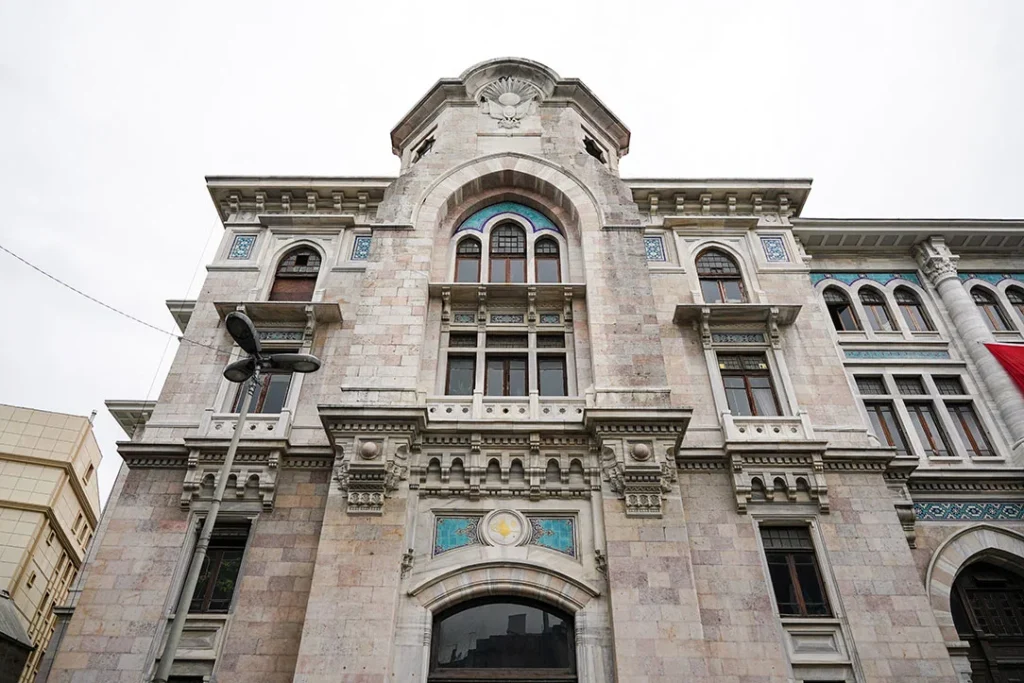
The final stage of Ottoman architecture also marked the beginning of a very different search for identity. After the Second Constitutional Era was declared in 1908, nationalism surged through Ottoman political and cultural life, and architecture was swept up in it too. The result was the First National Architectural Movement, which emerged partly as a reaction against the eclectic and foreign-dominated styles of the late empire.
Led by architects such as Kemaleddin Bey and Vedat Tek, this movement aimed to revive and reinterpret decorative features from Seljuk and Classical Ottoman architecture in modern buildings. It was not a nostalgic replica project, but rather an attempt to express a modern national identity through references to the Ottoman and Seljuk past.
One of the best-known examples in Istanbul is the Sirkeci Grand Post Office, designed by Vedat Tek and often regarded as the first building of the movement. Its pointed arches, tile decoration, and monumental entrance clearly nod to Ottoman architectural heritage. The Harikzedegan (Tayyare) Apartments in Laleli, designed by Kemaleddin Bey, are among the city’s earliest reinforced concrete structures and now function as a hotel. Other important examples include the Kamer Hatun Mosque, the 4th Vakıf Han, and the Beşiktaş Pier, designed by Ali Talat Bey, which still adds a graceful note to the Bosphorus shoreline.
Influential architects of the Ottoman era
Mimar Sinan
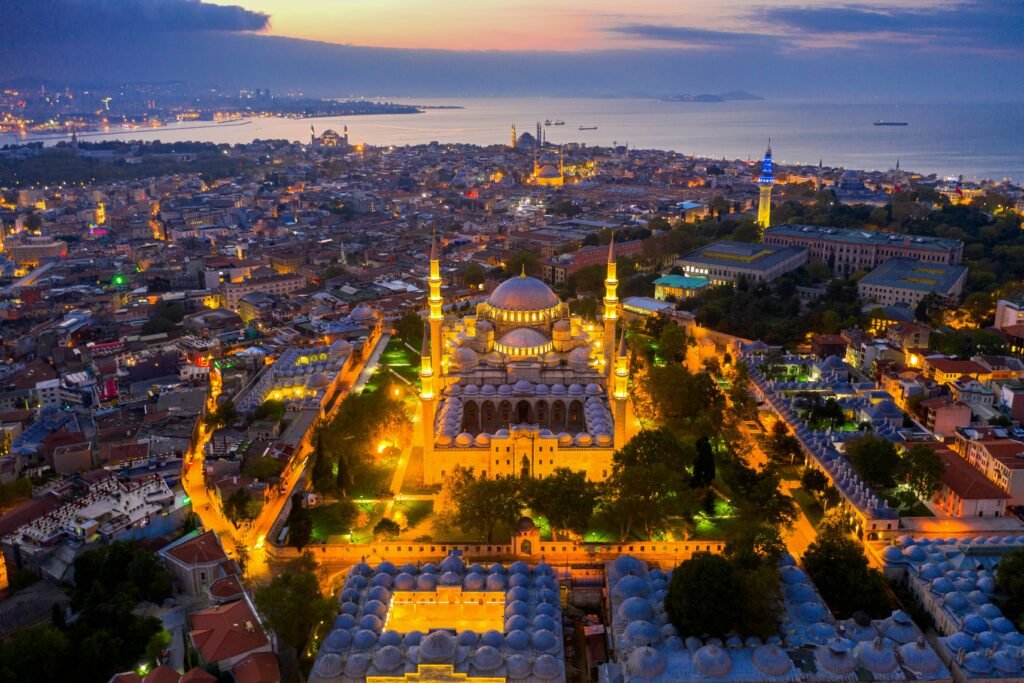
If Ottoman architecture has a giant, it is Mimar Sinan. Born in Kayseri in the 15th century, he was brought to Istanbul through the devshirme system during the reign of Yavuz Sultan Selim. As part of his military service under Kanuni Sultan Süleyman, he traveled widely across the empire, from Rhodes to Mohács, from Belgrade to Baghdad, studying the architecture of the regions he encountered.
He went on to become the towering figure of Ottoman classical architecture, influencing generations of architects after him. His Şehzade Mosque, which he called his apprenticeship work, and the Süleymaniye Mosque, one of his greatest triumphs, remain among the crown jewels of Istanbul’s skyline. Beyond Istanbul, his Selimiye Mosque in Edirne is often cited as his masterpiece.
Sinan is credited with over 300 works across Anatolia and the Balkans. Among the most notable are the Rüstem Paşa Mosque, famous for its stunning blue İznik tiles; the Mağlova Aqueduct over the Alibey Stream; and the Kanuni Sultan Süleyman Bridge at Büyükçekmece.
The Rüstem Paşa Mosque is especially interesting because it sits atop an elevated platform with shops below. From the outside, it appears relatively restrained. Inside, though, it explodes into some of the finest tilework of the period. In fact, the mosque used so many tiles that İznik’s workshops could not meet demand alone, and workshops in Kütahya were also enlisted to complete the commission.
The Mağlova Aqueduct, also called Muallakkemer, is considered a masterpiece of Ottoman hydraulic engineering. Part of the Kırkçeşme water system, it supplied water to Istanbul, stretches around 260 meters, and still carries water today. Which is not bad for a structure centuries old and apparently uninterested in retirement.
The Balyan family
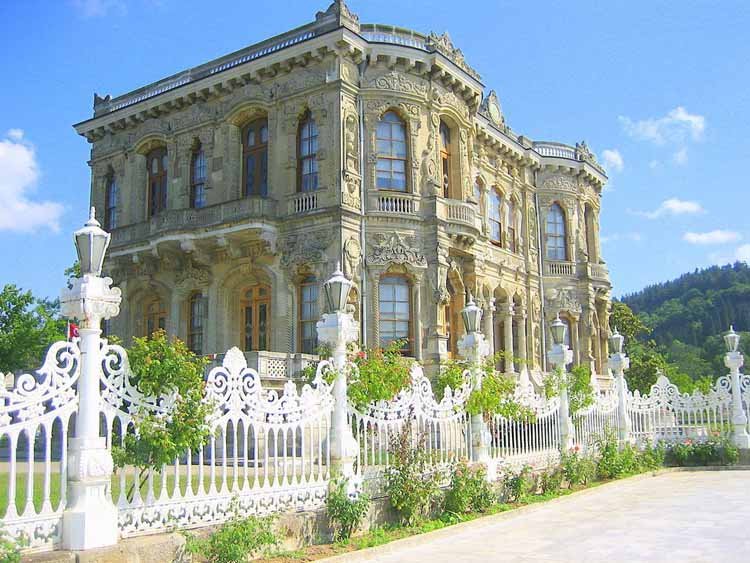
The Balyan family dominated much of late Ottoman architecture. Over five generations, they blended Baroque influence with Ottoman forms and helped define what is often called Turkish Baroque. Their work includes the Dolmabahçe, Çırağan, and Beylerbeyi Palaces, the Küçüksu and Ihlamur Pavilions, and mosques such as Büyük Mecidiye, Nusretiye, and Pertevniyal Valide Sultan.
As palace architects, they shaped much of Istanbul’s 19th-century image. But they were not just designers of decorative façades. They were also engineers and urban planners, and their work was especially significant under Sultan Abdülmecid and Sultan Abdülaziz. Trained in Europe yet working deeply within Ottoman traditions, they created a hybrid style that still defines parts of the city.
Alexandre Vallaury
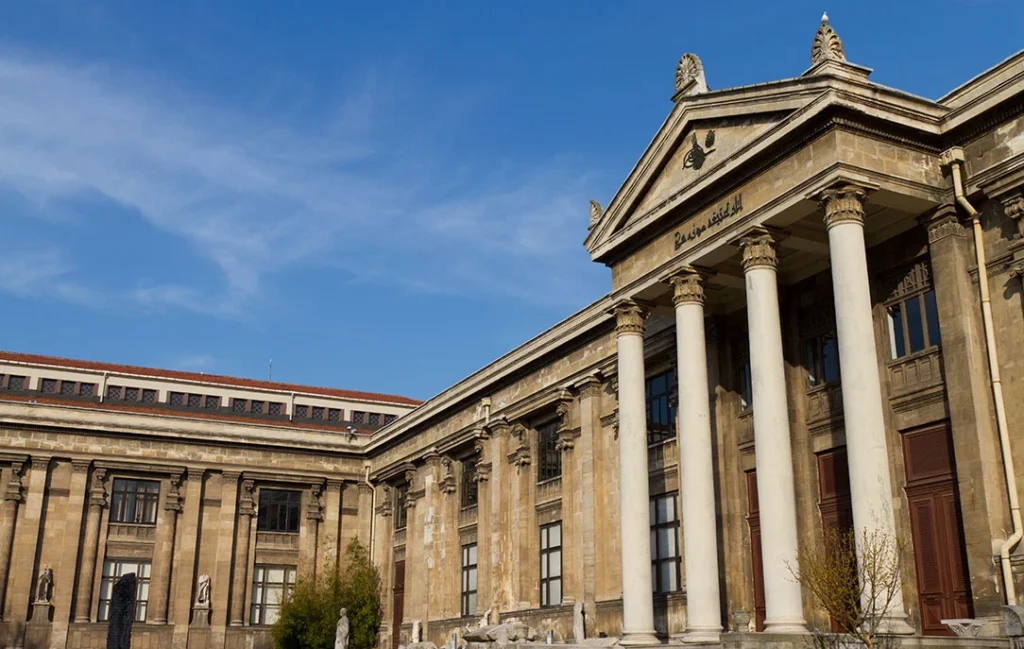
Another major figure in late Ottoman Istanbul was Alexandre Vallaury, a French-born architect from the city itself. Also a painter, Vallaury became close to Osman Hamdi Bey and later helped establish the architecture department of the School of Fine Arts (Sanayi-i Nefise Mektebi).
Vallaury built widely across Istanbul, especially in Pera and Beyoğlu, earning the nickname “Architect of the City”. His works include the Ottoman Bank building (today Salt Galata), the Pera Palace Hotel, the Istanbul Archaeological Museum, and the Union Française.
His style often combined European neoclassicism with Orientalist elements. A perfect example is the Ottoman Bank building in Karaköy: its street-facing façade is neoclassical, while its side facing the Golden Horn is Orientalist. This stylistic duality was echoed by neighboring buildings and helped shape the distinctive atmosphere of Bankalar Street.
Unique Ottoman landmarks of Istanbul
Ottoman architecture in Istanbul is not limited to mosques and palaces. The city’s geography and political importance also produced unique structures that feel inseparable from the place itself.
Rumeli Fortress
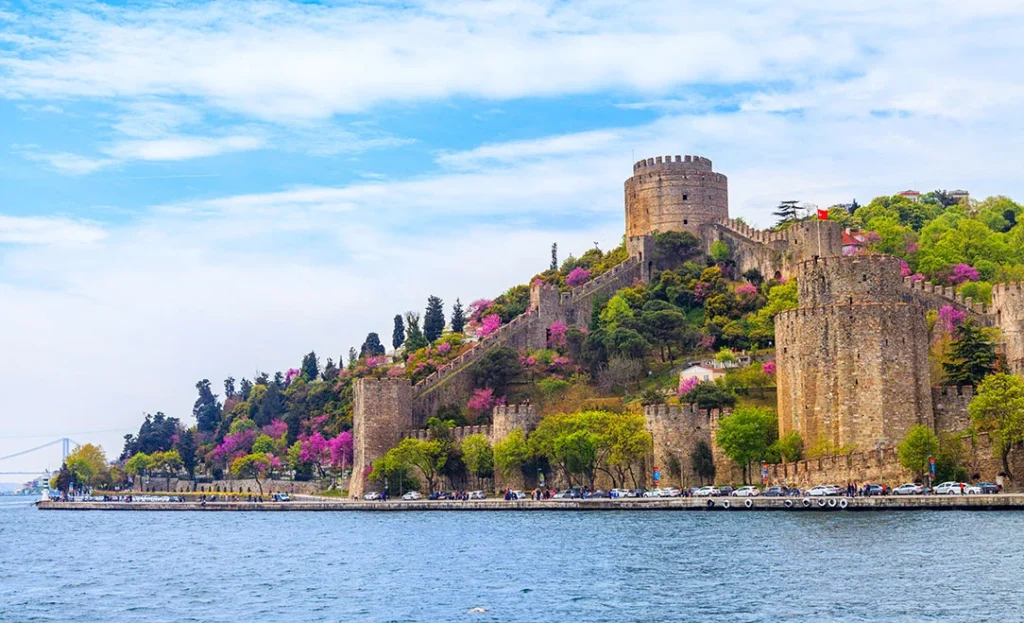
Built in 1452 at the narrowest point of the Bosphorus, directly opposite Anadolu Hisarı, Rumeli Hisarı is one of the boldest works of Ottoman military architecture. Sultan Mehmed the Conqueror commissioned it a year before taking Constantinople in order to block aid ships moving through the strait.
Its three great towers were entrusted to Saruca Pasha, Zağanos Pasha, and Halil Pasha, and the entire fortress was completed in the almost absurdly short span of about four months. In its time, it had the largest battlements of any castle. Today it functions as a museum and remains one of Istanbul’s great photo spots, because of course a fortress looming over the Bosphorus was always going to be photogenic.
Grand Bazaar
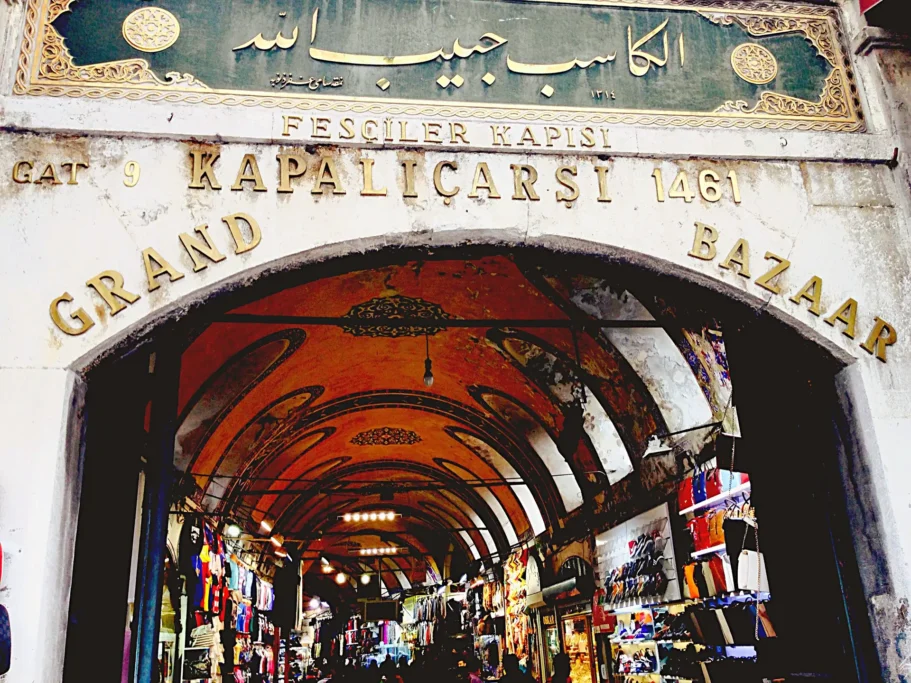
The Grand Bazaar began to take shape around two covered markets during the reign of Sultan Mehmed the Conqueror and expanded over the centuries into one of the world’s oldest and largest covered markets. Covering more than 30,000 square meters, with over 60 streets and thousands of shops, it is an extraordinary example of Ottoman commercial architecture.
Its vaulted ceilings, stone arches, and maze-like streets make it feel less like a shopping center and more like an inhabitable architectural organism. Which is exactly what it is: a working, breathing monument that has functioned continuously for centuries.
Bosphorus mansions
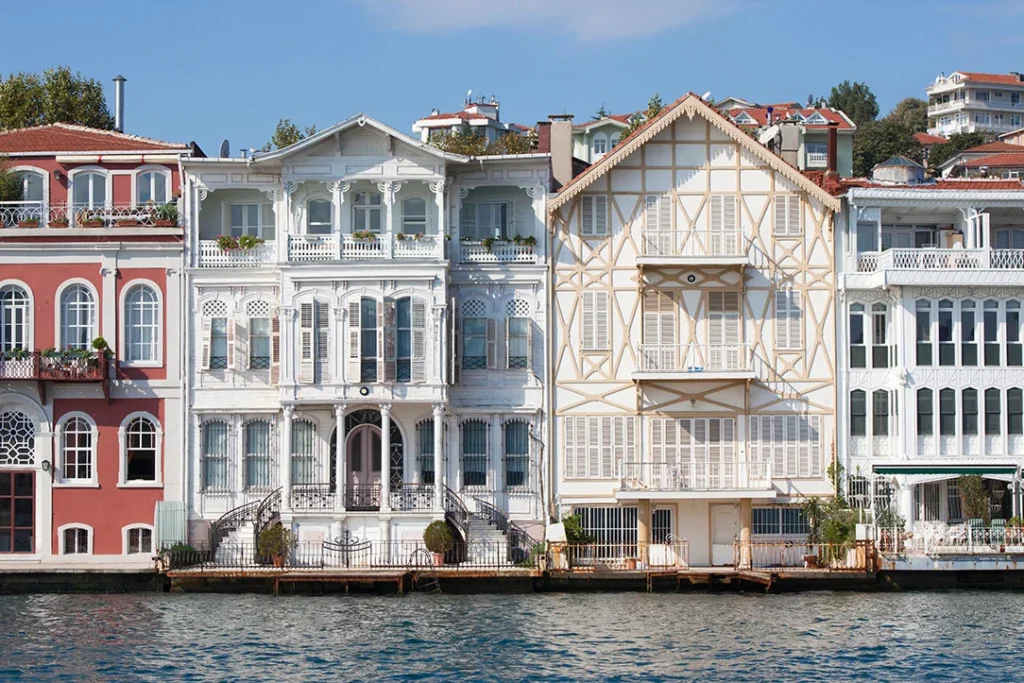
The mansions lining both shores of the Bosphorus form one of Istanbul’s most distinctive architectural landscapes. Built for members of the Ottoman elite, these wooden and stone waterfront residences reflect a way of life shaped by proximity to the sea.
Among the oldest surviving examples is the Amcazade Hüseyin Pasha Mansion in Anadolu Hisarı, dating to the 17th century and considered one of the oldest surviving Ottoman civil structures in Istanbul. Along the coast from Kuzguncuk to Bebek and from Çengelköy to Kandilli, mansions from different periods still form an essential part of the Bosphorus skyline.
Final thoughts
From early pavilions shaped by Seljuk influence to the soaring domes of the classical period, from the refined fountains of the Tulip Era to the dazzling waterfront palaces of the Westernization period, Istanbul presents the full sweep of Ottoman architecture almost like an open-air museum.
But these buildings are not just collections of domes, arches, marble, and tiles. Each one reflects the politics, ambitions, tastes, anxieties, and transformations of its time. Ottoman architecture is, in the end, not just about what the empire built. It is about how the empire imagined itself—grand, adaptable, theatrical, devout, modernizing, nostalgic, and always determined to leave a skyline behind.
So the next time we stand under the shadow of Süleymaniye, walk past the Ahmed III Fountain, or stare up at Dolmabahçe Palace, we should do more than admire the stonework. We should listen for the story each building is still telling.
- Cihangir Istanbul Neighborhood Guide (2026): Cafés, Museums and Hidden Corners
- Best Hotels in Cihangir Istanbul with Bosphorus view (2026): 4 Stylish Places to Stay
- 19 Best Restaurants in Cihangir Istanbul (2026)
- Where to Find the Best Kokorec in Istanbul (2026): 10 Local Street-Food Spots

- Best Kumpir in Istanbul: 10 Local Places to Try in 2026