
Travel writing based on first-hand experience
Explore the heart of Morocco with our Marrakech Medina guide — full of must-see sights, local tips, and hidden gems.
| ➡️Plan your dream trip with our 3 -14 days perfect Morocco itinerary — packed with can’t-miss sights, insider tips, and magical experiences. ➡️Looking for the best things to do in Marrakech? Explore souks, gardens, palaces, and unforgettable experiences. ➡️For an authentic experience in Marrakech, the Medina is your go-to destination. Discover the 3 best places to stay in Marrakech Medina, where charm, tradition, and hospitality come together for an unforgettable stay. |
Table of Contents
About Marrakech Medina
The historic heart of Marrakech, the Medina, is the largest in the Maghreb. Nearly a thousand years old, this walled Old City is where visitors and everyday Marrakchis cross paths: some meander through alleys scented with orange blossom and dotted with fountains; others stream toward the Medina’s buzzing souks.
Recognised as a UNESCO World Heritage Site, the Medina concentrates many of Marrakech’s most significant monuments—Koutoubia Mosque, Ben Youssef Medersa, and the Saadian Tombs—plus a constellation of small, fascinating museums. Above all, it’s home to the legendary souks and Jemaa el-Fna, the city’s beating heart and open-air theater.
History of the Medina of Marrakech
Born with the city itself, the Medina has anchored Marrakech since the 11th century.
Founded by the Almoravids (1070–1072), Marrakech quickly became capital of a powerful emirate stretching from the Senegal River to the Iberian Peninsula. Andalusian craftsmen from Seville and Córdoba fused their artistry with Saharan and West African influences, creating the distinct Marrakech style still visible today.
The city’s defences rose under Ali Ben Youssef; the ramparts (1122–1123) still encircle the Old City.
In 1147, the Almohads seized Marrakech, demolishing many Almoravid structures but commissioning new landmarks, including the Koutoubia Mosque and the Kasbah.
In the 16th century, the Saadians restored the city to splendor as imperial capital—rebuilding monuments and erecting palaces like El Badi. Most iconic sites date to these golden eras: monumental gates, gardens, palaces, Ben Youssef Medersa, Saadian Tombs, and Jemaa el-Fna.
What to do in the Marrakech Medina?
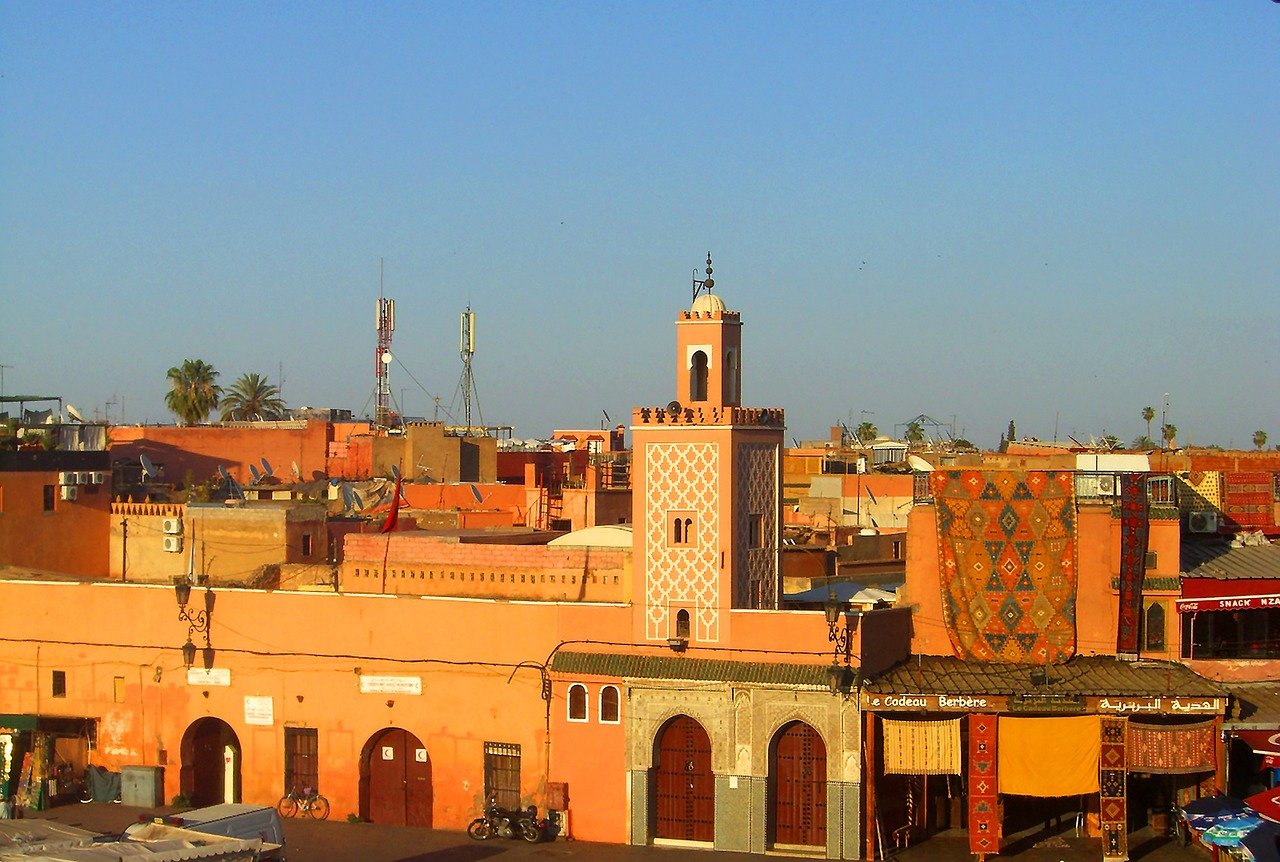
The Medina concentrates the city’s most compelling monuments and most of its museums. You’ll likely spend a big slice of your trip here, weaving between grand palaces, historic mosques, medersas, riads, and hammams—all threaded by a maze of souks.
What we love: Ducking into a cool riad courtyard after the heat of the alleyways, bargaining (kindly!) for a hand-woven rug, and losing the map on purpose.
The starting point: Jemaa el-Fna square
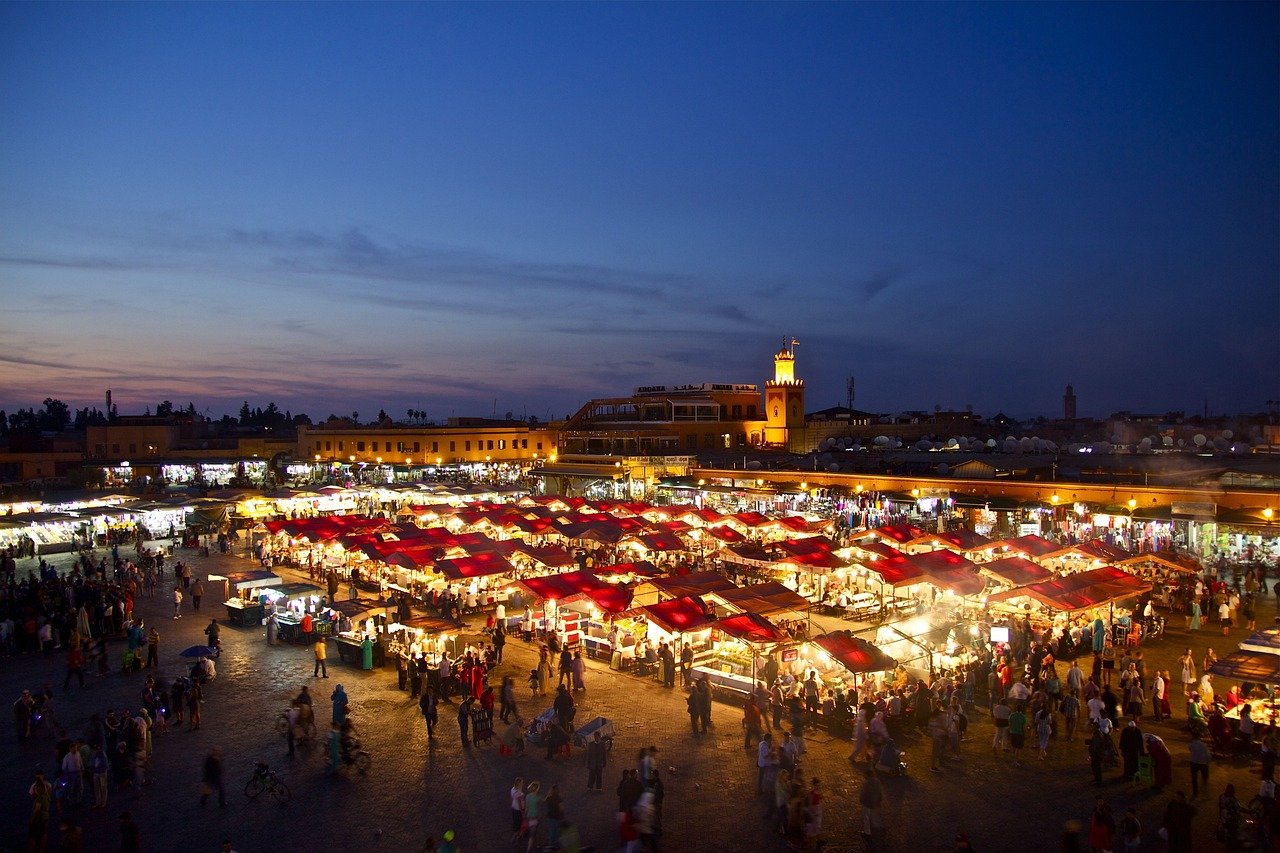
This vast square is the center of Medina life—open, animated, impossible to ignore. Daytime brings performers, herbalists, and artists; after dusk, food stalls take over with smoke, spice, and music.
What we love: Rooftop terraces for golden-hour views, fresh orange juice stands, and the nightly crescendo as drums echo across the plaza.
The West: Koutoubia Mosque
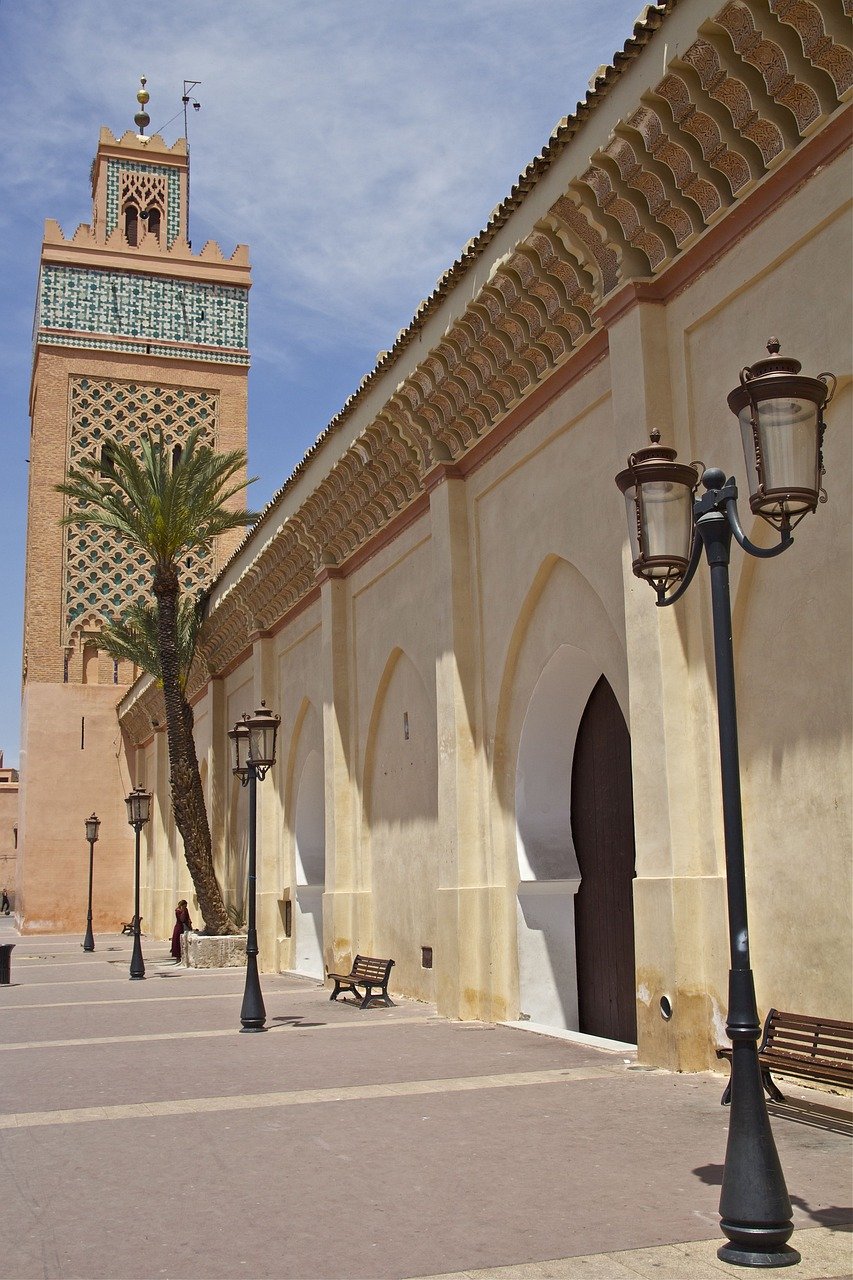
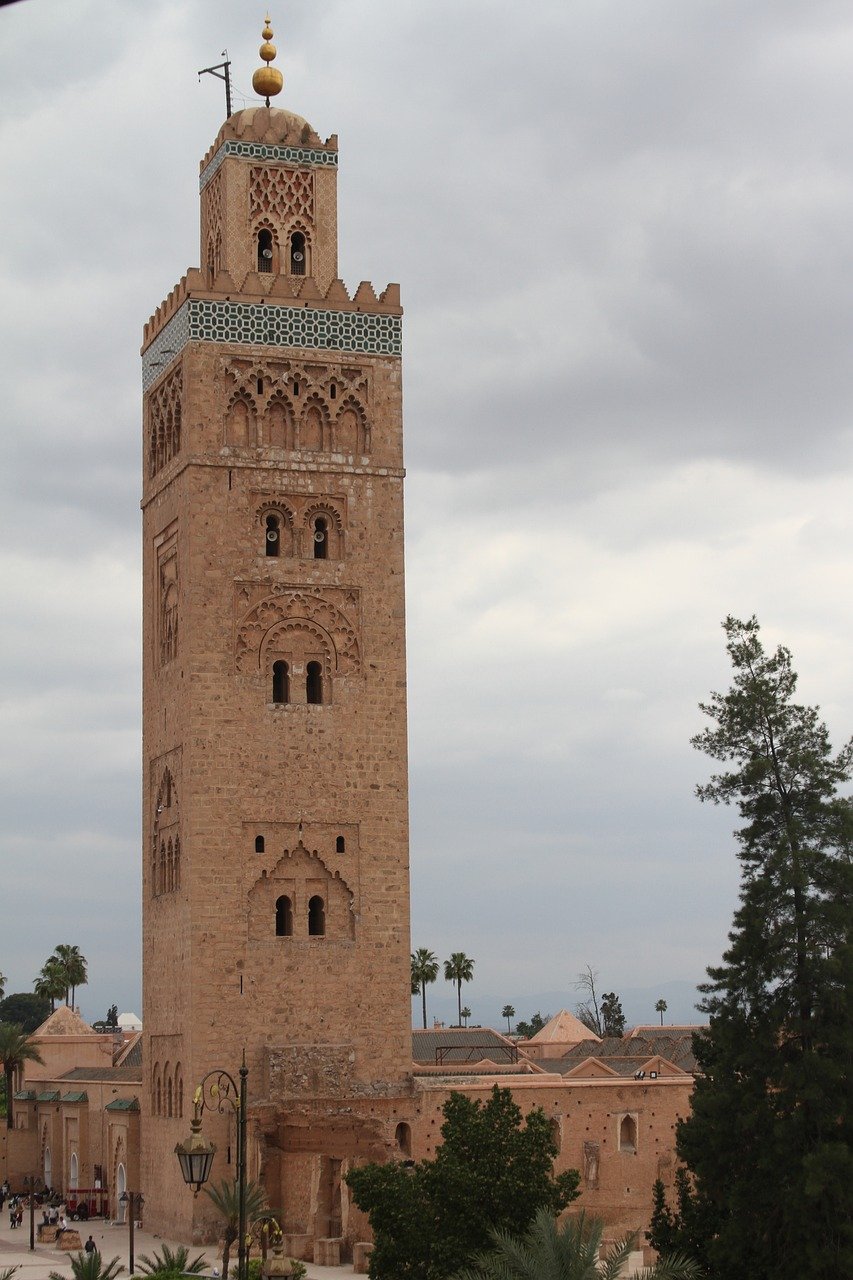
Start west of the square at the 12th-century Koutoubia, an Almohad masterpiece. Its 77-meter minaret inspired towers from Seville to Rabat, and the vast prayer hall once welcomed up to 20,000 worshippers.
What we love: Evening light on the minaret stonework and the calm gardens encircling the mosque.
The North of the Medina
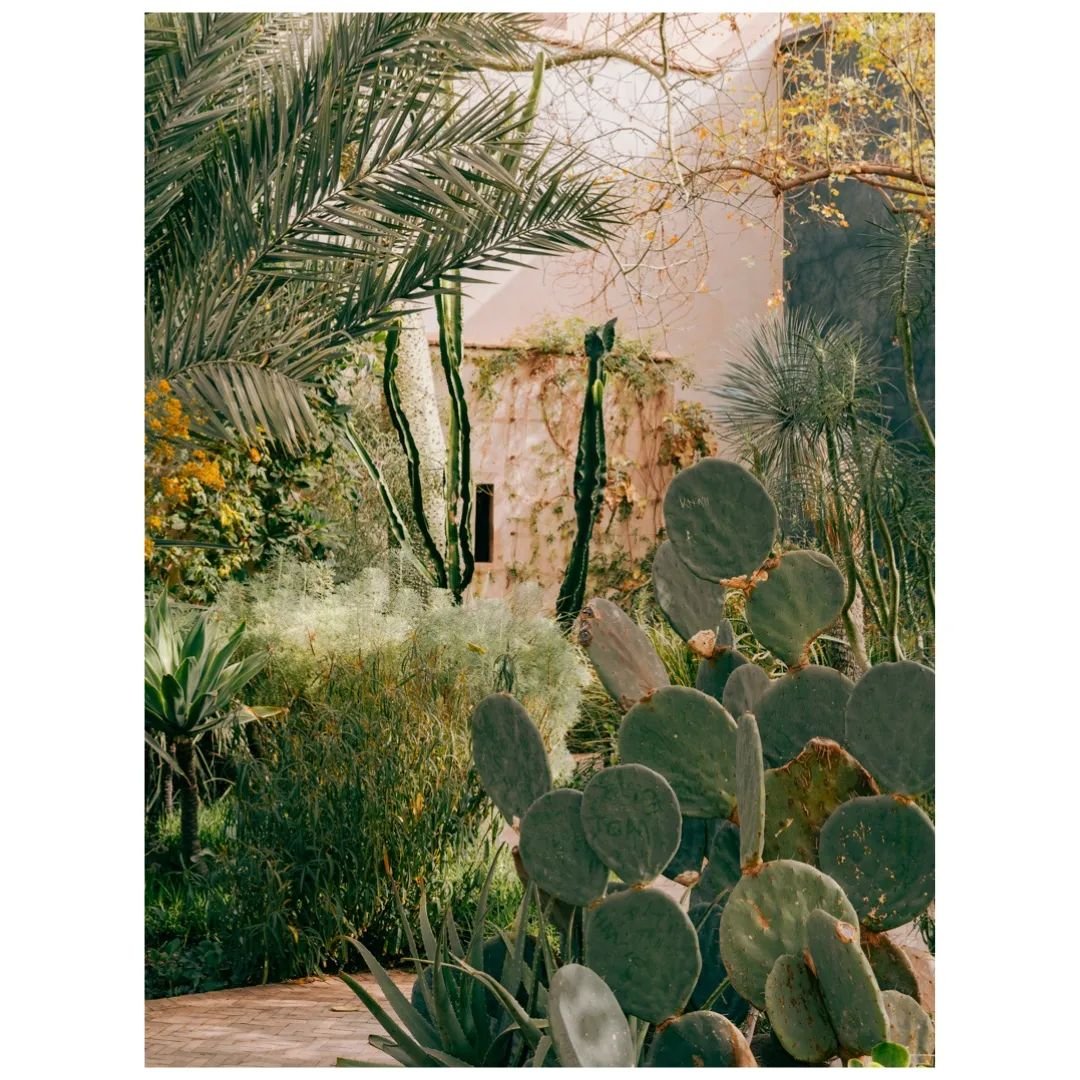
Head north for a string of highlights: Mouassine Mosque & Museum, Maison de la Photographie, and the Jardin Secret. Continue to the exquisite Ben Youssef Medersa and the surrounding riads, fountains, and hammams—the souks district begins here.
What we love: Zellij and cedar-carved details at Ben Youssef, photo archives that time-travel, and quiet corners in Jardin Secret.
The South of the Medina
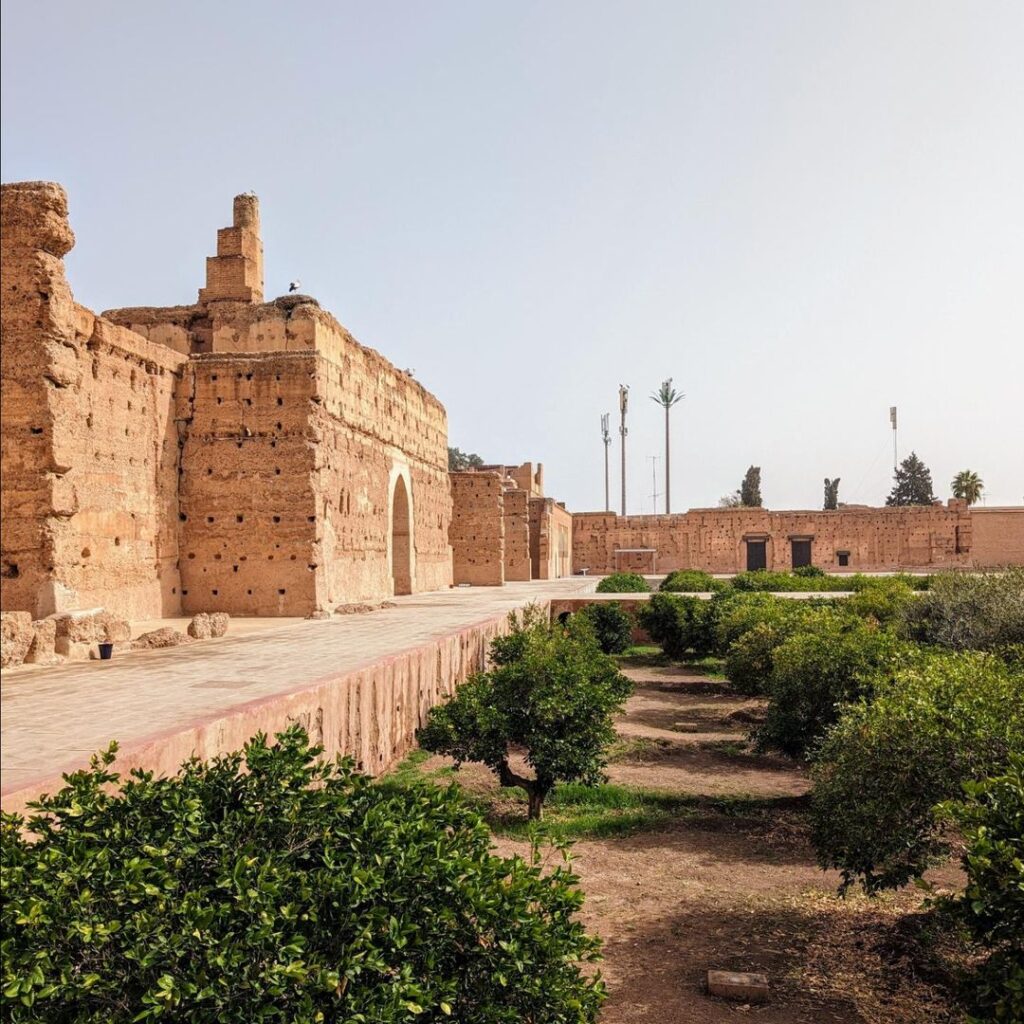
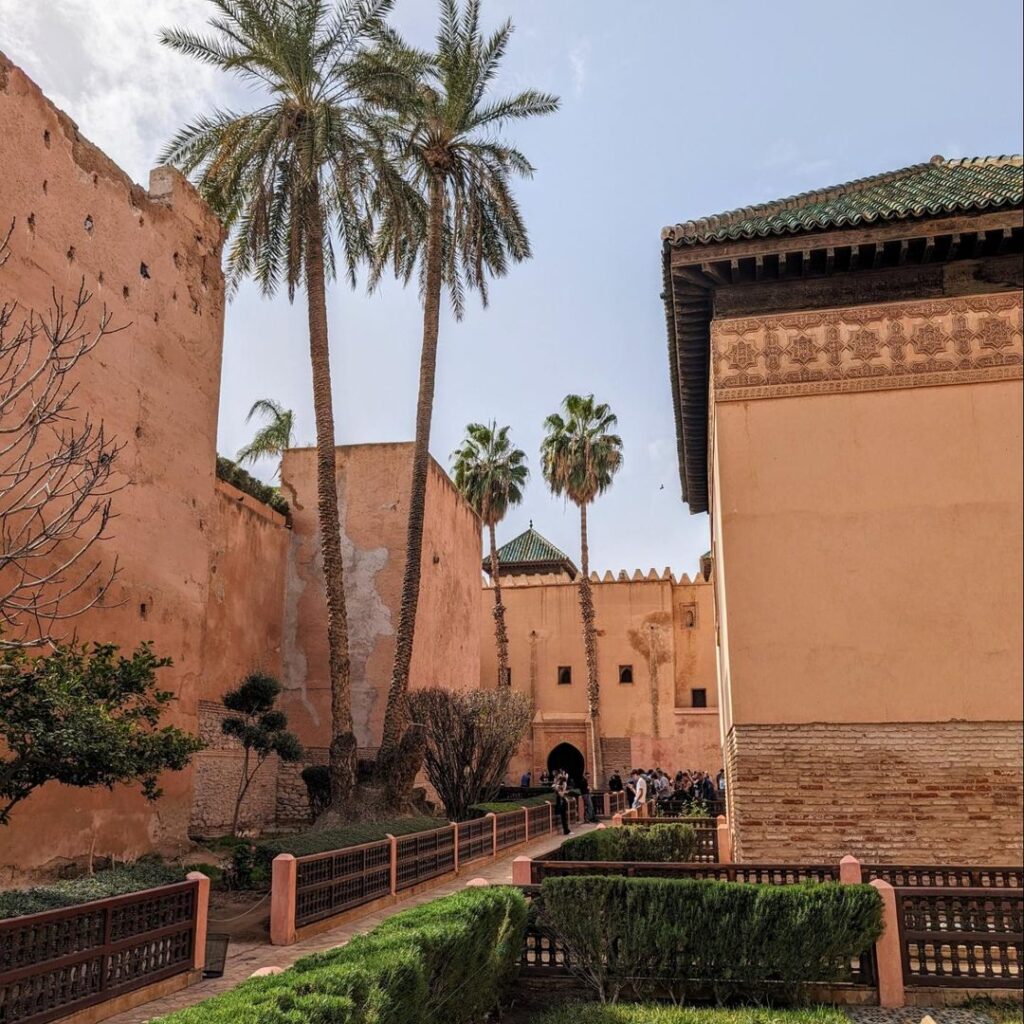
Cross to the opposite side of Jemaa el-Fna for the Kasbah and the Mellah (old Jewish quarter), near the Royal Palace. Don’t miss the Bahia Palace, the Bert Flint Museum, the atmospheric remains of El Badi, and the jewel-like Saadian Tombs.
What we love: The quiet, residential feel, orange-scented courtyards at Bahia, and the delicate stucco of the Saadian burial chambers.
How to get to the Medina of Marrakech?
The Medina sits in the city center. From Marrakech Menara Airport, buses or taxis drop you near Koutoubia or Jemaa el-Fna, ideal gateways to reach your riad on foot.
By bus: L11, L12, and L19 from the airport reach Koutoubia/Jemaa el-Fna. Around the square, lines L2, L3, L4, L5, L6, L10, L14, L15, L16, L19, L66 stop frequently.
By car: Use paid, guarded car parks around the Medina (e.g., Koutoubia). Many riads can arrange porters for luggage from the car park.
What we love: Walking the last few minutes to your riad—alleys grow quieter, doors open to hidden courtyards, and the city exhales.
Guided tours of the Medina of Marrakech
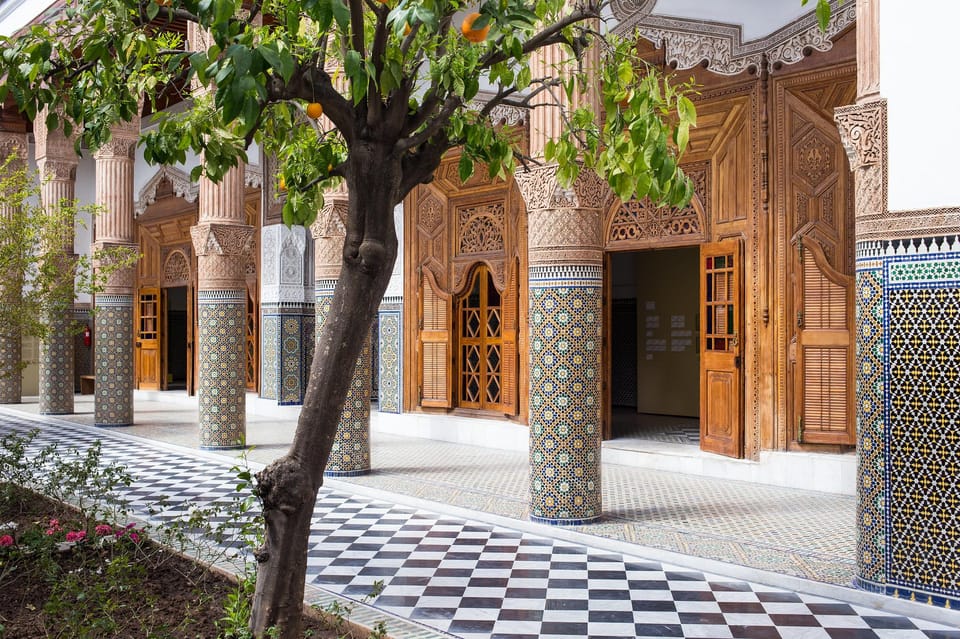
A guided walk (3–4 hours) unlocks stories you might otherwise miss—dynasties, craftsmanship, hidden zawiyas. Guides thread together palaces, gardens, medersas, and souks into a readable city.
What we love: Access to tucked-away ateliers, tasting stops you wouldn’t find on your own, and context that makes tilework and calligraphy come alive.
Medina cuisine: curated picks
Hotel and Ryad Art Place Marrakech
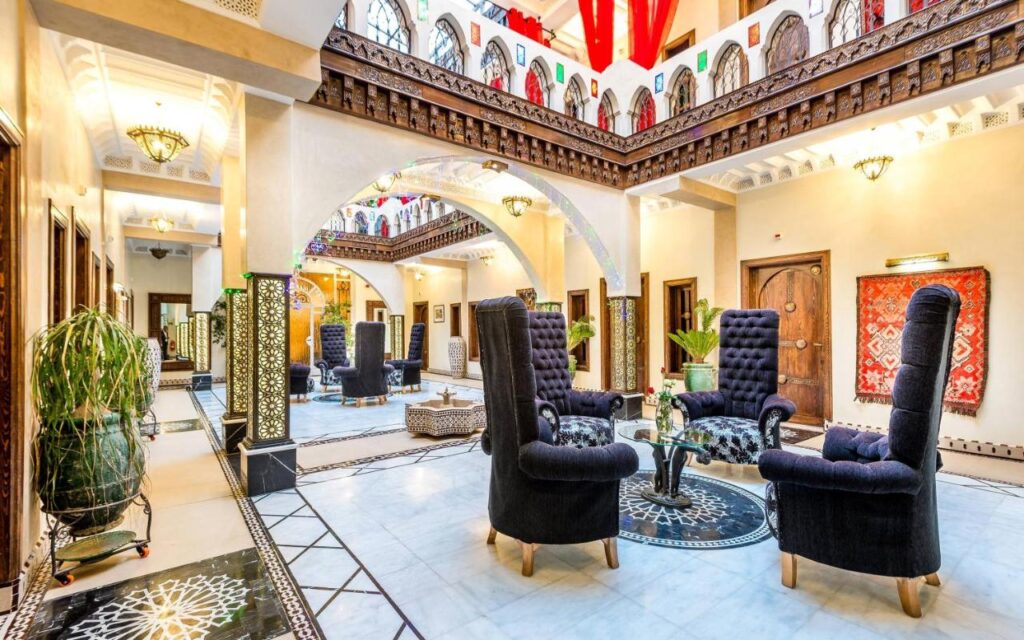
Serene yet central, right on Jemaa el-Fna. Free Wi-Fi, pool, fitness center; breakfast included. Step outside to the souks or gaze at Koutoubia from the roof.
What we love: Watching the square wake up from the terrace with a mint tea in hand.
Jemaa el-Fna Square, Marrakech 40000. Check availability
Zwin Zwin Boutique Hotel
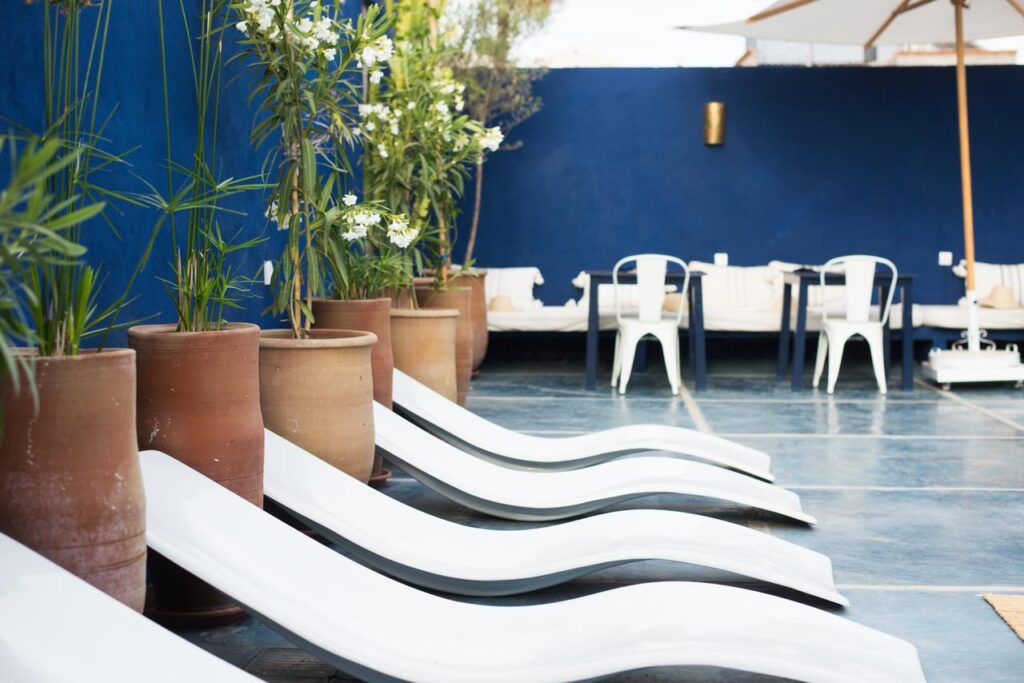
“Zwin” means beautiful—and this riad delivers. Warm, bohemian, and culinary-forward with a daily changing menu.
What we love: Sun-splashed rooftop breakfasts and home-style twists on classic Moroccan dishes.
El Mokha, 10 Rue El Moustachfa, Medina, 40000. More info
Royal Mansour Marrakech
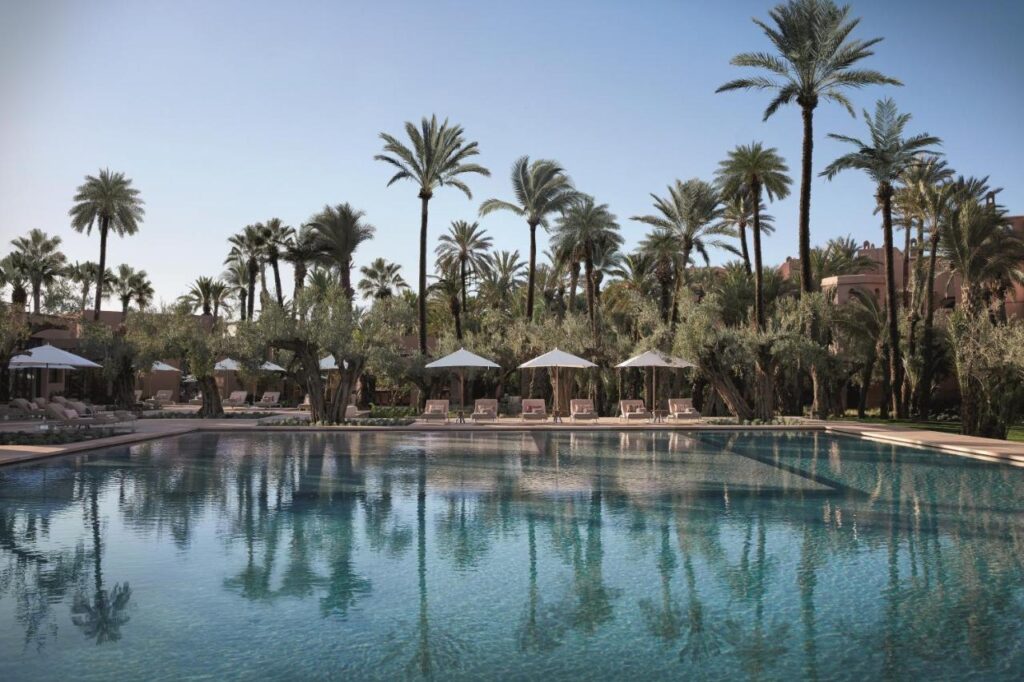
Palatial luxury with indoor/outdoor pools, near Bahia Palace and Jemaa el-Fna; Majorelle Garden is a short hop away.
What we love: Private riad-style suites and spa rituals that feel straight out of a fairy tale.
Rue Abou El Abbas Sebti. Check availability
Les Jardins de la Koutoubia
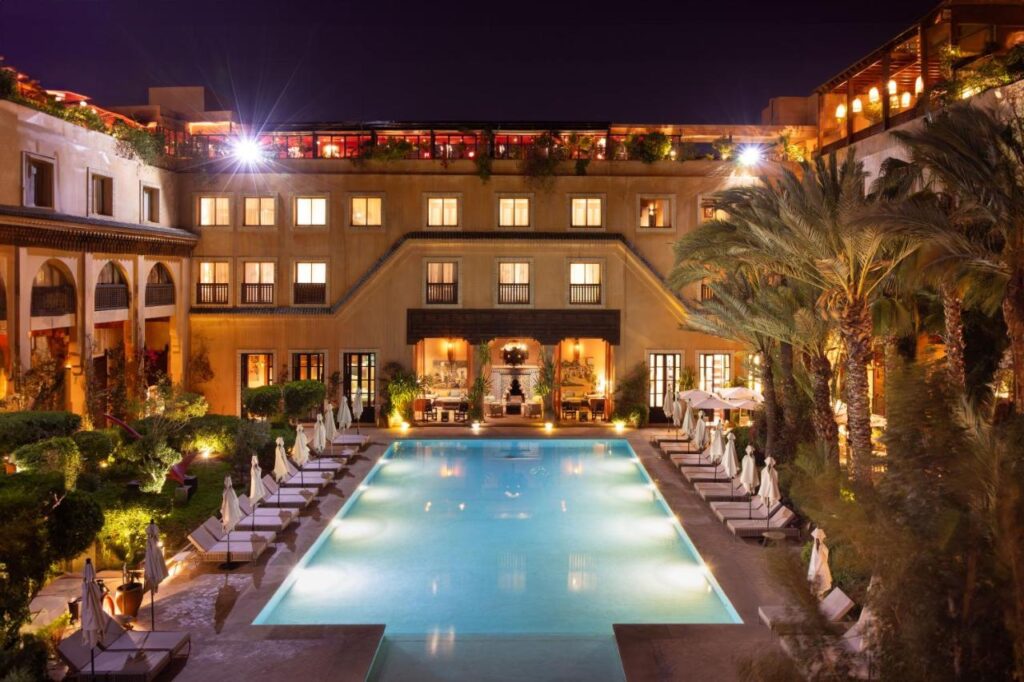
Five-star indulgence steps from Koutoubia: traditional spa, hammam, hot tub, and a palm-ringed pool. Spacious, air-conditioned rooms with all the comforts.
What we love: Late-night hammam followed by a quiet poolside mint tea.
26 rue de la Koutoubia, Médina, 40000. Check availability
Where To Eat At The Marrakech Medina
The Medina teems with everything from street eats to destination dining. Here are favorites for every budget.
The Best Cheap Restaurants in the Medina of Marrakech
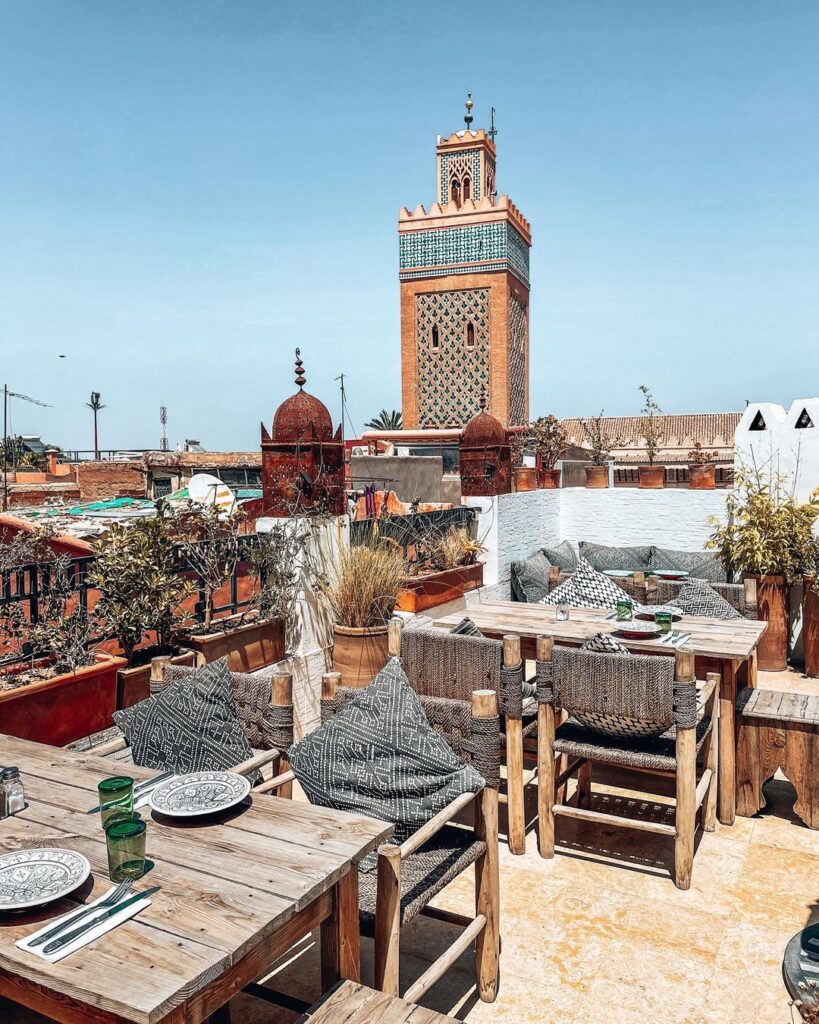
Jemaa el-Fna food stalls: By night, the square becomes a giant grill—couscous, tagines, brochettes, mechoui. Menus are similar; let yourself be ushered in and enjoy the banter. An only-in-Marrakech feast.
Café des Épices (near the souks): Simple, good, with rooftop views—think fresh salads, sandwiches, and juices.
Kui-Zin (near the souks): A calm terrace with saffron chicken, beef tagine with artichokes, and occasional cooking workshops.
La Table de la Kasbah (Kasbah): Traditional tanjia, mourouzia, and tagines; terrace tables face Moulay Yazid Mosque.
The Best Chic Restaurants in the Medina of Marrakech
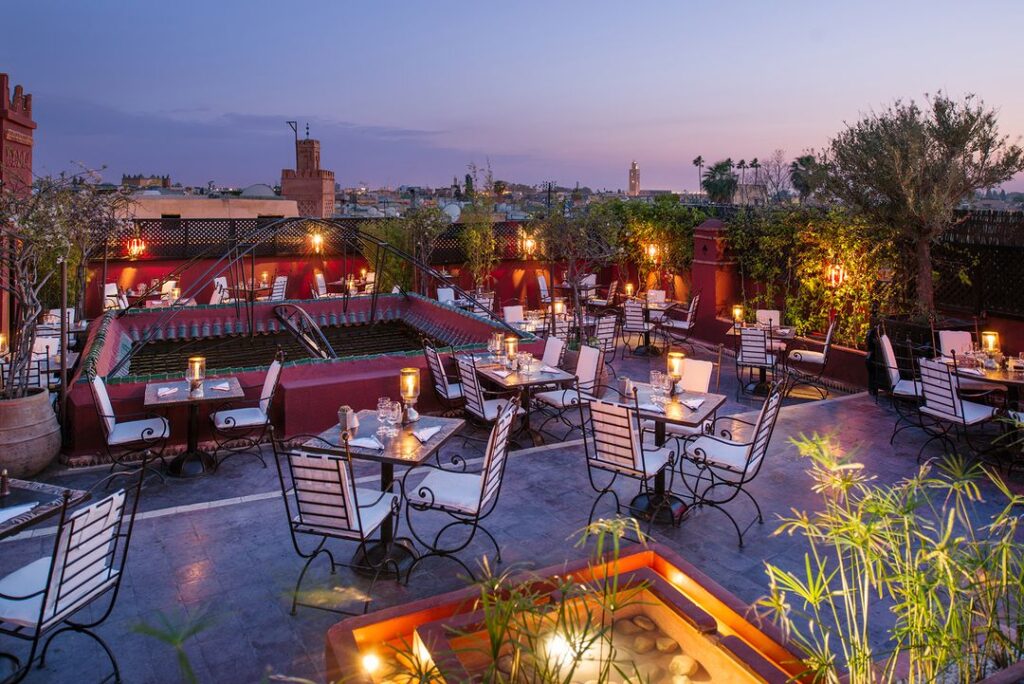
Le Foundouk (former caravanserai): Moroccan-international blend, mood-lit nooks, and lantern-escorted taxi farewells—pure theater.
Dar Cherifa (Mouassine): A 16th-century riad serving deep-heritage dishes (note: no alcohol; excellent juices and mocktails).
Naranj (Medina): Syrian-Lebanese flavors—chiche barak, vibrant veg plates—under arches and draped curtains.
The Best Luxury Restaurants in the Medina of Marrakech
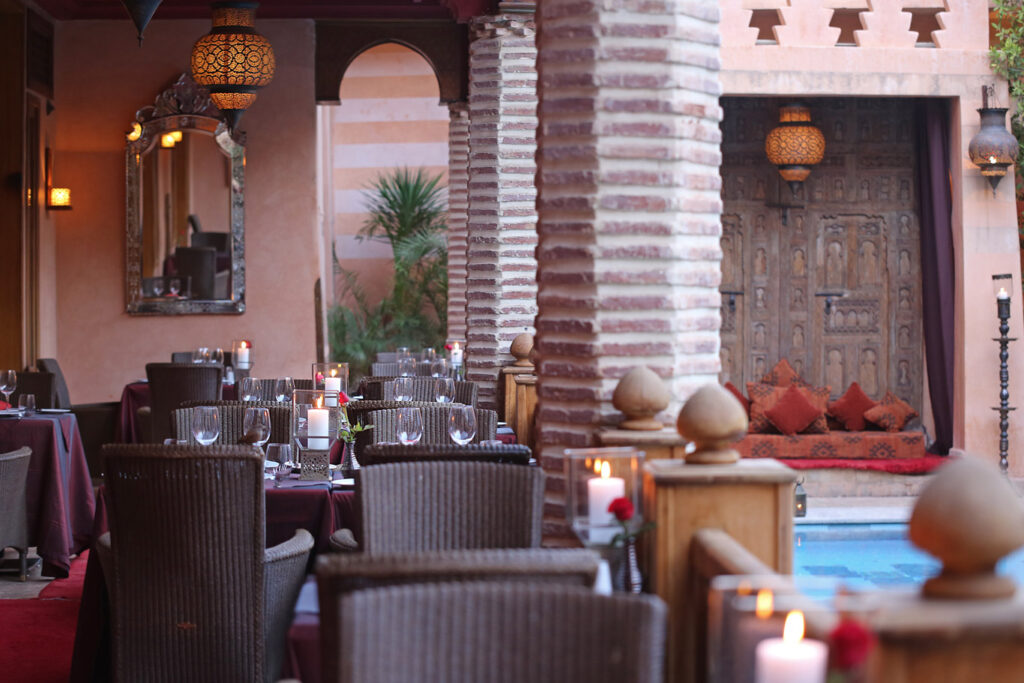
La Maison Arabe (two restaurants): One entirely Moroccan, one Franco-Moroccan-Asian; book a poolside table for dinner magic.
Dar Zellij (17th-century riad): Carved ceilings, candlelight, and Arab-Andalusian music nightly; refined Moroccan classics.
Ksar Essaoussan (Rue des Ksours): A dress-up night: doorman, grand patio, salons, and a 100% Moroccan fixed menu—start with pastilla, end with couscous.
FAQs: Marrakech Medina
What is the Medina, exactly?
Marrakech’s walled Old City—UNESCO-listed—packed with souks, riads, mosques, palaces, and Jemaa el-Fna.
When’s the best time to visit?
March–May and Sept–Nov for mild temps. Summer is hot; winter nights can be chilly.
Is it safe to walk around?
Generally yes—stick to lit, busier lanes at night, keep valuables zipped, and use registered guides/taxis.
How do I get there from the airport?
Taxi or bus (L11/L12/L19) to Koutoubia or Jemaa el-Fna, then walk to your riad; many riads arrange porters.
Do I need cash or card?
Both. Markets prefer cash (dirham). Larger restaurants and riads take cards.
How do prices work in the souks?
Bargain with a smile. Start around 30–40% of the opening price and meet in the middle.
Any dress code or etiquette tips?
Dress modestly (shoulders/knees covered is respectful). Ask before photographing people; remove shoes in mosques/riads if asked.
Are non-Muslims allowed in mosques?
Generally no for active prayer spaces; enjoy exterior architecture and courtyards where permitted.
What’s Jemaa el-Fna like at night?
It becomes a huge open-air food hall with performers and stalls. Bring small change and an appetite.
Can I visit on Fridays or during Ramadan?
Yes, but some sights/shops have reduced hours; expect busier prayer times and a calmer daytime vibe in Ramadan.
Are guided tours worth it?
Absolutely—guides help navigate, add history, and steer you to reputable artisans.
How about animal attractions?
Avoid snake/monkey photo props; choose ethical experiences instead.
What should I wear on my feet?
Closed, grippy shoes—alleys are uneven and dusty.
Any must-see highlights?
Koutoubia, Ben Youssef Medersa, Saadian Tombs, Bahia Palace, El Badi ruins, the souks, and Jardin Secret.
- Perfect Morocco with kids Itinerary (2026): 25 Days from Tangier to the Anti-Atlas, Coast, and Marrakech
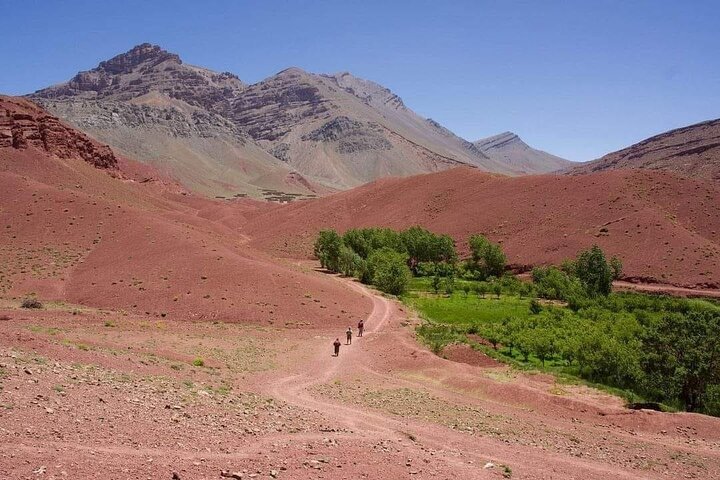
- Where To Stay In Agafay Desert in 2026: Luxury Moroccan Holidays
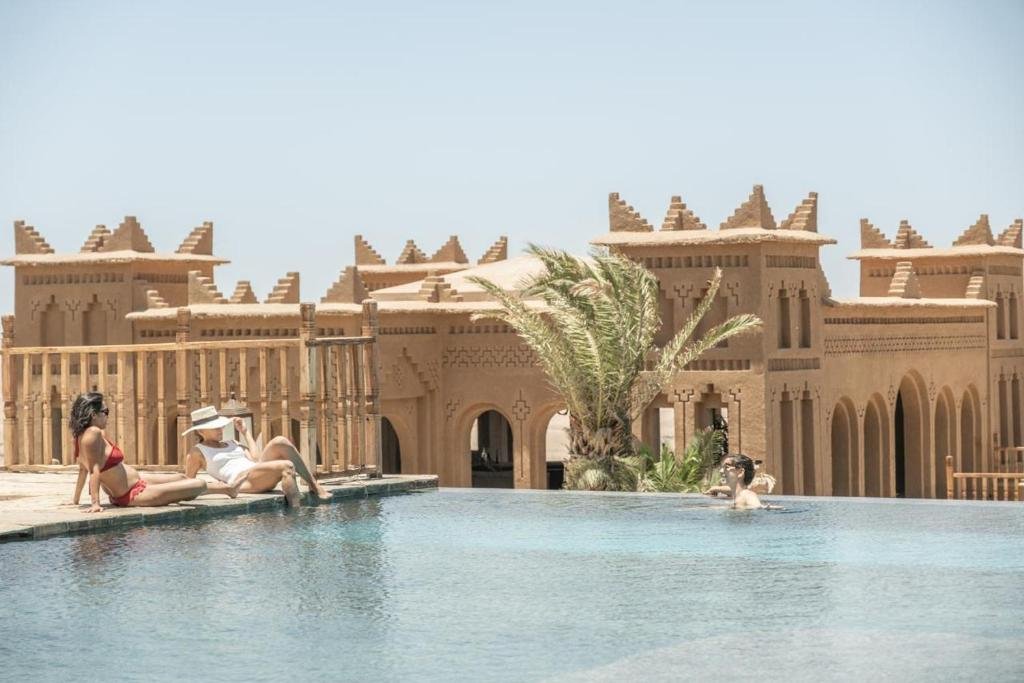
- 14 Most Beautiful Beaches In Morocco (2026)
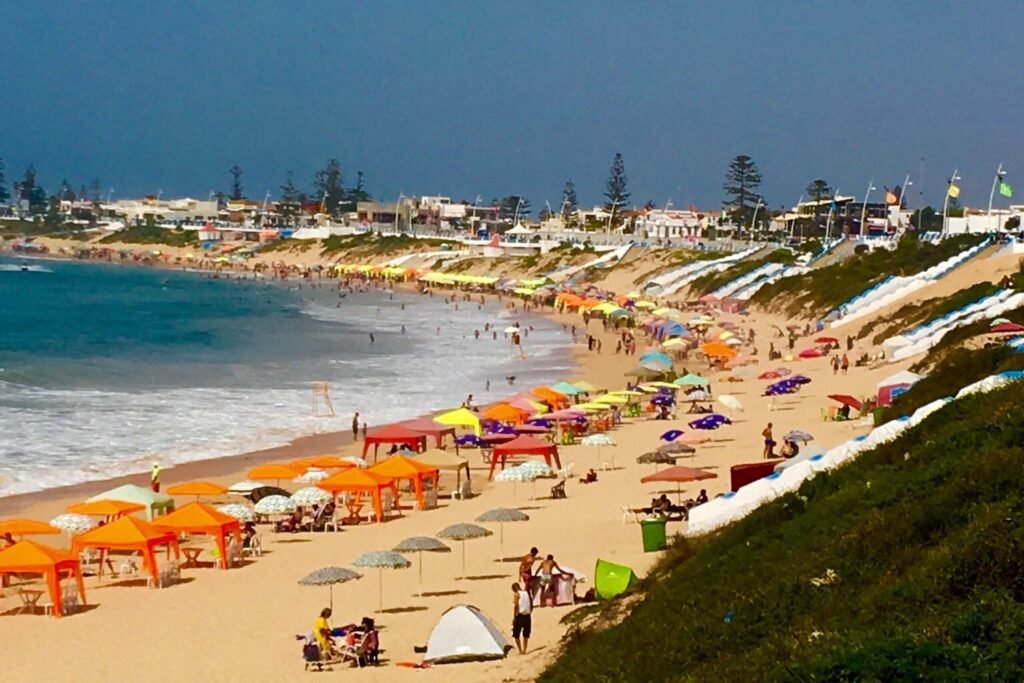
- What To Wear In Morocco (2026): Real-World Travel Guide For Female Travellers
- 3 Best Places To Stay in Marrakech Medina [2026 Updated]