
Travel writing based on first-hand experience
Plan the perfect Jordan itinerary with this detailed 8-day travel guide. Explore Petra, Wadi Rum, the Dead Sea, Amman, and more with tips on when to visit, what to see, where to stay, and how much to budget.
Table of Contents
1. ORGANIZE YOUR JORDAN ITINERARY
→ WHEN TO VISIT?

The best time to discover Jordan is in March, April, and May. Days are warm without being oppressive, nights are gentle, and the landscapes are in their most welcoming light.
September and October are also excellent choices. The crowds thin out, prices drop, and it’s the perfect way to soak up a little sunshine before winter sets in.
We strongly advise against visiting in the peak of summer (July/August). The heat is overwhelming and makes exploring Petra or hiking in the desert a real challenge. Winter (November–March) isn’t ideal either—desert nights are freezing, some sites close or reduce hours, and flash floods can occur in wadis.
→ BOOK YOUR FLIGHT

The easiest entry point is flying into Amman, Jordan’s capital. That said, it’s worth checking flights to Aqaba too, especially if you’re planning time on the Red Sea coast.
Traveler’s tip: With around two weeks to spare, you could even combine Jordan with a trip to Israel. In that case, flights to Tel Aviv are worth a look.
Ryanair and other low-cost airlines often roll out tempting offers to Jordan. Flexibility and fast booking are key if you want to grab one!
→ CAR RENTAL
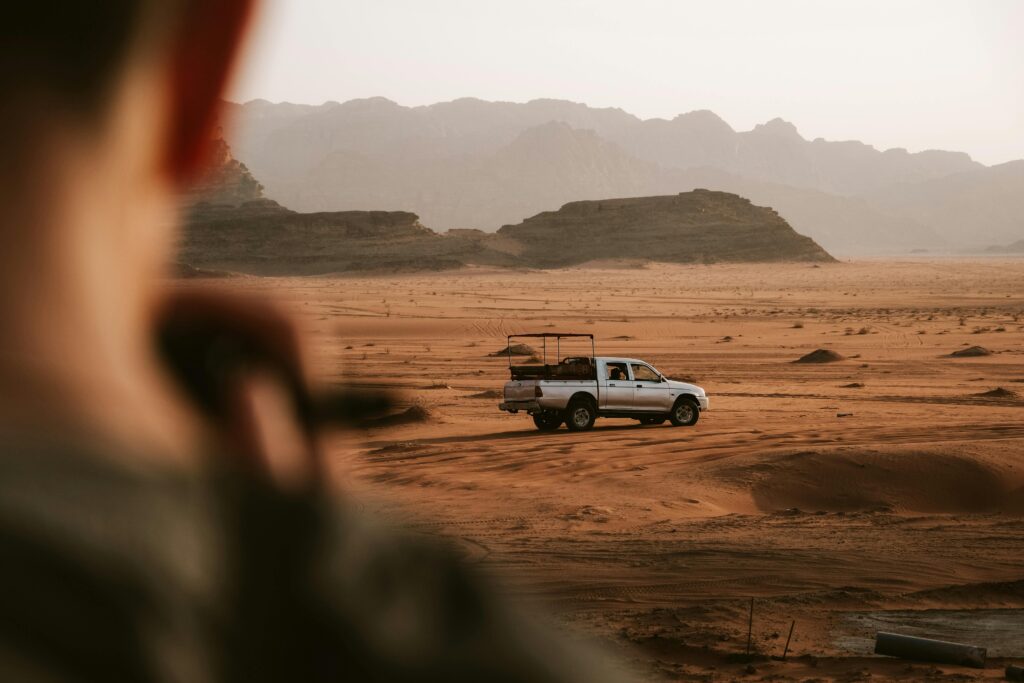
Renting a car is hands-down the best way to see Jordan. With rates starting around €30 a day, it’s affordable and gives you complete freedom—stop at scenic spots, reach Petra before the tour buses, and design your own pace of travel. We wouldn’t do it any other way.
Driving is generally straightforward, except for navigating busy Amman. Roads are toll-free and well-maintained, but watch out: unmarked speed bumps are everywhere and can catch you off guard!
Expect military checkpoints near the Dead Sea. These are routine—you’ll simply greet the officers and explain you’re a tourist. The region is closely monitored but safe.
Fuel is reasonably priced, averaging about €2 per liter.
Note: Amman’s traffic can be chaotic. If you’re driving, book a hotel with secure parking.
For the best rates, compare providers like Sixt, Dollar, Avis, and Budget through Discovercars. It’s a great tool to ensure you don’t overpay.
→ VISA AND JORDAN PASS
Before traveling, we highly recommend purchasing the Jordan Pass online through the Ministry of Tourism’s official site (jordanpass.jo). This all-in-one pass grants access to most of the country’s main attractions—including Petra, Wadi Rum, and Jerash—and it also waives the visa fee (40 JOD / ~€50). Once purchased, you’ll receive the pass by email. Simply print it or save it on your phone to show at immigration and at site entrances.
It’s excellent value. The entry to Petra alone almost covers the cost. And since nearly every traveler includes Petra, the pass quickly pays for itself.
Packages vary by how many days you want in Petra: 1 day for 70 JOD (~€90), 2 days for 75 JOD (~€97), or 3 days for 80 JOD (~€103). Considering how vast Petra is, we strongly recommend the 2-day option (more on that in the itinerary below).
Without the pass, Petra tickets cost 50–60 JOD plus the visa fee—so the math is easy. Note: not every site is included (for example, Wadi Mujib, Dana Reserve, and the National Museum in Amman charge separately).
→ SECURITY IN JORDAN
Understandably, many travelers worry about safety in Jordan. The country sits at the crossroads of Syria, Iraq, Saudi Arabia, Israel, and the West Bank—a region often associated with instability. But Jordan has a reputation as a safe haven. It serves as a buffer state, and both Jordanians and the international community are invested in keeping it that way.
During our trip, we never once felt unsafe. Military presence is visible, but more for reassurance than threat. Locals and Bedouins are incredibly welcoming—tourism is vital to their livelihoods. Just avoid venturing near the Syrian and Iraqi borders, and you’ll be fine.
→ HOW TO DRESS IN JORDAN AS A WOMAN?
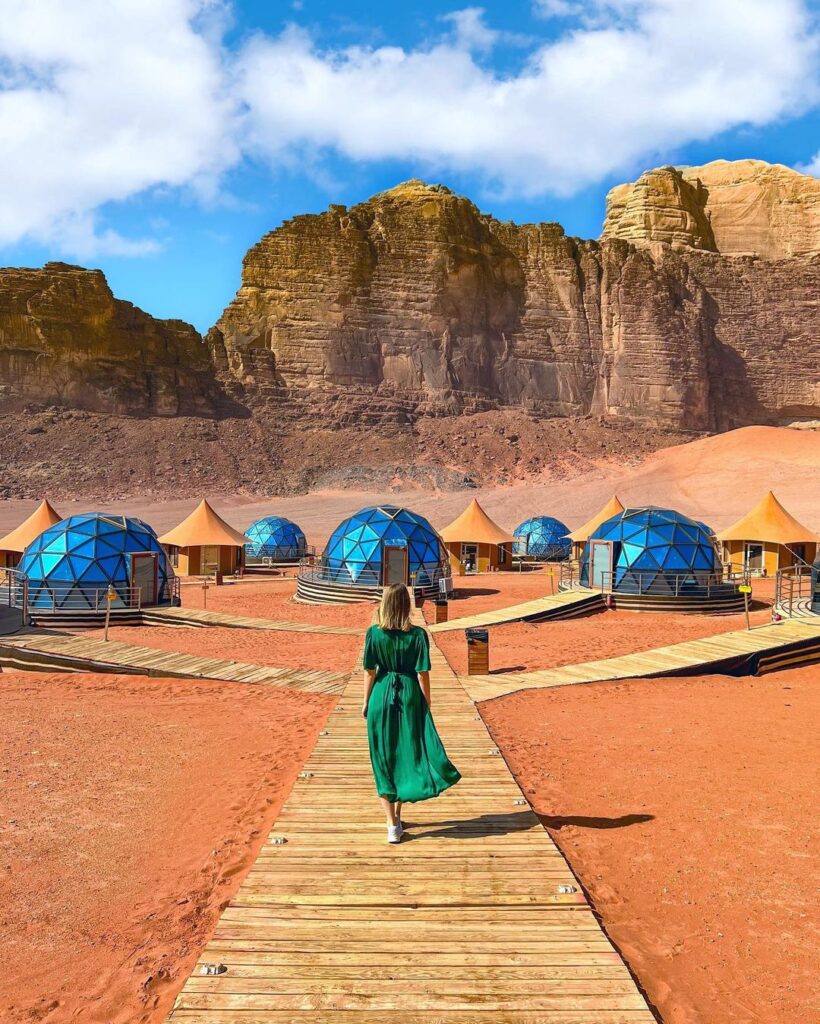
Pack modest, lightweight clothing. Long dresses are ideal—they cover your legs while keeping you cool. In cities, avoid low-cut tops and opt for t-shirts or dresses that cover your shoulders. A light shawl is a handy backup for covering up when needed.
I wore shorts only once—by the pool at the Dead Sea resort. Elsewhere, it’s best to dress conservatively to respect local customs.
Protect yourself from the sun! A hat, cap, or scarf is essential in Petra and the desert, where shade is scarce. For footwear, bring sturdy sneakers for Petra, hiking boots if you plan treks, and water shoes for canyoning in Wadi Mujib.
→ HOW LONG TO VISIT?
We explored Jordan in 8 days, which gave us a solid overview. But if you can stretch it, 10 days is ideal. It gives you more time to slow down, linger in Petra, and balance sightseeing with relaxation.
2. JORDAN ITINERARY – 8 DAYS
DAY 1: MOUNT NEBO AND THE DEAD SEA

We landed in Amman late in the morning, picked up our rental car, and hit the road straight away toward our first stop: the legendary Dead Sea.
But before diving in, we paused at Mount Nebo—a place steeped in history. This is said to be where Moses first glimpsed the Promised Land. A dramatic bronze sculpture stands beside the Moses Memorial Church, and the views stretch across the Dead Sea to Israel and Palestine. Entry is just 2 JOD, and honestly, the panorama alone is priceless.
If you have extra time, consider detouring to Bethany Beyond Jordan, believed to be the baptism site of Jesus. It’s an important pilgrimage spot for Christians and a moving place to visit.
From there, we finally descended to the Dead Sea, the lowest point on Earth at 408 meters below sea level. Floating in its dense, mineral-rich waters is surreal—like lying on an invisible mattress. Technically, it’s a lake fed by the Jordan River, and sadly, it’s shrinking fast, dropping about a meter each year. Experts warn it may vanish by 2050 if nothing changes.
Accessing the water isn’t as simple as it looks. Much of the coastline is fenced off or difficult to reach, and a shower afterward is a must—the salt stings like crazy if left on the skin. There are two public beaches, but entry is pricey (around 20 JOD / €24). We suggest heading to a resort instead, where facilities are far better.
We splurged on a night at the Movenpick Resort & Spa. Normally, this kind of luxury isn’t our style, but it felt like the perfect way to kick off the trip. Think rustic stone villas, shimmering pools, mud baths by the shore, and dinner with a view over the glowing Dead Sea. We found a deal on Booking.com—€100 for a double room with balcony—and it was absolutely worth it. Floating at sunset with those views was pure magic.
DAY 2: WADI MUJIB AND DANA RESERVE

After a night of bliss at the Dead Sea, we were recharged and ready for adventure. Our first stop was the incredible Wadi Mujib, Jordan’s deepest canyon.
This gorge is a paradise for nature lovers, home to more than 400 plant species, nearly 200 species of birds, and countless mammals and reptiles. But the real thrill here is the hike: the Siq Trail, where you literally wade, swim, and climb your way through towering sandstone walls with rushing water at your feet. It’s unlike anything else we’ve done while traveling—part canyon trek, part natural waterpark!
Tips for the trail: bring water shoes and a waterproof bag for your phone. Expect to be in the water about 40% of the time. You can rent gear onsite, but it’s pricier than bringing your own. Admission is 21 JOD (yes, a little steep, but worth every dinar for the experience).
Soaked and exhilarated, we continued our journey toward the stunning Dana Biosphere Reserve. The road there is breathtaking, winding through dramatic valleys and mountain vistas—don’t rush it, you’ll want to stop often for photos.
We had booked a night at Al Nawatef Camp, a simple Bedouin camp perched above the valley. For 25 JOD per night (for 2 people) plus 7 JOD per person for dinner, it offered exactly what we wanted: authenticity, warmth, and a front-row seat to one of the most beautiful sunsets we’ve ever seen. Watching the sky turn golden over the Dana Valley was pure magic.
DAY 3 AND 4: PETRA

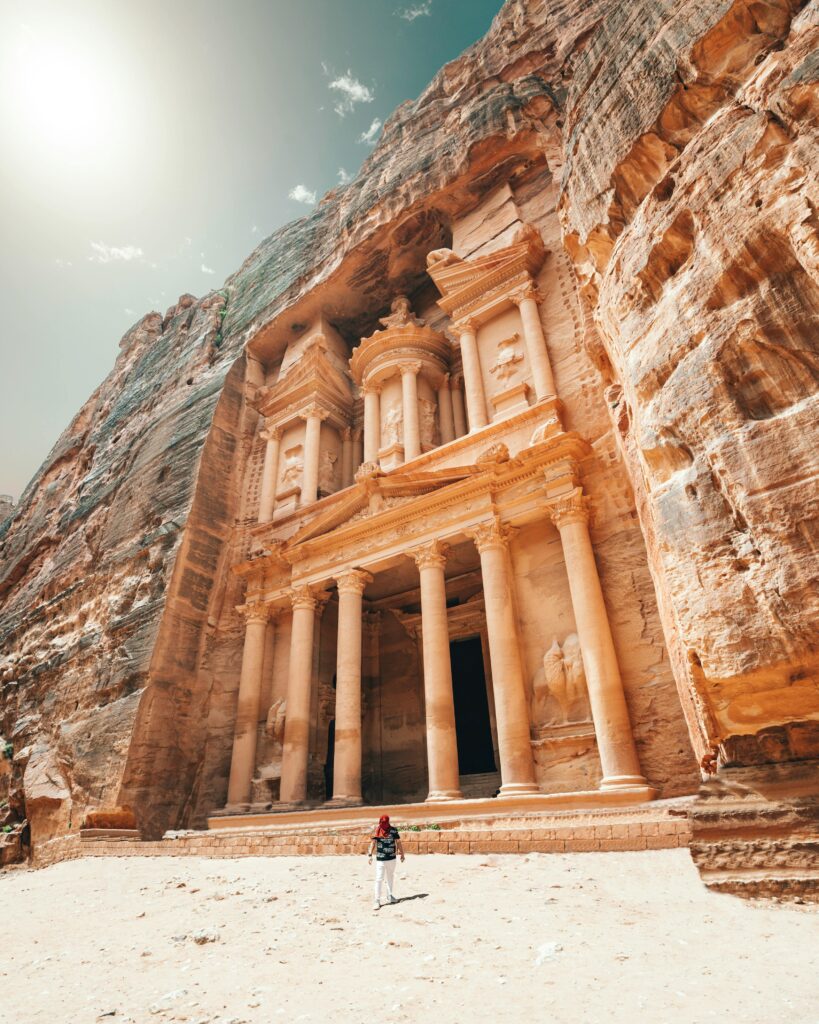
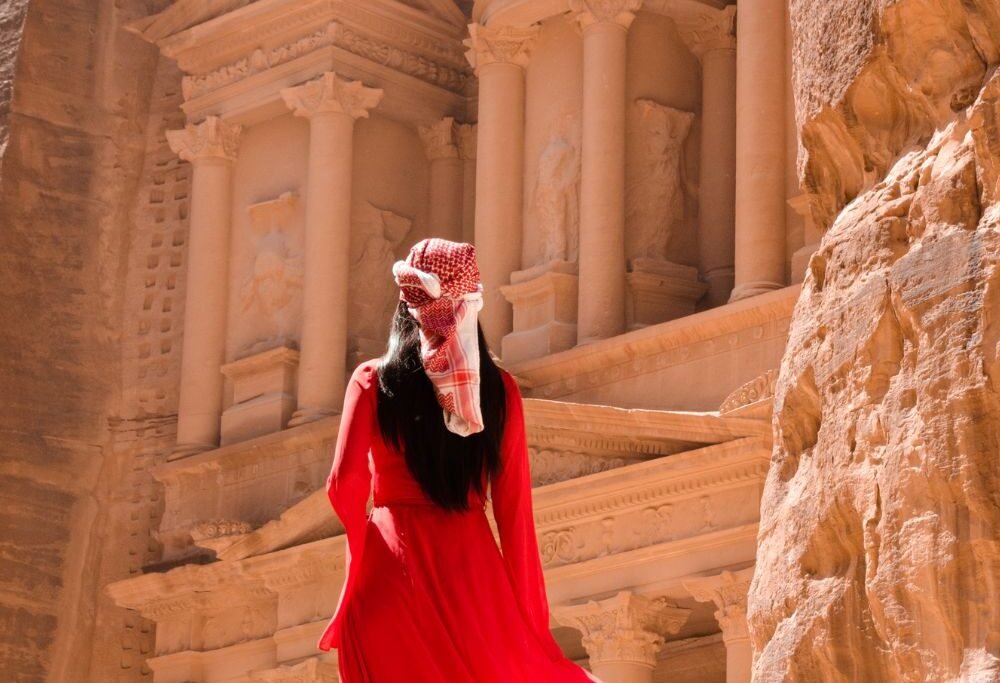
Some places live up to the dream just by their name—Petra is one of them. Carved into rose-red cliffs by the Nabataeans over 2,000 years ago, this city is a true wonder of the world. Nothing can prepare you for that first glimpse of the Treasury after walking through the narrow canyon of the Siq. It feels like stepping into another world.
We recommend dedicating at least two days to Petra. It’s huge, and rushing through would be a waste. Here’s how we split our time:
Day 1 in Petra
Arrive early—be at the gates by 6:30 or 7:00 a.m. when the site opens. Walking the Siq with almost no one around and seeing the Treasury in silence is worth the early start. This is Petra at its most magical.
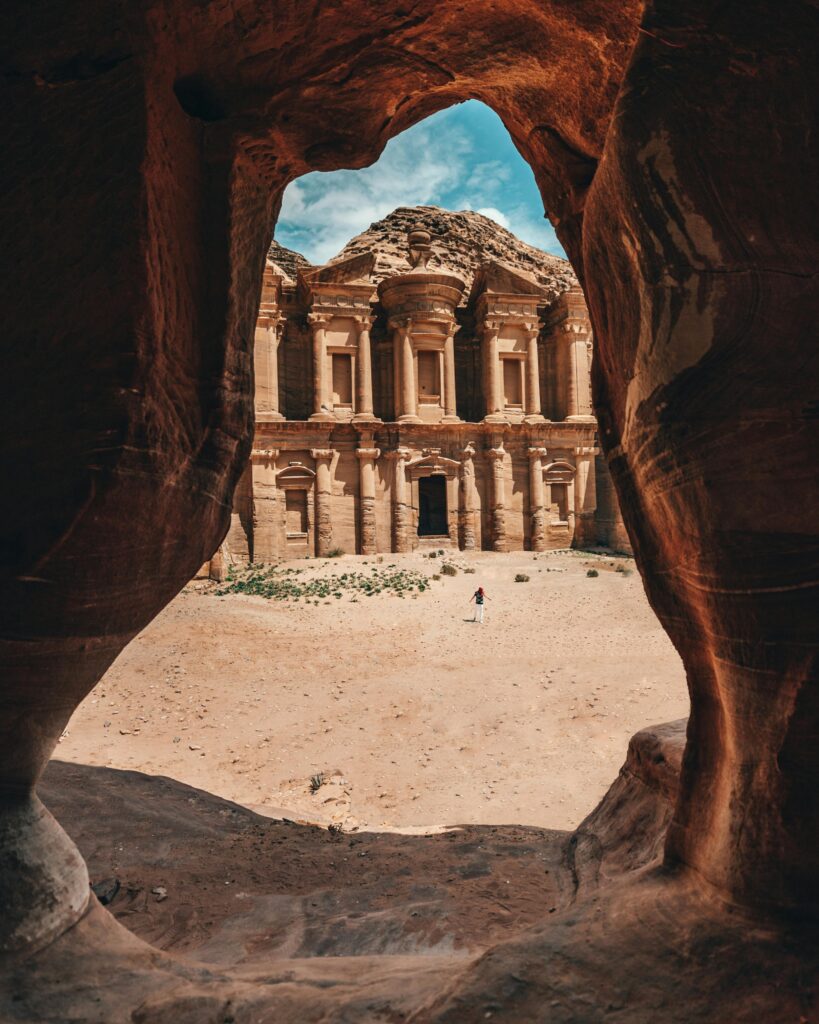
From there, climb up to the Monastery (Al-Deir), Petra’s other masterpiece. The hike takes around 2–2.5 hours (6 km) but rewards you with a colossal facade even larger than the Treasury. We relaxed at the little tea shop opposite, sipping fresh mint lemonade while staring at one of the world’s most breathtaking views.
If you have energy left, continue behind the Monastery for sweeping views over Wadi Araba, stretching toward Israel and Palestine. By early afternoon, as the sun grew brutal and the tour groups poured in, we called it a day. In the evening, we returned for the unforgettable experience of Petra by Night, when 1,500 candles light up the Treasury in a mystical glow.
Day 2 in Petra
At dawn, we set out again, this time aiming for a bird’s-eye view of the Treasury. The Al-Khubtha Trail is free, though Bedouins may offer “shortcuts” for a fee. Stick with the official trail—it’s a challenging but rewarding 45-minute climb. At the top, a Bedouin-run teahouse provides the perfect spot to sip tea while gazing down at the Treasury from above. It’s one of the most iconic views in all of Jordan.
We spent the rest of the day exploring at a slower pace: the Royal Tombs, the Theater, and shaded pathways filled with blooming oleanders. It felt good to wander without an agenda, soaking up Petra’s grandeur at our own rhythm.
Before leaving, we also made a quick stop at Little Petra (Siq al-Bariq), included in the Jordan Pass. It’s smaller, quieter, and a lovely way to round off the Petra experience.
Where to stay near Petra?
- Petra Plaza Hotel: Simple, comfortable, and perfectly located in Wadi Musa. Great value for mid-range budgets and within easy reach of Petra’s main entrance.
Where to eat?
- Beit Al-Barakah: Delicious falafel and hummus at unbeatable prices. A great little local spot to recharge after exploring.
DAY 5 AND 6: WADI RUM AND AQABA
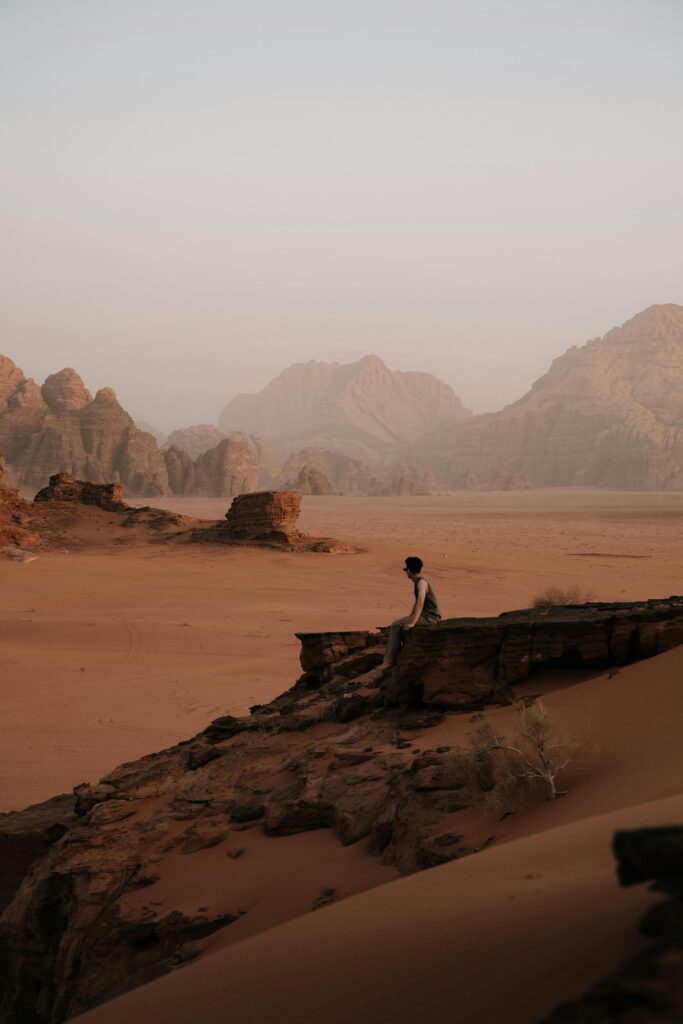
On Day 5, we headed south into the legendary Wadi Rum desert, a place of ochre sands and sandstone cliffs sculpted by the wind. It’s no wonder it became famous through Lawrence of Arabia and countless films since—being here feels like standing on another planet. Beyond the tiny Wadi Rum Village, the road simply ends, and the desert begins.
Booking ahead is essential. Many agencies offer tours, with experiences ranging from luxury glamping to rustic Bedouin camps. We wanted authenticity—sleeping under the stars instead of in a fancy dome—so we chose the Wadirum Stillness agency. It was exactly what we hoped for. If you’d like to book the same, contact Habis on WhatsApp (+962 7 7893 7527)—he’s more responsive there than online.
Our day in the desert was unforgettable. We explored hidden canyons, natural arches, and vast sand dunes without ever feeling crowded. At sunset, our guide prepared a campfire meal, and we shared stories under a sky streaked with stars and the Milky Way overhead. Falling asleep on the desert floor, with only the crackle of the fire and silence all around, was easily the highlight of our entire trip. The cost? 60 JOD (~€74) per person, including guiding, meals, and camping. Absolutely worth it.
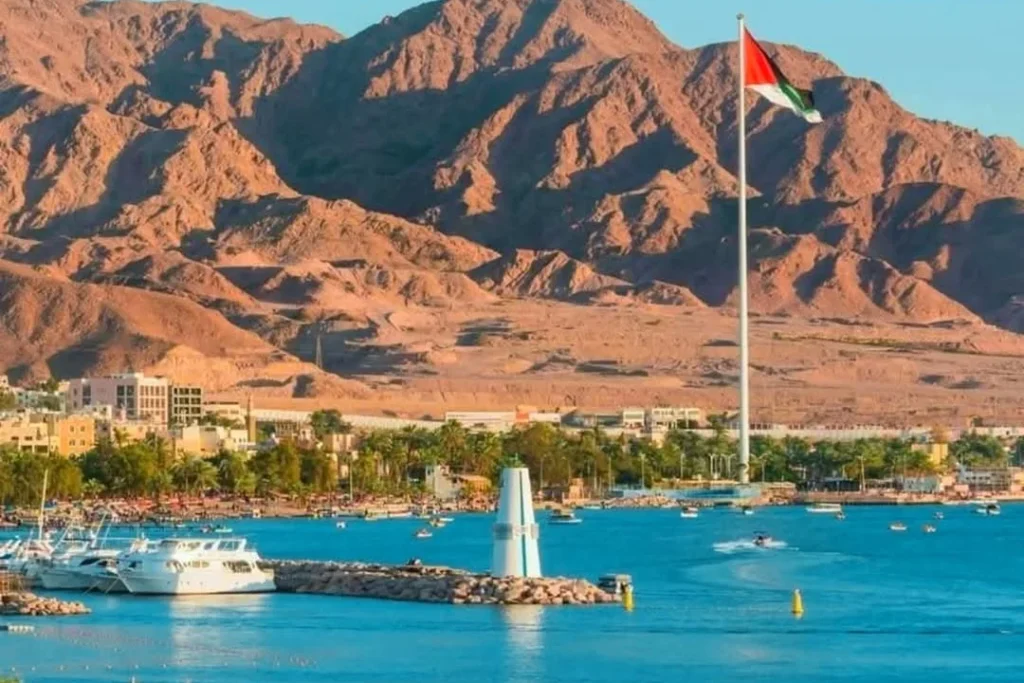
The next morning, we left the desert behind and drove down to Aqaba on the Red Sea. It’s Jordan’s only coastal city and a popular spot for diving and snorkeling. While we didn’t dive, we enjoyed a refreshing swim in the sea—a nice break before returning north. The beaches aren’t the prettiest, but the sea itself was blissfully cool after the desert heat.
We checked into the centrally located Luciana Hotel and later had dinner at Khubbza & Seneya, a gem of a restaurant serving lemon chicken with garlic, creamy hummus, and crispy arayes. Two people ate like royalty for under €12. Aqaba may not have major attractions, but the view across to Israel and Egypt from the shoreline is breathtaking.
Note: Aqaba is quite conservative. Locals usually swim fully clothed, so be respectful—save swimsuits for private resort beaches. If you prefer a more relaxed vibe, head to a beach club like Berenice Beach Club, where tourists can swim freely.
DAY 7 AND 8: AMMAN
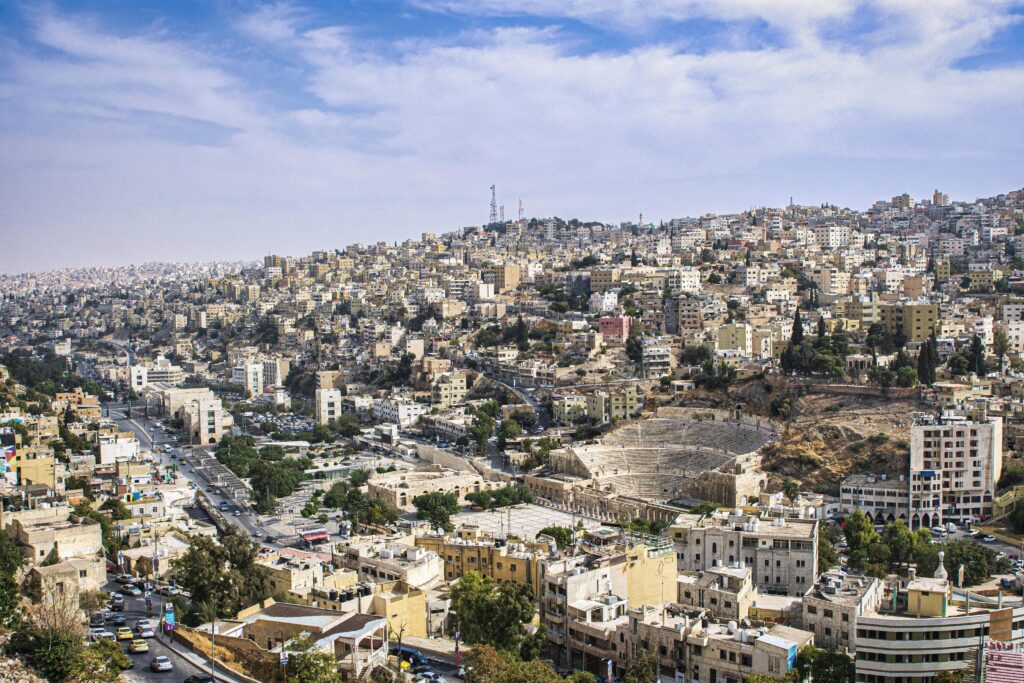
We wrapped up our Jordan adventure in Amman, the bustling capital. The drive back from Aqaba took about four hours, but with the Dead Sea shimmering on our right for part of the journey, it didn’t feel long at all. The scenery alone makes the road trip worth it.
We stayed right in the city center at the lovely Al Midan, a small hotel with parking included. Its location made exploring the city on foot really easy, and the staff were wonderfully welcoming.
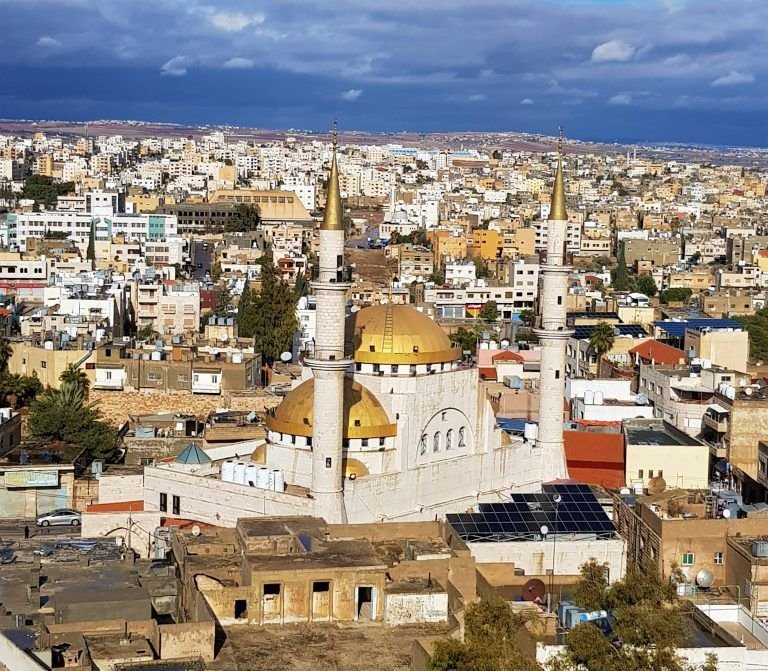
Amman has a unique mix of ancient ruins and modern energy. Don’t miss the Citadel with its Roman, Byzantine, and early Islamic remains perched on a hilltop overlooking the city. The Roman Theater is another highlight, still used for events today. We also loved wandering downtown among spice shops, markets, and little cafés that spill onto the streets.
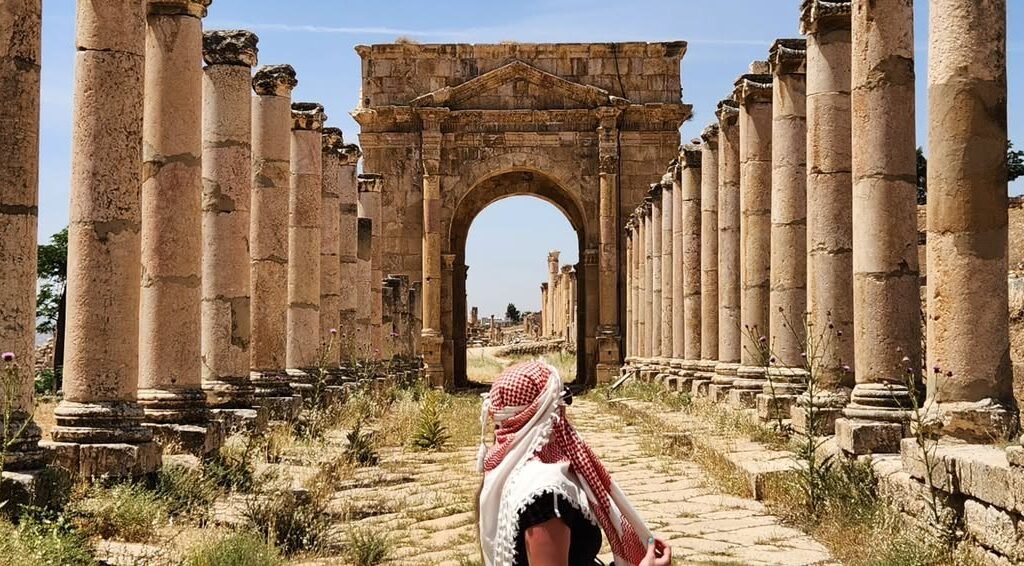
If you have an extra day, take your car for a short trip to Jerash, about an hour away. Often called the “Pompeii of the East,” Jerash is one of the best-preserved Roman cities outside Italy—colonnaded streets, temples, and theaters transport you back two thousand years.
And of course, no trip to Amman is complete without eating at Hashem, a legendary local restaurant. The menu is simple—falafel, hummus, and fresh bread—but the flavors are outstanding, and the prices are unbelievably cheap. It’s always buzzing with locals, which is the best sign of all.
3. THE BUDGET TO PLAN FOR A TRIP TO JORDAN

Jordan isn’t the cheapest destination in the Middle East, but with some planning, it’s manageable. For our 8-day trip as a couple, we spent around €1,200 in total. That included flights, car rental, accommodation, food, and activities. We didn’t hold back on experiences, but we also mixed in budget-friendly stays with the occasional splurge—like our night at the Dead Sea resort.
Here’s what to factor into your budget:
- Excursions & Activities: Jordan Pass, Petra by Night, Wadi Rum tour, Wadi Mujib entry. These are the highlights but they do add up.
- Accommodation: Budget-friendly guesthouses and camps average around 25 JOD (~€30) per night. The one exception is if you treat yourself at the Dead Sea, which is considerably pricier.
- Car rental & petrol: Very affordable compared to Europe. Expect roughly €30 per day for rental, plus €2 per liter of fuel.
- Food: Eating like a local keeps costs low—street falafel and hummus can feed two for a few euros. Sit-down meals are still very reasonable unless you’re in high-end resorts.
Overall, Jordan offers fantastic value for such a rich travel experience. The landscapes, history, and culture you’ll encounter here are truly priceless compared to the money spent.
- Driving in Jordan as a Tourist (2026): What to Expect, Road Rules, and Tips for a Safe Trip
- How to Dress in Jordan as a Woman (2026): What to Wear for Comfort, Respect, and Real Life
- Perfect Jordan Itinerary 10 days (2026): From Amman To Aqaba
- What to Do in Madaba in 2026: Explore Near Jordan’s Mosaic City
- What to Do in Jerash Jordan (2026): A Walk Through One of the Best-Preserved Roman Cities on Earth