
Travel writing based on first-hand experience
How to dress in Oman? Or, in other words: how to pack just the essentials in a backpack, without losing cultural respect or your own style.
Before we begin… take a breath.
You probably won’t need to buy anything or stress yourself out with an endless list. Traveling light, comfortably, and consciously isn’t just possible in a place like Oman; it’s what will work best for you. Here’s everything you need to enjoy your adventure through the best-kept secret of the Persian Gulf.
More Oman Travel Guides
Figuring out what to wear in Oman is much easier once you know where you’re going. These guides will help you plan the sights, the route, and the detours worth dressing for.
Table of Contents
How to dress in Oman with respect (and without sacrificing yourself)
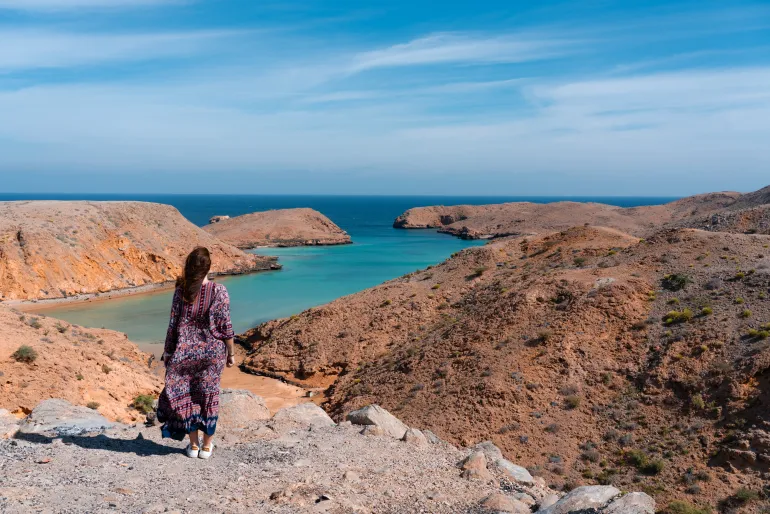
Oman is a friendly, safe country full of contrasts. But it also has traditions and customs very different from our own. As a woman, your clothes are more than just clothes: they’re a way of presenting yourself, and how you dress in Oman matters.
But it’s not about hiding or imitating. It’s about flowing with your surroundings. About adapting without losing your essence. About moving freely but carefully.
And no, you don’t need to dress “like a local” in Oman. It’s enough to understand the social scene and avoid low-cut tops, bare shoulders, miniskirts, and very tight clothing.
The good news? That doesn’t mean you have to be bored. You can still be yourself, playing with fabrics, colors, and silhouettes that are respectful, but also beautiful and functional.
The weather in November: neither cold nor hot, but quite the opposite
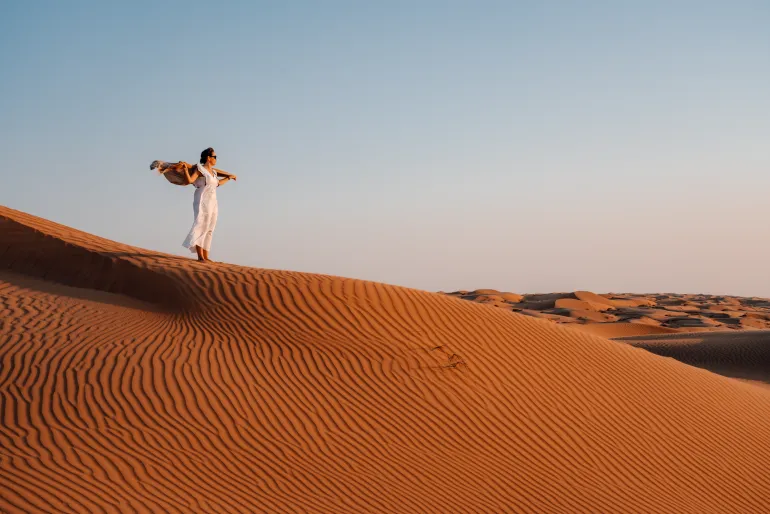
We traveled to Oman in November because it’s a delight. Warm but bearable days, cool nights in the desert, and a breeze in the mountains. Ideal for exploring, hiking, and even taking a dip in a wadi. But of course, that means dressing in layers, like an onion.
What to expect?
- Daytime: between 25°C and 30°C
- Night: 15°C or less in areas such as Jebel Shams or Wahiba Sands
- Strong sun: always, even if it doesn’t seem like it
- Mountain and desert breezes: get ready for cooler nights
The trick to dressing in Oman is in the minimal (but well thought out)
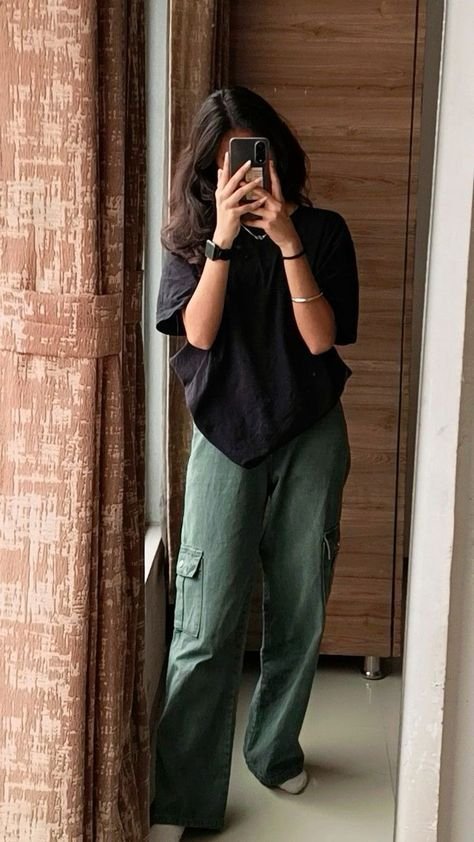
Your base for dressing in Oman can be:
Forget carrying your whole house on your back. Here, we’re all about a lightweight, sustainable, and functional backpack. Everything you pack should have at least three lives: for hiking, for dinner, for a trip to the souk, or for stargazing.
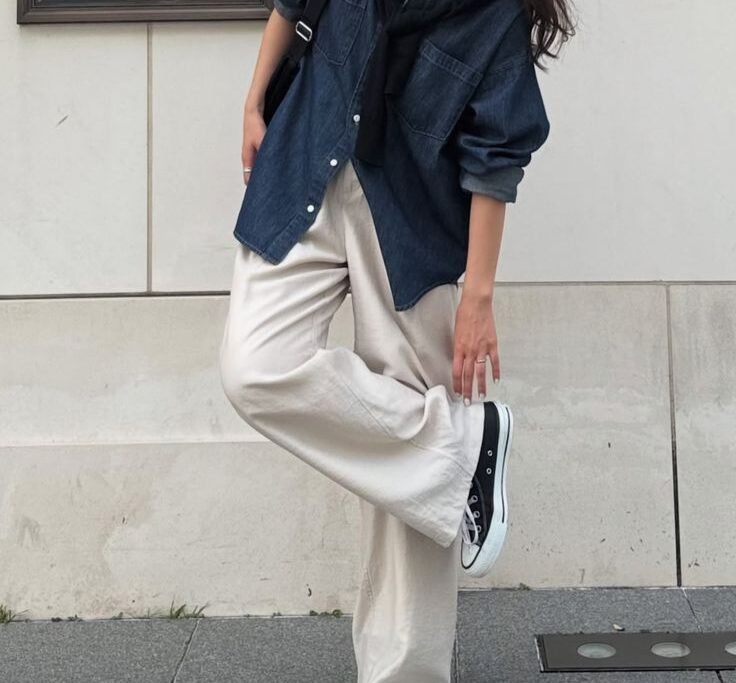
- 1 pair of “loose” trousers
- 2 breathable t-shirts and/or an oversized shirt or dress with sleeves.
- 1 thin thermal t-shirt for cold nights
- 1 pair of hiking trousers (for wadis and treks)
- 1 windproof jacket or fleece
- 1 large scarf that can be used as a veil, sarong, or even a towel
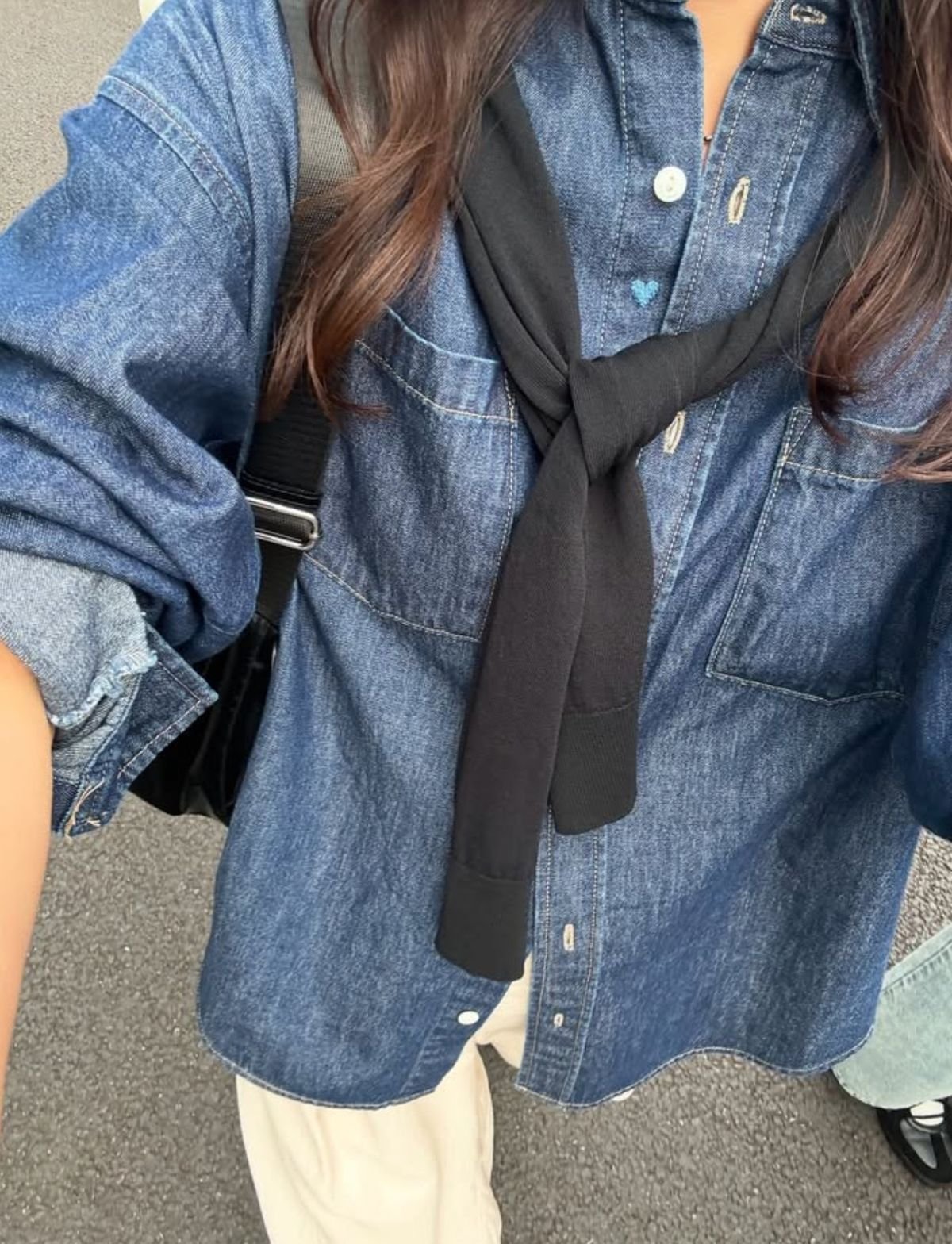
Mosques, souks and respect for the sacred
The day you visit the Sultan Qaboos Grand Mosque is special. Not just any outfit will do. Here you need to cover your arms, legs, and head; that means a veil, long pants or a long skirt, and a long-sleeved shirt.
And the souks? Although more relaxed, they are public spaces where it’s best to maintain the same level of formality. Think light clothing, but enough to cover up. Dressing in Oman can be easy and simple.
In the desert: yes to fluidity, no to plastic
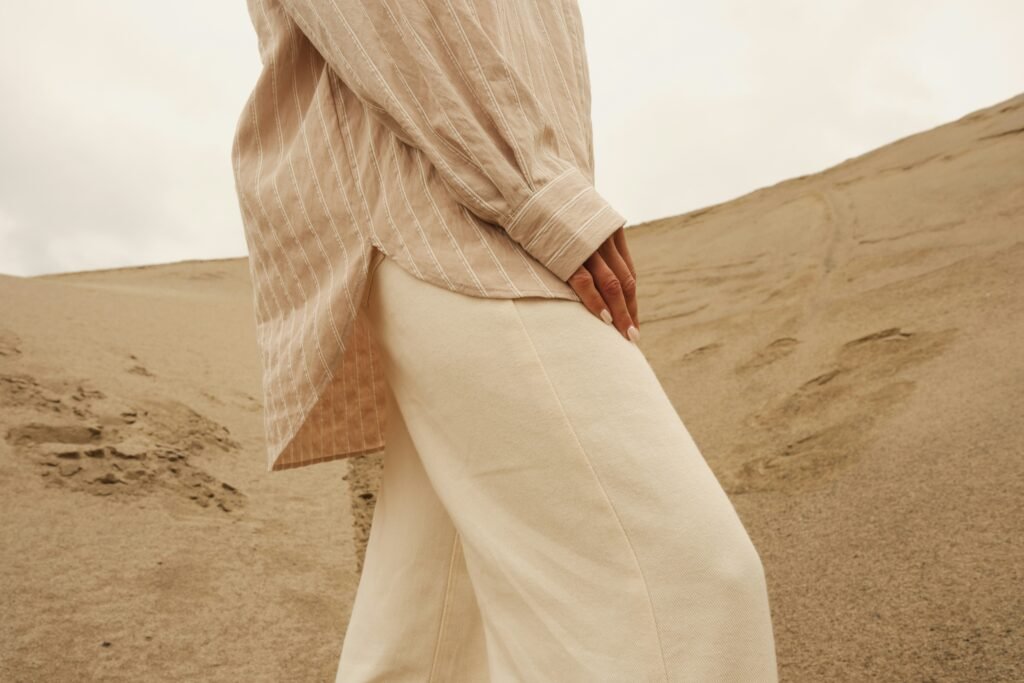
Wahiba Sands will blow your mind. Literally. So protect yourself from the sun, wind, and dust. Wear loose, covering clothing in neutral or sand colors.
And, since we’re talking about the desert… avoid synthetic fabrics that trap heat or generate more waste. Opt for natural fibers: organic cotton, linen, bamboo.
Oh, and one extra tip: always carry your own reusable water bottle, cloth bag, and bar soap.
Wadis, oases and water: bikini or swimsuit ?
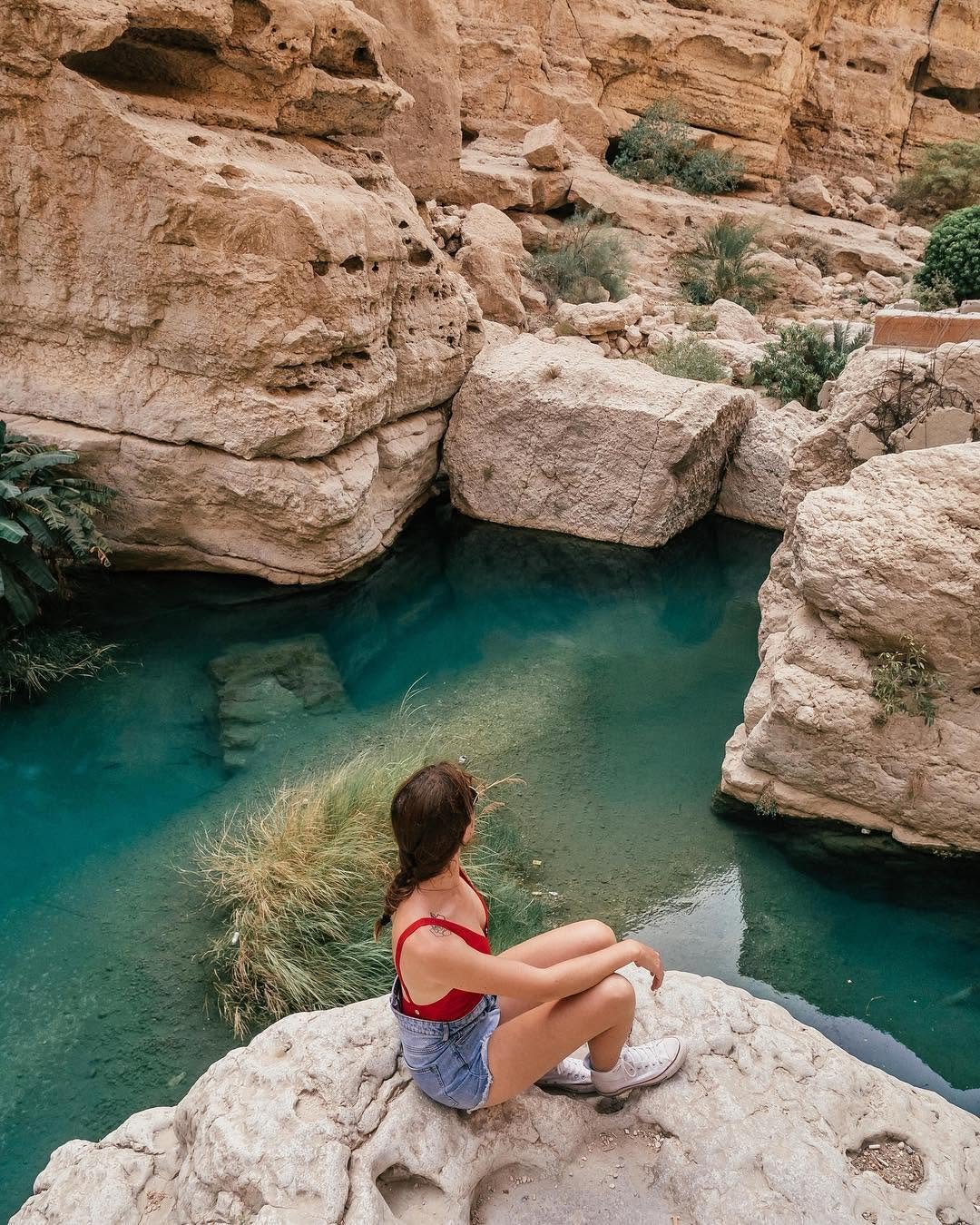
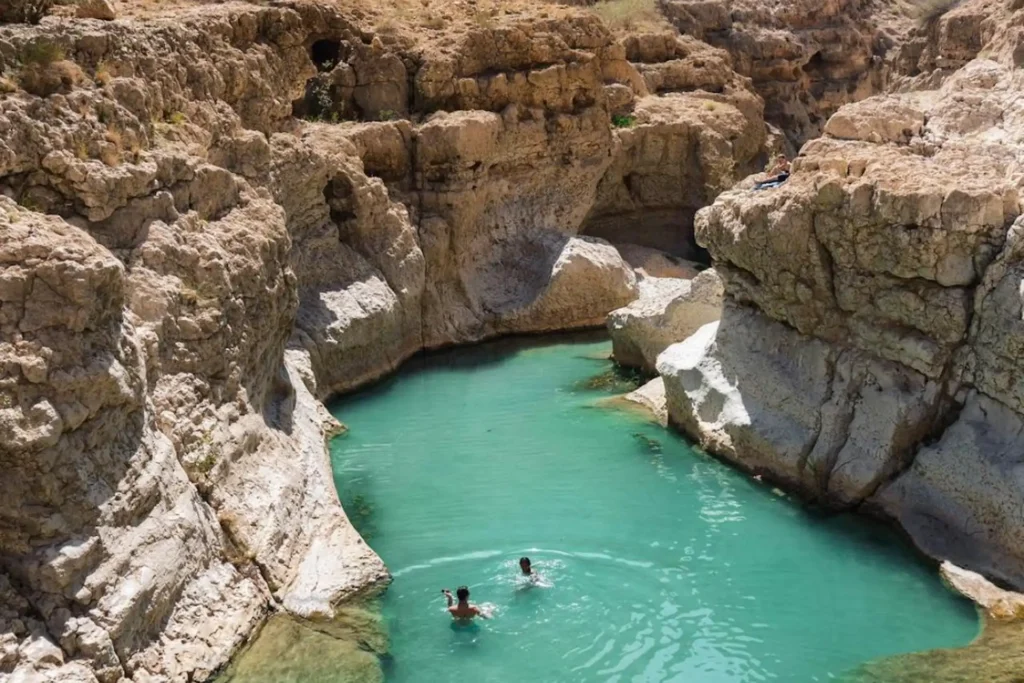
Good question. In places like Wadi Bani Khalid or Wadi Shab, you’ll want to take a dip. Ideally, wear a one-piece swimsuit. And when you get out, put on your sarong or towel. No one will judge you, but the more discreet we are, the more comfortable we’ll be. In fact, many “Western” women prefer to dress in keeping with the local culture and wear a t-shirt and shorts.
Footwear: 2 pairs and no more
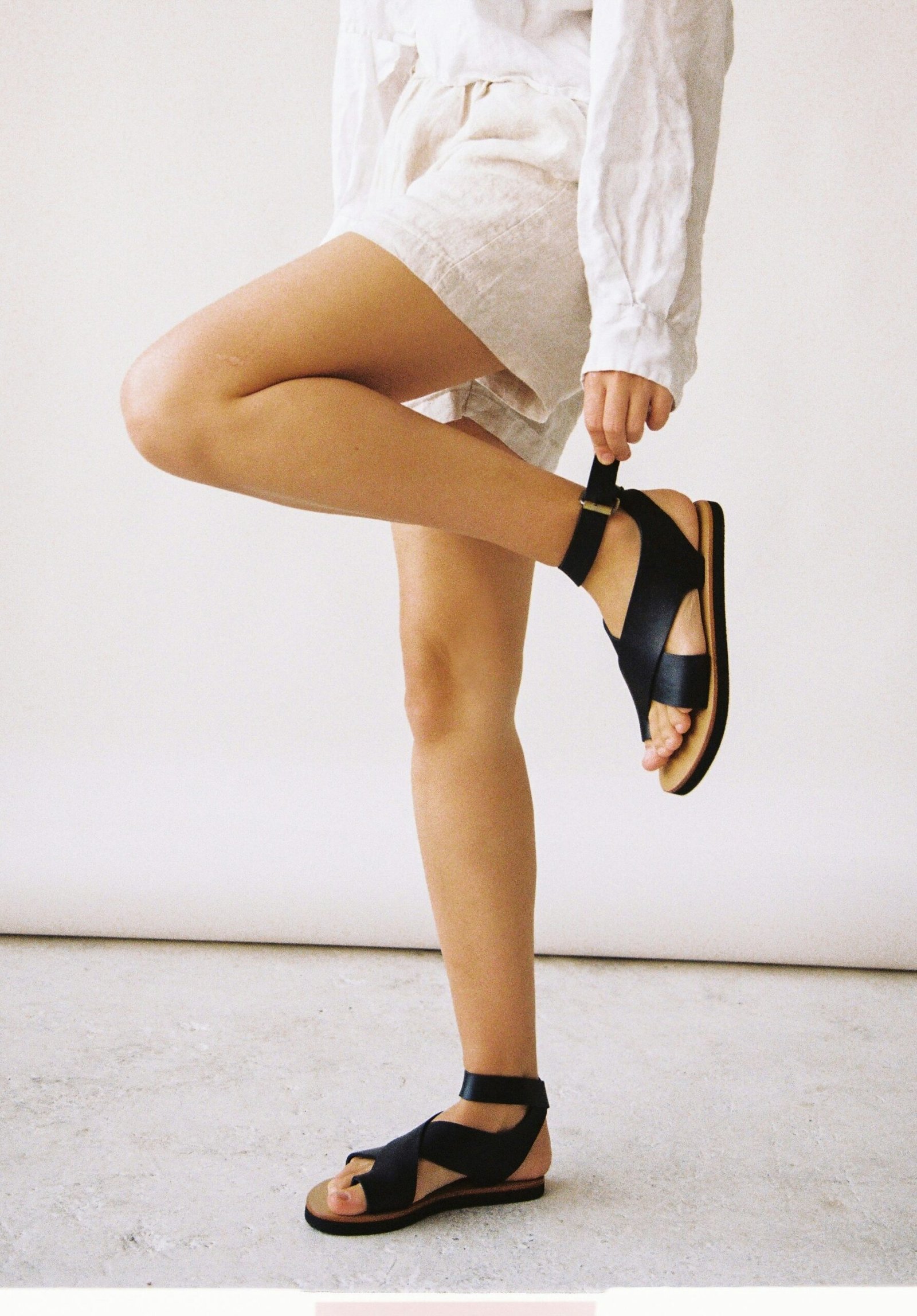
- Closed or sporty sandals for everyday wear
- Hiking boots (lightweight, with good soles).
If you get cold easily, add thick socks for nights in the mountains or in the tent. But that’s all you need.
Accessories that do (and that add value)
- Good sunglasses (the sun doesn’t forgive)
- Hat or cap (preferably foldable)
- Large scarf (we already mentioned it, but it’s key)
- Fanny pack or small backpack for excursions
What to leave at home (without feeling guilty)
- Jeans (they’re heavy, don’t dry, and aren’t comfortable)
- Very tight or synthetic clothing
- Full makeup (I assure you that you won’t even use it)
- Hair dryer (seriously, what for?)