
Travel writing based on first-hand experience
In this post, we’re sharing a fantastic 10 days in Oman itinerary covering the best places to see in Oman.
We’ve included the country’s most famous highlights, along with a few unexpected stops that made our trip even more unforgettable.
Oman is an incredible destination — safe, clean, and wonderfully diverse. Think rugged mountains, endless dunes, and beaches that look as though they’ve been lifted straight from the Caribbean.
Then there are the wadis: lush valleys threaded with rivers where swimming is not just possible, but almost essential. They add exactly the right dose of adventure to make a trip to Oman truly memorable.
So, if you’d like to discover all the details of our journey through Oman, keep reading — because we’re going to tell you absolutely everything.
More Oman Travel Guides
These guides will help you plan the sights, the route, and pro tips.
Table of Contents
Before your Oman trip: practical information
Car rental
If you want to explore Oman independently, renting a car is essential. We booked ours through our preferred search engine, which we’ve used to rent cars in more than 20 countries.
If you book through our affiliate link, you won’t pay anything extra, and you’ll be helping us keep the blog running. Thank you!
So, what type of car should you rent? For the route we suggest, a 4×4 is necessary. In Oman, some mountain roads have checkpoints at the start where they check whether your vehicle is a 4×4.
If you want to avoid the extra cost of renting one, you can always book a tour for certain sections of the route or ask more remote accommodations whether they offer pick-up service.
Don’t worry: in the day-by-day itinerary below, we explain exactly where a 4×4 is required and also suggest alternative organized tours.
Road conditions and country development
Oman is a fairly developed country, but let’s be honest: it’s not like the Emirates, its much better-known neighbor.
That is part of its charm, of course, but it also comes with a few limitations.
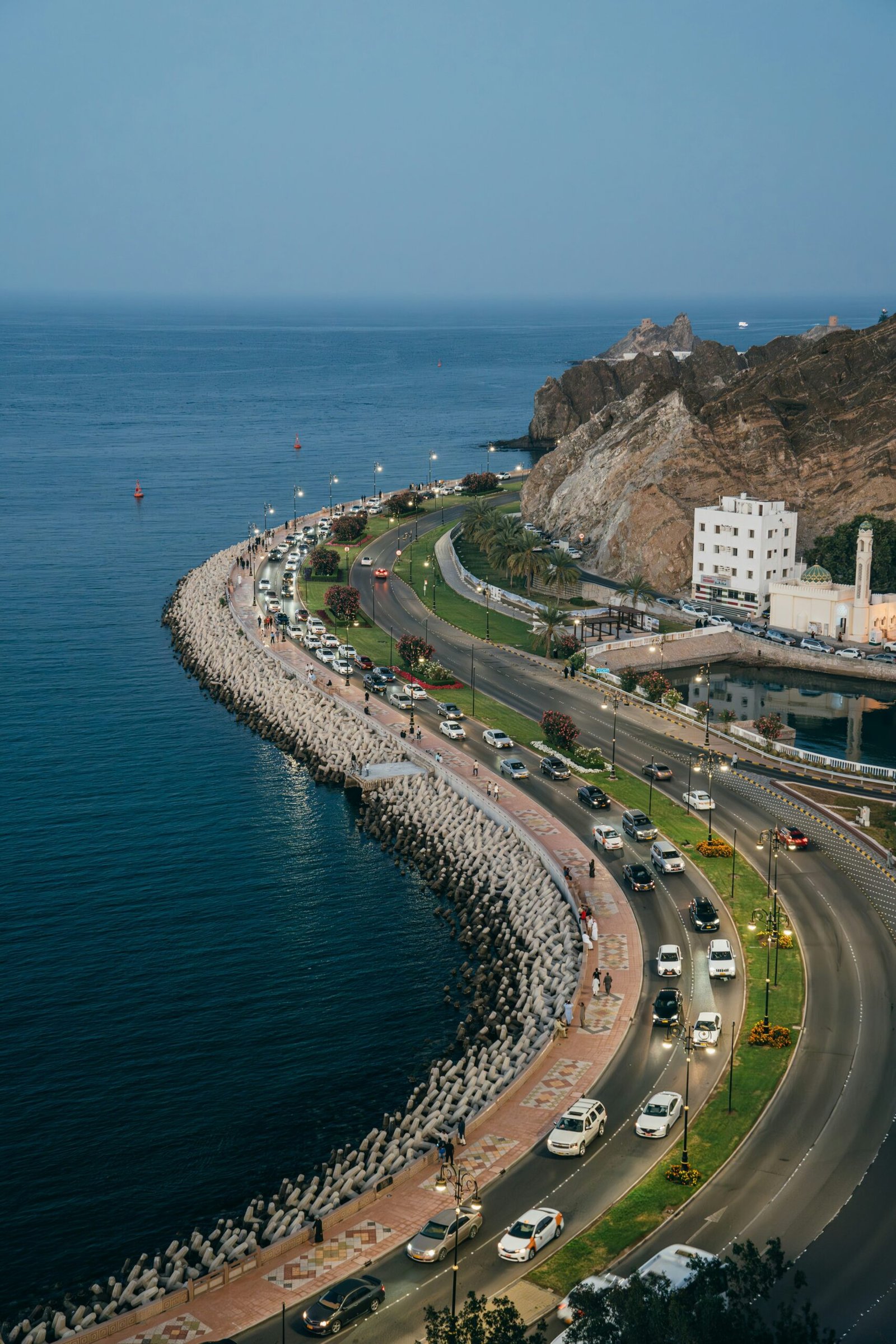
For example, Muscat, the capital, is spacious and modern, but it has no skyscrapers. That is intentional, as the government wants the city to keep a more local character.
Outside the capital, options for more “modern” or Western-style restaurants are limited. Still, don’t worry — along the way, we’ll recommend some good local places to eat.
As for the roads, they are generally in good condition between the country’s main cities. Mountain roads, however, are another story.
Many of these stretches are still unpaved, and to reach some relatively popular tourist areas, you will need to drive on dirt tracks with lots of bends and the occasional pothole.
It is worth remembering that in the 1970s, Oman was still a fairly poor country with only 10 km of paved roads. So the progress has been remarkable — and it will likely continue improving in the coming years.
| IMPORTANT! During our trip planning, calling through WhatsApp and FaceTime in Oman could be unreliable or restricted. However, WhatsApp text messages and photos worked normally. By late 2024, many users in Oman reported that WhatsApp voice and video calls had started working without a VPN, although this did not seem to come with a clear formal announcement. Apple also lists FaceTime as available in Oman, though availability can still depend on the device and carrier. We used Google Meet and it worked reasonably well. As always, it is worth checking the latest situation before your trip. |
Complete 10 days in Oman itinerary
Day 1: Arrival in Oman, Bimman Sinkhole, Pebble Beach, Wadi Mibam
After a red-eye flight with a layover in Saudi Arabia, we landed in Muscat with only one complaint: a serious lack of sleep.
After a coffee and a croissant, we picked up our rental car and officially began our 10-day road trip through Oman.
We headed southeast, driving through the wide, sprawling city of Muscat without stopping — we would come back at the end of the trip — and followed the coast of the Arabian Sea. Our first stop was the Bandar Al Khairan viewpoint, a wonderful introduction to Oman, where we got our first look at the mountainous landscape and the turquoise sea.
From here, you can also walk down to one of the beaches or even arrange a boat trip with a local.
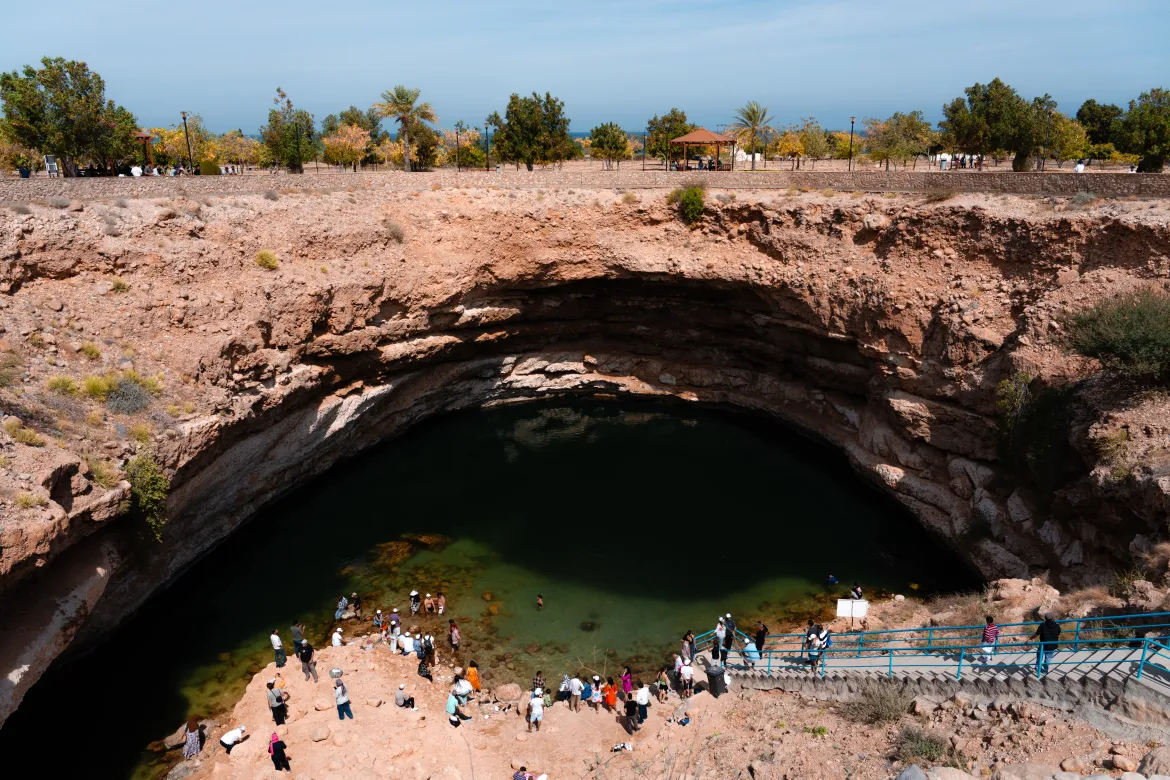
Next, we reached one of the most popular places in Oman: the Bimman Sinkhole, a kind of cenote where you can swim and relax. To be honest, we found it a bit too developed, and while it is interesting, it wasn’t one of our personal must-sees in Oman.
From here, the road becomes more interesting. We drove along the coast, with one beach after another appearing beside us, most of them covered in pebbles. We saw many Omani families spending the day there with their 4x4s parked right by the shore and tents set up for shade.
Near the town of Fins, we stopped at Pebbles Beach to admire the beautiful color of the sea.
By lunchtime, we were in a fairly rural part of Oman, so there weren’t many dining options. We chose Anwaar Restaurant in Tiwi, which serves food with Indian and Arabic influences, and it was quite good.
In the afternoon, we headed to our first wadi and visited the waterfalls of Wadi Miban. Access is only possible by 4×4, so if you do not have one, you can arrange a tour in the village just before arrival. Important: agree on the full price in advance.
After a full and intense first day, we checked into our hotel in Tiwi, ready for a good night’s sleep.
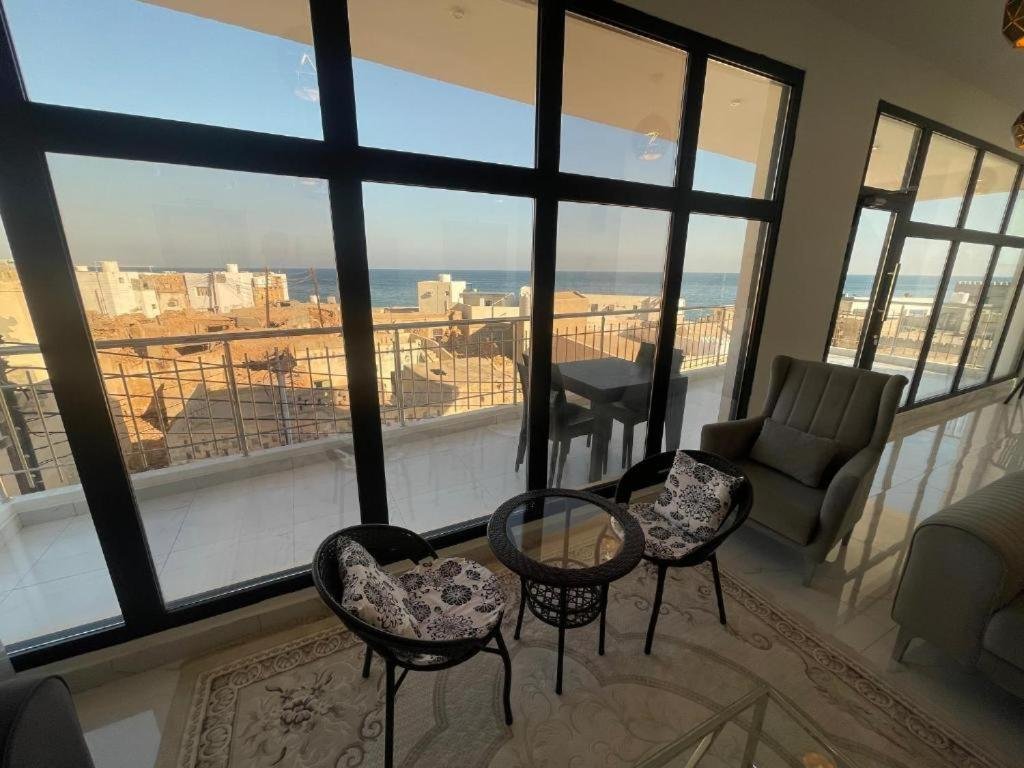
| Useful information for the day: Rental car booked here: discovercars. Tours and tickets: day trip to Wadi Miban from Muscat or book a tour directly in Wadi Miban village. Accommodation in Tiwi: Tiwi Pearl House, very simple but well located for our route. There are few better options in this part of Oman. |
Day 2: Wadi Ash Shab and route to Sur
One of the main reasons to stay overnight in Tiwi — a town that, honestly, does not offer much else — is to start one of the most incredible excursions in Oman first thing in the morning.
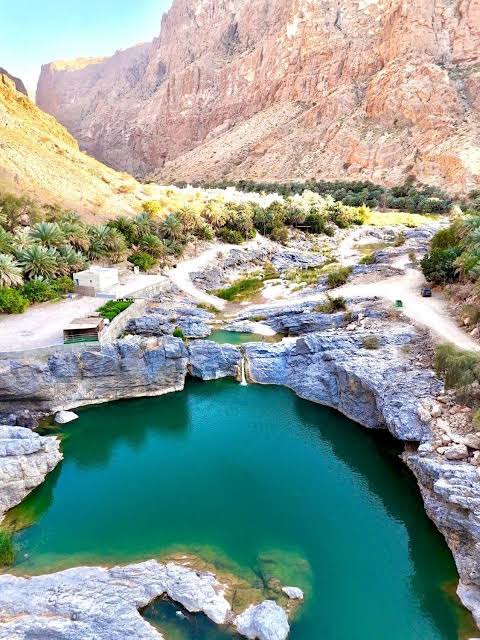
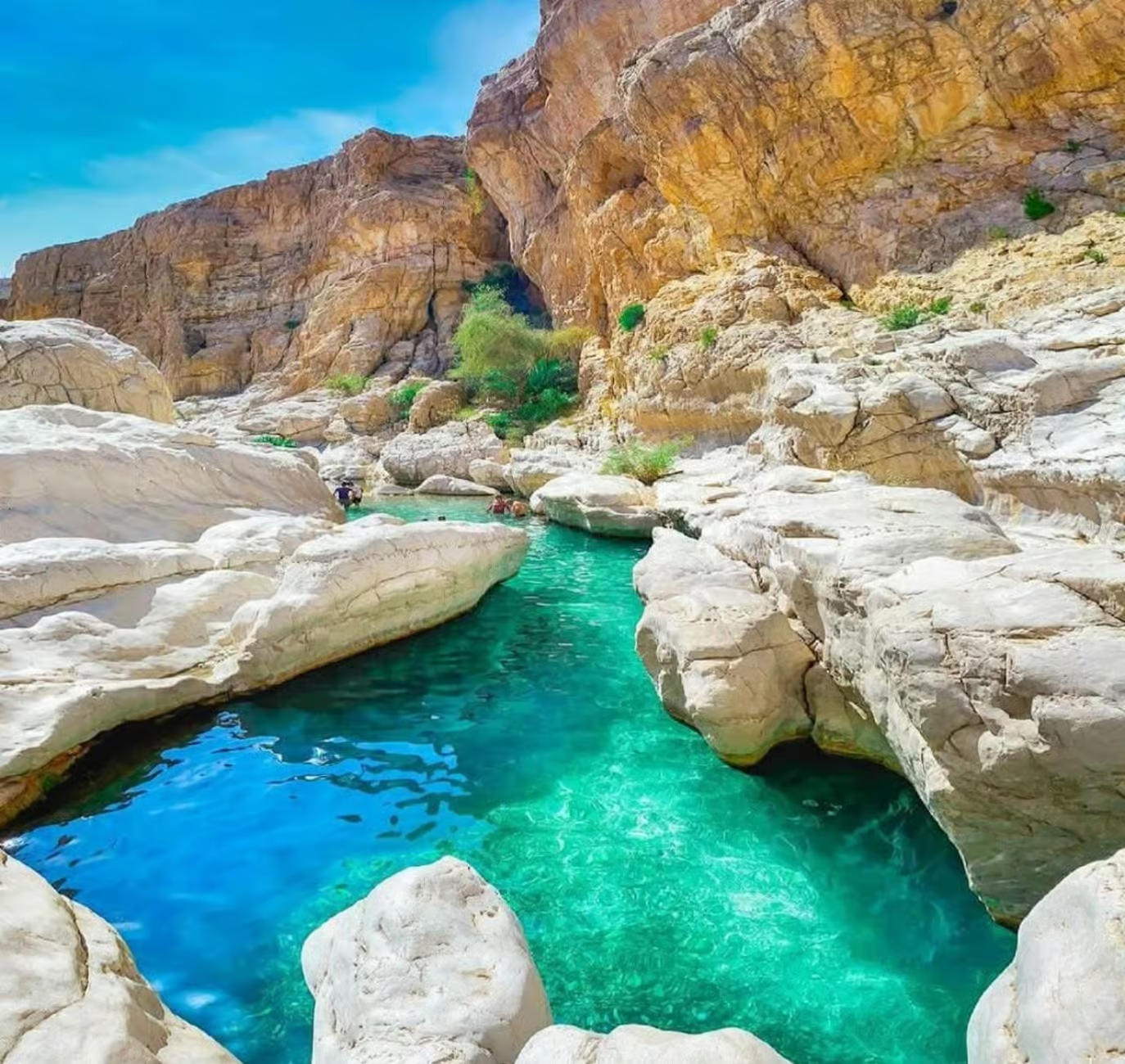
Welcome to Wadi Ash Shab! It is the most famous and spectacular wadi in Oman. The experience begins with a short boat ride, continues with a walk beside a photogenic river winding through cliffs and palm groves, and ends with a swim to a spectacular hidden waterfall. Amazing.
It reminded us so much of our unforgettable visit to Wadi Mujib in Jordan.
If you want to enjoy it the way we did, arriving early is essential — around 7:30 or 8:00 in the morning — before the heat gets intense, when the parking lot is still empty and you can almost have the trail to yourselves.
We’ve written a very detailed post about everything you need to know before doing the Wadi Ash Shab hike, including what to wear, useful tips, and what to expect along the trail.
Afterwards, we continued our journey and arrived in Sur, the second-largest city in Oman. We checked into our hotel, had lunch there, and took a refreshing dip in the pool before heading out to explore the city in the afternoon.
The historic center of Sur is quite small, so you can see the main sights in just a couple of hours.
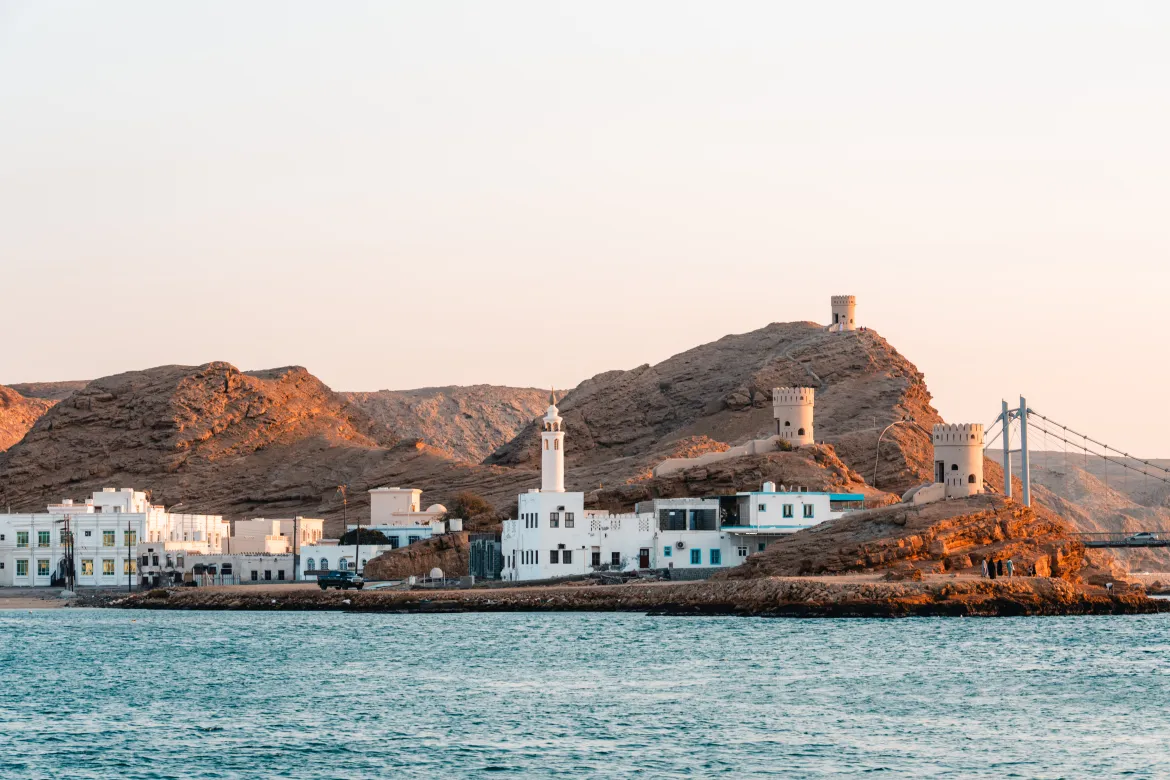
We started at Sur Beach, with its views over the old city, then continued to the Al-Ayjah Lighthouse, one of the loveliest sights in Oman, and finished with the fortresses and watchtower of Al-Ayjah Castle.
If you have time, you can also visit the Dhow Factory, where traditional Omani wooden boats are still built.
For dinner, we chose Vaidyans Fish and Grill Restaurant, an Indian-style restaurant with very good reviews, right next to our hotel.
| Visit to the Ras Al Jinz Turtle Reserve: If you would like a chance to see turtles on the beach, the Ras Al Jinz hotel, around 30 minutes by car from Sur, offers two nesting tours each day: one at 8 pm for guests and visitors, and another at 5 am for guests only. After reading reviews, we were not completely convinced that the experience was respectful toward the turtles, and the hotel also seemed a bit overpriced for what it offered. So we decided not to go. Still, you can check it here and decide for yourself. Spoiler alert: by the end of our trip, we saw many turtles in the wild in Oman — keep reading to find out where! |
Day 3: Wadi Bani Khalid and Wahiba Desert
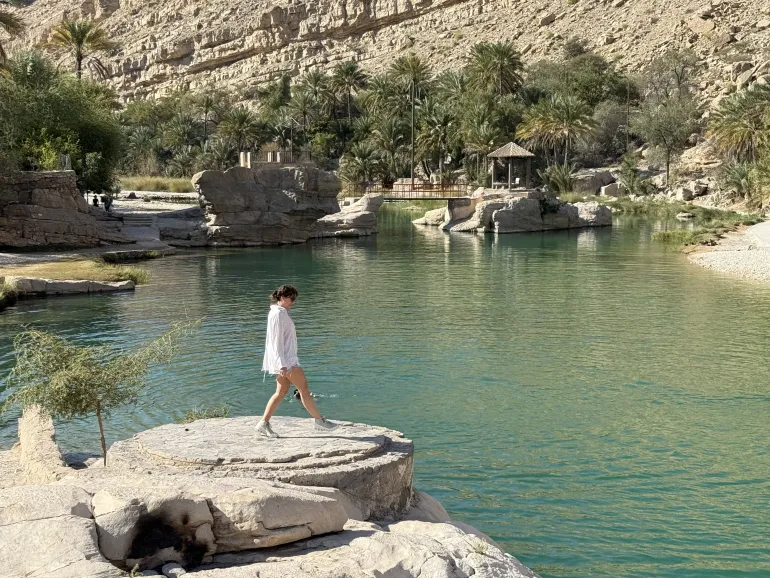
Our 10-day Oman road trip continues. Today includes a long drive, mostly on the highway, to our first stop: Wadi Bani Khalid.
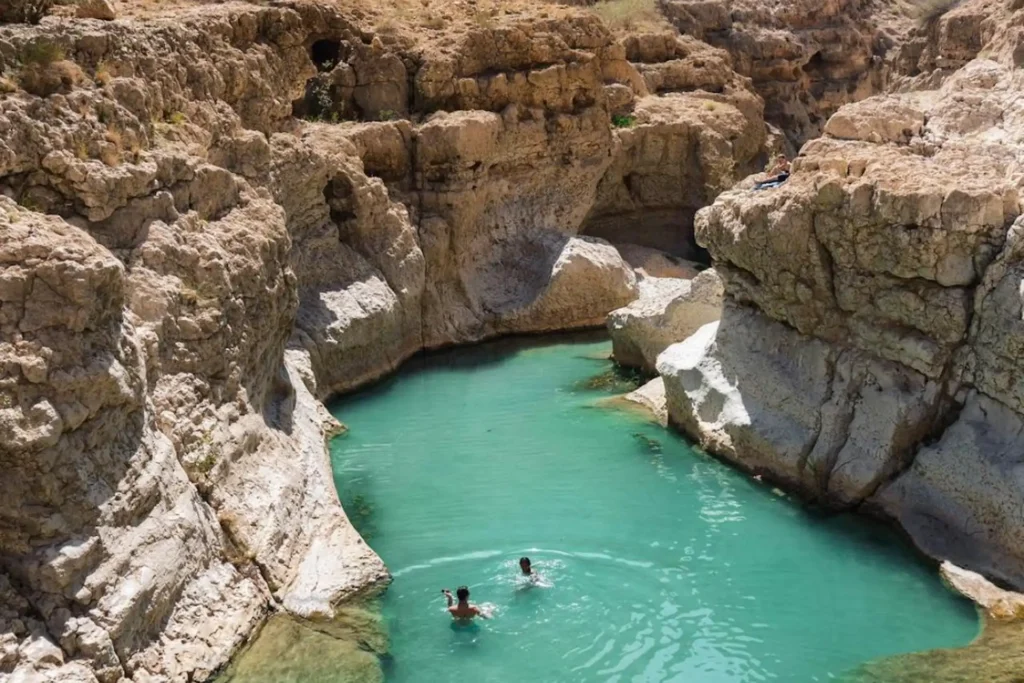
We arrived at this green oasis in the middle of the mountains and spent the morning swimming in its warm water. We recommend walking beyond the main pool to the upper part of the wadi, where you’ll find small hidden pools of crystal-clear water full of fish.
Before setting off again toward the Omani desert, we bought some snacks from a small place near the wadi for the journey.
Just over an hour later, we reached the town of Bidiyah, and the enormous golden dunes began to take over the landscape.
Wahiba Sands, also known as Sharqiya Sands, stretches for around 180 km in length and 80 km in width, covering a huge part of Oman.
We stayed in spectacular accommodation with a private pool just for us and views over the dunes.
| IMPORTANT: Some accommodations cannot be reached by private car or without a 4×4, so make sure to check access details carefully and arrange a transfer from Bidiyah if needed. |
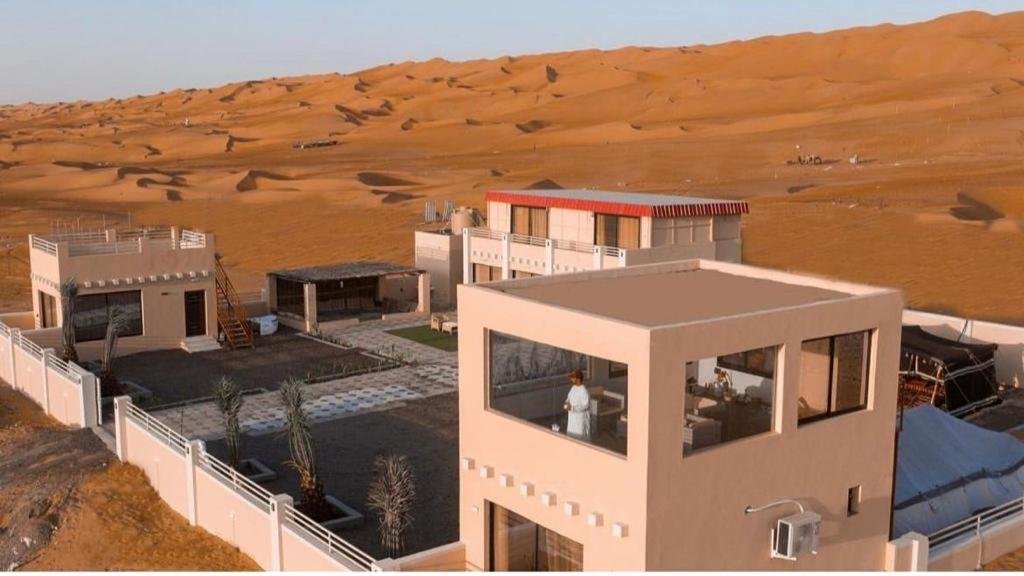
And as in any desert worth its salt, the classic activities here are camel rides, jeep tours through the dunes at sunset, and the most premium option of all: a hot air balloon ride over the desert.
We booked the sunset jeep tour directly through our accommodation, and it was INCREDIBLE.
In the evening, we enjoyed a traditional Bedouin dinner at our hotel, followed by a campfire under a sky full of stars.
| Useful information for the day: Tours and tickets: excursion to Wadi Bani Khalid and Wahiba Sands from Muscat. Accommodation in Wahiba Sands: Alsaif Camp, absolutely amazing — in the middle of the desert, but modern, luxurious, and even with its own pool. |
Day 4: Birkat Al Mouz and Al-Sugwra (Jabal Akhdar mountains)
Waking up with views of the desert dunes is always magical and unforgettable.
We decided to spend part of the morning relaxing by the pool at our apartment before heading to one of our must-see places in Oman: Birkat Al Mouz.
Before arriving, we stopped for a delicious almost Neapolitan-style pizza at Pizza La Pepe. Sometimes you just need a change.
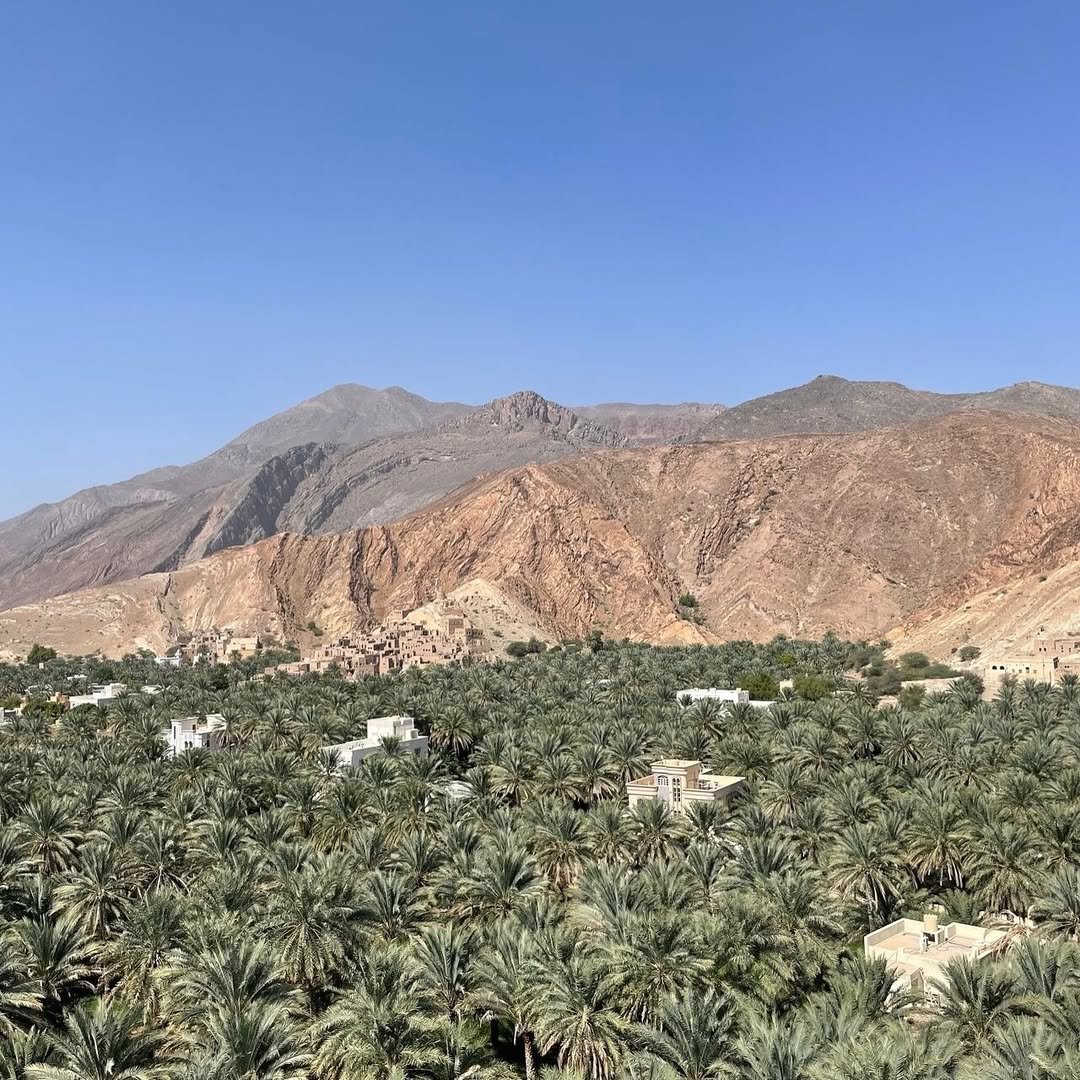
Birkat Al Mouz, a mud-brick village that is partly standing and partly in ruins, set between mountains and palm groves, stole our hearts immediately.
We explored it almost completely alone, feeling as if we were inside an adventure film — entering crumbling but incredibly photogenic houses, climbing to beautiful viewpoints, and wandering without a plan through narrow dusty alleys.
The photos speak for themselves.
It was hard to leave such a beautiful village, but one of the most extraordinary places of this 10-day Oman route was waiting for us. We headed toward the Jabal Akhdar mountains, which are accessible only by 4×4.
Our destination was one of the most unique places we have ever stayed.
The ancient village of Al-Sugwra, completely isolated on a mountainside, has been restored and turned into a boutique hotel where you can experience authentic Bedouin life in Oman.
It is only accessible on foot. So after driving along a winding, unpaved mountain road, we parked the car and sent our luggage across the valley on a basic zip line. You have to see it in our Instagram stories.
After a short 10-minute walk, we arrived at this incredible hotel, which is actually a tiny village with its own mosque.
When we saw our room — luxurious in every way — we were completely amazed and genuinely wondered how they had brought all the materials there. That zip line must be stronger than it looks.
We had dinner by the fire, and our hosts told us the story of the village, how it had been transformed, and the philosophy behind preserving it as a living part of Omani culture for visitors to experience in an exclusive way. One of the coolest experiences of ALL our trips.
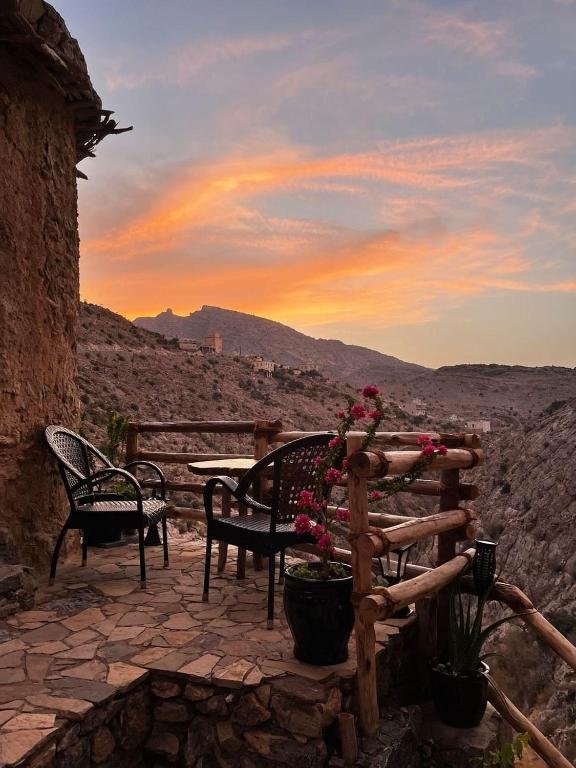
| Useful information for the day: Accommodation in Jabal Akhdar: The Suwgra-Al-Jabal Al-Akhdar is much more than a place to stay — it is an experience in itself, and the highlight of our trip to Oman. |
Day 5: Jibbreen Castle, Bahla Fort and Nizwa
Dawn breaks in the Al-Sugwra Valley, but the sun has not yet reached the stone walls, so it is freezing. We slept wonderfully, with no heating but excellent blankets.
We had a slow breakfast while enjoying the scenery, then walked back to the car.
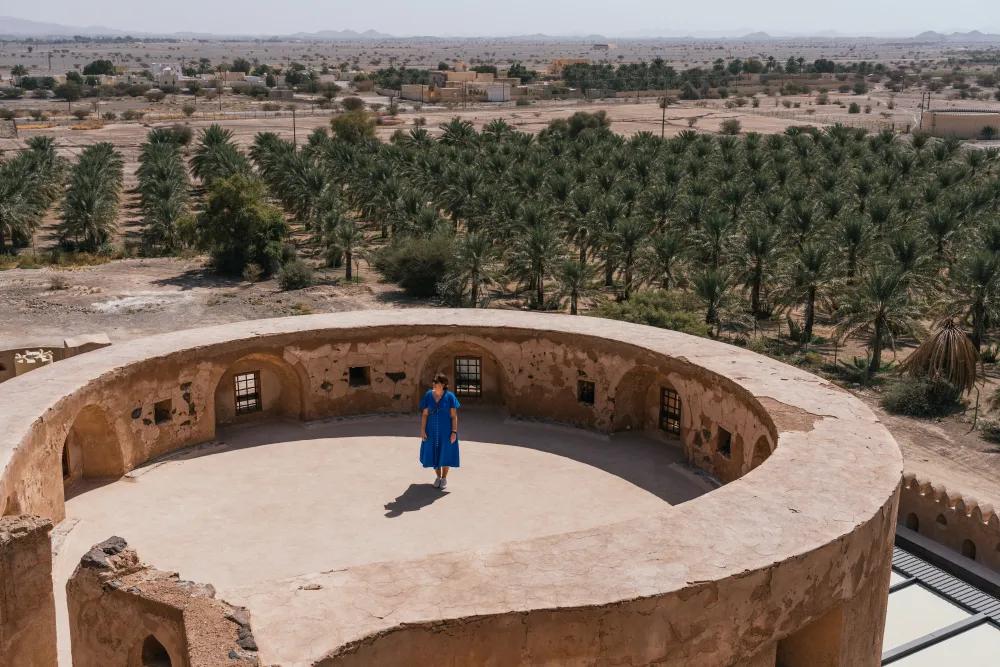
By mid-morning, we reached Jibbreen Castle, a 17th-century castle set on a plain surrounded by palm trees. The building is beautiful, with hundreds of rooms, hidden staircases, towers, and lovely interior courtyards. We liked it far more than we expected.
Then we continued to Bahla, where we had lunch at one of our favorite restaurants of the trip: A Wahat Al Tabiya. The homemade food was delicious, and the waiters were serving everyone at such a frantic pace — literally running — that we could not help laughing.
After lunch, we explored the Bahla souk and had an excellent coffee at Kadm. Then we visited the impressive Bahla Fort, which is undoubtedly one of the absolute must-sees in Oman.
We took countless photos, explored every corner we could find, and enjoyed the incredible views from the highest towers. We loved it.
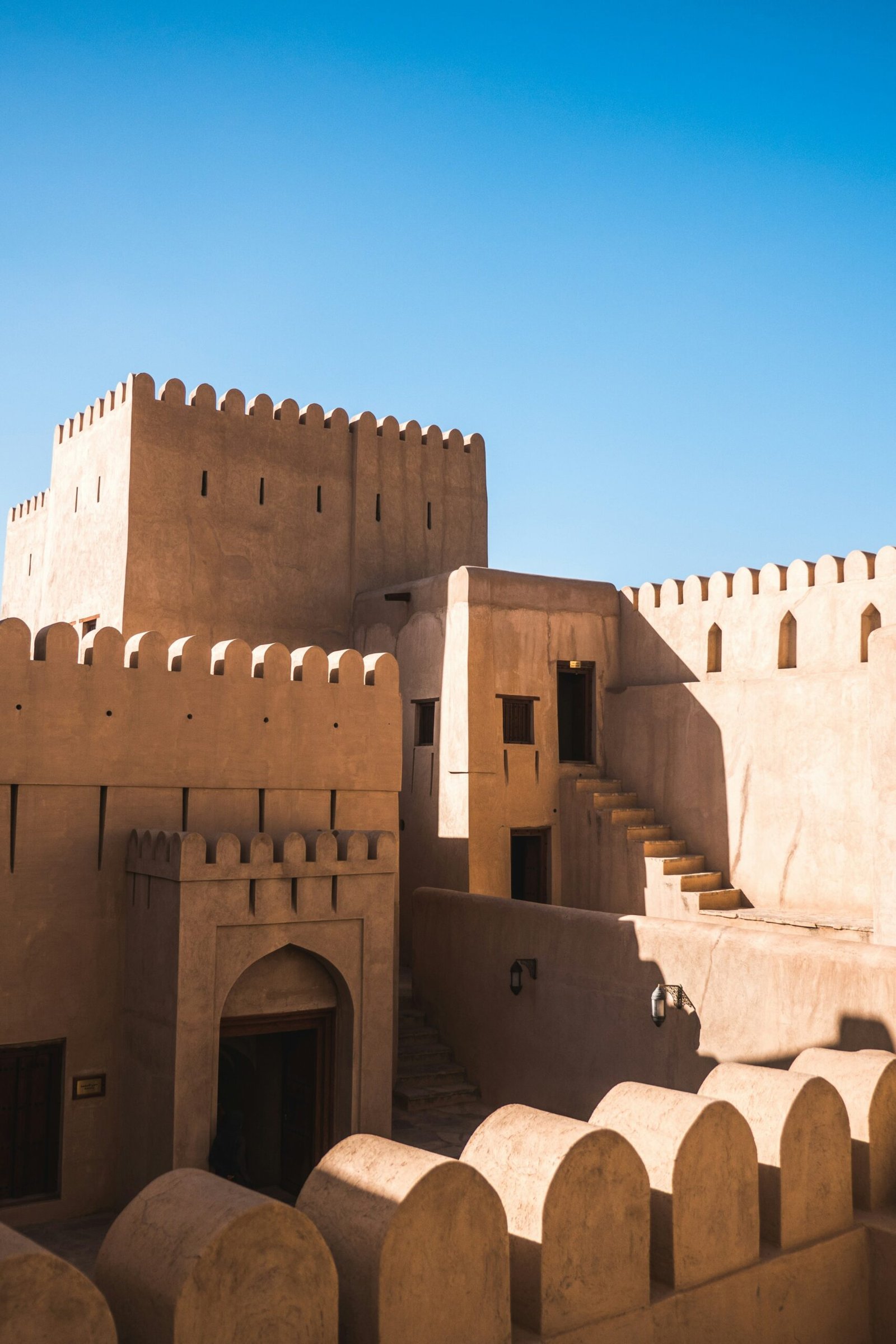
In the afternoon, we reached the final stop of the day: the historic city of Nizwa, probably the most popular place to include in a 10-day Oman itinerary.
And honestly, it makes perfect sense. Nizwa Fort is incredibly photogenic, especially at sunset. We recommend arriving around two hours before sunset so you can enjoy the visit without the crowds but with beautiful light. Once the sun goes down, it gets dark very quickly — as dark as Madrid’s Gran Vía. After visiting the fort, we wandered through Nizwa’s narrow streets and spent a good while browsing the shops in the souk until nightfall. An unforgettable day in Oman.
| Useful information for the day: Tours and tickets: You can check ticket prices for Jibreen, Bahla, and Nizwa on their official websites. Accommodation in Nizwa: Etra Inn, modern but decorated in Omani style, with easy parking and only 5 minutes from Nizwa Fort. |
Day 6: Jebel Shams Mountains, Misfah al Abriyyin and Al Hamra
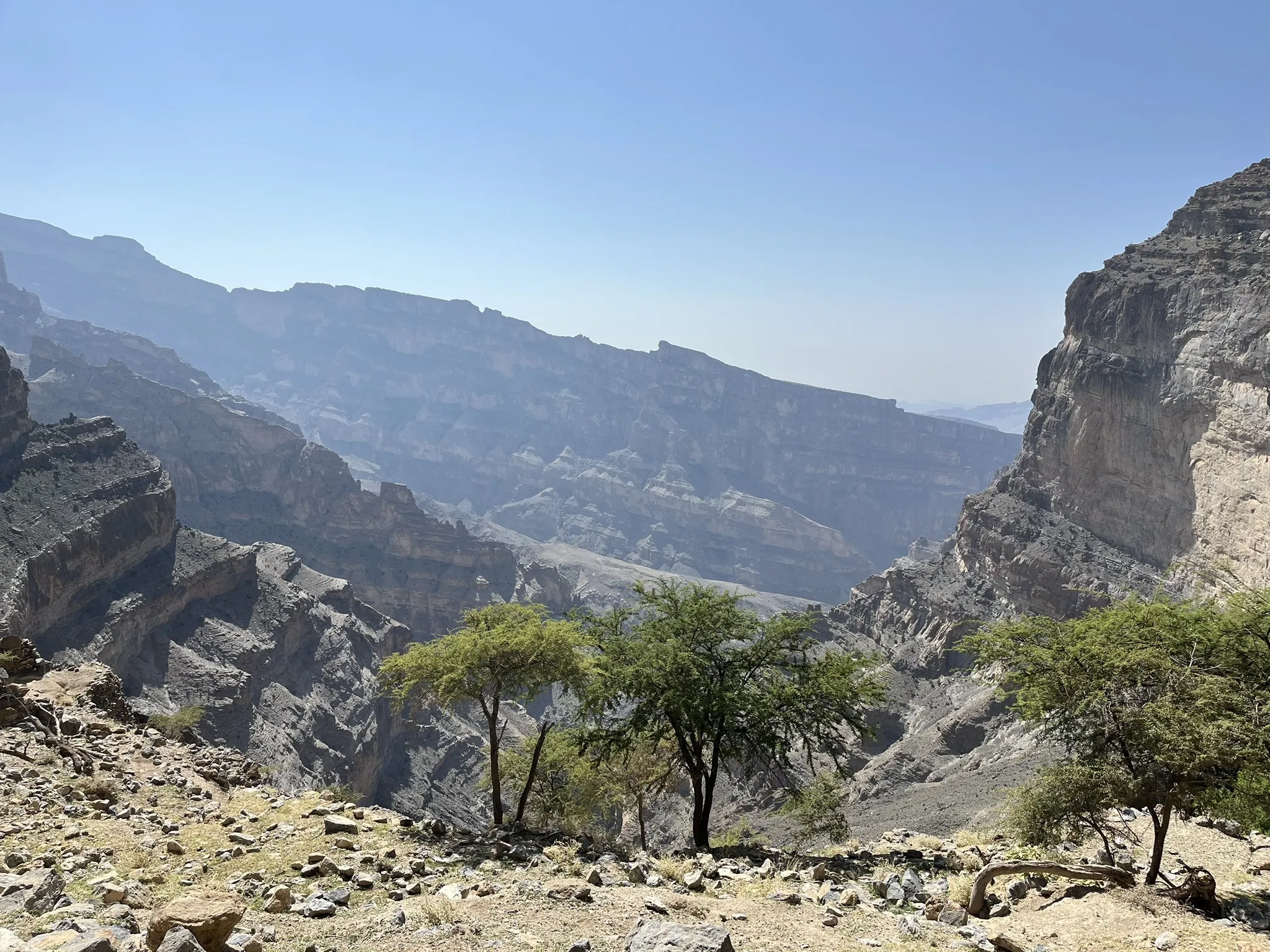
Today we head back into the Omani mountains, this time for a spectacular hike through Wadi Ghul, known as the “Grand Canyon of Oman”.
We chose the W6 – Balcony Trail, a linear route that can be done in full in around 3 to 4 hours, or partially if you prefer. We walked for about 40 minutes before turning back.
To reach the trailhead, remember that the last few kilometers are on an unpaved road, but it is possible to drive it slowly and without too much difficulty even without a 4×4.
The trail sits at an altitude of 1,900 meters and runs along the cliff edge, though without causing too much vertigo. It is full of mountain goats, dramatic cliffs, and incredible views across the Jebel Shams mountains. Highly recommended.
For lunch, we went to Reem Al Yamen Restaurant. Their menu is extensive, so you are almost certain to find something you like.
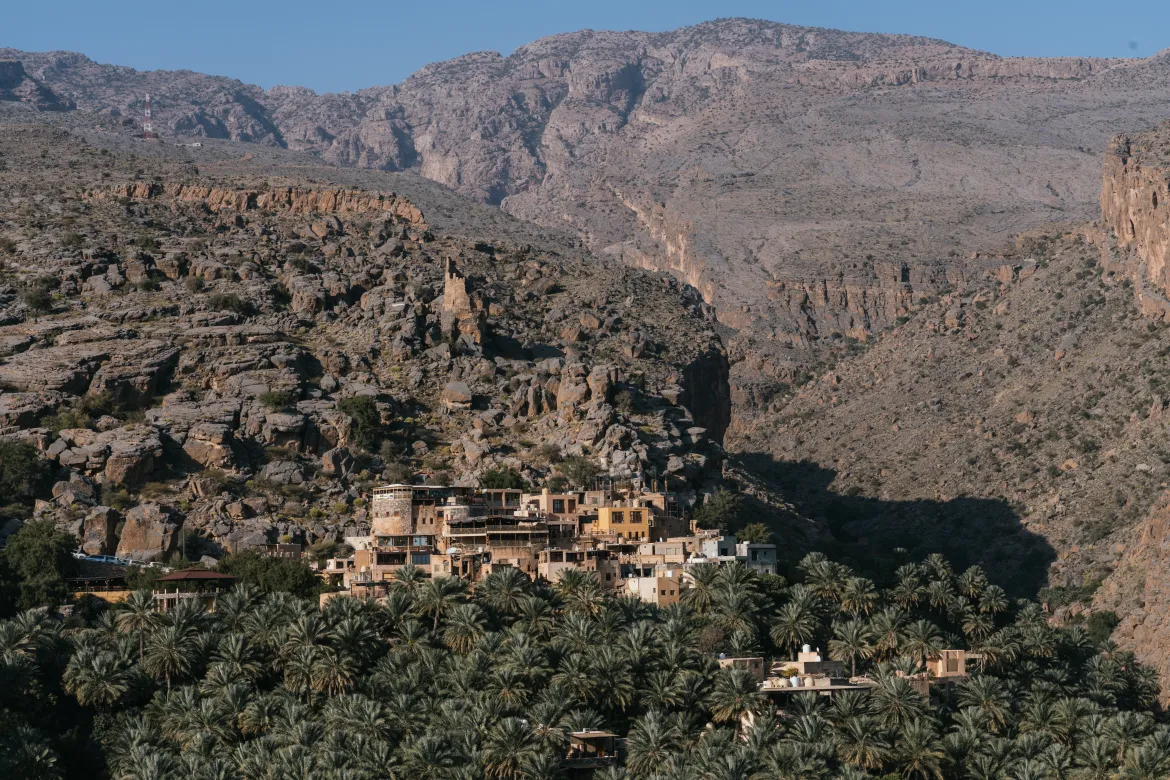
After lunch, we visited Misfah al Abriyyin, a small village hidden among palm groves, where you can walk past the centuries-old irrigation channels known as falaj. It is one of the essential places to see in Oman in 10 days.
There are also several cafés here with fantastic views where you can stop for specialty coffee. We went to Rogan’s Cafe and really liked it.
To finish the day, we explored the nearby town of Al Hamra. Its old quarter is largely in ruins, but it still has a lot of charm.
Here we visited the Bait al Safah Museum, which introduces visitors to the traditional way of life in this part of Oman, with demonstrations of how local products used to be made, all in a very welcoming atmosphere.
We spent the night at the charming boutique hotel Bait Al Aali, one of the best places we stayed during the whole trip thanks to both its authenticity and its service.
| Useful information for the day: Tours and tickets: Muscat excursion to Nizwa, Al Hamra and Jebel Shams. Accommodation in Al Hamra: Hotel Bait Al Aali, the only restored building left in Al Hamra, with a dreamy terrace, DELICIOUS dinner and breakfast included, and a traditional room that feels like stepping back in time. |
Day 7: Al Hajar Mountains, Bald Sayt and Nakhal Fort
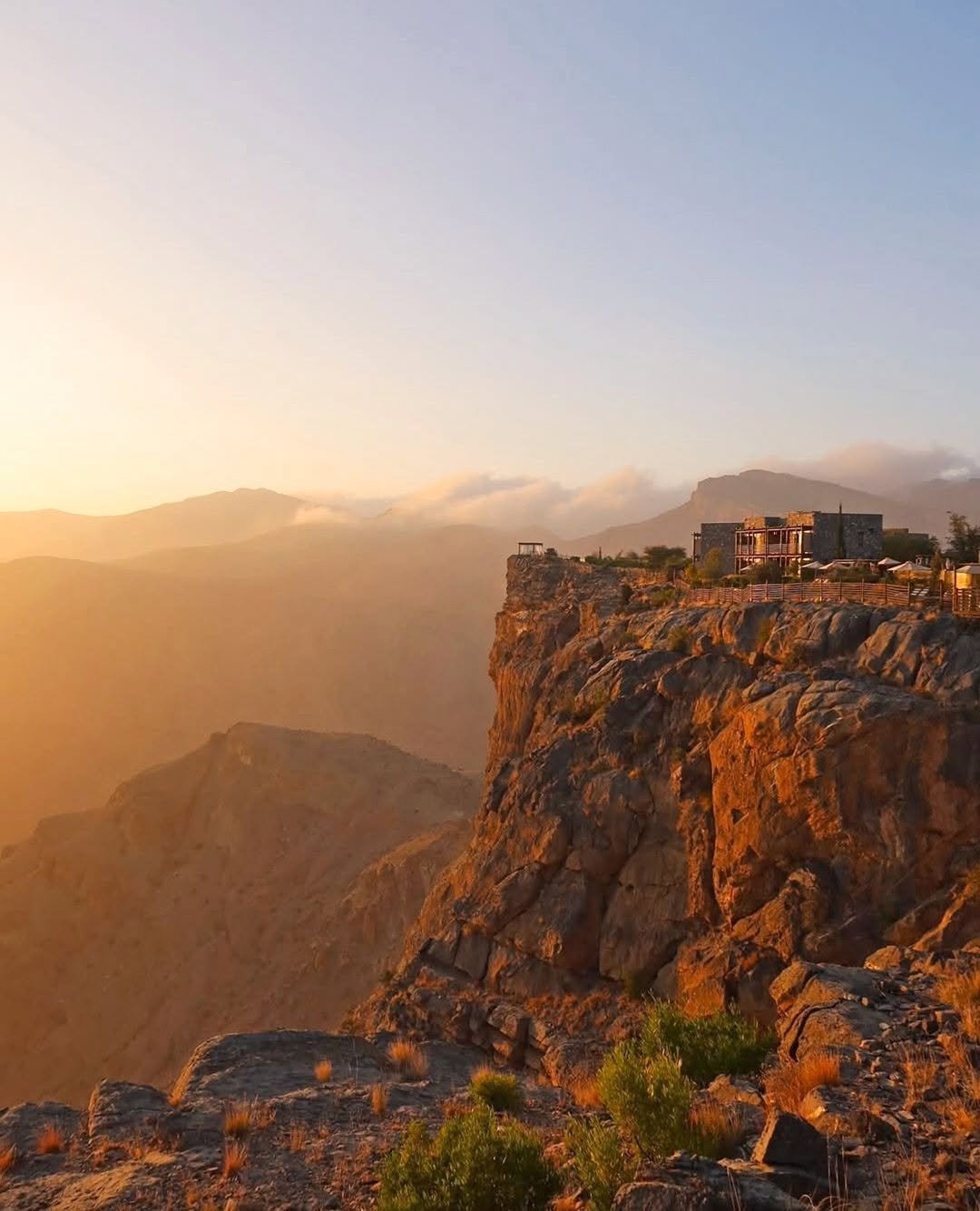
After a few incredible days exploring Oman, we started making our way back toward Muscat. But first, one last mountain adventure awaited us, with several spectacular stops in the Al Hajar mountain range.
The road from Al Hamra to Bald Sayt is intense in every possible sense. The scenery is stunning, but it is not a route for everyone. The first 28 kilometers are paved and straightforward, but the final 13 kilometers feel endless.
It is a narrow, exposed, unpaved mountain road. We only recommend attempting it in a 4×4, and only if you are comfortable driving in those conditions. Another good tip is to leave early in the morning to reduce the chances of meeting other vehicles, especially tourists, who are usually the easiest to panic.
The main stops on this route are:
– The small village of Balad Sayt, with its picturesque terraces and iconic football pitch in the middle of nowhere. Audi built it for an advert, and it was later left for local people to enjoy.
– Snake Canyon (Wadi Bani Awf), which can be completed in around 5 hours. The full hike includes a rope descent and is best done with a guide, though you can also hike independently to the first pool and enjoy a refreshing swim there.
– Little Snake Canyon, a much shorter version of the previous route, with pools you can reach after walking just over 300 meters from the entrance.
– The Wall of Shadows viewpoint and several other viewpoints along the way.
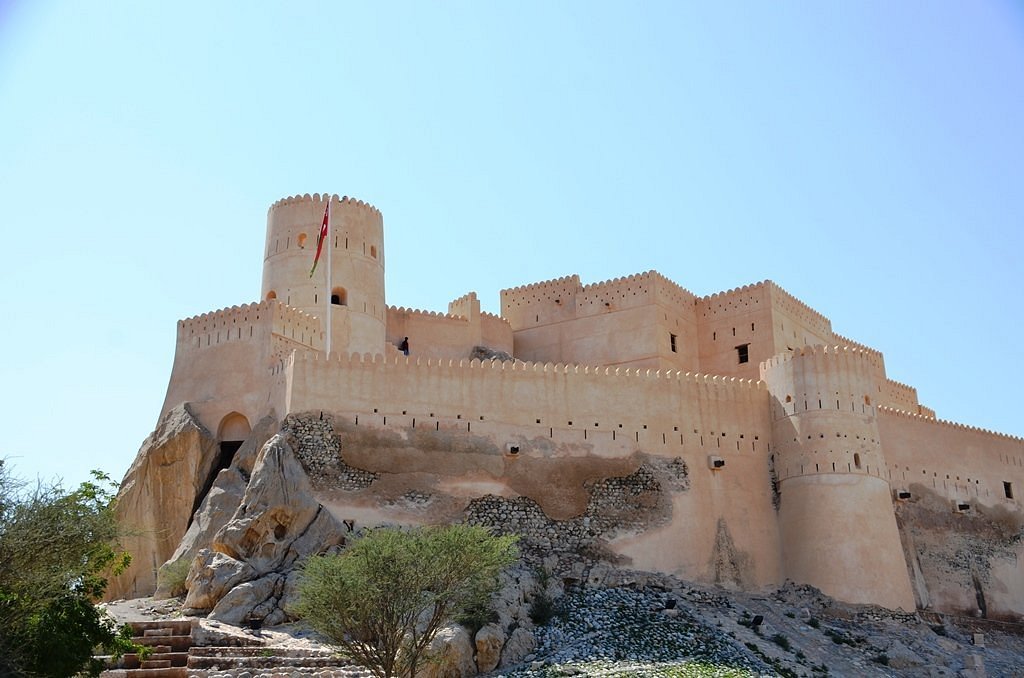
If you still have time, you can end the day at Nakhal Fort, very close to Muscat, where we arrived around sunset.
| Useful information for the day: Accommodation in Muscat: Mövenpick Hotel & Apartments Ghala Muscat, a genuinely fantastic hotel with a heated rooftop pool, an excellent breakfast, and rooms that feel straight out of the Arabian Nights — and much more affordable than you might expect. |
Day 8: Muscat
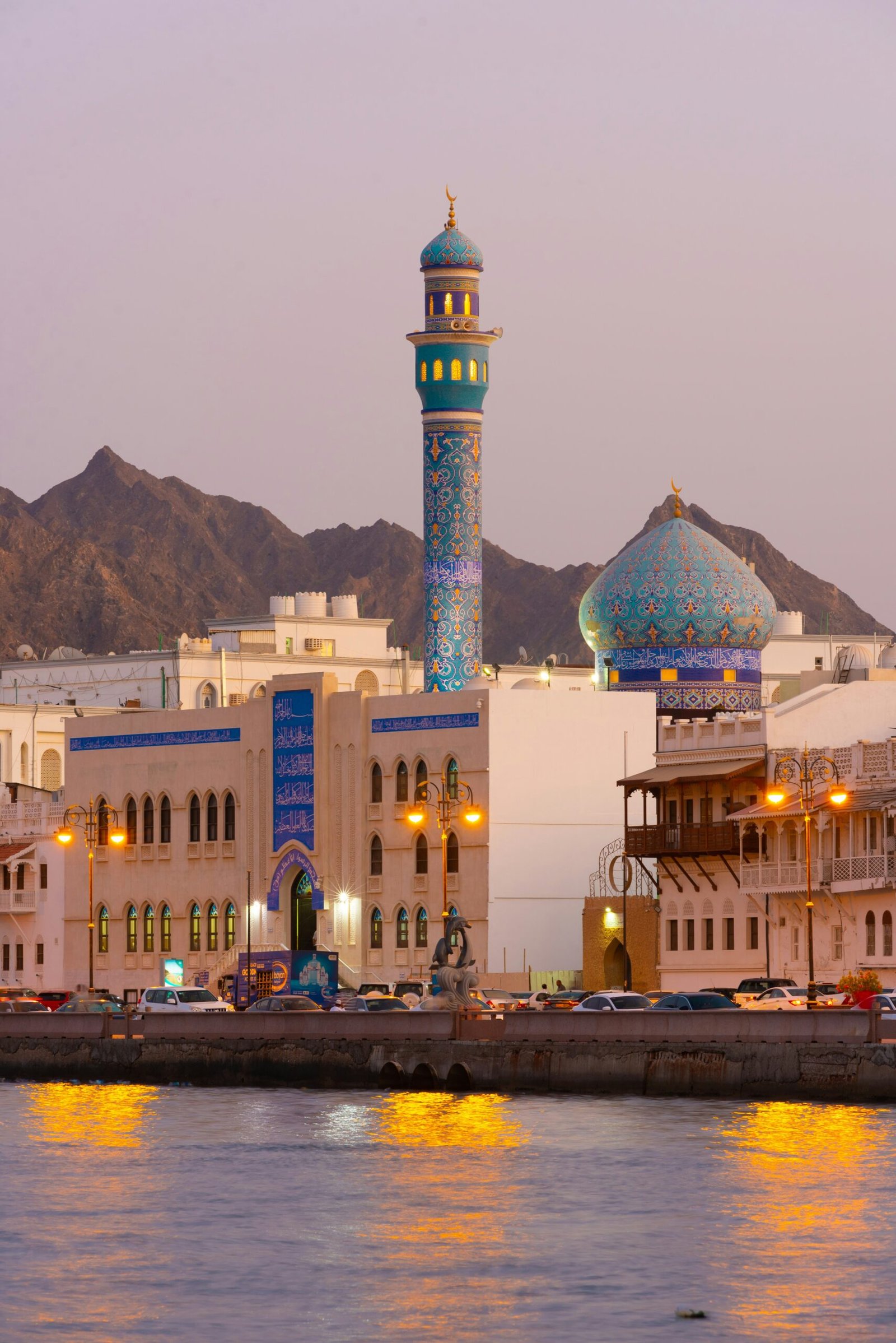
Finally, it was time to properly explore Oman’s capital. Muscat has several essential sights.
A car is very useful in Muscat, as the city is spread out across several districts separated by long distances.
Early in the morning, we visited the Sultan Qaboos Grand Mosque, the most important, largest, and most spectacular mosque in Oman.
It is enormous, with space for 20,000 worshippers, and was inaugurated in 2001 as a symbol of modern Oman.
We recommend arriving early, before opening time, and dressing appropriately: ankles and wrists covered, and for women, hair fully covered as well. Otherwise, you will need to rent suitable clothing at the entrance.
The mosque itself is spectacular, extremely photogenic, and filled with extraordinary details. A true work of art.
| IMPORTANT: The Sultan Qaboos Grand Mosque is closed to visitors on Fridays, as Friday is the main day of prayer for Muslims. Keep this in mind when planning your trip. |
After that, we visited the Royal Opera House Muscat, a beautiful and immaculate white building. It is worth seeing inside too, even if the ticket is a bit expensive. Still, it is one of the few attractions in Muscat where you really have to pay.
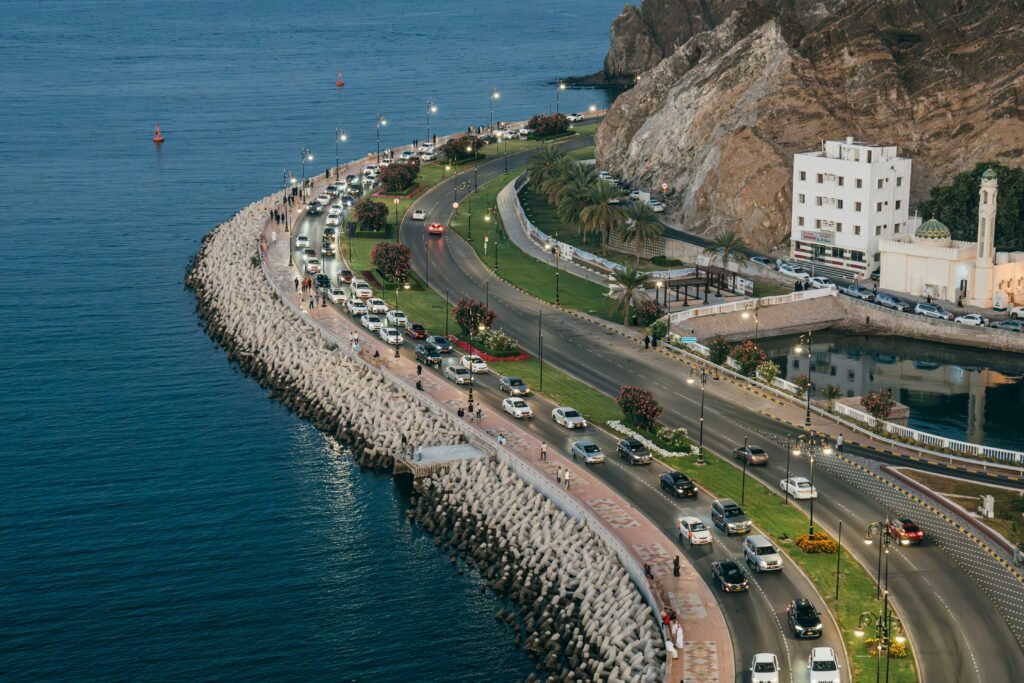
For lunch, we headed to Mutrah, the most traditional part of Muscat. We walked along the seafront and ate at the traditional restaurant Bait Al Luban.
After lunch, we spent some time wandering through the Mutrah souk, packed with traditional stalls selling incense, handicrafts, and souvenirs.
Next, we approached the Royal Palace of Muscat, which can only be seen from the outside, though the area around it is still very pleasant for a walk. If you have time, just opposite you can also visit the National Museum of Oman, which offers a fascinating introduction to the history of this still little-known country.
If you feel like treating yourselves, a lovely way to end the day is by heading to the luxurious Al Bustan Palace hotel, exploring its beautiful grounds, and having a drink at its Pavilion restaurant by the sea.
| Useful information for the day: Planning more time in Muscat? ➡️ 1 Day in Muscat (2025): A Perfect Itinerary for First-Timers ➡️ Best Things to Do in Muscat Tours and tickets: Guided tour of Muscat. We have also included the official website for each attraction so you can always check the most up-to-date ticket prices. Accommodation in Muscat: Mövenpick Hotel & Apartments Ghala Muscat. |
Day 9: Excursion to the islands of Daymaniyat
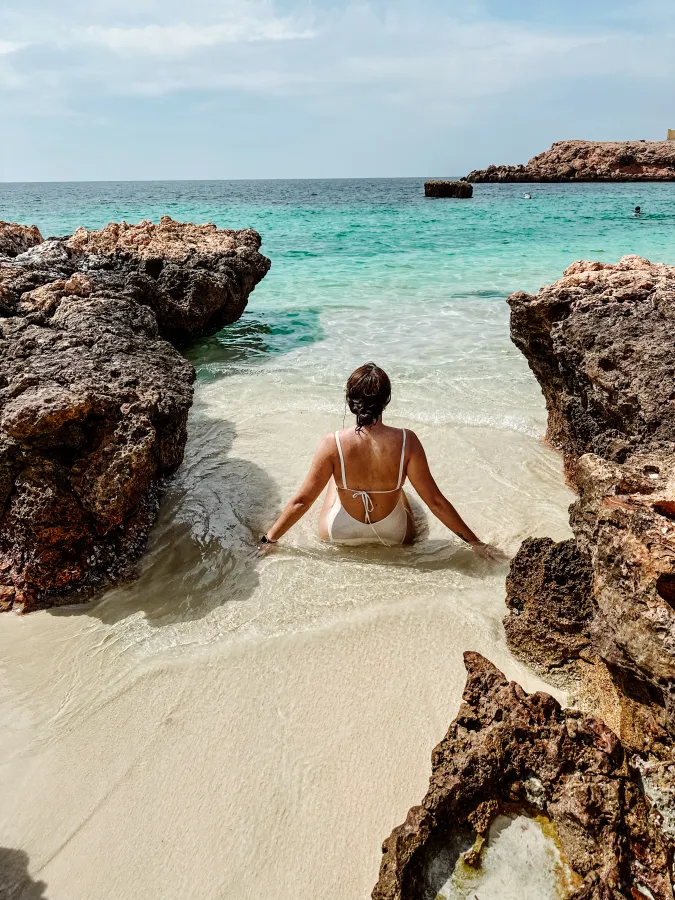
On our second-to-last day in Oman, we went on a very, very special excursion.
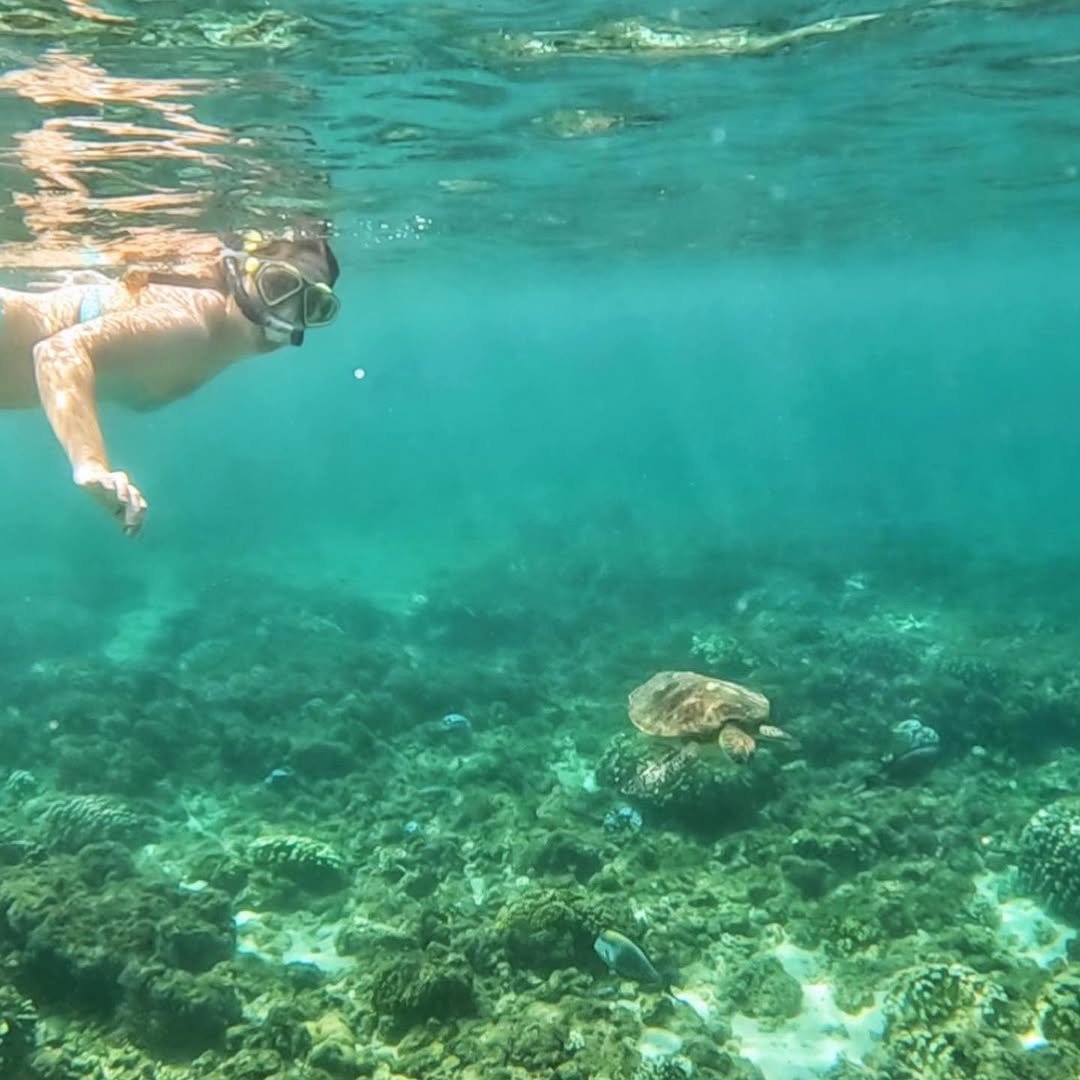
We visited the Daymaniyat Islands, a pristine paradise in the middle of the Arabian Sea, where you can see several colonies of turtles that come close to shore every day to feed on marine plankton.
We booked this excursion to the Daymaniyat Islands, departing from the port of Seeb, which included a guide, snorkeling equipment, snacks, and soft drinks on board.
After around half an hour by boat, we stopped at the first small beach on the islands and were immediately amazed by the color of the water.
But the best part came when we put on our snorkeling gear. Just a few meters from the shore, I saw Alessandro smiling and pointing at something. I turned my head and there, just inches from my face, was a turtle swimming slowly at the surface. We could not believe it.
And once we dove underwater, it became even more surreal. Dozens of turtles were swimming all around us, diving down to feed and then rising again to breathe.
There were only a few tourist boats at a time, three or four at most, and in general they seemed quite respectful toward the turtles. That is one of the great things about Oman still being a relatively uncrowded destination.
After a couple of hours swimming with the turtles, we went to another beach with access to a beautiful viewpoint where we could really appreciate the islands. We spent the rest of the morning there before taking the boat back to Muscat. It was an unforgettable experience.
We spent the rest of the day enjoying the warm pool at our hotel.
| Useful information for the day: Tours and tickets: Snorkeling in the Daymaniyat Islands, or if you have diving experience, this diving excursion to the Daymaniyat Islands may suit you better. There is also the option of spending the night camping on the Daymaniyat Islands, which is a great idea if you have more time. Accommodation in Muscat: Mövenpick Hotel & Apartments Ghala Muscat. |
Day 10: Muscat and return home
We took our final day in Oman very slowly, enjoying a delicious breakfast at the hotel and relaxing by the pool.
In the afternoon, we visited one of Muscat’s best-known shopping malls: Mall of Oman. It may not quite match the luxury and excess of the malls in neighboring Dubai, but it is still perfect for a relaxed afternoon of shopping.
The mall even has an indoor ski slope with snow all year round, as well as cinemas and a fun arcade with simulators, which makes it a great option for families too.
Then it was time to head to the airport for our flight home, still trying to process how wonderful these 10 days in Oman had been, how many different experiences we had packed into one trip, and how much this still relatively unknown country is worth visiting.

Other tips for visiting Oman
The best (and worst) time to visit Oman
The best time to visit Oman is between November and April, avoiding the hottest months, which we strongly recommend against.
We visited in February and it was already very hot. Summer is also the low season, so you will find fewer excursions and fewer tourist services in general.
We also recommend avoiding Ramadan, which changes dates every year, because many restaurants and businesses close during the day. That can make traveling around the country less convenient.
Is cash necessary?
In Oman, cash is only really necessary for tips and a few very specific purchases at small local businesses. Card payments are widely accepted almost everywhere else.
That is why we recommend withdrawing a small amount of cash using a fee-free card and then paying for the rest by card.
How to dress in Oman
Oman is a conservative country, much more so than the Emirates or Qatar. When swimming in the wadis, you should wear a T-shirt and shorts; wearing a bikini or going topless is frowned upon.
There are no such restrictions at hotel pools.
In towns and cities, we recommend keeping your shoulders and knees covered at all times. You will feel more comfortable, and local people will feel more comfortable too.
Also remember to pack water shoes for walking in wadis and on pebbly beaches, as well as a light jacket if you are sleeping in the mountains. Bring comfortable suitable shoes if you plan to hike, and do not forget a hat and sunscreen.
Etiquette and rules of conduct for traveling to Oman
Oman is a fully Muslim country, with its calls to prayer and a deeply rooted Arab culture.
You will notice that most locals wear traditional dress, which they are very proud of, and that one of the country’s favorite customs is going out for tea or coffee in one of the many specialty coffee shops scattered across Oman.
As in other similar countries, public displays of affection are frowned upon. You should also avoid showing disrespect toward local authorities and cooperate with whatever you are asked to do.
Alcohol is almost nonexistent across the country, except in some hotels in Muscat, and using any kind of drug is punishable by imprisonment.
And finally, leave your drone at home. Flying drones is strictly prohibited.
And that wraps up our complete guide to the best places to see in Oman in 10 days. We hope it helps you plan your trip and inspires you to discover this fascinating country, still relatively unknown and pleasantly far from mass tourism.
Oman Travel FAQs
Is Oman worth visiting?
Yes, Oman is absolutely worth visiting, especially if you love dramatic landscapes, road trips, wild beaches, mountain villages, desert camps, and places that still feel peaceful rather than over-polished. We get forts, wadis, canyons, dunes, old souqs, turquoise swimming spots, and some of the most spectacular driving scenery in the Middle East. Oman is not the place for giant theme parks and nightlife madness. It is the place for slow mornings, big views, and the kind of road trip where every bend makes you say, “Should we stop for another photo?” The answer is usually yes.
How many days do you need in Oman?
For a first trip to Oman, we would aim for at least 7 to 10 days. With one week, you can cover Muscat, Nizwa, Jebel Akhdar or Jebel Shams, Wadi Shab, Sur, and Wahiba Sands without completely exhausting yourself. With 10 to 14 days, you can slow down, add more wadis, spend time on the coast, and possibly include Salalah if you fly there. Oman looks compact on the map, but driving times add up quickly, and the whole point is not to rush past the good bits like a panicked delivery driver.
Can you travel around Oman without a tour?
Yes, you can travel around Oman without a tour, and many visitors do it as a self-drive trip. The main roads are generally good, fuel stations are easy to find on popular routes, and places like Muscat, Nizwa, Sur, Wadi Shab, and Wahiba Sands are manageable with planning. That said, a tour can be useful if you do not want to drive, if you are short on time, or if you want to visit remote mountain or desert areas without worrying about routes, road conditions, or getting stuck somewhere scenic but deeply inconvenient.
Do you need to rent a car in Oman?
For most travelers, yes, renting a car is the easiest way to explore Oman properly. Public transport exists, but it will not give you the freedom you need for wadis, mountain viewpoints, small villages, desert camps, and spontaneous roadside stops. If you only stay in Muscat, you can manage with taxis and hotel transfers. But if you want the classic Oman road trip, a rental car makes everything much easier. Think of it as your ticket to the good stuff — the forts, canyons, beaches, and “wait, is this real?” landscapes.
Is Oman safe for women travelers?
Oman is generally considered one of the safer countries in the region for women travelers, including solo women, but normal travel awareness still matters. Dress respectfully, avoid walking alone in isolated areas at night, use registered taxis or trusted transport apps where available, and trust your instincts. In most tourist areas, women travelers are treated politely, and harassment is less common than in many other destinations. The key is to respect local customs while still traveling confidently — polite, covered, and not afraid to ask questions when needed.
What should women wear in Oman?
Women do not need to wear an abaya in Oman, but modest clothing is the safest and most respectful choice. In towns, souqs, forts, villages, and public areas, we would pack loose trousers or long skirts, T-shirts or blouses that cover the shoulders, and a light scarf for mosques or more conservative places. Swimwear is fine at hotel pools and private beaches, but at public wadis and beaches, a more covered swimming outfit is usually better. Oman is hot, yes, but breathable linen and loose layers are your best friends here — glamorous? Maybe. Practical? Absolutely.
Is Salalah worth visiting?
Salalah is worth visiting if you have enough time or if you are especially interested in Oman’s greener, more tropical side. During the khareef season, usually in summer, the region turns misty and lush, which feels completely different from northern Oman. Outside that season, Salalah still has beaches, waterfalls, frankincense history, and dramatic coastal scenery. The catch? It is far from Muscat, so most travelers fly rather than drive. If you only have one week in Oman, focus on the classic northern route. If you have 10 days or more, Salalah becomes much more tempting.
What is the classic Oman route for a first trip?
The classic Oman route usually starts in Muscat, then continues to Nizwa, the mountains around Jebel Akhdar or Jebel Shams, Wadi Shab, Sur, and Wahiba Sands. This route gives you a brilliant mix of city, forts, mountains, wadis, coast, and desert without trying to see the whole country in one heroic but exhausting dash. A good version would be Muscat for 2 days, Nizwa and the mountains for 2 to 3 days, Wadi Shab and Sur for 1 to 2 days, and Wahiba Sands for 1 night before returning to Muscat.
Do you need a 4×4 in Oman?
You do not need a 4×4 for every Oman itinerary, but you will need one for certain places. A regular car is usually fine for Muscat, Nizwa, Sur, Wadi Shab, and many main-road routes. However, a 4×4 is strongly recommended or required for Jebel Akhdar, parts of Jebel Shams, some remote mountain tracks, desert driving, and certain camps in Wahiba Sands. If your desert camp offers pick-up from a meeting point, you may not need to drive into the dunes yourself. And honestly? Unless you are experienced, let someone else do the dune driving. Sand looks soft and romantic until your wheels disagree.