
Travel writing based on first-hand experience
Oman. A country that hit us like a sand-scented plot twist.
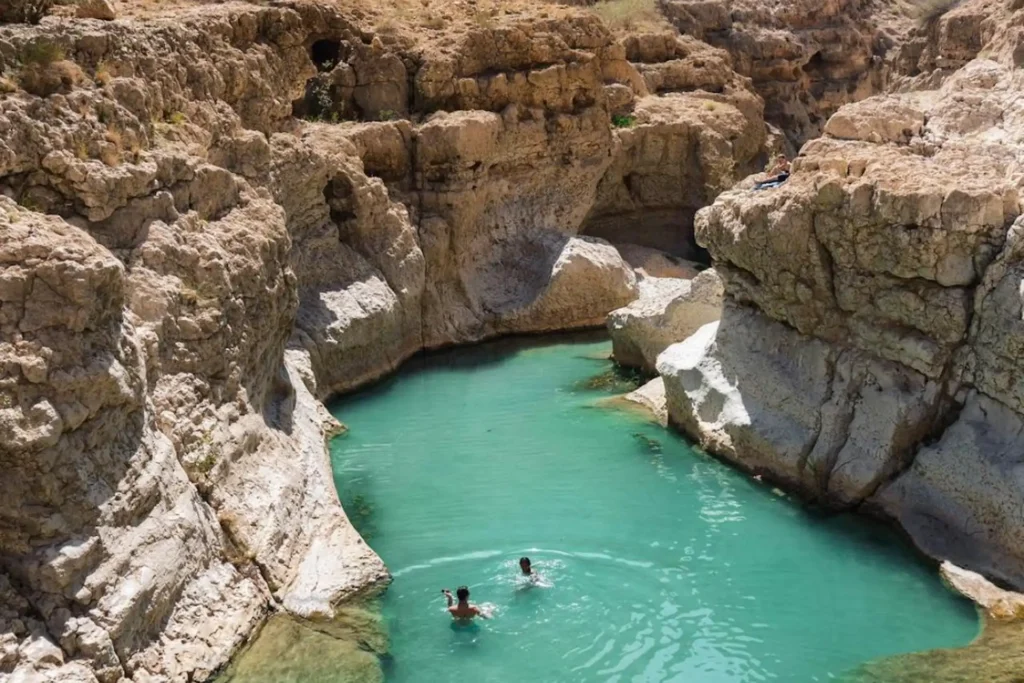
One minute we’re cooling off in emerald wadis, the next we’re barefoot on Salalah beaches that look filtered in real life, and then—bam—we’re drifting through Mutrah Souk, one of the oldest markets in the Arab world, breathing in frankincense like it’s oxygen. Somewhere along the way, it honestly felt like we’d stepped through a door into another era.
And the people? Ridiculously warm. Not in a performative, touristy way—more like a genuine pride in culture and tradition, paired with an eagerness to share it with you (and to make sure you’ve eaten enough, always).
One thing we’ll say confidently: Oman is still wildly underrated. It lives in the shadow of the UAE sometimes (Dubai is only about 400 km from Muscat), but the vibe is completely different—less shiny spectacle, more soul. In this post, we’re walking you through our 8 top attractions in Oman: places we actually visited, loved, and would go back to in a heartbeat.
Think: desert silence that feels louder than any city, Salalah beaches that make you forget your inbox exists, mountain villages clinging to cliffs, and souks where time goes soft around the edges.
More Oman Travel Guides
Planning a trip to Oman? These related guides cover the country’s top sights, hidden corners, cultural treasures, shopping ideas, and one of its most beautiful regions.
- ➡️ Best Places to Visit in Oman
- ➡️ Complete 10 Days in Oman Itinerary
- ➡️ Hidden Gems in Oman You Shouldn’t Miss
- ➡️ Dhofar, Oman: Best Places to Visit and Travel Tips
- ➡️ Best Things to Buy in Oman
- ➡️ Must-Visit Archaeological Sites in Oman
- ➡️ Oman Architecture Marvels: History Meets Modernity
- ➡️ The Ultimate Oman Road Trip Itinerary
Table of Contents
Our top 8 attractions in Oman (the “don’t-skip-these” list)
We’re keeping this practical and real: what it felt like, why it’s worth it, and how to actually pull it off.
- Mutrah Souk
- Wadi Tiwi
- Wahiba Desert
- Mughsail Beach
- Wadi Darbat
- Nizwa Souk
- Misfat Al Abriyeen
- Birkat Al Mouz
1) Mutrah Souk – Get lost in one of the oldest souks in the country
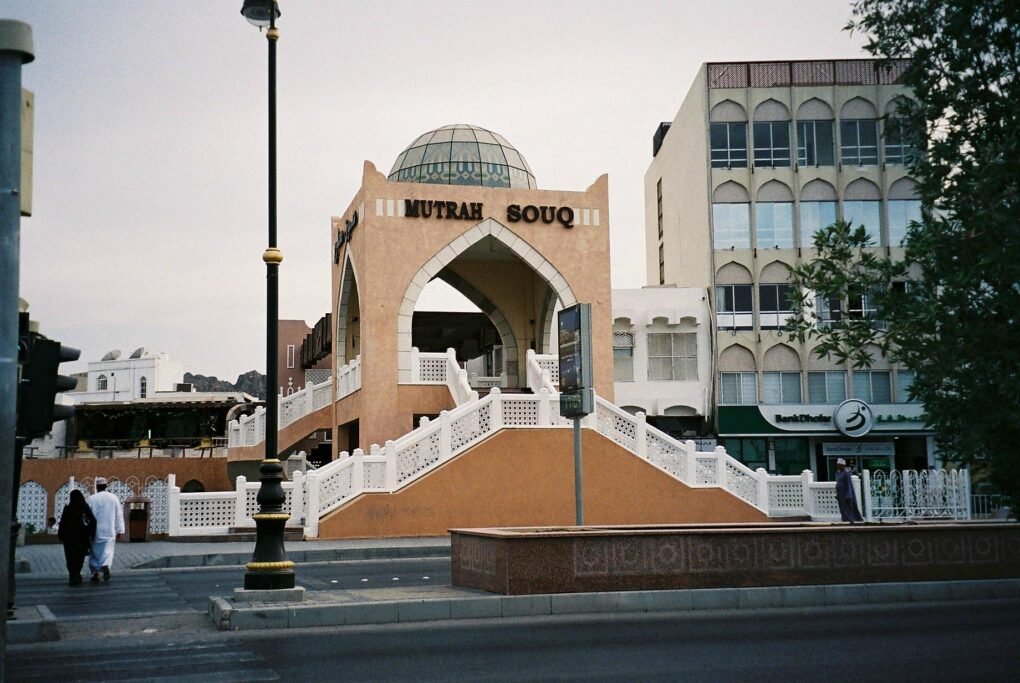
Muscat might be modern in parts, but it’s also rooted—one of the oldest capitals in the region, layered with history. You can tick off landmarks like Al Alam Palace and Al-Mirani Fort, sure… but the real time-warp moment is Mutrah Souk.
We wandered into its maze of alleys and immediately lost all sense of time (and direction, briefly). The souk is a world of:
- gold and silver jewelry
- Omani clothing and textiles
- exotic spices
- perfume oils and incense
- cashmere pieces
- everyday household items that somehow feel fascinating in the right lighting
And here’s the comforting part: you can’t truly get lost. Walk long enough and you’ll end up either by the water or staring at a mountain like, “Ah yes, nature’s exit sign.”
What we loved most was the atmosphere. Vendors approached us now and then, but it didn’t feel aggressive—more like gentle curiosity. And the scent… that constant mix of incense and spices that follows you home in your clothes (in the best way).
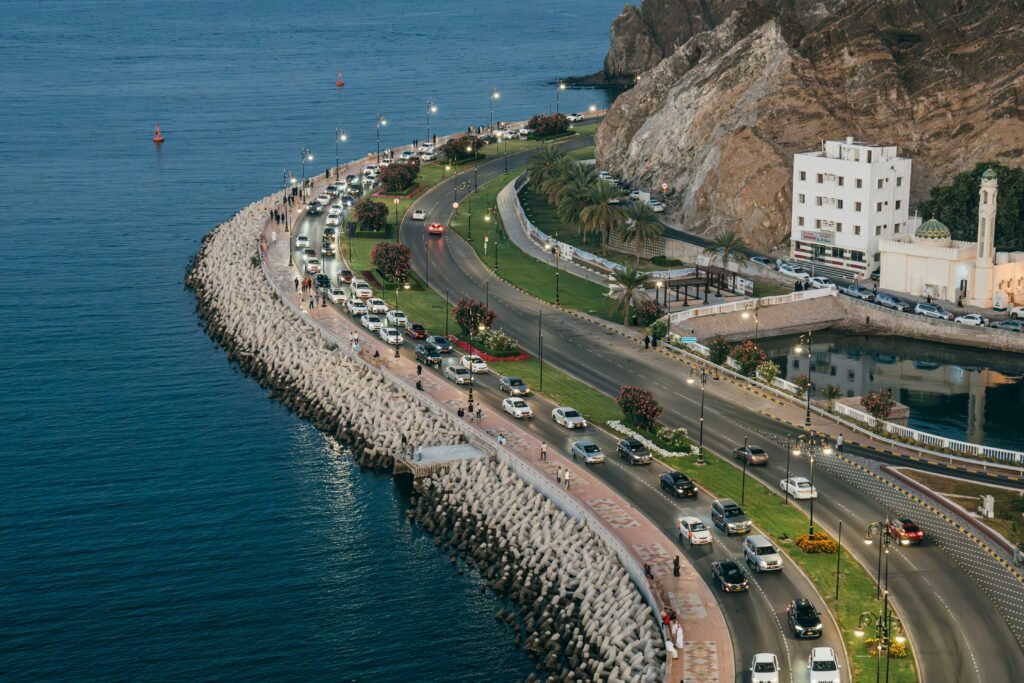
Close to: Muscat waterfront / Mutrah Corniche
How to do it: go late afternoon into evening for cooler air + best mood
What to buy: frankincense, perfume oils, silver jewelry, spices
Pro tip: duck into side alleys—main corridors are nice, but the magic is in the quieter branches.
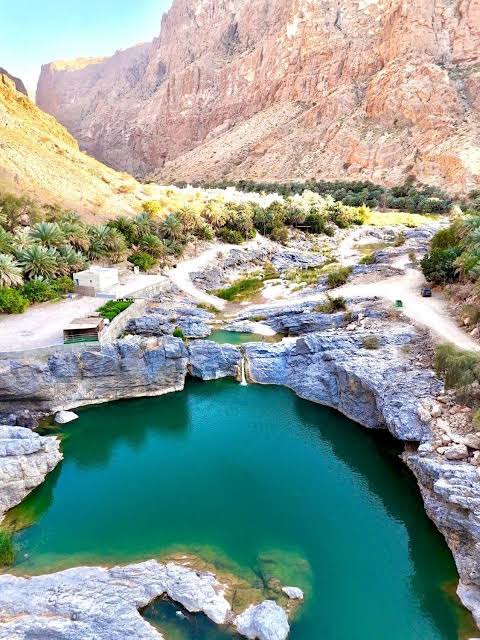
2) Wadi Tiwi – Refresh yourself in a cool wadi
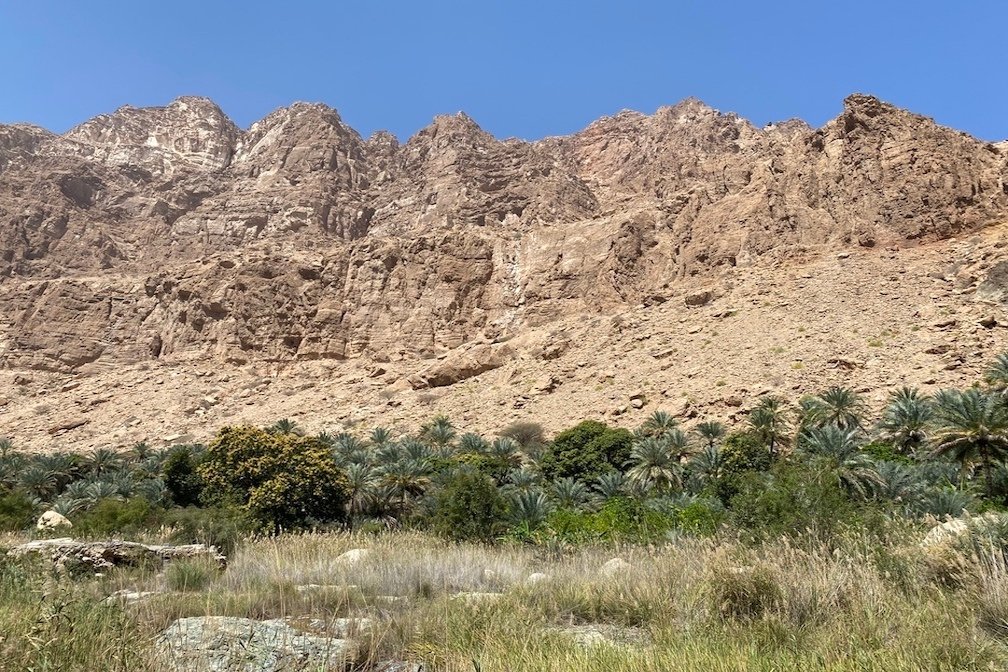
On the coastal road between Muscat and Sur, Wadi Tiwi is the kind of place that makes you pull over without thinking. Rugged cliffs, palm trees, dense green pockets—like somebody hid a tropical valley inside a dramatic canyon.
Even if you’re only doing northern Oman and skipping the long cross-country road trip, don’t skip this wadi. It’s a must.
We stopped shortly after the Wadina Resort and took a short break (the kind where you stand there grinning like an idiot because it doesn’t look real). We couldn’t drive all the way to the end because we had to reach our meeting point for the desert excursion—but even the “quick version” was stunning.
You can drive around 10 km into the wadi with a 4×4, but safety matters here:
- always check the weather forecast
- flash floods can happen fast
- even a 4×4 doesn’t protect you from heavy rain in a narrow valley
Some travelers say you can reach the first village with a normal car, depending on conditions.
3) Wahiba Desert – Spend a night in a desert camp (and make your life feel bigger)
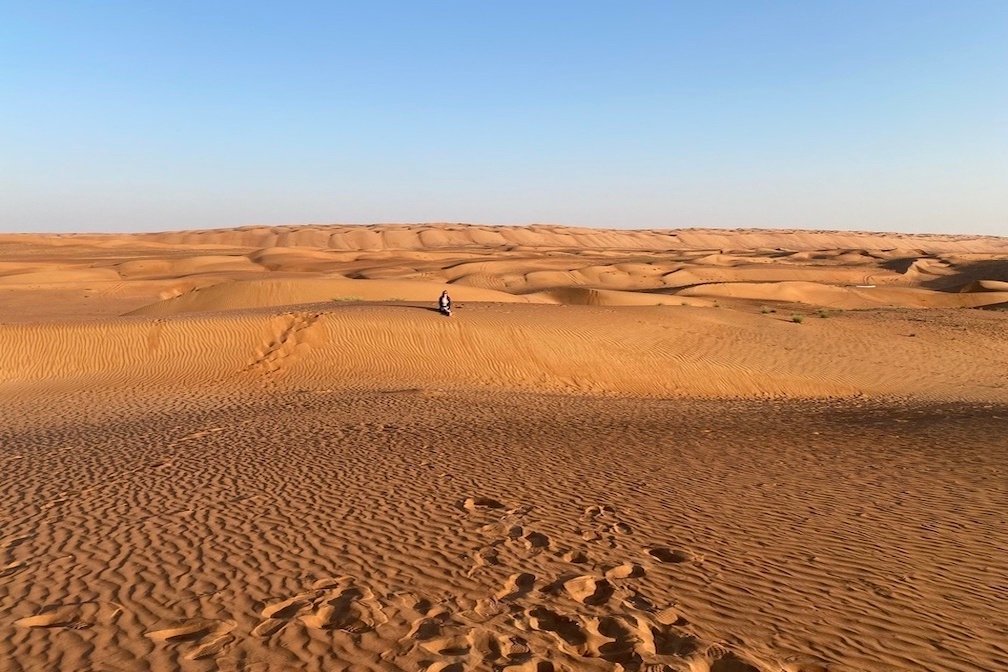
The Wahiba Sands may be “small” as deserts go (about 15,000 km²), but the experience is massive. Think rolling golden dunes—some rising up to 200 meters—and that silence that makes you hear your own thoughts again.
This is where you go for classic desert thrills:
- jeep safaris
- camel rides
- sandboarding
- off-road driving
- and a glimpse into Bedouin life through settlements and camps
And honestly? The real highlight is staying overnight. Desert camps here can be surprisingly comfortable, and once the sun drops, the sky turns theatrical—stars everywhere, darkness that feels pure.
If you crave a truly different kind of travel moment, sleep in the desert at least once.
4) Mughsail Beach – Swim and stare at the pastel horizon

Down in southern Oman, Salalah is shaped by the southwest monsoon (Khareef season), which can turn the landscape lush and green in summer. It also happens to be a paradise for beach lovers—now we understand the obsession.
Mughsail Beach is a long stretch of fine sand with the best kind of luxury: space. The colors are soft and unreal—sand, sea, and sky blending into delicate pastel gradients.
In March 2025, the water was 26°C—which is perfect if you’re the type who’s always cold (we see you, and we are you).
It’s about 20 minutes from Salalah, and there are covered pavilions for shade.
5) Wadi Darbat – One of the most beautiful wadis in Oman
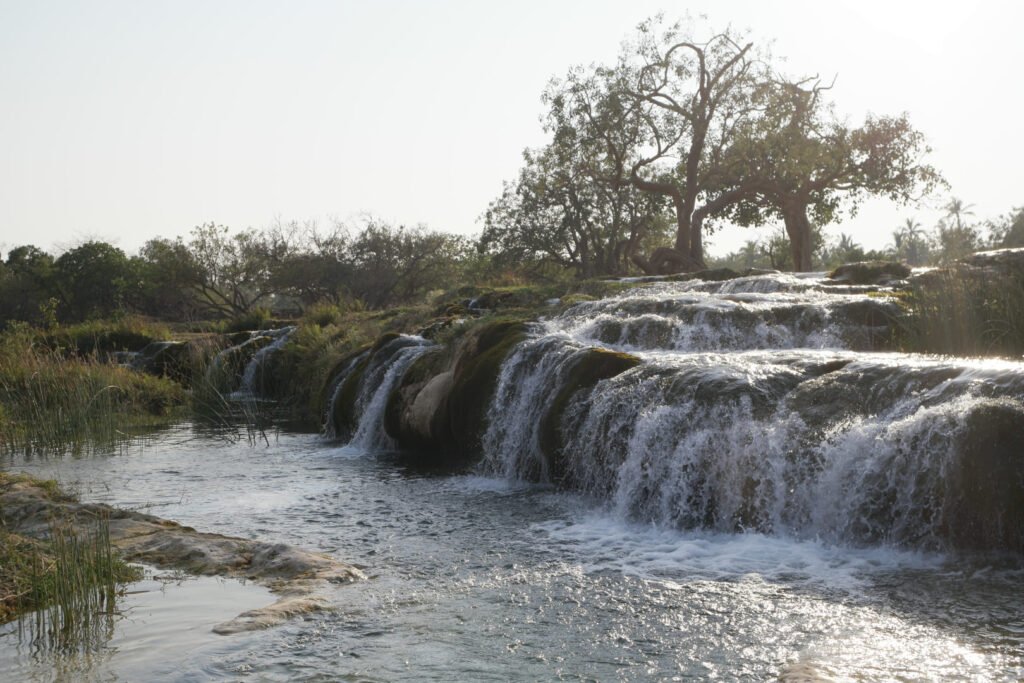
Oman is basically a country of “wait, there’s another wadi?” moments—each one with its own mood. And Wadi Darbat is one of the most photogenic.
A fun bit of context: Oman’s oases still help supply agricultural areas with moisture through the ancient falaj irrigation system—a brilliant, centuries-old engineering solution that’s still part of daily life.
A wadi is essentially a valley or dry riverbed that can hold natural pools—places to cool off and breathe.
Wadi Darbat is especially green during Khareef (monsoon season), when a large lake forms and the whole area looks lush. It’s also very family-friendly: you can rent pedal boats in the biggest pool.
Even in the dry season, it’s worth going—there are waterfalls at the entrance, and the wadi carries water year-round.
6) Nizwa Souk – Old-school atmosphere (and dates you can sample for free)
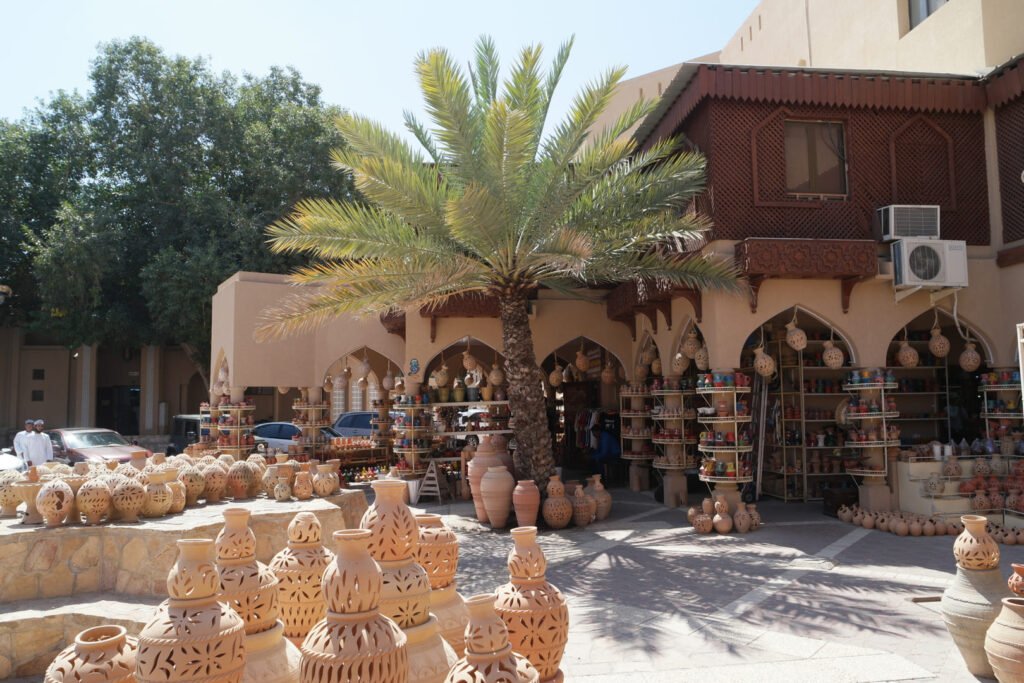
Nizwa is a historic city in central Oman—once a major Islamic center, now famous for its fortress and traditional souk. It’s also a great base for mountain excursions (you’ll hear a lot about Jebel Shams, Oman’s highest mountain).
The Nizwa Souk was restored in the 1990s, but it kept its authentic feel—shops selling silver jewelry, postcards, spices, souvenirs, books, and all the “small things” you end up unexpectedly loving.
Our favorite corner was the date souk, where you can taste different varieties for free. Dangerous. Delicious.
And if you can manage an early start, there’s a famous event:
Friday livestock market (from 6 a.m.)—cattle, goats, sheep, bargaining, inspecting, calling out prices. It’s especially busy before religious holidays, but mornings always feel lively here. Also: it’s a photographer’s dream if you’re respectful.
Extra detail we loved: on the first floor in the fruit-and-veg hall, there’s an antiques section. At the end of the market hall, you can often sample tea and halwa for free—and Omani coffee is usually served in pots like a warm little ritual.
7) Misfat Al Abriyeen – Wander through a sea of palm trees
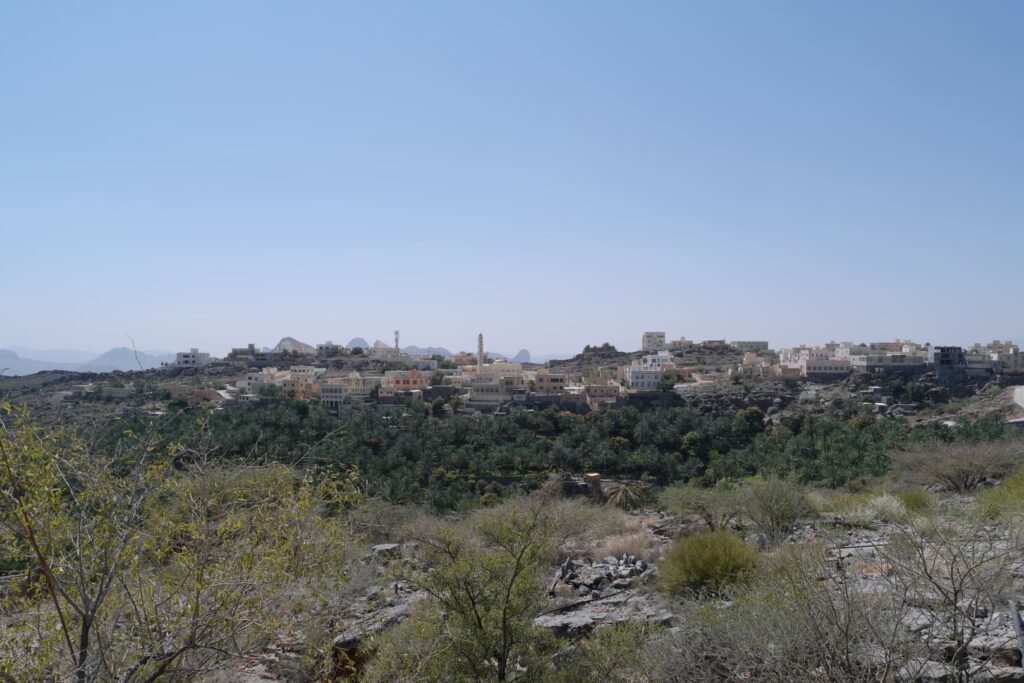
Near Nizwa, Misfat Al Abriyyin sits on a mountainside like a secret. It’s fed by a clear spring that flows year-round, and despite tourism, the village still feels remarkably intact.
Because people still live here, respect matters. Visitors are asked to keep privacy in mind, dress appropriately, and follow the posted conduct rules at the entrance.
We loved this place—peaceful, green, and quietly stunning. You can:
- sip coffee at a café with mountain views
- stroll through palm groves
- explore terraced fields
- wander charming alleys and old stone-and-mud architecture
- even stay overnight if you want to soak up the atmosphere
Did you know? Some of the old houses here are traditional mud homes with palm-thatched roofs.
8) Birkat Al Mouz – Ruins, falaj canals, and a view that hits hard
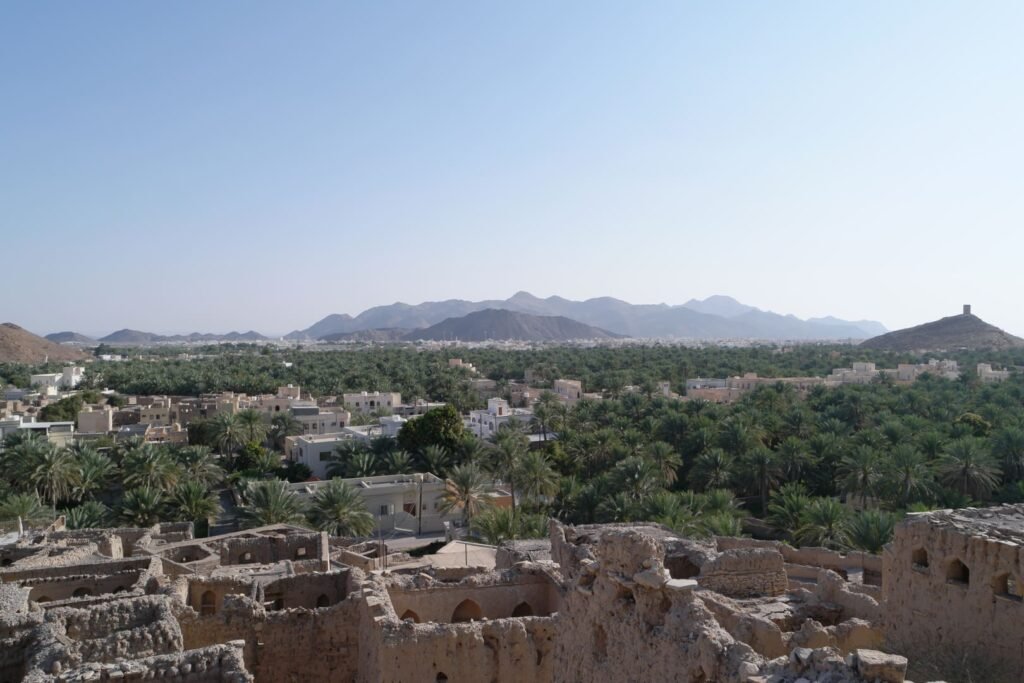
Hidden among dense date palms and banana plants, Birkat Al Mouz is a set of atmospheric ruins plus a still-functioning falaj system. And honestly? It surprised us the most—because we arrived with zero expectations.
We walked from the parking lot along the old irrigation channel (probably the “unofficial” route), passing local houses, goat pens, and green gardens. After about 15 minutes, the ruins appear—simple houses, a fortress, and that haunting beauty that comes with slow decay.
Then: climb up through the dusty ruins.
Because the view from above is the reward—mud-brick tones, bright green plantations, and mountains framing everything like a painting.
A practical warning: these ruins are unsecured and built traditionally from mud brick and wood, so collapses can happen. Even structures that look stable from the outside deserve caution.
Still, it’s absolutely worth it for photographers and atmosphere-lovers. The color contrast here is unreal.