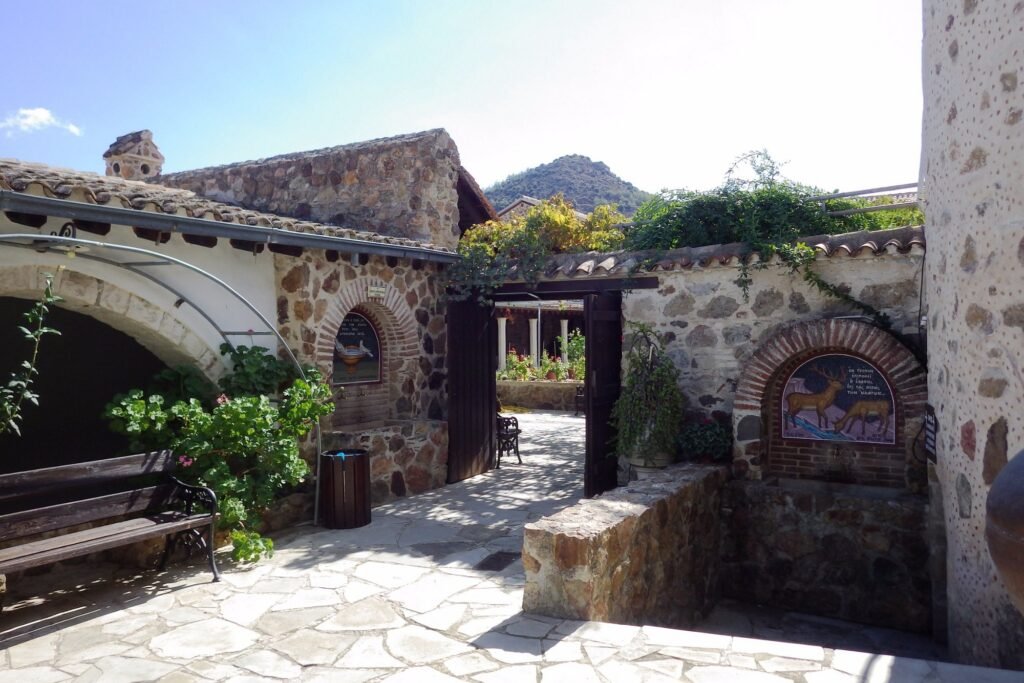

Travel writing based on first-hand experience
Ayia Napa (also called “Agia Napa”) has been arguably the most famous seaside resort in Cyprus for decades . No wonder: nowhere else in Cyprus are the beaches as beautiful. Fine, light sand meets turquoise waters. The region is simply a dream for swimming.
What to do in Ayia Napa? Where are the most beautiful beaches? Which sights are must-sees? And which hotels in Ayia Napa are recommended? You’ll find answers to all these questions and many practical tips in our detailed post.
Planning More Cyprus Adventures?
Ayia Napa may look like it’s all beaches, cocktails, and suspiciously perfect turquoise water, but Cyprus has plenty more waiting once we’ve dried off and stopped pretending one swim was enough. Use these guides to build the rest of your island trip without falling into the classic “wait, should we also go there?” spiral.
- Ayia Napa Itinerary
- 7-Day Cyprus Itinerary — the best next click if you want to fit Ayia Napa into a full island route without turning your holiday into a spreadsheet.
- Best Things to Do in Protaras — perfect for adding nearby beaches, sea caves, Cape Greco views, and easy coastal adventures.
- Things to Do in Protaras with Kids — handy if your Cyprus trip includes small humans, snack negotiations, and the need for shallow, calm swimming spots.
- Hidden Gems in Cyprus — for secret-ish chapels, tucked-away caves, quiet villages, and detours beyond the beach towel zone.
- What to Do in Cyprus with Kids — a bigger family-friendly guide covering museums, nature stops, beaches, and low-drama day ideas.
- Famagusta Guide — useful if you’re curious about crossing north from Ayia Napa or Protaras for history, beaches, and walled-city wandering.
- Best Brunch Spots in Ayia Napa — because after beach mornings and late nights, we deserve pancakes, eggs, coffee, and possibly no judgment.
- Best Bars in Cyprus — for sunset drinks, beach bars, rooftop moments, and the civilized art of pretending we only came for one cocktail.
Table of Contents
Is Ayia Napa Worth Visiting?
Let’s be honest: our first impression of Ayia Napa was not exactly “wild Mediterranean dreamscape.” The huge hotel complexes along the coast can feel a little intense at first, like Cyprus decided to build a beach holiday machine and then pressed “maximum resort mode.”
Would we recommend visiting in peak season? Honestly, no. Unless your idea of relaxation involves crowded beaches, loud beach clubs, and negotiating for towel space like it is an Olympic sport, we would skip July and August.
But here is the twist: the beaches around Ayia Napa are genuinely gorgeous. If the weather is kind and you visit in the off-season, this part of Cyprus can be absolutely wonderful.
We visited at the beginning of November and somehow landed on 25°C, sunshine, and sea water that was still warm from the long, hot summer. The beaches were lively, but not chaotic. Busy enough to feel alive, quiet enough that we did not want to run away immediately. A win.
So, is Ayia Napa worth visiting? Yes, especially if you want to see some of the most beautiful beaches in Cyprus. But our strong advice is this: come in the shoulder season. Spring and autumn are where Ayia Napa goes from “tourist overload” to “oh, this is actually lovely.”
1. Overview of Ayia Napa: What You Need to Know
Experience: Our 4 Top Sights & Tips for Ayia Napa
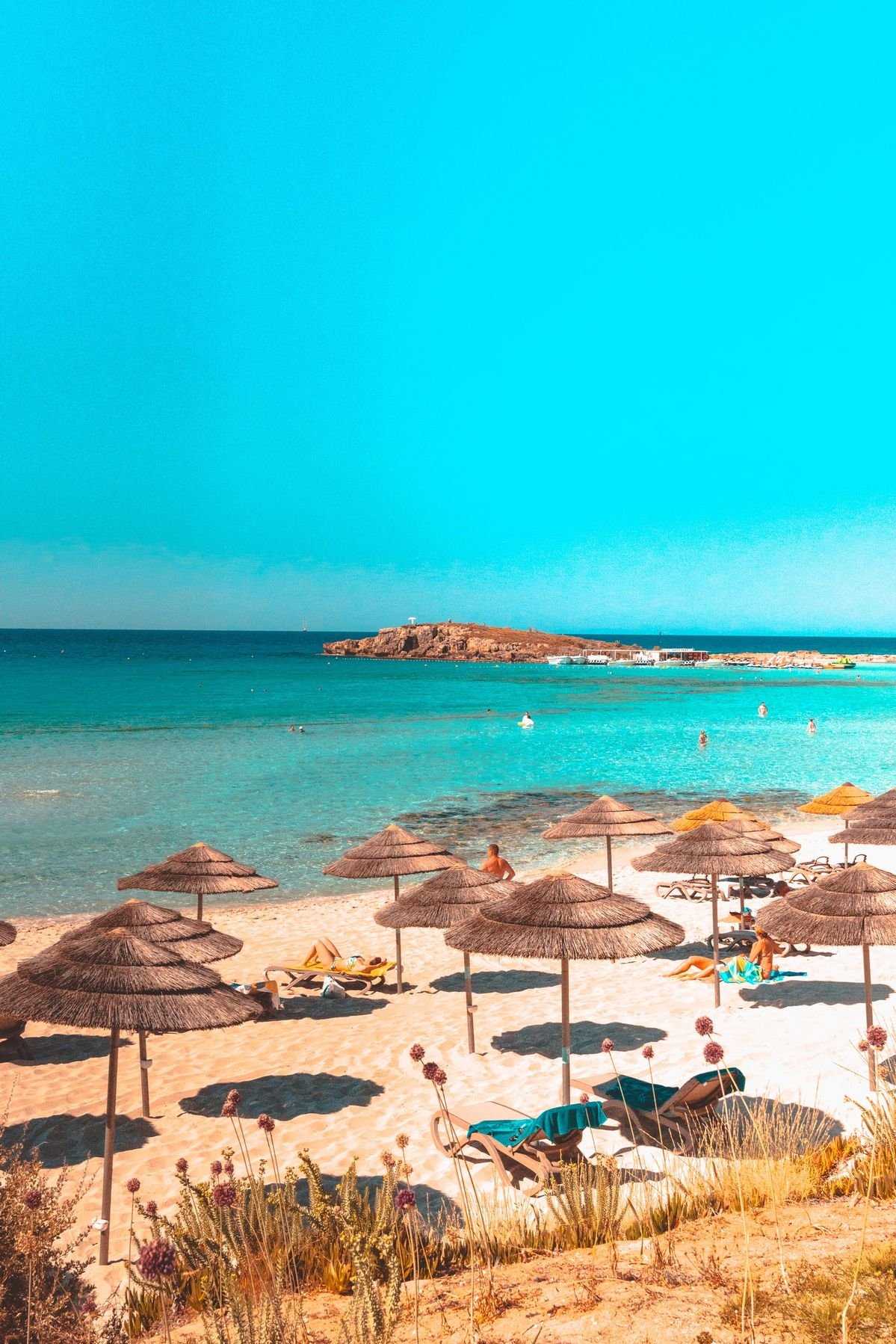
- Spend a day at Nissi Beach: Pale sand, turquoise water, and that classic “yes, Cyprus really does look like this” moment. Nissi Beach is often called one of the most beautiful beaches in Cyprus, and for once, the hype is not completely ridiculous.
- Take a trip to Cape Greco: This rugged peninsula sits just outside Ayia Napa and is one of the most scenic spots in the area. Expect sea caves, dramatic cliffs, hidden bays, and views that make you stop mid-sentence.
- Eat well in Protaras: Our favorite meal in the area was at Elia Restaurant in Protaras. Stylish, relaxed, and much more memorable than the average tourist-strip dinner.
- Choose your base wisely: For a smaller, boutique-style stay near Protaras, we recommend Sirena Bay Beach House. If you prefer a proper beachfront hotel directly in Ayia Napa, Alion Beach Hotel is a strong choice.
What to Expect in Ayia Napa
- Some of the most beautiful beaches in Cyprus are found around Ayia Napa. This is the main reason to come here, and honestly, it is a very good reason.
- Ayia Napa is also one of the biggest tourist centers in Cyprus. If the phrase “mass tourism” applies anywhere on the island, it applies here. Large hotels line the coast, and the whole place is built around holidaymakers.
- The center of Ayia Napa is not especially charming. It is very commercial, very touristy, and very much designed for nightlife, restaurants, bars, and souvenir shopping.
- Protaras, the neighboring resort town, is also tourist-focused but feels a little calmer. It can be a good alternative if you want easy access to beaches without staying right in Ayia Napa.
- The big scenic star of the area is Cape Greco. From Ayia Napa, it is an easy day trip with sea caves, rock formations, viewpoints, and some of the prettiest coastal scenery in eastern Cyprus.
2. What to do in Ayia Napa: Visit The Most Beautiful Beaches Around Ayia Napa
The real highlight of Ayia Napa? No contest: the beaches. This is where the area stops being merely touristy and starts showing off shamelessly. Pale sand, transparent water, rocky coves, tiny islands, snorkeling spots — the coastline is doing the most, and frankly, we respect it.
You can rent sun loungers and parasols at most beaches. The standard price has been around €2.50 per item for several years, which means two loungers and one parasol usually cost about €7.50 per day.
Showers are usually available, although they may cost extra. Cyprus has water shortages, so yes, even rinsing off after the sea can become a tiny logistical event.
Nissi Beach
- One of the most famous beaches in Cyprus
- Very pale, fine sand and turquoise water
- Great for families in the off-season
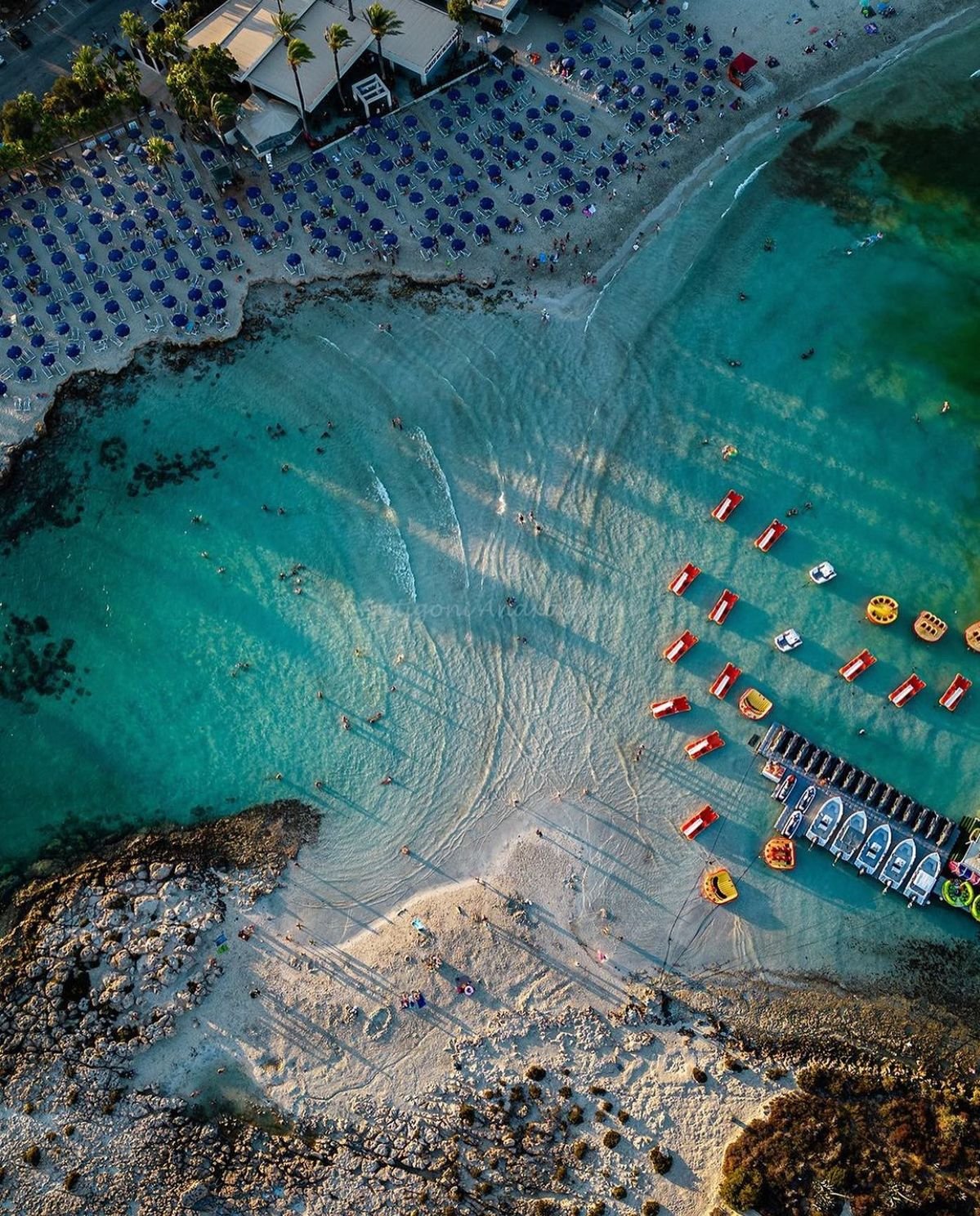
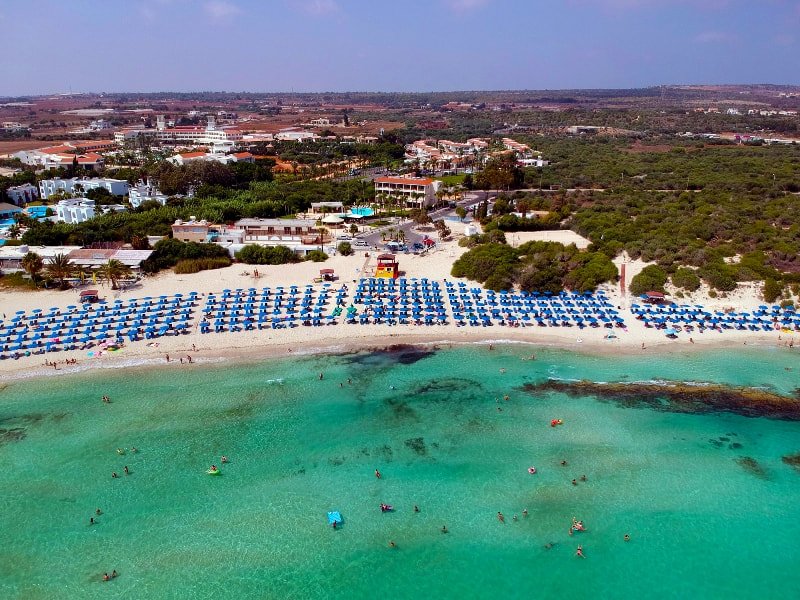
Nissi Beach usually appears near the top of every “best beaches in Cyprus” list, and yes, this time the internet is not lying to us. The sand is light and fine, the water is bright turquoise, and the whole bay looks almost suspiciously pretty.
What makes Nissi Beach special is the small island of Nissi, which shelters the bay. Thanks to this, the water is shallow, calm, and wonderfully clear — basically ideal for swimming, floating, and pretending we have our lives together.
The beach is about 500 meters long and freely accessible, even though there are hotels around the bay. You will find sun loungers, parasols, beach bars, restaurants, and cafés nearby.
During our off-season visit, Nissi Beach was pleasantly relaxed. There was lounge music from one of the beach clubs, but nothing too intrusive. In peak season, however, this beach has a reputation for attracting party crowds, so choose your timing wisely unless you enjoy your beach day with a soundtrack and several hundred new friends.
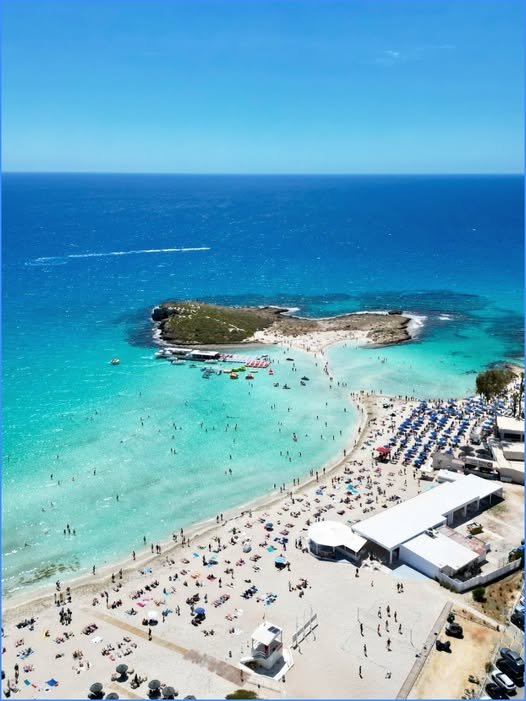
Fig Tree Bay
- The most beautiful sandy beach around Protaras
- Calm, clear water
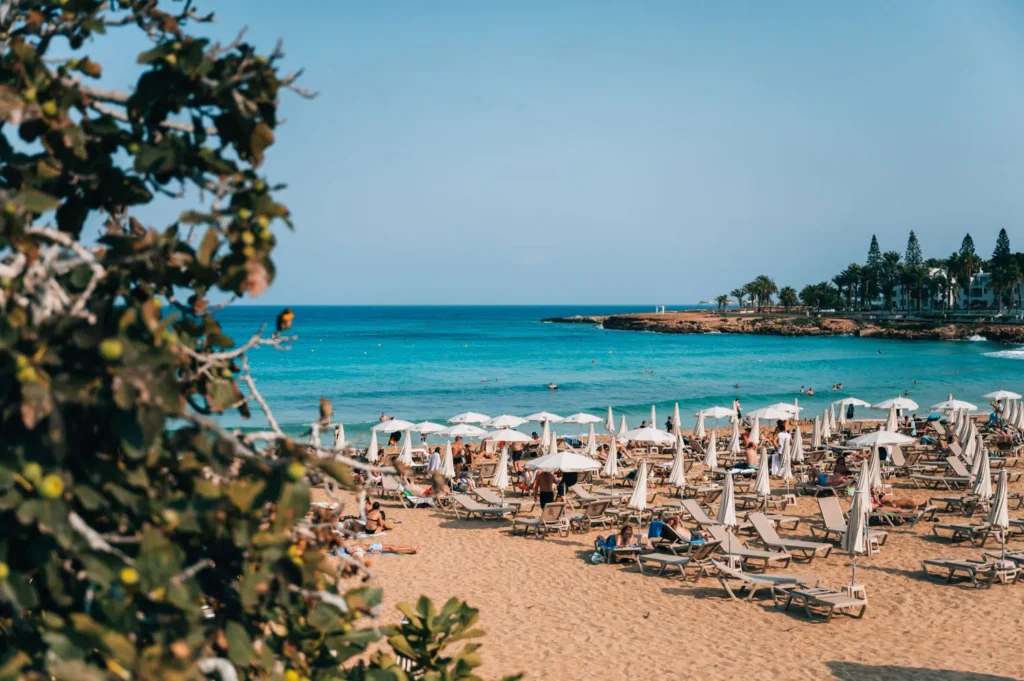
Fig Tree Bay is located on the east coast in Protaras, the neighboring beach town of Ayia Napa. Around Protaras, this is probably the most famous and most beautiful sandy beach.
The water here is calm, clear, and perfect for swimming. The sand is not quite as bright as at Nissi Beach, but it is still soft and fine. Overall, Fig Tree Bay is a lovely place for a relaxed beach day, especially if you are staying in Protaras.
You can rent sun loungers and parasols here too. Even in the off-season, there was still a fair amount of activity, but it did not feel overcrowded. Peak season? We imagine that is a different beast entirely.
Konnos Beach
- Good for snorkeling, with a chance to spot turtles
- A small, scenic bay with light sand
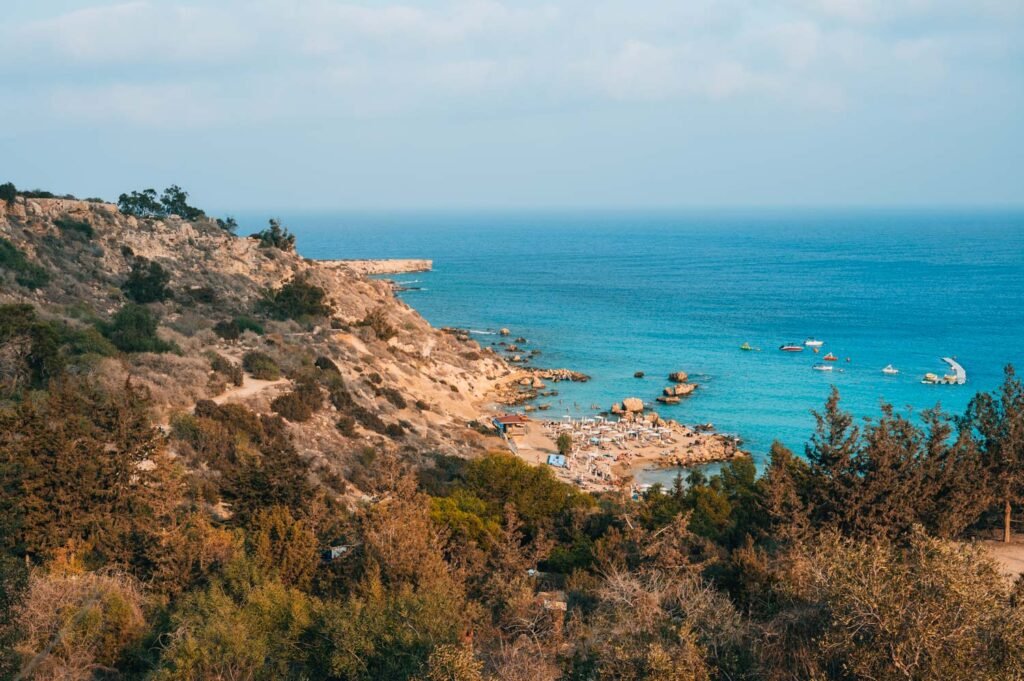
A little further south on the east coast, you will find Konnos Beach, another beauty in the Ayia Napa and Protaras area. It sits in a smaller bay, which makes it feel more intimate — but also means it fills up quickly.
Konnos Beach is especially popular for snorkeling. With a bit of luck, you may even spot turtles in the sea. No guarantees, of course. Turtles, unlike tourists, do not follow itinerary plans.
Makronissos Beach
- A good alternative to Nissi Beach
- Fine, fairly light sand and calm shallow water
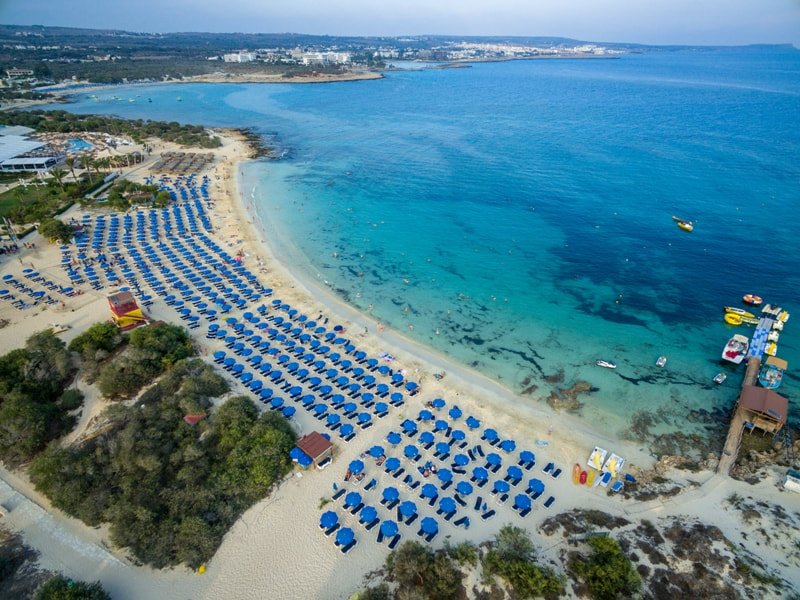
Just a five-minute drive from Nissi Beach, Makronissos Beach is another excellent choice if you want soft sand and clear water without necessarily throwing yourself into the Nissi Beach circus.
The sand here is fine and fairly light-colored, and the water is usually calm and shallow. This makes Makronissos Beach especially good for families with children.
One thing to watch for: there are rocks and stones in some parts of the water. They are usually easy to see, but water shoes can be useful if you are sensitive-footed or traveling with kids who treat every pebble like a personal attack.
Landa Beach
- A quieter alternative to Nissi Beach
- Family-friendly sandy beach with gently sloping water
Right near Makronissos Beach, Landa Beach is another lovely option if Nissi Beach feels too crowded. It has a relaxed atmosphere, soft sand, and calm, gently sloping water.
We found Landa Beach especially pleasant and family-friendly. It is the kind of beach where you can actually relax instead of constantly scanning the horizon for the next wave of crowds.
Ayia Thekla Beach
- Less crowded than the famous Ayia Napa beaches
- Pretty views from Ayia Thekla Chapel
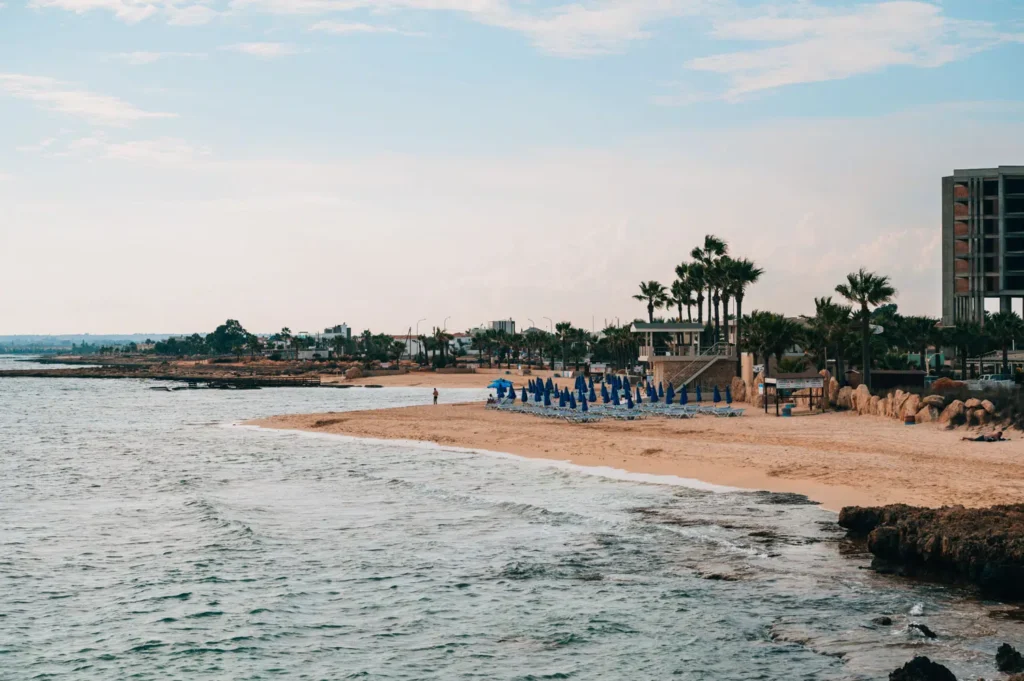
Ayia Thekla Beach is the least famous beach on this list, which is exactly part of its charm. When we visited before sunset in the off-season, it was almost empty. Peak season will, of course, have other plans.
You will recognize the area by the small blue-and-white Ayia Thekla Chapel, which sits on a little hill at the eastern end of the beach.
The beach itself is sandy and very pretty, although there are some rocks in the water. It is still good for swimming, but you need to be a little careful. The only thing that spoiled the view for us was a large unfinished building or construction site nearby — because apparently even paradise sometimes comes with scaffolding.
3. Excursion to Cape Greco: Sights & Tips
Interesting Facts & Information About Cape Greco
- Cape Greco is the main natural attraction just outside Ayia Napa and is only about a 15-minute drive away.
- It is a small peninsula known for spectacular bays, sea caves, cliffs, and viewpoints.
- You can explore Cape Greco independently by car or as part of a guided tour.
- Some roads are bumpy or gravel tracks, but you can reach the main highlights with a normal rental car.
- Plan at least half a day if you want to see the main sights without rushing around like a confused goat.
- Important for families: Many cliffside areas have no barriers. If you are visiting with small children, stay very alert. We used a baby carrier near exposed viewpoints and cliffs.
Sea Caves
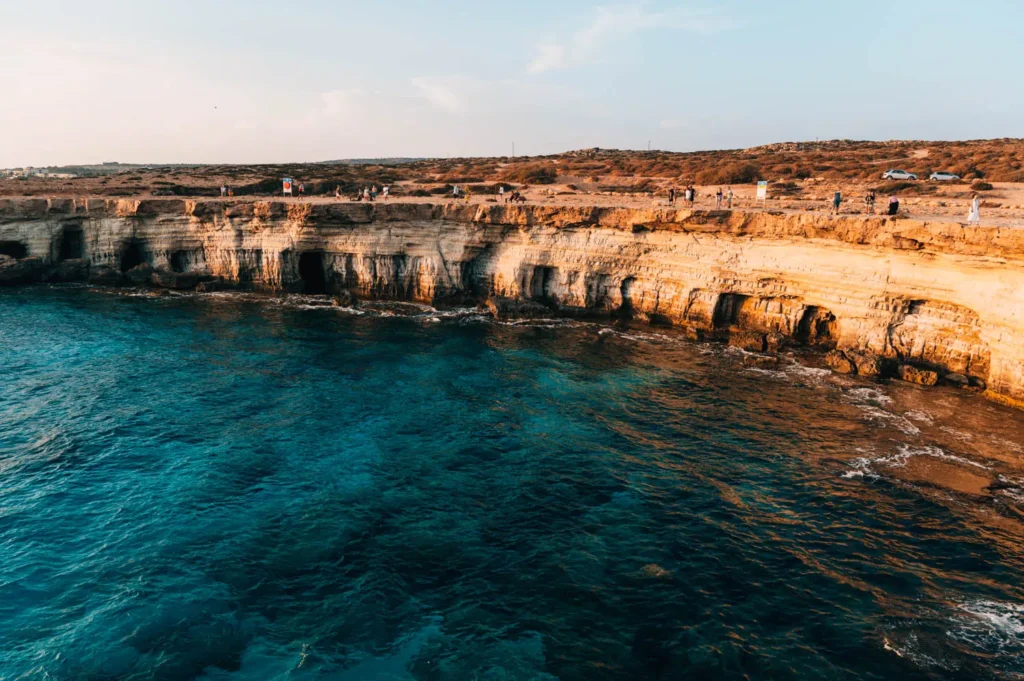
Cape Greco is famous for its dramatic sea caves, carved by the sea over thousands of years. Cyprus has sea caves in several places, but the ones around Cape Greco are among the most impressive.
The most popular spot for viewing the Sea Caves is located about one kilometer from the main Cape Greco peninsula. You can drive to the parking area, although the last stretch is a gravel road. Nothing too wild — a normal small car should manage it.
From the parking area, it is only about a two-minute walk to the cliffs. You can admire the caves from above or, in the right conditions, climb down to stand inside them. Low tide is best if you want to go down, so check tide times before you try it.
During our visit, we saw people attempting cliff jumping, but keep in mind that this is officially prohibited. Also, rocks, waves, and bad decisions are a terrible combination. Admire the view, keep your bones intact.
The Sea Caves are beautiful, but so is the whole surrounding cliff landscape. Even before sunset, when it was fairly busy, people were spread out enough that it still felt enjoyable.
Blue Lagoon
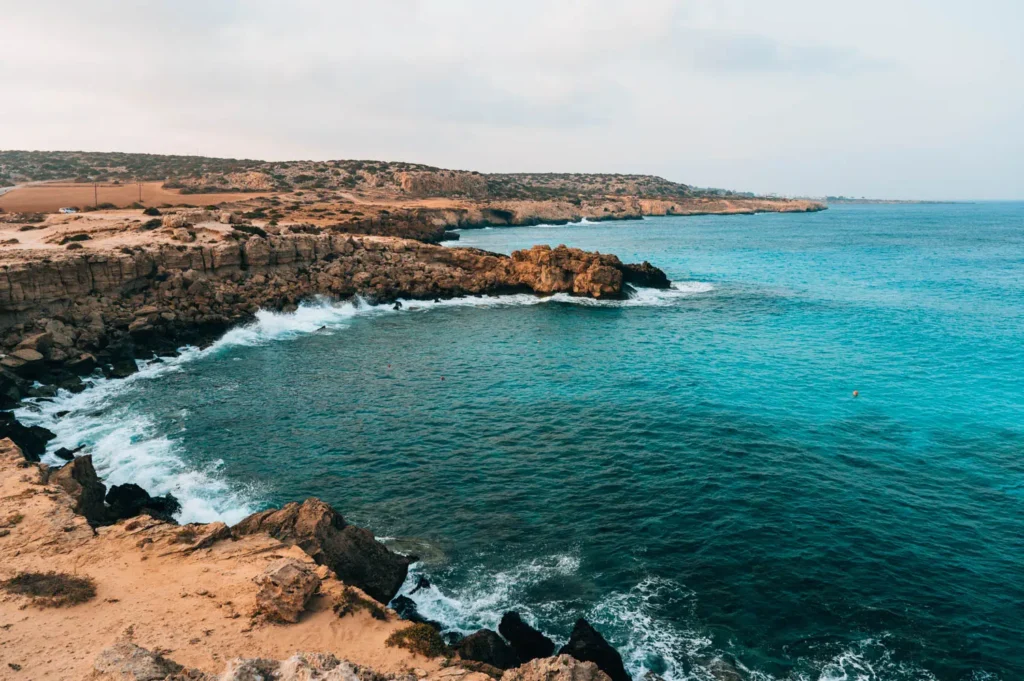
The Blue Lagoon is probably the most famous bay around Cape Greco. As the name promises with absolutely no subtlety, the water here glows in unreal shades of blue.
It is one of the most popular stops for boat trips, so it can get busy during the day. If you arrive by rental car, you can park above the bay and climb down, but water shoes are strongly recommended because the rocks are sharp.
Overall, we would say the Blue Lagoon is one Cape Greco sight that is probably better experienced by boat than from land. From the water, you get the full drama: cliffs, color, sparkle, the whole Mediterranean show.
Crow’s Arch / Kamara tou Koraka
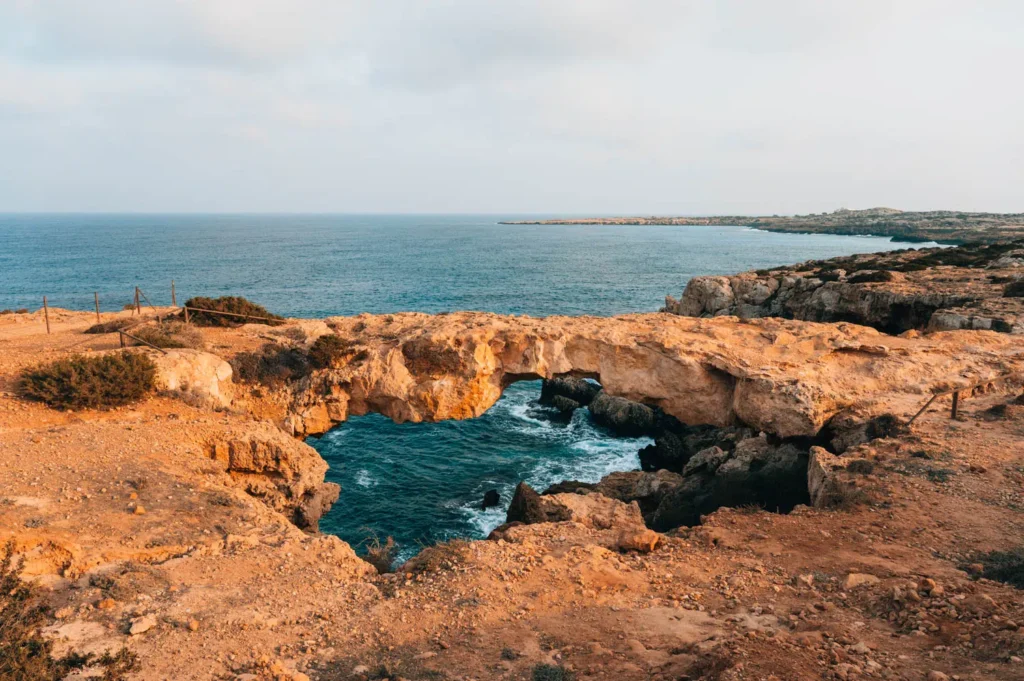
Crow’s Arch, also known as Kamara tou Koraka, is a natural rock arch and one of the easiest photo stops at Cape Greco. It is right beside a paved road, with a small parking area close by.
The arch itself is closed to visitors because of the risk of collapse, so you cannot walk across it. There is not much to do here, but it is worth a short detour if you are already exploring the cape.
Cape Greco Viewpoint
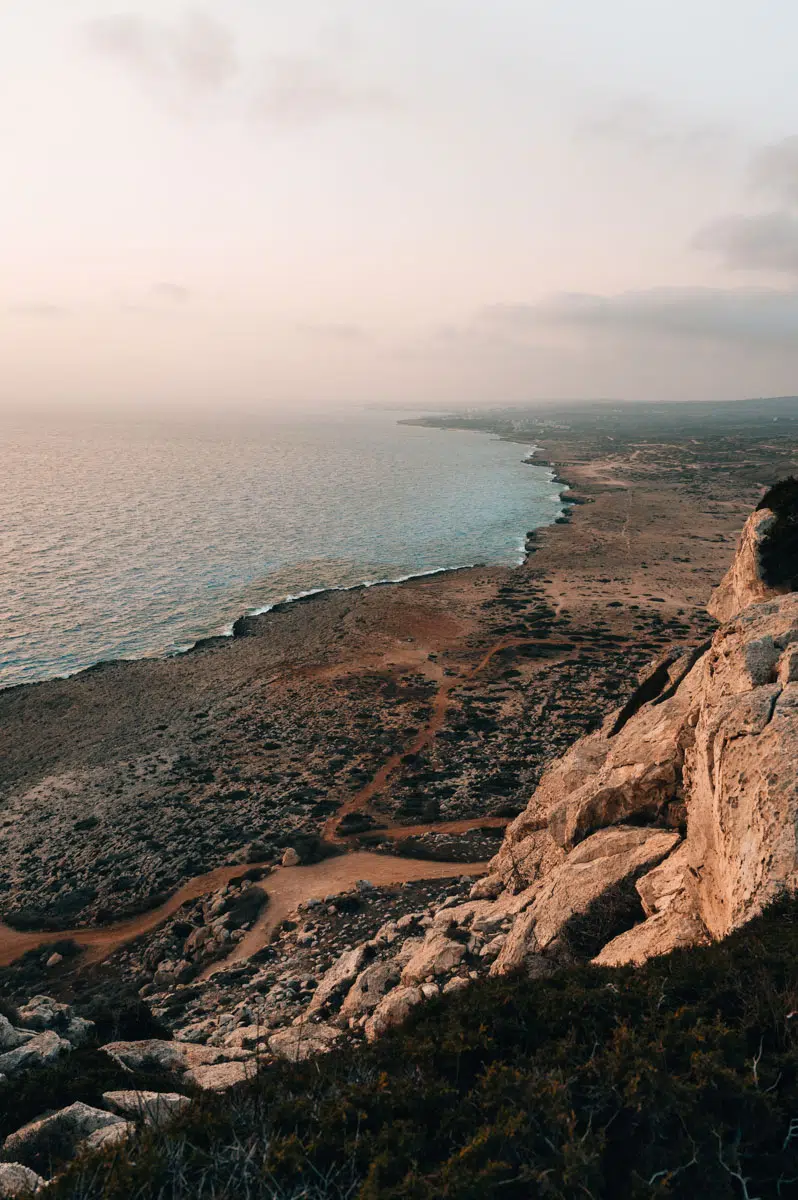
The Cape Greco Viewpoint is probably the most famous viewpoint in the area, and yes, it deserves the attention. From up here, the coastline opens out beautifully, with cliffs, sea, sky, and that grand end-of-the-world feeling.
You can drive to the parking area, then walk uphill for about five minutes to reach the viewpoint. It is short, but in summer heat, even five minutes can feel like a character-building exercise.
On the way up, you will pass a small bench with a view toward the lighthouse. Continue further uphill to the Monument of Peace, where you can also look back toward Ayia Napa.
Our tip: Visit before sunset. The light is softer, the views are better, and the whole place gets that golden, cinematic glow that makes everyone suddenly become a photographer.
4. Other Sights Around Ayia Napa
Beyond the beaches and Cape Greco, Ayia Napa does not have endless cultural sights. This is not Rome with beach towels. Still, there are a few places worth adding to your itinerary, especially if you want a break from swimming.
Sculpture Park
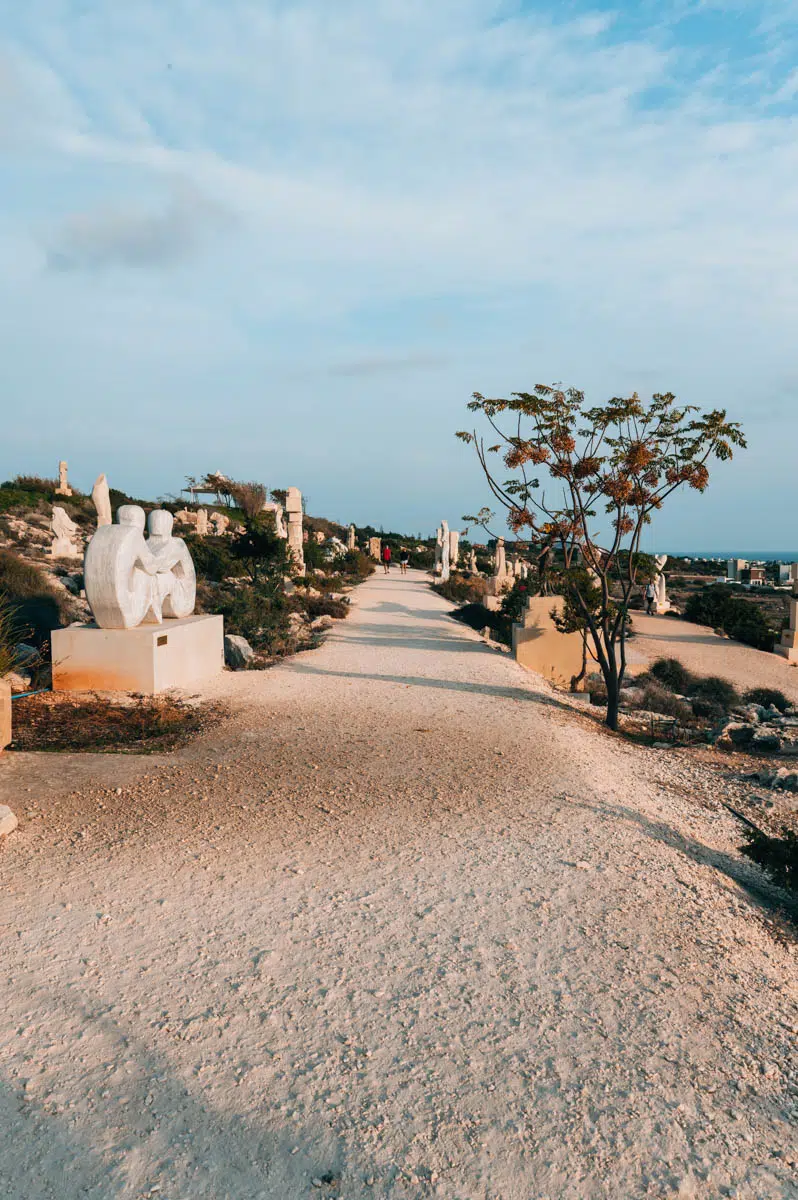
Ayia Napa Sculpture Park is where art meets coastline, with a generous dose of sea breeze. The park is spread across a hillside just outside the center, and the views over the Mediterranean are part of the experience.
Artists from around the world have created works here. Some sculptures reference Greek mythology, while others are more modern and abstract. In other words, some pieces will make immediate sense, and some will make you stand there saying, “Hmm. Interesting.” Both are valid art reactions.
Our tip: Visit in the late afternoon or before sunset. There is very little shade, so midday is not ideal unless you enjoy slowly roasting beside stone sculptures. Admission is free.
It is also worth wandering into the adjacent cactus garden. Together, the sculpture park and cactus garden make a lovely, low-key stop for a scenic walk.
Love Bridge
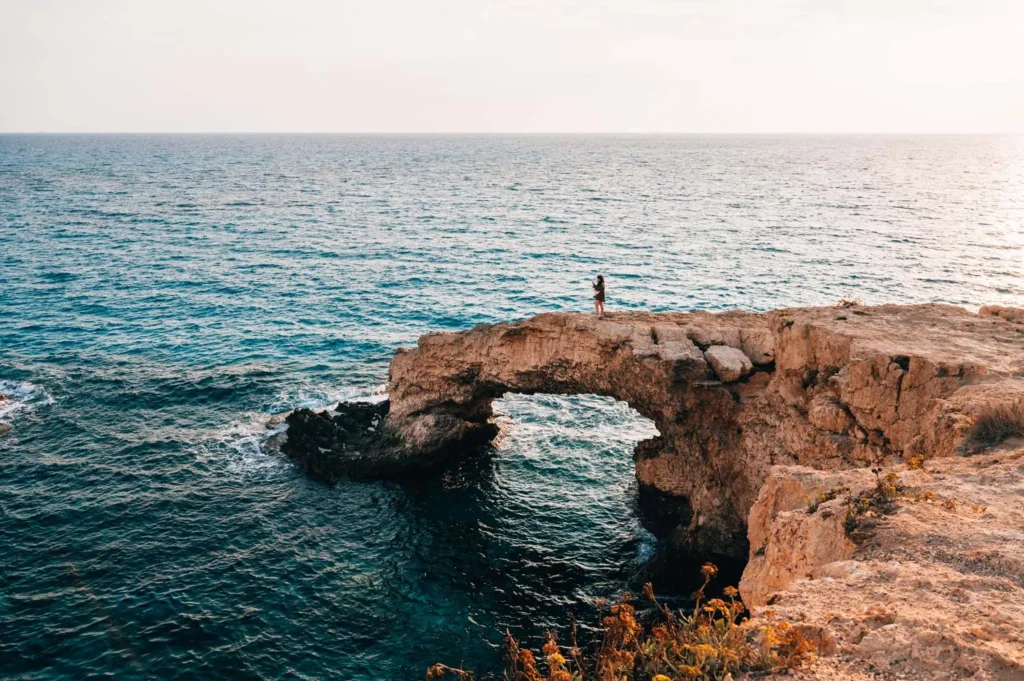
Close to the Sculpture Park, you will find one of Ayia Napa’s most photographed natural landmarks: the Love Bridge. This natural rock bridge is larger and more dramatic than Crow’s Arch, and it sits beautifully above the blue water.
You can walk across the bridge, but caution is absolutely necessary. The rock is exposed, there are no proper barriers, and this is not the place for wobbly legs, reckless posing, or children sprinting ahead like tiny fearless mountain goats.
If you are visiting with small children, be especially careful. We kept our little one in a carrier near exposed coastal spots like this.
Sunset is a very popular time to visit, but it can also get crowded. If you want calmer photos, come earlier or be patient.
There is a small parking lot nearby, and from there it is less than 100 meters to the Love Bridge.
Tip: Ayia Napa Town Center
Now for a slightly brutal tip: in our opinion, you do not need to spend much time in the town center of Ayia Napa.
Ayia Napa is a tourist resort through and through. You will find restaurants, cafés, souvenir shops, tourist supermarkets, clubs, bars, and a large children’s arcade. Useful? Yes. Charming? Not especially.
Our conclusion: the harbor area is quite pleasant and worth a wander, but the center itself is not one of the must-see places in Cyprus. Come for the beaches and coastline, not the main strip.
5. Food & Drink: Cafés and Restaurants Around Ayia Napa
The bad news first: we found Cyprus a little underwhelming overall when it came to food. We ate well, yes, but we rarely had the kind of meal that made us stare across the table in silent emotional gratitude.
That said, we did find a few restaurants and cafés around Ayia Napa and Protaras that stood out from the tourist-menu fog. Here are the places we would actually recommend.
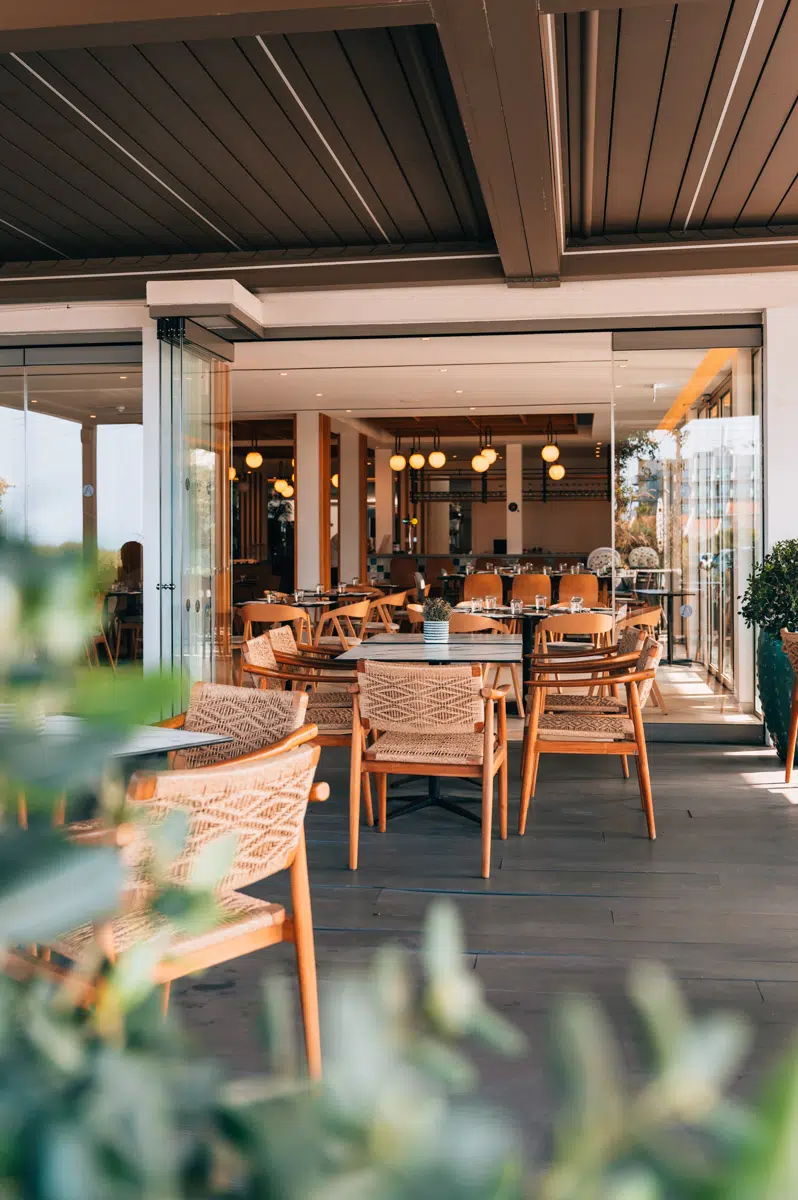
- Elia Restaurant (Protaras): Our favorite in the area. This stylish restaurant serves Mediterranean cuisine with a creative twist. Expect fish, meat, and a few vegetarian options. We ate very well here and loved the atmosphere.
- Pinch (Protaras): A relaxed Mediterranean spot with dishes such as hummus, falafel, salads, meat, and fish. We even ordered delivery twice and were genuinely impressed by the quality.
- Sale e Pepe (Ayia Napa): A good choice if you are staying in Ayia Napa and craving Italian food. The menu focuses mainly on pizza and pasta.
- The Loop (Paralimni): A trendy brunch spot about a 10-minute drive from Ayia Napa. Come here for Eggs Benedict, shakshuka, and proper breakfast-brunch energy.
- Lartecono Davinci Gelato (Protaras): A modern gelato shop with excellent, sometimes creative flavors. Grab some and take a slow walk along the coast. This is not complicated happiness.
6. Accommodation: Our Hotel Picks
Small Boutique Hotel: Sirena Bay Beach House
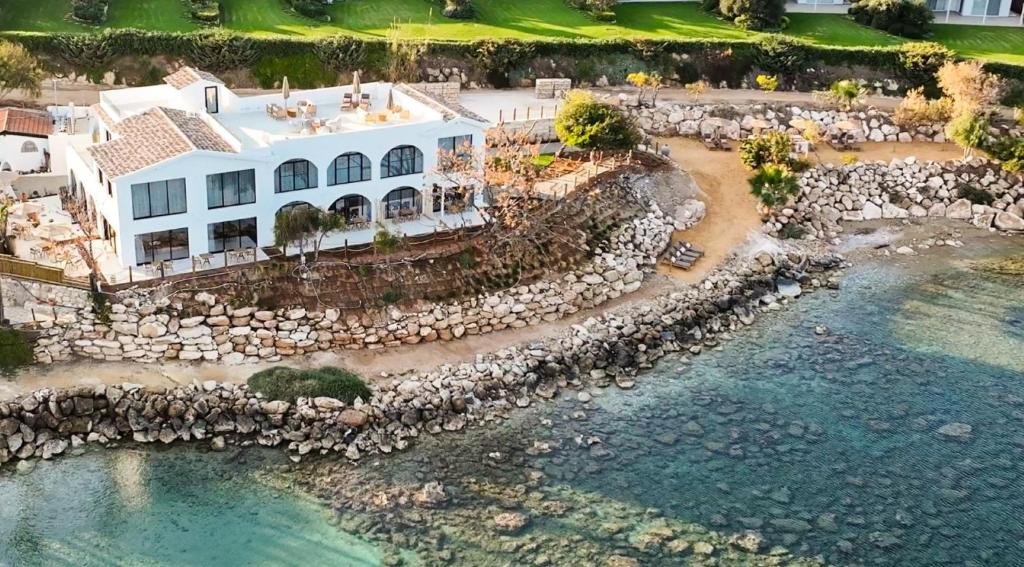
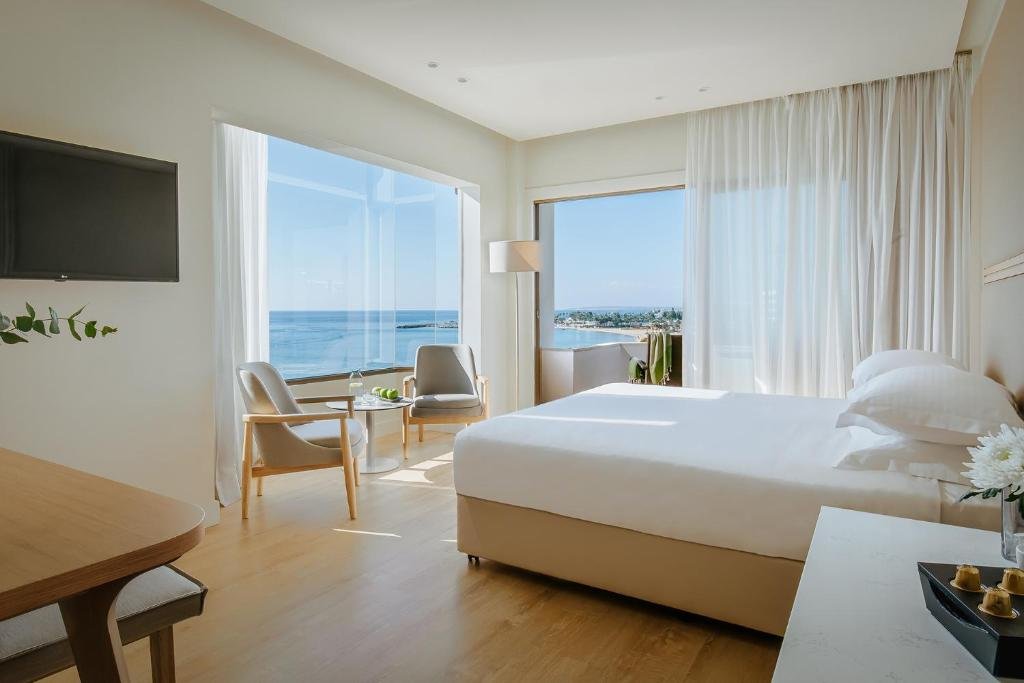
Looking for a small, pretty boutique hotel right by the beach? Then Sirena Bay Beach House is a lovely option. We stayed here and would happily recommend it.
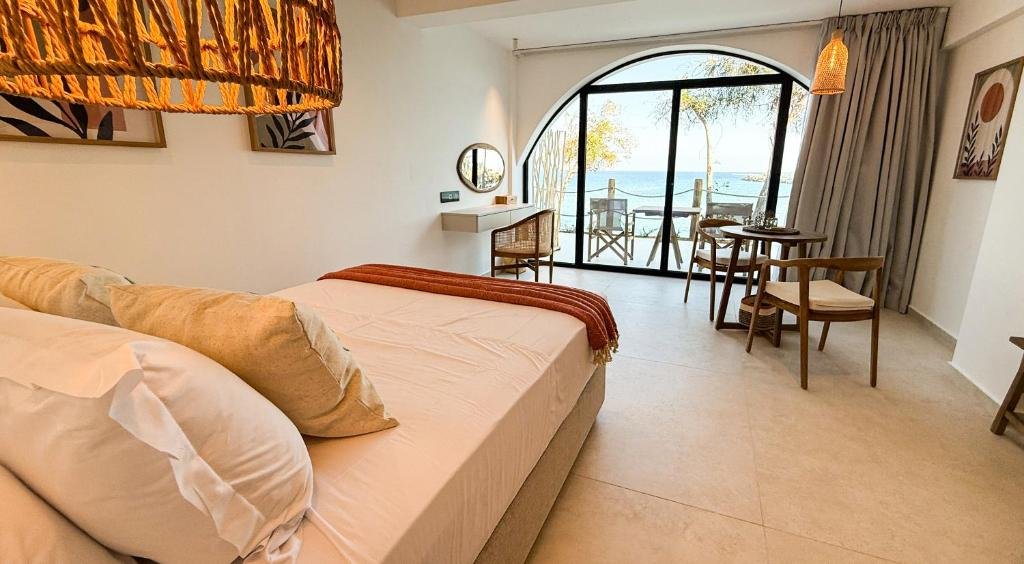
The hotel has a relaxed boho style, and many rooms come with a sea view, balcony, or terrace overlooking the water. The bed was a bit too bouncy for our taste, but still comfortable. Overall, we felt very much at home.
The small kitchen in many rooms is also useful, especially because breakfast is not currently offered at the hotel. Being able to make a simple breakfast before heading out is always a win.
The hotel sits right by the sea. In the evening, with the window open, you can hear the waves crashing. One thing to keep in mind: during peak season, the nearby beach bar may bring some music noise.
Sirena Bay Beach House is located near Protaras on the east coast, which makes it a great base for exploring the area. Ayia Napa is about a 15-minute drive away, and Fig Tree Bay is just over 10 minutes away. The beach beside the hotel is also pleasant for easy, lazy sea days.
In the off-season, the hotel feels like an oasis of peace and quiet. In November, there were barely any open restaurants or cafés nearby, so we often ordered delivery through Foody and ate on the terrace. Honestly? Wonderful.
Our conclusion: One of our favorite hotels from our Cyprus trip. We would stay here again without hesitation.
Luxury Beach Hotel: Alion Beach Hotel
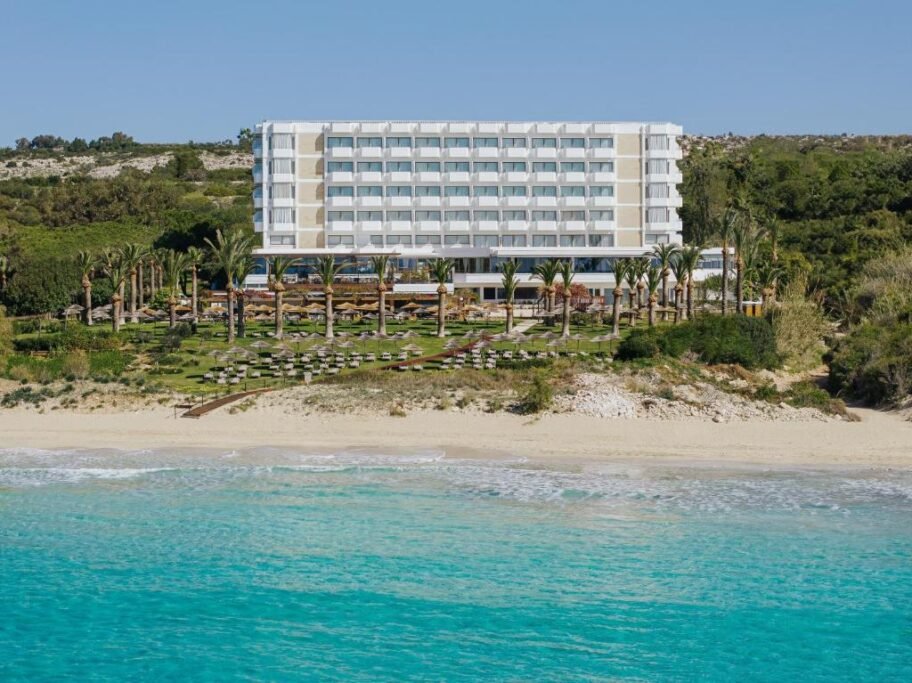
If you would rather stay in a large, polished luxury beachfront hotel with all the facilities, then Alion Beach Hotel is a strong choice.
The hotel is located in Ayia Napa, but not right in the loud center, so you avoid the worst of the party atmosphere. If you do want to reach the center, it is about a 15-minute walk away.
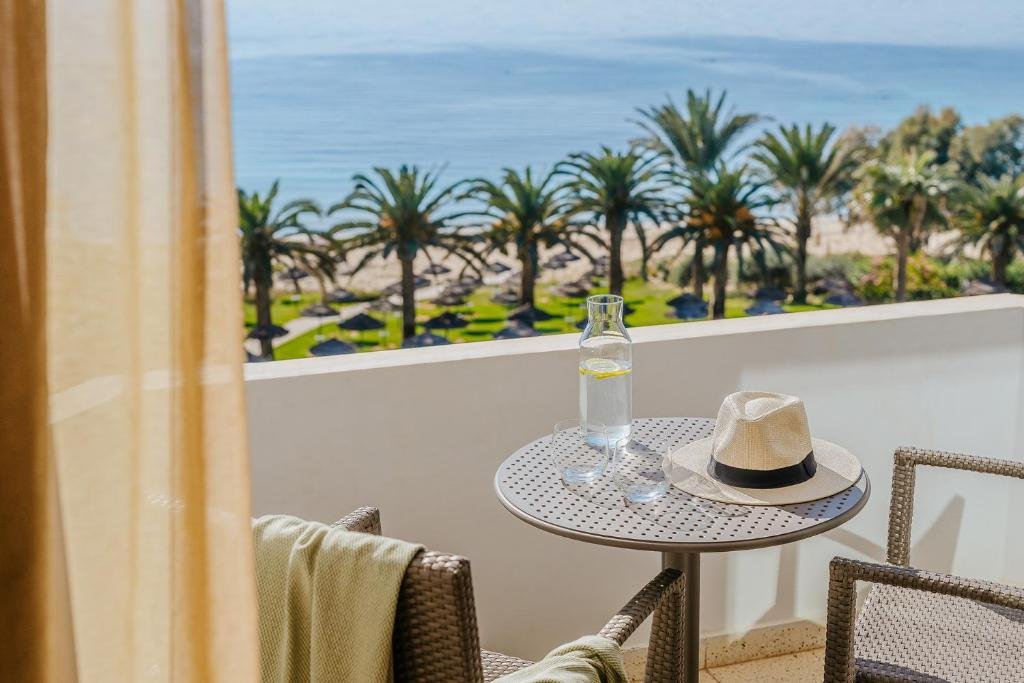
The beach in front of the hotel is beautiful, with fine sand and clear water that is perfect for swimming. A nice bonus: sun loungers are reserved for guests for the full stay, which removes the classic morning towel-war nonsense.
The building itself is large and not exactly boutique-chic, but the hotel has a spacious, very well-kept garden area, which makes the whole place feel much more relaxed and comfortable.
Our conclusion: A great pick if you want to stay directly on a beautiful beach and enjoy the comfort of a full-service hotel.
7. Practical Travel Tips: Arrival, Transport, and Getting Around
How Do I Get to Ayia Napa?
Cyprus has two international airports: Larnaca and Paphos. Direct flights are available from many European cities, and flight times from Central Europe are usually around 3 to 3.5 hours.
For Ayia Napa, Larnaca Airport is the most convenient choice. From there, it takes about 45 minutes by car to reach Ayia Napa.
We recommend renting a car for your Cyprus trip, especially if you want to visit beaches, Cape Greco, and nearby towns independently. We booked our rental car through DiscoverCars and picked it up directly at Larnaca Airport.
How Do I Get Around Ayia Napa?
Our recommendation is simple: rent a car. It gives you the freedom to explore the best beaches, viewpoints, and coastal stops at your own pace.
If you do not feel comfortable driving, you can still visit many highlights as part of a guided tour or boat trip. Your hotel can usually help with local options too.
Which Guided Tours Are Worth Booking?
Many sights around Ayia Napa are easy to visit independently, but a few tours are genuinely useful — especially if you want to see the coast from the water or avoid dealing with logistics.
- Lazy Day Cruise, Turtle Cove, Blue Lagoon & Lunch
- Guided Tour to Cape Greco & Sea Caves
- Kayak Tour to the Sea Caves
How Many Days Should I Spend in Ayia Napa?
It depends on the type of trip you want. Ayia Napa is one of the most popular places in Cyprus for a classic beach holiday, so many travelers stay for around one week.
We visited as part of a Cyprus road trip, with Ayia Napa as our first stop. If you want to see the best beaches, visit Cape Greco, and still have time to relax, we would recommend three to four nights.
- 20 Best Beaches in Cyprus (2026): Most Stunning Beaches You Can’t Miss
- What to See in Troodos Mountains (2026): Villages, Hikes, Wineries & Monasteries
- Most Unique Hotels in Cyprus (2026): Best Beach Resorts, Boutique Stays & Apartments

- An Epic Cyprus Road Trip Itinerary in 2026: From Ayia Napa to Trodos Mountains

- 12 Hidden Gems In Cyprus Worth The Detour in 2026