
Writing lived-in travel guides from long stays and real routes
Golden deserts, turquoise wadis, dramatic mountains, ancient forts, and beaches where sea turtles nest — Oman is one of the best destinations in the Middle East for a family adventure.
Safe, welcoming, and easy to explore by car, Oman is a giant outdoor playground where kids can swim in natural pools, ride camels, explore castles, and sleep beneath the desert stars.
In this Oman family itinerary, we’ll take you from Muscat to the spectacular landscapes of the Hajar Mountains, Wahiba Sands, and Oman’s beautiful coastline, sharing the best family-friendly stops, places to stay, and practical tips for an unforgettable road trip.
Planning a Family Trip to Oman? Read These Guides Next!
From swimming in spectacular wadis to exploring Muscat with little adventurers, these guides will help you make the most of your Oman road trip.
- Muscat with Kids: Best Family-Friendly Things to Do – Discover the capital’s best attractions, cultural sights, and fun activities for children.
- Best Wadis in Oman: Spectacular Natural Swimming Spots – Find turquoise pools, dramatic canyons, and unforgettable outdoor adventures for your itinerary.
Table of Contents
Oman Family Itinerary: How Many Days Do You Need?
We spent 12 days travelling around Oman, and for a family trip, that felt just about right. You can certainly cover the same route faster, but when you’re travelling with children, having the occasional afternoon by the pool instead of racing to the next fort is never a bad thing.
If you have two weeks in Oman, you can follow this Oman family itinerary at a comfortable pace and still have some breathing room. If you only want to see the country’s biggest highlights, one week is possible, but expect much longer days and considerably less lounging around.
For us, 10–12 days strikes the best balance between desert camps, mountain scenery, wadis, beaches, cultural stops and enough downtime to remember that this is supposed to be a holiday.
Getting Around Oman With Kids
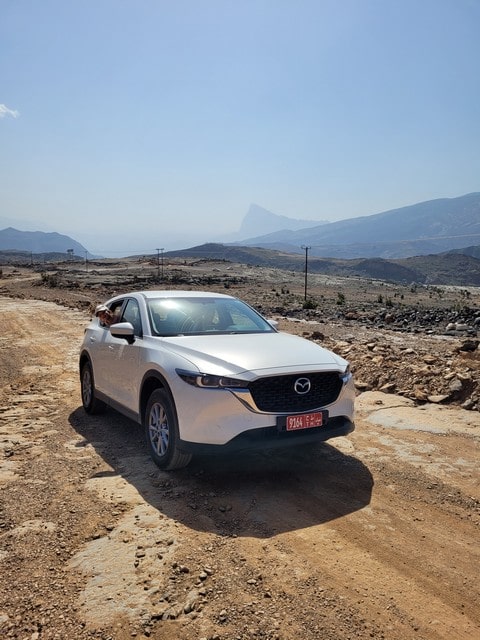
For this Oman itinerary, renting a car is by far the easiest option.
Oman does have public transport, but reaching many of the wadis, mountain areas and desert stops on this route without your own vehicle can be complicated. You would often need additional taxis, transfers or organised tours, which can quickly become more expensive than a rental car when you’re travelling as a family.
For our route, we recommend considering a 4×4, particularly if you plan to visit Jebel Shams. The final section of the road into the mountains can be rough, and having a more capable vehicle makes the journey considerably easier.
That said, a 4×4 usually costs much more than a standard rental car. If Jebel Shams isn’t high on your Oman wish list, it’s worth comparing the price difference before automatically upgrading.
We rented our car at Muscat Airport through Discover Cars. Insurance was included, and the excess would be refunded in case of damage, which made the whole rental process feel refreshingly straightforward.
You can check car rental in Muscat with Discover Cars here.
Our Oman Family Itinerary
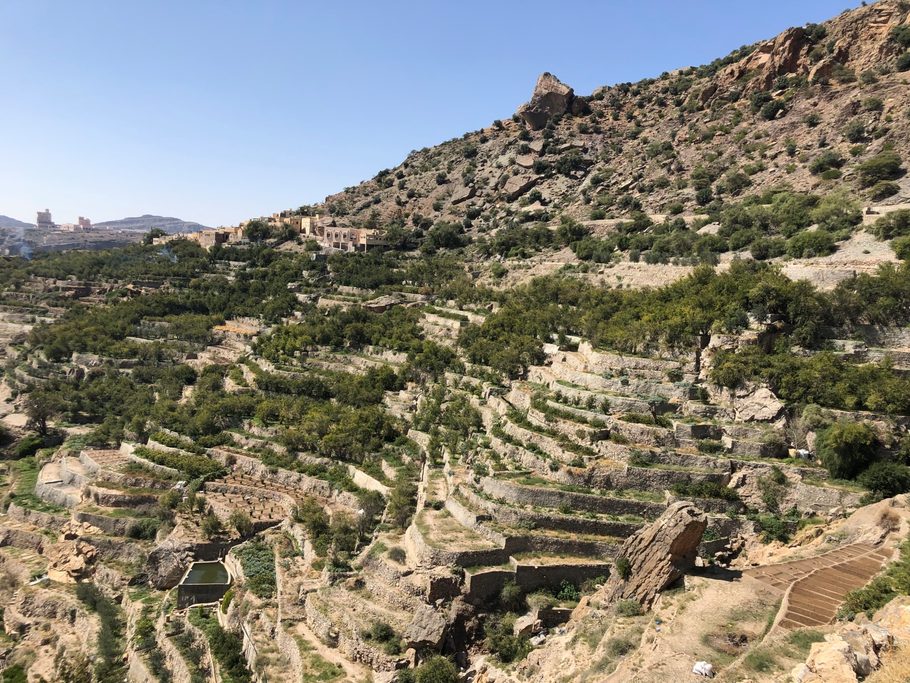
One thing quickly becomes obvious when you start planning an Oman road trip: most first-time visitors end up following a fairly similar loop through northern Oman.
And honestly, there is a reason for that.
Within a relatively compact area, you can combine Muscat, enormous mountain canyons, traditional towns, desert dunes, turtle beaches and some of the country’s most beautiful wadis.
Another big advantage for families is that, on this itinerary, most driving days stay below three to four hours. There are a couple of longer stretches, but nothing compared with attempting to cover the entire country.
You can drive the loop clockwise or counter-clockwise. One thing worth planning around is Nizwa’s Friday goat market. If seeing it is important to you, arrange your route so that you wake up in Nizwa on Friday morning.
Our 12-Day Oman Family Itinerary
Day 1: Muscat
Day 2: Muscat
Day 3: Muscat
Day 4: Jebel Shams
Day 5: Jebel Shams → Bahla → Jabreen → Nizwa
Day 6: Nizwa
Day 7: Wahiba Sands
Day 8: Wadi Bani Khalid → Ras Al Jinz
Day 9: Wadi Shab / Bimmah Sinkhole
Day 10: Wadi Shab → Muscat
Day 11: Daymaniyat Islands
Day 12: Muscat and departure
Days 1–3: Muscat
Our first day in Oman was essentially swallowed by travel.
We flew from Istanbul to Muscat, spending roughly 12 hours in transit before arriving at around 2 a.m. If your flight arrives at a similarly antisocial hour, don’t try to cram sightseeing into the first morning. Oman will still be there after breakfast.
Day 2: A Slow Start in Muscat

We deliberately kept our second day easy.
We stayed at the Maani Muscat Hotel and Suites, which worked particularly well for the beginning of the trip thanks to its large pool and generous breakfast.
Lunch and dinner were also available at reasonable prices, so we didn’t have to immediately launch ourselves into Muscat in full sightseeing mode.
There’s a large Carrefour close to the hotel, which was useful for stocking the car with water, drinks, fruit and snacks for the road trip ahead.
You can check rates at Maani Muscat Hotel and Suites here.

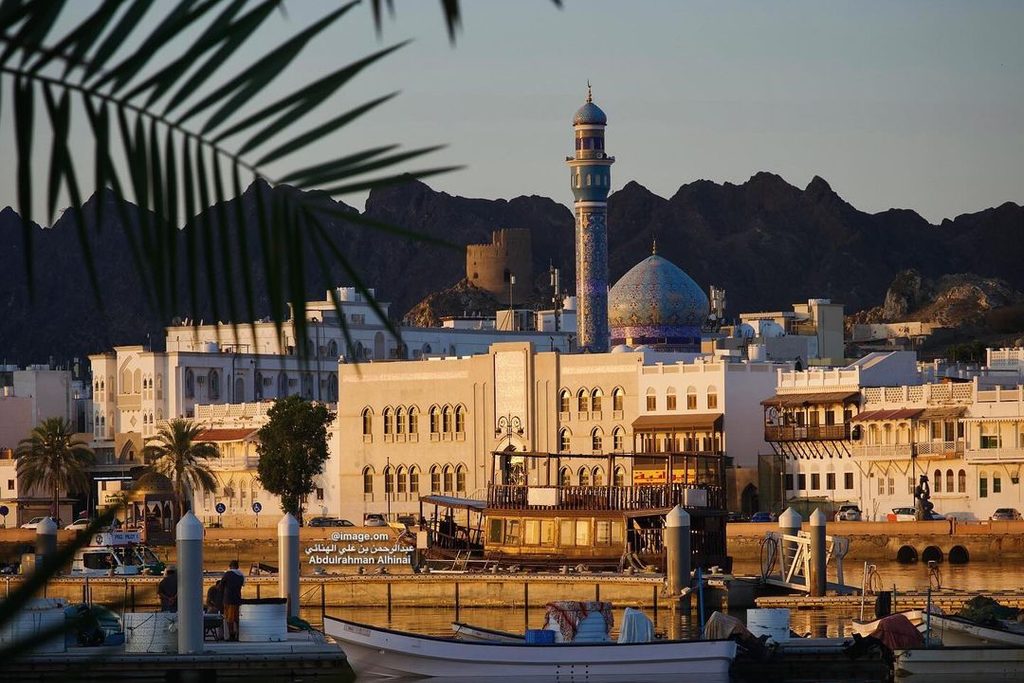
Day 3: Sultan Qaboos Grand Mosque, Mutrah and the Opera House
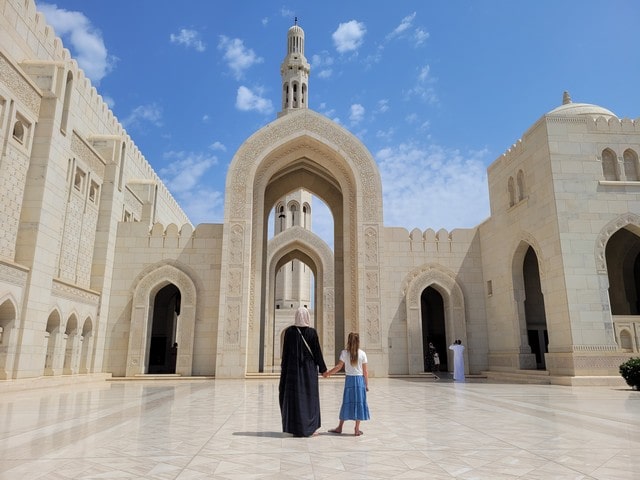
On day three, we finally started exploring Muscat properly.
Our first stop was the magnificent Sultan Qaboos Grand Mosque. Non-Muslim visitors can visit in the morning, so this is one attraction you don’t want to leave until late afternoon.
It is easily one of Muscat’s most impressive sights and well worth getting up early for.
Afterwards, we drove towards the city centre and wandered around the souks. An hour was enough for us to explore, soak up the atmosphere and browse the stalls.
We then continued to the Royal Opera House Muscat. We only explored the exterior rather than going inside, before heading to Café Bateel for lunch.
By that point, sightseeing motivation had started losing its battle with the hotel pool, so we spent the rest of the afternoon back at Maani Muscat Hotel and Suites.
For more family-friendly Muscat ideas, see the guide to Muscat with Kids.
Days 4–5: Jebel Shams
Day 4: Muscat to Jebel Shams
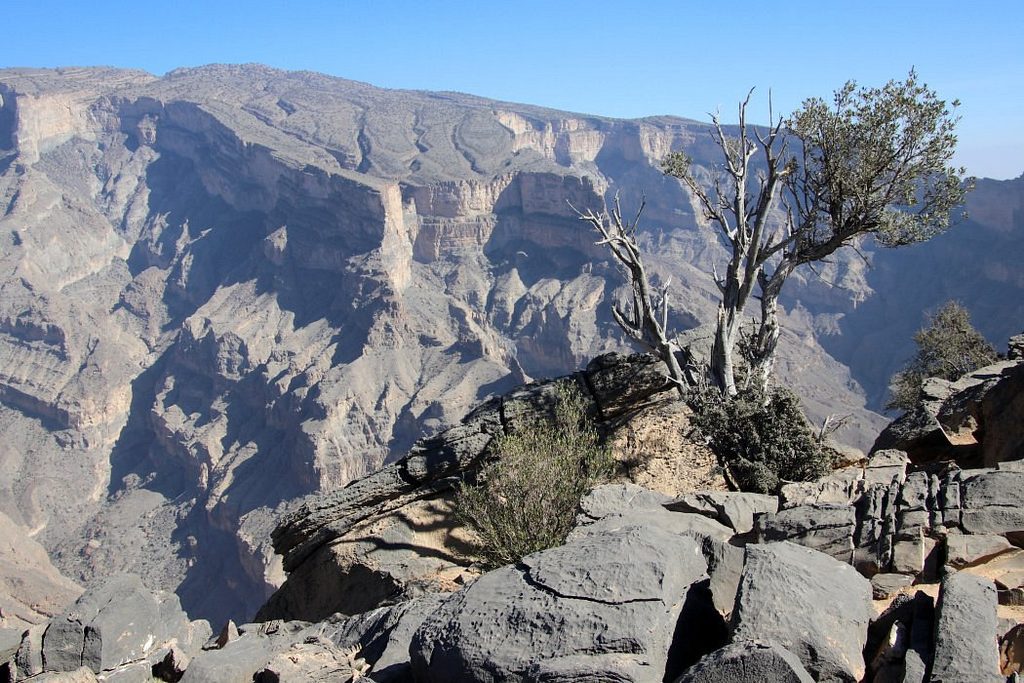
We didn’t rush out of Muscat.
After sleeping in, having breakfast and squeezing in another few hours around the pool, we left around midday for Jebel Shams.
The drive from Muscat takes approximately 3.5 hours.
We had already read plenty of warnings about the final section of road into the mountains. It is rough in places, but with our 4×4 it wasn’t a problem, and the drive itself was spectacular.
We arrived at Sama Jabal Shams Resort at around 4 p.m.
That’s actually a good time to arrive because there isn’t a huge amount to do immediately around the resort.
Children can use the playground, while a short walk into the surrounding landscape gives you beautiful mountain views.
We booked half-board and ate dinner at the hotel, which made sense in such an isolated location.
You can check Sama Jabal Shams Resort prices and availability here.
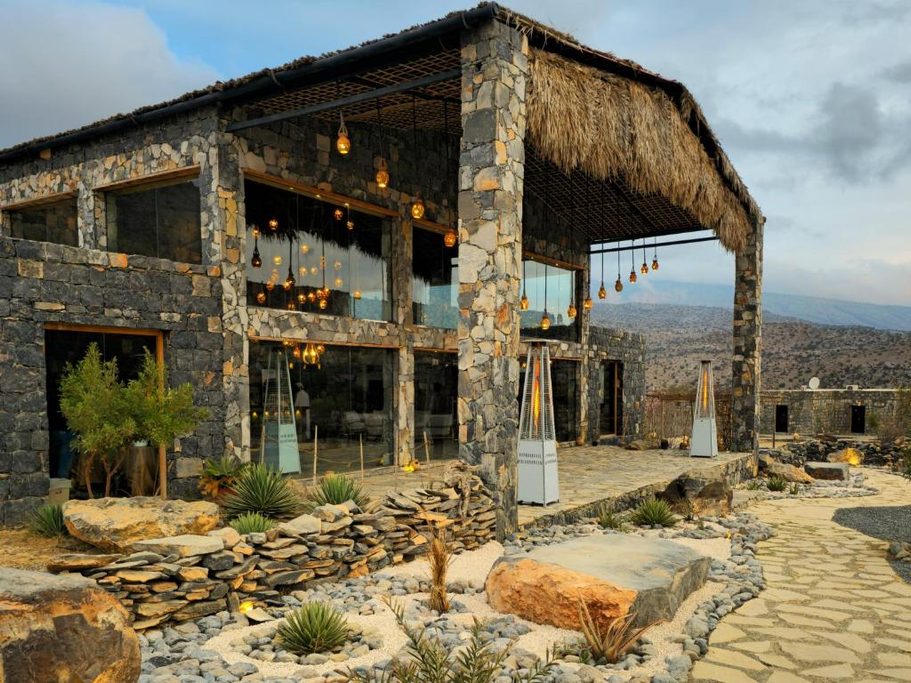
Day 5: Hiking the Jebel Shams Balcony Walk
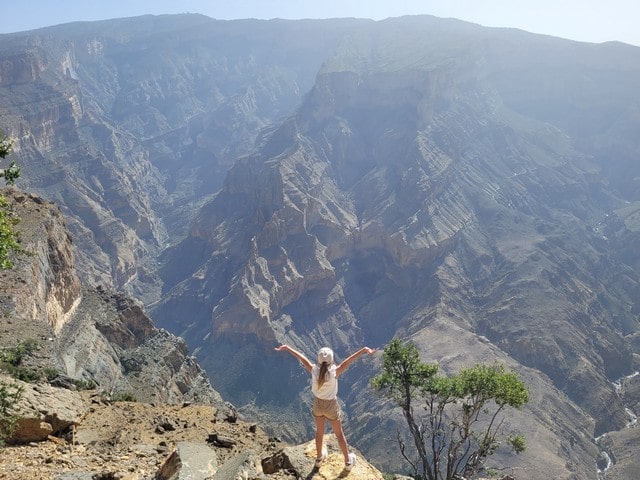
Day five starts early because this is the morning for the Jebel Shams Balcony Walk.
The trail runs along the edge of the spectacular canyon often nicknamed the Grand Canyon of the Middle East.
Allow around three to four hours for the hike, although one advantage when hiking with children is that you can simply turn around whenever everyone has had enough.
The views are magnificent almost immediately, so you don’t necessarily need to complete the whole trail for the experience to be worthwhile.
After the hike, we packed up and headed towards Nizwa, making two worthwhile stops along the way.
Stop 1: Bahla Fort
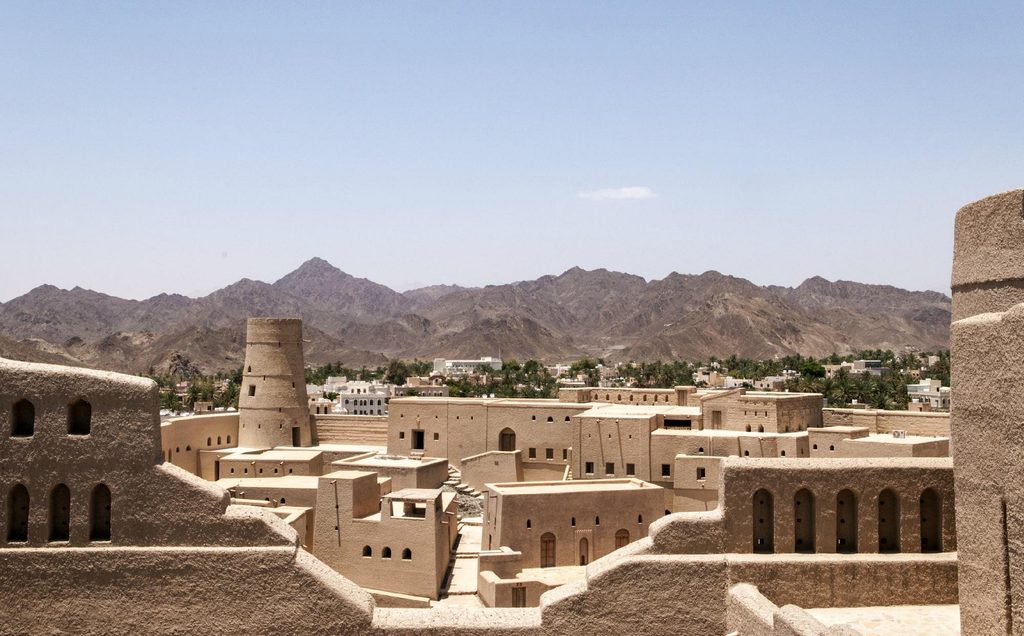
Our first stop was Bahla Fort, around 1.5 hours from Jebel Shams.
It’s an impressive historic fortress and one of those places where you suddenly realise just how photogenic brown stone can be when surrounded by Omani mountains and palms.
Stop 2: Jabreen Castle
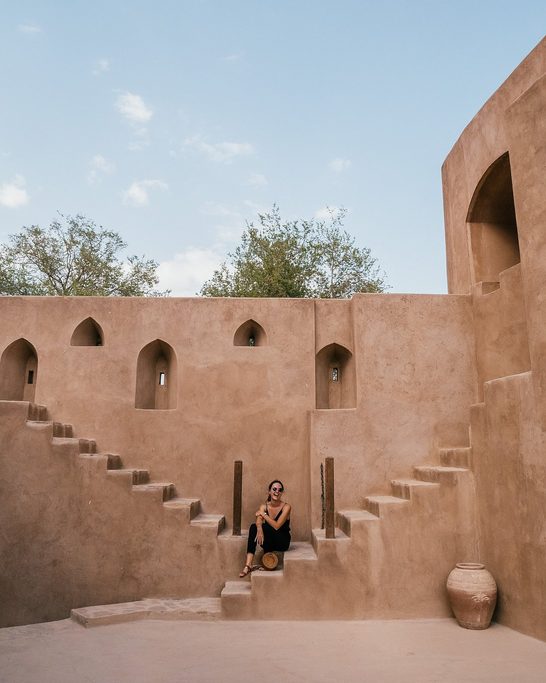
From Bahla, Jabreen Castle is only about 15 minutes away.
Both are worth visiting, but if you’re short on time and need to choose only one, we’d pick Bahla Fort.
From Jabreen, the drive to Nizwa takes roughly another 30 minutes.
We spent the night at the Busta Inn, right in the centre of Nizwa.
Its greatest advantage is the location. There’s also a small swimming pool, although we wouldn’t choose the hotel specifically for the pool.
That evening, we headed out for dinner in central Nizwa.
Day 6: Nizwa
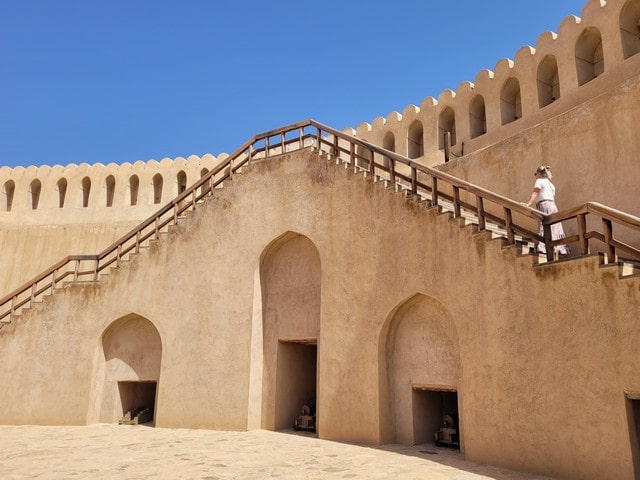
We intentionally arranged the itinerary so we’d be in Nizwa on Friday morning, when the famous goat market takes place.
Our hotel was only about a five-minute walk away, so we headed there before breakfast.
Try to arrive at around 7 a.m. You’ll see locals buying, selling and inspecting livestock while crowds gather around the trading area.
We had expected it to feel quite touristy, but there were far more local visitors than we’d imagined, which made the experience much more interesting.
After the goat market, we returned for a relaxed breakfast and later wandered around Nizwa’s souks.
Rather than immediately driving to the desert, we decided to spend a second night in Nizwa.
This gave us a slower day and stopped the itinerary from becoming one long sequence of packing bags, driving and unpacking them again.
In the afternoon, we visited Nizwa Water Park.
It’s a fun option when travelling with children, but be aware that the park has a strict swimwear dress code. Check the requirements before visiting so you don’t arrive ready for the slides only to discover that your swimwear isn’t accepted.
That evening, we wandered around atmospheric central Nizwa again and had dinner at Tamrah Restaurant, where the views are a major part of the appeal.
Day 7: Wahiba Sands
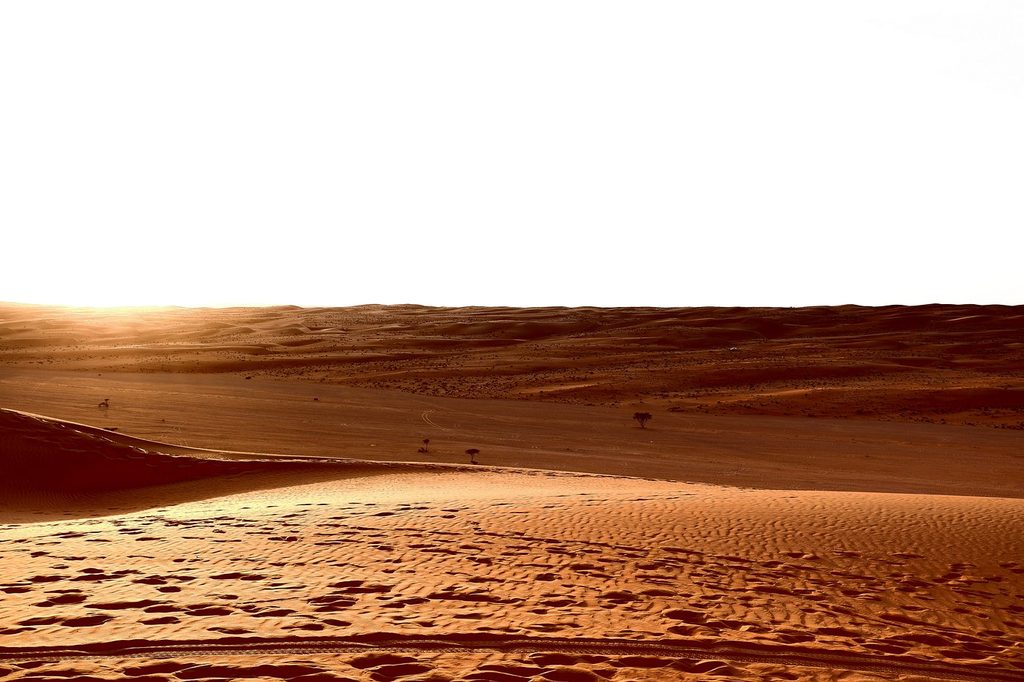
Now for the desert.
We started the morning at Nizwa Fortress, conveniently located in the town centre.
It’s another extremely photogenic stop and well worth seeing before leaving Nizwa.
From there, we drove towards Wahiba Sands, a journey of roughly three hours.
We spent quite a while debating whether to drive our own vehicle through the desert to the accommodation or arrange a transfer.
In the end, we chose the sensible option and let someone else worry about sand.
We parked on the edge of the desert, transferred our luggage into the guide’s vehicle and continued from there.
We stayed at Thousand Nights Camp, and this was one of the accommodation highlights of the trip.
Despite being surrounded by desert, the camp has comfortable rooms and even a swimming pool.
We spent the first few hours doing very little, which felt entirely appropriate.
There was also sandboarding. Success levels varied.
Dune Bashing at Sunset
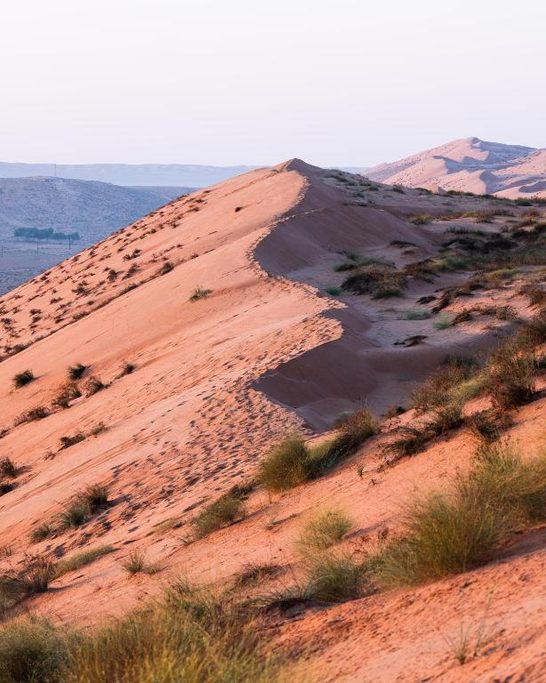
Later in the afternoon, a guide collected us for dune bashing.
In practical terms, this means climbing into a 4×4 and letting someone who knows the desert extremely well fling it up and down enormous sand dunes.
Our daughter absolutely loved it. The more she laughed and clapped, the more enthusiastic the driving became.
At one point the jeep got stuck in the sand, which briefly looked dramatic but was apparently just another afternoon at the office for our guide.
We finished the excursion watching the sunset over the dunes.
The colours across Wahiba Sands at this time of day are extraordinary and easily justify spending at least one night in the desert.
Dinner was a buffet back at the camp.
You can check Thousand Nights Camp availability here.
Day 8: Wadi Bani Khalid and Ras Al Jinz
After breakfast, we left the desert early and headed towards Wadi Bani Khalid.
The drive from the desert camp takes roughly 1.5 hours.
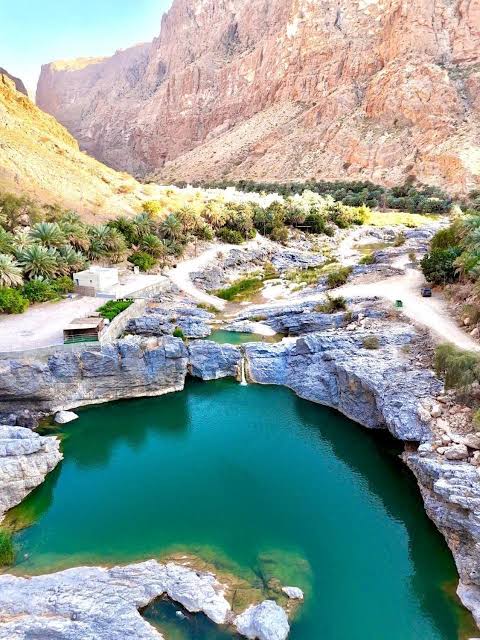
Wadi Bani Khalid is one of those places that makes Oman’s landscape slightly difficult to comprehend: you drive through dry, rocky terrain and suddenly arrive at bright blue natural pools surrounded by palms and canyon walls.
It’s also a good wadi to visit with children because you can spend several hours swimming and cooling off.
We explored part of the valley and also visited a cave before continuing towards Ras Al Jinz.
From the wadi, expect approximately another three hours of driving to Ras Al Jinz, making this one of the longer road days on the itinerary.
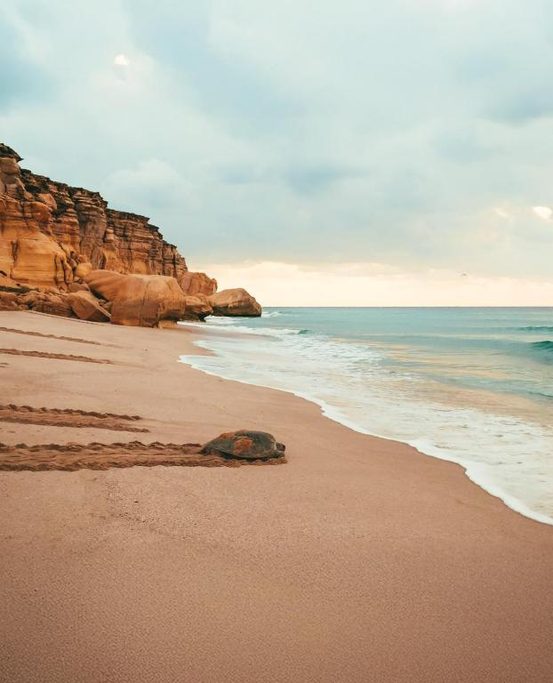
We stayed at Sama Ras Al Jinz Resort, close to the turtle reserve.
After checking in, we visited the beach and stopped for a drink at a nearby beachfront resort.
Later that afternoon, we had a turtle-watching excursion booked.
For us, the experience didn’t live up to expectations, so this is one stop we’d suggest researching carefully before deciding whether to include it.
Day 9: Wadi Shab and Bimmah Sinkhole
The following morning, we continued towards Wadi Shab.
We booked Wadi Shab Beach Villa, an apartment conveniently close to the wadi.
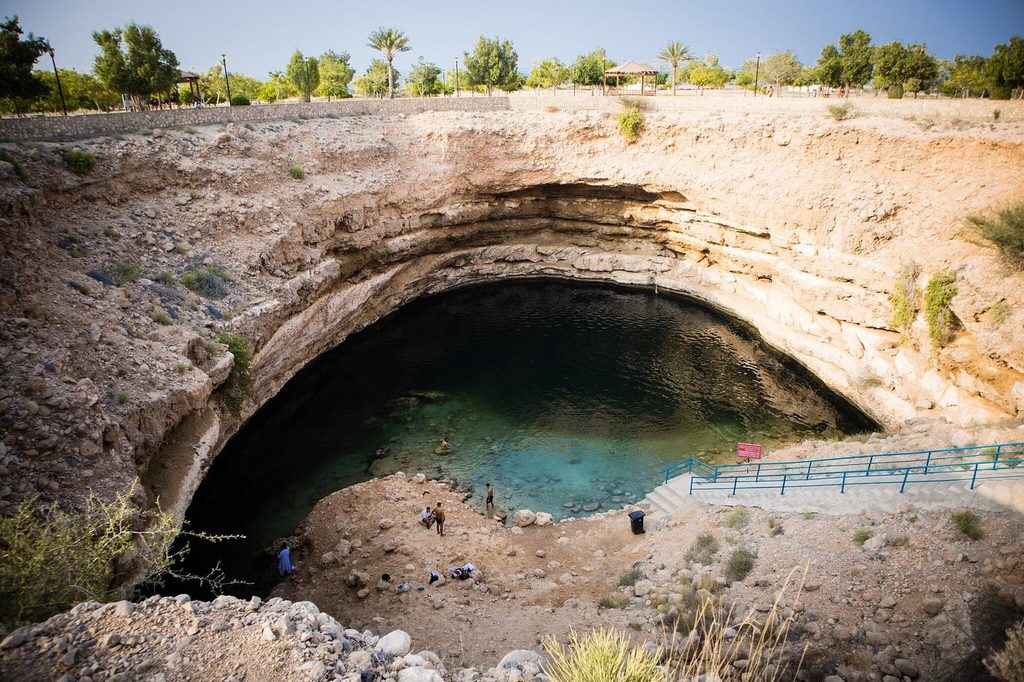
After checking in, we drove about 20 minutes to Bimmah Sinkhole.
It’s an easy stop where you can take a quick swim in the striking natural pool before continuing your journey.
We then headed back to the apartment and spent the rest of the afternoon around the pool.
The bonus?
From the property we could see turtles swimming in the sea throughout the day.
The owner also arranged food for us that evening, so instead of searching for a restaurant, we had dinner at the apartment.
Our original plan had been to hike Wadi Shab that afternoon, but after seeing how crowded it could become later in the day, we changed strategy.
That turned out to be a very good decision.
Visit Wadi Shab Early
The next morning, we headed to Wadi Shab as early as possible and were among the first visitors.
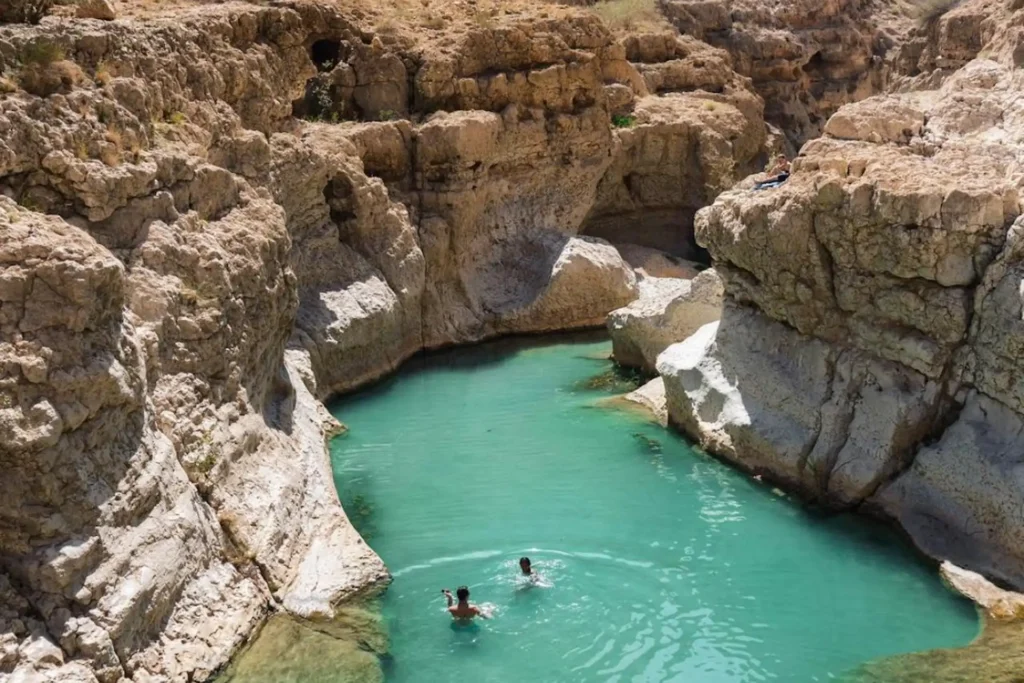
Wadi Shab is one of Oman’s most spectacular wadis, combining hiking, swimming and narrow canyon scenery.
Unfortunately, heavy rain in the days before our visit meant water levels were much higher than normal.
That made parts of the hike considerably more difficult and prevented us from reaching the cave at the end.
Even so, Wadi Shab remains one of the highlights of this Oman itinerary.
Days 10–12: Back to Muscat
Day 10: Wadi Shab to Muscat
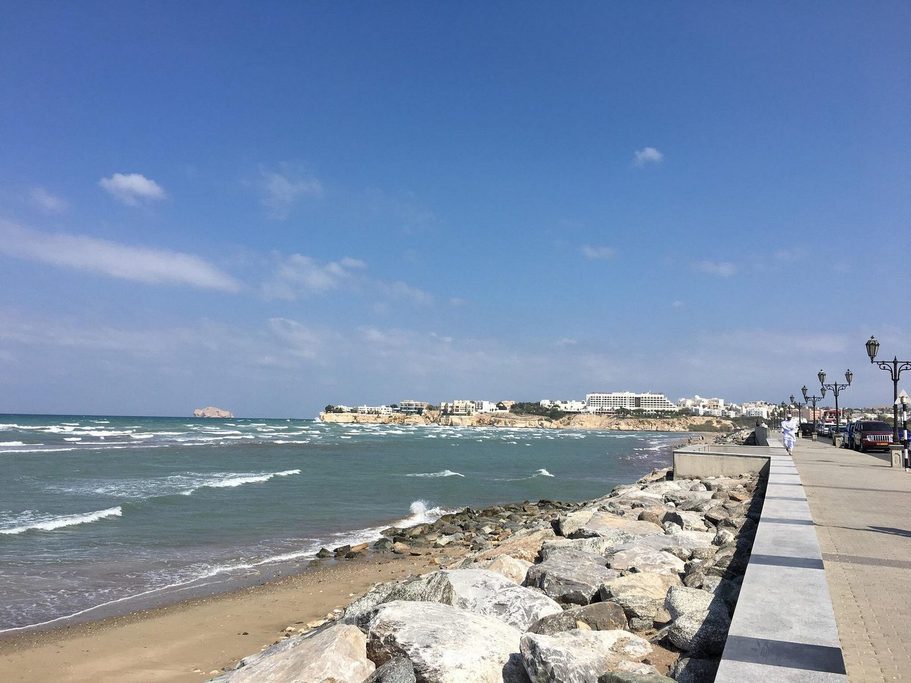
We stayed at Wadi Shab until around 2 p.m., then drove back towards Muscat.
Originally, we had booked a different hotel for the final part of the trip, but we had enjoyed the Maani Muscat Hotel & Suites so much at the beginning that we booked it again.
Sometimes familiarity wins.
After days of mountains, desert roads and wet hiking shoes, an uncomplicated afternoon by the pool felt exactly right.
Day 11: Daymaniyat Islands
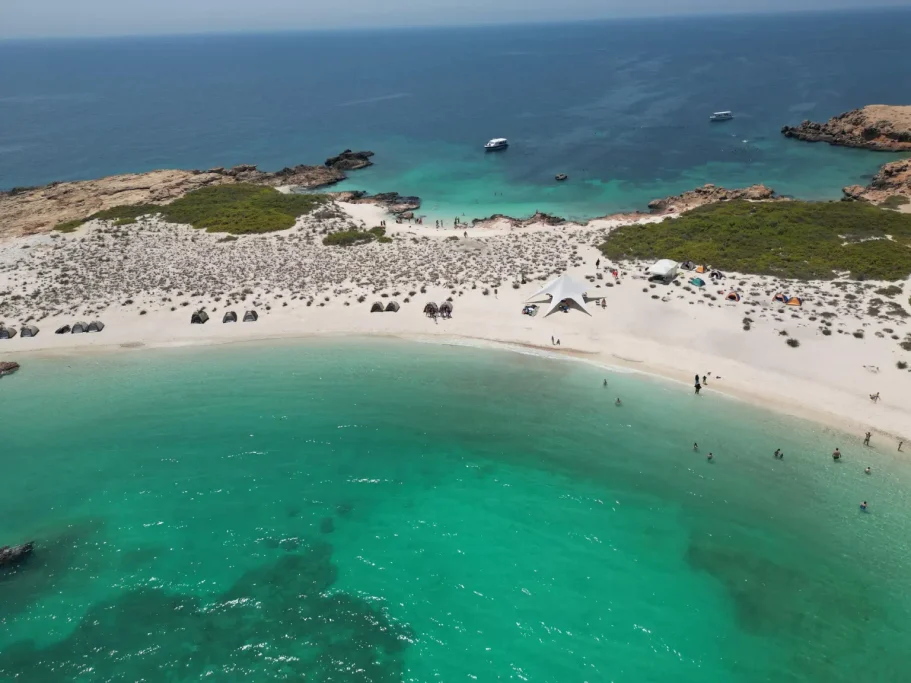
The next morning, we got up early for a boat trip to the Daymaniyat Islands.
If you enjoy snorkelling or diving, this is one of the experiences we’d strongly consider adding to a Muscat stay.
The waters around the islands are home to tropical fish, turtles, rays and sharks, and in the right season you may even have a chance of seeing whale sharks.
We didn’t see any whale sharks during our visit, but the trip was still one of the most memorable days of the itinerary.
Day 12: Final Day in Muscat
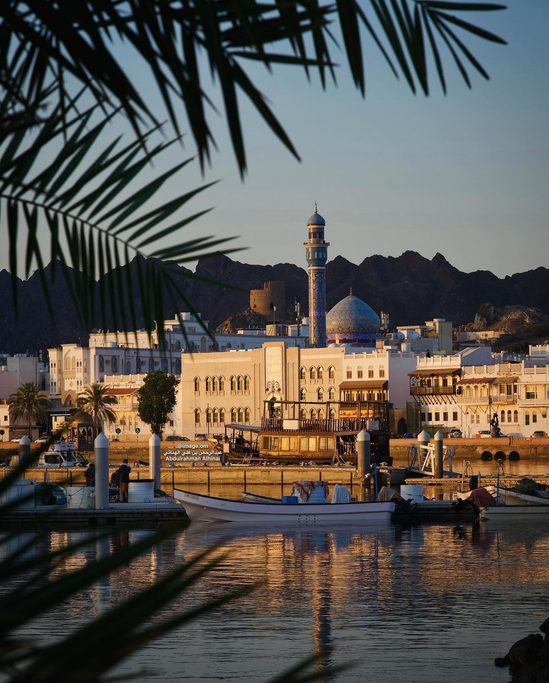
Our final day was deliberately uneventful.
We packed, spent a little more time enjoying the hotel pool and then drove to Muscat Airport, where we returned the rental car before flying home.
After 12 days on the road, we’d seen mountains, deserts, forts, souks, beaches, wadis and some of the most dramatic landscapes in Oman — without making the trip feel like an endurance test.
For families in particular, that’s why we’d recommend roughly 10–12 days for an Oman road trip rather than trying to squeeze the same route into a week.
You can certainly travel faster.
But Oman is much better when you occasionally stop moving.