
Travel writing based on first-hand experience
We roll into Muscat a little sun-dazed, and Mandarin Oriental, Muscat immediately flips the switch: white-stone calm, palms, and that soft hush that makes you lower your voice without meaning to. Set in Shatti Al Qurum with the sea on one side and the mountains on the other, it’s the kind of place that turns a simple “just one night” into “okay, maybe two.”
In this Mandarin Oriental Muscat review, we’ll tell you exactly what you want to know before you book: whether the location is genuinely practical, which rooms feel worth the upgrade, how the food stacks up, and what the overall vibe is when you’re actually living in it—not just photographing it. If you’re debating whether it’s “special enough” to justify the splurge, let’s answer that fast (and honestly).
Table of Contents
Mandarin Oriental Muscat Review
The Art and Then Some’s honest opinion: 9/10
We roll into Mandarin Oriental Muscat and immediately get that “new hotel” thrill… without the awkward “still smells like paint” energy. Opened in February 2024, this is the brand’s fifth property in the Gulf, and it arrives like a polished cameo between mountains and sea, staring straight out toward Shark Island. It’s a bridge—international modernity on one side, Omani culture on the other—and somehow it doesn’t wobble.
Luxury here isn’t loud; it’s the small, obsessive stuff: filtered light that makes you look more rested than you are, hand-carved doors you’ll definitely photograph, and fresh rose bouquets that keep showing up like they’re part of the staff. The hotel’s got 103 rooms and 47 suites, a holistic spa, five restaurants, a stunning swimming pool, and an exclusive Amouage boutique. It’s brand-new, yet it already feels oddly “always been here,” lounging in the shade of palm trees like it owns the coastline.
The location: 8/10
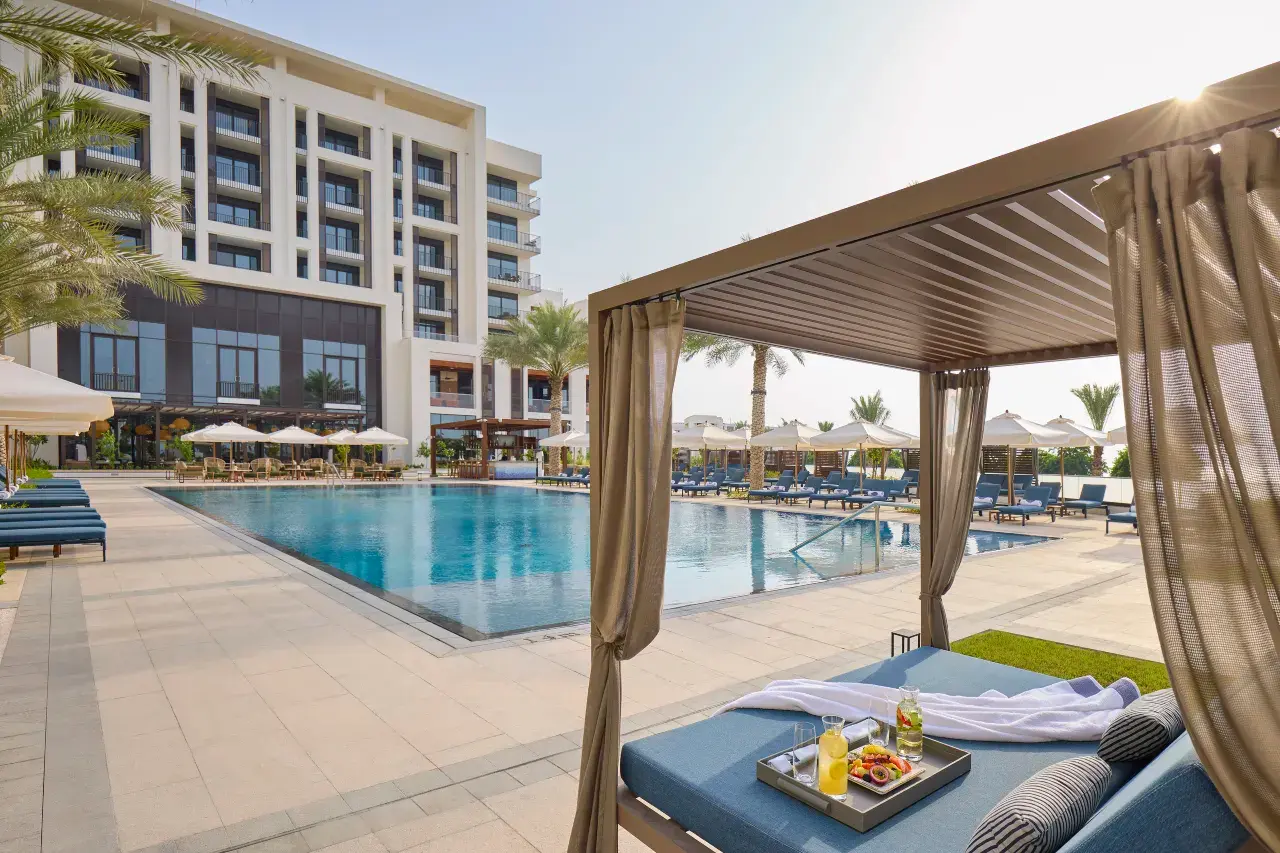
Location-wise, we’re planted on the beachfront in Shatti Al Qurum, which is basically the sweet spot if you want Muscat’s culture on tap and a seaside exhale. You’re a stone’s throw from the Royal Opera House and about a 10-minute drive from Mutrah Souk. It’s not a classic “sealed-off resort bubble” — think of it more as a clever hybrid: urban hotel energy with a coastal reset button.
The trade-off? The airport isn’t far, so you may catch occasional noise—especially in the mountain-facing rooms. If you’re a light sleeper, that’s your cue to book thoughtfully (or embrace the sea side and let the waves do the talking).
The decor: 9/10
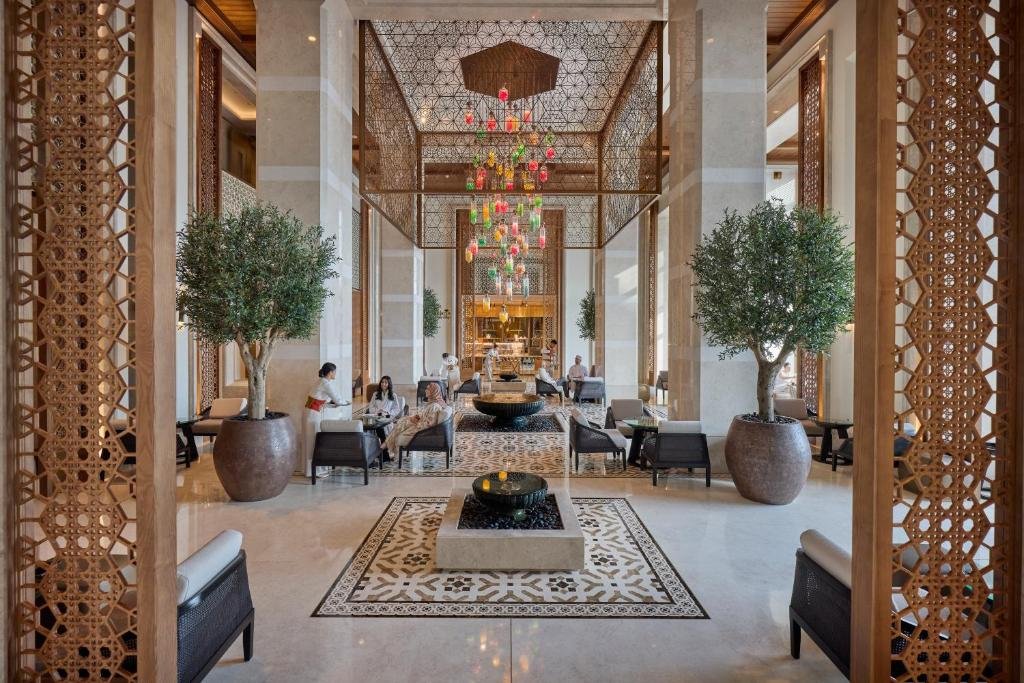
If you like design that whispers “we have taste” instead of screaming “we have money,” you’ll be very happy here. The signature of French architect Xavier Cartron is everywhere—but never in a try-hard way. We get luminous contemporary lines paired with Omani artistry: fine marble floors, openwork panels inspired by mashrabiya screens, archways that play games with light, and ceilings that feel sculpted rather than simply built.
In the lobby, there’s a monumental wooden fan by Shirish, created by Omani artist Alia Al Farsi. Each strand represents one of Oman’s eleven regions—a big, quiet statement about identity and diversity. Fountains nod to the Sultanate’s major regions, while a colored glass chandelier (custom-made in the Czech Republic) draws inspiration from Middle Eastern spices and basically dares your eyes to stop wandering.
Artworks are scattered like breadcrumbs in a narrative: pieces such as Polina Pichenko’s work on rosewater distillation in Jebel Akhdar stretch the story across matter, light, and time. In other words: you’re not just checking in, you’re stepping into a curated mood.
The rooms: 9/10
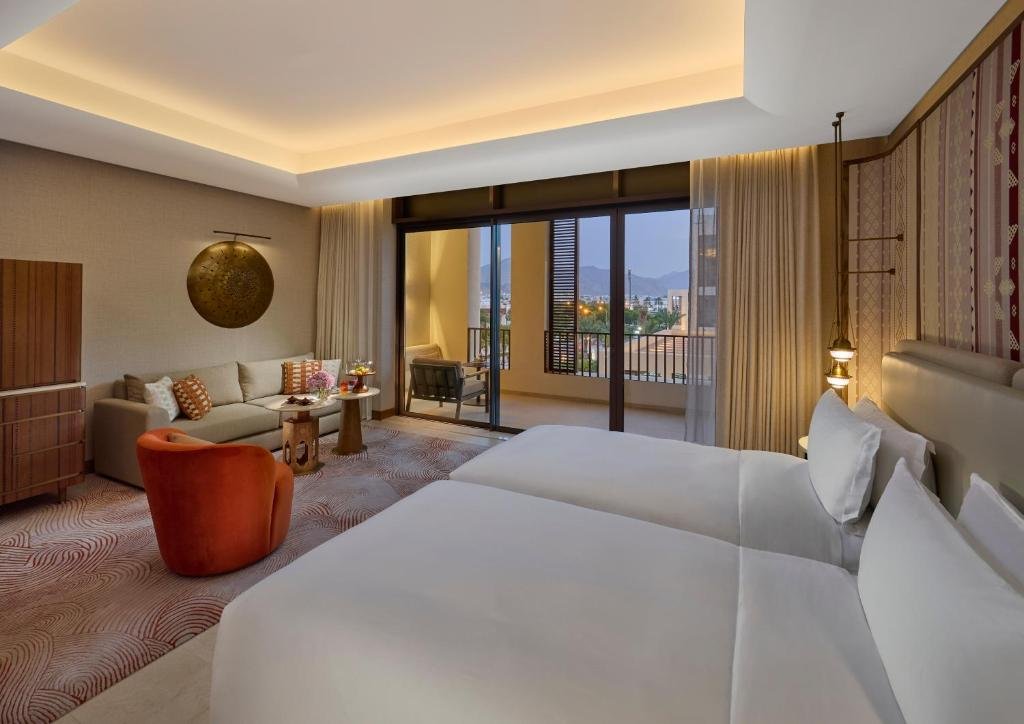
Here’s where we start doing math in our heads and nodding approvingly: the hotel has 150 rooms, and even the smallest starts at a generous 55 square meters. That’s “we can actually unpack” space. Sea-side rooms lean into blue tones that echo Gulf lagoons; mountain-side rooms go terracotta, picking up the ochre shades of the nearby massifs.
Materials and motifs keep the story local without turning the room into a museum: pink desert marble, local ashwood, and subtle nods to the kuma (traditional cap) and the khanjar (ceremonial dagger). The playful touches help too—like a chess-inspired bar unit in some rooms—proving the design isn’t just about looking pretty, it’s about character.
Special applause for the marble bathrooms: deep soaking tubs and rain showers that make you “accidentally” take your time. Suites stretch out further—some with two bedrooms, others with large panoramic terraces—and the walk-in closets are properly oversized (as in: you won’t be living out of a suitcase like a gremlin). Add discreet room service, intuitive tech, and legitimately excellent bedding, and yep, the whole thing lands firmly in the “this is how it should be done” category.
The service and facilities: 10/10
This is where the hotel flexes—politely. Service blends Omani hospitality with that famously precise Mandarin Oriental rhythm: attentive, discreet, and so detail-oriented you’ll wonder if they can read minds. A cosmopolitan team of 250 staff members from 50 nationalities keeps everything smooth from the first hello to the last goodbye.
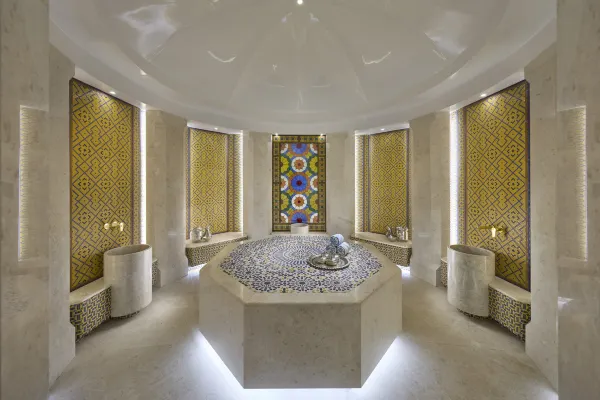
The spa is built like a sanctuary: hammam, sauna, treatment suites with views, and rituals that draw from local and Asian traditions. Some treatments use the signature Anchorage fragrance—frankincense, rose, and ambergris—which is the kind of scent memory that follows you home and makes your regular shower feel slightly embarrassing.
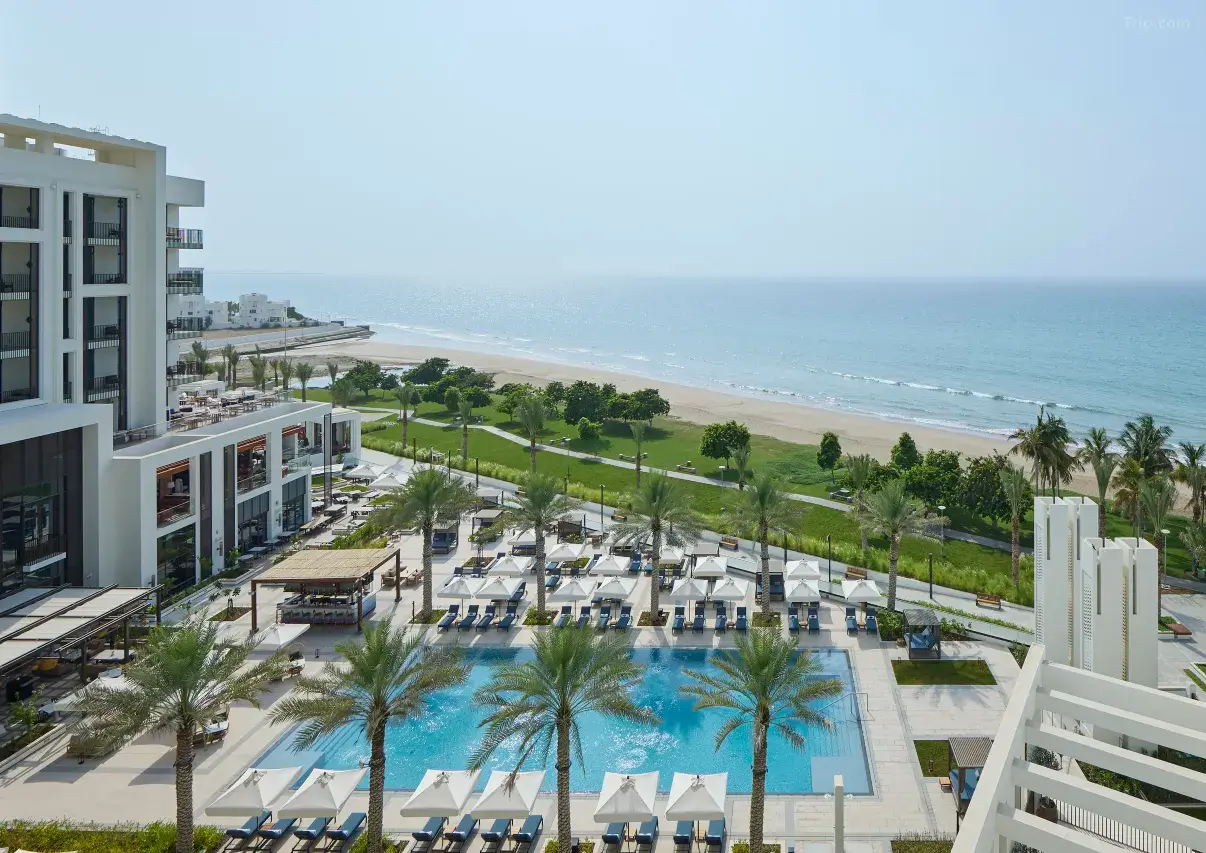
On top of that: a large outdoor pool, fitness center, and calm spaces for relaxation and meditation. And then there’s the concierge, who can stitch together cultural and nature-heavy days: guided visits to the Sultan Qaboos Grand Mosque and the Royal Opera House, souk strolls, and deep dives into Muscat’s architecture and history. Want to go bigger? The hotel can arrange excursions to wadis, ancient forts, and mountain villages, typically with experienced English-speaking local guides.
And for fragrance lovers (or anyone who wants a very Omani souvenir moment): the hotel hosts the first Amouage boutique ever opened in a hotel. It’s intimate, all light-and-dark-wood drama, and you’ll get thoughtful guidance through the brand’s rare creations like you’re choosing a personality upgrade.
At the table and at the bar: 8/10
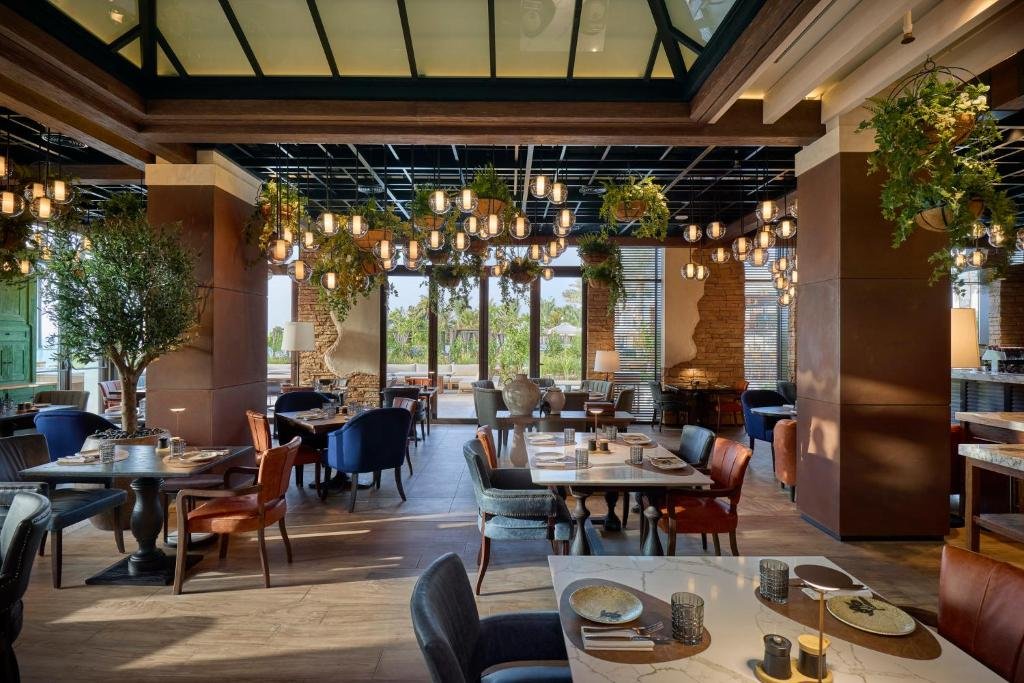
We’ve eaten our way through enough “luxury hotel restaurants” to be skeptical, but the culinary scene here earns its address. Essenza is the elegant Italian option, weaving Mediterranean ingredients with contemporary Omani touches. Rawya, by the pool, leans into local flavors and spice-route inspiration—perfect when you’ve been in the sun and want something that tastes like a story.
Sì Breeze and Sawa Lounge keep things lighter (afternoon tea, sunset cocktails, the whole “we’re just going to have one drink” lie). The Mandarin Cake Shop exists for the sweet-toothed among us who “just want a little something” and then leave with a box. Nights stretch out at the bar with a well-curated cocktail list and a few Omani signatures—like a rosewater-infused martini that feels both fancy and oddly refreshing.
Overall, the mix feels outgoing and generous—Levantine, Italian, and local accents, served with precise, attentive service that deserves a mention all by itself.
The price/quality ratio: 8/10
Let’s talk numbers, because you’re going to. Rates start at €450 per night for a double room including breakfast, taxes, and service, which is honestly strong value for this level of finish and service. For larger rooms, expect roughly €528– € 7,935 per night, depending on season and category.
Yes, it’s firmly high-end—and it’s priced like it knows it. But the amenities, the immaculate service, and the beachfront-in-the-city positioning make it feel justified. If you’re after authenticity and elegance without the “look at me!” luxury theatrics, this is an easy yes.
- Where To Eat In Muscat Oman (2026): 10 Best Restaurants For Varied & Generous Food
- 6 Best Luxury Hotels In Muscat Oman (2026): Real Luxury, Authentic character & Magical Setting

- Mandarin Oriental Muscat Review (2026)

- 1 Day in Muscat (2026): A Perfect Itinerary for First Timers
- Best Things To Do In Muscat (2026): Your Complete Guide to the City’s Highlights