
Travel writing based on first-hand experience
Discover Art Deco Marrakech —from the iconic Jardin Majorelle and Yves Saint Laurent Museum to vintage cafés and architectural gems. This self-guided walking tour reveals a stylish side of the Red City beyond the Medina.
Exploring Marrakech beyond the Medina?
Art Deco Marrakech is where the city suddenly changes costume. One minute we’re in the souks, dodging lanterns and motorbikes like heroic little pigeons; the next we’re in Guéliz, staring at 1930s façades, galleries, cafés, and modern Moroccan design. If you want the stylish side of Marrakech — less “lost in the Medina,” more “architectural detective with iced coffee” — these guides pair beautifully with this walk.
- What to Do in Guéliz Marrakech — the obvious next stop for museums, shopping, boulevards, galleries, and the modern side of the Red City.
- Famous Moroccan Architecture Styles — perfect if you want to understand how Art Deco, colonial buildings, riads, kasbahs, and zellige all fit into Morocco’s visual chaos.
- Best Art Galleries in Marrakech — for a creative Guéliz wander when façades are not enough and we need actual art on actual walls.
- Best Museums in Marrakech — ideal for pairing architecture with culture, design, photography, and contemporary Moroccan creativity.
- Best Things to Do in Marrakech — the big-picture guide for mixing Guéliz, the Medina, gardens, hammams, rooftops, and desert escapes.
- 3 Days in Marrakech Itinerary — useful if you want to slot this Art Deco walk into a proper city plan without turning your trip into a spreadsheet monster.
- Best Restaurants in Guéliz Marrakech — because after hunting down architecture, we deserve lunch. Obviously.
Table of Contents
What Is Art Deco?
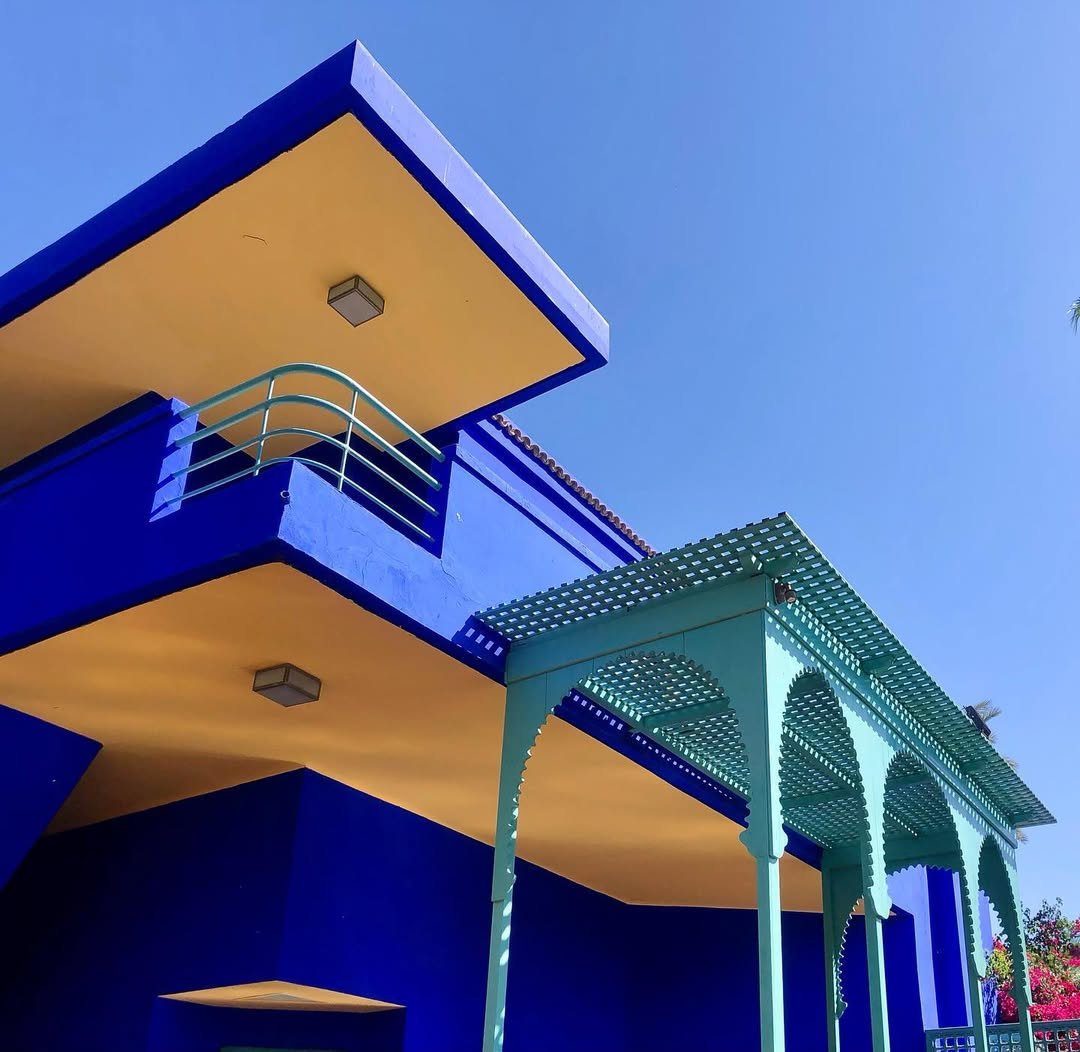
Emerging in the 1920s, Art Deco was a reaction to the intricate and organic style of Art Nouveau. Associated with glamour, luxury, and modernity, it used bold geometric forms, vibrant color contrasts, and rich materials.
Key architectural features include:
- Geometric shapes: Zigzags, fans, clean lines, and symmetry
- Stylized ornamentation: Bas-reliefs, sculptures, and abstract decoration
- Luxurious materials: Marble, chrome, glass, polished wood, concrete
- Color contrasts: Bold pairings like black and gold, blue and white
- Ribbon windows: Horizontal bands for light and views
- Vertical emphasis: Towers, pilasters, and slender lines
- Global motifs: Egyptian, African, and classical inspirations
- Diverse uses: Found in apartment buildings, hotels, theaters, train stations, post offices—even garages and gas stations
While not always opulent, Moroccan versions of Art Deco often offer a refreshing mix of simplicity and bold flair.
Leading Art Deco Architects in Marrakech and Morocco
A few names stand out for their influence in Morocco’s unique Art Deco scene, blending French styles with Moroccan culture:
- Henri Prost – French urban planner and architect, known for shaping Guéliz with a fusion of Art Deco and Moroccan elements.
- Albert Laprade – Partnered with Prost, designed the Habous neighborhood in Casablanca and several iconic buildings including El Hank lighthouse.
- Adrien Laforgue – Responsible for many Art Deco buildings in Rabat, including the main post office, train station, courthouse, cathedral, and cultural institutes.
- Pierre Jabin – Contributed to commercial and residential projects in Casablanca and Agadir.
Guéliz, Marrakech: Discovering the City’s Art Deco Elegance
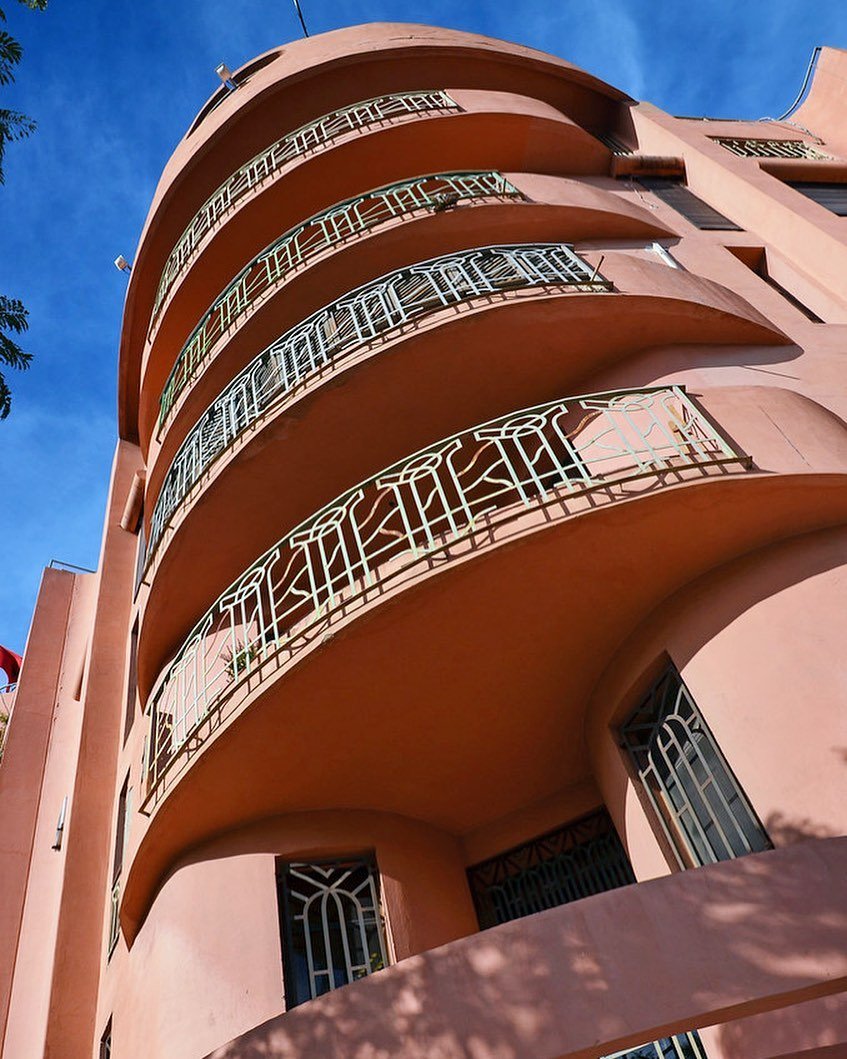
Guéliz in Marrakech is well known for its striking Art Deco architecture. Built in the 1920s, this “new” district offers a bold contrast to the ancient Medina. It’s the perfect place to explore a different, more modern side of the city.
Guéliz emerged at a time when Art Deco was the dominant architectural style, replacing the organic, ornate shapes of Art Nouveau that once captured the imagination of architects from Vienna and Brussels to Prague, Paris, Barcelona, and Riga.
In its place came a love for sleek, geometric harmony. Interestingly, when blended with the tall palm trees lining the streets, the style gives Guéliz an air reminiscent of Downtown Los Angeles.
Art Deco in Marrakech: A Walking Itinerary in 8 Stops
Several buildings across Guéliz (and nearby Hivernage) reveal a local version of Art Deco, designed by French architects during the Protectorate era. Hotels, cafes, office buildings, churches, and apartment blocks all reflect this influence.
Our 8-stop itinerary allows you to spend half a day (less if you skip galleries or museums) gazing up at a unique and original side of Marrakech.
Distance and Duration: About 5 km, 1 hour and 10 minutes walking time.
Jardin Majorelle

The most photographed Art Deco site in Marrakech is undoubtedly the Majorelle Garden and its iconic cobalt blue villa.
Built starting in 1929, the villa was commissioned by artist Jacques Majorelle and designed by Robert Poisson and Paul Sinoir. The architecture combines Moorish and Art Deco elements—groundbreaking at the time. The first floor was Majorelle’s residence; the ground floor held his vast painting studio.
Majorelle, passionate about botany, created a lush garden inspired by Islamic designs, rich in tropical plants and Impressionist touches. It features a central basin and provides refuge for countless birds. Described as a “cathedral of form and color,” the garden leaves a lasting impression.
Yves Saint Laurent Museum
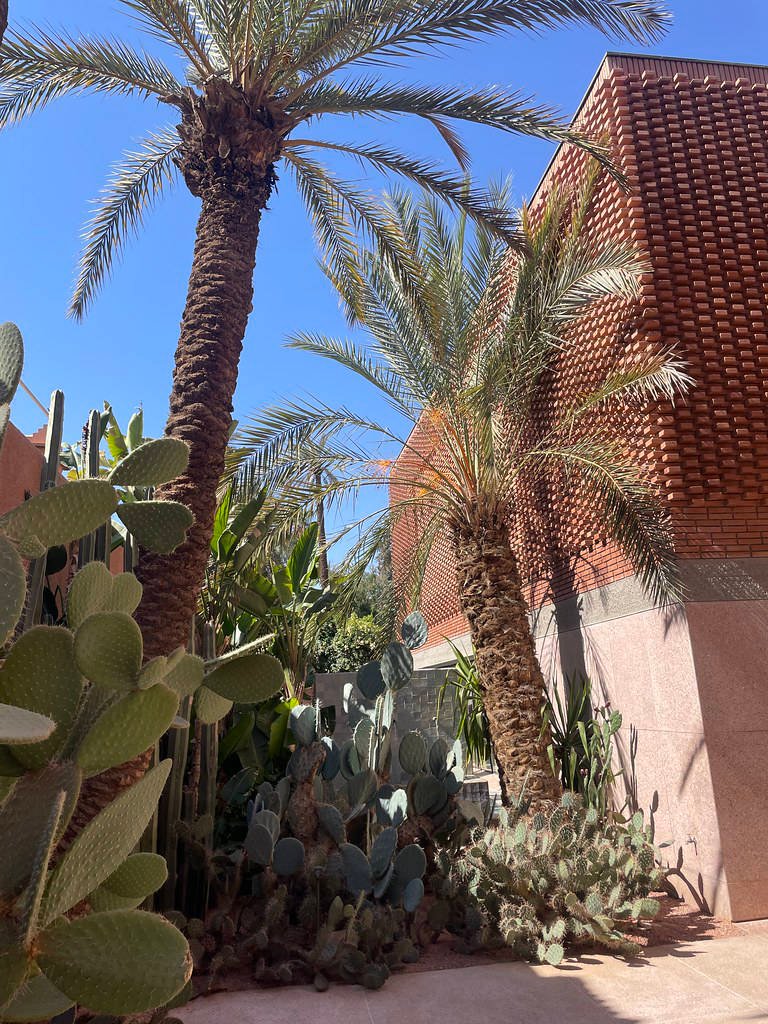
Modern buildings like the Yves Saint Laurent Museum continue this architectural tradition with great success—though not all recent constructions manage the same grace. Still, the museum is a beautiful homage to the city’s Art Deco legacy.
Café des Négociants

One of the most stylish and historic Western-style cafes in Guéliz. A partially covered terrace lets you watch the passersby (along with the noisy traffic). Inside, a mezzanine towers over black-and-white furniture and elegant wrought iron railings.
Across the street is the now-closed Hôtel des Voyageurs, possibly awaiting demolition for something taller and flashier.
Residential Building – Rue de la Liberté / Avenue Mohammed V
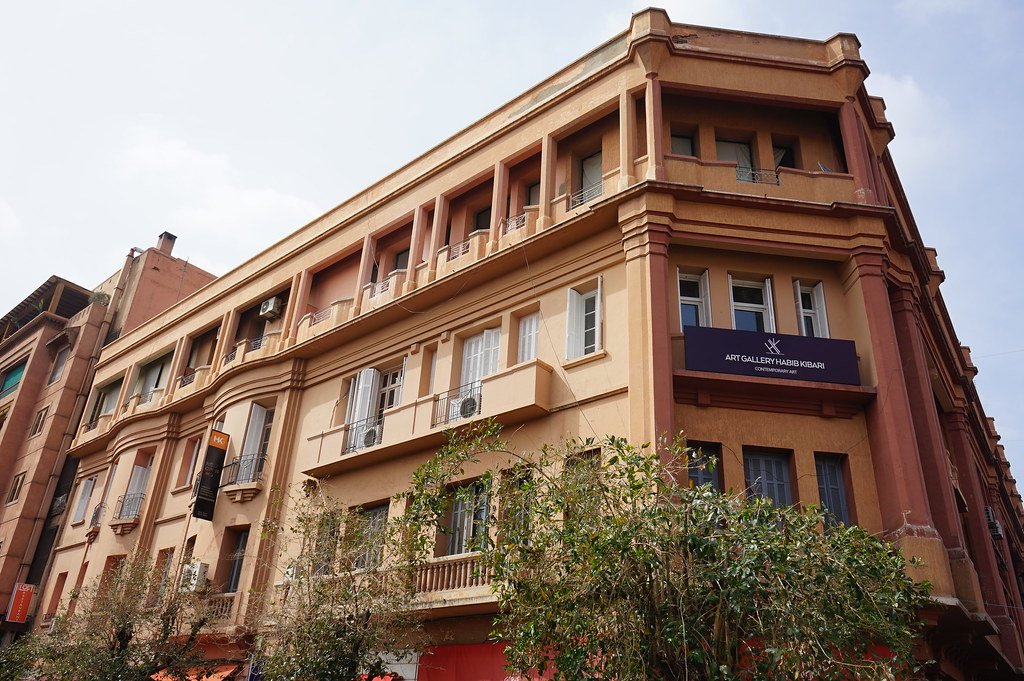
This Art Deco building features majestic murals depicting iconic Moroccan sites. Though tinged with Orientalist and colonial influence, it’s fascinating to explore. Inside, stairwells and hallways are airy, elegant, and well-proportioned.
You’ll also find Galerie 127, home to the finest collection of contemporary photography focused on Morocco. Nearby, Café Imlil remains untouched by time, with vintage furniture and delicate lace décor. It’s the perfect spot to enjoy traditional Moroccan music and a gazelle horn pastry from Patisserie Al Jawda across the street. The prices are high, and some treats underwhelm, but the experience is still worth it.
Comptoir des Mines
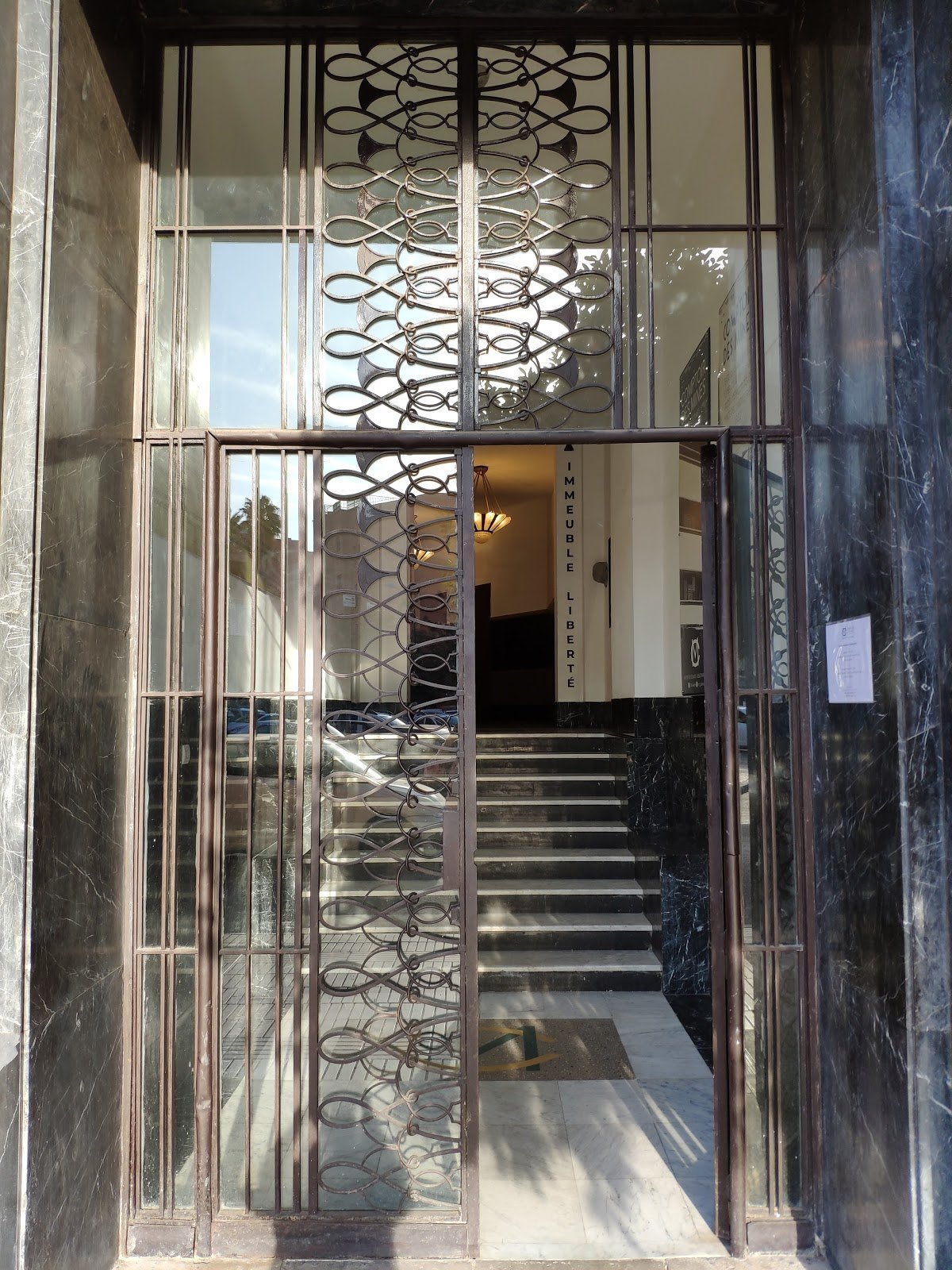
Originally a supplier of construction materials and mining explosives, this 1932 Art Deco building now houses CMG (Comptoir des Mines Galerie), a contemporary art gallery.
Every two months, a new artist exhibits in this massive space, which includes both a modern warehouse and the original Art Deco building. Aside from a ceiling carved into the shape of Africa by artist Mohamed Arejdal, the structure remains intact.
The space is elegant and understated. Floral glass lamps light the sweeping staircases and curving corridors—one of the most architecturally interesting interiors in Marrakech.
Grand Café de la Poste
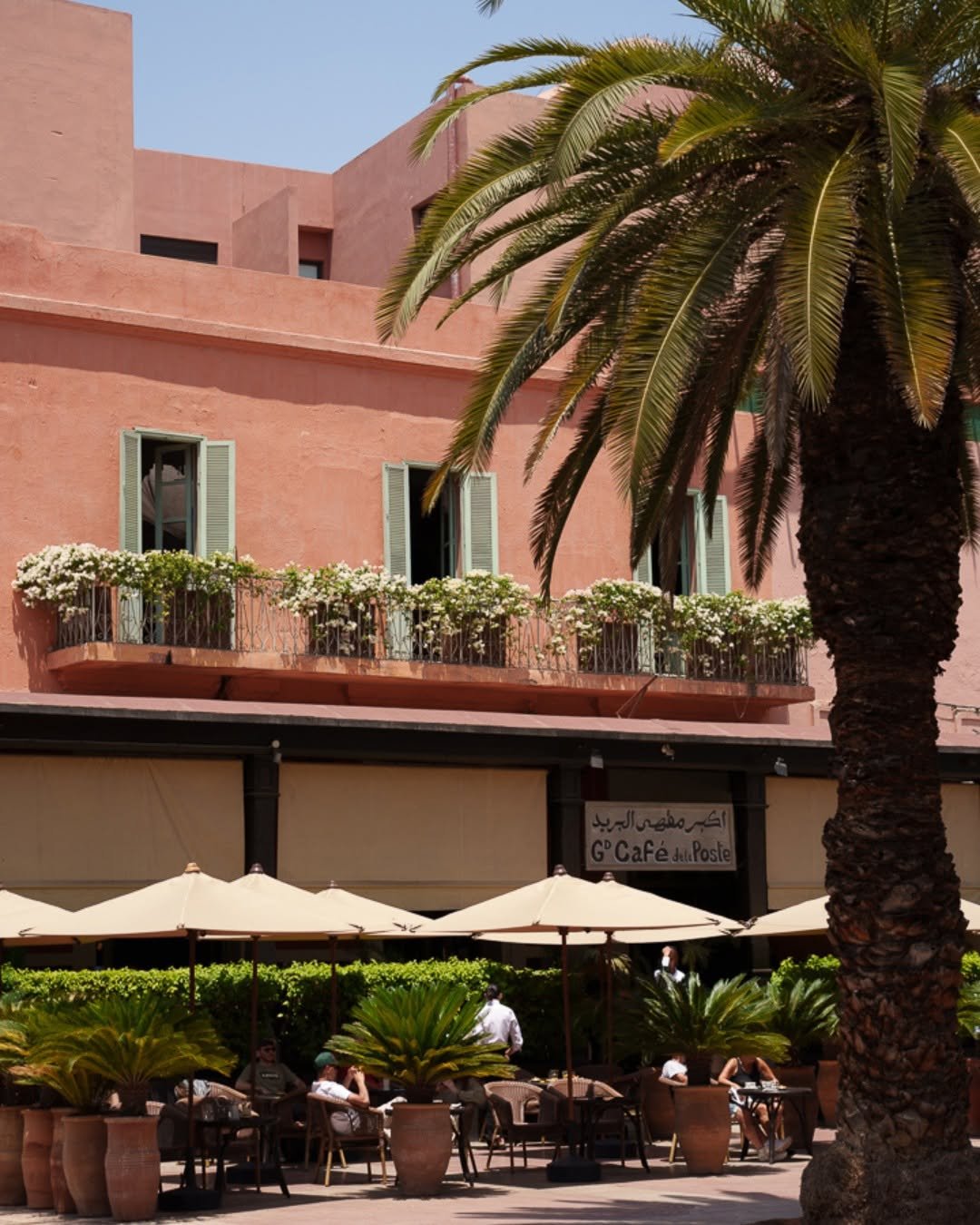
A legendary café that’s been welcoming visitors since the 1920s. Open daily from 9 am to 1 am, it serves breakfast, dinner, and late-night drinks—often accompanied by live jazz. It’s also a great place for a refreshing evening tea in Guéliz.
Church of the Saints Martyrs

The only Catholic church in Marrakech, this serene and harmoniously proportioned structure was built in 1928 and consecrated in 1929. It honors five Franciscan martyrs executed on this site in the 13th century. Today, it remains active with three Franciscan priests serving the city’s expat community.
La Mamounia Hotel
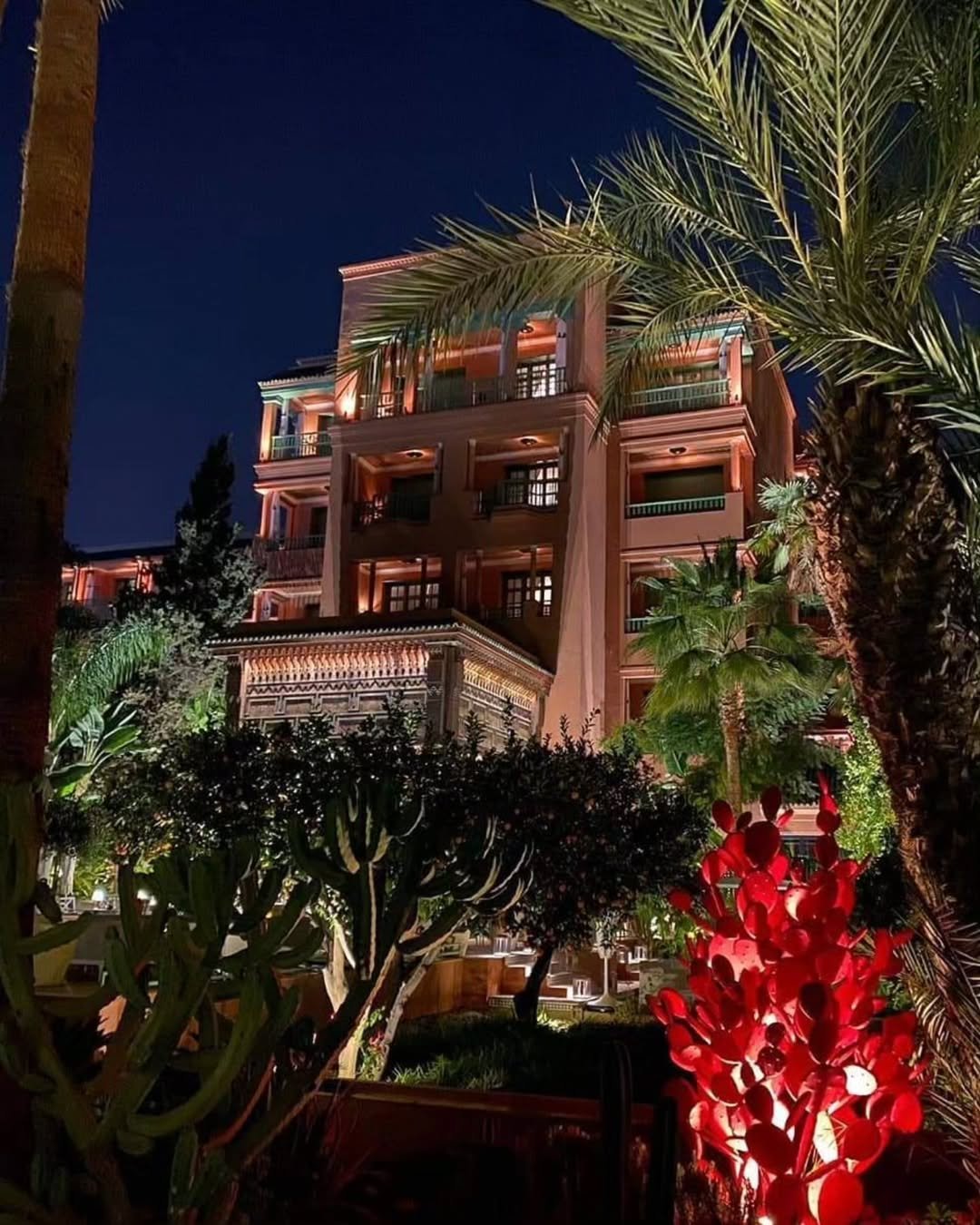
La Mamounia, one of Marrakech’s most luxurious hotels, is a stunning example of Art Deco architecture.
Opened in 1923, it was designed by French architects Henri Prost and Antoine Marchisio, featuring geometric lines, luxurious materials like marble and rare woods, and vivid stained glass windows.
The gardens are open to the public even without booking a stay or ordering from the bar. However, dress codes apply—no shorts or sneakers.
Other Art Deco Highlights in Marrakech
- Elegant facades along Avenue Mohammed V
- Houses and arcaded buildings in Guéliz (though many are being replaced by modern apartment blocks)
- Remnants of Art Deco scattered across the district—look up to catch the details
FAQs – Art Deco Marrakech
Where can we see the best Art Deco architecture in Marrakech?
The highest concentration is in the Guéliz district, especially along Avenue Mohammed V and Rue de la Liberté. Here you’ll spot 1930s façades, curved balconies, and geometric mosaics that blend French colonial modernism with Moroccan motifs. Don’t miss the old Cinéma Le Colisée, Théâtre Le Palace, and several elegant residential buildings near Place du 16 Novembre.
What is the historical background of Art Deco in Marrakech?
Art Deco arrived during the French Protectorate era (1912–1956), when architects experimented with blending European modernist design and North African craftsmanship. The result: a hybrid style with clean lines, zellige patterns, wrought-iron balconies, and pastel façades — a unique urban identity that still defines Guéliz today.
Are there museums or galleries focusing on Art Deco?
While there’s no dedicated Art Deco museum, the Museum of Marrakech and Musée Yves Saint Laurent both showcase the city’s 20th-century design evolution. Also, many Art Deco interiors are now home to galleries, concept stores, and cafés — so exploring them often means stepping into living history.
Is Guéliz walkable for an Art Deco tour?
Yes — Guéliz is compact and ideal for a self-guided stroll. Most notable buildings sit within a 1.5 km radius. Start at Place du 16 Novembre, wander down Avenue Mohammed V, and loop back through Rue de Yougoslavie and Rue de la Liberté to see both iconic landmarks and hidden gems.
Are guided Art Deco tours available?
Absolutely. Several local historians and architecture-focused walking tours offer 2–3 hour explorations of Guéliz’s Art Deco heritage, often including stops for coffee in restored cafés or visits inside private buildings rarely open to the public.
What’s the best time of day to explore Art Deco sites?
Early morning or late afternoon is ideal — the soft light highlights façades, reliefs, and tilework beautifully. Many cafés and galleries open by 10:00, so late morning is perfect if you want to mix sightseeing with brunch or vintage shopping.
Are there Art Deco hotels or places to stay?
Yes. Boutique hotels like Le Caspien and Hotel Les Ambassadeurs retain original Art Deco elements, while newer hotels in Guéliz often incorporate retro design touches inspired by the era.
Can we combine Art Deco sightseeing with other cultural stops?
Definitely. Guéliz is near Jardin Majorelle, Musée Yves Saint Laurent, and several contemporary art galleries — all easy to combine with an architecture walk in a single day.
Is it worth visiting for architecture fans?
Absolutely. While Marrakech is famous for its medina and Islamic architecture, Guéliz’s Art Deco scene offers a totally different story — a snapshot of Morocco’s modernist chapter and a bridge between colonial history and contemporary design culture.
- Perfect Morocco with kids Itinerary (2026): 25 Days from Tangier to the Anti-Atlas, Coast, and Marrakech
- Where To Stay In Agafay Desert in 2026: Luxury Moroccan Holidays
- 14 Most Beautiful Beaches In Morocco (2026)
- What To Wear In Morocco (2026): Real-World Travel Guide For Female Travellers
- 3 Best Places To Stay in Marrakech Medina [2026 Updated]