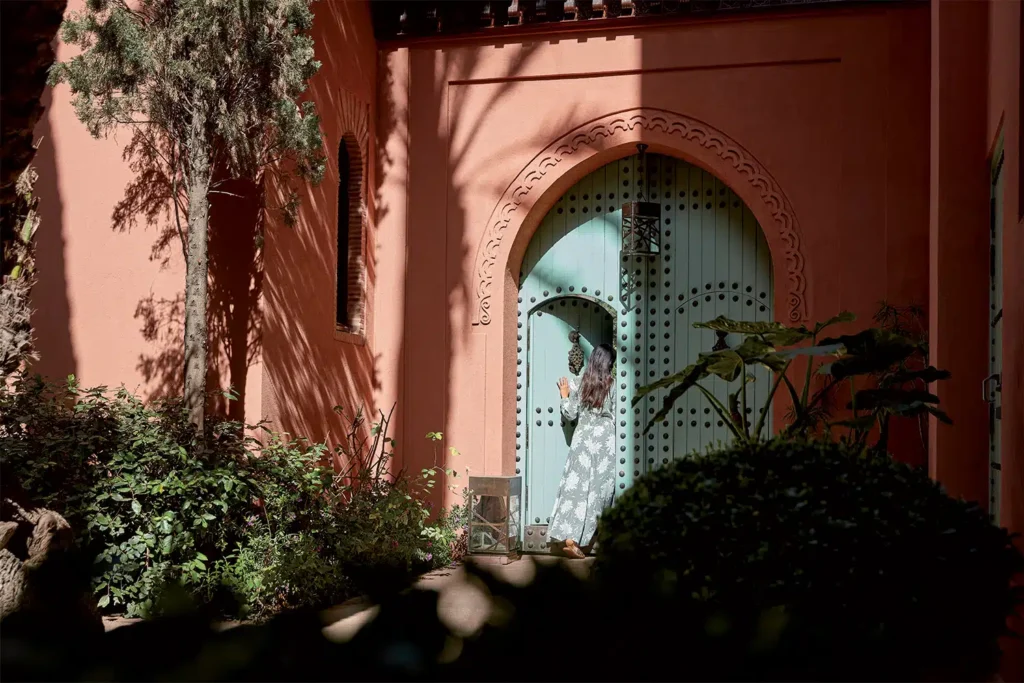

Travel writing based on first-hand experience
Visiting Marrakech, a city brimming with culture, history, and breathtaking landscapes, can be a truly memorable experience. To make the most out of your trip, whether it’s for 3, 4, 5, or 7 days, here’s a perfect Marrakech itinerary that highlights the must-see attractions and the best activities to enjoy during your stay.
| ➡️Looking for the best things to do in Marrakech? Explore souks, gardens, palaces, and unforgettable experiences. ➡️If you’re planning a Moroccan adventure, here is a list of the best hotels in Marrakech for every budget. ➡️If you are looking for the best brunch in Marrakech, these are the places worth knowing about — with options for rooftop lounging, luxury hotel indulgence, golf-course views, pool access, and laid-back healthy plates. |
Table of Contents
How to Visit Marrakech
How long to visit Marrakech?
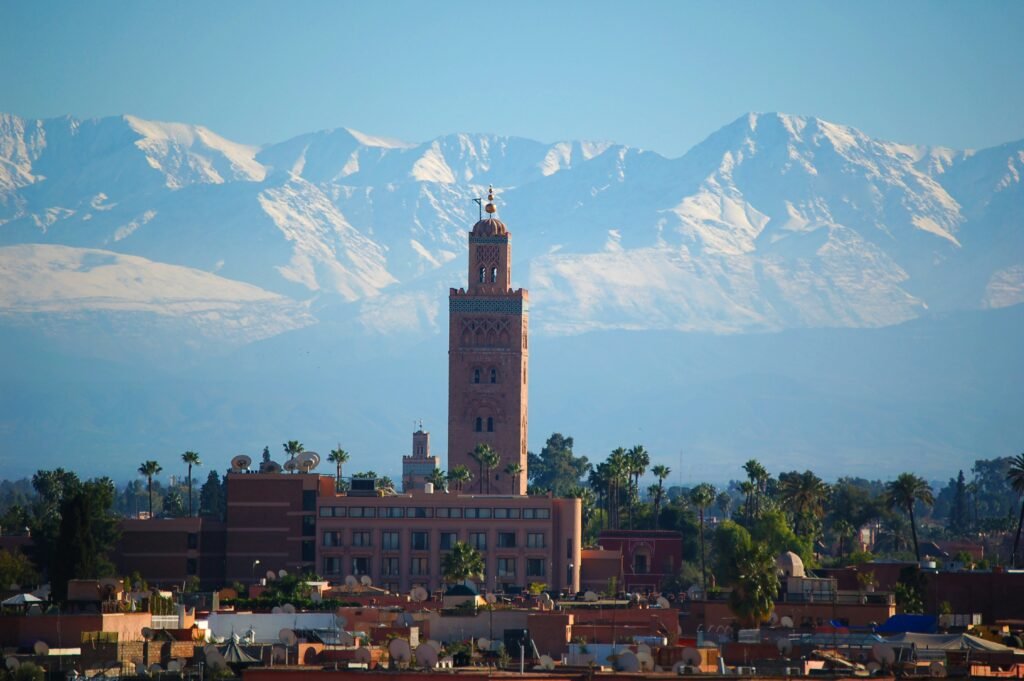
So, how many days do you really need in Marrakech? Let’s be honest — you could spend two days and feel overwhelmed, or seven and still get lost (literally and metaphorically). The city’s medina is a maze of magic, noise, and incense — it doesn’t give up its rhythm easily.
Three days will let you see the essentials without sprinting between palaces. Five to seven days means you’ll have time to linger in cafés, wander aimlessly, and maybe even make peace with your inner haggler. Marrakech rewards slow travelers — not checklist chasers.
Is Marrakech dangerous?
Not particularly! Marrakech is intense, yes — but not unsafe. The main hazards are sensory overload and the occasional scam, not crime. Petty theft is rare if you keep your wits about you.
Basic street smarts: don’t flash cash, avoid wandering alone late at night, and keep your bag close in busy souks. Police presence is strong, and most Marrakchis are kind and helpful once you get past the initial sales pitch.
The real “danger”? Cats. Thousands of them, lounging like they own the medina (and they do). As a mouse among felines, we kept our distance.
What you should really watch out for are creative hustles: the man who “shows you the way” and demands payment, the fake guide with “official” credentials, the unsolicited henna artist, or the “free” mint tea that suddenly isn’t. Just smile, say “no thank you,” and keep walking. Confidence is your best currency.
What to wear in Marrakech?
Marrakech is stylish but conservative — a balance between heat and respect. Locals are used to tourists, but it’s best to dress modestly: shoulders covered, hemlines below mid-thigh, nothing too sheer. Think loose, breathable fabrics — linen, cotton, or anything that doesn’t stick in the heat.
Women don’t need to wear a headscarf, but tank tops and short shorts will attract attention. Men, a quick PSA: ditch the sleeveless tees unless you’re by the pool. Everyone, invest in a wide-brimmed hat and decent walking shoes. Marrakech pavements are not made for flimsy sandals.
How to get around Marrakech?
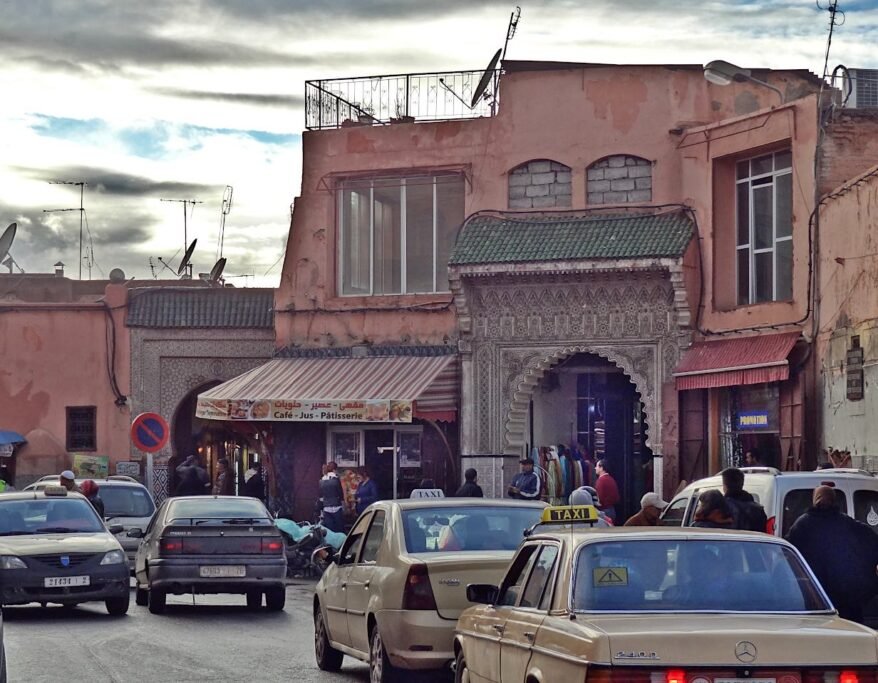
The best way to explore Marrakech is on foot. Most of the medina is pedestrian-only — or more accurately, “pedestrian plus motorbike plus donkey.” Bring patience and a good GPS app (Google Maps will only get you halfway before it melts down in confusion).
Getting lost is part of the charm. It happens to everyone, even locals. When in doubt, trust the smell of grilled sardines or the call of “bonjour, my friend!” — both usually lead back to the main square.
To go beyond the walls — to Guéliz, the Majorelle Garden, or the train station — grab a petit taxi. They’re cheap, abundant, and negotiable (everything in Marrakech is). Always agree on a price before hopping in. You’ll still pay more than locals, but that’s part of the game.
If you prefer less haggling, you can use local ride apps like Careem or Bolt (Uber doesn’t operate here). They’re reliable and often cheaper than arguing in English while holding a map upside down.
And yes, horse-drawn caleches are still a thing — picturesque, if a little pricey. Agree on a route and cost first; it’s more romantic than practical, but for sunset rides around the ramparts, it’s pure storybook magic.
When is the best time to visit Marrakech?
Spring (March–May) and autumn (September–November) are Marrakech’s sweet spots — warm days, cool nights, and fewer crowds. Winter is pleasant too, with daytime temperatures in the 20s°C (70s°F), though evenings get chilly.
Summer? Brave souls only. The mercury soars above 40°C (104°F), and sightseeing becomes a survival sport. Plan for early mornings and late evenings — and a siesta that would make a cat proud.
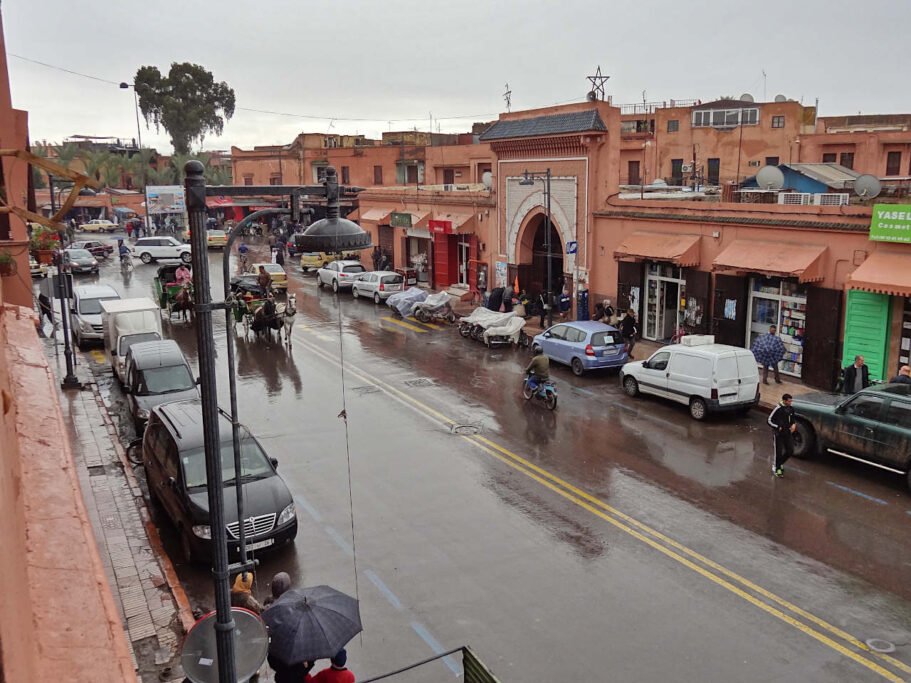
We visited in late November, which turned out to be… wet. Rain in the desert? Absolutely. Most showers were at night, though, leaving us sunny days and gleaming streets by morning. So yes, bring a light raincoat, just in case.
What to do in Marrakech as a couple?
Few cities are more romantic in chaos. Between the jasmine-scented riads and the sunsets that turn every terrace into a movie scene, Marrakech is made for couples. Stroll through the Majorelle Garden, sip mint tea above Jemaa el-Fna, or share a quiet dinner by lantern light in a hidden courtyard.
If you’re the “adventure together” type, book a camel ride in the Palmeraie or a spa session in a traditional hammam. Romance here smells like orange blossom, argan oil, and a pinch of chaos — in the best possible way.
What to do in Marrakech with children?
Bring the kids — they’ll love it. Marrakech is sensory overload in the best possible way. The Jemaa el-Fna Square is like a nightly circus of storytellers, snake charmers, and drummers.
For calmer adventures, head to the Majorelle Garden or the Berber Museum — colorful, compact, and perfect for short attention spans. Little explorers can ride camels or quads at Palmier Adventure Park, cool off at the Oasiria Water Park, or visit the Water Museum for a fun, hands-on science fix.
And don’t skip the classic horse-drawn carriage ride around the ramparts. It’s pure magic for the little ones (and a break for tired feet).
What to do in Marrakech when it rains?
Rain in Marrakech isn’t a tragedy — it’s a change of soundtrack. The medina glows, the tiles gleam, and the scent of wet earth mixes with spices. Perfect time to go indoors and embrace slow travel mode.
- Visit the Bahia or El Badi Palaces — fewer crowds, same grandeur.
- Browse the Yves Saint Laurent Museum or Dar Si Saïd — history without the heat.
- Warm up in a traditional hammam or spa with orange-blossom steam and eucalyptus oil.
- Sit in a café under an awning, order mint tea, and watch the rain fall over the medina. Time slows. You’ll like it.
Even under gray skies, Marrakech never loses its color — it just swaps the sunlight for reflection.
What to do in Marrakech: The Essential Activities
- Wander the medina of Marrakech — a UNESCO World Heritage maze where life hums behind every carved door.
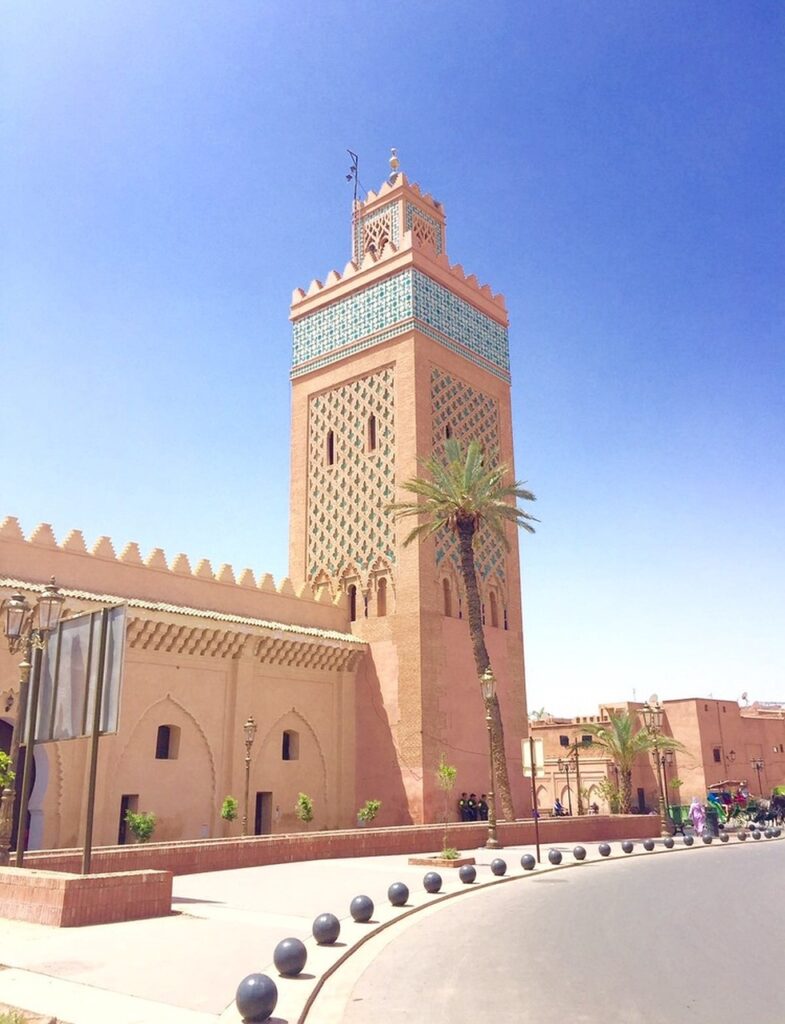
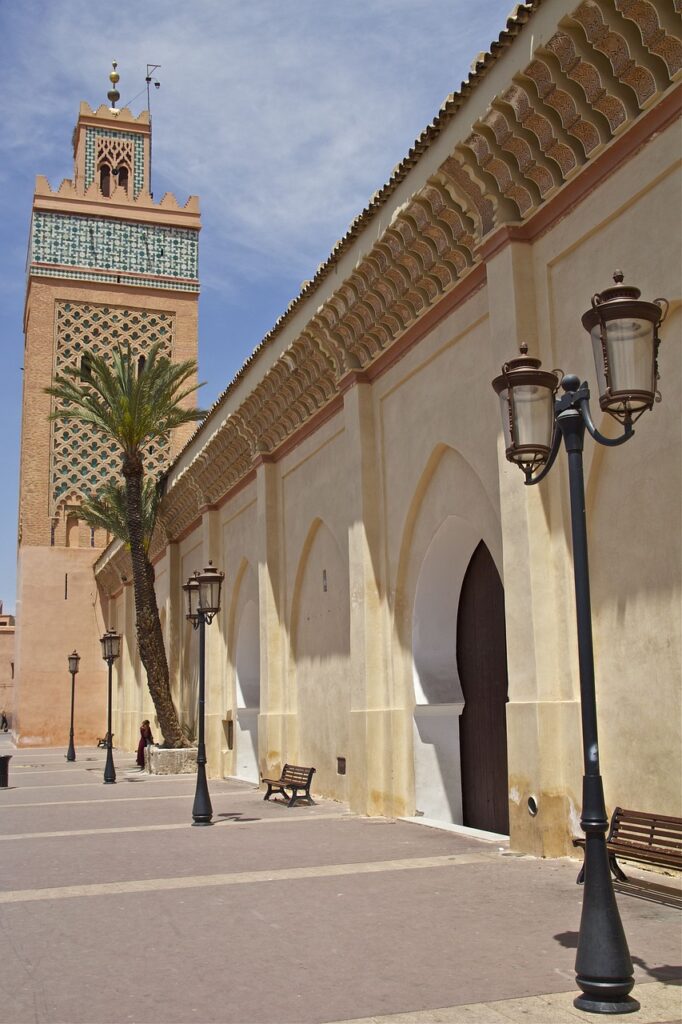
- Admire the Koutoubia Mosque — especially that minaret, Marrakech’s north star.
- Tour the Bahia Palace — arguably the city’s most dazzling residence.
- Soak up the theater of Jamaa el-Fna Square — always buzzing, most electric at dusk.
- Get gloriously lost shopping in the souks — ceramics, leather, spices, repeat.
- Step into the serene Ben Youssef Medersa.
- Admire the exquisite Saadian Tombs.
- Stroll the iconic Majorelle Garden and drop by its Berber museum.
- Visit the quietly grand Dar Si-Saïd Palace.
- Seek out the recently restored Secret Garden.
- Unwind in other lush gardens around town.
A brief presentation and history of Marrakech
From the Almoravids to the Alawites
Marrakech was founded in 1071 by Youssef Ibn Tachfin of the Almoravids. It quickly became a powerhouse — a crossroads of trade, faith, and craftsmanship — and capital of a vast realm spanning today’s Morocco, Mauritania, parts of Algeria, and Al-Andalus on the Iberian Peninsula.
The Almohads later seized the city, kept it as their capital, and raised the Koutoubia Mosque — ruling an even broader coastal empire.
Marrakech drew artists and scholars from Al-Andalus, giving it a singular cultural glow. As a trade hub, it bridged sub-Saharan wealth with Mediterranean markets.
Between the 13th and 16th centuries under the Merinids, the city waned while Fez took center stage.
Its spark returned under the Saadians, who built lavish palaces — few of which survive intact today.
In the 17th century, the Alaouites rotated the capital between Fez, Meknes, and Marrakech; Marrakech held the title again from 1757 to 1790.
Marrakech from the French protectorate to the present day
In 1912, Marrakech entered the French protectorate of Morocco.
Thami El Glaoui became pasha with Marshal Lyautey’s blessing and held the role for over 40 years, collaborating with the French.
Morocco regained independence in 1956. From the 1960s onward, Marrakech blossomed into a coveted destination, helped by Yves Saint-Laurent, who made Majorelle his home.
Today it’s Morocco’s leading tourist city, with options for every budget.
Marrakech has grown out around its vast Medina (the largest in North Africa), mixing modern neighborhoods, hotel zones, expat enclaves, and more down-to-earth districts.
Where to stay in Marrakech: best hotels and riads
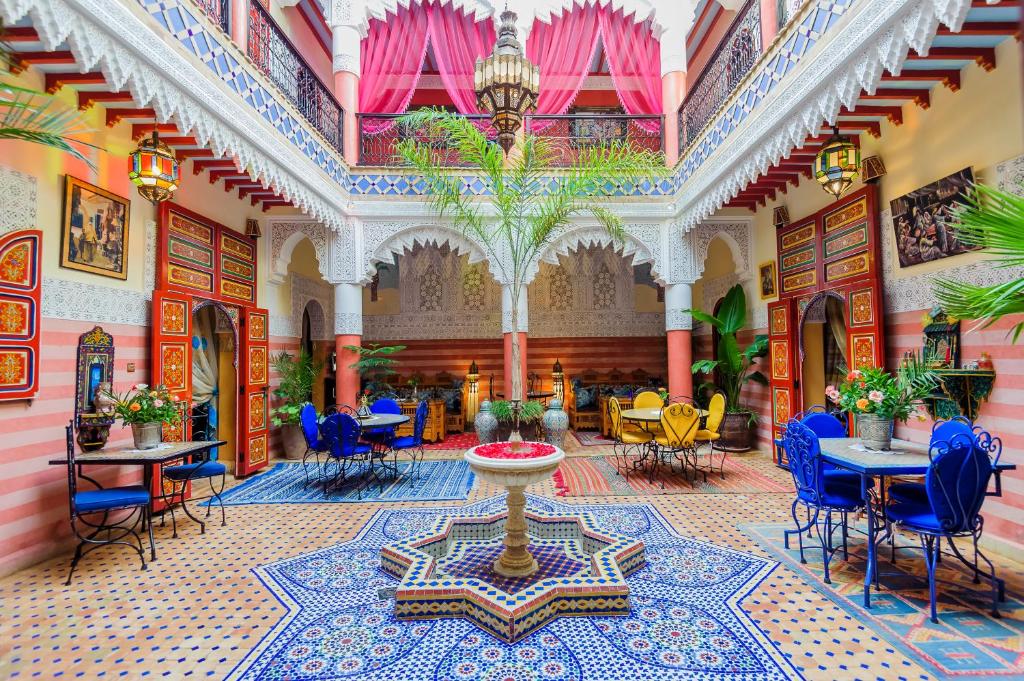
Accommodation choices abound — Airbnb apartments, simple stays, luxury hotels, and atmospheric riads — something for every taste and wallet.
Wondering where to base yourself to visit Marrakech?
Most highlights cluster in the medina — which spans a hefty 600 hectares.
- Stay near Jamaa el-Fna Square if you can — it’s the beating heart of the action.
- Inside the medina, you’ll find classic hotels, welcoming riads (guest rooms in traditional houses), and plenty of Airbnbs.
- The Guéliz district offers a modern vibe and strong amenities, though it’s a bit removed from the medina.
- Hivernage is home to Marrakech’s most glamorous hotels — La Mamounia and friends — a short stroll from the medina. If the budget allows, it’s a treat.
Below is a curated pick of top Marrakech stays by area, budget, and style — some of them true gems.
Stay in the medina of Marrakech
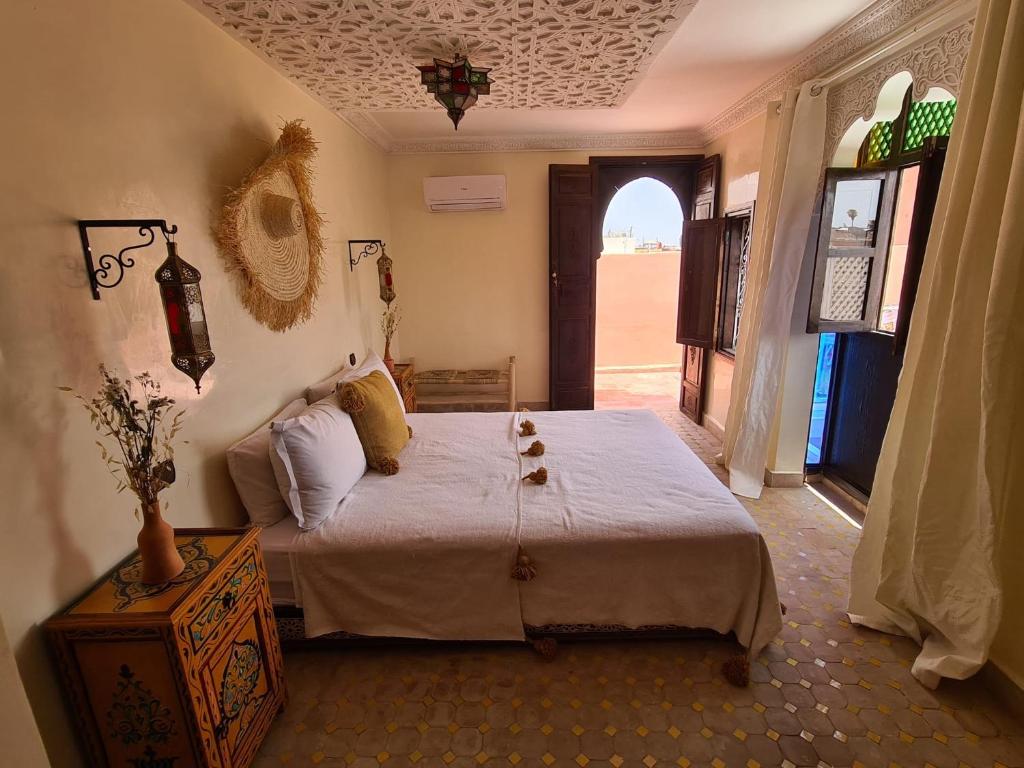
- Be Nomad — budget-friendly hostel with both dorms and doubles, all tastefully Berber-styled. Garden, shared lounge, shared kitchen, and some rooms with kitchenettes — a wellness-minded base with great reviews and value.
- Riad Casa Sophia — charming, very affordable riad (from €56/night) in a handy location. Ideal for couples visiting Marrakech on a budget.
- Riad Simon — attractive, comfortable, well-located, and well-priced, with a private kitchen alongside the restaurant and communal lounge.
- Riad Dar Hamid Hotel & Spa — 10/10 reviews near the souks. City-view terrace, interior garden, spacious rooms, thoughtful decor — and, of course, a spa.
- Riad Bleu du Sud — former noble family riad turned guesthouse, richly traditional with glowing ratings.
- Riad Atlas Acacia — classic riad with generous rooms and suites, patio, terrace, pool, spa, and wellness area. Excellent value.
- Riad & Spa Zoraida — roof terrace, attentive service, two pools, hammam, and massage services — a perennial favorite.
- Kahena Lifestyle Concept — modern and refined but still elegant; spacious rooms, Atlas-view terrace, and a whirlpool with loungers.
- Riad Anya & SPA — near the Royal Palace; recently renovated with contemporary Moroccan design, pool, spa, massages, and an Atlas-view terrace.
Best Stays in the Hivernage district of Marrakech
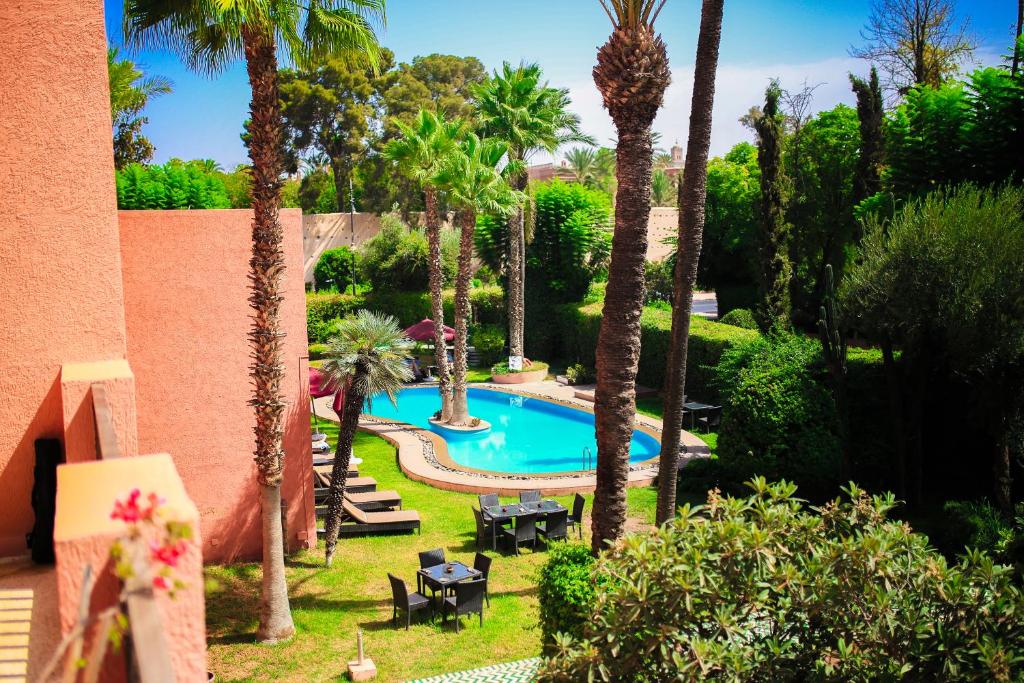
- Hivernage Secret Suites & Garden — higher-end suites with thoughtful design, room service, pool, and garden serenity.
- The Red House — magnificent and close to Jamaa el-Fna; sumptuous rooms and suites, pool, garden, spa, and stellar reviews.
- Four Seasons Resort Marrakech — a splurge with gardens, pool, tennis, three restaurants, hammam, jacuzzi, and wellness center. Rooms with terraces and views: perfect for a romantic Marrakech stay.
Getting from Marrakech-Menara airport to Medina
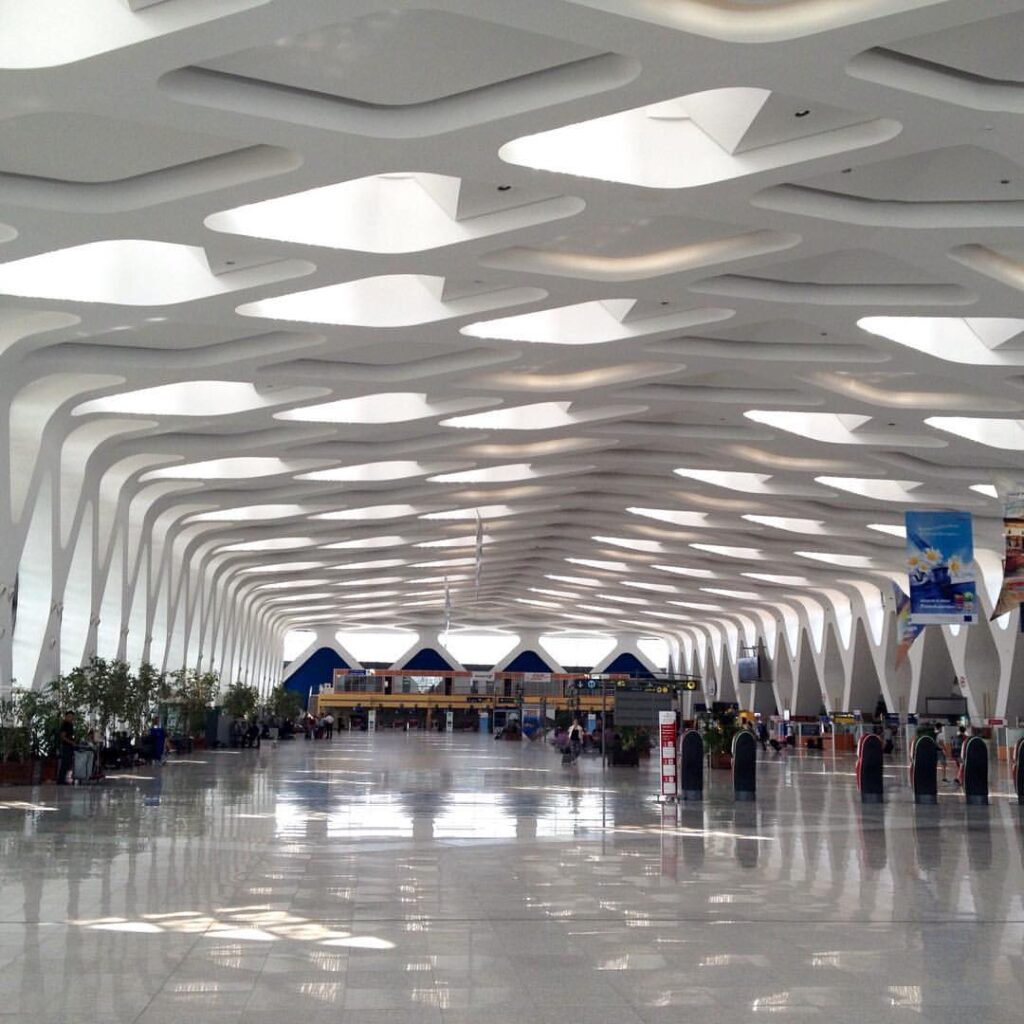
The simplest arrival plan: arrange a minibus or grab a taxi via your hotel at a set fare — no haggling marathon required.
If bargaining on touchdown isn’t your style, prebook a private transfer (usually cancellable). Compare offers and pick the smoothest ride in.
Visit Marrakech in 1 day: Best Places To Visit
Only one day in Marrakech?
Here’s a brisk, highlight-packed loop:
- Explore a slice of the medina of Marrakech.
- Experience the energy of Jamaa el-Fna Square.
- Admire the Koutoubia Mosque and its gardens.
- Duck into the souks of Marrakech.
- Visit the splendid Bahia Palace.
- Head south to the old Kasbah for the Saadian Tombs, El Badi Palace, and the Royal Palace (exterior only).
Because the medina is enormous, we suggest focusing on the southern section down to the Kasbah.
Short on time? Join this guided tour of the medina and Marrakech’s key sights — efficient and illuminating.
Medina of Marrakesh
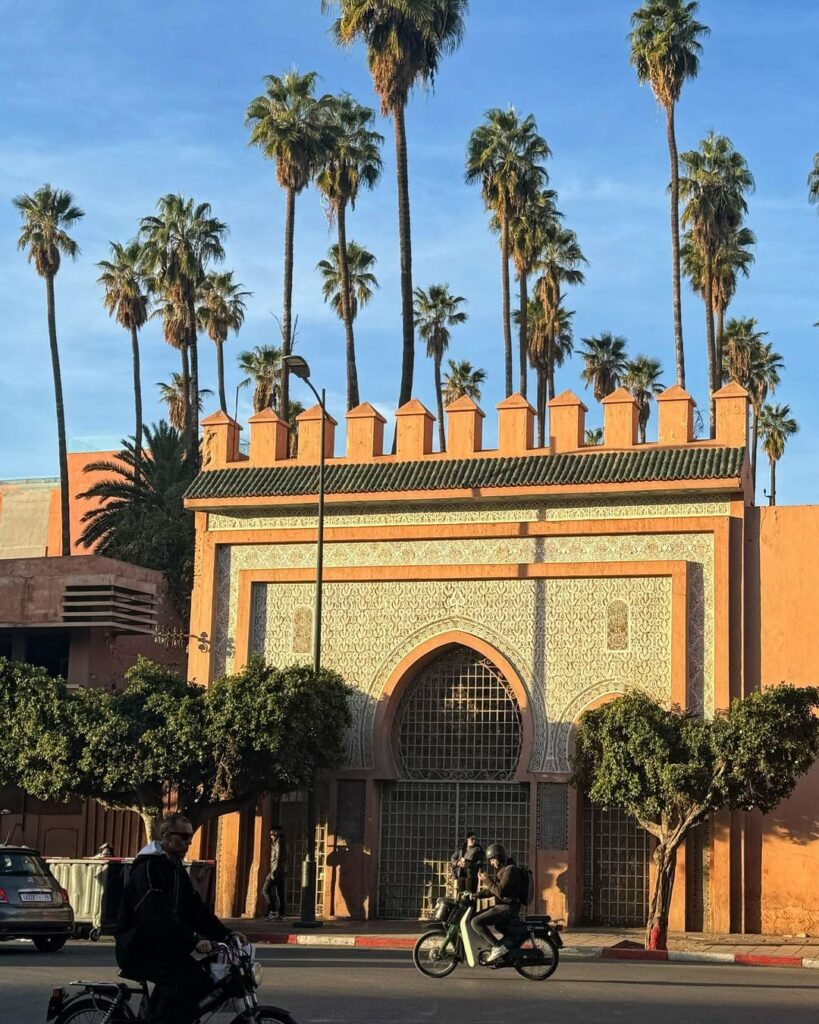
The Medina is wrapped in 19 km of walls and tight lanes painted Marrakech-ocher. Behind them hide secret spots — palaces, riads, shaded courtyards.
Dozens of mosques dot the alleys. Non-Muslims can’t enter, but the minarets, portals, and ornamented doorways are a feast for the eyes.
Given its sprawl, you’ll only see a fraction on a first pass. Target a different section daily; many highlights cluster near Jamaa el-Fna.
Expect to get lost (it’s part of the charm). Between detours, notice the fine details — carved doors, tiled fountains, and timber lintels.
Jamaa el-Fna Square
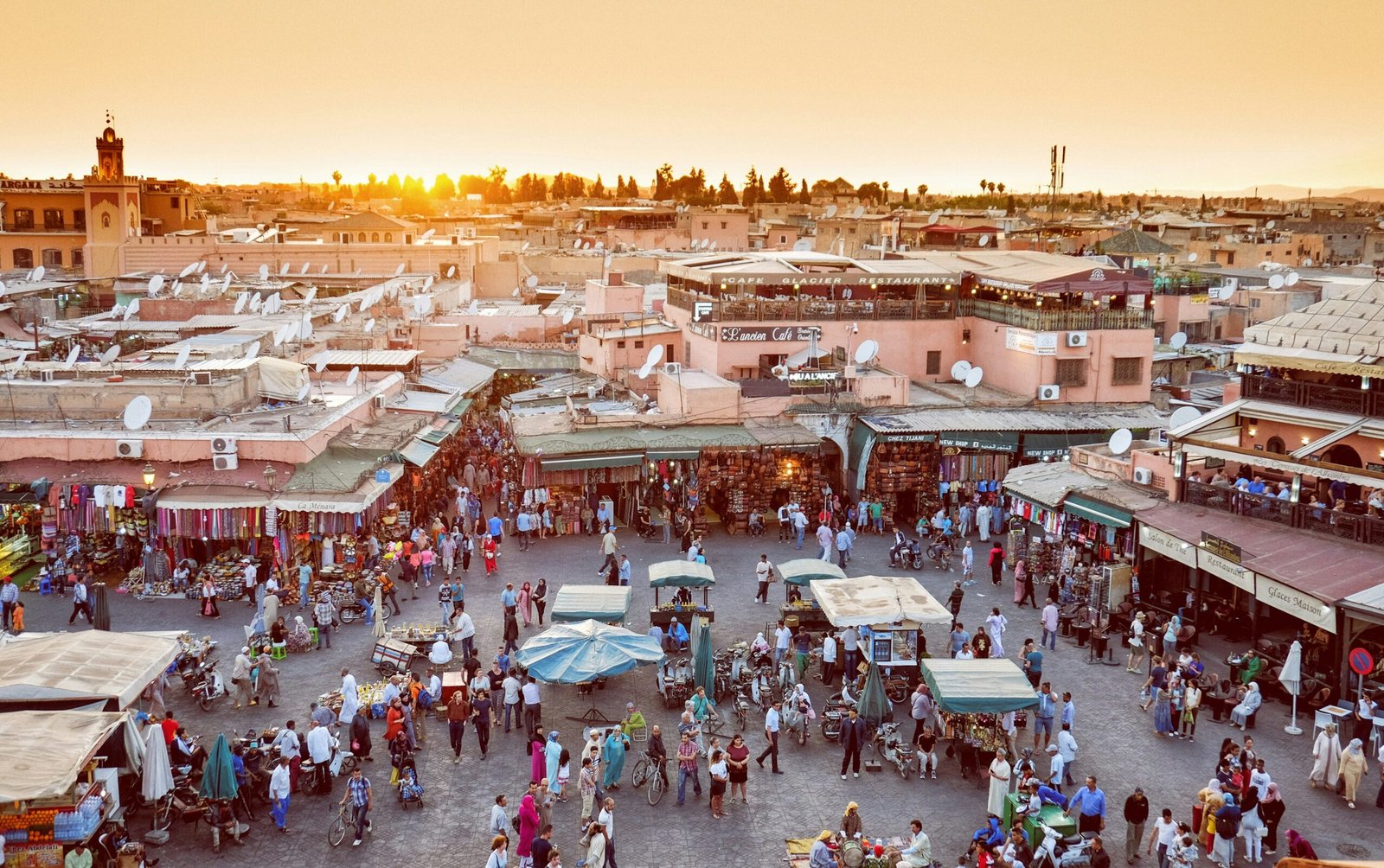
Jamaa el-Fna is the grand stage of the old city: food stalls, juice vendors, snake charmers, storytellers, and fortune tellers. You come for atmosphere over aesthetics — and at night, it’s pure spectacle (and a great dinner stop).
Koutoubia Mosque
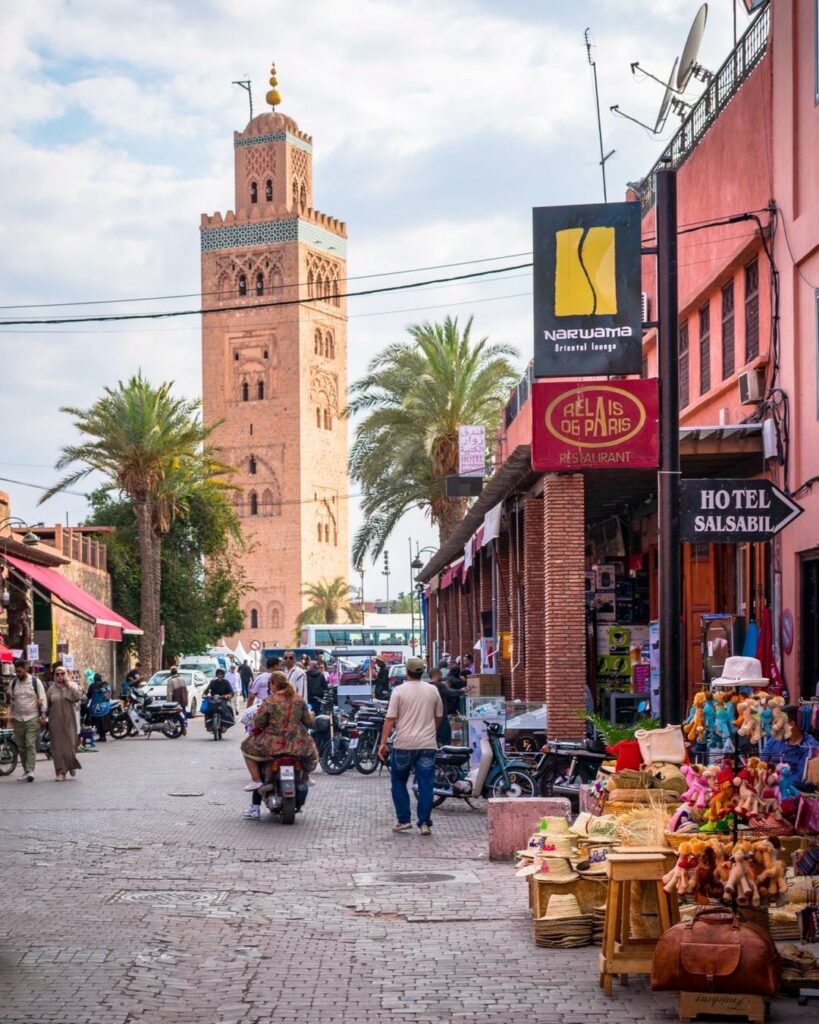
Koutoubia Mosque is Marrakech’s signature silhouette, its minaret the model for Seville’s Giralda. Built between 1120 and 1196, it’s the city’s largest mosque. Non-Muslims can’t enter, but the understated interior glimpsed from the doorway and the Arab-Andalusian garden outside glow at dusk.
The Souks of Marrakech
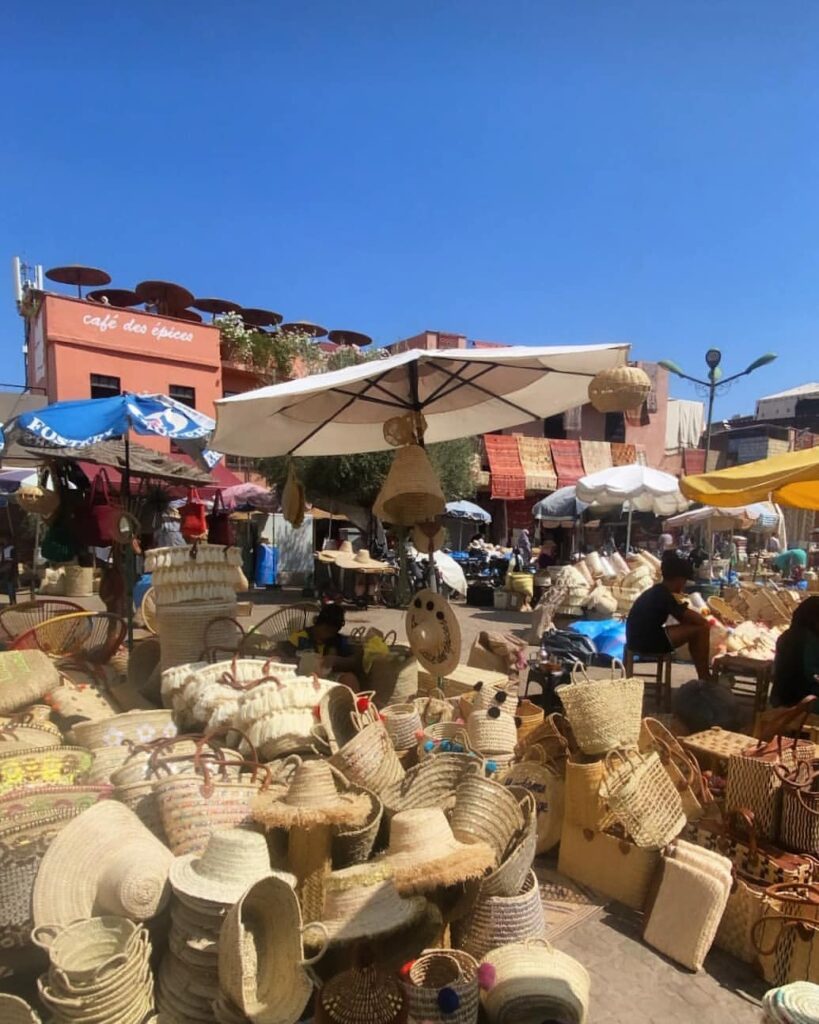
The Souks of Marrakech, just off Jamaa el-Fna, are profession-themed markets — leather here, lamps there, a spice cloud everywhere. Haggling is normal (except for produce), getting lost is inevitable, and people-watching is the sport of champions.
The Mellah
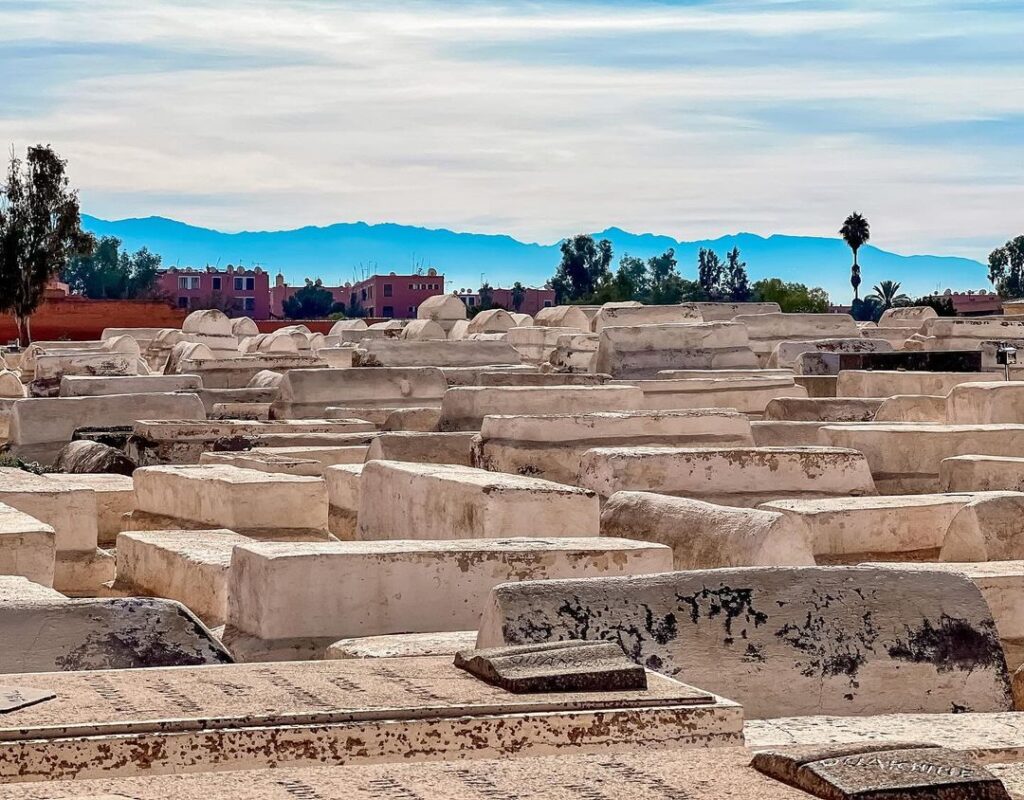
The Mellah, the historic Jewish quarter south of Jamaa el-Fna, invites quieter wandering. Recently restored synagogues welcome visitors.
Bahia Palace
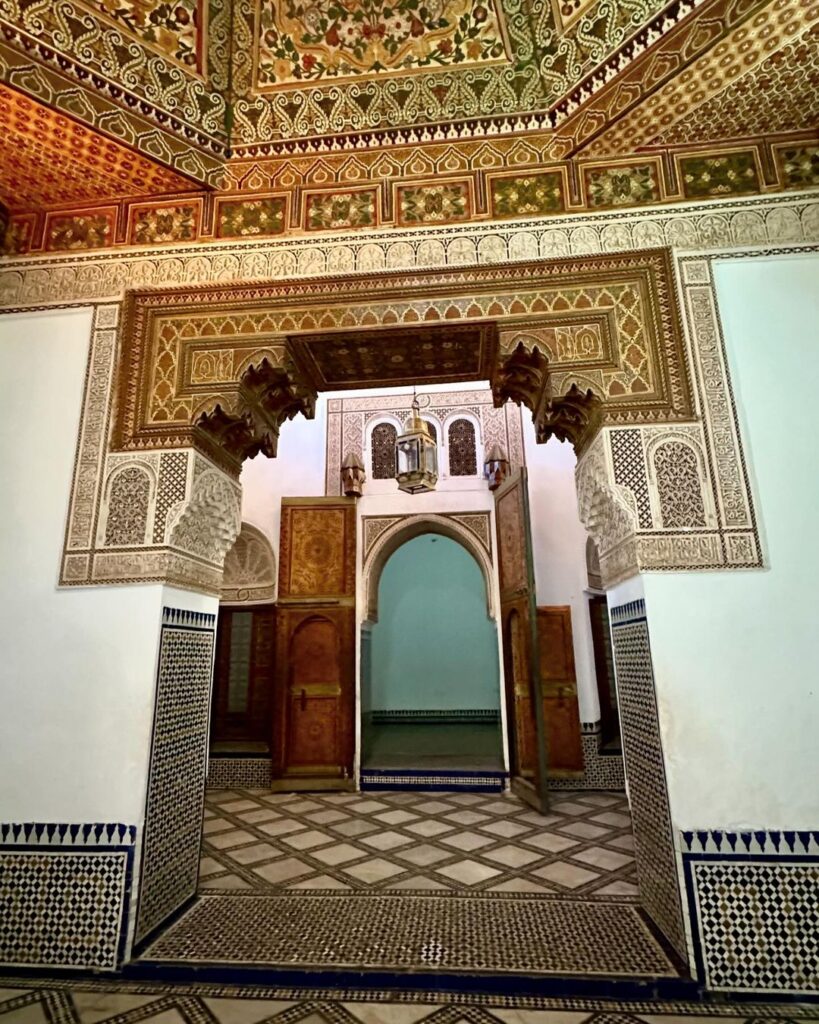
The Bahia Palace is unmissable — arguably Marrakech’s loveliest. Built for vizier Si Moussa (1866–1900), it sprawls over 80,000 m² and showcases the peak of Moroccan craftsmanship. “Bahia” means “the beautiful,” named for the vizier’s favorite. General Lyautey later lived here during the protectorate. Open daily 9:00–17:00; admission 80 MAD for non-Moroccans.
Visit to the Bahia Palace in Marrakech
Only part of this vast palace is accessible; the rest belongs to the Moroccan royal family.
It’s still absolutely worth your time — note that rooms are unfurnished.
Allow about 1h30 for a relaxed visit.
Enter via a long alley into a small courtyard (patio), then the charming little riad.
Lyautey used nearby rooms and even added a fireplace — Marrakech winters can be chilly.
Look up for the painted timber ceilings — they steal the show.
The most striking rooms encircle a larger patio. The craftsmanship is extraordinary.
Those ceilings? We couldn’t stop staring.
The old Kasbah of Marrakech
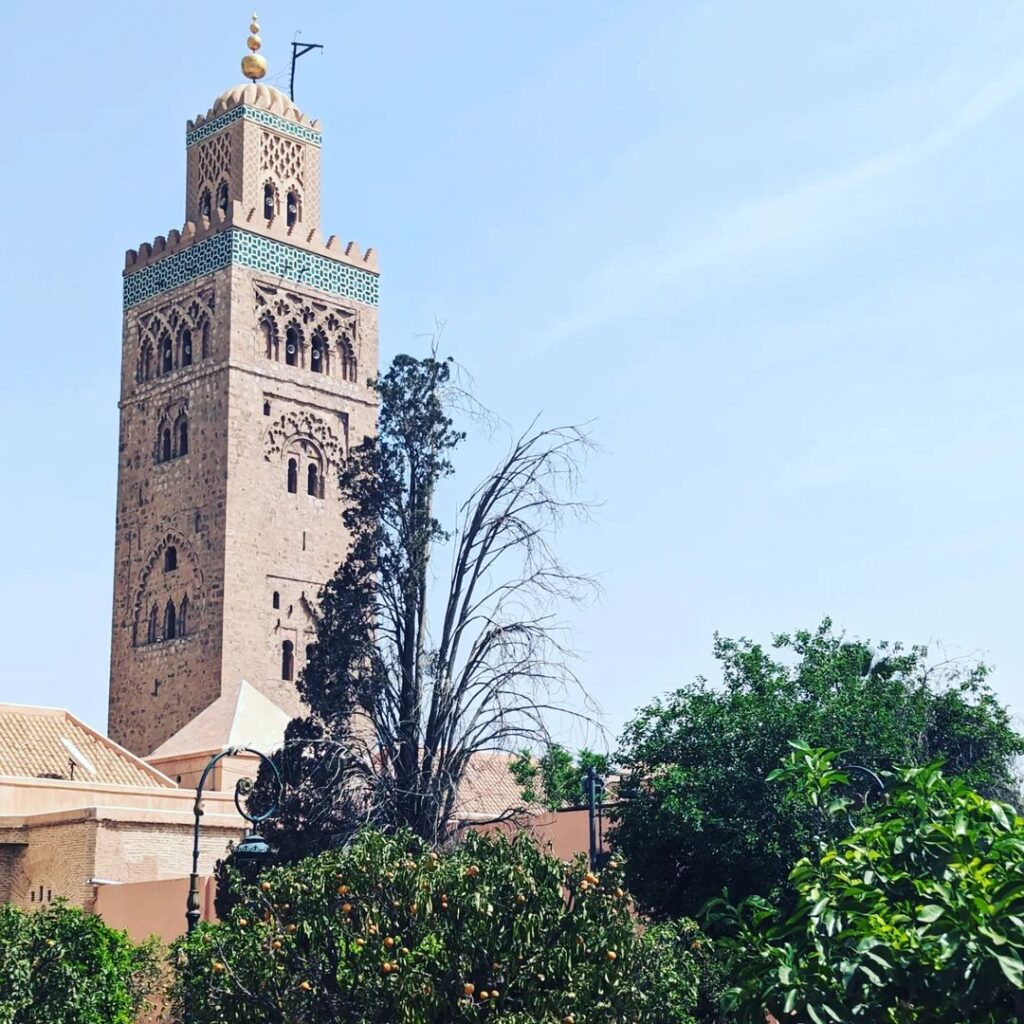
Head south into the medina’s Kasbah, a historic military quarter found in many North African cities.
Today it’s a lived-in district with wider streets and a touch more traffic.
Ancient ramparts still define its edges.
Don’t miss the beautiful Bab Agnaou Gate.
The Royal Palace of Marrakech also lies here — closed to visitors, alas.
The Saadian tombs of Marrakech
Beside the El Mansour Mosque (the former Grand Mosque) are the Saadian Tombs.
The Alaouites left them untouched, which is why we can admire them today.
The tombs sit within a tranquil garden enclosure.
Most date to the late 16th century.
The necropolis comprises multiple mausoleums. You can’t enter, but you can view them from the thresholds.
Look for the exquisite Hall of Twelve Columns, the Mihrab Hall, and the Great Hall.
Admission in 2024 is 60 MAD (about €6). A small site with a big punch of history — you decide if it’s worth it.
El Badi Palace
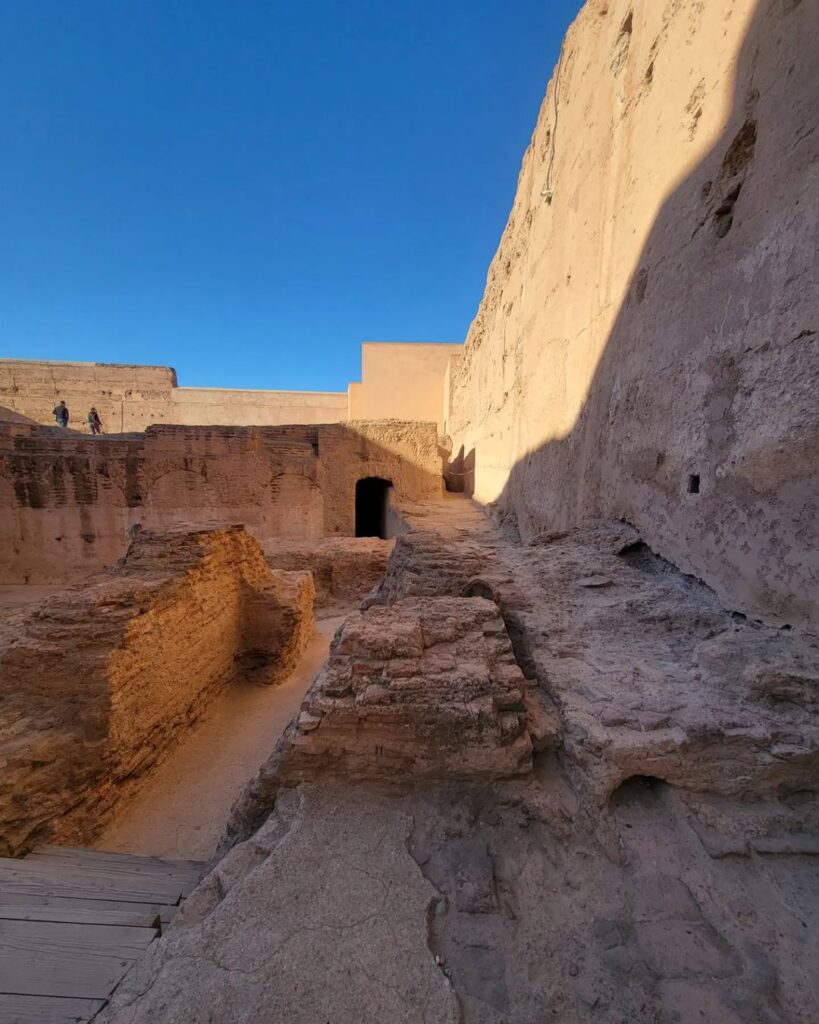
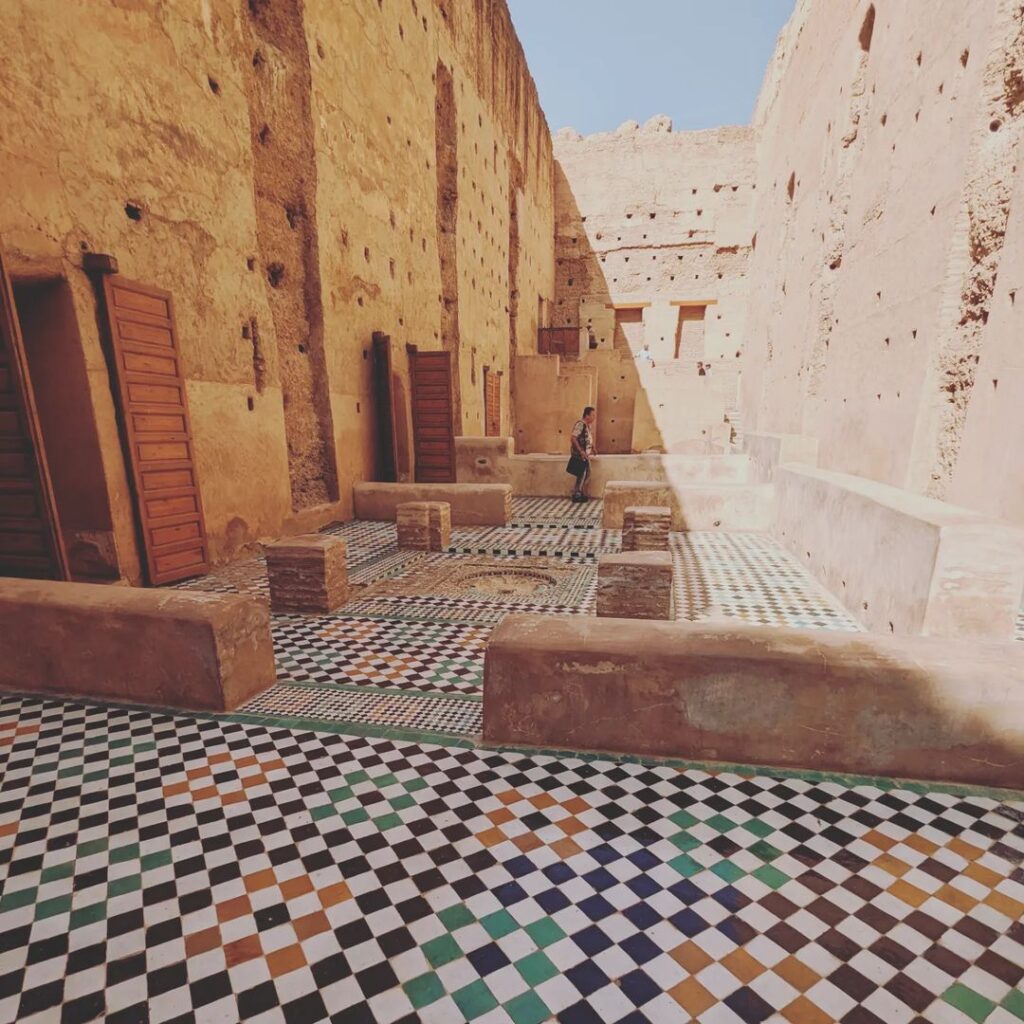
Nearby stands the El Badi Palace — once Marrakech’s grandest residence.
Built 1578–1594 by Saadian sultan Ahmed al-Mansur, it was sumptuously decorated, inspired by Granada’s Alhambra.
Sadly, little remains.
Alaouite sultan Moulay Ismaïl stripped it to adorn his new capital in Meknes, dethroning Marrakech.
Come for the sense of scale, the rooftop views over Marrakech, and the evocative ruins.
Inside, an exhibition space preserves the Koutoubia’s ancient minbar (pulpit) — among Morocco’s oldest.
History lovers will linger here.
The Agdal Gardens
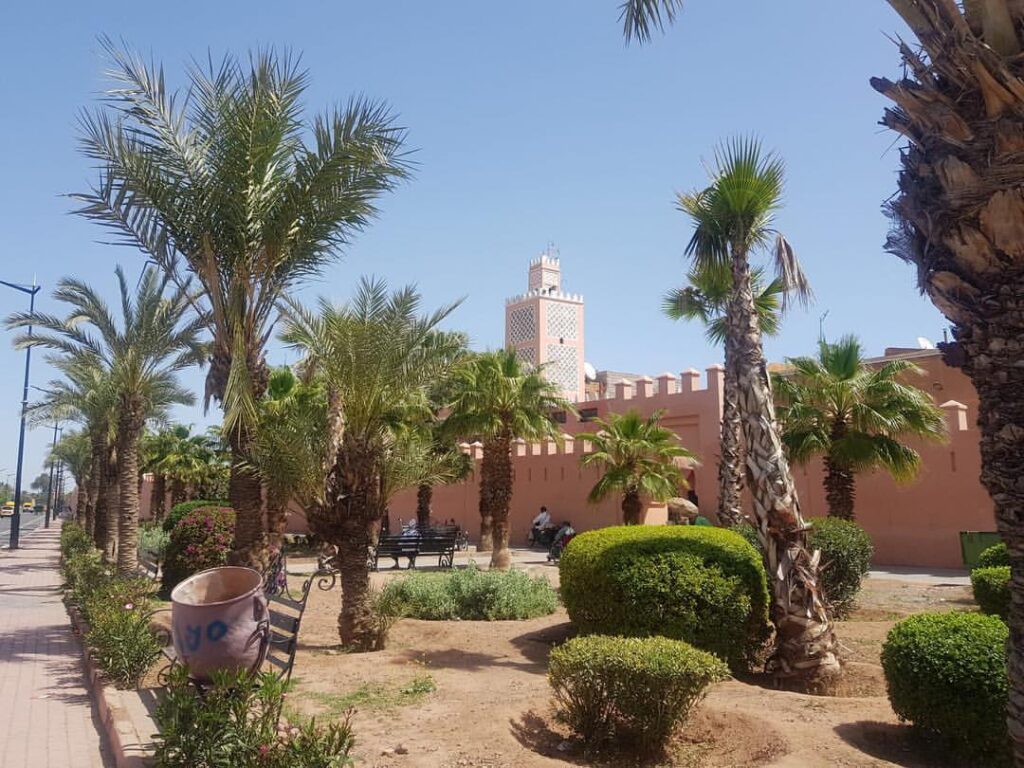
South of the royal palace stretch the Agdal Gardens.
We wrongly assumed everything was open.
In reality, only a small section opens to the public (weekends only), and the entrance is a long walk from the medina (we clocked several kilometers).
Go for the Atlas mountain views and the panorama back toward the medina from the abandoned pavilion.
It’s a peaceful detour if you’re craving space from the crowds.
Return by taxi if legs protest.
Visit Marrakech in 2 Days
What to do in Marrakech in 2 days?
Ready for round two? After soaking in the energy of the medina on day one, today we go deeper—into palaces, madrasas, museums, and the legendary tanners’ quarter. Expect colors, craftsmanship, and the scent of leather that you’ll remember long after you’ve gone home.
- The Dar Si Saïd Palace and its carpet museum
- The Ben Youssef Madrasa and its neighborhood
- The Marrakech Museum
- The Tanners’ District
Dar Si Saïd Palace in Marrakech
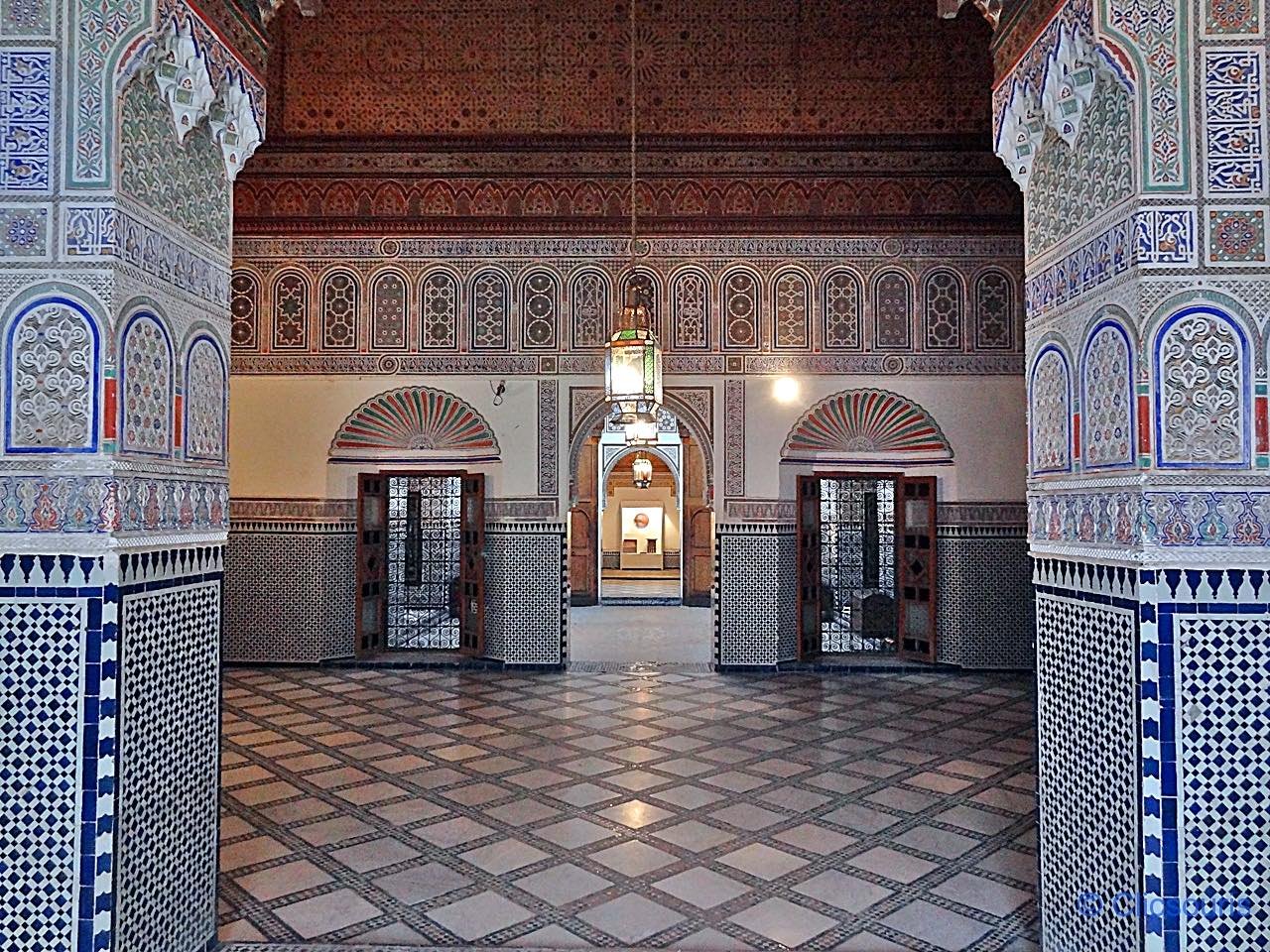
I invite you to discover this elegant palace, the Bahia’s “little brother.” Built in the 19th century by Si Saïd Ben Moussa—Minister of War under the Alaouite Sultan Moulay Abdelaziz—this gem stands just a short stroll from the Bahia Palace and dazzles with its calm and refinement.
As you wander through its series of graceful salons, don’t forget to look up—those painted wooden ceilings are a work of art! Rich in color, geometry, and detail, they’re pure Moroccan magic.
Step outside and you’ll find a peaceful riad courtyard with a small kiosk tucked in the shade—a green oasis right in the city center.
When we visited, the palace hosted the Museum of Moroccan Arts and Crafts. Today, it’s become a museum of Berber carpets and weaving, celebrating traditional skills that still define the Atlas Mountains and beyond.
Opening hours: every day except Tuesday, from 10 a.m. to 6 p.m.
Entrance: 30 dirhams.
Official website of the Dar Si Saïd Palace
North of Jamaa el-Fna Square
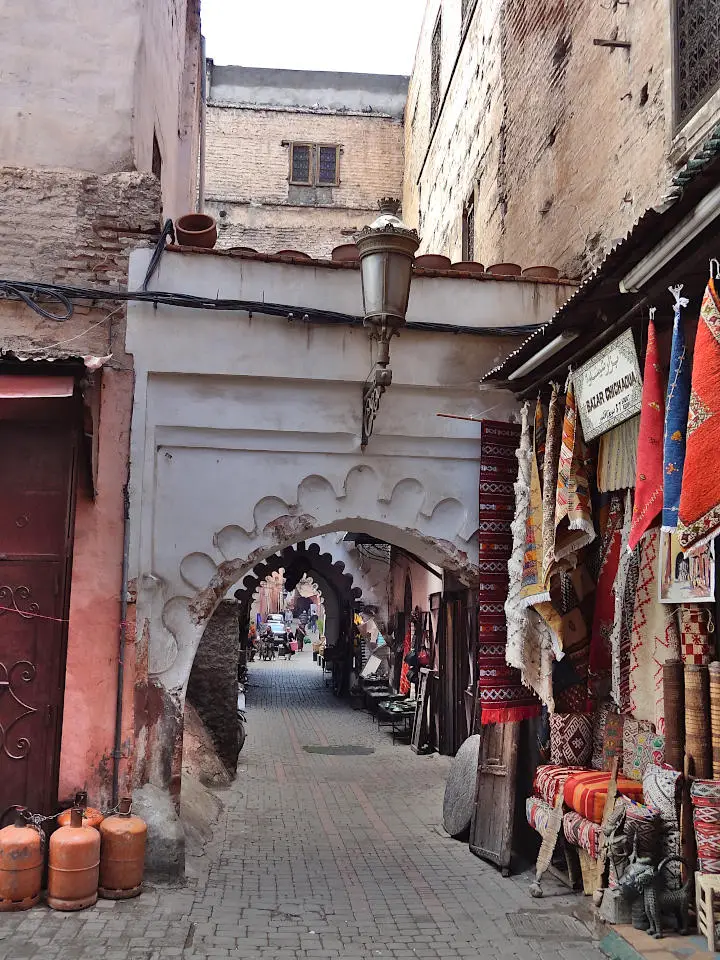
After that, we head north of the Jamaa el-Fna—a different slice of Marrakech life. Along the way, stroll through the souks again; every corner hides a new scent, sound, or splash of color.
Keep your eyes open—the beauty of the medina often lies in the details: carved doors, tiled fountains, and old mosque gates that whisper centuries of stories.
Ben Youssef Madrasa
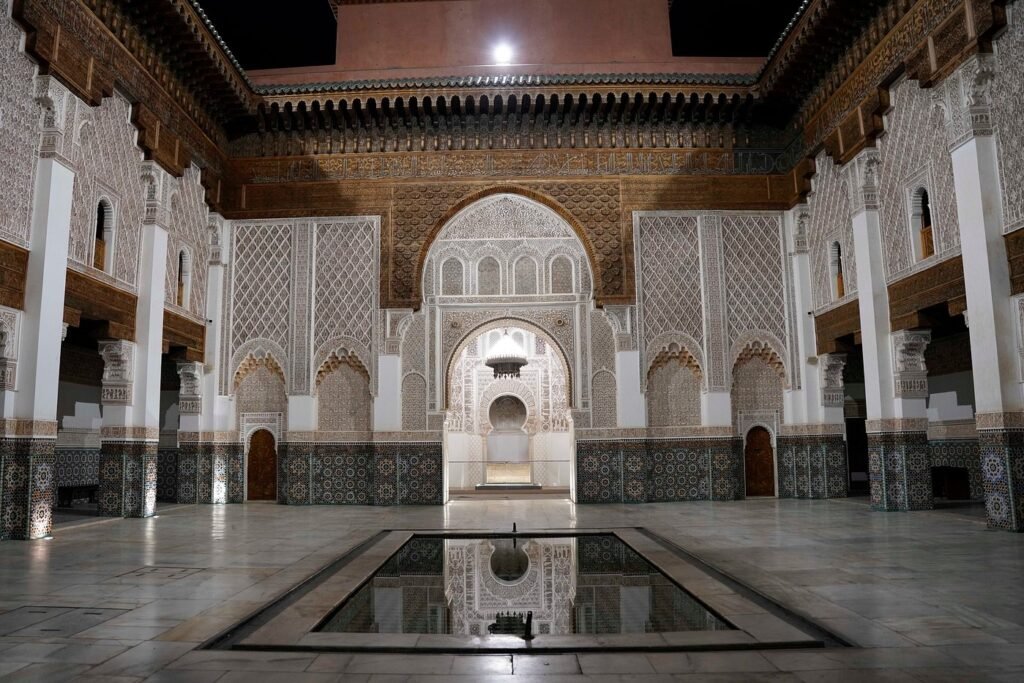
And now, one of the jewels of Marrakech: the Ben Youssef Madrasa. The moment you step through the entrance, the grandeur of this 16th-century Koranic school surrounds you.
What exactly is a madrasa? In short, it’s a Koranic school—a place where students once lived, studied, and prayed. The Ben Youssef Madrasa was founded in 1570 and functioned as both a university and residence for students from across Morocco. Imagine sharing a 9 m² room with several others… our modern dorms suddenly feel like luxury suites!
Classes took place in the adjoining mosque, and the madrasa stayed active for four centuries. Today, it’s a historical monument that still radiates serenity and architectural splendor.
Start your visit in the courtyard of ablutions, a tranquil square bordered by arches and surrounded by the students’ cells. Look up—yes, again!—and admire the Arab-Andalusian stucco and zellige tilework.
The prayer room is breathtaking, echoing the style of Nasrid architecture found in Granada. The mihrab—a niche pointing toward Mecca—is a masterpiece of craftsmanship. Lean in to see the details (but watch your head!).
Upstairs, wander through the tiny cells where students once lived. Some open onto the courtyard with a lovely view; others face the narrow alleys outside. The madrasa isn’t large, but every corner deserves a moment of wonder. We lingered here longer than planned, simply mesmerized by its quiet beauty.
Pro tip: Visit early morning or late afternoon for softer light and fewer crowds. It’s one of the most photogenic spots in the medina!
Marrakech Museum
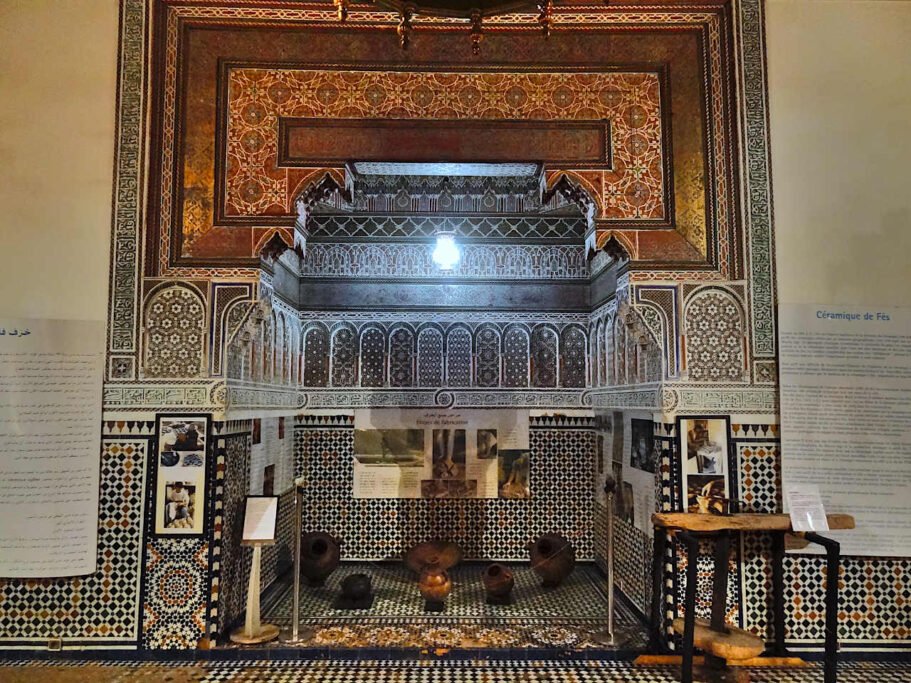
Right next door, the Marrakech Museum—also known as the Omar Benjelloun Foundation—awaits inside a beautifully restored 19th-century palace. Its temporary exhibitions rotate between Moroccan art, crafts, and sculpture, but the architecture alone is worth the visit.
The covered central patio with its ornate ceiling is spectacular, flooded with light and decorated with delicate plasterwork. Once again, look up—Marrakech ceilings will ruin you for minimalism forever.
Grab the combined ticket with the Ben Youssef Madrasa—it costs only about €1 more and saves you another line.
Tanners’ Quarter of Marrakech
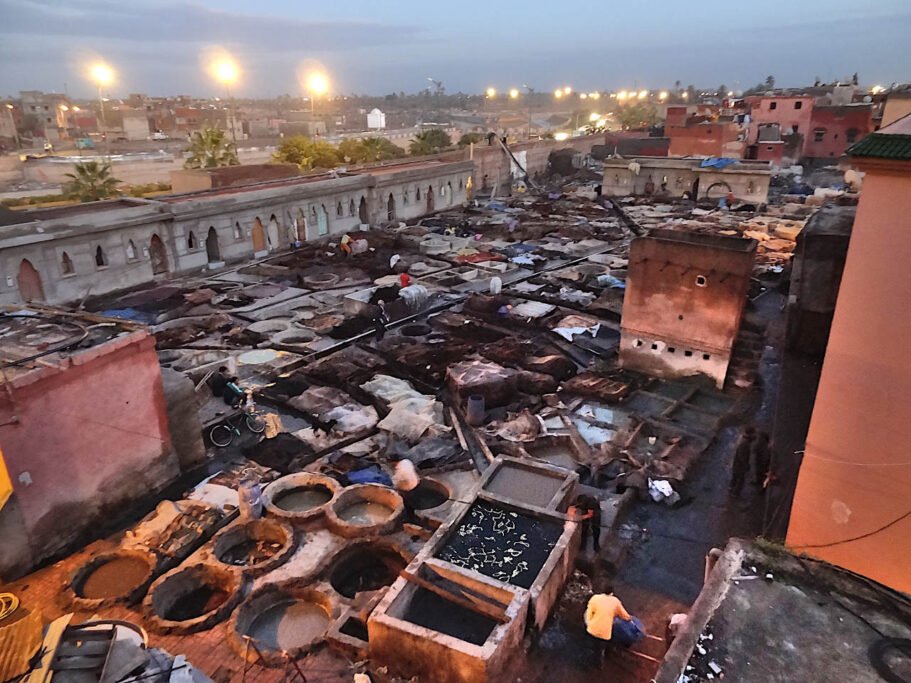
To finish your second day, head for the Tanners’ District—one of the city’s oldest quarters and still buzzing with traditional craft. Finding it isn’t hard; in fact, several self-appointed “guides” will be eager to show you the way (and inevitably, their cousin’s shop).
Arm yourself with a sprig of mint under the nose—the smell of curing leather is… let’s say, robust! Watching the artisans work the hides with natural dyes is fascinating. Everything is done by hand, just as it has been for centuries.
Technically, the tour is free—but it ends at a leather shop, and yes, prices can be wild. A little haggling is part of the fun; we walked away with a beautiful leather bag at half the asking price and a story to tell.
By the end of your second day, you’ll have walked through centuries of history—from the ornate palaces of the Saadians to the humble student rooms of Ben Youssef—and felt Marrakech shift from chaos to calm and back again. The city has that rhythm: dazzling, dizzying, utterly unforgettable.
Visit Marrakech in 3 days
What to do in Marrakech in 3 days?
This time, we step beyond the medina’s walls and mix icons with modern Marrakech. Day three is all about gardens, design, and a fresh angle on the city’s rhythm.
- The Majorelle Garden
- The Yves Saint-Laurent Museum
- The Guéliz district
- The Secret Garden
- The Confluences Museum
Majorelle Garden
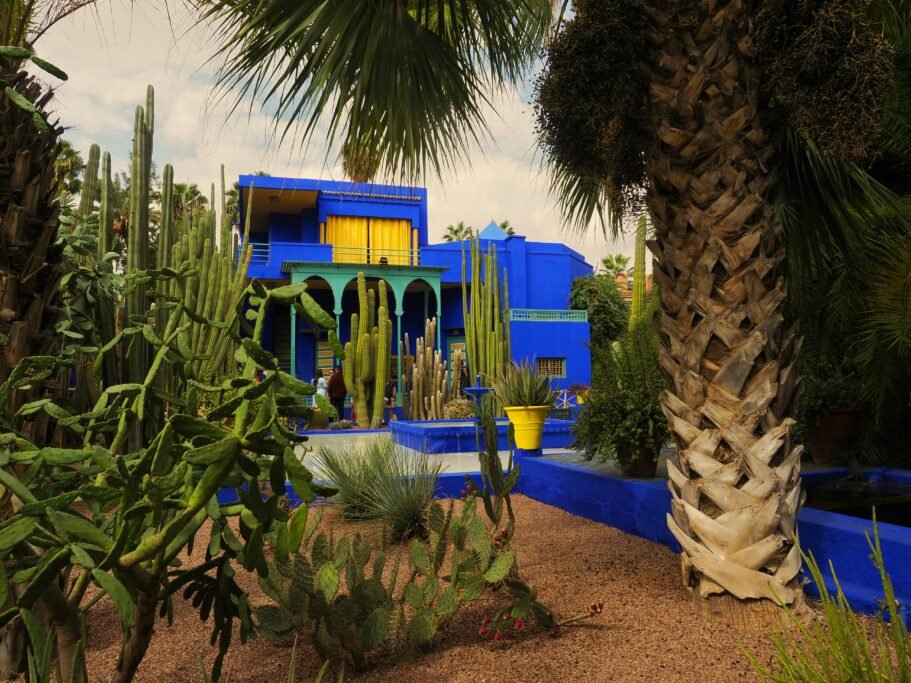
Among Marrakech’s must-sees—and just outside the medina—lies the Majorelle Garden, a small, ravishing world of palm shadows, cobalt blue, and quiet paths.
Although it bears the name of its founder, the painter Jacques Majorelle, the property is world-famous as the Marrakech residence of Yves Saint-Laurent. The designer fell for the garden (and its Art Deco villa) in 1966, then bought it in 1980 with his partner Pierre Bergé.
Majorelle dreamed of a lush oasis inspired by Islamic gardens. Saint-Laurent and Bergé refined it further, creating a true botanical sanctuary of 300 species across a single hectare. It’s compact, yes, but as the saying goes: small is beautiful. It’s considered one of the most beautiful gardens in Marrakech—and in Morocco.
We discovered it under a milky sky (luck of the draw!), but the blues still popped, and the pathways felt serene. With around 600,000 visitors a year, it’s undeniably popular—especially with couples looking for a romantic pause.
The villa is famous for its intense blue and houses a fascinating Berber Museum founded by YSL. Photos weren’t allowed inside—shh, we may have snapped a couple anyway…
Refuel at the garden café, then—right next door—step into the Yves Saint-Laurent Museum, dedicated to his fashion legacy. Calling all design lovers: this one’s for you.
Opening hours and prices of the Majorelle Garden and the Yves Saint-Laurent Museum
Open daily from 9am to 6pm (last entry 5:30pm). Full-price tickets:
- Garden only: 120 DH (≈ €12), 60 DH international students, free under 12; 40 DH for Moroccan residents, 20 DH Moroccan students
- Garden + Berber Museum: 150 DH, 80 DH international students, free under 12; 60 DH residents, 30 DH Moroccan students
- Garden + Berber Museum + YSL Museum: 220 DH, 100 DH international students, free under 12; 70 DH residents, 35 DH Moroccan students
- YSL Museum only: 100 DH, 60 DH international students, free under 12; 40 DH residents, 20 DH Moroccan students
Yes, prices have climbed in recent years; we still think it’s worth it. Given the crowds in peak season, book skip-the-line tickets in advance!
There’s even a combo tour with hotel pick-up for the Majorelle Gardens followed by a one-hour camel ride in the Palmeraie.
Guéliz: the modern district of Marrakech
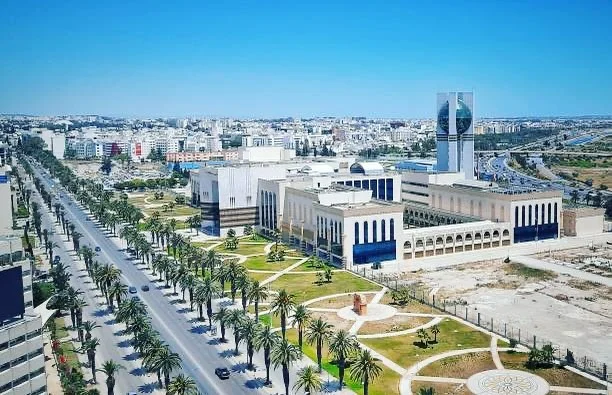
Next up: Guéliz. Born during the French protectorate, it still feels more “European”—an easy landing if you want modern cafés and wide sidewalks after the medina’s hum.
Think contemporary (but still ochre) facades, tidy streets, McDonald’s and Starbucks rubbing shoulders with a big mall and “world food” restaurants, plus locals in Western dress. It’s not culture shock—it’s contrast.
Spot the Royal Theatre in its oriental finery, then head to the Marrakech train station, a “neo-regional” gem we fell for—far preferable to the blank futurism you sometimes see elsewhere. A great reminder that Marrakech isn’t only the medina.
Shoppers, you’re covered: explore the area’s many malls, including Carré Eden.
Secret Garden of Marrakech
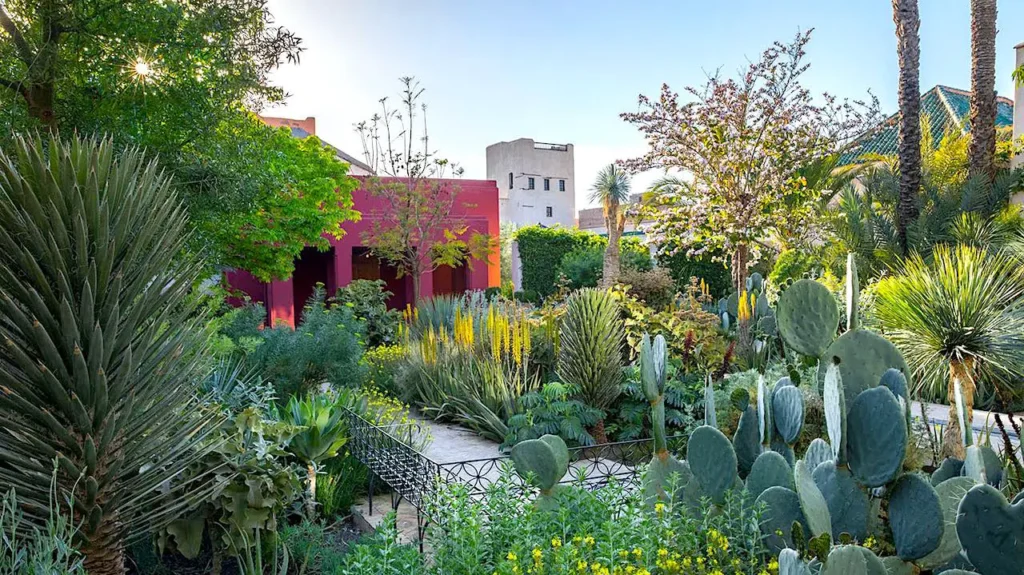
Back in the medina and near the central souks, you’ll see signs for the Secret Garden. In the 16th century, this site anchored a grand Saadian complex of palaces—later destroyed when the dynasty ended.
A new palace rose in the mid-19th century, changing owners until it was abandoned in the 1930s. Recently restored, today’s Jardin Secret actually comprises two riads: an Islamic garden and an exotic garden. Exhibits explain the brilliant traditional water systems.
Parts of the palace now host an exhibition hall, a boutique, and a café. Climb the tower for a pretty panorama over the garden and the medina (it was still under construction when we visited).
Hours: daily, 9:30 a.m.–5:30 p.m. or 6:30 p.m. depending on season (earlier summer closing).
Entrance: 80 DH; 60 DH ages 7–24; free under 7 and for disabled visitors + companion.
Tower: +40 DH (30 DH reduced).
Dar el Bacha: the Museum of Confluences in Marrakech
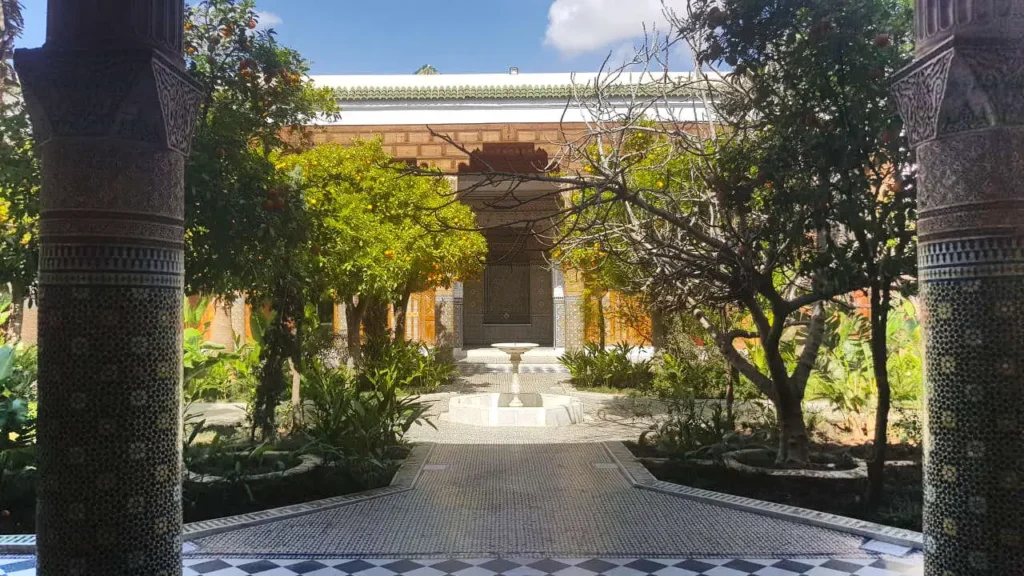
Right beside the Secret Garden stands the newly opened Musée des Confluences, in a partially restored 1912 palace. This was once the residence of El Glaoui, Pasha of Marrakech under the French Protectorate—yes, it was grand.
Inside, you’ll find rotating displays of regional arts: woodwork, ceramics, jewelry, textiles. Only a portion is open at any one time, so collections change—perfect if you like surprises. Don’t miss the café lounge featuring coffees from around the world, and pause in the tranquil riad.
Hours: daily except Tuesday, 10 a.m.–6 p.m.
Entrance: 60 DH for foreigners; 25 DH for nationals.
That wraps day three: a blend of heritage and modern life, of couture and cacti, of blue walls and golden light. It’s Marrakech, reframed—still dazzling, just from a different angle.
Visit Marrakech in 4 days
What to do in Marrakech in 4 days?
Four days in Marrakech? Now we’ve earned the right to slow down a little — to wander, to linger, to peek behind the carved doors that once felt off-limits. Today’s plan: gardens, riads, palaces, and one or two legendary hotels where you can sip mint tea and pretend you live there.
- The Menara Gardens
- Riads and historic hotels
- The Tiskiwin (Bert Flint) Museum
Menara Gardens
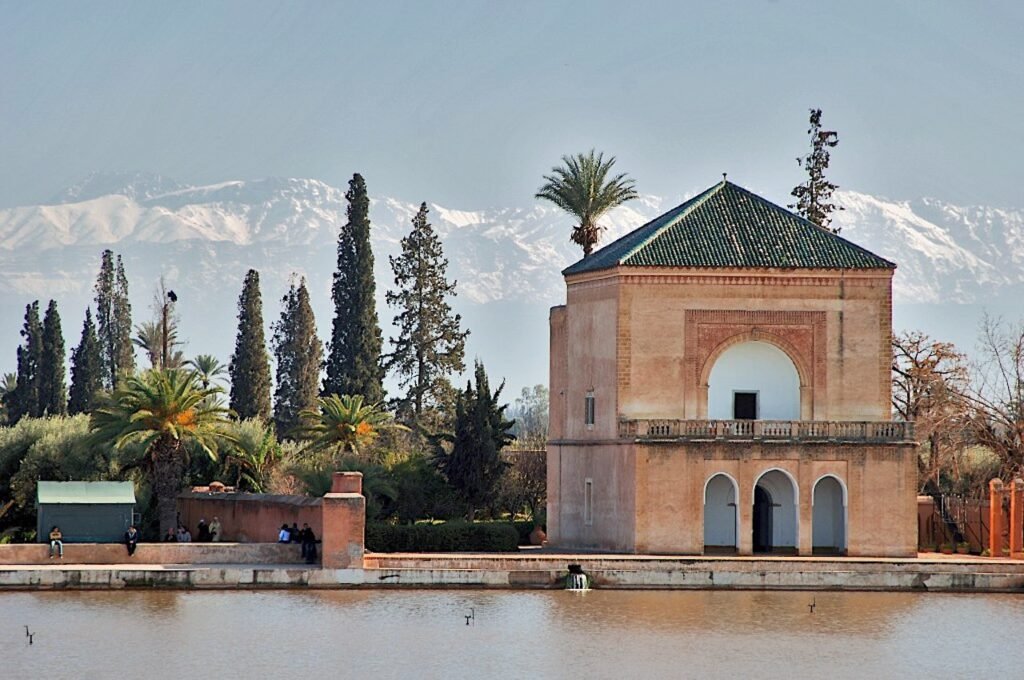
Located about 45 minutes west of Jemaa el-Fna Square, the Menara Gardens offer a breather from the city’s sensory overload. Planted with olive trees and centered around a massive reflecting pool, this 12th-century orchard has been soothing Marrakchis for centuries.
The 19th-century pavilion and its mirror-still reservoir are postcard perfection, especially when the Atlas Mountains loom pink in the distance. Just be warned: it’s popular. We found it beautiful but busy — and, honestly, we slightly preferred the quieter Agdal Gardens nearby for a more local, less touristy vibe.
Riads and beautiful hotels in Marrakech
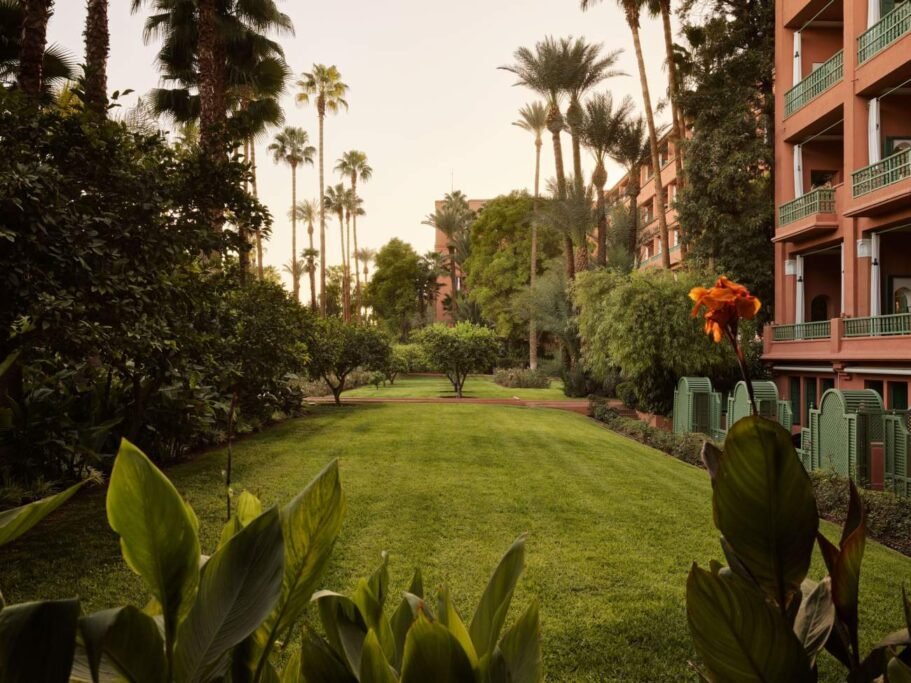
Next, let’s talk about riads — those Andalusian-style mansions with hidden courtyards that make Marrakech’s heart beat a little slower. They’re architectural poetry: tiled patios, arched doorways, the scent of orange blossom hanging in the air.
We managed to peek into a few (for a few dirhams — nothing’s ever truly free here). As always, expect someone to expect a tip, but don’t feel pressured; a friendly coin or two is fine.
Better yet, stay in one. Waking up to birdsong echoing off mosaic walls beats any generic hotel corridor. For bigger budgets, Marrakech’s palace-hotels are pure fantasy: the kind of places that make you whisper instead of talk.
We stepped through the gates of La Mamounia — a Belle Époque icon that’s free to enter — and strolled its lush gardens. Think marble arcades, palms, roses, and fountains everywhere. You half expect Churchill to walk by in a linen suit.
Next, we tiptoed into the Royal Mansour, discreet and dreamlike. We thought about ordering a drink until we saw the menu: €20 cocktails. We smiled politely and drifted out again. (No regrets, only memories!)
Tiskiwin Museum (Bert Flint)
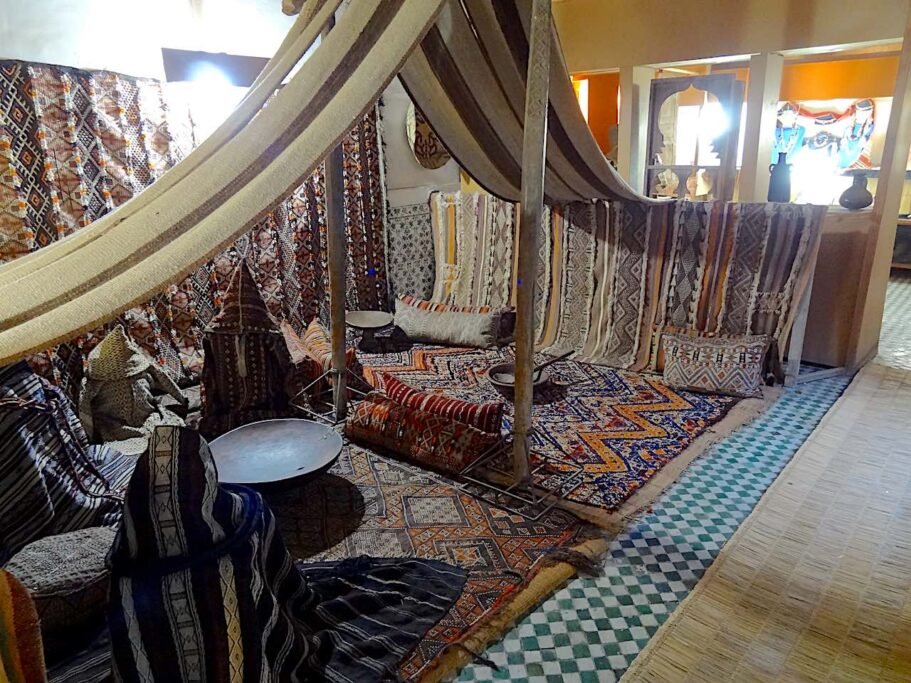
Culture lovers, this one’s for you. Hidden next to the Bahia Palace, the Tiskiwin Museum — also known as the Bert Flint Museum — is the passion project of a Dutch scholar who spent decades collecting North African art and ethnographic treasures.
Inside this early 20th-century house, you’ll find textiles, masks, jewelry, and handicrafts from across Morocco and the Sahara — each room telling a story of trade, migration, and artistry. It’s a quiet, human-scaled museum that feels more like stepping into someone’s personal archive than a curated institution. We loved it.
And that’s day four — slower, deeper, more introspective. Marrakech starts to feel less like a whirlwind and more like a living, breathing companion. You’ve walked its palaces, tasted its spice, and now, maybe, you’re finally moving at its pace.
Visit Marrakech in 5, 6 or 7 Days
What to do in Marrakech in 5, 6, or 7 days?
After four days of tiled courtyards and mint tea, you’ve earned your explorer stripes. You’ve conquered the medina, bartered like a pro, and maybe even found your favorite riad. Now it’s time to stretch those desert legs — because beyond Marrakech lies an entirely different Morocco. Think waterfalls, mountain roads, dunes that look like Mars, and fishing towns that smell like salt and cinnamon.
If you’re staying more than four days in Marrakech, you’ve already seen the city’s major landmarks. You can either slow down — hammam, riad, repeat — or dive into one of the many excursions around the Red City.
Before we roll, a quick travel truth: book online through verified platforms (GetYourGuide, Viator, etc.) instead of random street vendors. You’ll skip the drama, and yes, everything is cancellable.
Marrakech Palm Grove
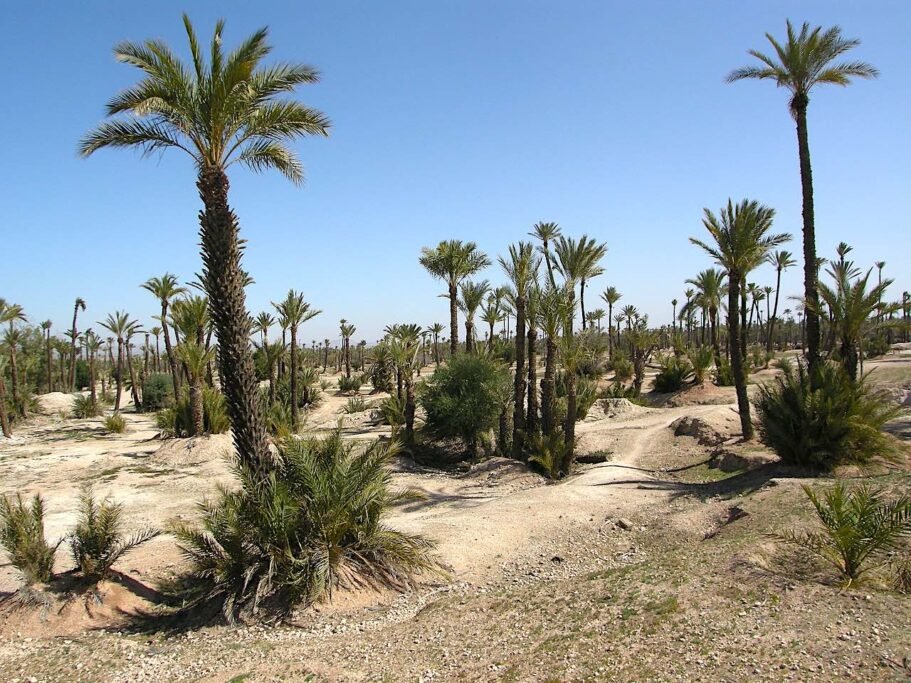
The legendary Palmeraie — or Marrakech Palm Grove — stretches across some 15,000 hectares and shelters nearly 100,000 date palms. Created in the 11th century, it’s an oasis turned icon, but like most legends, it’s a bit frayed at the edges.
Locals told us the truth: the palm grove is struggling with overexploitation and water scarcity. Parts of it are dry, and urban sprawl keeps nibbling at the edges. Still, it remains a classic experience if you want that quintessential camel photo under the palms.
You can book a camel ride through the Palmeraie, often paired with mint tea and hotel pick-up — easy, scenic, and delightfully touristy in the best way. Just don’t expect untouched wilderness.
Sahara Desert Excursion
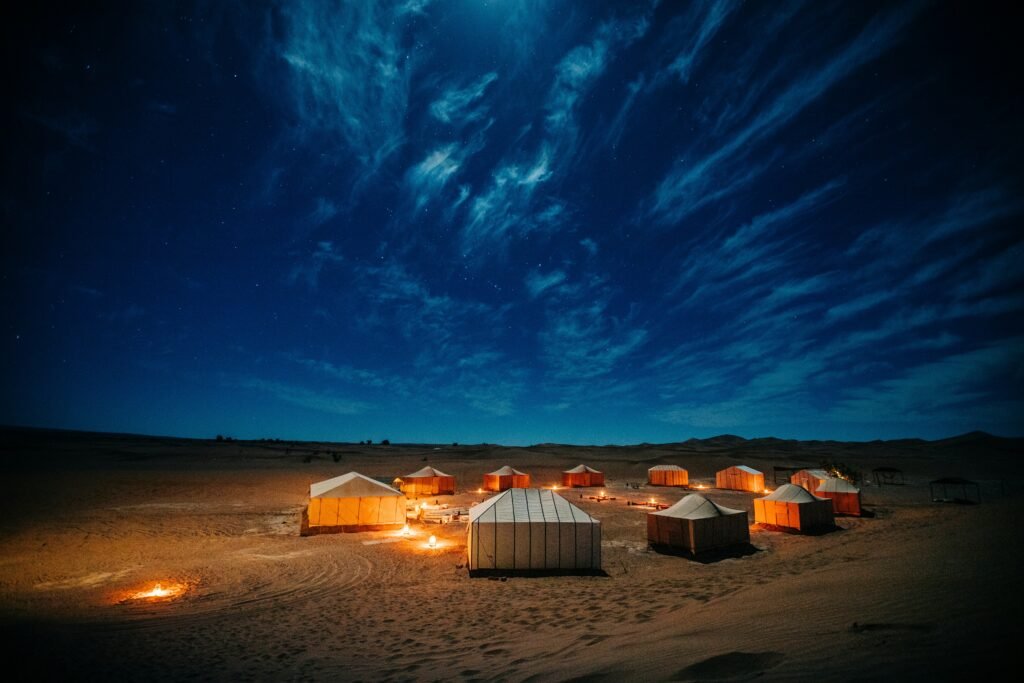
Now for the big one: the desert trip. This is Morocco’s rite of passage — a road movie stretched across sand and stars. The three-day Sahara excursion from Marrakech takes you deep into the south, ending at the dunes of Merzouga near the Algerian border (yes, the same desert where “Lawrence of Arabia” and “Gladiator” were filmed).
On the way, you’ll cross the High Atlas Mountains, visit the kasbah of Aït Ben Haddou, wind through the Dades Gorges, and stop in Ouarzazate, Morocco’s cinematic capital. Then it’s on to the dunes — and that dreamy night in a Berber camp under a galaxy of stars. Yes, there’s a camel ride (technically a dromedary — same thing, different PR).
Fair warning: it’s a long trip — around 560 km to Merzouga — but the scenery keeps your jaw occupied. I didn’t go myself (snakes, sand, and me? a hard no), but everyone I met said it’s one of those “once in a lifetime, once is enough” kind of journeys.
Ouzoud Waterfalls and Berber Villages
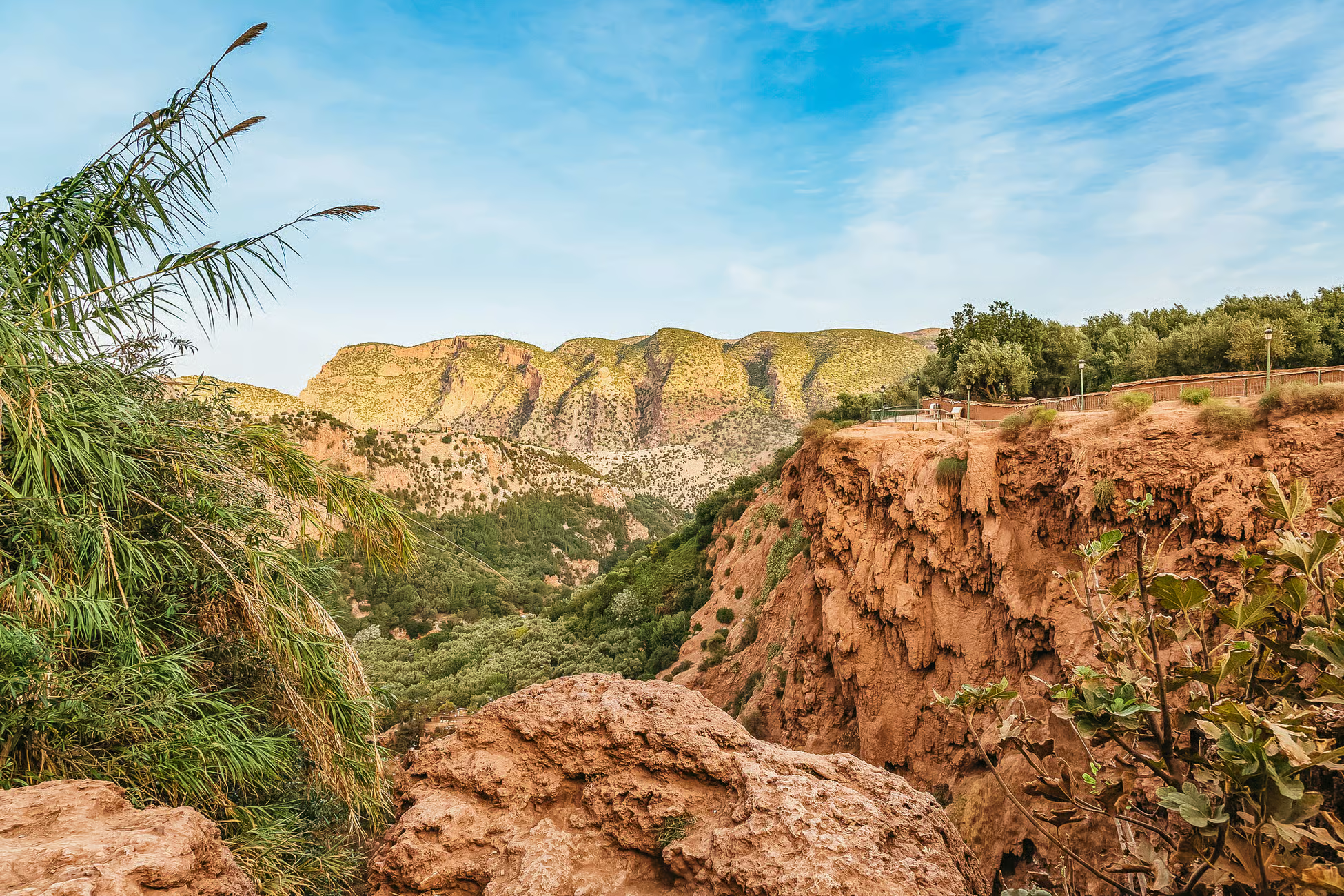
If you crave nature over dunes, swap sand for spray. A day trip to the Ouzoud Waterfalls — about 150 km northeast of Marrakech — delivers lush valleys, friendly macaque monkeys, and a refreshing dip in the El Abid River. Bring a swimsuit and sturdy shoes.
Most tours include a guided hike, boat ride, and lunch at a riverside restaurant. It’s the perfect antidote to the city’s intensity — waterfalls instead of motorbikes, mist instead of spice smoke.
Visit Essaouira from Marrakech
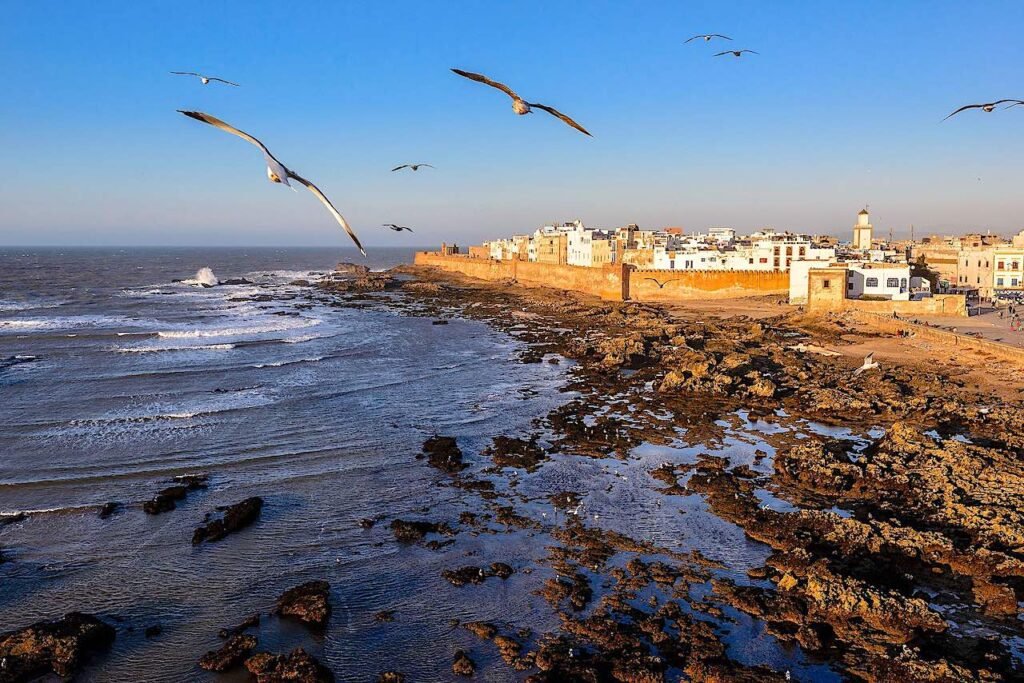
And finally, a coastal detour: Essaouira — once Mogador, now a windswept bohemian haven two and a half hours west of Marrakech. Think Atlantic ramparts, whitewashed lanes, and a rhythm that’s pure ocean breeze after the medina’s chaos.
The old city, with its blue shutters and sea air, reminded us of a Moroccan Saint-Malo—or maybe Cádiz—with a whiff of cumin and argan oil. Unfortunately, we couldn’t go (flooded roads, long story), but everyone swears it’s worth the drive.
Other Museums in Marrakech
If you’d rather stay put and keep soaking up culture, Marrakech has plenty of smaller museums worth your time:
- Boucharouite Museum — a cozy private space showcasing Berber carpets and textiles.
- House of Photography — a beautiful collection of Moroccan photos from 1870–1950, plus a rooftop café.
- MACMA Museum of Art & Culture — in Guéliz, featuring modern art and temporary exhibitions.
By the end of a week in Marrakech, you’ll have met every shade of the city — the ochre walls, the quiet courtyards, the orange groves, the noise, the calm, the call to prayer echoing through dusk. Stay long enough, and Marrakech starts to whisper back.
Where to Eat in Marrakech: Gastronomy in Morocco
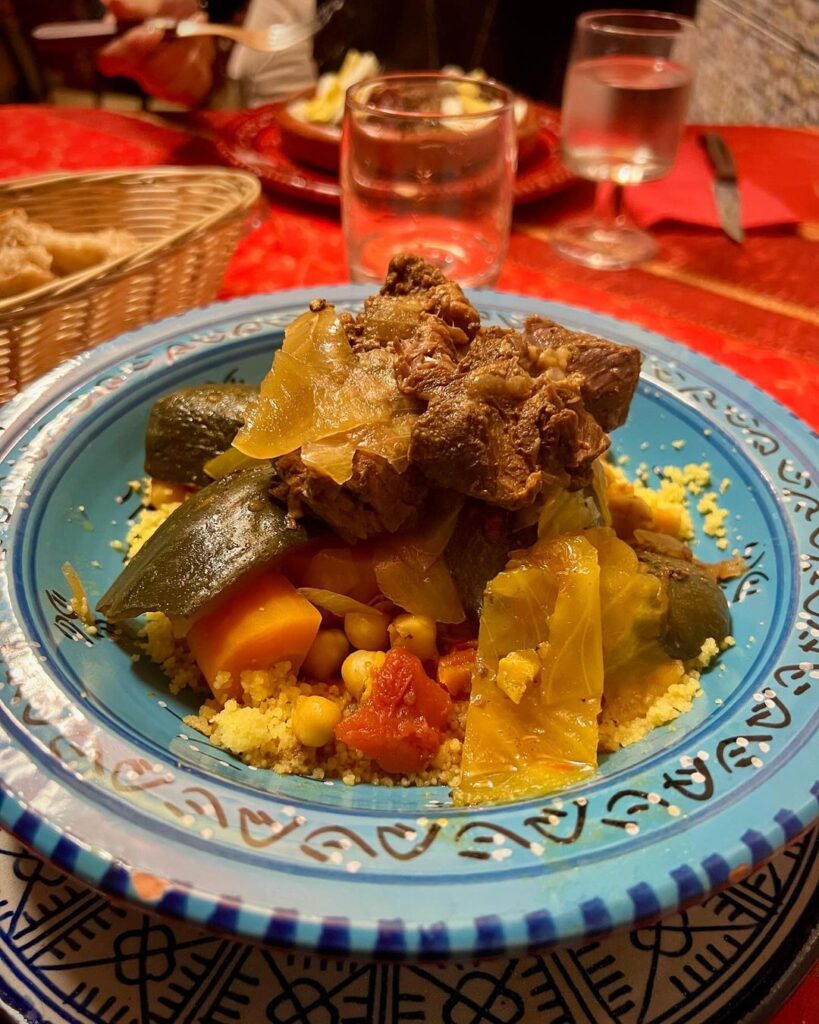
Morocco is a feast disguised as a country. Tagines bubbling in clay pots, clouds of couscous as light as air, oranges juiced by the gallon — Marrakech is where appetite becomes itinerary.
And the best part? You don’t have to splurge. Skip the tourist menus, follow the locals, and you’ll find food that hums with life for the price of a coffee back home.
Classic Spots We Loved
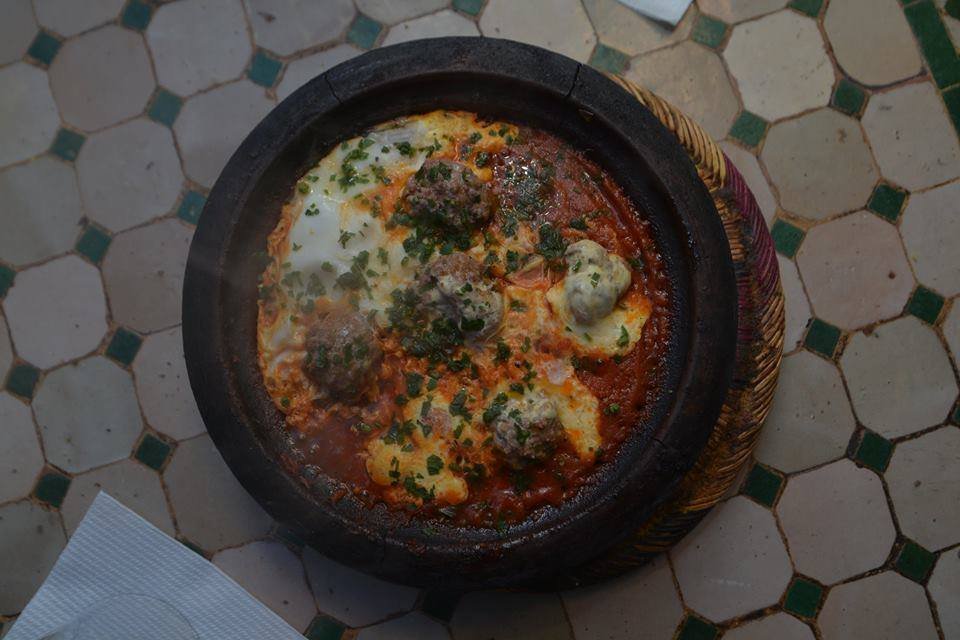
Our go-to? Oscar Progres, tucked just off Jemaa el-Fna Square. No frills, fast service, and food that tastes like home cooking with an audience of locals. We kept coming back for their kefta tagine with eggs — spicy, rich, and impossible to forget.
For a slightly dressier vibe, Chez Brahim is the refined cousin — friendly service, live music, and those same Moroccan staples with a touch of polish. It’s touristy, sure, but still solid.
And over in Guéliz, we found seafood heaven at Al Bahriya. The concept? Pick your fish, pay by the kilo, and watch it sizzle on the grill. Prices range from 150–200 dirhams/kg (about €15–€20), lobster around 300 DH/kg. Simple, smoky perfection.
Must-Try Moroccan Dishes
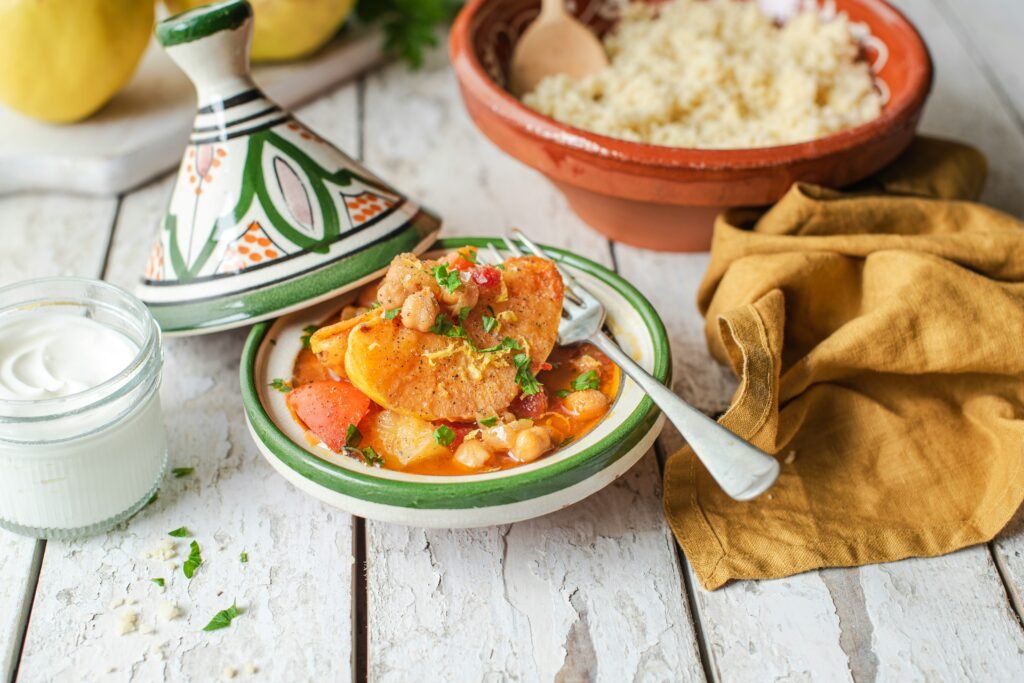
Every Moroccan meal is a small ceremony — and these are the dishes that define it:
- Tagine — Slow-cooked stew (chicken with lemon and olives, lamb with prunes, or kefta with eggs). Served sizzling, eaten slowly.
- Couscous — Traditionally prepared on Fridays, steamed to fluffy perfection and topped with vegetables, chickpeas, and tender meat.
- Pastilla — A flaky pie of chicken, almonds, and cinnamon dusted with powdered sugar — sweet, savory, and utterly confusing in the best way.
- Harira — A tomato-and-lentil soup that comforts like a hug; especially common during Ramadan.
- Grilled brochettes — Street food perfection, smoky and served with fresh bread and a squeeze of lemon.
Sweet Things & Drinks
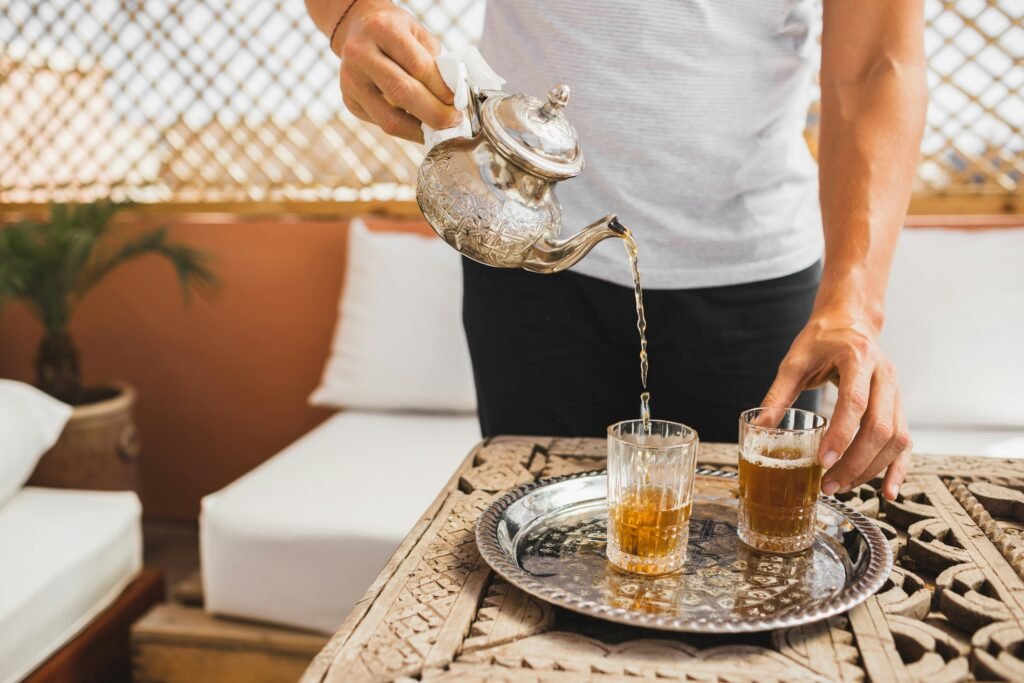
Moroccan pastries are the stuff of dreams — almond, honey, sesame, rosewater. Skip the glossy tourist patisseries and head to small local bakeries where locals queue. The price? Half as much, twice as good.
And then, there’s tea. Mint tea isn’t a drink here; it’s a ritual. Every corner café serves it, often with a silver teapot and a view of life passing by. Pair it with chebakia (flower-shaped honey cookies) for a true Marrakchi moment.
For drinks, juice stalls near Jemaa el-Fna are irresistible. Fresh orange juice goes for 4 dirhams (about €0.40). Try avocado, fig, banana, or coconut blends too — you’ll wish you could bottle them for home.
And don’t leave without tasting amlou — Morocco’s answer to Nutella, made from argan oil, almonds (or peanuts), and honey. Slather it on pancakes, or just eat it with a spoon while pretending you’ll “save the rest for later.”
Marrakech is, above all, a city for eaters. Whether it’s skewers on the street, royal tagines in a riad, or flaky pastries under a tangerine sky, you’ll remember the flavors long after the call to prayer fades.
FAQs – Marrakech Itinerary
How many days do you need to visit Marrakech?
Ideally, plan at least 3 days to see Marrakech’s main attractions like the souks, palaces, and gardens without rushing. With 5 to 7 days, you can slow down, explore hidden riads, and take day trips to the Atlas Mountains or Essaouira.
What are the must-see places in Marrakech?
Start with Jemaa el-Fna, the Bahia and El Badi Palaces, the Ben Youssef Madrasa, and the Majorelle Garden. Add in the Secret Garden, Dar Si Saïd Museum, and the Marrakech Museum for a deeper cultural hit.
What are the best day trips from Marrakech?
Popular day trips include the Ouzoud Waterfalls, Ourika Valley, Essaouira, the Agafay Desert, or even a 3-day Sahara excursion to Merzouga. Each offers a different slice of Moroccan landscape.
Is Marrakech safe for tourists?
Yes, Marrakech is generally safe. Use common sense — avoid flashing valuables, say “no thank you” to pushy touts, and keep your bag close in the souks. The biggest risk is over-spending at the market, not crime!
What should I wear when visiting Marrakech?
Opt for lightweight, modest clothing — loose trousers, long skirts, and breathable shirts. Women don’t need to cover their hair, but short shorts or low-cut tops will attract attention. A hat, sunglasses, and comfortable shoes are essentials.
When is the best time to visit Marrakech?
The best months are March to May and September to November, when the weather is warm but not scorching. Winter is pleasant too, while summer can be intensely hot (over 40 °C).
How do you get around Marrakech?
Explore the medina on foot, take petit taxis for short rides outside the walls, or use Careem/Bolt apps for convenience. Expect to negotiate prices — it’s part of the experience.
Where should I stay in Marrakech?
Stay in a riad inside the medina for atmosphere, or choose Guéliz for modern comforts and easier access. Riads range from budget guesthouses to palatial luxury stays with courtyards and rooftop terraces.
What foods should I try in Marrakech?
Don’t miss tagine kefta, pastilla, couscous, and harira soup. Snack on Moroccan pastries, sip mint tea, and try amlou, a sweet spread made with argan oil and almonds.
Can I visit the desert from Marrakech?
Yes — you can take a 3-day trip to the Sahara Desert via Ouarzazate and Aït Ben Haddou. For a shorter experience, visit the Agafay Desert, just 45 minutes away, for camel rides and stargazing without the long drive.
- Perfect Morocco with kids Itinerary (2026): 25 Days from Tangier to the Anti-Atlas, Coast, and Marrakech
- Where To Stay In Agafay Desert in 2026: Luxury Moroccan Holidays
- 14 Most Beautiful Beaches In Morocco (2026)
- What To Wear In Morocco (2026): Real-World Travel Guide For Female Travellers
- 3 Best Places To Stay in Marrakech Medina [2026 Updated]