
Travel writing based on first-hand experience
The road narrows, the buildings disappear, and suddenly the Mediterranean fills the entire windscreen. Cyprus does beaches rather well—sometimes with rows of sunbeds and iced coffees, sometimes with nothing but sand, sea, and the growing suspicion that we should have packed more water. Discover our list of best beaches in Cyprus.
The island offers two noticeably different beach experiences. Northern Cyprus is generally quieter and less developed, with long sandy stretches, natural coves, and prices usually quoted in Turkish lira. Southern Cyprus has more organised facilities, Blue Flag beaches, lively resort towns, and prices in euros.
Neither side is universally “better.” It depends on whether you want beach clubs and easy logistics or a wilder coastline where the nearest facility may be a determined goat.
One useful detail before we begin: Nicosia is inland and has no beaches. Travelers staying in the capital usually drive towards Kyrenia, Famagusta, Larnaca, or Ayia Napa for a day beside the sea.
Beach fees, sunbed prices, and access arrangements can change during the season, so treat the prices below as a guide and check locally before setting off.
Planning a wider Cyprus escape?
Pair your beach-hopping itinerary with a food crawl through several corners of the island. Taste traditional Cypriot cooking at the best taverns in Larnaca, plan a sunset dinner at one of the most romantic restaurants in Limassol, or head inland to explore the best street food in Nicosia. For something different after several days of mezze, browse our guide to the best Asian restaurants in Nicosia.
Table of Contents
Best Beaches in Cyprus: Northern Cyprus
Northern Cyprus is where we head when we want more coastline and fewer competing Bluetooth speakers. The beaches around Kyrenia, İskele, Famagusta, and the Karpaz Peninsula range from organised beach clubs to remote turtle-nesting areas with barely any development.
Northern Cyprus Beaches at a Glance
| Beach | Area | Google score | Entry and facilities |
|---|---|---|---|
| Golden Beach | Karpaz Peninsula | 4.6 | Usually free; very limited facilities |
| Escape Beach | Kyrenia | 4.1 | Paid entry; packages may include sunbeds and umbrellas |
| Glapsides Beach | Famagusta | 4.5 | Usually free entry; sunbeds cost extra |
| Alagadi Turtle Beach | Kyrenia | 4.5 | Usually free; limited facilities |
| Long Beach | İskele | — | Public sections are free; resort areas may charge |
1. Golden Beach, Karpaz Peninsula
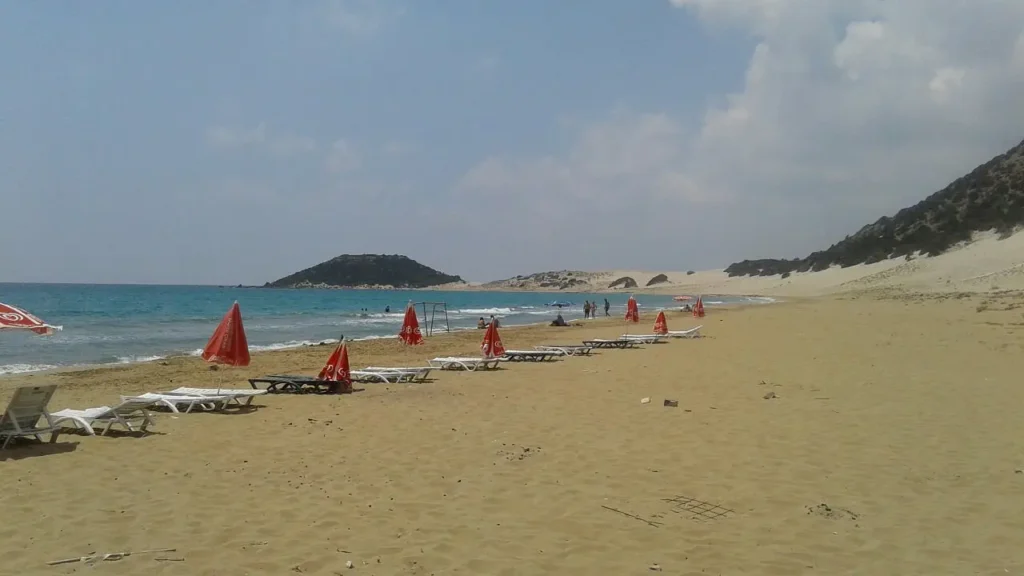
Golden Beach is the showstopper of Northern Cyprus. As we drive towards the tip of the Karpaz Peninsula, traffic thins, villages become smaller, and the island starts to feel increasingly remote.
By the time we reach the beach, the usual resort scenery has vanished. In its place: a long ribbon of pale sand, clear turquoise water, and enough room to find a section of coastline that feels almost private.
This is not the beach for cocktails delivered to your sunbed. The appeal is precisely the opposite. Golden Beach is wide, natural, and wonderfully undeveloped. The sea is often calm, and the long shoreline is perfect for walking until we find our own quiet corner.
Best for: remote scenery, peaceful swimming, couples, road trips, and travelers who prefer nature to beach clubs.
Location: Karpaz Peninsula, beyond Dipkarpaz.
How to get there: Follow the Karpaz road from İskele or Bafra, continue through Dipkarpaz, and look for the Golden Beach signs.
Entrance fee: Beach access is usually free. Small businesses or accommodation properties may charge separately for facilities.
Our tip: Bring drinking water, food, sunscreen, and shade. Facilities are limited, and that charming wildness becomes slightly less charming when we realise the nearest cold drink is many kilometres away.
2. Escape Beach, Kyrenia
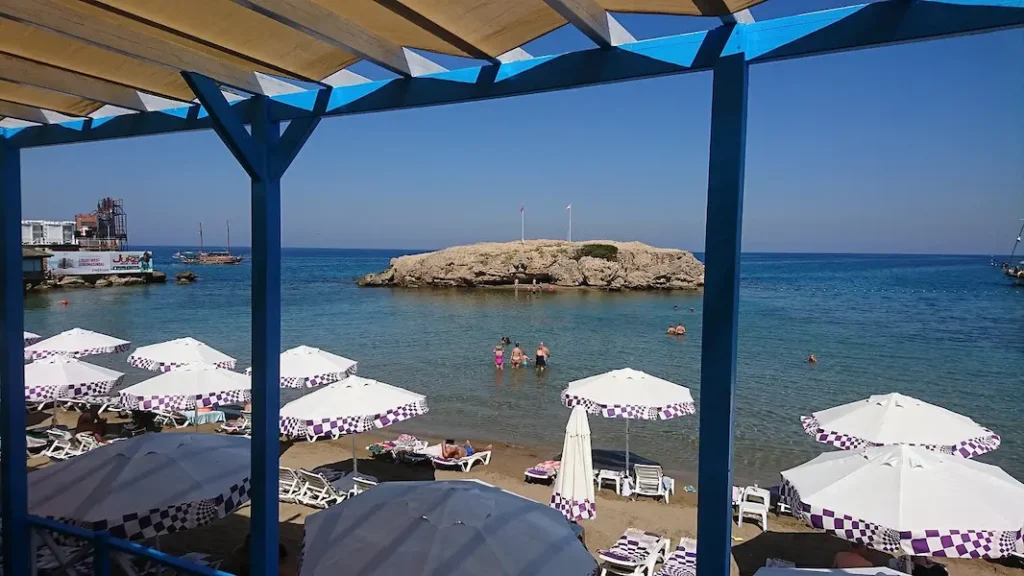
Escape Beach—also known as Yavuz Çıkarma Plajı—is for days when we want clear water without turning the beach trip into a survival exercise.
Located west of Kyrenia, it offers showers, changing rooms, sunbeds, umbrellas, food, and drinks. The sea is usually clear and relatively shallow close to shore, making it a convenient choice for families and less confident swimmers.
It is more developed than many Northern Cyprus beaches, but that organisation is exactly why people come. We arrive, find a sunbed, order something cold, and avoid carrying half the contents of our hotel room onto the sand.
Best for: an easy beach day, families, facilities, food and drinks, and travelers without their own beach equipment.
Location: Alsancak, west of Kyrenia.
How to get there: Drive west from central Kyrenia towards Alsancak. A rental car or taxi is usually the easiest option.
Entrance fee: Paid entry. Prices vary by season, and some packages include a sunbed and umbrella. The fee in 2025 was around 400 TL, but current prices should be checked before visiting.
Our tip: Weekends get busy. Arrive early if you want a good position near the water rather than the last lonely sunbed beside the car park.
3. Glapsides Beach, Famagusta
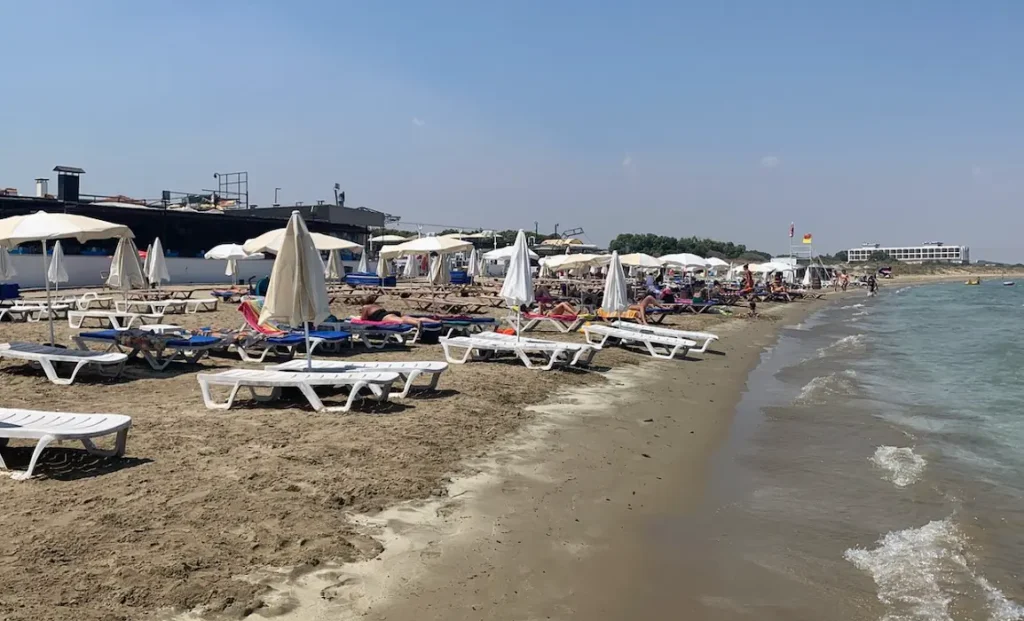
Why do families keep returning to Glapsides Beach? The answer is refreshingly uncomplicated: fine sand, shallow water, and plenty of space.
The gently shelving seabed makes swimming comfortable for children, while the broad beach gives groups room to spread out without becoming unwilling participants in someone else’s picnic.
Glapsides has enough facilities to make the day convenient but still feels more relaxed than a full-scale resort beach. We can rent a sunbed near the busier section or simply walk farther along the sand and put down a towel.
Best for: families, young children, groups of friends, shallow swimming, and budget beach days.
Location: Near the Famagusta–Salamis road.
How to get there: It is a short drive north of central Famagusta. Follow signs for Glapsides Beach.
Entrance fee: Entry is generally free. Sunbeds, umbrellas, food, and other services cost extra. Sunbeds cost around 100 TL during summer 2025, but prices may increase.
Our tip: Walk beyond the main cluster of sunbeds for more space and a quieter atmosphere.
4. Alagadi Turtle Beach, Kyrenia
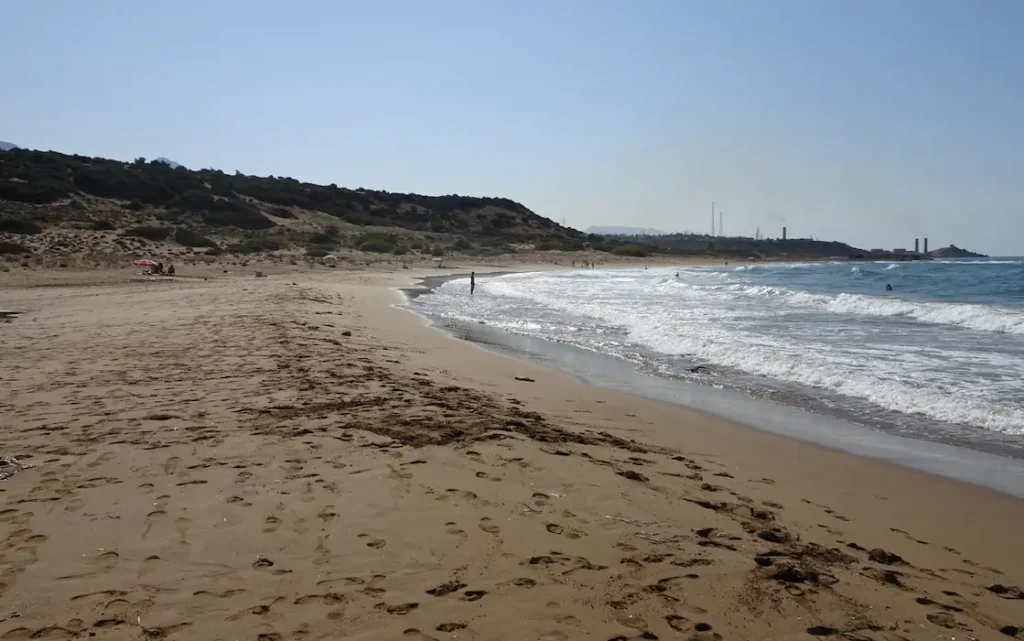
Alagadi is not polished, manicured, or particularly interested in becoming a beach club. That is exactly why we like it.
The beach is an important nesting area for loggerhead and green sea turtles, so development is restricted. The result is a natural coastline with soft sand, open views, and far fewer facilities than the organised beaches west of Kyrenia.
During nesting season, sections may be protected, and evening access can be controlled to reduce disturbance. Visitors should never touch nests, follow tracks, use bright lights at night, or approach turtles.
Best for: nature lovers, turtle conservation, quiet beach days, and travelers seeking an undeveloped coastline.
Location: Near Alagadi village, east of Kyrenia.
How to get there: The drive from central Kyrenia usually takes around 20–30 minutes. Follow signs towards Alagadi and the turtle beach.
Entrance fee: Generally free. Nearby businesses may charge for their own facilities or services.
Our tip: Check local conservation guidance before visiting. Keep noise low, take all rubbish away, and avoid using bright lights after sunset.
5. Long Beach, İskele
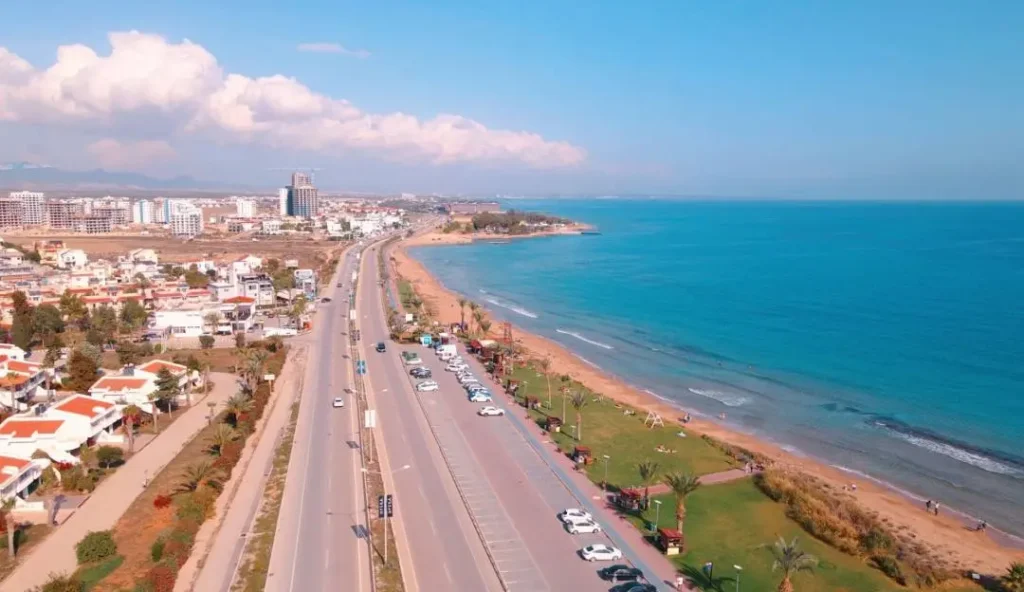
Long Beach gives us a little of everything: swimming, walking, cafés, modern developments, and a coastline long enough to avoid feeling trapped in one small patch of sand.
The beach runs along the İskele coast and has become one of the area’s most popular seaside destinations. Some sections remain public and simple, while others are connected to resorts, restaurants, or residential developments.
A long promenade makes this one of the better beaches for travelers who like to combine swimming with walking, cycling, or an evening wander.
Best for: long walks, families, morning swims, resort facilities, and travelers staying around İskele.
Location: The İskele coastline, northeast of Famagusta.
How to get there: Drive north from Famagusta towards İskele, then follow the coastal road and local signs for Long Beach.
Entrance fee: Public sections are generally free. Resort-operated areas, sunbeds, and private facilities may charge.
Our tip: Come early for quieter water and more space. Sunset is lovely, but the promenade becomes much busier in the evening.
6. Kervansaray Beach, Kyrenia
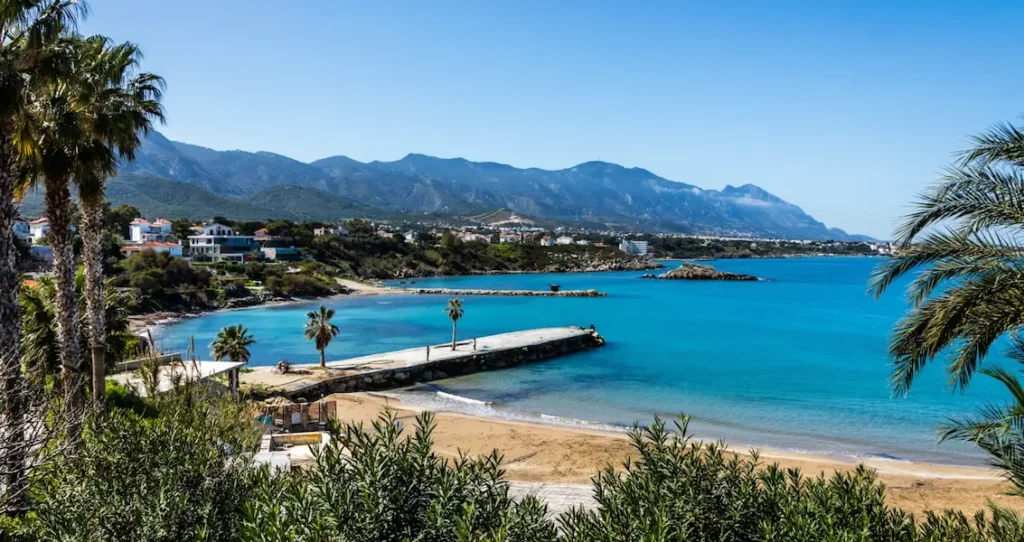
Kervansaray Beach is relatively small, but what it lacks in size it makes up for in sunset drama.
The water is usually calm and clear, making it a good option for a short swim rather than an ambitious all-day beach expedition. It is particularly appealing later in the afternoon, when the light softens and the coastline begins showing off.
Facilities and access arrangements vary between the public beach area and nearby businesses.
Best for: sunsets, short swims, couples, and travelers staying west of Kyrenia.
Location: West of central Kyrenia, near Karaoğlanoğlu and Alsancak.
How to get there: The drive from central Kyrenia usually takes around 10–15 minutes, depending on traffic.
Entrance fee: Public beach access may be free, while nearby businesses charge for sunbeds, food, or other services.
Our tip: Arrive in the late afternoon, swim before sunset, and stay for the changing light.
7. Camelot Beach, Kyrenia
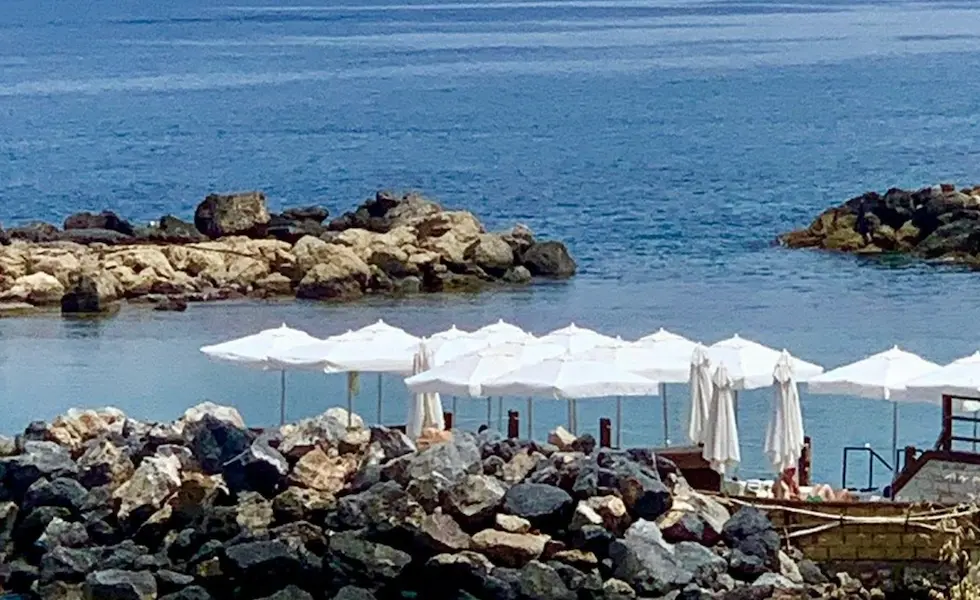
Camelot Beach is another organised option west of Kyrenia, but it generally feels more controlled and compact than Escape Beach.
The water is usually clean, while the seabed contains a mixture of sand and pebbles. Facilities make it an easy place to spend several hours without bringing every beach accessory known to humanity.
It can still become busy during summer weekends, though weekdays tend to be considerably calmer.
Best for: organised beach days, couples, swimming, sunbeds, and travelers who want facilities without the biggest crowds.
Location: Alsancak, west of Kyrenia.
How to get there: Drive west from central Kyrenia towards Alsancak.
Entrance fee: Paid entry. A fee of approximately €12 has been reported, although prices can vary by season and package.
Our tip: Visit on a weekday for a noticeably quieter experience.
8. Kaplıca Beach
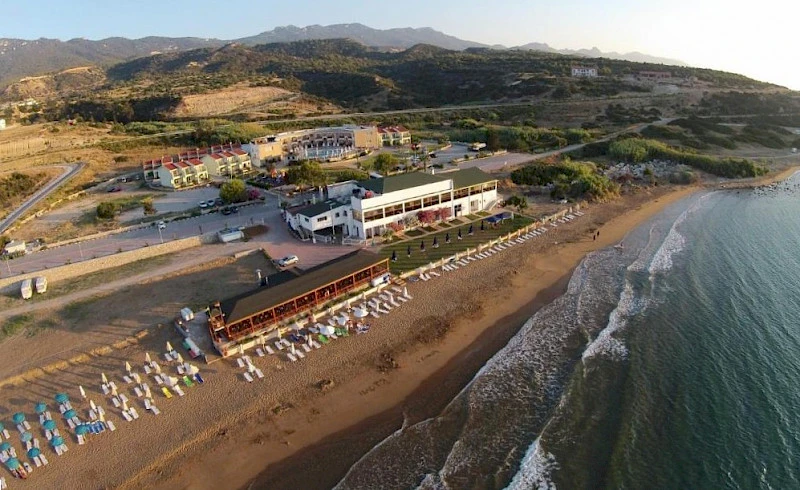
Kaplıca Beach sits well away from the island’s busiest resort centres. It is broad, quiet, and refreshingly uncomplicated.
The sea is generally shallow near shore, while the wide beach rarely feels as compressed as the organised beaches around Kyrenia. Most visitors are locals or travelers exploring the less-developed northeastern coastline.
Facilities can be extremely limited, so this is another beach where preparation matters.
Best for: quiet swimming, road trips, families with their own beach equipment, and getting away from resort crowds.
Location: Near Kaplıca village on the northeastern coast, along the Kantara route.
How to get there: Drive north from Famagusta towards Kantara and Kaplıca. A rental car is strongly recommended.
Entrance fee: Public access is generally free. Any resort-operated sections may charge for facilities.
Our tip: Bring water, snacks, shade, and anything else you expect to need. Do not assume there will be shops or reliable facilities beside the beach.
9. Palm Beach, Famagusta
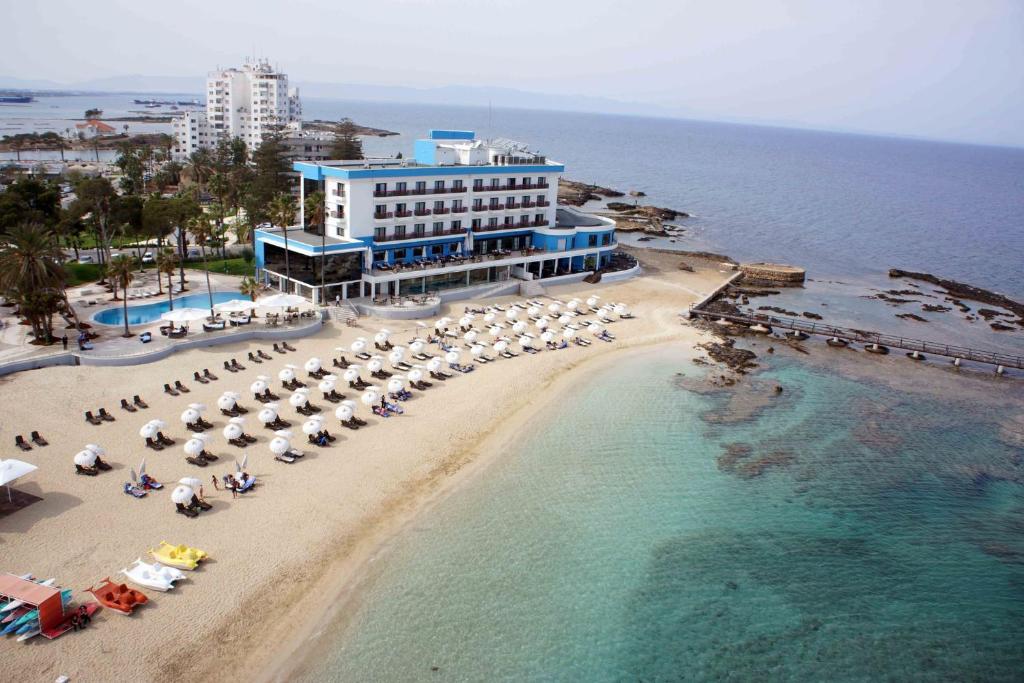
Palm Beach is one of the most unusual places to swim in Cyprus. It lies beside the fenced area of Varosha, also known as Closed Maraş, where abandoned high-rise buildings form an eerie background to the pale sand and blue water.
The sea is often calm, and the beach itself is attractive, but it is the surrounding history that makes the experience memorable. Few beaches come with quite this much geopolitical atmosphere.
Access rules have changed over time, and nearby hotel or controlled areas may have separate arrangements.
Best for: history, unusual scenery, calm water, photography, and travelers exploring Famagusta.
Location: Southern Famagusta, beside the Varosha boundary.
How to get there: It can be reached from central Famagusta by a short drive, taxi ride, or a longer walk.
Entrance fee: Access conditions vary. Some sections may be connected to hotel or private facilities.
Our tip: Visit in the morning for softer light, calmer water, and fewer people. Follow all signs and restrictions around controlled areas.
10. Diana Beach, Kyrenia
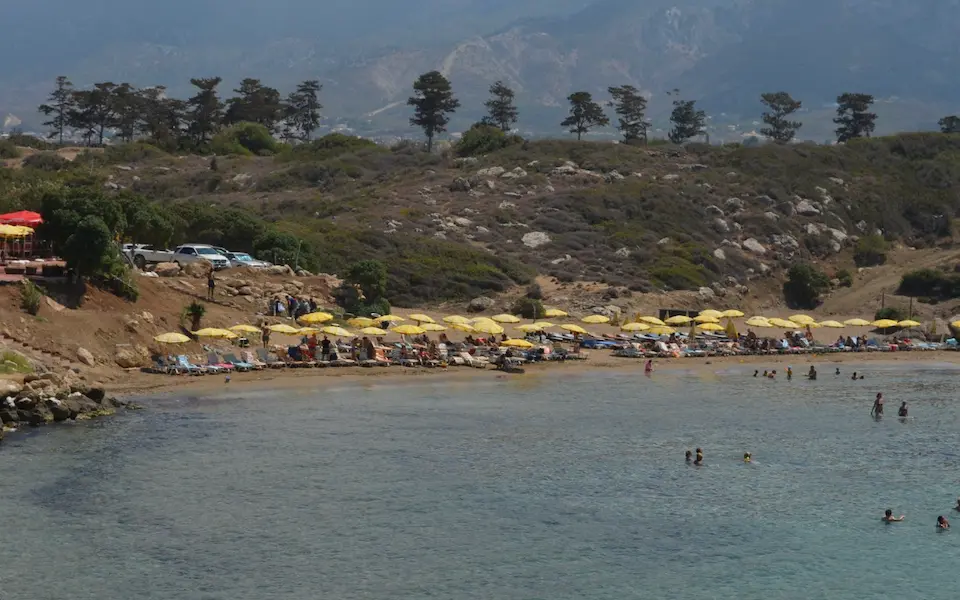
Diana Beach is a smaller cove for travelers who would rather avoid enormous resorts and densely packed rows of sunbeds.
The setting feels more intimate, and crowds are usually lighter than at the best-known beaches west of Kyrenia. It works particularly well for couples or anyone who wants a quieter few hours beside the sea.
Because it is small, available space and facilities can still fill during peak periods.
Best for: couples, quiet swimming, small coves, and a more relaxed beach atmosphere.
Location: Near Kyrenia.
How to get there: It is a short drive from the city centre, with a car or taxi being the most convenient option.
Entrance fee: Sunbeds reportedly cost around 330 TL in summer 2025. Prices and access arrangements may change.
Our tip: Go earlier in the day if you want the best choice of spots.
A Note About Restricted Coastal Areas
Parts of the Cypriot coastline lie close to military zones or controlled areas. Photography, filming, road access, or beach entry may be restricted.
Follow local signs, do not cross fences or barriers, and avoid photographing military installations. A perfect beach photo is rarely worth creating an international incident before lunch.
Beaches of Southern Cyprus
Southern Cyprus delivers the more polished side of the island’s beach life: Blue Flag beaches, promenades, beach bars, water sports, lifeguards, and sunbeds arranged with almost military precision.
Prices are in euros, and popular resort beaches can become very busy during July and August. In return, facilities are generally reliable, public access is straightforward, and many beaches are easy to reach by bus.
Best Beaches in Cyprus: Southern Cyprus Beaches at a Glance
| Beach | Area | Google score | Entry and facilities |
|---|---|---|---|
| Nissi Beach | Ayia Napa | 4.5 | Free entry; sunbeds and umbrellas cost extra |
| Fig Tree Bay | Protaras | 4.6 | Free entry; sunbeds and umbrellas cost extra |
| Makronissos Beach | Ayia Napa | 4.8 | Free entry; sunbeds and umbrellas cost extra |
| Finikoudes Beach | Larnaca | 4.6 | Free entry; sunbeds and umbrellas cost extra |
| Mackenzie Beach | Larnaca | 4.6 | Free entry; sunbeds and umbrellas cost extra |
11. Nissi Beach, Ayia Napa
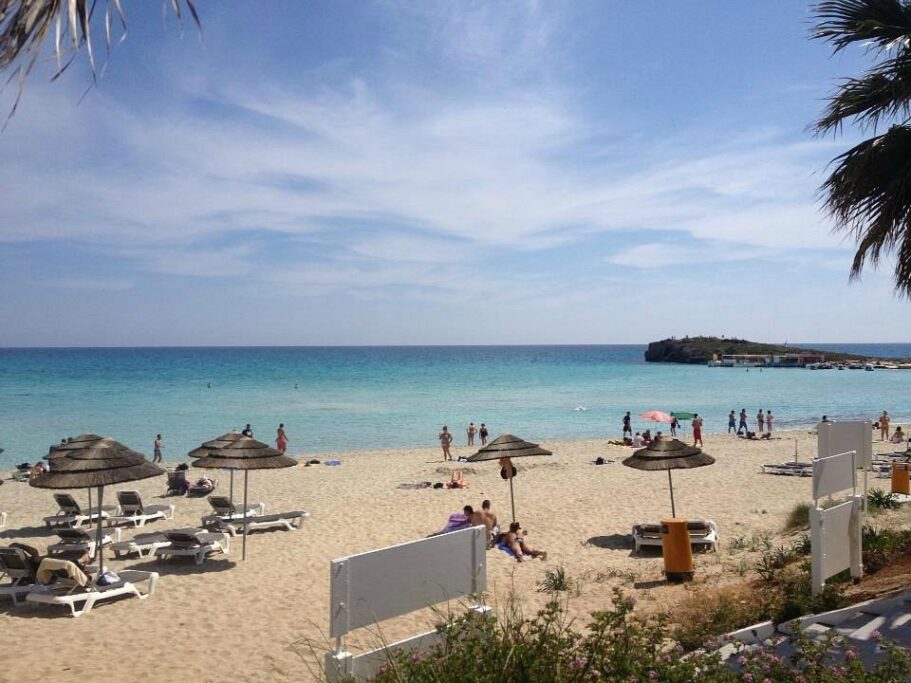
Nissi Beach is the beach people picture when they imagine Cyprus: pale sand, luminous turquoise water, and a shallow channel leading towards a tiny offshore islet.
Yes, it is beautiful. Yes, everyone else has noticed.
The shallow water near shore is usually warm and easy to swim in, while the organised beach offers cafés, water sports, changing facilities, and sunbed rentals. The atmosphere becomes increasingly lively as the day progresses.
Best for: turquoise water, first-time visitors, swimming, water sports, groups of friends, and lively beach days.
Location: West of central Ayia Napa.
How to get there: Local buses, taxis, rental cars, and some hotel shuttles connect Ayia Napa with Nissi Beach.
Entrance fee: Beach access is free. Sunbeds, umbrellas, and water activities cost extra. Prices reported for 2026 include around €15 for two sunbeds and an umbrella, though current rates should be checked locally.
Our tip: Arrive early. Before 9 a.m., the beach can feel almost peaceful; by midday, it may resemble an international convention for inflatable flamingos.
12. Fig Tree Bay, Protaras
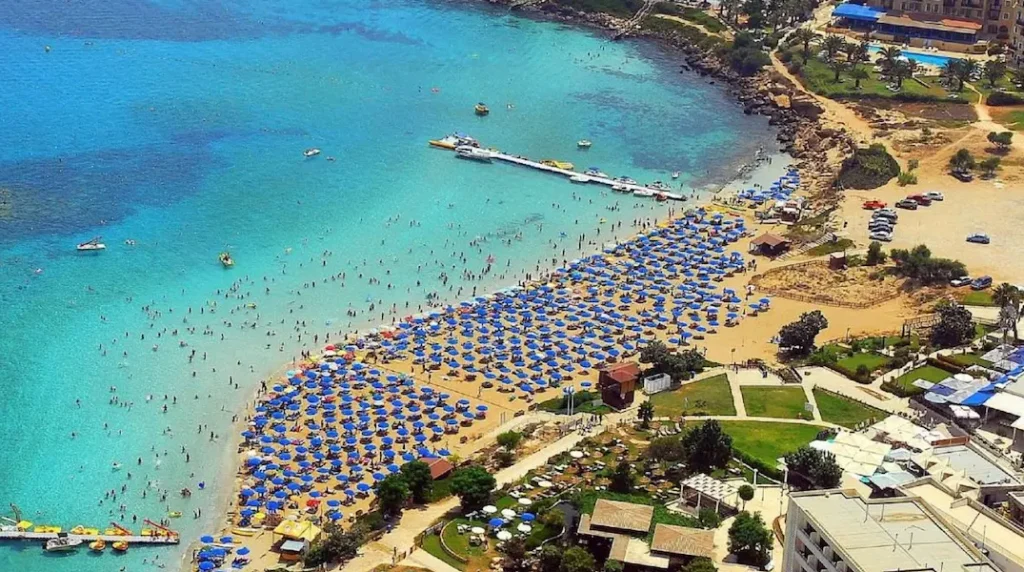
Fig Tree Bay is one of the best family beaches in Cyprus. Its sheltered position keeps the water relatively calm, while the soft sand and gradual entry make swimming easy for children.
The beach sits directly beside Protaras, so restaurants, cafés, shops, and accommodation are close by. This convenience makes it a particularly good choice for travelers without a car.
There is also a small island offshore that confident swimmers can reach when conditions are suitable.
Best for: families, children, calm water, easy facilities, and travelers staying in Protaras.
Location: Central Protaras.
How to get there: Walk from most central Protaras accommodation or use local buses and taxis.
Entrance fee: Free public access. Sunbeds and umbrellas are rented separately, with prices commonly starting at around €2.50 per item.
Our tip: Families should arrive in the morning, when the beach is cooler, quieter, and easier to navigate with children.
13. Makronissos Beach, Ayia Napa
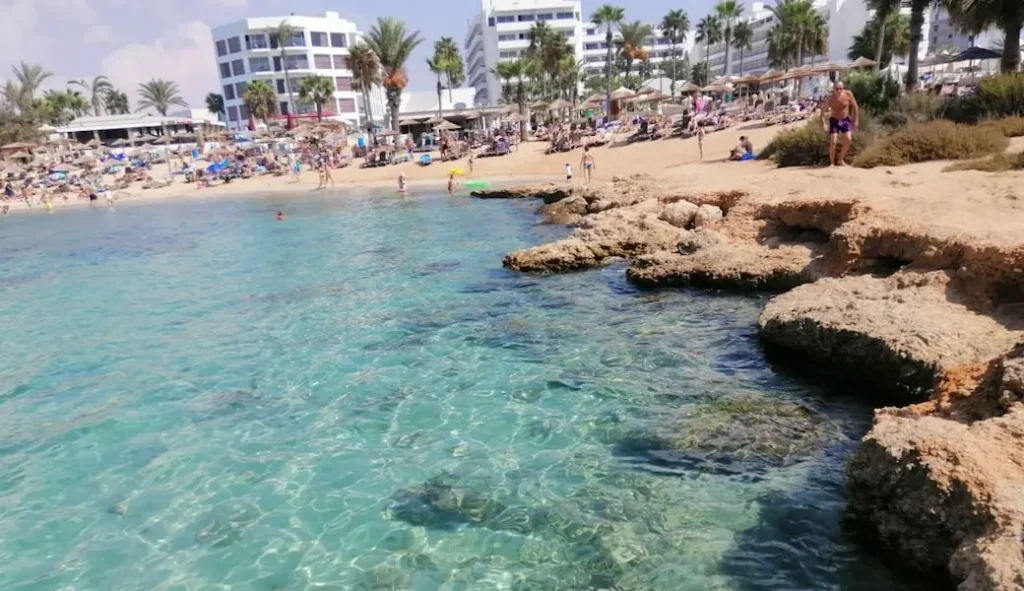
Think of Makronissos as Nissi Beach’s calmer sibling—the one that still has the beautiful water but does not need to announce it through several beach speakers.
The beach is divided into several sandy coves, giving it a more spacious feel. The water is often clear and calm, while archaeological tombs nearby add an unexpected historical detour.
Makronissos is still popular, especially in summer, but it generally feels less frantic than Nissi.
Best for: clear water, couples, families, quieter Ayia Napa beach days, and travelers who want space.
Location: West of Ayia Napa, beyond Nissi Beach.
How to get there: Drive, take a taxi, or use one of the local buses running along the Ayia Napa coastal route.
Entrance fee: Free public access. Sunbeds and umbrellas generally cost extra, often around €2.50 per item.
Our tip: Do not treat Makronissos merely as a backup when Nissi is full. For many travelers, it is the better beach from the beginning.
14. Finikoudes Beach, Larnaca
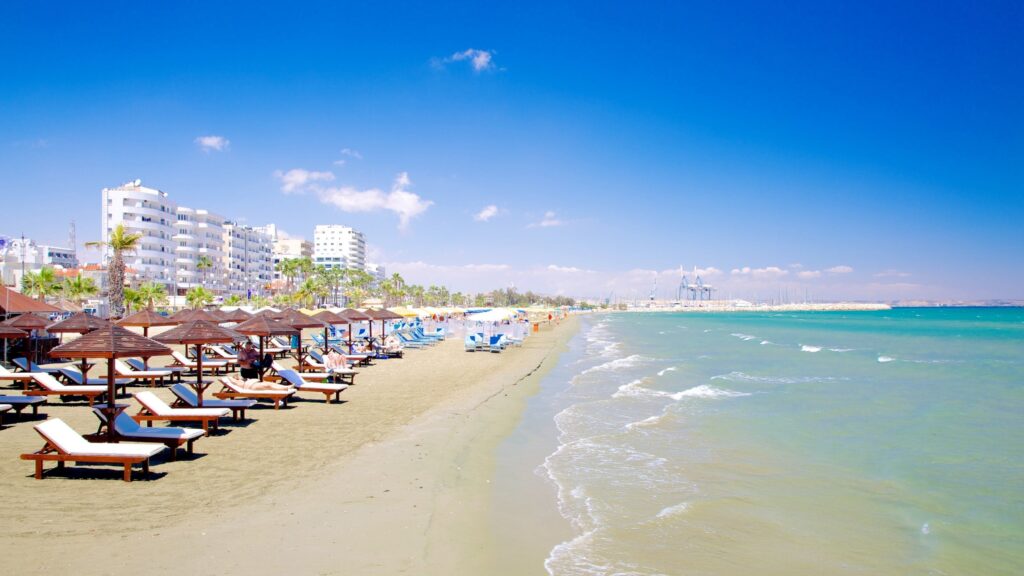
Finikoudes is the ultimate city beach. One moment we are swimming in the Mediterranean; ten minutes later, we are seated beneath palm trees with coffee, lunch, or an impressively unnecessary dessert.
The sand is darker than at the beaches around Ayia Napa, and the water remains shallow for a considerable distance. The beach’s greatest advantage is convenience: it sits directly beside Larnaca’s palm-lined promenade.
This is not the island’s wildest or most dramatic beach, but few are easier to include in a city break.
Best for: city breaks, short swims, families, restaurants, cafés, and travelers without a car.
Location: Central Larnaca.
How to get there: Walk from Larnaca’s central hotels or take a local bus. Parking is available nearby but can be difficult during busy periods.
Entrance fee: Free public access. Sunbeds and umbrellas are available for an additional fee, often around €2.50 per item.
Our tip: Combine a morning swim with lunch in the old town or an evening walk along the promenade.
15. Mackenzie Beach, Larnaca
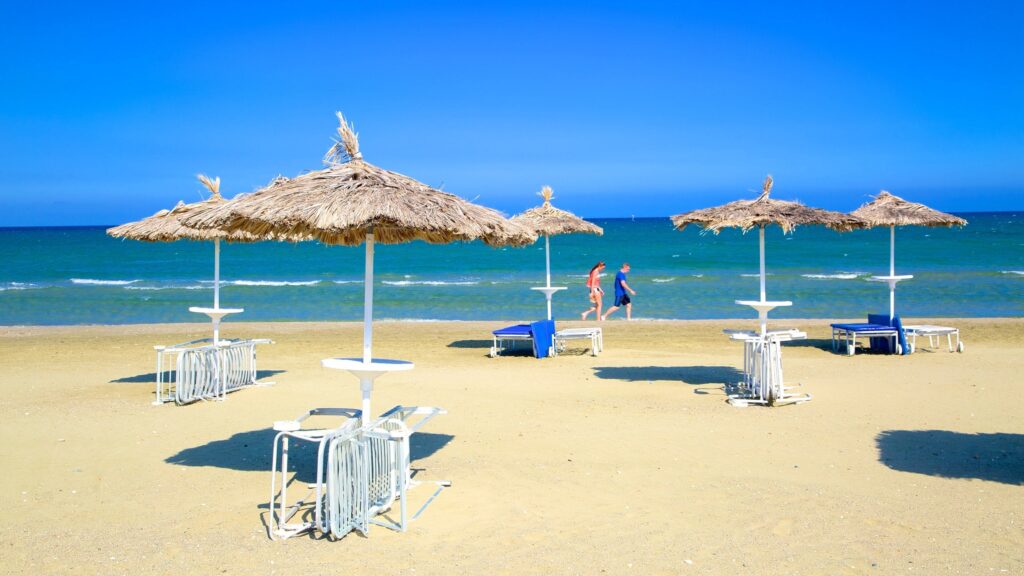
Mackenzie Beach combines swimming, restaurants, nightlife, and unusually close views of arriving aircraft.
Because the beach lies near Larnaca International Airport, planes descend directly over the coast. Aviation enthusiasts will be delighted. Anyone hoping for absolute silence may wish to reconsider their strategic position.
The water is generally shallow, while the long line of cafés and restaurants makes it easy to stay from breakfast until sunset.
Best for: plane spotting, beach bars, restaurants, social beach days, and travelers staying near Larnaca.
Location: South of central Larnaca, near the airport.
How to get there: Walk from parts of Larnaca, use a local bus, or drive south from the city centre.
Entrance fee: Free public access. Sunbeds and umbrellas cost extra, commonly around €2.50 per item.
Our tip: Come in the morning for calmer swimming or later in the day for food, drinks, and the livelier beach atmosphere.
16. Coral Bay, Paphos
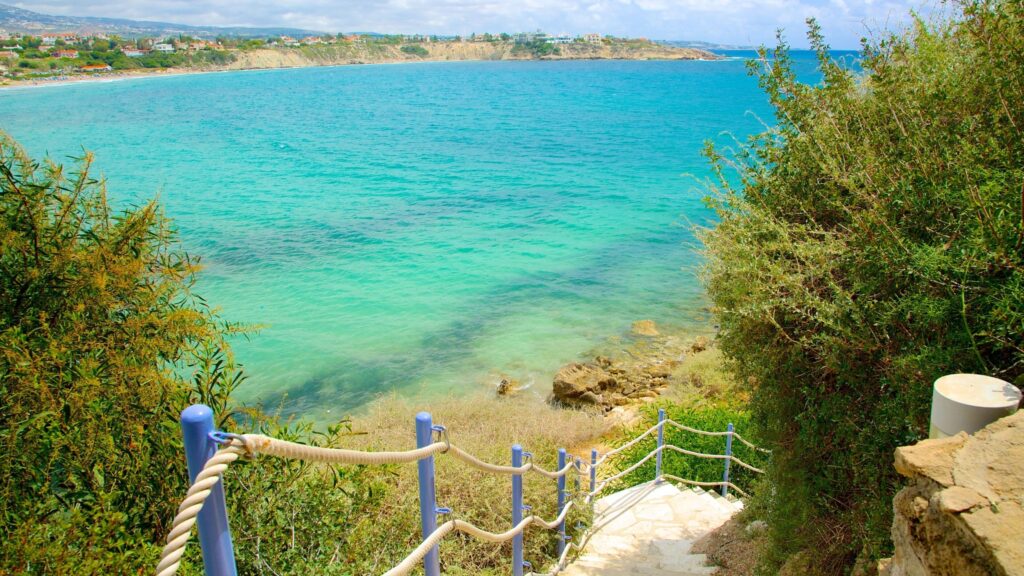
Coral Bay is one of the most popular sandy beaches near Paphos. Its curved bay shelters the water from stronger waves, making it particularly suitable for families and casual swimmers.
The beach is well organised, with sunbeds, water sports, restaurants, and facilities nearby. It can become crowded in summer, but the broad strip of sand usually gives us more breathing room than some smaller resort beaches.
Best for: families, swimming, sandy beaches, water sports, and travelers staying around Paphos or Peyia.
Location: North of Paphos, near Peyia.
How to get there: The drive from central Paphos takes around 15–20 minutes. Regular buses also connect Paphos with Coral Bay.
Entrance fee: Free public access. Sunbeds and umbrellas cost extra, often around €2.50 per item.
Our tip: Visit in the morning. Afternoon winds can make the water less calm, particularly outside the most sheltered section.
17. Konnos Bay, Between Ayia Napa and Protaras
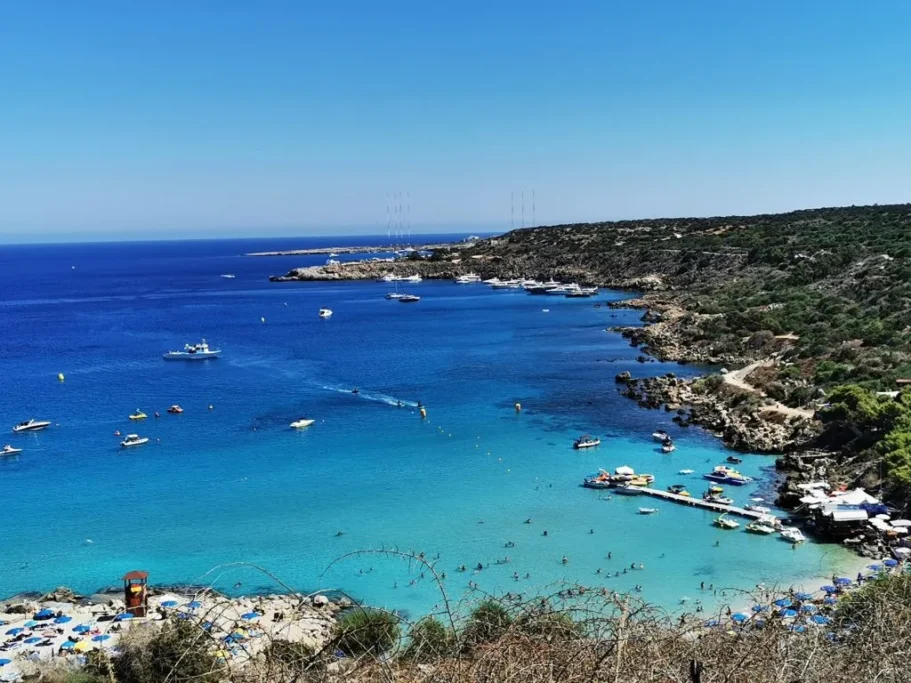
Konnos Bay looks as though someone tucked a small turquoise lagoon beneath a hillside of pine trees and then tried not to tell too many people about it.
The sheltered bay has clear water, soft sand, and a greener setting than most beaches around Ayia Napa. It is part of the Cape Greco area, making it easy to combine with coastal walks, viewpoints, or sea caves.
The descent to the beach involves a steep road and steps, which is worth considering when traveling with a pushchair or carrying enough beach equipment to establish a small colony.
Best for: scenery, clear water, couples, snorkeling, Cape Greco trips, and sheltered swimming.
Location: Between Ayia Napa and Protaras, near Cape Greco.
How to get there: Drive or take a taxi to the parking area above the bay, then walk downhill. Seasonal buses may stop nearby.
Entrance fee: Free public access. Sunbeds and umbrellas cost extra, commonly around €2.50 per item.
Our tip: Wear practical shoes for the descent and arrive early because parking and beach space are limited.
18. Aphrodite’s Rock, Petra tou Romiou
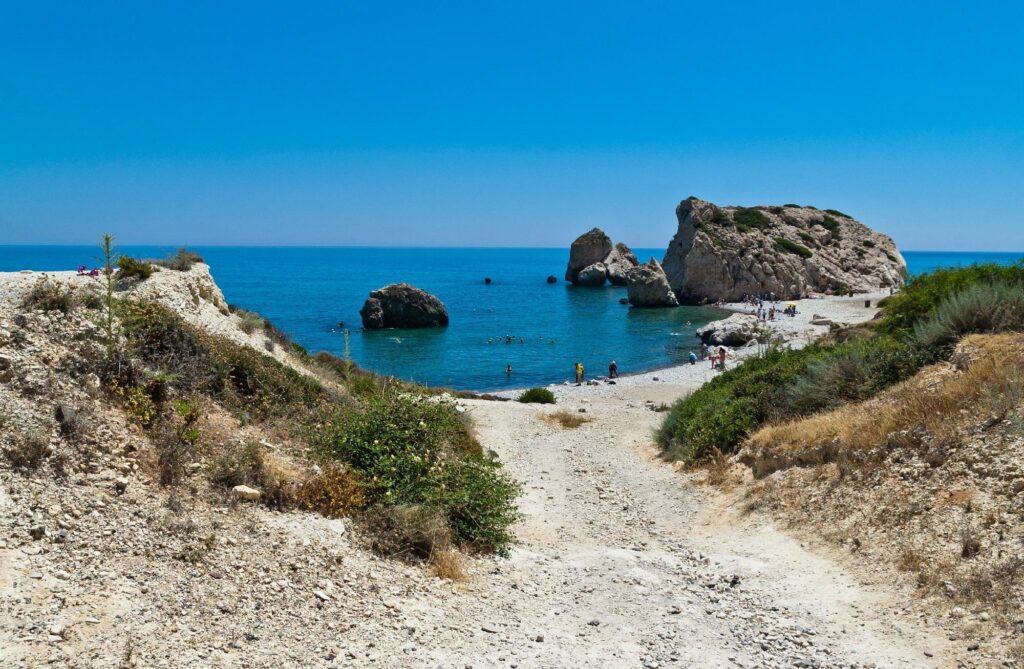
Aphrodite’s Rock is more famous as a legendary landscape than as an easy swimming beach.
According to mythology, this is where Aphrodite emerged from the sea. Today, travelers stop to photograph the dramatic offshore rocks, walk along the pebble beach, and watch the light change across the water.
The sea can be rough, currents may be strong, and the shoreline is pebbly. Come for the scenery first and regard swimming as optional rather than compulsory.
Best for: photography, mythology, scenic road trips, sunsets, and short stops between Paphos and Limassol.
Location: On the coastal road between Paphos and Limassol.
How to get there: Use the designated parking area beside the main road and follow the pedestrian passage beneath the road to the beach.
Entrance fee: Free.
Our tip: Bring sturdy sandals or water shoes. The stones are not impressed by our romantic connection to Greek mythology.
19. Lara Beach, Akamas Peninsula
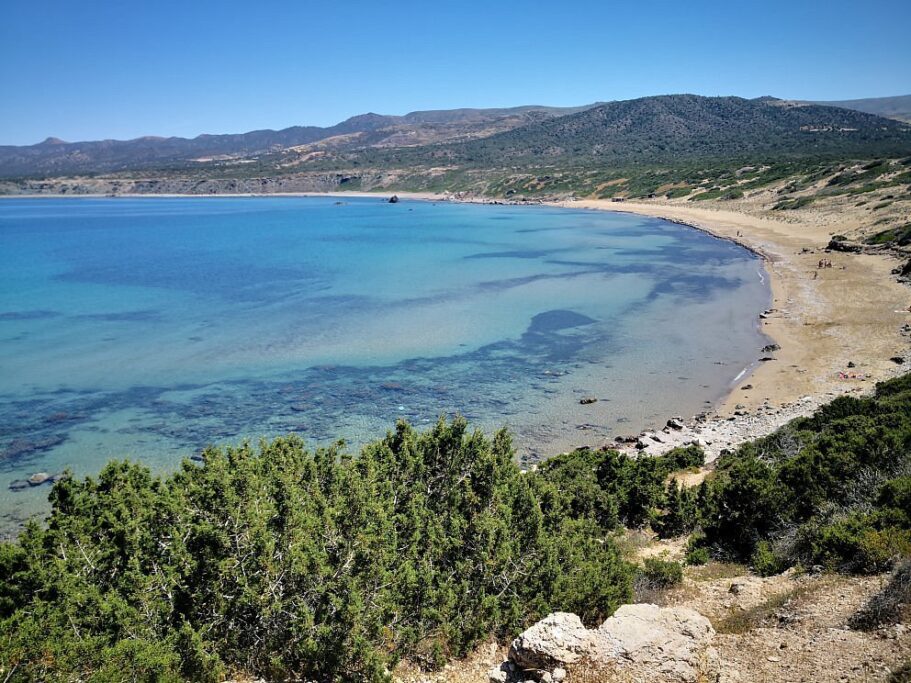
Lara Beach is one of the wildest beaches in Southern Cyprus. It lies within the protected Akamas Peninsula and serves as an important nesting area for loggerhead and green turtles.
There are few facilities, little development, and no neat promenade to guide us towards an iced coffee. Instead, we get open sand, natural scenery, and one of the island’s most environmentally sensitive coastal areas.
The access road can be rough, and standard rental-car insurance may not cover driving on unpaved roads.
Best for: nature, turtle conservation, remote scenery, adventurous road trips, and undeveloped beaches.
Location: Akamas Peninsula, north of Paphos.
How to get there: Access is generally by an unpaved road. A suitable vehicle, organised excursion, or local transport service may be necessary.
Entrance fee: Free.
Our tip: Check road and rental-car conditions before driving. Stay away from marked nests, do not leave rubbish, and avoid disturbing wildlife.
20. Governor’s Beach, Limassol
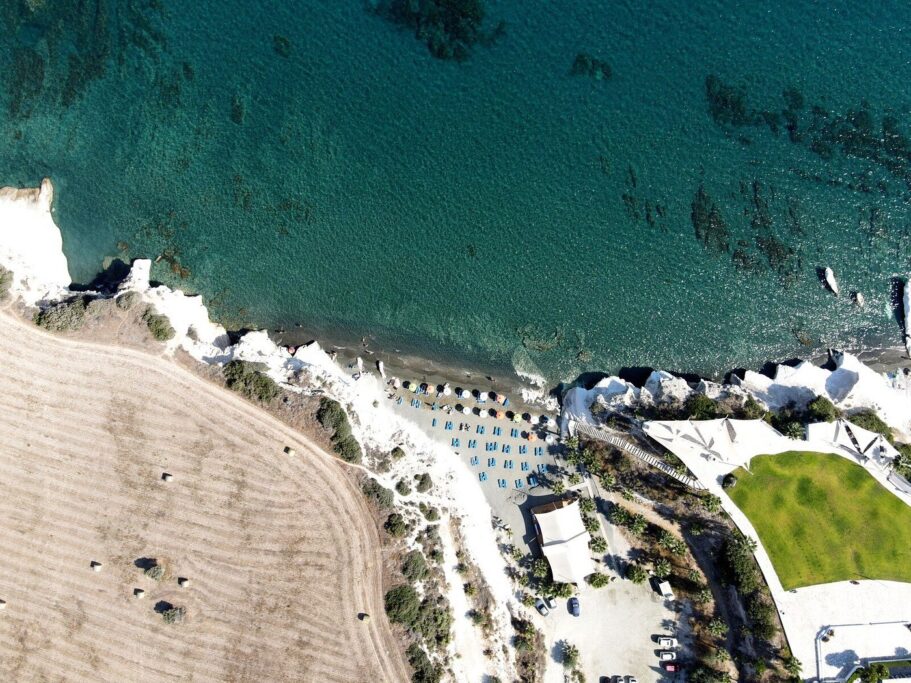
Governor’s Beach stands out because of its landscape rather than a single uninterrupted strip of golden sand.
White chalk cliffs drop into small coves of dark sand and clear water, creating one of the most photogenic coastal scenes near Limassol. The area is quieter than the large resort beaches and has several tavernas overlooking the sea.
Different coves offer slightly different access, so it is worth exploring rather than stopping at the first car park.
Best for: photography, couples, quiet coves, seafood lunches, and travelers based in Limassol.
Location: Between Limassol and Larnaca.
How to get there: The drive from Limassol usually takes around 20–30 minutes. A rental car is the easiest option.
Entrance fee: Public beach access is free. Restaurants and organised areas charge separately for food, sunbeds, or facilities.
Our tip: The white cliffs look spectacular in strong daylight, while late afternoon is more comfortable for swimming and walking.
Which Part of Cyprus Has the Best Beaches?
Choose Northern Cyprus if you want:
- Longer, less-developed beaches
- Quieter coves and fewer organised resorts
- Turtle-nesting areas and natural scenery
- Prices generally quoted in Turkish lira
- A road-trip style beach holiday
Choose Southern Cyprus if you want:
- Reliable beach facilities and public transport
- Blue Flag beaches and organised sunbed areas
- Beach bars, restaurants, and water sports
- Easy family beaches with lifeguards
- Resort towns such as Ayia Napa, Protaras, Larnaca, and Paphos
For wild scenery, Golden Beach and Lara Beach are difficult to beat. Families will find the easiest swimming at Fig Tree Bay, Glapsides, Coral Bay, and Makronissos. For classic turquoise-water photographs, Nissi Beach and Konnos Bay deliver exactly what the brochures promise.
And when we want a beach with something genuinely unusual? We choose Palm Beach for history, Mackenzie for low-flying aircraft, or Aphrodite’s Rock for mythology and dramatic coastal scenery.
- 20 Best Beaches in Cyprus (2026): Most Stunning Beaches You Can’t Miss
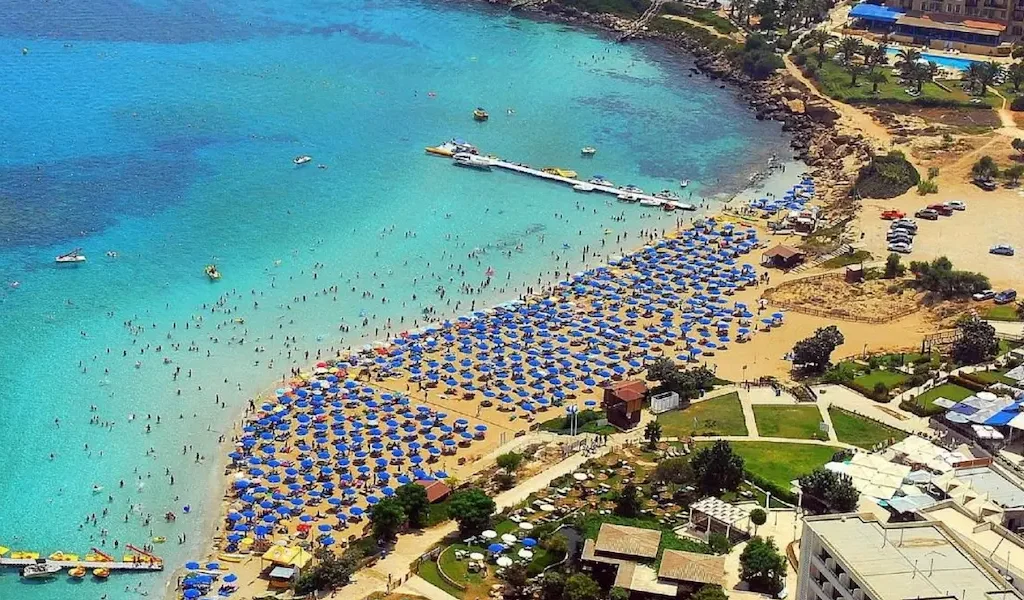 The road narrows, the buildings disappear, and suddenly the Mediterranean fills the entire windscreen. Cyprus does beaches rather well—sometimes with rows of sunbeds and iced coffees, sometimes with nothing but sand, sea, and the growing suspicion that we should have packed more water. Discover our list of best beaches in Cyprus. The island offers two… Read more: 20 Best Beaches in Cyprus (2026): Most Stunning Beaches You Can’t Miss
 - What to See in Troodos Mountains (2026): Villages, Hikes, Wineries & Monasteries
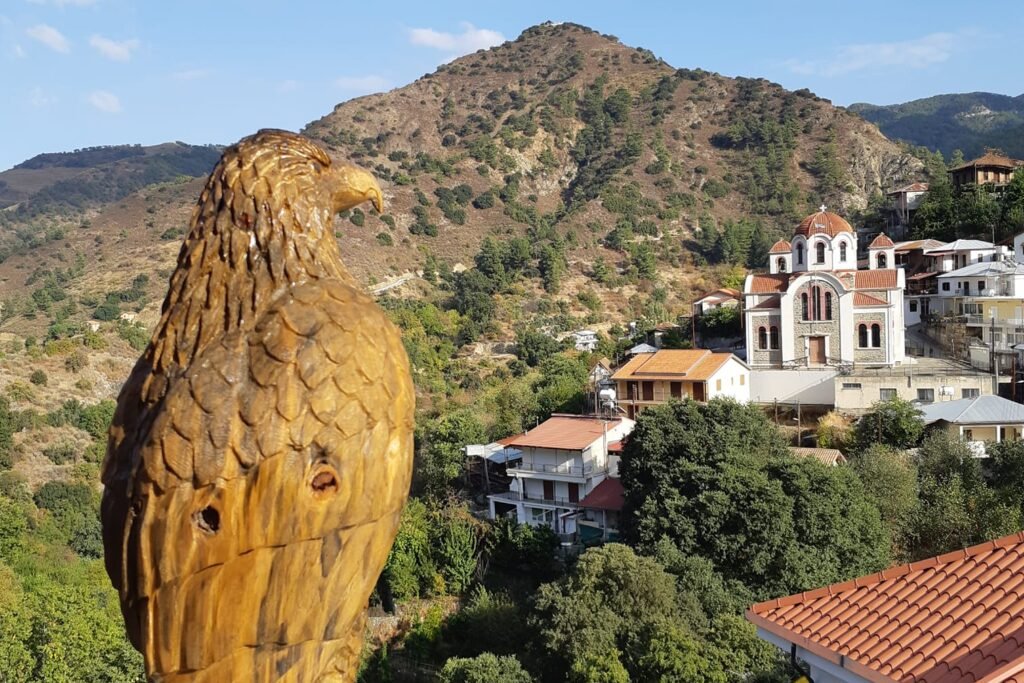 Wondering what to see in Troodos Mountains? Good. Because this is the side of Cyprus that quietly steals the show while everyone else is still face-down on a beach towel. We get pine forests, stone villages, Byzantine churches, wine terraces, waterfalls, monasteries, and roads so twisty they deserve their own warning label. The Troodos Mountains… Read more: What to See in Troodos Mountains (2026): Villages, Hikes, Wineries & Monasteries
 - Most Unique Hotels in Cyprus (2026): Best Beach Resorts, Boutique Stays & Apartments
 Planning a holiday in Cyprus but not sure where to stay? We get it. Cyprus looks easy on the map — one island, lots of sunshine, problem solved, right? Not quite. Choose the wrong base and suddenly your dreamy beach escape comes with surprise driving marathons, rocky beaches when you wanted sand, or nightlife when… Read more: Most Unique Hotels in Cyprus (2026): Best Beach Resorts, Boutique Stays & Apartments
 - An Epic Cyprus Road Trip Itinerary in 2026: From Ayia Napa to Trodos Mountains
 Planning a Cyprus road trip itinerary and still trying to piece together the best route? Excellent. You have landed in the right corner of the internet. Cyprus is one of those islands that looks small on the map and then casually throws everything at you: bright sandy beaches, mountain villages, ancient ruins, dramatic gorges, monasteries,… Read more: An Epic Cyprus Road Trip Itinerary in 2026: From Ayia Napa to Trodos Mountains
 - 12 Hidden Gems In Cyprus Worth The Detour in 2026
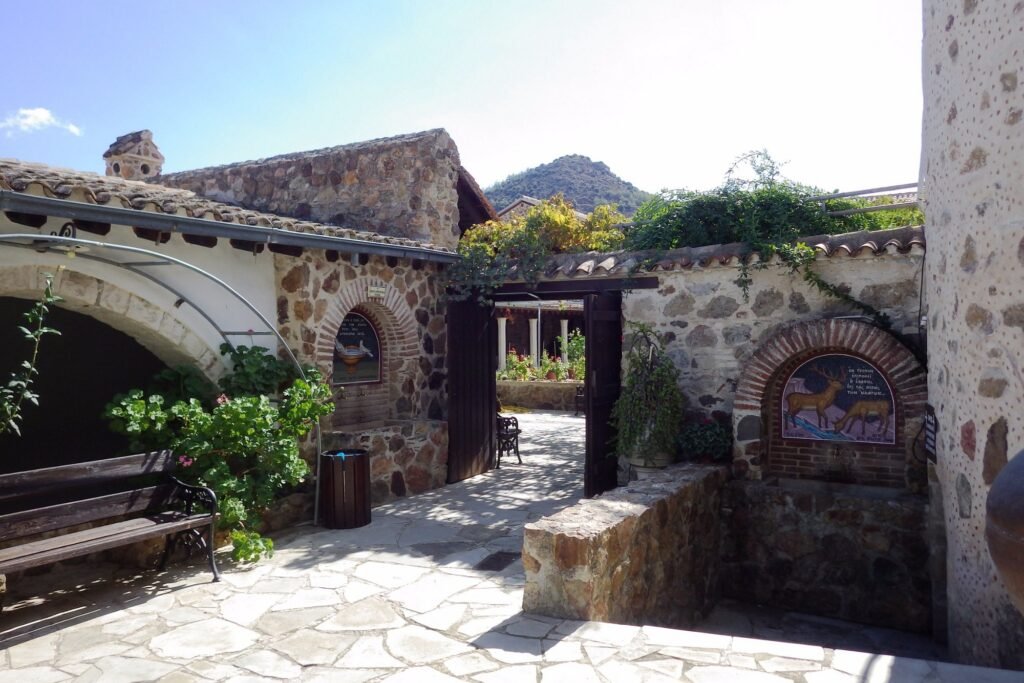 Cyprus has a habit of surprising us when we least expect it. We come for the beaches, the postcard coves, the old-town strolls, the easy sunshine—and then the island casually reveals a completely different side of itself. One that is quieter, stranger, older, and far more intriguing than the usual tourist loop. Beyond the classic… Read more: 12 Hidden Gems In Cyprus Worth The Detour in 2026