
Writing lived-in travel guides from long stays and real routes
We land in Dubai with two competing thoughts: “Wow, everything is shiny,” and “Wow, everything looks expensive.” And yes—Dubai can absolutely torch a budget if we let it. But here’s the plot twist: if we move like backpackers with a plan (and not like tourists chasing every gold-plated temptation), Dubai is surprisingly doable for normal humans.
We’ll lean hard on the city’s best budget superpowers: public transport, free beach time, and “big-ticket” sights you can still enjoy without selling a kidney.
Then we stack the rest of your days with free promenades, souks, sunset spots, and food that tastes expensive even when it isn’t. Ready? We will show you how to visit Dubai on a budget.
Planning Dubai without torching the budget?
Dubai can look like it was built specifically to bully our bank account. But plot twist: with metro rides, Old Dubai walks, public beaches, smart hotel choices, mall food courts, free fountain shows, and a little resistance around “just one more attraction,” we can absolutely make it work. If you’re building a cheaper Dubai trip, these guides will help you connect the budget tips with itineraries, family ideas, shopping, food, and heat-proof attractions.
- 3 Days in Dubai Itinerary — the obvious next read if you want a realistic route with Old Dubai, Downtown, beach time, desert ideas, and public-transport-friendly planning.
- 2 Days in Dubai Itinerary — perfect if you’re short on time and need a tight plan that still covers the big sights without chaotic overspending.
- Where to Stay in Dubai — useful for comparing budget-friendly areas like Deira, Bur Dubai, Dubai Marina, Downtown, and beachside bases before booking.
- Best Indoor Attractions in Dubai — handy when the heat gets dramatic and you need aquariums, museums, malls, art spaces, cinemas, and air-conditioned survival plans.
- Best Things to Do in Dubai with Kids — great for family-friendly activities, cheap abra rides, mall attractions, beaches, fountains, and kid-approved sightseeing.
- Best Family-Friendly Hotels in Dubai — useful if you want pools, kids’ clubs, family rooms, beach access, and better value from your accommodation.
- Shopping in Dubai — for souks, malls, perfume markets, gold shopping, Global Village, and the noble art of browsing without financially self-destructing.
- Best Restaurants in Dubai — because budget travel still deserves good food, from casual eats and mall meals to one strategic “we planned this” dinner.
- How to Dress in Dubai — practical for packing outfits that work for malls, souks, beaches, restaurants, mosques, and very aggressive air-conditioning.
Table of Contents
How to visit Dubai on a budget
Getting around Dubai on a budget
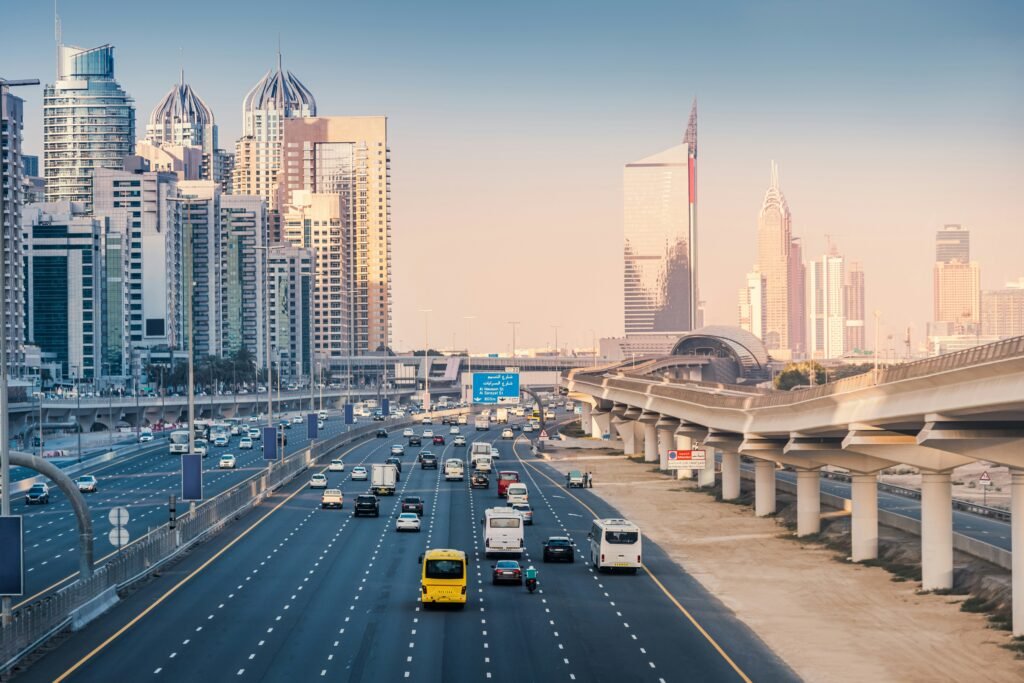
Dubai looks like it was designed for people who arrive by limousine and leave by yacht… but we can absolutely move around like normal humans with a normal bank account. The city is huge, yes, yet it’s also strangely easy: a clean metro spine, cheap buses, low-cost water crossings, and taxis that only get painful if you treat them like a daily hobby. Here’s how we keep transport costs low without sacrificing our feet (or our mood).
1) Buy a Nol card first (your budget superpower)
If we do one smart thing on day one, it’s this: get a Nol card. It works on the Metro, buses, and trams—and it saves you time, small change stress, and accidental “why is this ticket so expensive?” moments. You can top it up as you go and tap in/out like a local commuter with places to be.
Budget tip: stick to public transport for the long hops (Downtown ↔ Marina, Deira ↔ Bur Dubai), then use short taxi rides only when it truly makes life easier (late night, with bags, with kids, or when it’s a “my patience is done” day).
2) Metro: cheap, fast, air-conditioned (aka Dubai’s best bargain)
The Dubai Metro is the best-value way to cross big distances quickly. It’s clean, reliable, and—most importantly—fully air-conditioned, which becomes a personality trait from April to September. If you’re staying under €150/night, there’s a good chance you’re also staying somewhere metro-friendly, and that’s a win.
What it’s perfect for: Dubai Mall / Burj Khalifa area, Business Bay-ish access, Mall of the Emirates, Deira and the older neighborhoods, and connecting toward the Marina side (with a bit of walking or a tram link).
Real-life planning note: Dubai is not always “step out of the station and you’re there.” Sometimes you’ll walk 10–20 minutes in the heat between the metro and your final destination, so we time outdoor walks early morning or after sunset when possible.
3) Trams + buses: the quiet money-savers
Once we’re near the Marina / JBR area, the tram becomes a sneaky little budget hero. Pair it with the metro and you can cut down taxi use dramatically. Buses are also excellent value—especially for shorter hops where the metro doesn’t drop you exactly where you want to be.
Budget tip: buses are great when you’re heading to a specific neighborhood or beach and you don’t want to pay taxi prices just to cover a few kilometers.
4) Cross the creek by abra (1 dirham, 5 minutes, maximum charm)
If you want the cheapest transport in the city that also feels like an experience, hop on an abra across Dubai Creek. It’s quick, it’s fun, and it costs about 1 dirham. This is how we travel on a budget and still feel like we’re “doing Dubai,” not just commuting through it.
Perfect for: linking Deira and Bur Dubai while exploring souks, Al Fahidi, museums, and old-school Creek-side Dubai.
5) Taxis: use them strategically (not as your default)
Taxis in Dubai are comfortable, safe, and everywhere—but they’re also the fastest way to quietly destroy a budget if you use them for every single trip. Our rule: we treat taxis like a tool, not a lifestyle.
- Use taxis when: it’s late, you’re carrying bags, you’re traveling with kids, you’re going somewhere awkward to reach by public transport, or the heat is doing that thing where it makes you question all your decisions.
- Skip taxis when: the metro can cover 70–90% of the distance and a short walk or tram/bus finishes the job.
Budget tip: if you’re going to take a taxi, take it for the final 2–3 km, not the full cross-city journey.
6) Walk smart, not hard
Dubai is walkable in pockets, not as one giant stroll-friendly city. Downtown has promenades, the Marina is made for wandering, and older districts around the Creek are great on foot. But outside those areas, walking can be less “cute travel moment” and more “why is this pavement ending?”
- Best walking zones: Dubai Marina, JBR, Downtown promenades, Al Fahidi / Creek area.
- Timing matters: walk early morning or after sunset, especially from April to September.
7) Sample budget-friendly route ideas
- Old Dubai day: Metro to the Creek area → wander Al Fahidi + museums → abra across the water (1 dirham) → Deira souks → metro back.
- Downtown + fountains night: Metro to Burj Khalifa/Dubai Mall station → explore Downtown on foot → free fountain show → metro home (no taxi required unless you’re done with walking).
- Marina/JBR evening: Metro toward the Marina side → connect by tram (or short taxi) → sunset stroll along the canal → tram/metro back.
If we play it right, Dubai becomes a “metro + tram + abra” city with the occasional taxi sprinkled in like a treat—rather than a constant transport expense. And that’s exactly how we keep the whole trip under control, even when the skyline is trying to tempt you into expensive decisions.
Traveling to Dubai on a budget: tips for staying for under €150 a night
Dubai gets branded as “five-star or nothing,” but we’ve slept very happily on the affordable side of the skyline. The trick is simple: pick smart-value hotels (or a good apartment), and time your trip. If you travel off-season (April to September), discounts can be dramatic—some places run promotions of up to 50% off.
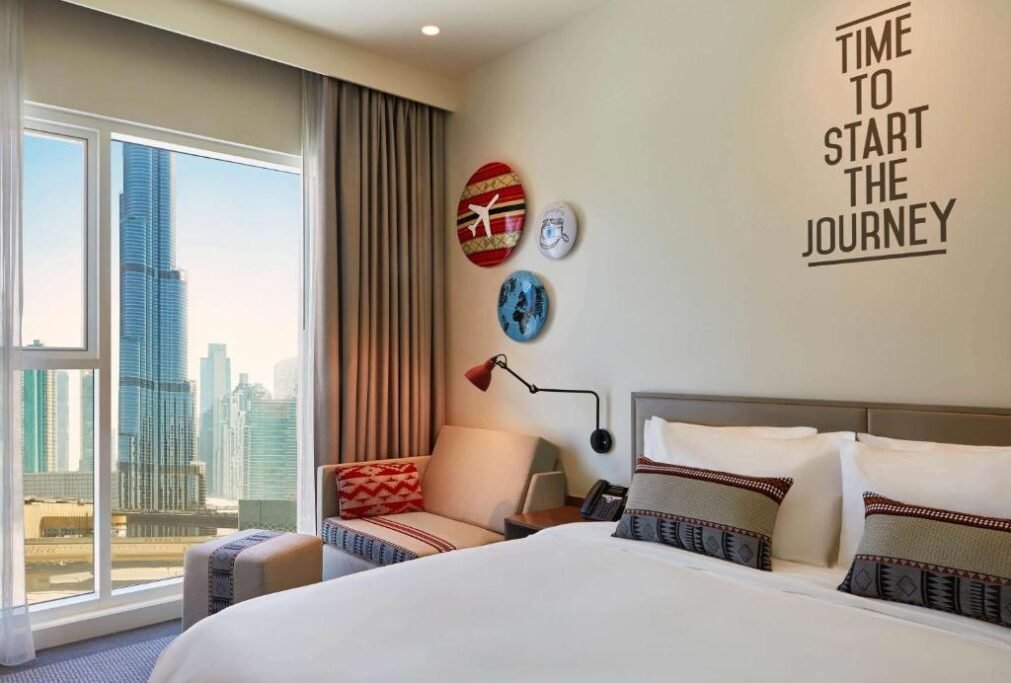
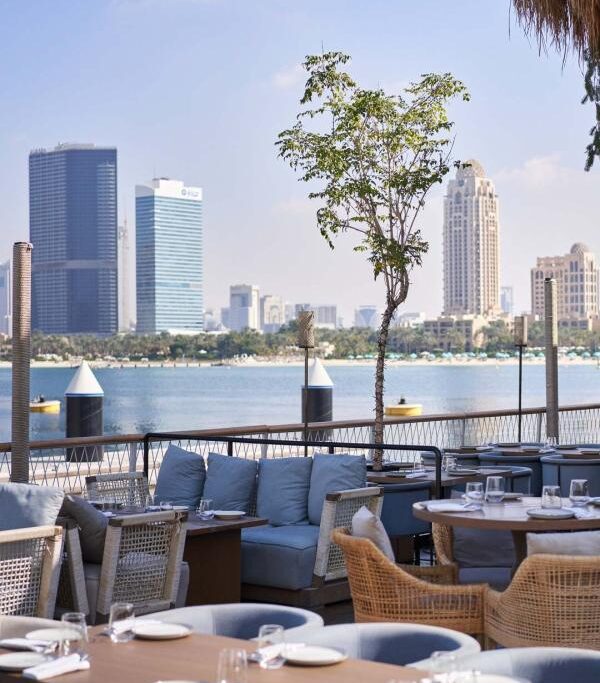
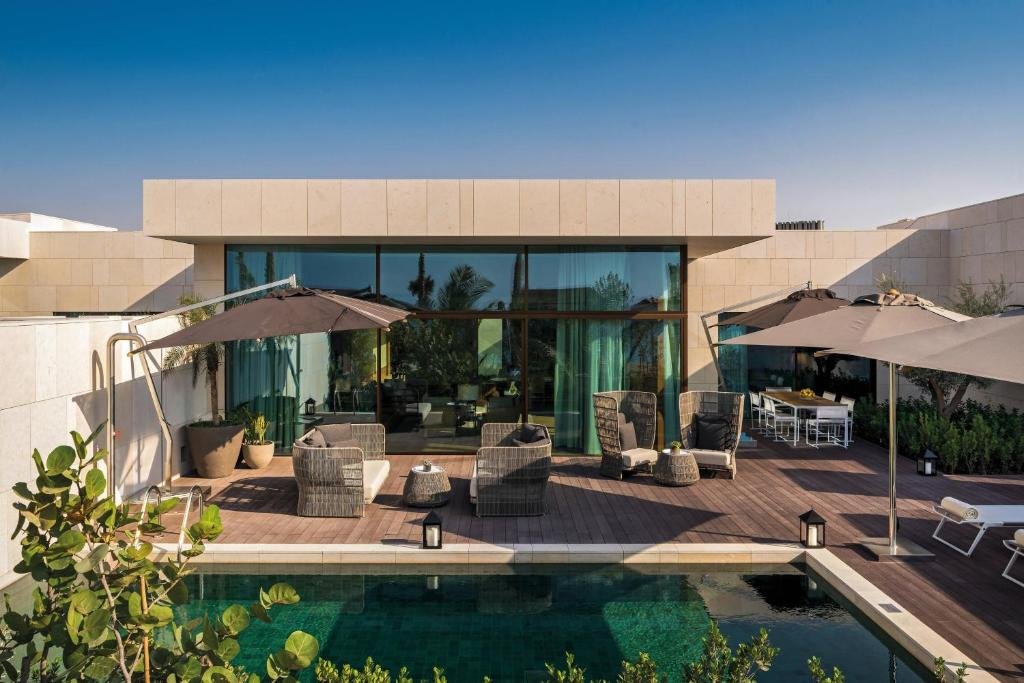
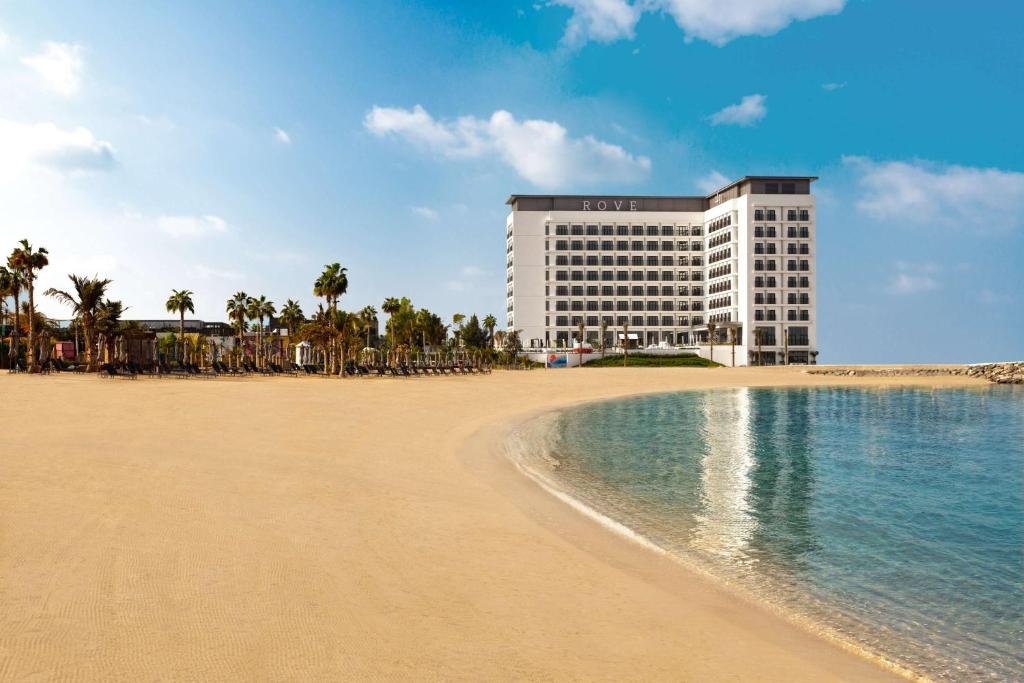
- Rove Hotels: one of Dubai’s best deals for comfortable, affordable stays. Launched in 2015 by the Emaar group, the Rove collection now has nine properties across the city. Think three-star lifestyle hotels with spacious, air-conditioned rooms that actually feel designed for real humans (not just a glossy brochure). Rove Downtown Dubai even comes with a rooftop pool and Burj Khalifa views—because Dubai loves a flex, even on a budget. And Rove La Mer drops you right on the sand, with a big pool overlooking calm, turquoise water. We loved the “swim before breakfast, swim again after sunset” rhythm here. The vibe is stylish (designer furniture, artwork, clean lines) without being precious. Prices can be very friendly—around €105 per night. Tested and approved by the editors of artandthensome.com, it’s one of those rare Dubai wins where value, comfort, and location all show up to the same party.
Also worth checking out :
- Studio One Hotel Dubai: Yes, it’s possible to stay for under €100 in Dubai. Opened in 2019, Studio One is a boutique hotel with 141 rooms and studios, plus a swimming pool, restaurants, and a spa. Rates start around €90 per night.
Airbnb
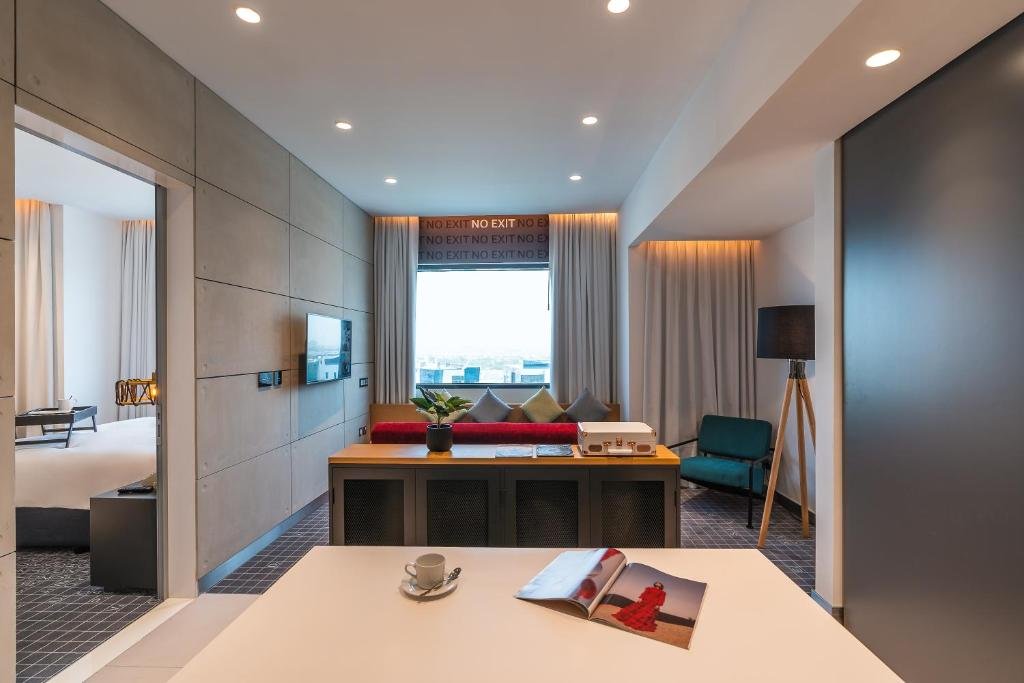
According to a recent study, Dubai is the most profitable city in the world for owners using Airbnb to rent out their properties—so yes, the supply is huge. A quick search for “Entire home, less than €150” for a spring stay brings up over 1,000 results. In real-life terms, we’re usually looking at €120 to €150 for a studio apartment in the city center.
Cheap Dubai: Eat for under €30
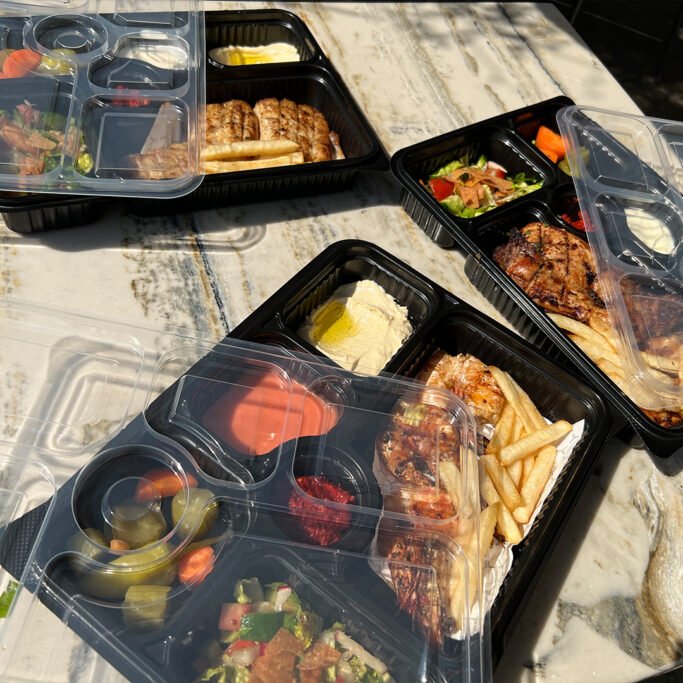
You don’t need to drain your wallet to eat well in Dubai. With around 80% of the population made up of foreigners from roughly 200 nationalities, the city eats like a global buffet—often at surprisingly friendly prices if you know where to aim your feet (and your appetite).
- Restaurants on 2nd December Street: formerly known as Al Dhiyafa, this stretch between Chelsea Plaza and the Etihad Museum in Satwa is one of our favorite “budget food corridors.” For a local-style feast, head to Al Mallah, impossible to miss with its yellow-and-green facade. You’ll find hearty shawarma and excellent manakish (Lebanese “pizza” with olive oil and za’atar).
- Food courts are the easiest way to eat cheaply in Dubai while sampling flavors from everywhere at once. From Depachika Food Hall at Nakheel Mall to South Market at DIFC, from Time Out Market in Downtown to Streetery Food Hall, plus the Asian market vibe around Jumeirah Lakes Towers… the options are, genuinely, endless.
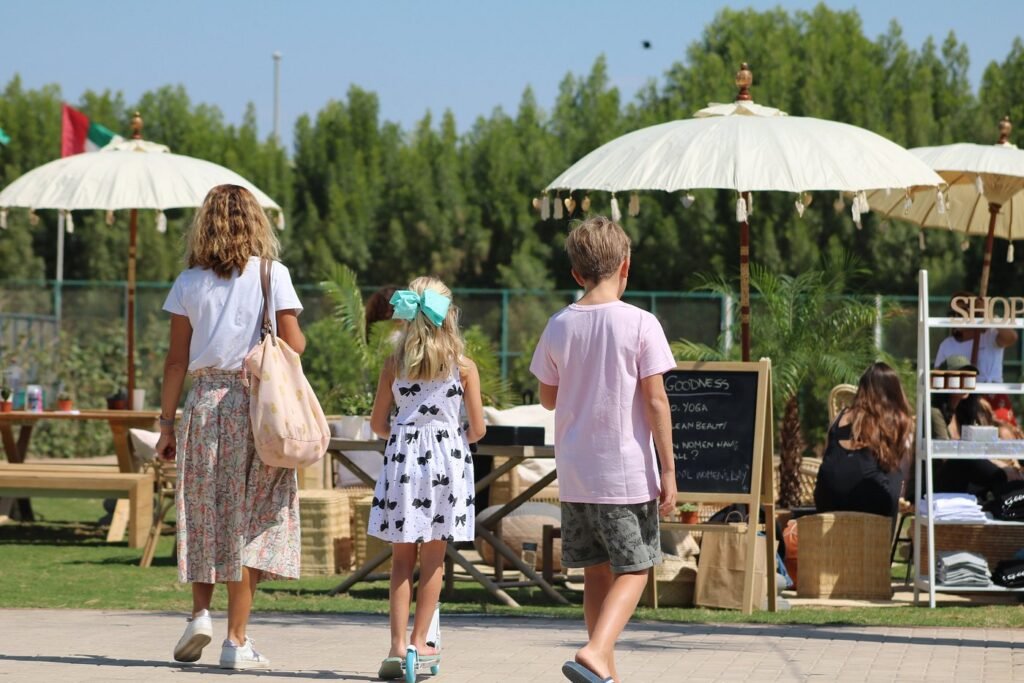
- Ripe Market: for 5 dirhams entry, this small farmers’ market near Mall of the Emirates lets you shop directly from local artisans. There are also kids’ play areas, a picnic zone, and even a small farm—very “Dubai does wholesome.”
Business lunch packages at top restaurants in Dubai
Want the fancy-chef experience without the dinner bill that makes you reconsider your life choices? Business lunches are the loophole. You get polished plates, a great setting, and prices that don’t punch your budget in the face.
- L’Atelier Robuchon offers a three-course menu (starter, main, dessert) for €32.50.
- Coya, the iconic Peruvian restaurant at the Four Seasons Resort Jumeirah, has a €32 menu for two starters and one main course.
- Amazonico offers its Menu Ejecutivo (starter–main–dessert) for €35, with options like salmon ceviche or beef tartare, slow-cooked Wagyu beef cheek or line-caught sea bass, then dessert (carrot tart or caramelized pineapple with coconut sorbet).
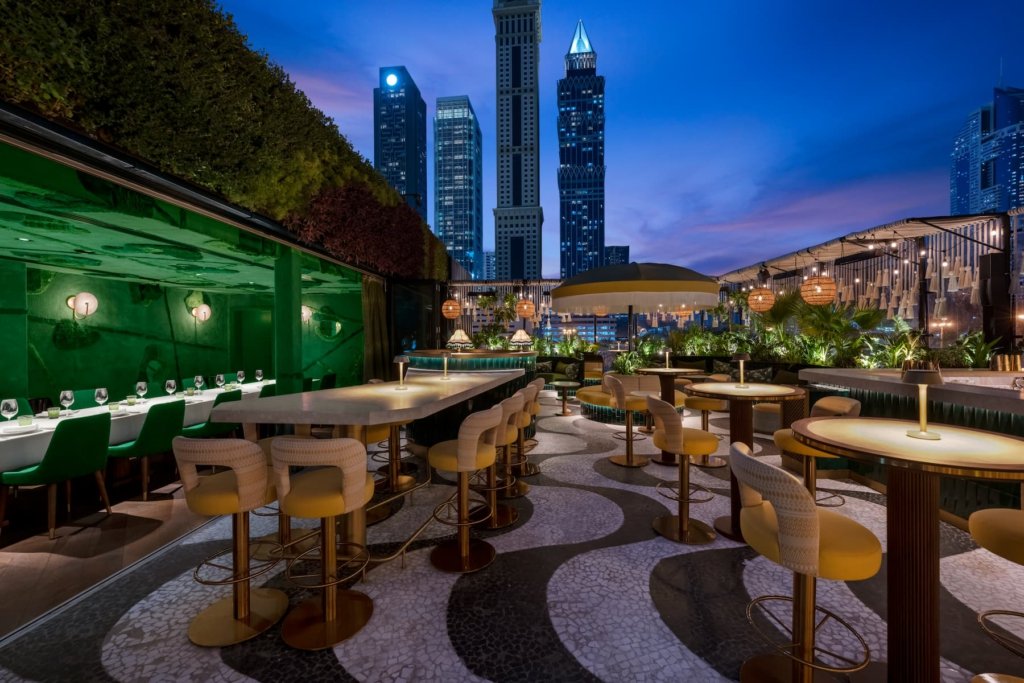
- At Zuma (DIFC), the €35 lunch offer includes miso soup, two starters, and a main course.
- Shanghai Me
- The Suburb Canteen
Budget Friendly Activities in Dubai
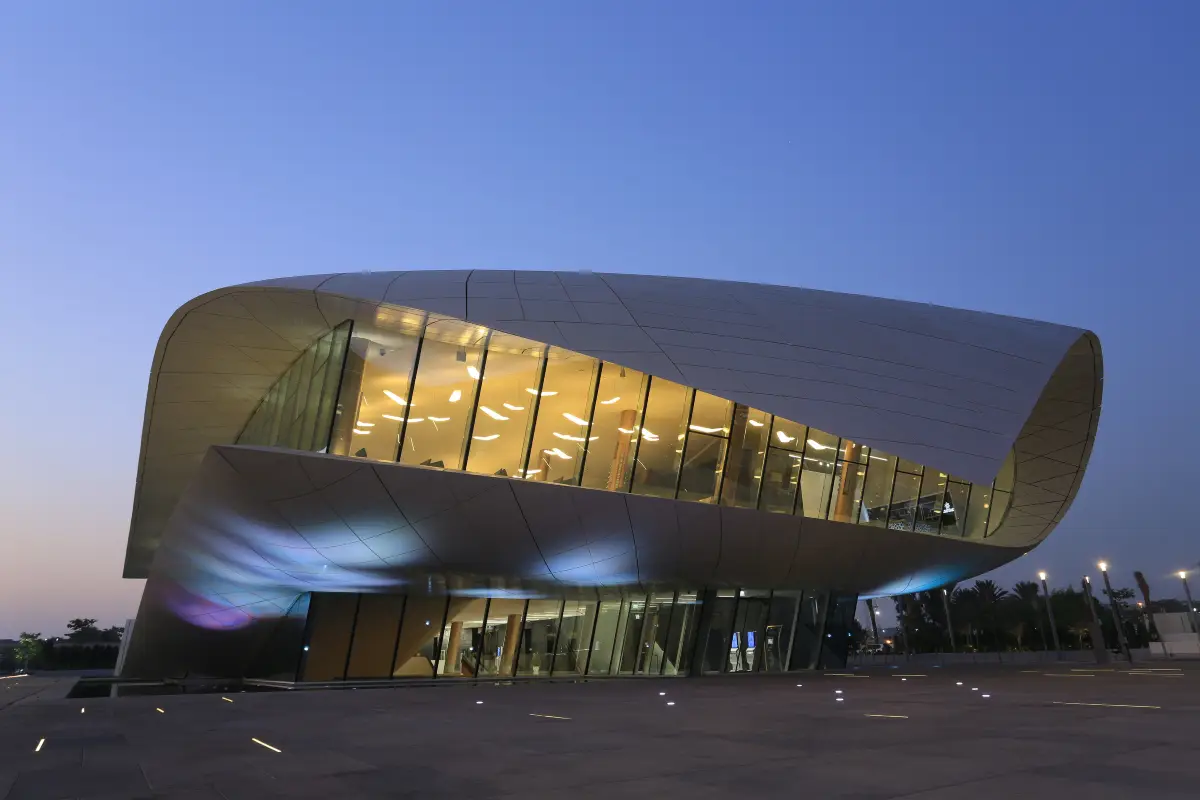
- Visit the museums of authentic Dubai (some are free). If we want to understand the city beyond the glitter, museums are the fastest shortcut. Al Shindaga Museum is a superb open-air museum focused on Emirati traditions, set in former royal residences (€10 entry). The ultramodern Etihad Museum covers the story of the UAE’s founding. In the historic Al Fahidi district, pop into smaller stops like the Coffee Museum (free entry) and the Dubai Coins Museum, with a beautiful collection of ancient coins.
Etihad Museum
- Stroll the souks: gold souk, textile souk, spice souk, perfume souk… Dubai’s souks are peak atmosphere on a small budget. Most cluster around Bur Dubai and Deira, north of Downtown. Come to haggle, snack, people-watch, and stumble into crafts you didn’t know you needed.
- Get your art fix at Alserkal Avenue: a must if you want Dubai’s creative heartbeat. This repurposed industrial district packs galleries and cool cafés into around forty restored warehouses. We can easily spend half a day here with zero gallery fees—and just pay for coffee when we’re ready to sit and stare dramatically at our “culture.”
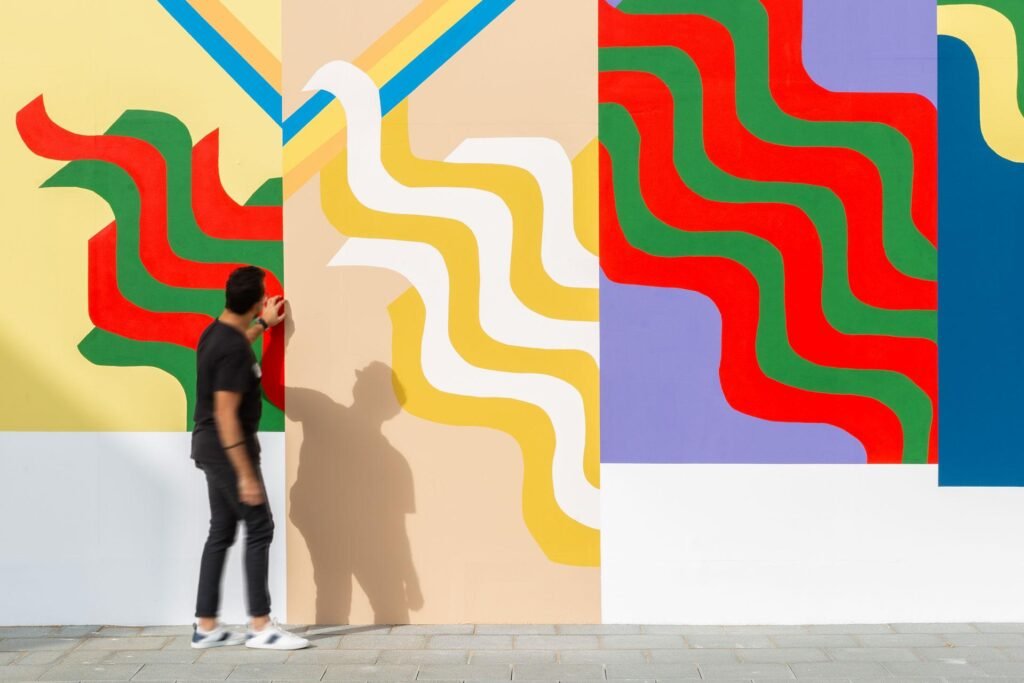
- Lose yourself in Al Fahidi: formerly Al Bastakiya, this restored historic district feels like stepping into an older Dubai—wind towers, narrow lanes, and architecture built with marine debris and seashells from the Creek. Don’t miss Al Fahidi Fort (Dubai’s oldest building, from the 18th century), the Egyptian-inspired Al Farooq Mosque (one of the few open to the public, along with the Jumeirah Mosque), or the Sheikh Mohammed Centre for Cultural Understanding (SMCCU). Their cultural meals and talks are a brilliant way to learn through food and conversation ( free entry).
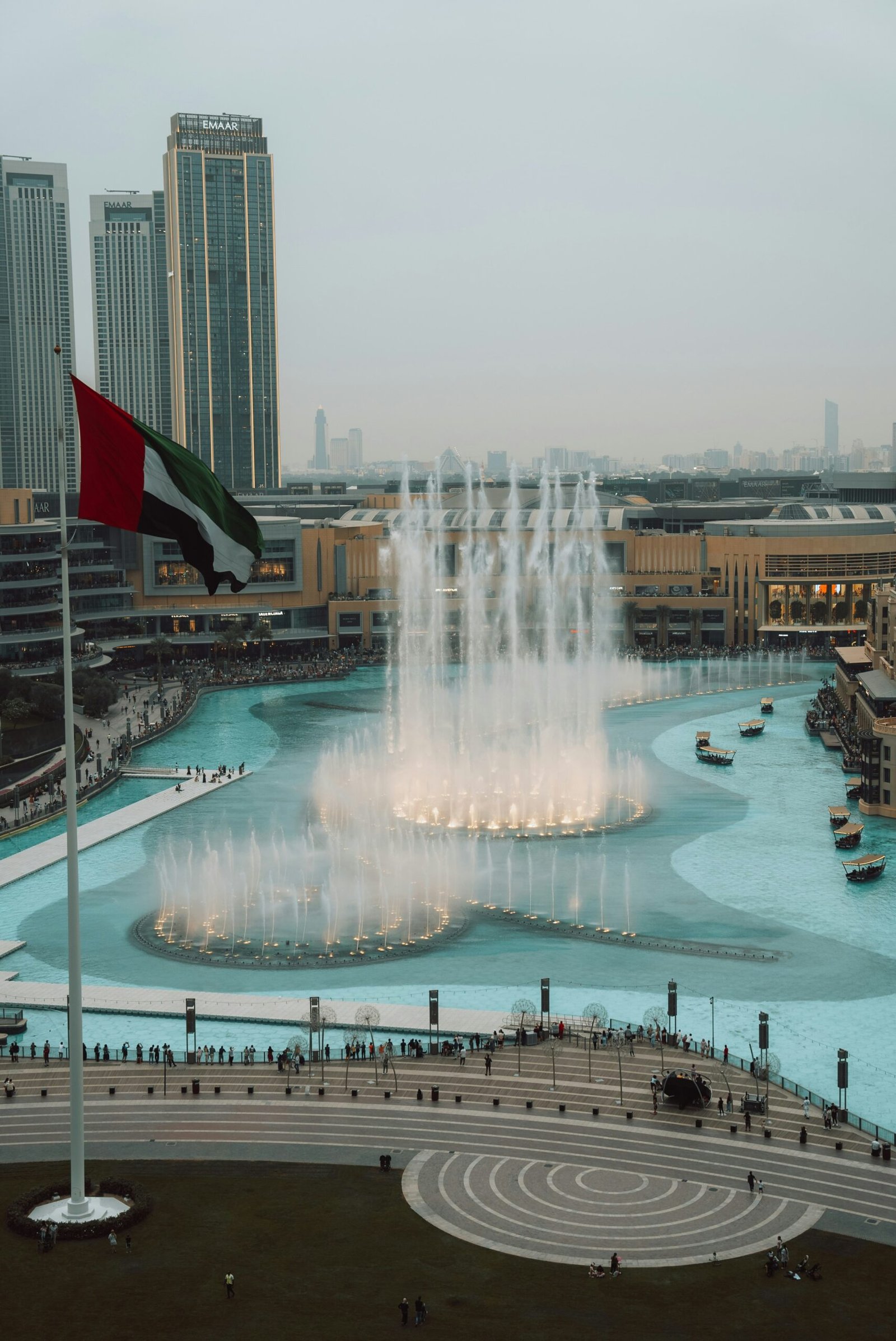
- Take an abra: crossing Dubai Creek by traditional wooden boat is short, sweet, and wonderfully cheap. The ride takes about 5 minutes and costs 1 dirham, paid directly to the driver.
- Admire the Dubai Fountains: free, iconic, and (yes) properly magical. Every evening, every 30 minutes from 6:30 pm, the fountains outside Dubai Mall dance at the foot of the illuminated Burj Khalifa. The choreography changes, the music shifts, and the jets reach up to 270 meters. Price: €0. Mood: priceless.
- Do an evening stroll through Dubai Marina: go at dusk, when the towers glow and reflections ripple across the canal. It’s one of the city’s best “walk-it-off” neighborhoods—palms, promenades, and that “we live in a movie” lighting.
- Marvel at the Dubai Miracle Garden: a 7-hectare floral park in Al Barsha with plant sculptures and a butterfly garden with 15,000 species (entrance €22.50).
- Discover Bluewaters Island: easy to reach on foot, by metro, or by water taxi. It’s packed with shops and dining, plus Ain Dubai, the world’s largest observation wheel.
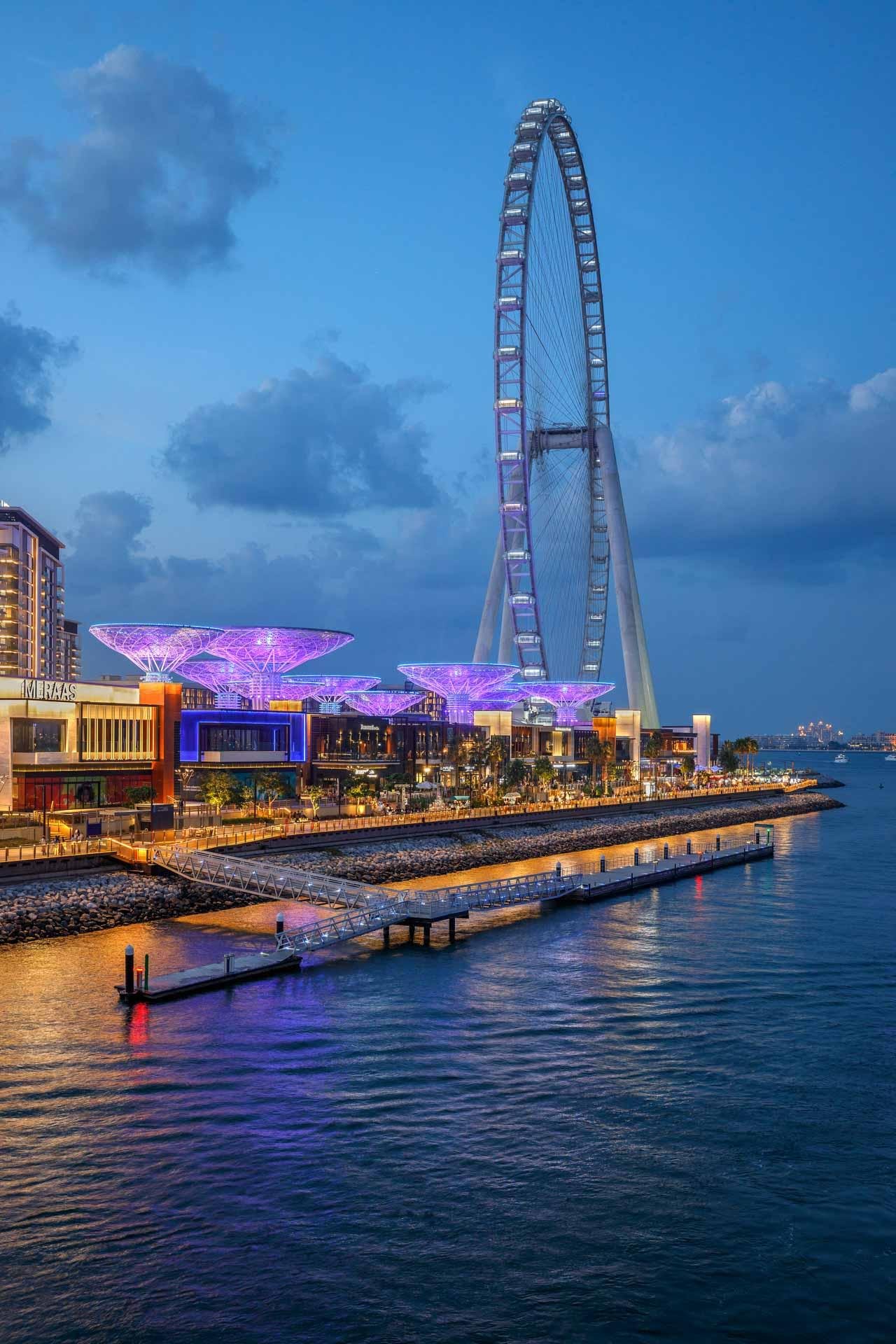
Ain Dubai
- Visit the Jumeirah Mosque: built in 1976 in an Egyptian style, it’s one of the few mosques open to non-Muslims. Tours run daily at 10:00 AM and 1:30 PM. You’ll wait in the majlis with Arabic coffee and luqaimats (little doughnuts), then join a one-hour tour covering the basics of Islam (five pillars, role of the imam, and more). Entrance is €6.
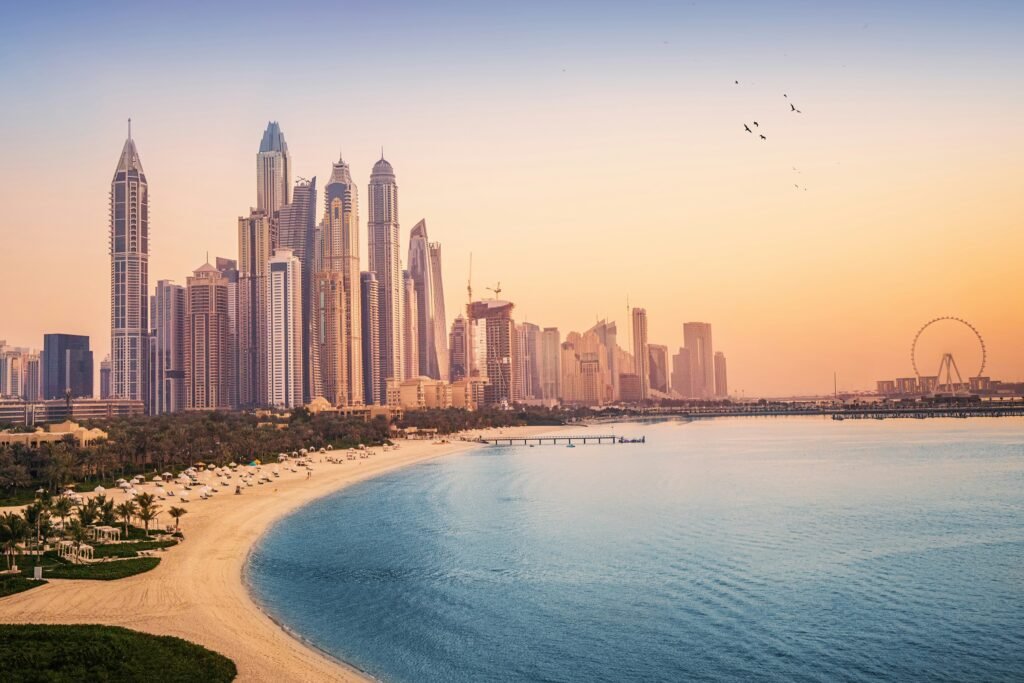
- Sunbathe on the beach: Dubai’s coast is packed with beaches, and many are free. Lively Kite Beach (near Burj Al Arab) is great for paddling, skating, kitesurfing, and budget-friendly food trucks. The Beach JBR near Dubai Marina is a favorite for sunset views. Also worth a look: Al Mamzar, Umm Suqeim, and Al Sufouh.
Cheap Dubai: Shopping Deals
- Dubai Outlet Mall and The Outlet Village are the obvious starting points for year-round brand discounts. Also keep an eye on Brands For Less or The Deal for marked-down designer items. On 2nd December Street, we even spotted a Pierre Cardin outlet advertising discounts up to 70% on men’s and women’s fashion and leather goods.
- The souks of Deira and Al Seef: this is where the real bargaining happens. Prices often aren’t displayed—so yes, you should haggle (politely, but confidently).
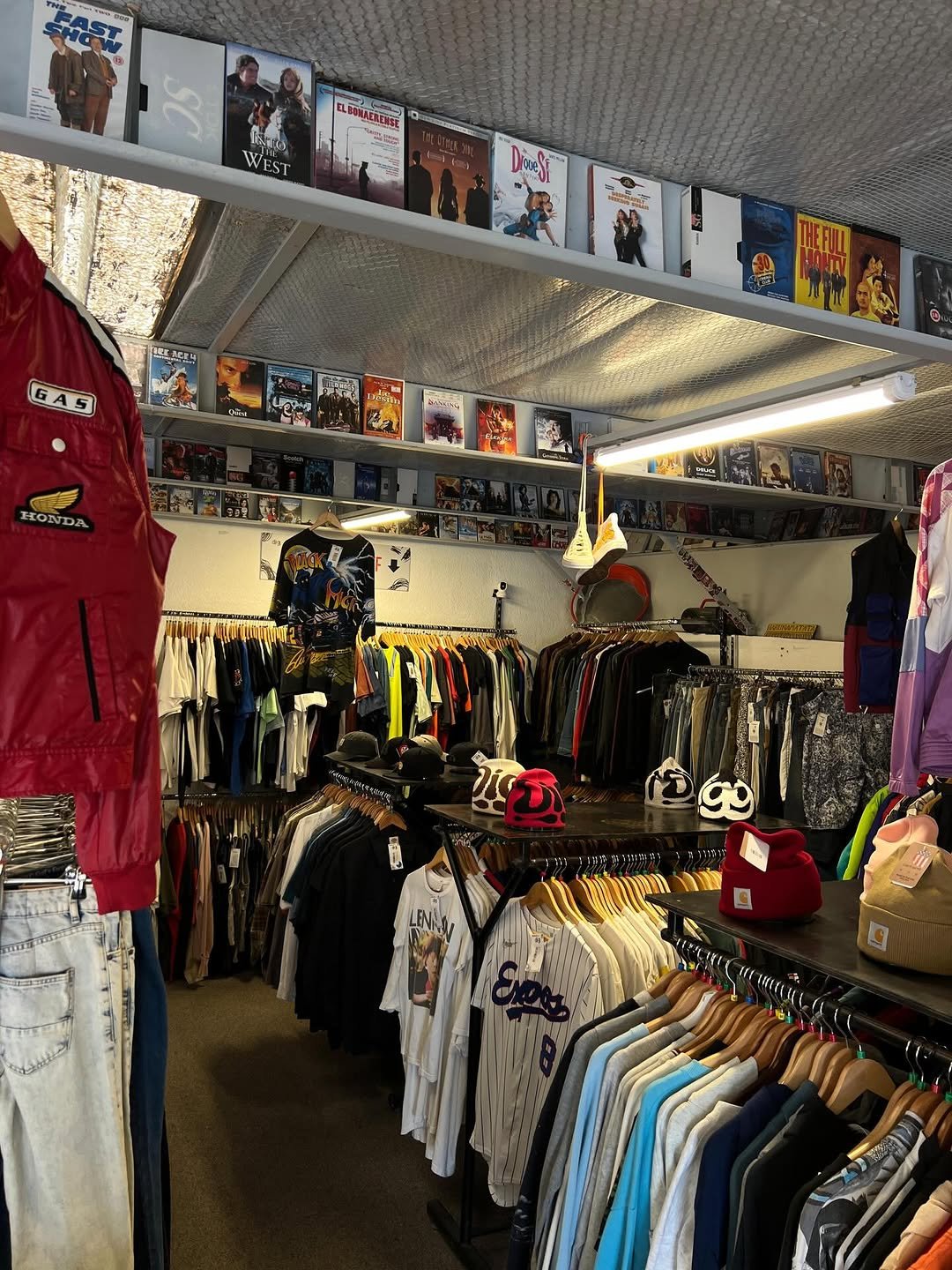
- The Retold secondhand store in Al Barsha is a haven for pre-loved luxury with a curated eye. Digg It Vintage in Al Quoz leans streetwear, with finds like Carhartt trousers and graphic tees. And at Garde Robe on Jumeirah Beach Road, you can hunt for certified luxury pieces—Céline, Chanel, Valentino, and more—starting around €150, sold with a certificate of authenticity.