
Travel writing based on first-hand experience
We ventured into the Spice Bazaar Istanbul, one of the city’s most ancient marketplaces, and compiled a list of must-do activities for your visit to this historic market.
Keep exploring Istanbul’s markets, food and historic streets
Once we have sampled the Turkish delight, inspected enough spice pyramids and somehow acquired three bags of tea, the obvious next step is more Istanbul. Discover the city’s best shopping streets and historic passages, decide what to buy in Istanbul, and continue eating with our guide to the best Istanbul street food. You can also explore nearby landmarks with our Sultanahmet neighborhood guide or fit the bazaar into a complete one-to-seven-day Istanbul itinerary.
Table of Content
Spice Bazaar Istanbul: What to Do, Taste, and Buy
1. Taste the Freshest Turkish Delights

Let’s start with the obvious danger: Turkish delight. One innocent “just looking” moment, and suddenly we are tasting pistachio, rose, coconut, pomegranate, double-roasted, cream-filled, and possibly negotiating with ourselves over suitcase space. This is how the Spice Bazaar gets you. Politely. Sugary. Without mercy.
Freshness matters massively here. Good Turkish delight should be soft, fragrant, and delicate — not the sad, rubbery cube that has been sitting in airport packaging since the Ottoman Empire was still checking emails. At the Spice Bazaar in Istanbul, you can find proper lokum made with classic recipes, generous nuts, and flavors that actually taste like something.
Look for plain rose Turkish delight, pistachio lokum, double-roasted varieties, coconut-coated pieces, and cream-filled options. Most shops will offer samples, so taste before you buy. Dangerous? Yes. Necessary? Also yes.
2. Discover Different Spices
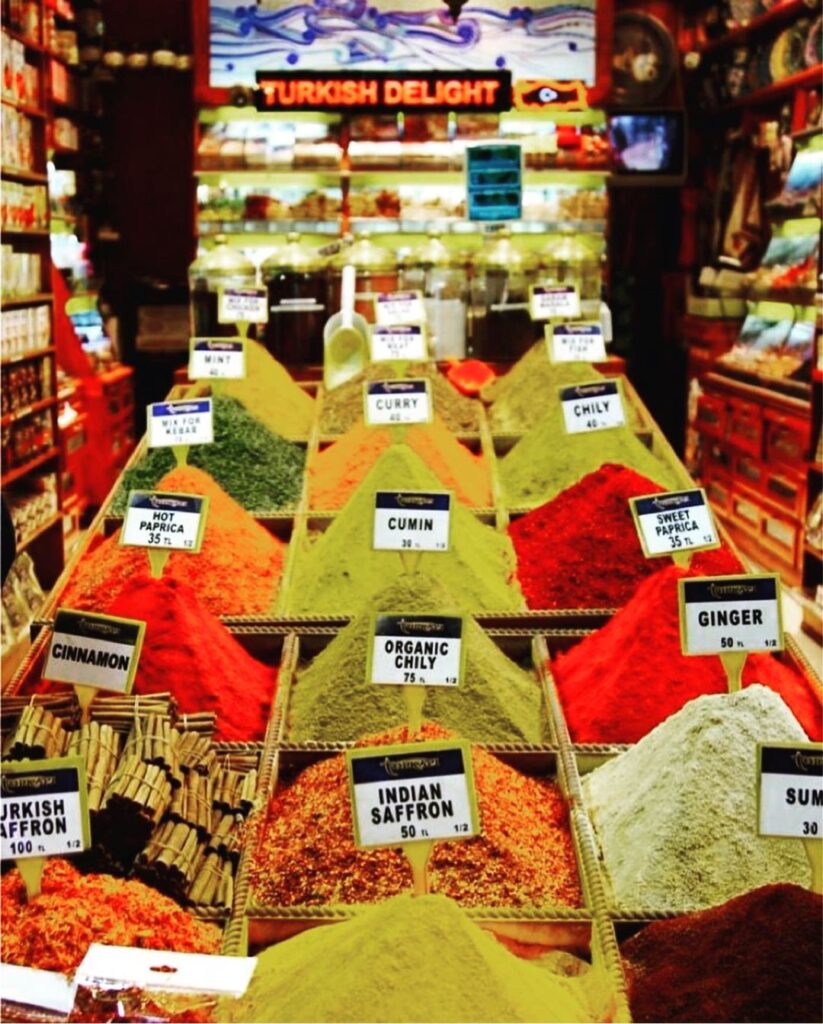
Before you even step properly inside, the Spice Bazaar announces itself with scent. Warm cumin, smoky paprika, dried mint, sumac, cinnamon, saffron, pepper blends — basically, your nose gets dragged into the building before the rest of you has caught up.
This is one of the best places in Istanbul to buy fresh spices, spice blends, dried herbs, and cooking mixes. You will find familiar favorites, but also blends for grilled meat, chicken, fish, rice, vegetables, soups, and Turkish breakfast dishes. Translation: even your lazy weekday dinner can come home from Istanbul wearing a tiny fez.
What to buy: sumac, pul biber, isot pepper, dried mint, Turkish saffron-style blends, za’atar-style mixes, cinnamon sticks, and shop-made seasoning blends. Ask the seller what each blend is best used for — most are very happy to explain, and some will give better cooking advice than half the internet.
3. Check Out the Different Flavors on the Counter

The Spice Bazaar is not just about spices and Turkish delight. That would be far too sensible. Instead, the counters are piled with things you recognise, things you think you recognise, and things that make you pause like, “Do we eat this, cook with it, or hang it in the kitchen and pretend we are a more interesting person?”
Alongside the classics — Turkish delight, nuts, dried fruits, teas, and spices — you will see strings of dried eggplants, tomatoes, zucchini, peppers, okra, and other traditional pantry staples used in Turkish home cooking. These are not decorative props, although they absolutely look like something a food stylist would fight for.
Then come the teas. And oh, the teas. Rose tea, jasmine tea with visible flower buds, pomegranate tea, apple tea, herbal blends, fruit blends, and dramatic mixes that look like tiny botanical confetti. Some are more traditional, some are clearly made for visitors, and some are exactly what you want to drink on a rainy day while pretending you are still in Istanbul.
If you have a sweet tooth, this place is a full-blown trap. Look for dried figs, apricots, dates filled with nuts, fruit leather, köme, walnut sausage, and other Turkish sweets made with grape molasses, nuts, and dried fruit. They travel better than baklava and make excellent edible souvenirs — assuming you do not eat them all before leaving the hotel.
4. Choose Oriental Gifts
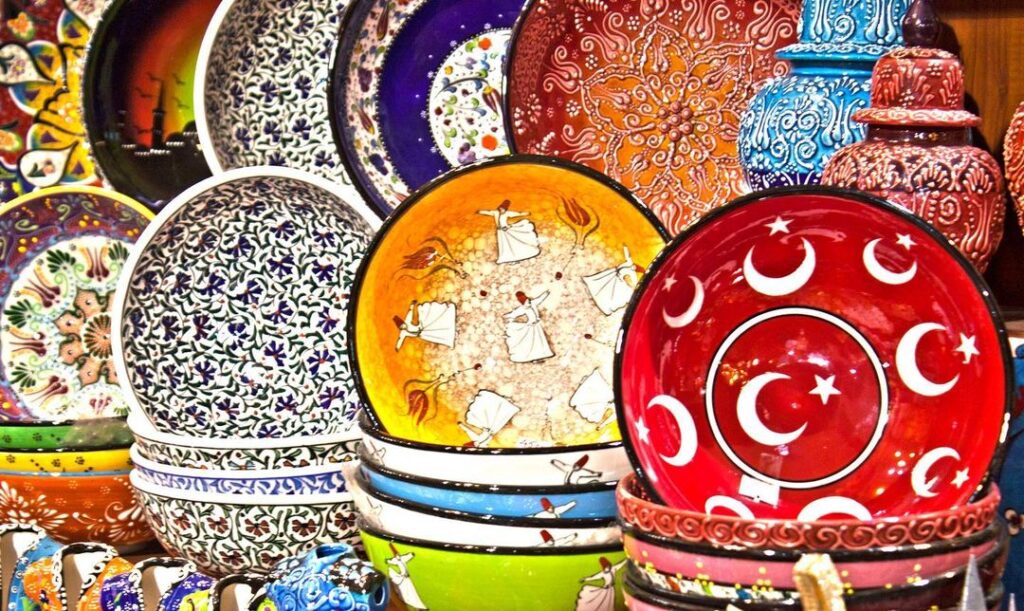
The Spice Bazaar still has that grand, old Istanbul feeling: arched ceilings, busy stalls, glowing lamps, polished copper, and enough color to make your camera work overtime. So yes, come for spices — but leave time for gifts too.
You will find handmade accessories, mosaic lamps, copper coffee pots, Turkish tea glasses, ceramic bowls, hand-painted tiles, silk scarves, backgammon boards, chess sets, and mother-of-pearl inlay pieces. Some are beautiful. Some are touristy. Some are both. Welcome to bazaar shopping; nuance is part of the sport.
Buying tip: Compare a few stalls before committing, especially for lamps, ceramics, and copper pieces. Prices and quality vary, and the first thing you love may not be the best version of that thing. Cruel but true.
5. Buy Breakfast Foods from Various Regions in Turkey
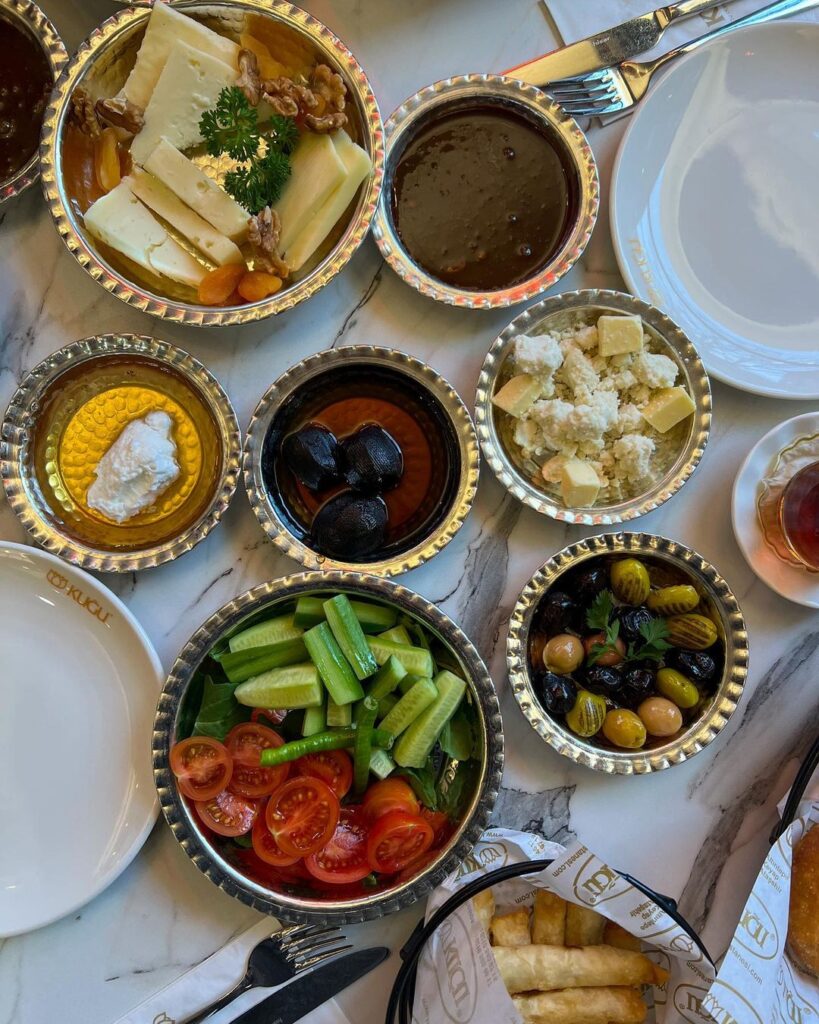
If you believe breakfast is not a meal but a civic institution, welcome home. The Spice Bazaar is a brilliant place to explore Turkish breakfast foods from different regions, especially if your idea of happiness involves olives, cheese, bread, honey, and a small table that somehow becomes a feast.
You can find cheeses from places like Ezine and other regions, olives from Ayvalık and Antakya, Turkish butter, honey, jams, nuts, pastrami from Kayseri or Kastamonu, and enough breakfast bits to make your hotel room picnic dangerously good.
What to buy: vacuum-packed cheese, olives, honey, dried fruit, nuts, and spice blends. If you are flying home, ask what will travel well and what should be packed carefully. Olive oil leaking inside luggage is not a souvenir. It is a crime scene.
6. Dine at Pandeli Restaurant

After all that sniffing, tasting, buying, bargaining, and pretending you definitely have room in your suitcase, climb upstairs for one of the most atmospheric food stops in the bazaar: Pandeli Restaurant.
Pandeli is a historic Istanbul restaurant tucked inside the Spice Bazaar, known for its blue-tiled interior, old-school charm, and classic Turkish cuisine. It has hosted plenty of notable guests over the years, but honestly, the best part is simpler: sitting by the window, looking down toward Eminönü, and eating something warm after the bazaar has fully scrambled your senses.
If you can, ask for a table by the window. You get food, history, tiles, and a front-row seat to the beautiful chaos outside. It is a perfect way to end your Spice Bazaar visit before heading back into the streets, full of tea, sugar, spices, and wildly optimistic souvenir bags.
Address: Rüstempaşa Mah. Balık Pazarı kapısı Sokağı Mısırçarşı İçi 1, D:2, 34110 Fatih/İstanbul, Türkiye
FAQs — Spice Bazaar Istanbul
1) What is the Spice Bazaar?
A 17th-century covered market famed for spices, teas, lokum, nuts, dried fruit, and colorful stalls—right in Eminönü by the Yeni (New) Mosque.
2) Where is it and how do I get there?
Eminönü, Fatih district. Tram T1 → Eminönü stop; ferries to Eminönü/Karaköy; short walk from Galata Bridge.
3) When’s the best time to visit?
Weekday mornings—cooler, calmer, better chats with vendors. Evenings and weekends get busy.
4) Is it open every day?
Typically daily around 09:00–19:00, with variations on holidays/Fridays. Check current hours before you go.
5) What should I buy?
Pul biber (Aleppo flakes), isot/Urfa pepper, sumac, saffron, tea blends, Turkish delight, pistachios, hazelnuts, dried figs/apricots, honey, and soaps.
6) How do I judge spice quality?
Smell first, prefer whole over pre-ground, ask about turnover, and check clear labeling (origin, date). Bright color ≠ always better—trust aroma.
7) Is haggling expected?
For loose goods and gifts, yes—polite, friendly bargaining. Some stores are fixed-price; ask if the price is “final.”
8) Card or cash?
Most vendors take cards; small purchases may be cash-only. Keep some TL for tips and tiny buys.
9) Can I get items vacuum-sealed or shipped home?
Many shops vacuum-seal on request and arrange insured shipping. Know your customs limits for food/spices.
10) Any allergy tips?
Nuts, sesame, and dairy show up in sweets. Ask, read labels, and choose sealed packages if sensitive.
11) Are free samples safe?
Generally fine—use tongs/spoons when offered, avoid shared scoops, and skip if you have strict dietary needs.
12) Photography okay?
Yes, but ask before close-ups of people. Step aside to avoid blocking aisles.
13) Is it stroller/wheelchair friendly?
Main aisles are flat but crowded. Side lanes can be narrow/uneven—go early for space.
14) How do prices compare to Grand Bazaar?
Spice Bazaar is more food-focused; prices vary by shop. Compare per-100g prices and quality before buying.
15) How do I avoid tourist traps?
Check weights, ask for prices per unit, compare a few stalls, and buy small amounts first to test.
16) Can I buy real saffron here?
Yes—look for “Crocus sativus” and sealed packs. Don’t confuse safflower (cheap) with true saffron (costly, intense aroma).
17) Any etiquette I should know?
A smile and a “merhaba” help. Accepting tea is optional; no purchase obligation. Keep aisles flowing.
18) Is it safe?
Crowded but generally safe—watch pockets, zip bags, and keep phones secure during photos.
19) What’s nearby to pair with a visit?
Yeni Mosque next door, Rüstem Paşa Mosque (İznik tiles), Galata Bridge, Eminönü ferry piers, and the Egyptian Bazaar arcades.
20) Quick 2-hour plan?
Enter from Eminönü, sample teas/spices, pick up lokum and nuts, pop into Rüstem Paşa, then ferry to Kadıköy for lunch.
- What to Wear in a Turkish Bath (2026): Ultimate Hammam Dress Code & Massage Etiquette
- 2026 Turkey Travel Tips: Useful Things to Know From A Local

- 2026 Turkey Packing List: Essential Travel Items and Tips
- Where To Stay In Bodrum (2026): Best Neighborhood & Top Hotel Picks
- 22 Top Turkish Cosmetics Brands (2026 Edition)