
Travel writing based on first-hand experience
The first few minutes in Khan el-Khalili Bazaar tend to go something like this: lanterns. More lanterns. A wall of copper trays. Someone offering you perfume. Someone else insisting you absolutely need a scarab. Spices appear in colours you didn’t know spices came in, and somewhere behind all of this, tea is being poured into tiny glasses.
Welcome to shopping in Cairo. This sprawling historic souk is a glorious jumble of tourist stalls, traditional workshops, jewellery shops, perfume sellers and cafés. Not every souvenir is handmade, and not every opening price deserves to be taken seriously. But with a little patience, you can leave with something much better than another fridge magnet.
So, what to buy at Khan el Khalili Bazaar? From Egyptian lanterns and personalised cartouches to spices, cotton scarves and wooden boxes, these are our favourite finds — and the practical shopping tips that will help you choose well.
Table of Contents
What to Buy at Khan el Khalili: At a Glance
| What to buy | Best for | Our advice |
|---|---|---|
| Metal lantern | Classic Cairo souvenir | Choose a compact size and inspect the glass |
| Silver cartouche | Personalised gift | Check metal hallmarks and spelling |
| Perfume oil | Lightweight present | Test the fragrance on skin |
| Karkade and spices | Budget-friendly gift | Look for fresh, clearly packed ingredients |
| Cotton scarf | Practical souvenir | Feel the fabric and check the label |
| Copper or brass tray | Home décor | Compare thickness and finishing |
| Inlaid wooden box | Handicraft lovers | Inspect the hinges and inlay |
What to Buy at Khan el Khalili Bazaar: 12 Best Souvenirs
1. Egyptian Lanterns (Fanous)

If Khan el-Khalili had a mascot, it would be the fanous: the pierced-metal and coloured-glass lanterns hanging above stalls like jewellery for buildings. Some are tiny tabletop lamps; others are enormous hanging pieces that look as though they belong in a medieval palace.
The best ones have carefully worked metal, sturdy joins and evenly fitted glass. A handmade-looking piece isn’t automatically handmade, so compare several examples and ask whether the seller makes them locally. For flying home, a small tabletop lantern is a much easier prospect than a chandelier-sized souvenir.
Best for: anyone who wants one memorable piece of Cairo for their home. Buying tip: ask the seller to protect each glass panel before packing.
2. Silver Jewellery and Personalised Cartouches
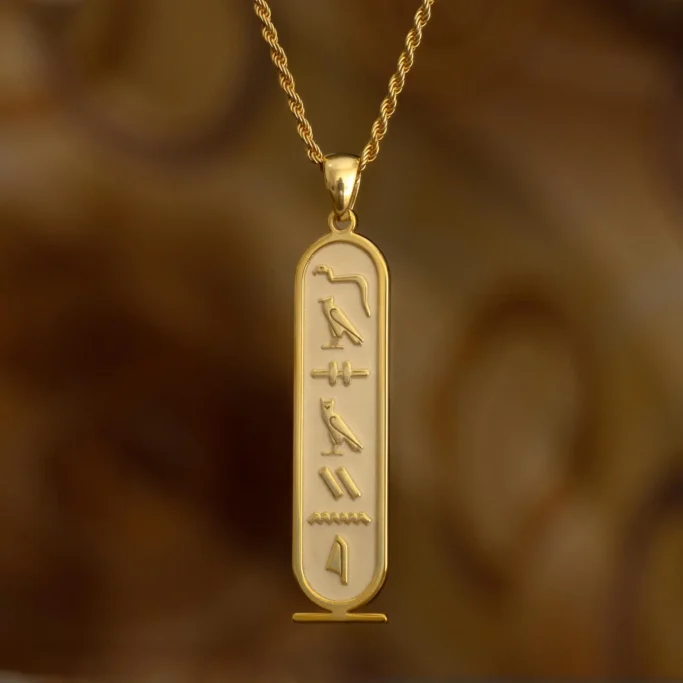
A necklace engraved with your name in hieroglyphics is touristy, yes. It’s also one of the few touristy souvenirs we’d happily defend. You’ll see cartouche pendants alongside scarabs, ankhs, Eye of Horus charms and modern silver jewellery.
If you’re buying precious metal, check for a proper hallmark, ask about purity and weight, and request an itemised receipt. Don’t assume that every shiny pendant is silver. For personalised pieces, confirm the spelling and layout before engraving begins; hieroglyphic transliteration is decorative rather than a perfect letter-for-letter translation.
Best for: personalised gifts that barely take up any suitcase space.
3. Egyptian Perfume Oils
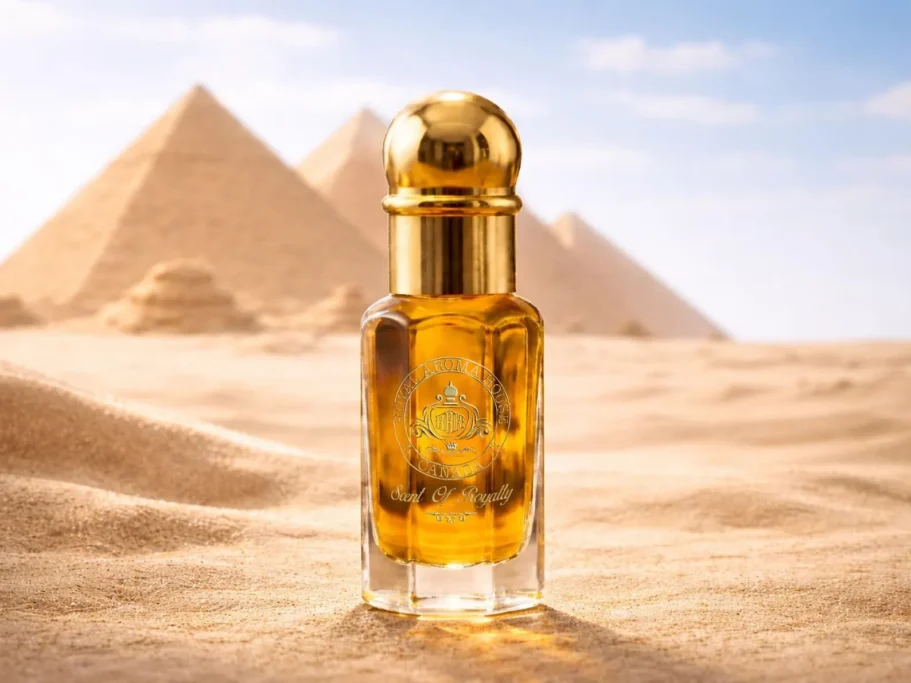
Perfume stalls are one of the market’s most irresistible traps. Jasmine, musk, amber and lotus-inspired blends are popular options, sometimes sold in ornate little bottles. Before buying, ask whether you’re being offered a concentrated perfume oil, a diluted fragrance or a spray.
Test a little on your skin, then wait before deciding. After smelling ten fragrances in two minutes, your nose will have officially resigned. Don’t take claims such as “pure essence” or “therapeutic” as proof of ingredients or quality.
Best for: fragrant, lightweight souvenirs and small gifts.
4. Decorative Glass Perfume Bottles
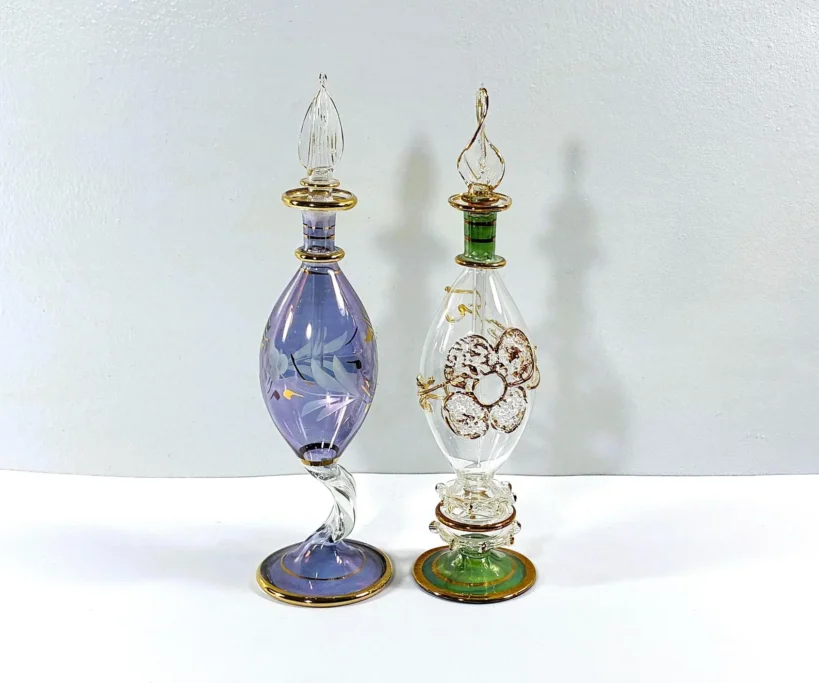
Even without the perfume, the bottles are hard to resist. Delicate coloured glass, narrow necks and decorative stoppers make attractive little presents. Compare the glass thickness, look for chips around the opening and check how securely the stopper fits.
Buy several and you’ll need each wrapped separately. Nothing spoils a souvenir quite like arriving home with an expensive bag of glass confetti.
Best for: inexpensive presents for friends and family.
5. Spices, Hibiscus Tea and Dukkah

Follow your nose into the spice shops. Look for karkade (dried hibiscus), cumin, coriander, black seed and dukkah, Egypt’s fragrant blend of nuts, seeds and spices. Hibiscus is an especially good souvenir: it’s light, easy to pack and makes a beautifully crimson drink served hot or cold.
Choose clean, aromatic spices that are properly stored and packed. Be especially cautious with expensive items such as saffron: implausibly cheap “premium” spice rarely turns out to be a bargain. Check the customs rules for taking food products into your home country.
Best for: cooks, tea lovers and travellers with limited luggage space.
6. Egyptian Cotton Scarves and Galabeyas
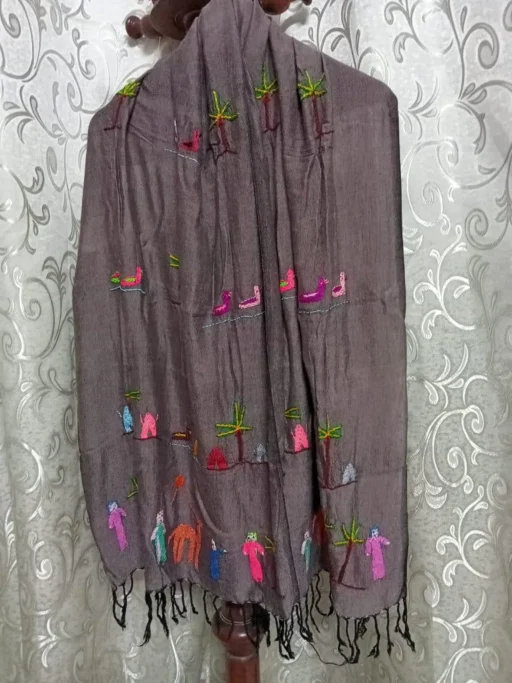
You’ll find cotton scarves, shawls, embroidered textiles and traditional galabeyas throughout the shopping streets. Egyptian cotton has a famous name, but that doesn’t mean every garment sold here is made from it.
Feel the material, inspect the seams and check any fibre label before paying. A soft scarf is one of our favourite practical purchases, especially because it packs flat and won’t require airport security to investigate your carry-on.
Best for: wearable souvenirs, easy-to-pack gifts and everyday use.
7. Papyrus Paintings
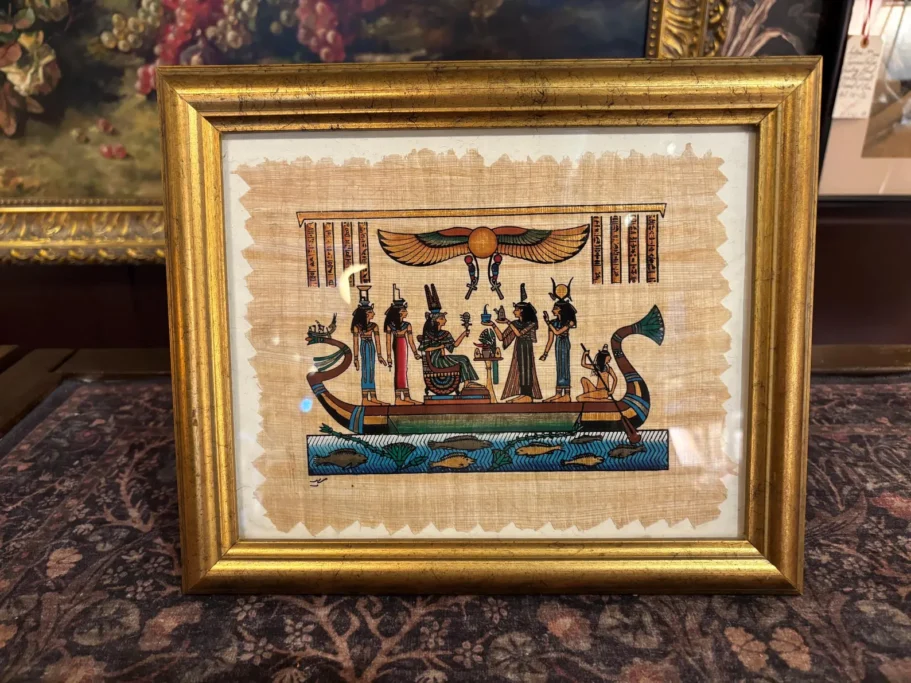
Papyrus prints depicting pharaohs, hieroglyphics and ancient Egyptian scenes are classic souvenir-shop territory. The catch? Some inexpensive examples are made from other plant fibres or paper rather than traditional papyrus.
Real papyrus is produced from interwoven layers of plant strips, so examine the visible fibres and texture. Cheap copies can still make cheerful souvenirs, but you shouldn’t pay authentic-papyrus prices for them. And remember that printed artwork is modern decoration, not an antiquity.
Best for: lightweight Egyptian-themed wall art.
8. Copper and Brass Trays, Bowls and Coffee Sets
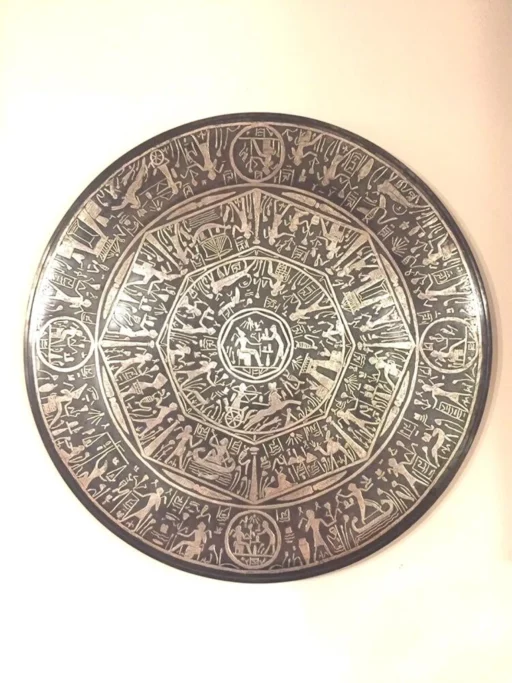
Khan el-Khalili’s metalwork is one of its loveliest traditional crafts. Think engraved serving trays, hammered bowls, little teapots and ornate coffee sets. Look beyond the first glittering display and compare the metal thickness, engraved details and weight of similar items.
A heavier hand-worked piece may cost more than a thin, machine-decorated version. Ask whether the object is suitable for food or purely decorative, especially if you plan to use a tray for serving.
Best for: statement home décor and a more substantial keepsake.
9. Inlaid Wooden Boxes and Backgammon Sets

Small wooden jewellery boxes, chessboards and backgammon sets are often decorated with geometric patterns, contrasting woods and mother-of-pearl-style details. They can be gorgeous, and sometimes beautifully made.
Open every drawer and lid, check the hinges and see whether the pattern is genuinely inlaid rather than printed. Discovering back at your hotel that your decorative wooden box has the structural integrity of a biscuit packet is best avoided.
Best for: distinctive gifts and traditional handicrafts.
10. Leather Bags, Wallets and Slippers
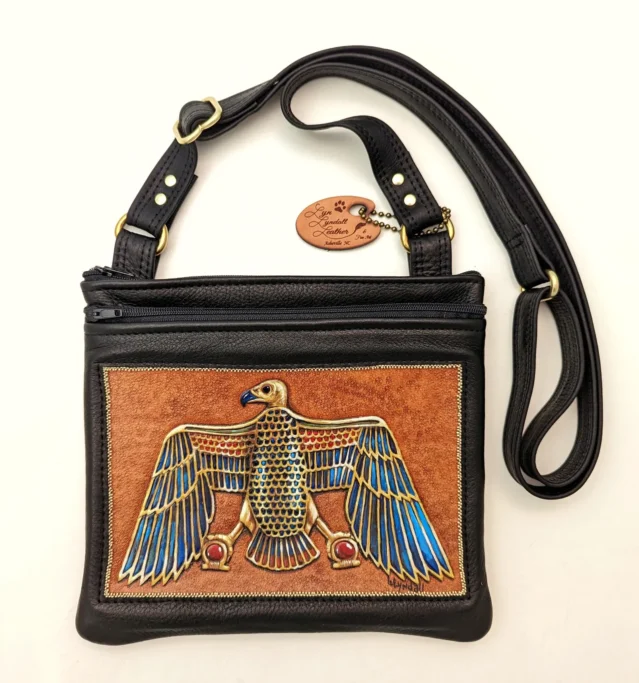
Leather bags, wallets and slippers also appear around the bazaar. These can be practical buys, but quality varies: inspect stitching, seams, zips, lining and edges. A strong leather smell doesn’t tell you whether something will last.
Look for a piece that feels genuinely well constructed, rather than choosing the biggest discount.
Best for: useful everyday souvenirs.
11. Alabaster and Egyptian-Style Stone Carvings
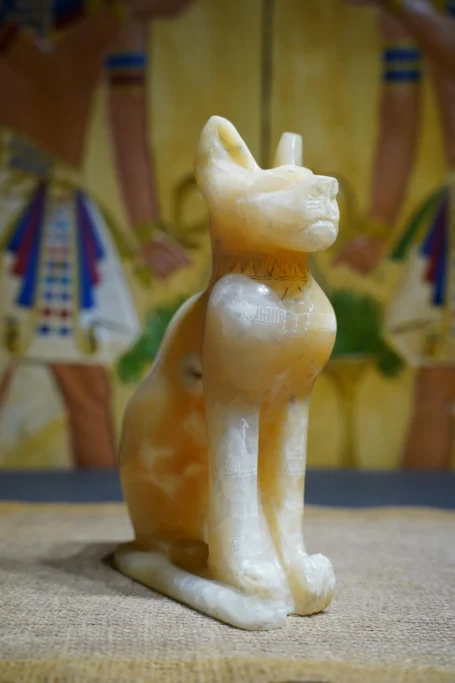
Cats, scarabs, pyramids, pharaohs and miniature gods stare at you from almost every souvenir display. Some are carved from stone or alabaster; others are inexpensive moulded resin. Either can make a fun souvenir as long as you know what you’re paying for.
Examine the underside, weight and finish, and compare several examples. Treat any claim that a souvenir is an actual ancient artefact as a warning sign, not a special opportunity.
Best for: traditional Egyptian-themed gifts and decorative pieces.
12. Rugs, Kilims and Traditional Textiles
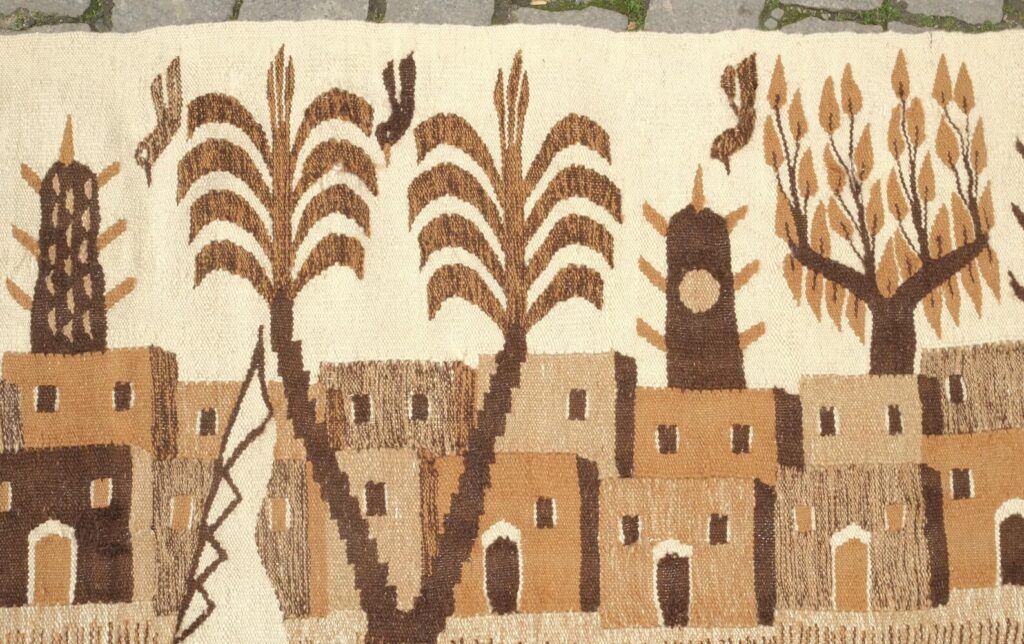
For something larger, look at woven rugs, kilims and decorative textiles. Ask about the materials, origin, weaving method and size. If you’re paying a substantial amount, take a photo of the item and get the details written on the receipt.
Textile enthusiasts can also visit the nearby Tentmakers’ Market, known for its colourful appliqué work. It is a worthwhile addition to a longer wander through Historic Cairo.
Best for: travellers who would rather bring home one special piece than twenty tiny souvenirs.
How to Tell Handmade Crafts from Mass-Produced Souvenirs
The bazaar sells both. You’ll find genuine artisans and workshops, but also rows of very similar mass-produced pyramids and pendants. Neither is a problem if the price matches the product.
- Compare a few shops. Identical items appearing everywhere are unlikely to be rare works of art.
- Inspect the details. Check stitching, joins, inlay, glass and finishing.
- Ask about the maker. A workshop may be able to show you how a piece is produced, though this is not guaranteed.
- Don’t buy a story instead of a product. “Ancient”, “handmade” or “pure silver” should be supported by evidence when authenticity matters.
How to Bargain at Khan el-Khalili Bazaar
Bargaining is part of the experience in many stalls, though some established stores use fixed prices. There is no magic rule that says you must offer exactly one-third or half of the first price. Material, workmanship and starting prices vary too much for that.
- First: browse two or three sellers and get a feel for comparable prices.
- Next: decide what you would actually be comfortable paying and make a polite counteroffer.
- Finally: if you can’t agree, smile, say “La, shukran” (no, thank you), and move on.
The aim is to negotiate, not stage an international incident over a small souvenir.
Cash, Cards and Shopping Safety
Carry Egyptian pounds in smaller notes for inexpensive purchases. Some established businesses accept bank cards, but don’t assume every stall will. Confirm the total and currency before paying, and ask for a written receipt for jewellery or other expensive items.
Keep your bag closed in crowded lanes, stay aware of your surroundings and avoid carrying all your cash in one obvious place. Be careful with anything marketed as a genuine archaeological find: modern replicas are normal souvenirs, while authentic antiquities are subject to legal restrictions and should not be treated as ordinary market goods.
When to Visit and How Much Time to Allow
Allow two to three hours for relaxed shopping, or more if you’d like to explore surrounding streets and stop at a café. Late morning and afternoon are practical for browsing; evening is particularly atmospheric when the lights come on and the market feels lively.
Khan el-Khalili is a district rather than a single building, so shops do not all share one opening schedule. Hours can change around religious holidays and Ramadan. There is no admission ticket for walking around the bazaar.
Shopping at Khan el-Khalili with Children
A small budget for choosing their own souvenir can make browsing more fun for children. We would steer them toward a little scarab, a miniature lantern or a compact papyrus-style print rather than fragile glass bottles.
The alleys can be busy and noisy. Agree on a meeting point, keep younger children close and plan a tea or juice break before everyone reaches full souvenir overload.
Stop for Tea Before You Leave
Eventually, your brain will reach maximum brass-lantern capacity. That’s your cue to find a café and order tea, mint tea or karkade. Sit for a while, watch the market go about its business and reassess whether you really need that third lamp.
Then probably go back and buy it.
Khan el-Khalili Shopping FAQs
What is Khan el-Khalili famous for buying?
Its best-known products include decorative metal lanterns, jewellery and personalised cartouches, perfume oils, spices, copper and brass goods, textiles and Egyptian-themed souvenirs.
Is Khan el-Khalili expensive?
You can find cheap souvenirs and costly handmade crafts in the same market. Prices vary widely with quality, materials and the seller, so compare a few shops before making a substantial purchase.
Can you bargain at Khan el-Khalili?
Yes, in many stalls. Some shops use fixed prices, so ask politely if the price is negotiable before making an offer.
What is the easiest souvenir to bring home?
A cotton scarf, spice packet, small perfume bottle or silver pendant is easier to pack than a large lantern or metal tray. Check your airline’s liquid rules and your destination’s customs restrictions.
What should you avoid buying?
Avoid supposedly ancient artefacts, unverified precious metals and other expensive items sold with big authenticity claims but no documentation. Be wary of fragile pieces that cannot be properly packaged.
Our Favourite Thing to Buy at Khan el-Khalili
If we had room for only one purchase, we’d pick a small, well-made Egyptian lantern. It captures the atmosphere of Cairo, looks lovely at home and has a stronger connection to the bazaar’s traditional craft culture than another plastic pyramid.
But the best way to shop at Khan el-Khalili is not to arrive with a rigid list. Wander, compare, look into the smaller workshops and take your time. You might find exactly what you came for — or something much better hidden behind a stack of copper trays.
Planning More Adventures in Cairo and Egypt?
Finished hunting for treasures at Khan el-Khalili? There’s plenty more to discover, from Cairo’s hidden corners to Egypt’s best souvenirs. Keep exploring with our guides:
- 12 Best Things to Buy in Egypt – More authentic souvenirs, local crafts, and shopping tips.
- Best Shopping in Cairo – From traditional bazaars to modern boutiques and shopping malls.
- 11 Best Places to Visit in Cairo – The city’s most fascinating attractions beyond the bazaar.
- Hidden Gems in Cairo – Unusual places, atmospheric streets, and lesser-known discoveries.
- Where to Stay in Cairo – The best neighbourhoods and hotels for every travel budget.
- Ultimate Egypt Packing List (2026): What to Bring for the Desert, Cities, and the Red Sea
- Is Egypt Safe For Solo Female Travellers in 2026
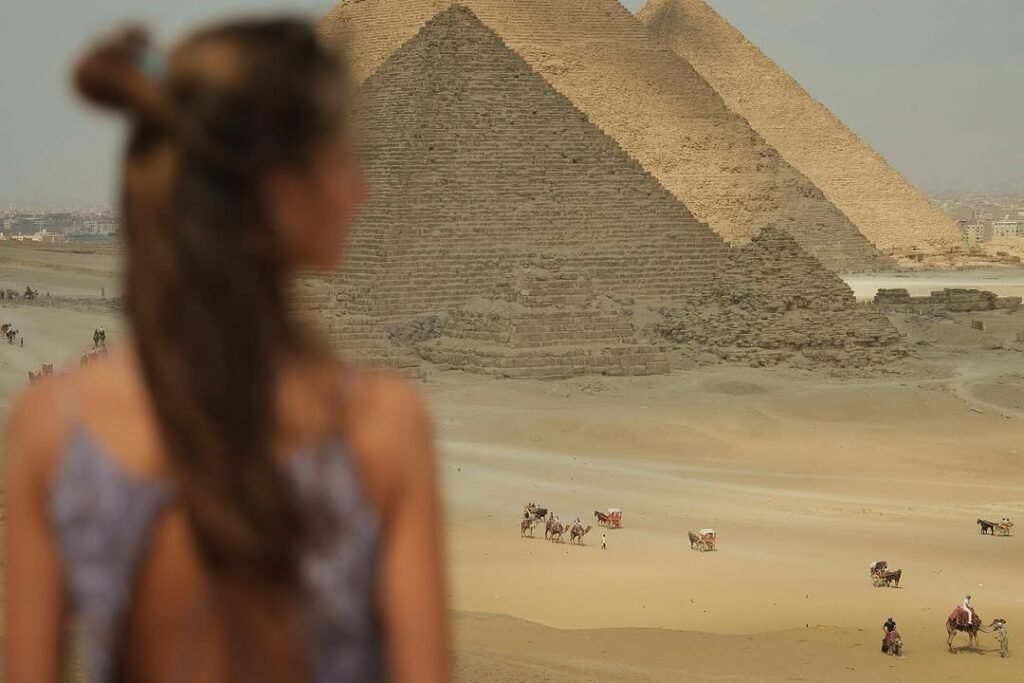
- 5 Days In Egypt Itinerary in 2026: Cairo, Luxor & Nile Cruise
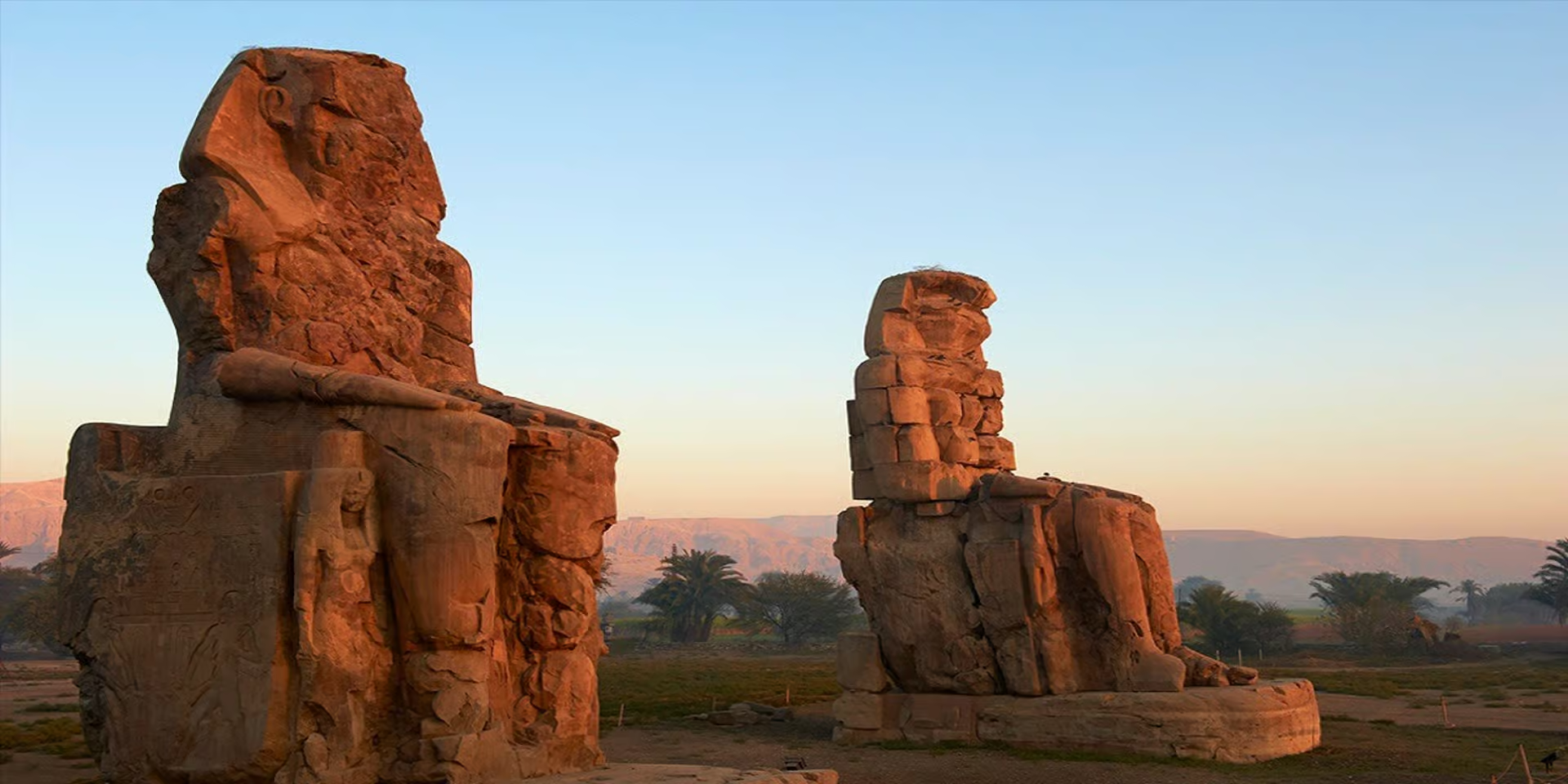
- 2026 Ultimate 8 Days In Egypt Itinerary: Cairo, Luxor, Aswan & Abu Simbel (Day-by-Day Guide)
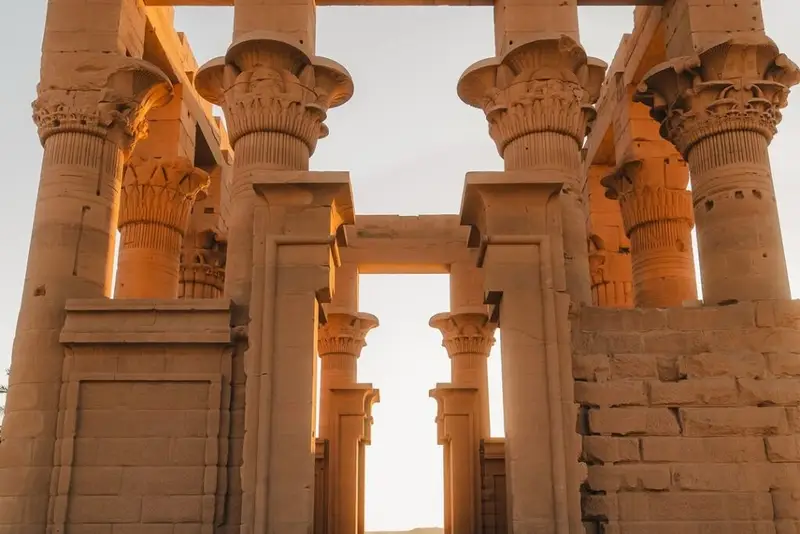
- How To Dress In Egypt | 2026 Tourist Guide