

Travel writing based on first-hand experience
Explore must-see places to visit in Istanbul and hidden corners with this ultimate guide. From mosques to markets, here’s what to see in the city.
Table of Contents
Getting Around Istanbul
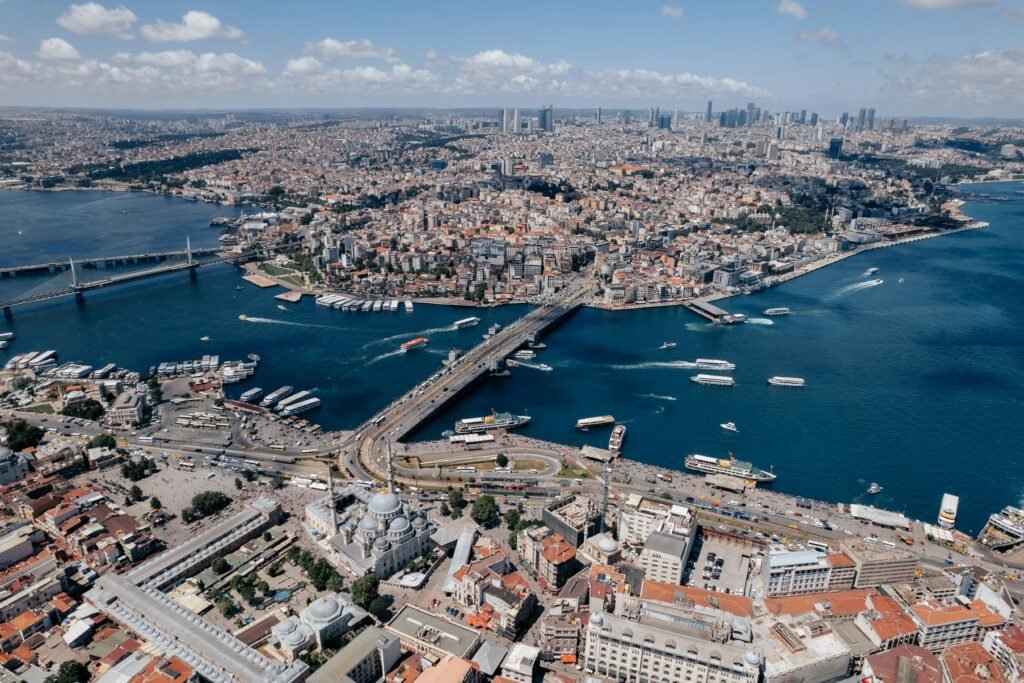
Welcome to Istanbul — a city that sprawls over two continents, weaves through millennia of history, and somehow still manages to make you late for dinner. Getting around this city is an adventure in itself: half ferry cruise, half public-transport relay race, and 100% worth the chaos.
Istanbulkart: The Golden Ticket
If you take one tip from us, let it be this: buy an Istanbulkart the moment you arrive. This rechargeable travel card works on everything — trams, metros, buses, ferries, and funiculars. You can grab one from yellow vending machines at metro or ferry stations, load it up with credit, and tap away like a local pro.
One card can be shared between a few travelers (just tap for each person, waiting a couple of seconds between scans). It’s cheaper, faster, and saves you from fumbling with coins at every stop.
Pro tip: Istanbulkart also gets you discounts on transfers — take a tram, then a ferry, then a bus, and the fares drop each time within a set time window. Think of it as a loyalty program for wanderers.
By Tram and Metro
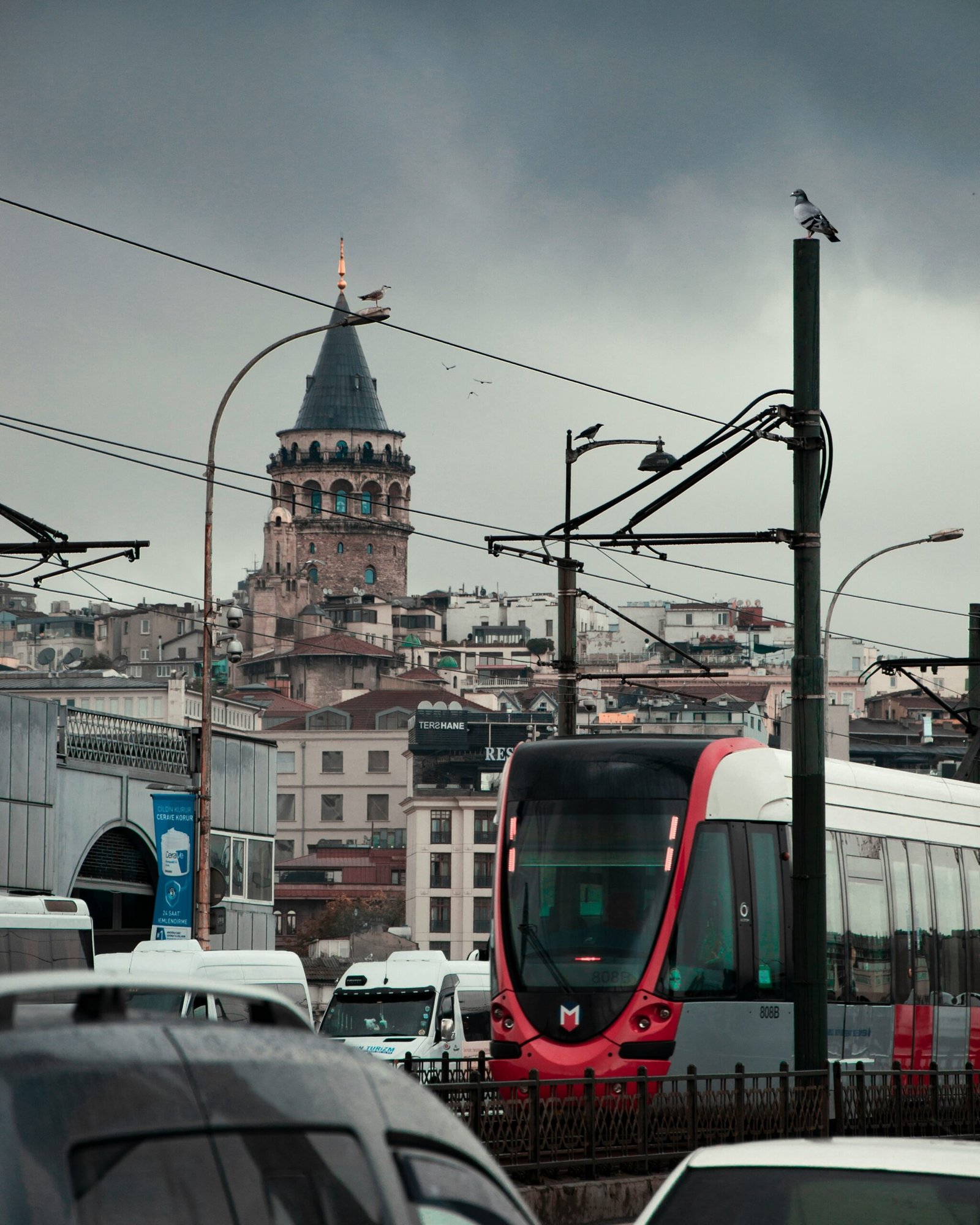
When the traffic turns into a parking lot (which it does, often), the tram and metro are your best friends. The T1 Tram Line runs straight through the heart of tourist life — from Kabataş and Karaköy to Sultanahmet and Grand Bazaar. The M2 Metro Line connects Taksim and Şişli all the way north to Levent, perfect for skipping the endless uphill walks.
The newer Marmaray Line dives under the Bosphorus like a futuristic fish, linking the European and Asian sides in minutes. It’s fast, clean, and feels a bit like teleportation compared to the old ferry days.
By Ferry: Between Two Continents
Forget Uber boats or fancy yacht cruises — the best Bosphorus experience costs less than a cup of Turkish tea. Hop on one of the city ferries (Şehir Hatları) and glide between Europe and Asia while watching the skyline turn gold at sunset. Ferries connect Karaköy and Eminönü to Kadıköy, Üsküdar, and even the Princes’ Islands.
Pro tip: Grab a simit (Turkish bagel) and feed the seagulls — it’s basically a rite of passage here. Also, check ferry times after dark; evening services slow down earlier than you’d expect.
By Bus, Minibus, and Dolmuş
Istanbul’s bus network is huge — perfect for reaching neighborhoods like Beşiktaş, Ortaköy, or Eyüp that aren’t well-served by the tram. But beware: traffic jams are a way of life. For a more local flavor, try a dolmuş (shared yellow minivan). They run semi-fixed routes, you just hop in, tell the driver where you’re going, and pay in cash when you get off. No schedules, no stops — pure Istanbul improvisation.
By Taxi and Ride Apps
Yellow taxis are everywhere, but not all are created equal. Some drivers may “forget” to turn on the meter, so confirm before riding. For smoother trips, use BiTaksi or Uber (both work well and show upfront pricing). Traffic, however, is the great equalizer — even the fanciest car can’t outdrive the Bosphorus bottleneck.
On Foot: Walking the Old City
In Sultanahmet, walking is often faster — and definitely prettier. The distances between landmarks are short, and you’ll stumble upon hidden courtyards, stray cats, and unexpected viewpoints. Just bring comfy shoes: those cobblestones mean business.
Pro tip: Istanbul’s terrain is no joke — expect steep climbs, slippery tiles after rain, and stairs appearing out of nowhere. Hydrate, pace yourself, and reward each uphill battle with a glass of çay.
Bonus: Bosphorus Tours
For a scenic shortcut (and some brag-worthy photos), join a Bosphorus sightseeing cruise. You’ll drift past Ottoman palaces, grand mosques, and ultra-modern mansions, all while sipping tea on deck. Many depart from Eminönü or Kabataş, and some even serve dinner under the stars.
BEST PLACES TO VISIT IN ISTANBUL
It would be quite impossible to list all the places to visit in Istanbul, there are so many, I, therefore, offer you a summary of the “must-see” places not to be missed during a stay in Istanbul, followed by a program of visits. I advise you also to get this tourist pass if you want to get the most out of your visit, really convenient!
1. HAGIA SOPHIA
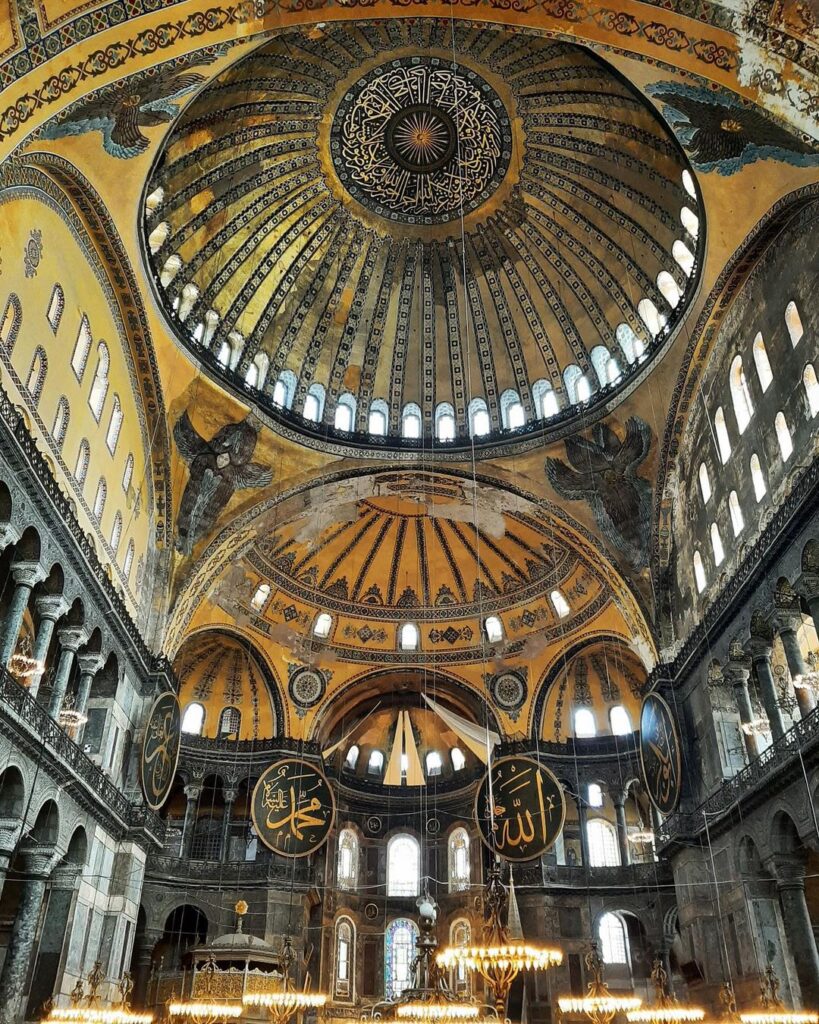
Hagia Sophia was long the largest church in the Christian world, and its architecture subsequently inspired many religious buildings. Its grandiose size and impressive dome make it the largest building in Istanbul. After the Ottoman conquest, it was converted into a mosque and served as an example for future Ottoman mosques. Today, it is a museum that attracts millions of visitors each year and is recognized as a UNESCO World Heritage site. Hagia Sophia is a stunning architectural marvel that features old mosaics, an enormous dome, and elements added during the Ottoman period, such as the mihrab and the library. Visitors to the museum can explore the interior and marvel at the blend of Byzantine and Islamic architectural styles. Within the walls of Hagia Sophia, you will also discover the magnificent tombs of sultans and princes. These tombs are beautifully decorated with intricate tile work and calligraphy and offer a glimpse into the history of the Ottoman Empire.
BOOK HAGIA SOPHIA TOUR AND SKIP THE LINE
2. THE BLUE MOSQUE
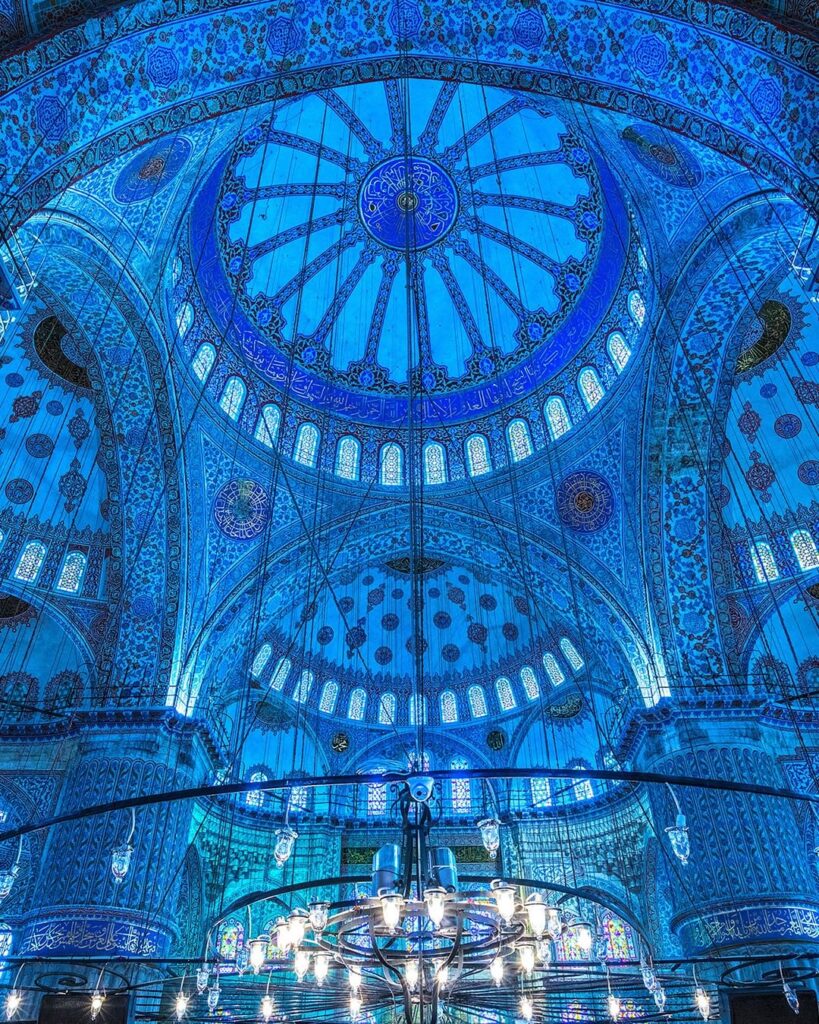
The Blue Mosque, also known as the Mosque of Sultan Ahmet, is one of the most beautiful mosques in Istanbul. Built in the 17th century by students of the great architect Sinan, its architecture is inspired by that of Hagia Sophia, as are many mosques in Istanbul. However, it is the only mosque in the city to have six minarets, which caused a bit of controversy at the time of its construction. When the sultan learned that no mosque could have more minarets than that of Mecca, he paid for the addition of a minaret to the Grand Mosque in Mecca, and the problem was solved! The Blue Mosque owes its nickname to the thousands of pieces of blue ceramic that adorn its interior, creating a mesmerizing effect. Visitors can admire the intricate details and different cupolas of the mosque, which are simply magnificent. As with other mosques in Istanbul, visitors cannot walk around freely, as the center is mainly dedicated to prayer. However, it is a must-visit place in Istanbul, and a great opportunity to learn more about the city’s history and culture.
3. TOPKAPI PALACE AND ITS HAREM
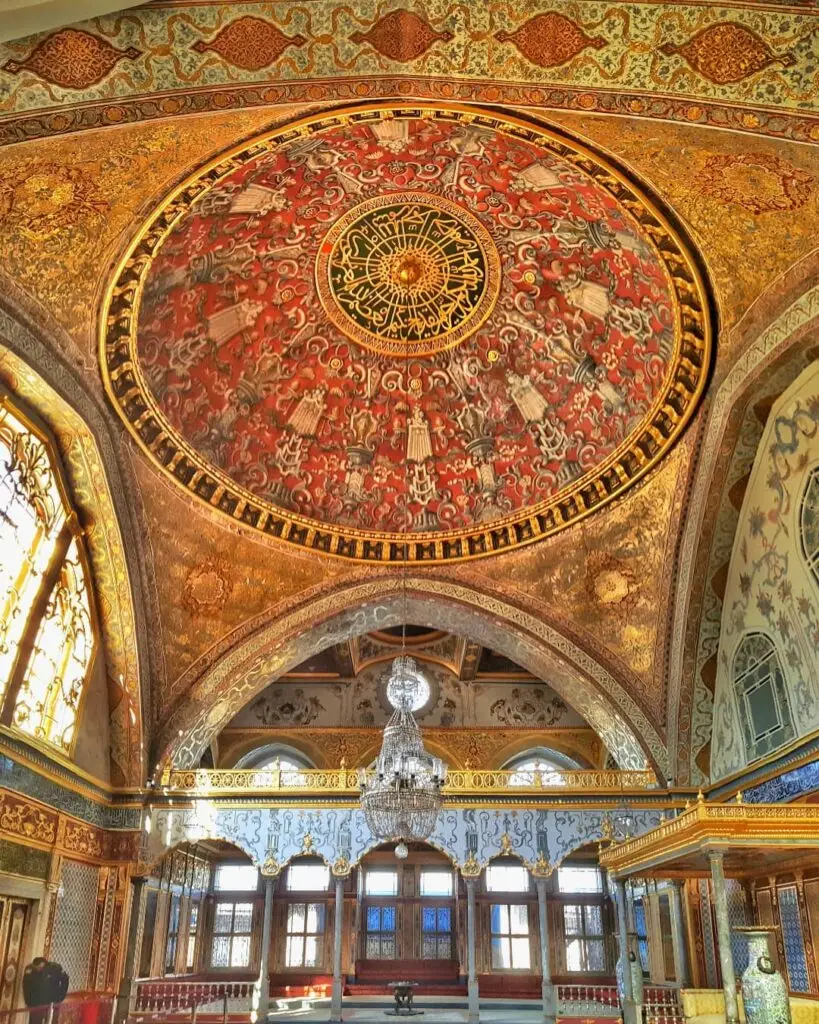
Another symbolic monument to visit in Istanbul, Topkapi Palace is actually a large palace complex. It housed the imperial family and the Ottoman government for centuries. Topkapi Palace is divided into three parts:
- The Ottoman Museum, which occupies different pavilions of the “public” palace
- The Harem, or private part, place of residence of the female members of the Sultan’s family
- The Gardens: With its beautiful ceramic decor and magnificent architecture, it feels like a palace from 1001 nights!
BOOK TOPKAPI PALACE HAREM TOUR
4. SULEIMAN MOSQUE
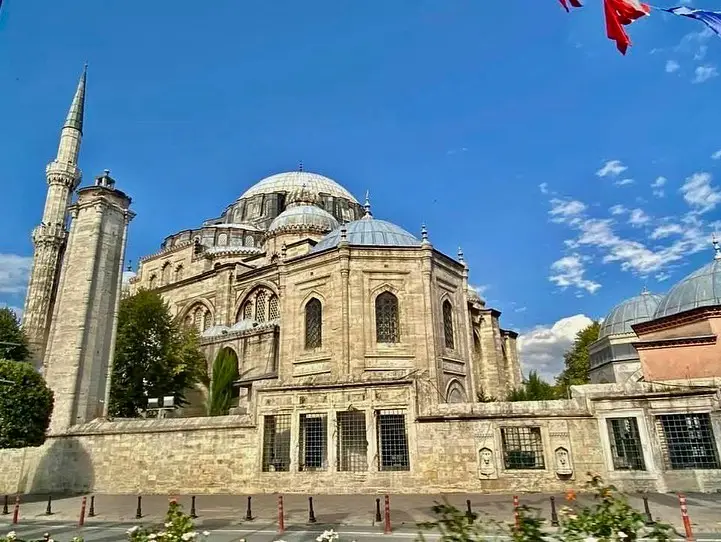
Another must-see monument in Istanbul is the Suleymaniye Mosque, also known as the Suleiman Mosque. It was built between 1550 and 1557, towards the end of the rule of Suleiman the Magnificent, and is the work of the great architect Sinan, who was very important in the history of architecture in Istanbul. The style of the Suleymaniye Mosque evokes that of Hagia Sophia, which was a point of reference for many architects in Istanbul. The mosque is distinguished by its four minarets, which symbolize that Suleiman was the fourth sultan to live in Istanbul. The sultan wanted to mark the end of his reign with the construction of a major building in Istanbul, and the Suleymaniye Mosque certainly achieved that goal. The Süleymaniye Mosque dominates the Golden Horn from the top of its hill and can be seen from different points of the city. Besides the mosque, the complex houses in its courtyard various mausoleums, including that of Sultan Suleiman and his wife Roxelana, called Hürrem in Turkish, as well as that of Mimar Sinan.
5. THE BASILICA CISTERN
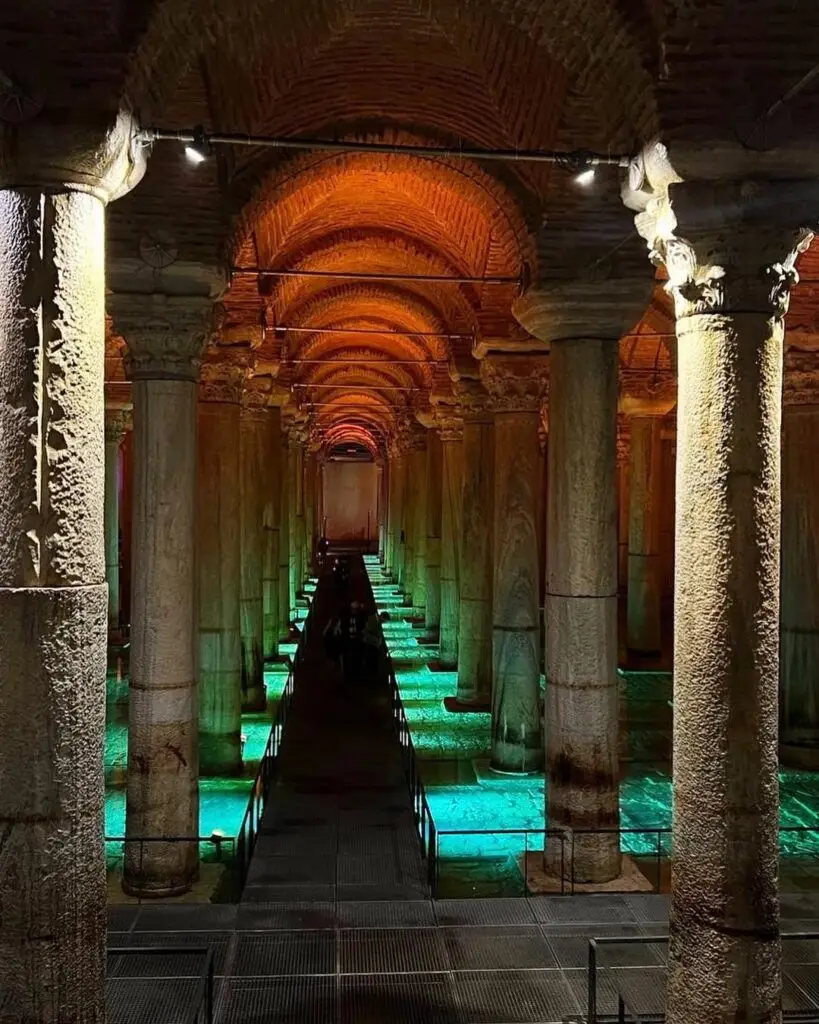
A real curiosity in Istanbul that you should not miss is the Basilica Cistern. As its name suggests, the cistern was originally a water storage created under the Byzantine Empire. However, today people come here for the monumental architecture and the somewhat mysterious, even mystical atmosphere that emanates from it. Inside, you can admire 336 columns, 9 meters high, with their feet in the water, and lit by a reddish light that offers an almost otherworldly spectacle. You may even see a few fish swimming in the water. Follow the somewhat signposted route that leads you to the “Column of Tears,” and then to the heads of Medusa supporting two columns. It’s unclear where these heads come from, but they add to the intrigue and mystery of the place. Concerts are sometimes held in the Basilica Cistern, thanks to its exceptional acoustics.
BOOK BASILICA CISTERN TOUR AND SKIP THE LINE
6. THE HISTORIC DISTRICT OF SULTANAHMET
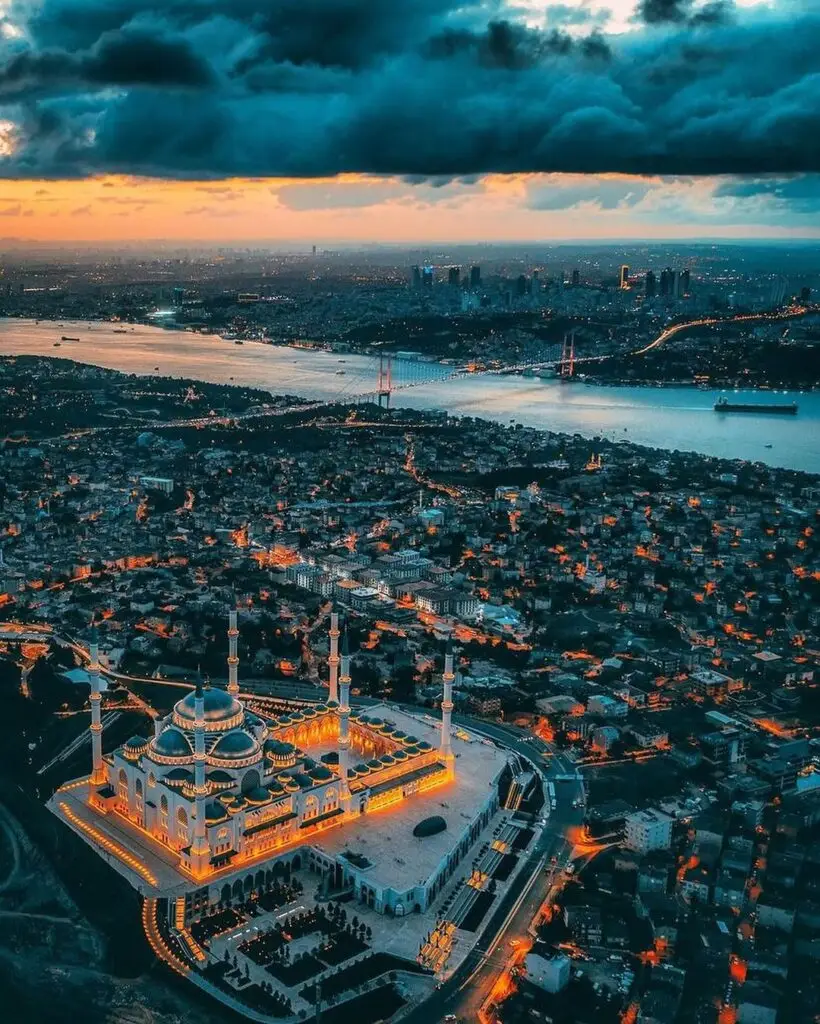
Sultanahmet is a historic district in Istanbul, Turkey, and home to many of the city’s most famous landmarks, such as the Hagia Sophia, Blue Mosque, and Topkapi Palace. The district also features charming cobblestone streets, traditional Ottoman-style architecture, and lively bazaars selling everything from spices to textiles. Visitors can immerse themselves in Istanbul’s rich history by exploring the numerous museums, mosques, and ancient ruins in the area, while also indulging in delicious Turkish cuisine at the many restaurants and cafes.
7. HIPPODROME SQUARE
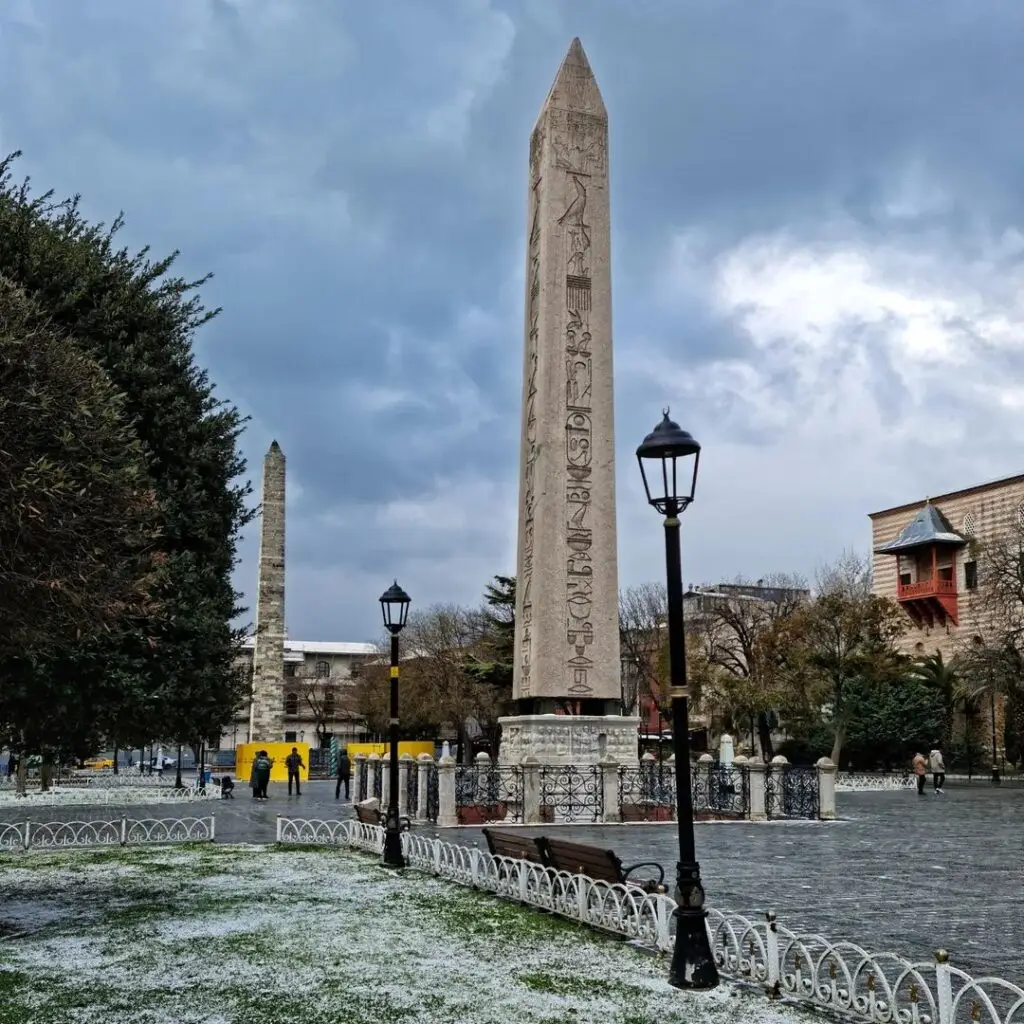
Sultanahmet Square is a vibrant public square located in the historic Sultanahmet district of Istanbul, Turkey. This bustling area was once the site of the great Hippodrome of Constantinople, inspired by the Circus Maximus of Rome. While only a small portion of the Hippodrome remains visible today, visitors can still explore the square and discover its rich history. In ancient times, the Hippodrome was a central gathering place for the people of Constantinople and was often used for public events and games, including thrilling chariot races. Over the centuries, the Hippodrome underwent many changes and renovations, and it finally took on its final dimensions under the rule of Emperor Constantine. Today, Hippodrome Square is a bustling hub of activity in Istanbul, filled with lively street vendors, cafes, and shops. Visitors can take in the sights and sounds of the city while admiring the remaining monuments of the Hippodrome, including the Obelisk of Theodosius, the Serpentine Column, and the German Fountain. You can still find ancient columns there, and you can also visit the Museum of Turkish and Islamic Arts , housed in the former palace of Ibrahim Pasha , Sultan Suleiman the Magnificent’s right-hand man.
8. THE GRAND BAZAAR AND THE EGYPTIAN BAZAAR
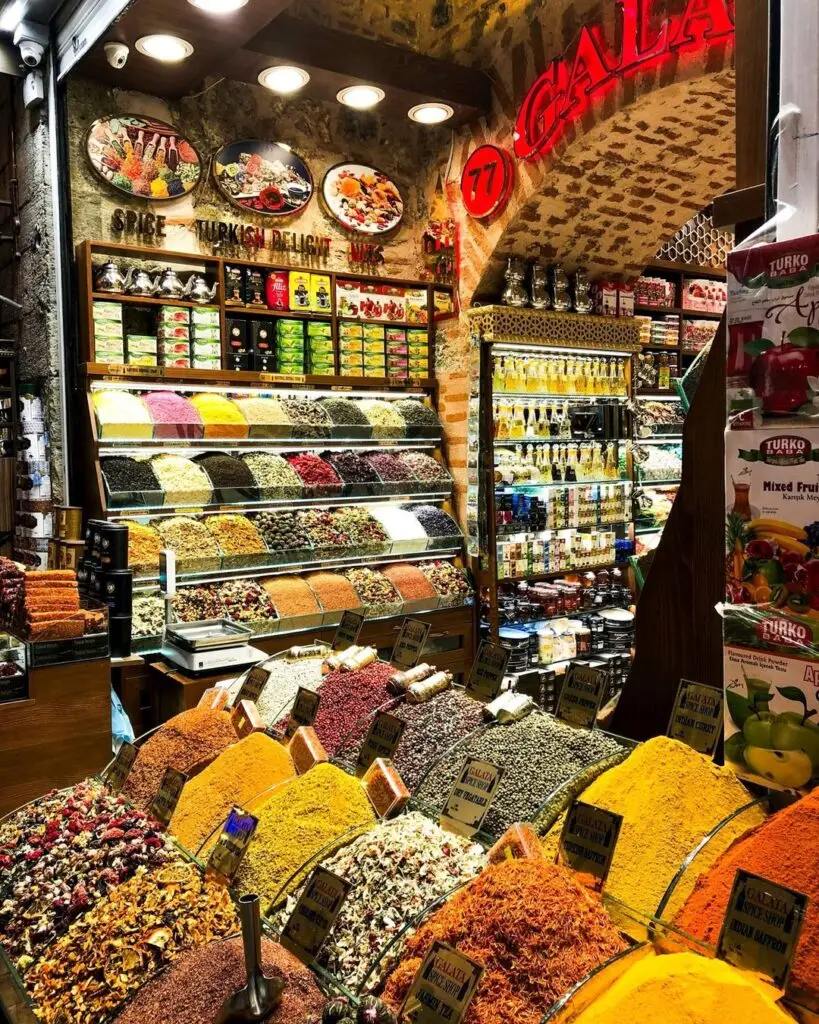
Bazaars are an integral part of Istanbul’s culture and history, similar to the souks found in Arab countries. The Grand Bazaar, the largest covered market in the world with its 45,000 m2, is undoubtedly a must-see place in Istanbul. If you’re looking for a more authentic bazaar experience, I recommend visiting the Spice Bazaar (also known as the Egyptian Bazaar). Though smaller and less imposing than the Grand Bazaar, it has a unique and charming atmosphere with its traditional stalls of spices, fruits, vegetables, and sweets. Even though it’s a tourist destination, many locals also frequent the Spice Bazaar. Worth visiting is Mehmet Effendi’s coffee shop, a popular spot among Istanbul’s residents.
9. ISTANBUL’S NEW MOSQUE-YENI CAMI
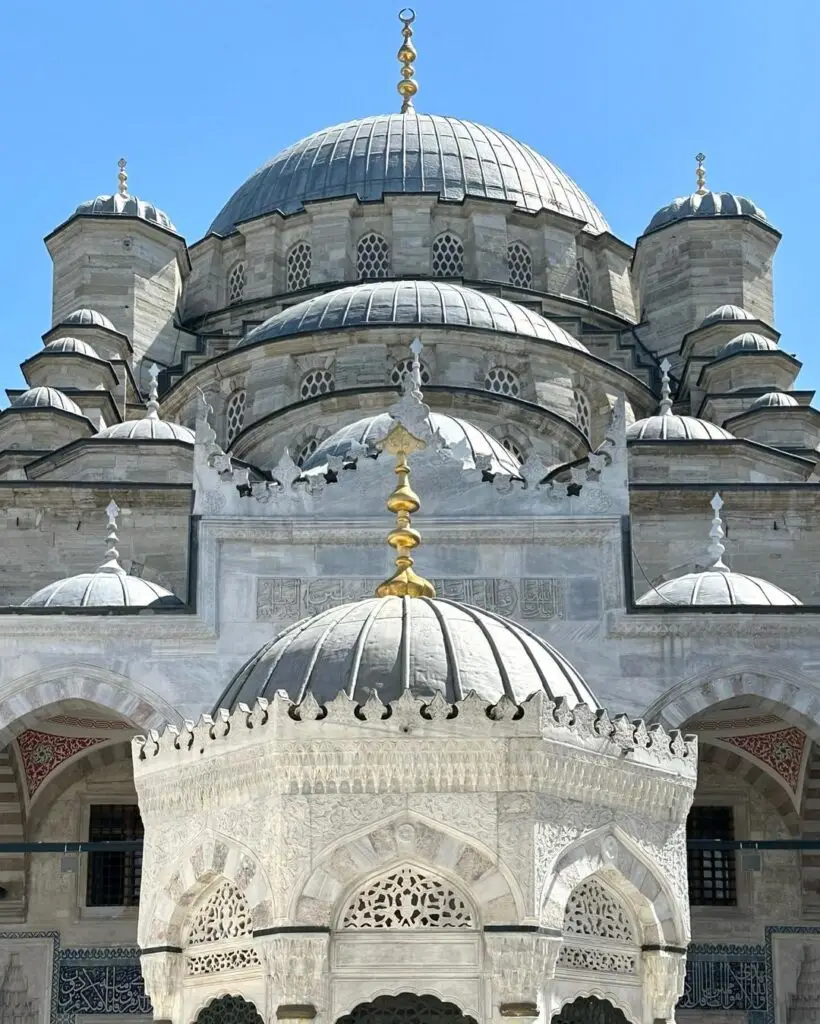
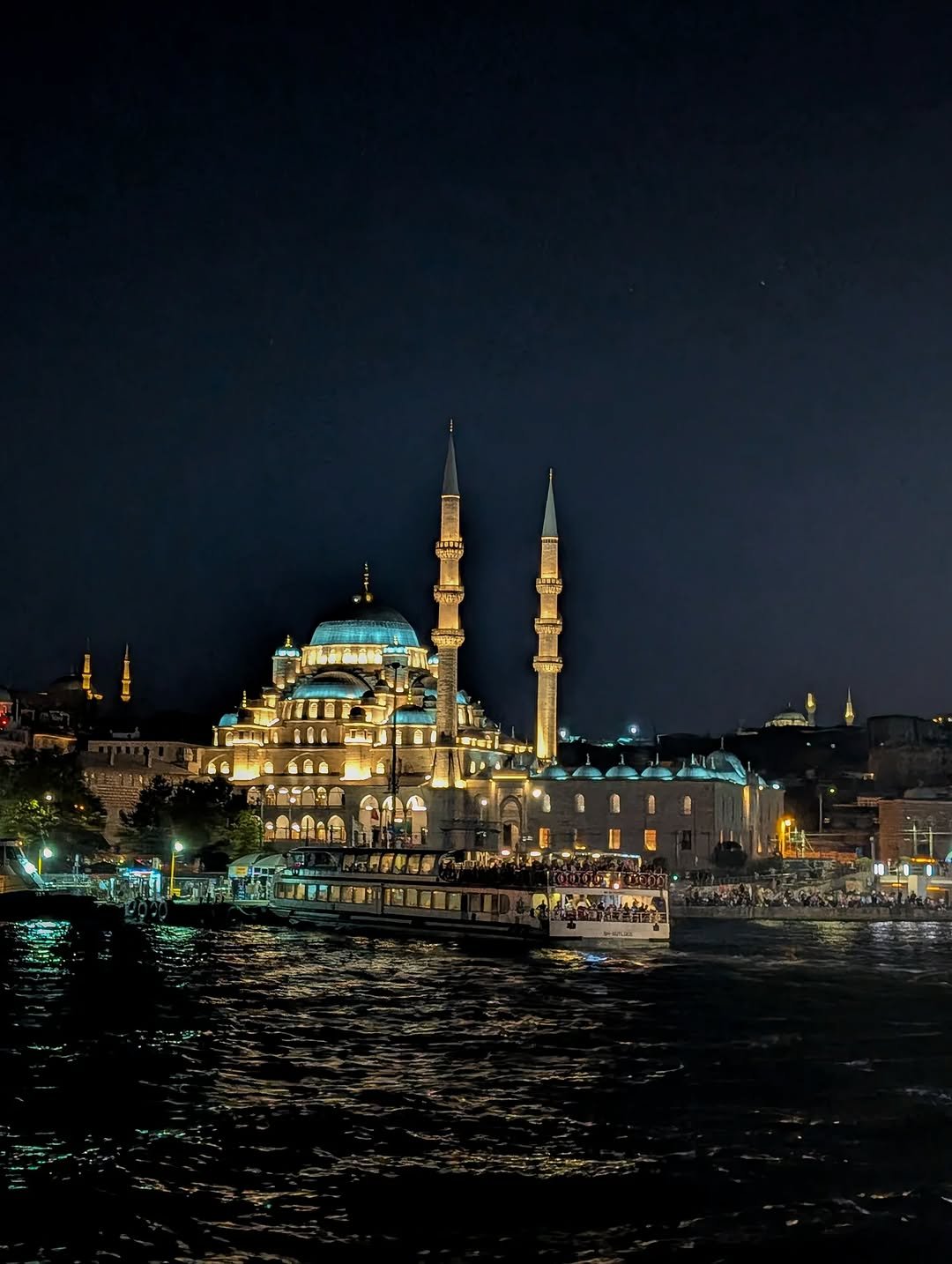
Istanbul is home to numerous mosques, and among them, the stunning New Mosque should not be missed. Located in Eminönü Square on the Golden Horn, the mosque is easily accessible from the Beyoǧlu district via the modern Galata Bridge. The square is a bustling hub in Istanbul, with boats arriving and departing for Üskudar and Kadikoy on the other side of the Bosphorus. The New Mosque is an impressive structure, both inside and out, and is adorned with exquisite Iznik mosaics, similar to those found in the Blue Mosque. Despite its name, the New Mosque is quite old, dating back to the 17th century. It was commissioned by Sultana Safiye, one of the most powerful “queen mothers” in Ottoman history, who sought to embellish Istanbul with stunning monuments. A visit to this mosque is a must during your stay in Istanbul, and it will leave you in awe of the city’s rich history and architecture.
10. THE OLD DISTRICT OF PERA- BEYOǦLU
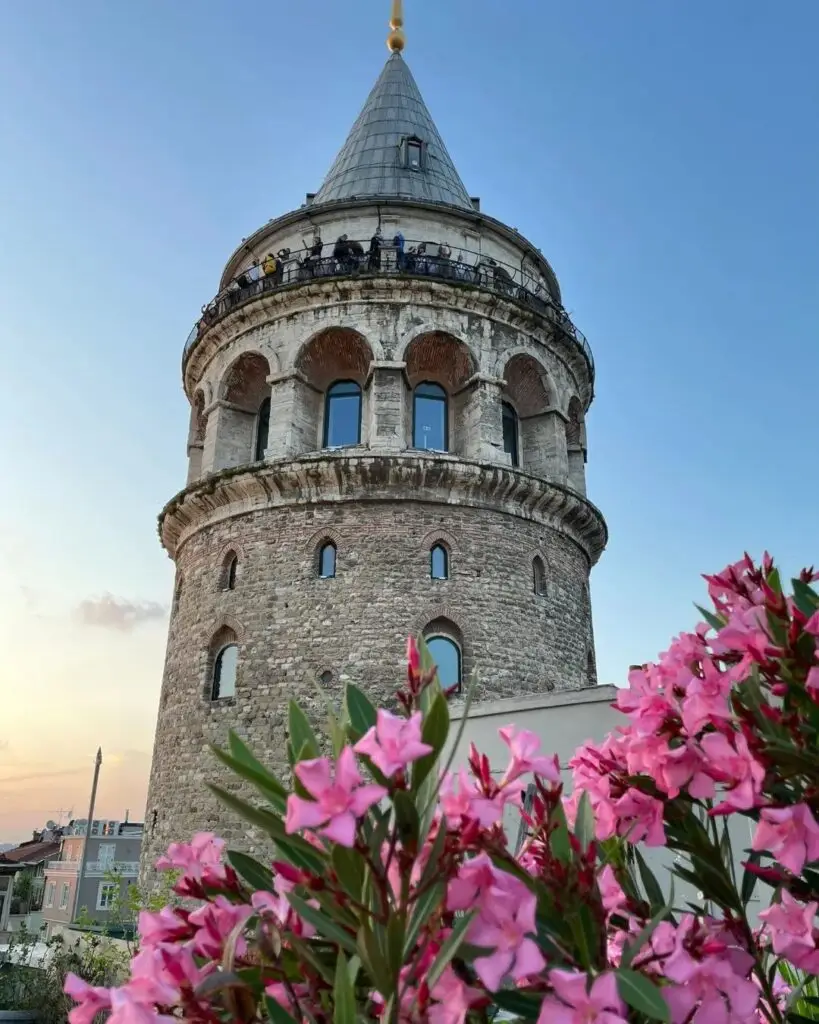
Let’s continue exploring Istanbul by crossing to the other side of the Golden Horn. One way to do so is to walk across the Galata Bridge. Although the bridge itself is not particularly attractive, it offers a stunning view of the city and is a popular spot for fishing. Below the bridge, there are numerous cafes and restaurants where you can enjoy the view and have a meal. The old neighborhood of Pera, now known as Beyoǧlu, was home to many Europeans living in Istanbul, giving it a very European feel while still maintaining its Turkish character.
11. AVENUE ISTIKLAL
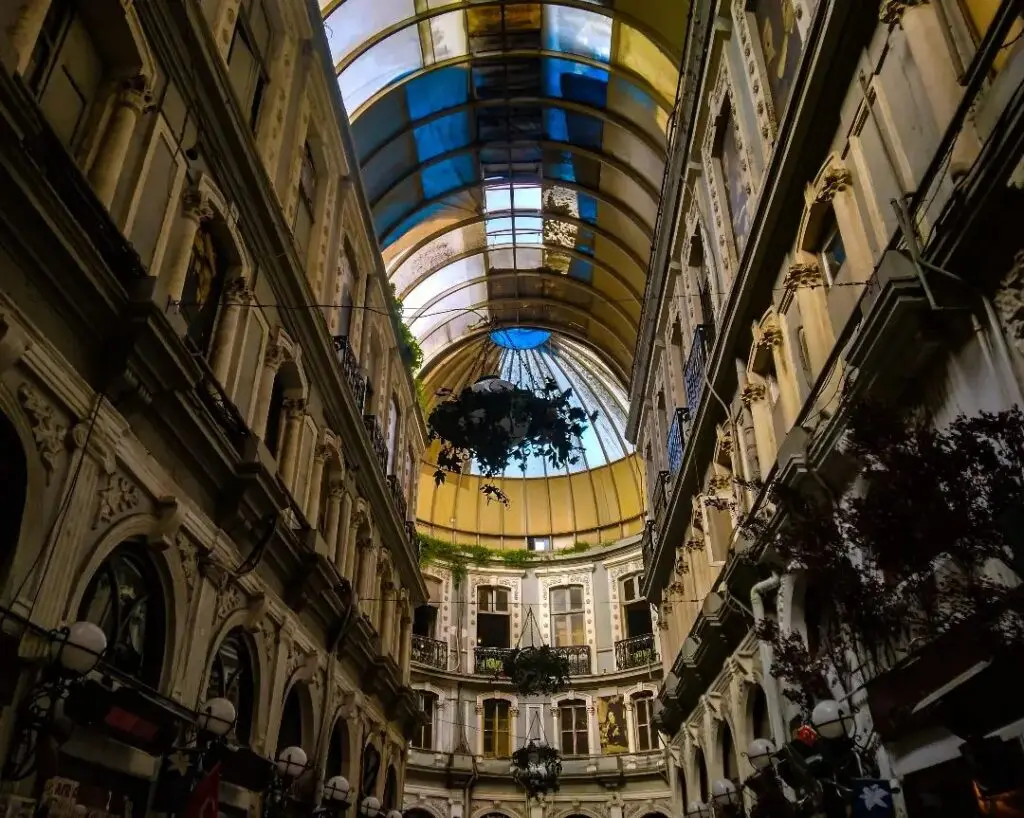
Istiklal Avenue is Istanbul’s heart! Reserved for pedestrians and crossed by an old historic tram, you will find many shops, cafeterias (the typical lokantassi ), and tea rooms. Lively day and night, it is a must-see at least once during a stay in Istanbul. At the very end, Taksim Square is a place of passage and a transport hub, even if it is not necessarily lovely.
12. THE GALATA TOWER
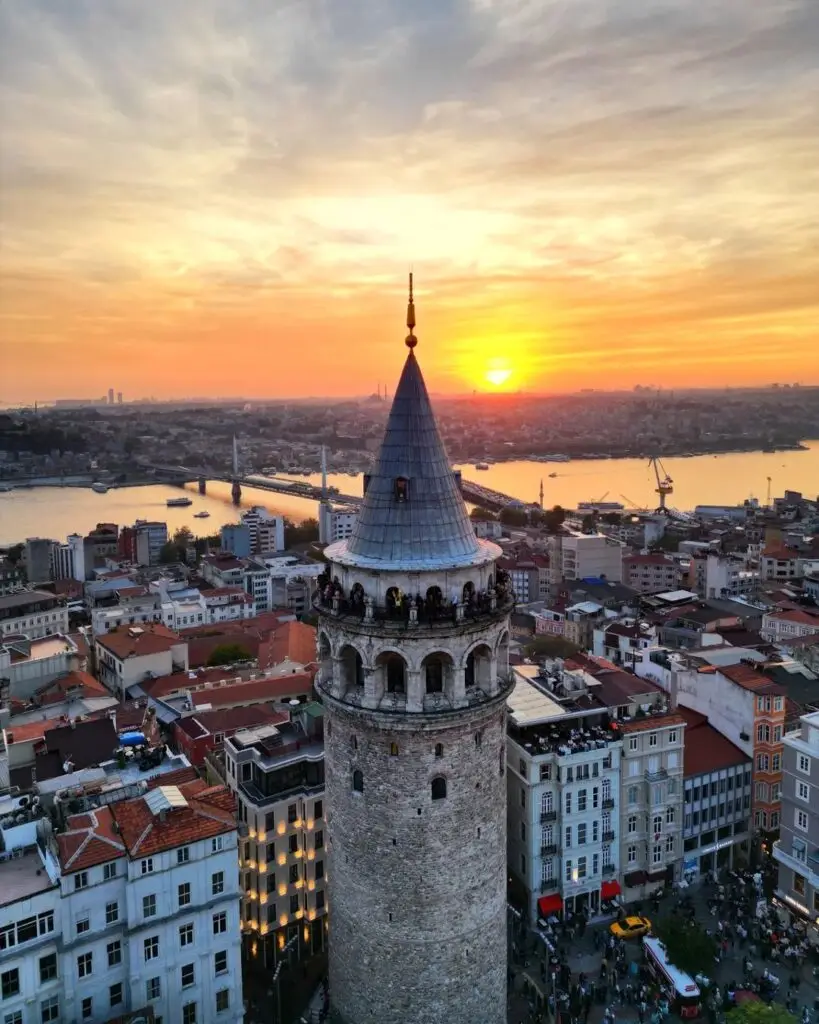
The Galata Tower is one of the emblematic monuments of Istanbul. It was built in 1348 by the Genoese and dominates the Golden Horn. It is a must-do to climb to the top to admire the magnificent panoramic view of Istanbul. A restaurant is also there.
BOOK GALATA TOWER FAST TRACK AUDIO GUIDE
13. BOSPHORUS CRUISE
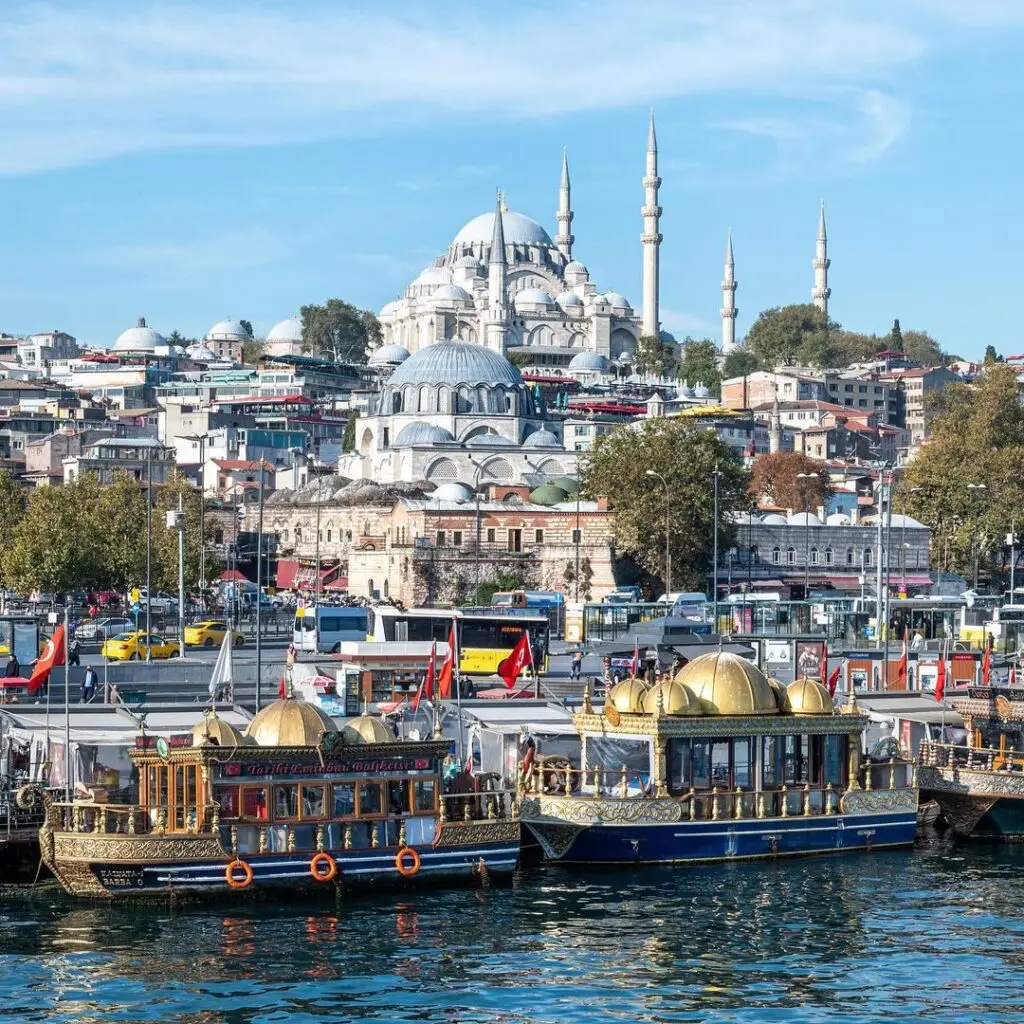
A boat trip is an essential activity to include when visiting Istanbul. The city’s unique geography, located between an estuary and a strait and spanning two continents, offers an ideal setting for cruising. The most interesting boat trip is undoubtedly the one along the Bosphorus, which divides the two continents. There are two options available: a shorter cruise to the second bridge or a longer one that goes all the way to the Black Sea. The departure point is at the tram terminus in the Kabataş district.
14. DOLMABAHCE PALACE
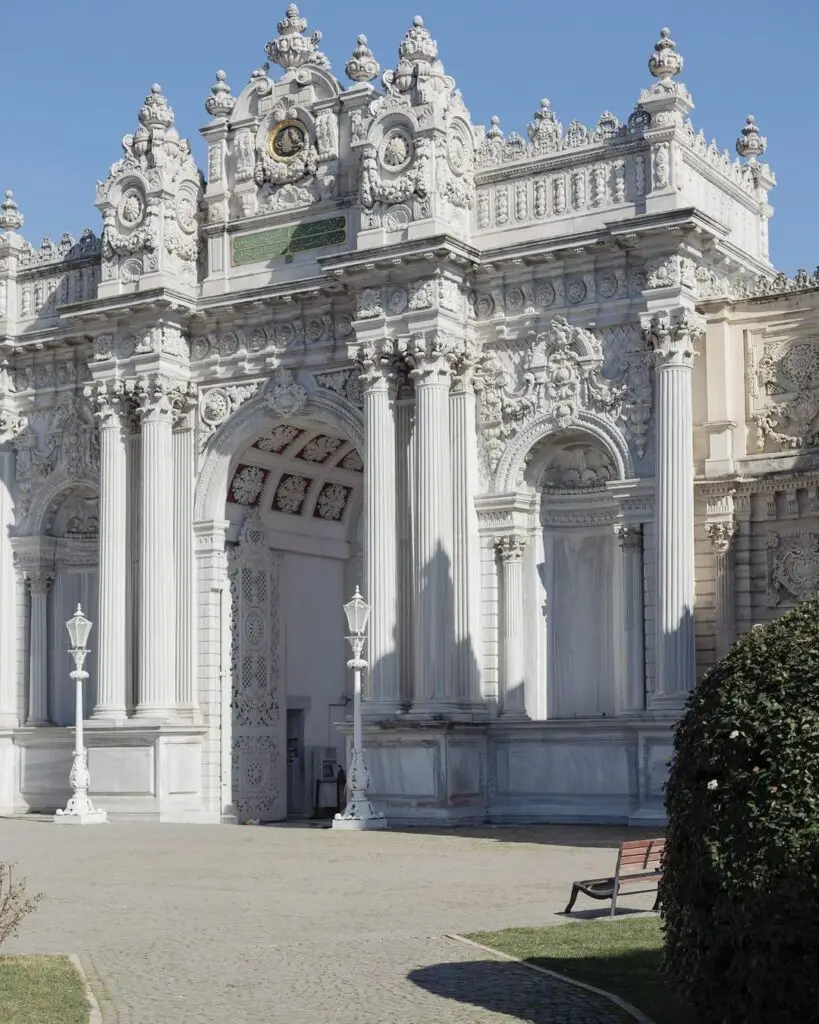
After Topkapi Palace, the Dolmabahce Palace in Istanbul is a must-visit. It was built between 1842 and 1853 to replace the traditional Topkapi Palace as the sultan’s residence, harem, and place of government. The Dolmabahce Palace is less exotic to Europeans, as it was built in the “Western” style, with furniture modelled on that of European palaces. However, it is still an essential part of Ottoman and Turkish history. Atatürk, the founder of modern Turkey, used it as his summer palace and died there in 1938. In addition to the apartments, harem, and gardens, the palace houses museums of 19th-century paintings and clocks. If you can only visit one palace in Istanbul, I suggest choosing Topkapi, which is more typical and exotic for Europeans.
15. KARIYE MOSQUE
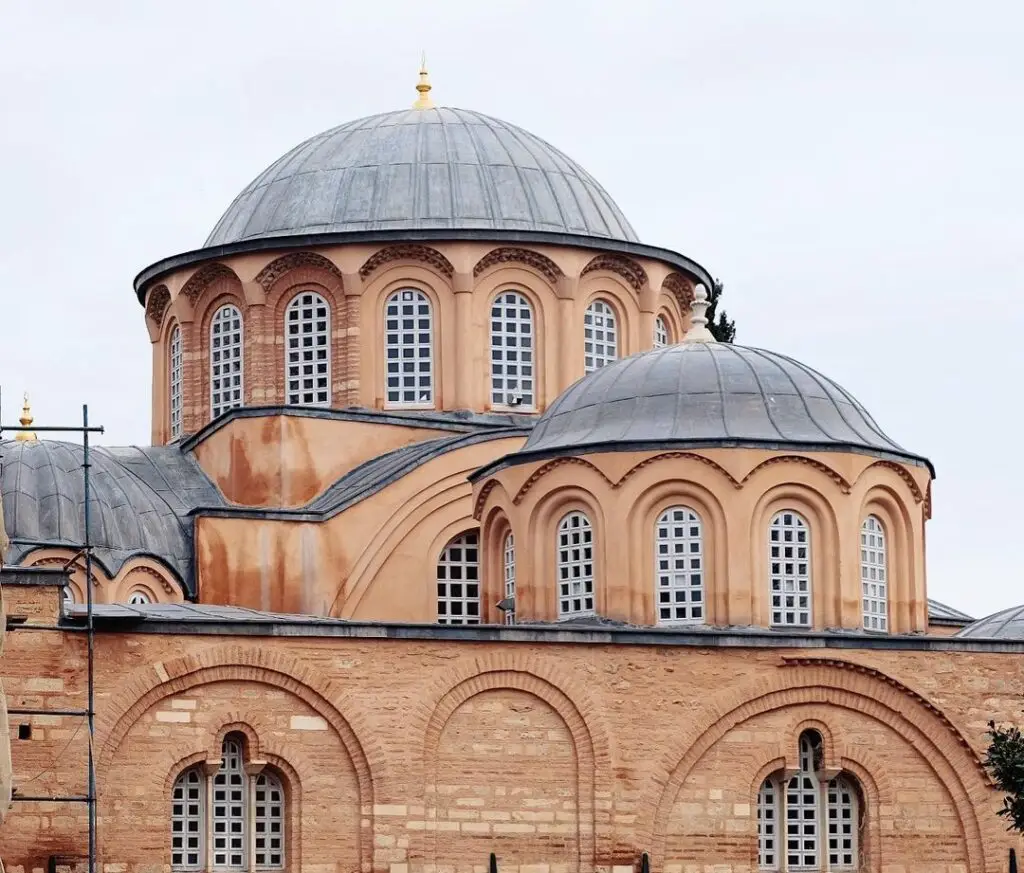
Let’s continue this guide to Istanbul by moving further from the center. The ancient Kariye Mosque is a bit far from downtown Istanbul, but worth a detour with some time. This old Byzantine church is renowned for its magnificent 14th-century mosaics. It’s not very big, but you can spend some time admiring the mosaics and the frescoes in the funerary chapel. Just like Hagia Sophia, it was converted into a mosque.
16. THE NEIGHBORHOODS OF FENER AND BALAT
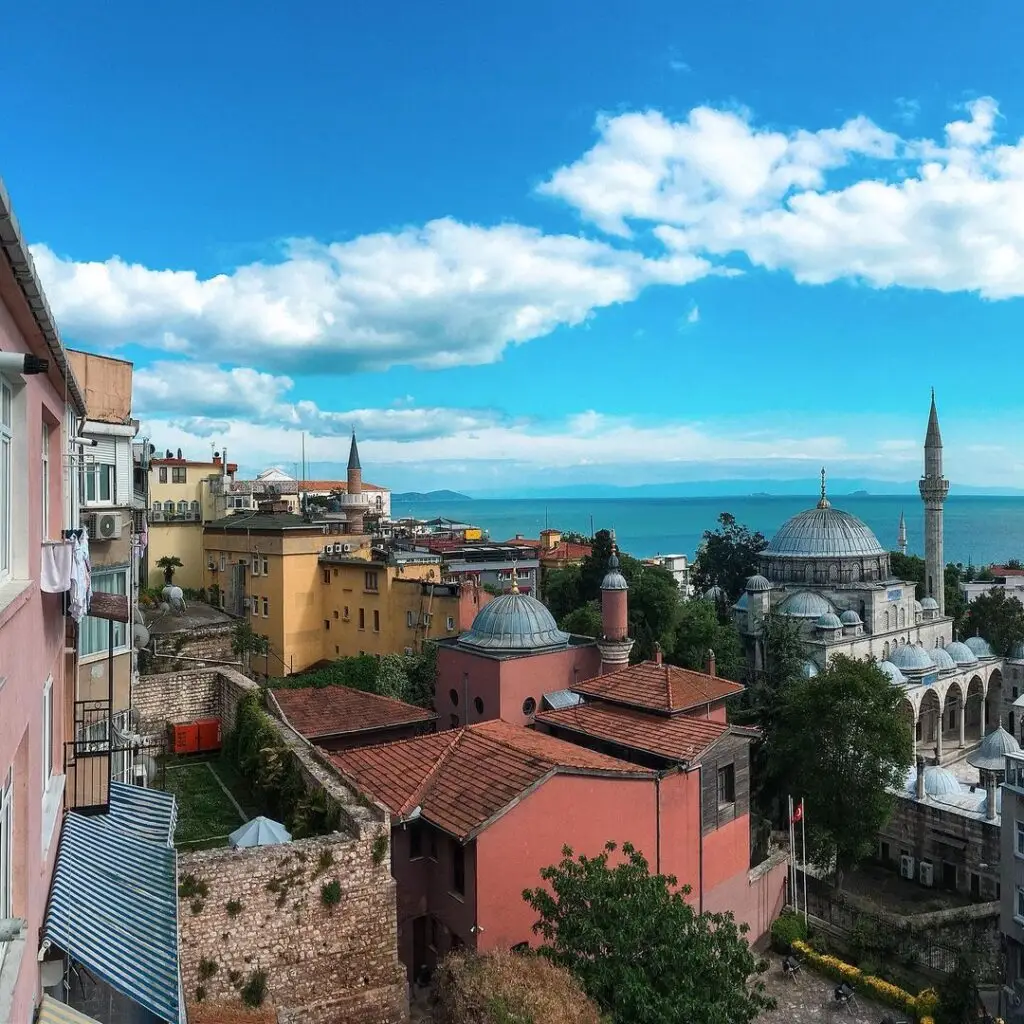
Other districts to visit during a stay in Istanbul: Fener and Balat. Side by side, these two old districts of Istanbul are located partly along the Golden Horn. They are easily accessible by transport, tram, or bus from Eminönü Square.
The Neighborhood Of Fener
The district of Fener was once the Greek quarter of Istanbul, dating back to the Byzantine Empire. However, since the Ottoman conquest of Constantinople, it became a predominantly Greek neighborhood. Many Greeks fled the country after the collapse of the Ottoman Empire, particularly after the anti-Greek riots of the 1950s. Despite its past as a prosperous area with beautiful Ottoman residences, the neighborhood underwent significant changes. It became a popular destination for newcomers from rural areas and immigrants from other countries. As a result, it has become a working-class district, and many of the historic buildings have fallen into disrepair, though they still retain their beauty and architectural significance.
You can see there the seat of the Orthodox Ecumenical Patriarchate (the Vatican of the Orthodox), the ancient walls of Theodosius, and the beautiful Bulgarian St.Stephen Orthodox Church – like a jewel case containing shining gold adornment.
Balat District
The district of Balat has a rich history as the Jewish quarter of Constantinople, particularly after the expulsion of the Jews from the kingdom of Castile in 1492. It was also a rather posh neighborhood, boasting many beautiful and historic houses typical of Istanbul and a few synagogues, such as the Ahrida Synagogue, which is still in operation and open to the public. Today, the district is undergoing a revitalization process, with the addition of restaurants, bars, trendy shops, and art galleries. Its colorful houses make it a pleasant neighborhood to stroll around Istanbul. However, it’s important to note that the district’s interesting part is small, limited to a few streets that have been rehabilitated, especially between Yildirim and Vodina streets, not far from the Golden Horn.
17. KADIKOY
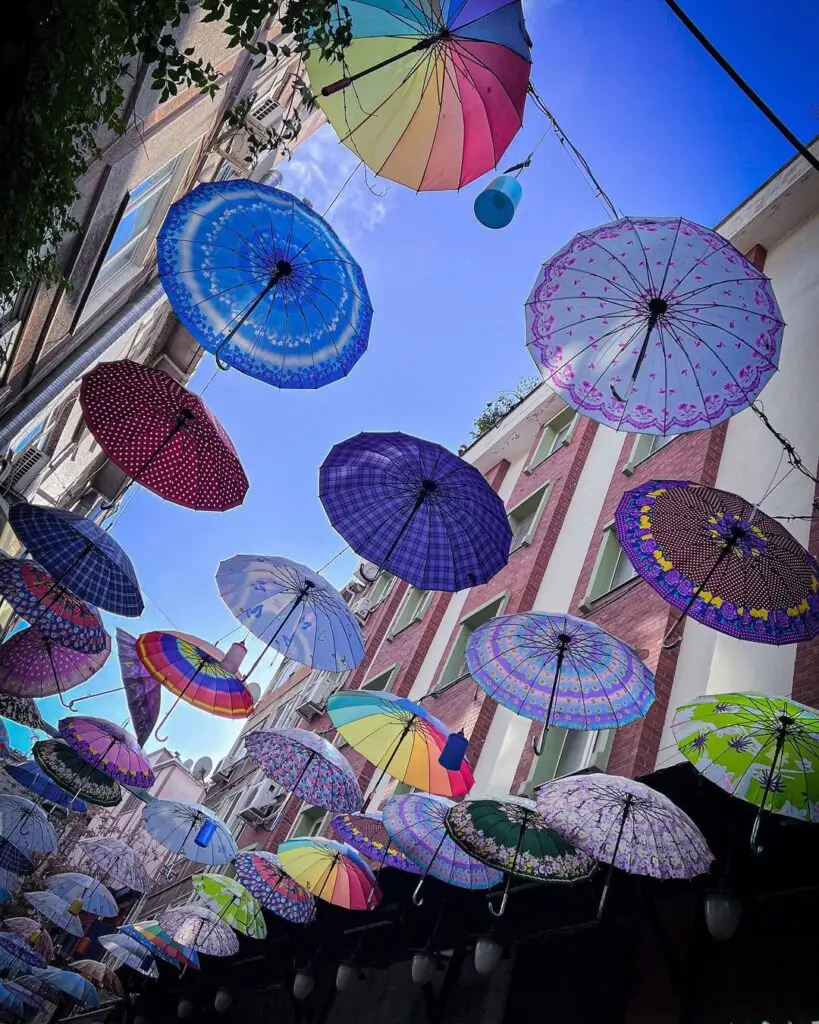
Kadıköy, also known as the “village of the judge,” is a district on the Asian side of Istanbul, south of Üsküdar and east of the European district of Sultanahmet. The Galata Bridge connects the district to Eminönü Square or Karaköy Pier on the European side, and boats depart every 15 minutes during the day and every half hour in the evening until 11:00 p.m. for Karaköy. The district has a long and rich history, dating back to 685 BC, when it was founded as an ancient Greek colony known as Chalcedon. The Ottomans later conquered it in 1353, exactly a century before Constantinople became Istanbul. Today, Kadıköy is an essential urban center on the Asian side of Istanbul, with a population of around 500,000 inhabitants, and is frequently connected by boat to the European side. It is a typical and vibrant district of Istanbul that offers beautiful views of both the European and Asian shores, particularly the tip of the Serail and the Sultanahmet district. One of the highlights of Kadıköy is its lively atmosphere, which can be experienced in the small pedestrian area near the quays. Visitors can find plenty of shops, bars, cafes, and restaurants there, making it an ideal place to dine and socialize. For those with more time, a chic district unfolds to the south along the coast, which can be explored by taking a ride on the small old tram that makes a loop in the area.
18. ORTAKOY
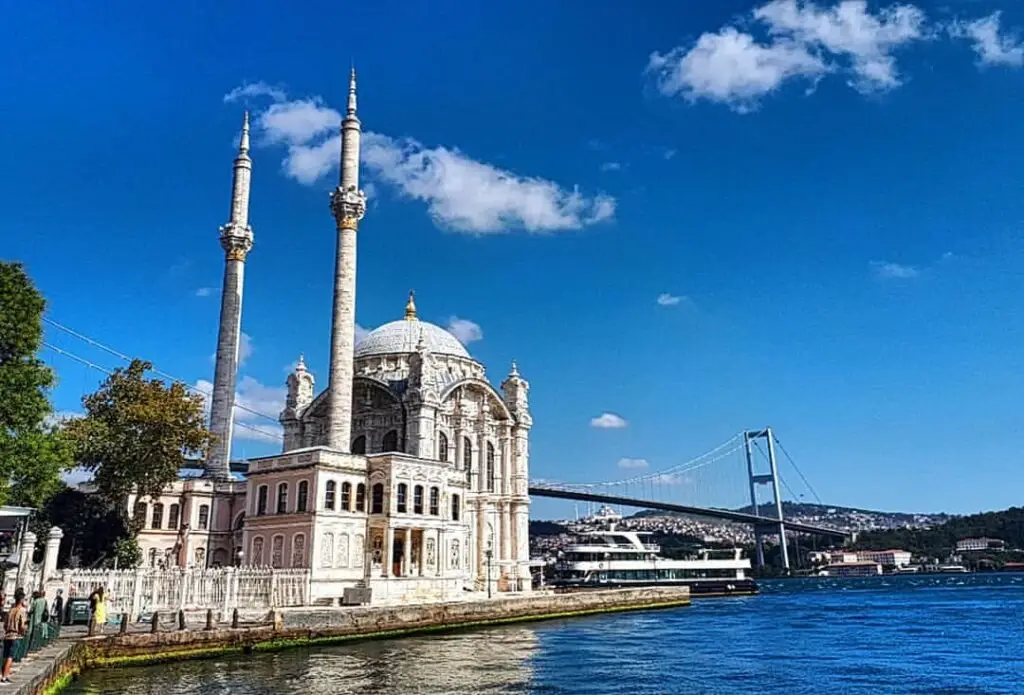
Ortaköy is a small, fashionable village that has become part of the Beşiktaş district of Istanbul. It was initially a cosmopolitan fishing village, home to Turks, Jews, and Armenians. Today, it is renowned for its iconic mosque on the Bosphorus, a must-see attraction in Istanbul. Ortaköy still has traces of its multicultural past, including a synagogue and a Greek church. However, the area has undergone significant transformation in recent years. It has become a trendy hub with various bars, cafes, restaurants, and art galleries, making it a popular destination for locals and tourists alike. The village is also home to Istanbul Galatasaray University, but the best way to appreciate its charm is by taking a boat ride along the Bosphorus. However, as the area is only accessible by bus or boat, it may take some time to fully explore it. Therefore, for those with only a limited time in Istanbul, visiting Ortaköy may not be a top priority.
19. ARNAVUTKOY

Arnavutköy, which means “the Albanian village” in Turkish, is another charming old village in Istanbul, located on the European side of the Bosphorus, further away from Ortaköy. It was also a cosmopolitan village, and its most famous feature is the beautiful Ottoman wooden houses that line its streets. To fully appreciate the beauty of these houses, it’s best to view them from a boat ride along the Bosphorus. Arnavutköy’s architecture and history make it a unique destination in Istanbul, and a must-see for those interested in the city’s cultural heritage.
20. THE MOST BEAUTIFUL PARKS AND GARDENS IN ISTANBUL
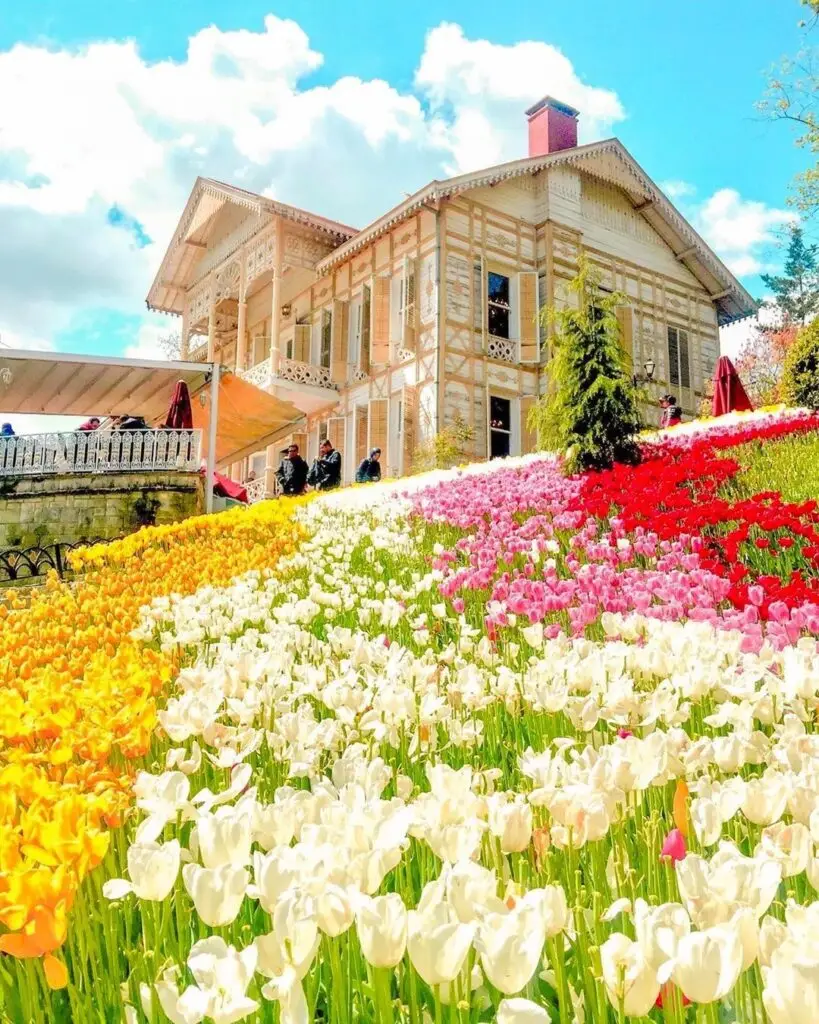
Here are the most beautiful parks and gardens in Istanbul:
- Gülhane Park (Rose Garden Park) is the most central. It was originally part of Topkapi Palace before becoming a public garden in Istanbul. With its 15 hectares, it is very pleasant, close to Sultanahmet.
- Eminönü Square Yildiz Park (Park of the Star) is located in the Beşiktas district and overlooks the Bosphorus. This was the Yildiz Imperial Palace Park. Today it is one of the largest parks in Istanbul, with around 45 hectares. It offers amazing views, as well as different spaces, trees, flowers, and two old Ottoman pavilions. Good to know: a cable car takes you to the top.
- Emirgan Park: this time you will have to go much further along the Bosphorus to discover this magnificent park known for its tulips. This is also one of the largest parks in Istanbul.
FAQs: Places to Visit in Istanbul
What are the must-see attractions in Istanbul?
Start with the icons: the Hagia Sophia, Blue Mosque, and Topkapi Palace—all within a short walk of each other in Sultanahmet. Then cross the Galata Bridge to explore Galata Tower, Istiklal Street, and Taksim Square. Don’t miss the Grand Bazaar, Spice Market, and a Bosphorus ferry ride.
What’s the best area to stay in Istanbul for sightseeing?
If it’s your first visit, Sultanahmet is ideal for being close to the main monuments. Beyoğlu (Galata, Cihangir, Karaköy) is more local and lively, full of cafés and nightlife. Kadıköy on the Asian side is hip, laid-back, and great for food lovers.
How many days do you need to explore Istanbul?
Plan at least 3 full days to cover major sights at an easy pace. Four to five days gives time for neighborhoods like Balat, Üsküdar, and a Bosphorus cruise to Ortaköy or Rumeli Fortress.
What are the best free things to do in Istanbul?
Stroll across the Galata Bridge, wander Balat’s colorful streets, visit Çamlıca Hill for panoramic views, or explore local markets and mosques (most are free to enter outside prayer times).
Which museums are worth visiting in Istanbul?
The Istanbul Archaeology Museums, Museum of Turkish and Islamic Arts, and the Istanbul Modern are excellent picks. The Dolmabahçe Palace also doubles as both a museum and a palace experience.
What’s the best way to get around Istanbul?
Use the Istanbulkart for trams, metros, buses, and ferries. The tram connects most major attractions, and ferries between the European and Asian sides are both scenic and cheap.
What are the most Instagrammable places in Istanbul?
Definitely Ortaköy Mosque with the Bosphorus Bridge backdrop, the rooftops of Sultanahmet, Balat’s pastel houses, and the Galata Tower views at sunset.
What day trips can you take from Istanbul?
Popular options include Princes’ Islands (Büyükada), Belgrad Forest, Şile and Ağva on the Black Sea, and even Edirne, the former Ottoman capital, for a full-day cultural escape.
Is Istanbul safe for tourists?
Yes, Istanbul is generally safe. Just take normal big-city precautions—watch for pickpockets in crowded areas and use licensed taxis or ride apps like BiTaksi.
- What to Wear in a Turkish Bath (2026): Ultimate Hammam Dress Code & Massage Etiquette
- 2026 Turkey Travel Tips: Useful Things to Know From A Local
- 2026 Turkey Packing List: Essential Travel Items and Tips

- Where To Stay In Bodrum (2026): Best Neighborhood & Top Hotel Picks
- 22 Top Turkish Cosmetics Brands (2026 Edition)