
Travel writing based on first-hand experience
Fez, alongside Marrakesh, Rabat, and Meknes, belongs to Morocco’s four imperial cities and remains one of the country’s most compelling places to wander. As Morocco’s third-largest city, it draws travelers for the kind of atmosphere that feels immediate the moment we step inside: narrow lanes folding into each other, souks thick with spice, leather, mint, metalwork, and that constant sense that another carved doorway is about to reveal something unexpected.
Here, the city unfolds through distinct quarters, especially the historic Medina and the old Jewish district, the Mellah, where some of the most characterful markets and streets still carry layers of everyday life. This guide gathers the best things to do in Fez and nearby, along with practical tips to help you move through the city more easily, choose where to stay, and find places worth sitting down for a proper meal.
| ➡️Discover the best places to stay in Fez, Morocco — from the historic Medina’s charming riads to Ville Nouvelle’s modern hotels. Find top neighborhoods, handpicked stays, and insider tips to make your trip unforgettable. ➡️Read our detailed 3-day itinerary in Fez. Explore the historic medina, vibrant souks, ancient landmarks, and hidden gems with this detailed travel guide. ➡️These are the places that stayed with us most, along with the practical tips that make choosing where to eat in Fez much easier. |
Table of Contents
How to get to Fez?
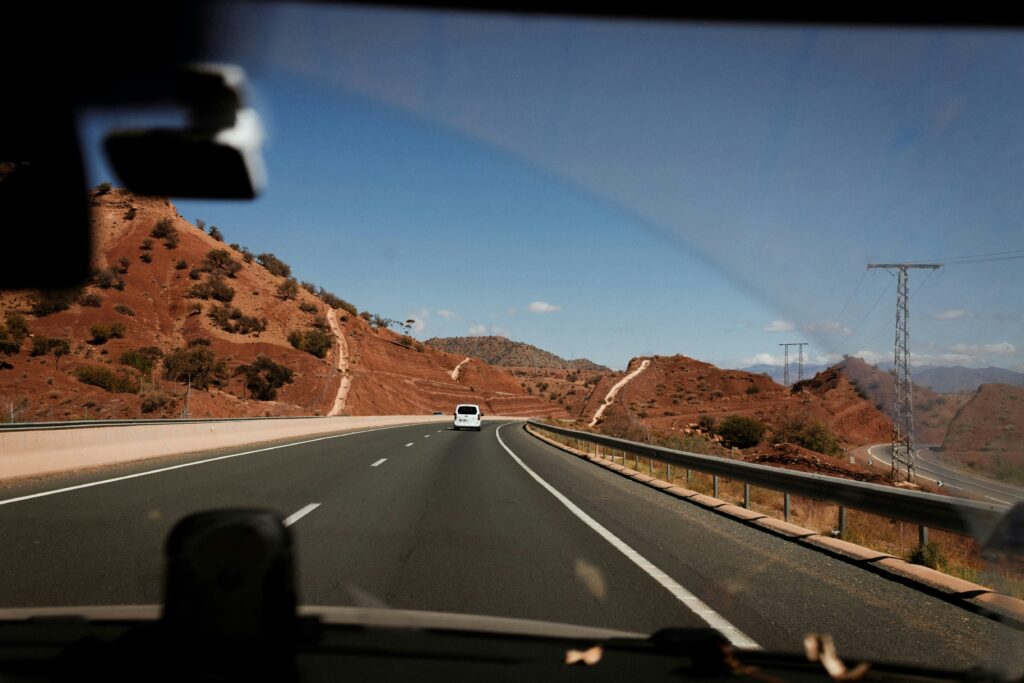
Fez Sais airport is served by national flights and some international flights with the low-cost companies Ryanair, EasyJet, and Vueling. Ryan Air offers several direct flights from Madrid and Barcelona (from 10 euros). However, flights to Fez usually stop first in Casablanca.
From other Moroccan cities, you can get to Fez by plane, train, bus, or by renting a car with a driver.
- Marrakech: flights are available for around €30; trains for €18, which lasts 6h30; and buses, also for €18, which lasts 8 hours. It is also possible to arrive by car with a driver, the journey takes 5 hours and the price is agreed with the driver himself, but it is generally around €45-60.
- Rabat: the train costs around 25 euros and takes 2 hours. You can also hire a private tour or rental car.
- Casablanca: you can get there by plane, train or bus. Flying is the quickest option and costs around 65 euros. The bus takes between 3 and 4 hours and costs between 10 and 30 euros, just like the train, which takes the same time to arrive.
How to get from Fez airport to the city?
There are several ways to get from Fez Saiss Airport to the center of this Moroccan city.
- It is common to hire a transfer service that will take you to the door of your accommodation. The price is around €15, as is the taxi fare.
- You can also take bus number 16, which will take you to the station in 40 minutes for €0.40.
Getting Around Fez
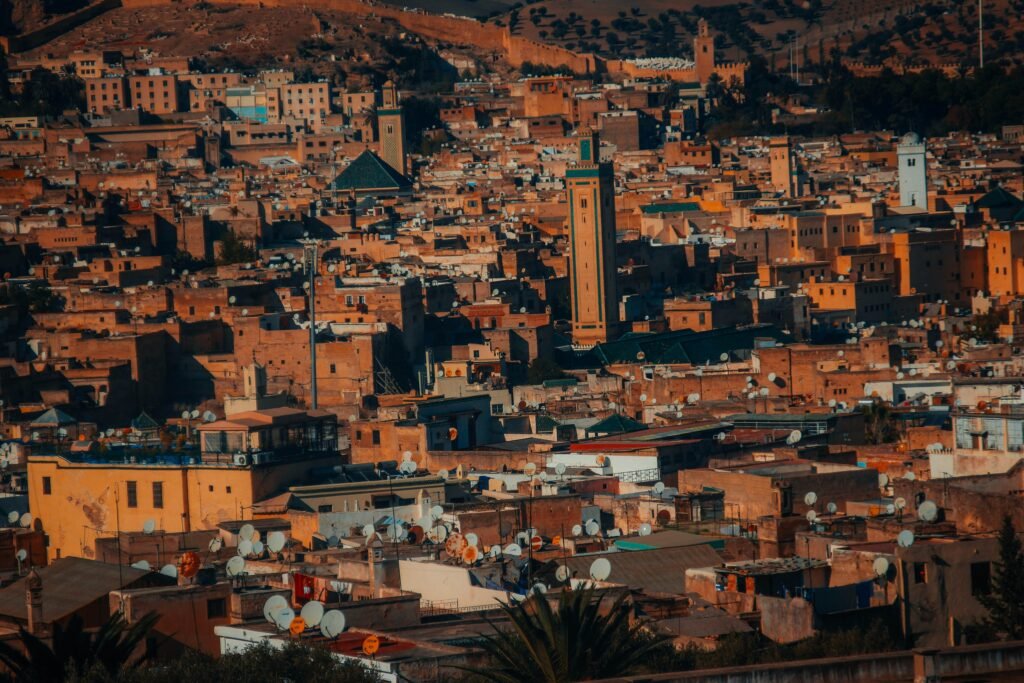
Fez (Fès) is the kind of city that makes us fall in love with travel… and immediately regret not charging our phone. One minute we’re floating through spice-scented alleyways, the next we’re doing a very confident walk in the wrong direction. That’s the deal here: the medina is largely car-free, with lanes so narrow that motor vehicles simply don’t fit—so you’re moving on foot (and occasionally sharing the “road” with handcarts and donkeys).
The good news? Once you understand how Fez is stitched together, getting around becomes surprisingly simple: walk inside the medina, taxi between neighborhoods, and use trains/buses for longer hops.
The Fez Geography Cheat Code
Fez is basically three worlds living side by side:
- Fes el Bali (the old medina): the maze, the magic, the “where are we?”
- Fes el Jdid: historic but a bit more open, home to the Mellah (old Jewish quarter)
- Ville Nouvelle: wider streets, modern cafes, shopping, and the train station
Pro tip: save a few “anchor points” in your maps app before you go—think major gates like Bab Boujloud (Blue Gate) or big squares like Rcif. When Fez gets twisty (it will), anchors keep you calm.
Walking the Medina: Your Main Transport (Yes, Really)
Inside the medina, we walk. Everyone walks. Even when we swear a taxi could “just squeeze through” (it cannot). Cars aren’t allowed in the old walled city, and even if they were, the streets aren’t built for them.
How we make it easier for you:
- Use offline maps (download before you arrive). GPS can wobble in tight lanes.
- Don’t fight the medina’s logic—follow the flow of people when possible.
- If someone offers to “guide you,” decide fast. Fez has plenty of kind locals… and plenty of “helpers” who expect a tip at the end.
Pro tip: if you’re lost, ask a shopkeeper who’s clearly busy (they’re less likely to turn it into a paid tour).
Taxis in Fez: The Two-Type System You’ll Use Daily
Fez runs on two taxi modes:
1) Petit Taxis: For City Hopping
These are your quick rides across town—within city limits—and in Fez they’re typically red. They officially carry up to 3 passengers.
What to know:
- Ask for the meter: “compteur, s’il vous plaît.” Some drivers “forget” it exists in tourist-heavy spots.
- There’s usually a minimum fare and night surcharges can apply (often around a 50% bump).
Pro tip: if the driver won’t use the meter, agree on the price before you sit down. If it feels weird, politely step away and flag the next one. Fez has plenty.
2) Grand Taxis: For Outskirts + Intercity
Grand taxis are for routes outside the city and are often shared (unless you hire the whole car).
This matters because:
- Some places (including airport runs, depending on local rules/practice) may be handled more often by grand taxis.
Pro tip: for day trips or anything “outside town,” ask your riad what’s normal right now—grand taxi stands and pricing habits can vary by season and time of day.
Buses Inside Fez: Cheap, Slower, Totally Doable
Fez has city buses and they can be very inexpensive—think a few dirhams for many routes.
They’re useful if you’re staying in Ville Nouvelle and commuting toward the medina, but they’re not always the fastest or easiest if you’re short on time.
Pro tip: if you’re only in Fez for 1–2 days, taxis usually buy you back hours. If you’re slow-traveling, buses are fine—just plan with extra buffer.
Trains + Long-Distance Buses: Getting Out of Fez Smoothly
Trains (ONCF)
Fez is well connected by train for big-city hops (Rabat/Casablanca/Tangier, etc.). For schedules and updates, ONCF is the reference point.
Pro tip: build your itinerary around trains when you can—Morocco’s rail network is often the least stressful way to cover distance.
Long-Distance Buses (CTM and others)
CTM is the big name for intercity buses, and you can buy tickets at offices or online.
Pro tip: if you’re going somewhere popular (Chefchaouen routes, holiday weekends), book ahead. “We’ll just show up” is how you end up eating station snacks for dinner.
Luggage Reality: Your Riad Is in a Maze
If you’re staying in the medina (and you probably are), accept this now: the last stretch is usually on foot. That’s not a problem—just a planning note.
Pro tip: message your riad in advance and ask:
- which gate is closest
- whether they can send someone to meet you (especially if arriving after dark)
This one simple step saves so much drama.
The best things to do in Fez
1. Discover Bab Boujloud
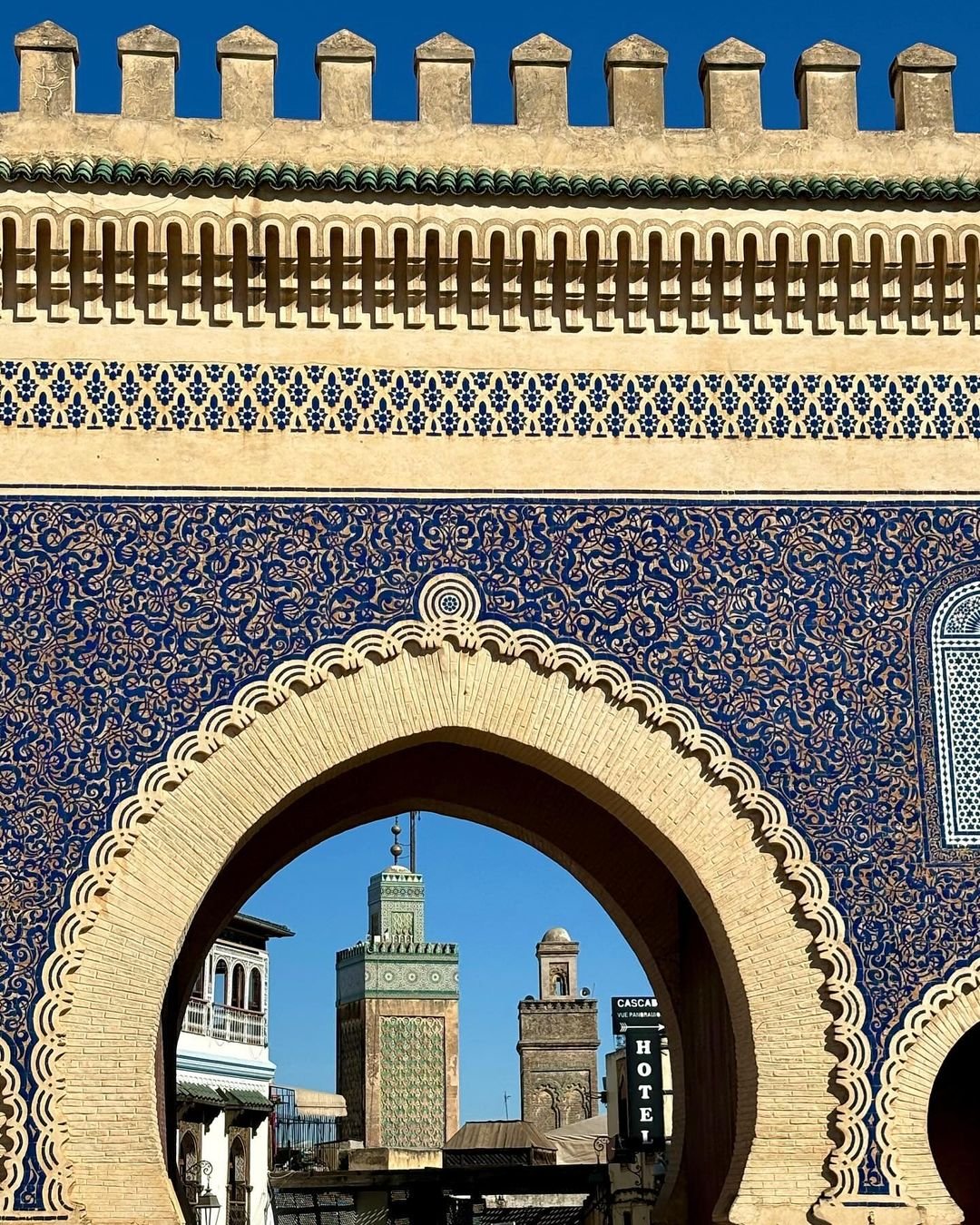
When you arrive in Fez, one of the first things to do is enter the Medina through Bab Bou Jeloud, the main gate. This imposing entrance is beautifully tiled in blue on one side and green on the other and features three arches that connect the old Medina to the Fez el-Jdid district. Visiting this gate is a remarkable experience not only because of its stunning beauty but also due to its location in one of the busiest areas of the city. It’s a vibrant hub where people flock towards Talaa Kbira and Talaa Sghira, two of the main commercial streets in the area.
2. Explore Medina

The Medina of Fez, characteristic of Moroccan cities, is as chaotic as it is beautiful. Exploring its narrow streets allows you to immerse yourself in the true essence of Morocco.
As the oldest part of Fez, the Medina houses many of the city’s key attractions, including Talaa Kbira and Talaa Sghira. These two main streets weave through the Medina, guiding you through the intricate maze that is Fez. As you wander, you’ll catch glimpses of the Al-Karaouine Mosque, the most significant mosque in Fez and the oldest university in the world. While non-Muslims cannot enter, it’s highly recommended to admire its grandeur from the outside.
Another essential site in Fez is the mausoleum of Mulay Idris II, located on the Green March Square. Non-Muslims can peek inside from the door, but even that glimpse is worth the visit.
3. Visit Mellah, the Jewish quarter of Fez
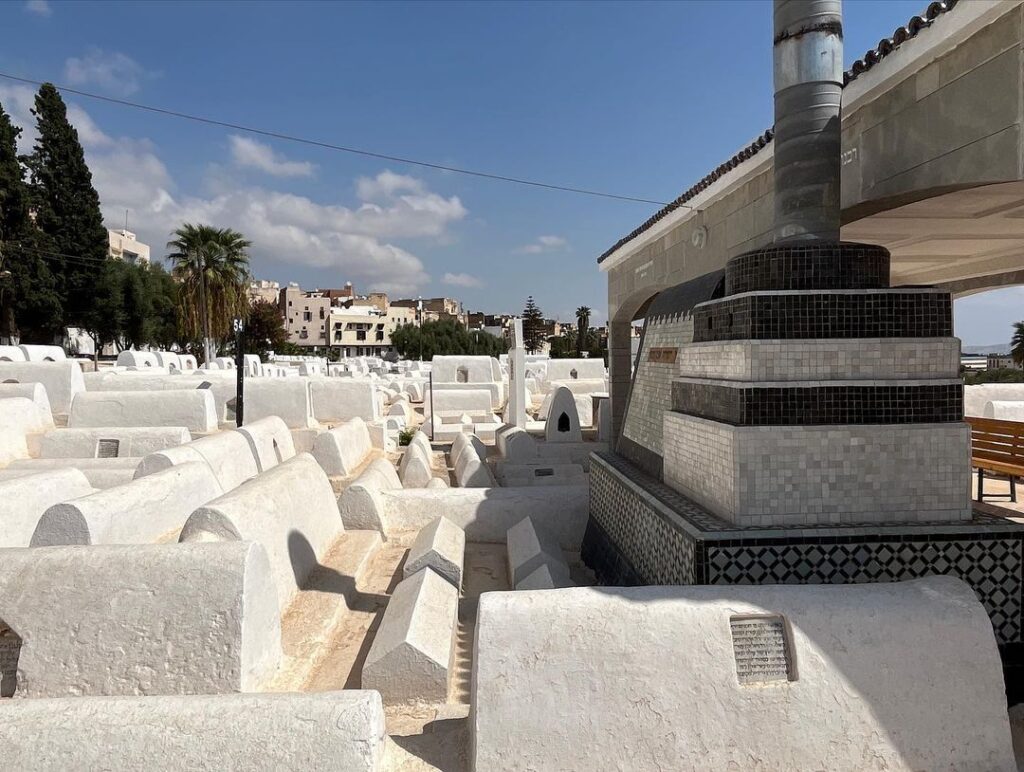
In Fez’s Medina, you’ll find the Mellah, or Jewish quarter. Although there are few Jewish residents today, the area has an impressive architectural heritage. A key highlight is the Dar al-Makhzen, a royal palace that is among Morocco’s oldest and largest, built in the 14th century.
The Jewish cemetery is also located in the Mellah, known for its unique white and rounded tombs. It’s a significant site for Jewish pilgrims as it holds the grave of the martyr Suleika Hachuel.
Nearby, hidden behind a modest door, is the Ibn Danan synagogue, one of North Africa’s oldest synagogues. It was abandoned for many years before being restored in 1999. The Mellah is also distinguished by its buildings with exterior balconies, a rare sight compared to other traditional homes in the Medina of Fez.
4. Visit Fez Souks
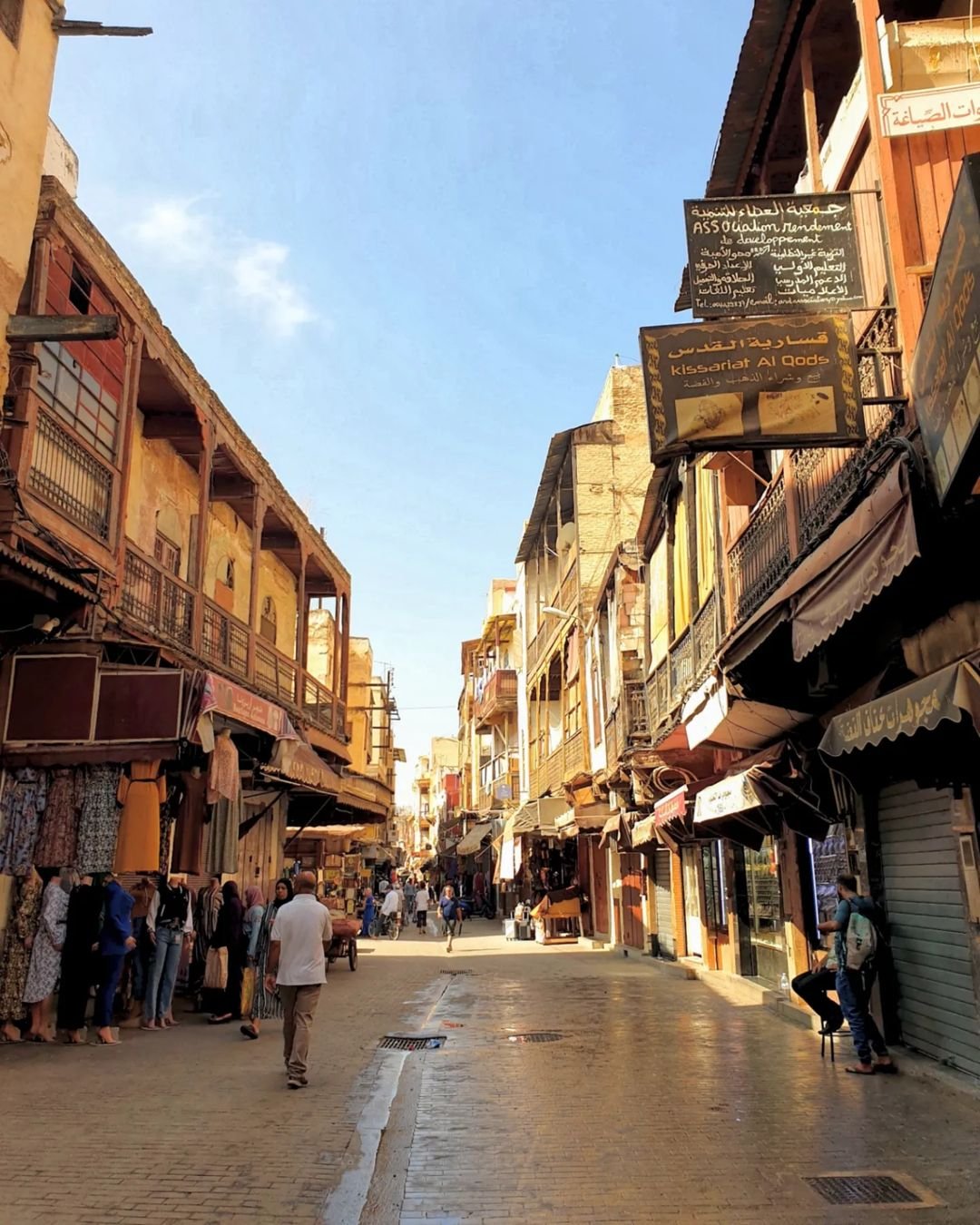
In Fez, like throughout Morocco, the souks are a vibrant and integral part of urban life. These bustling markets, set along Medina’s narrow streets, offer everything from exquisite rugs and home decor to leather goods, not to mention the variety of street food stalls and other food vendors.
Each market area within the city specializes in different types of products. For example, the Nejjarine Souk, located near the museum dedicated to wood arts and crafts, is renowned for its woodworking and carpentry products. Another notable market is the Attarine Souk, which was originally focused on pharmaceutical items but now predominantly sells spices. Additionally, the Henna Souk offers a range of henna-related products.
5. See Madrasas of Fez
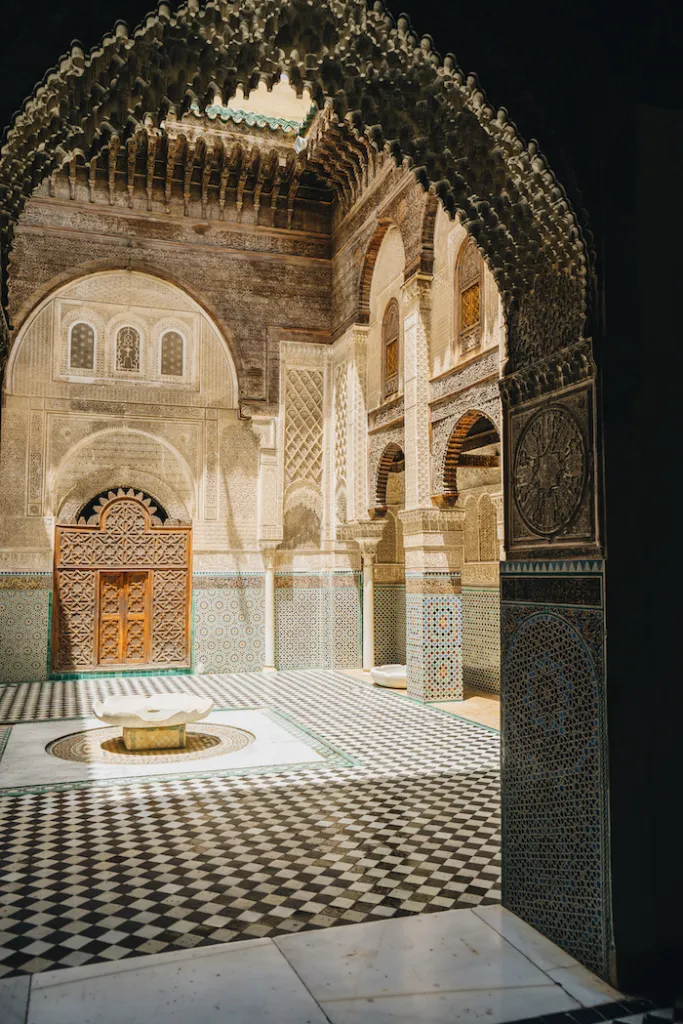
In Fez, madrasas, which are centers for studying the Quran, play a significant role in the city’s cultural landscape. Two particularly stunning examples that captivate visitors are the Al Attarine and Bou Inania Madrasas. Constructed around the year 1300, these institutions are prime illustrations of Marinid architecture.
Unlike mosques, visitors can explore these Madrasas, although areas still used for worship remain off-limits to non-Muslims. This accessibility makes them a fascinating stop for those looking to delve deeper into the architectural and educational heritage of Fez.
6. Vist Tanneries
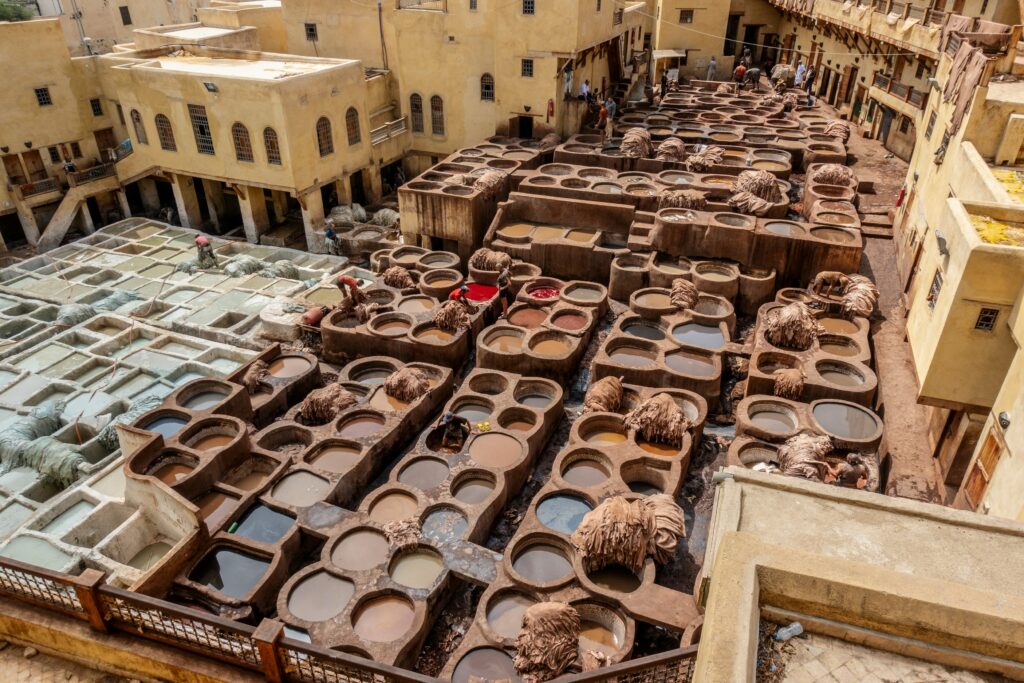
Fez is home to four traditional tanneries, with the Chouara Tannery being the largest and most renowned. It’s a tourist favorite spot due to the vivid spectacle of colors and the strong, distinctive smells.
Visitors can view the tannery from the terraces of nearby leather goods shops. To help manage the pungent odors, you’ll be offered a sprig of mint to hold under your nose during the tour. While the tour itself is free, many visitors find themselves purchasing a leather souvenir before they leave. This unique experience offers a deep dive into the traditional leather-making processes that have been practiced in Fez for centuries.
7. Visit Jnan Sbil Garden
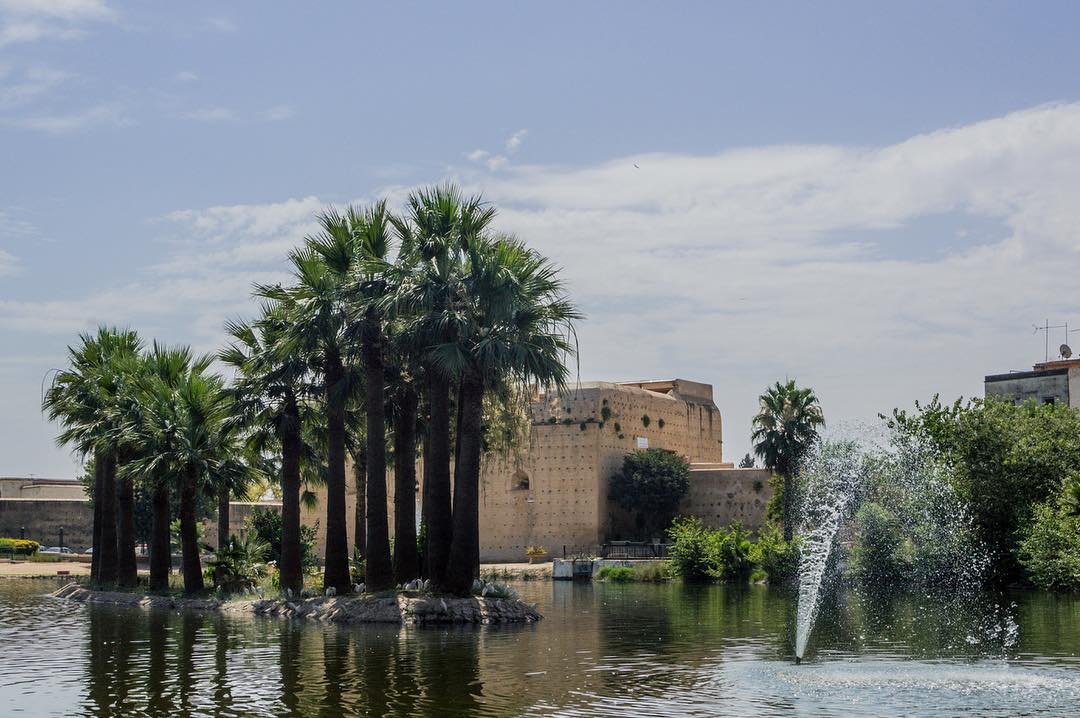
Jnan Sbil Garden is often referred to as the green lung of Fez, offering a serene space where visitors can enjoy a variety of plants, a picturesque lake, a row of palm trees, numerous fountains, and an old-fashioned water wheel. Additionally, there is a bamboo garden and another garden styled after Andalusian designs.
The garden began as an imperial project in the 17th century, and during the French protectorate, it was enhanced with new plant species and opened up to the public. It’s a sanctuary of peace, just a 15-minute walk from Fez’s bustling Medina.
Best things to do around Fez
1. Discover Volubilis
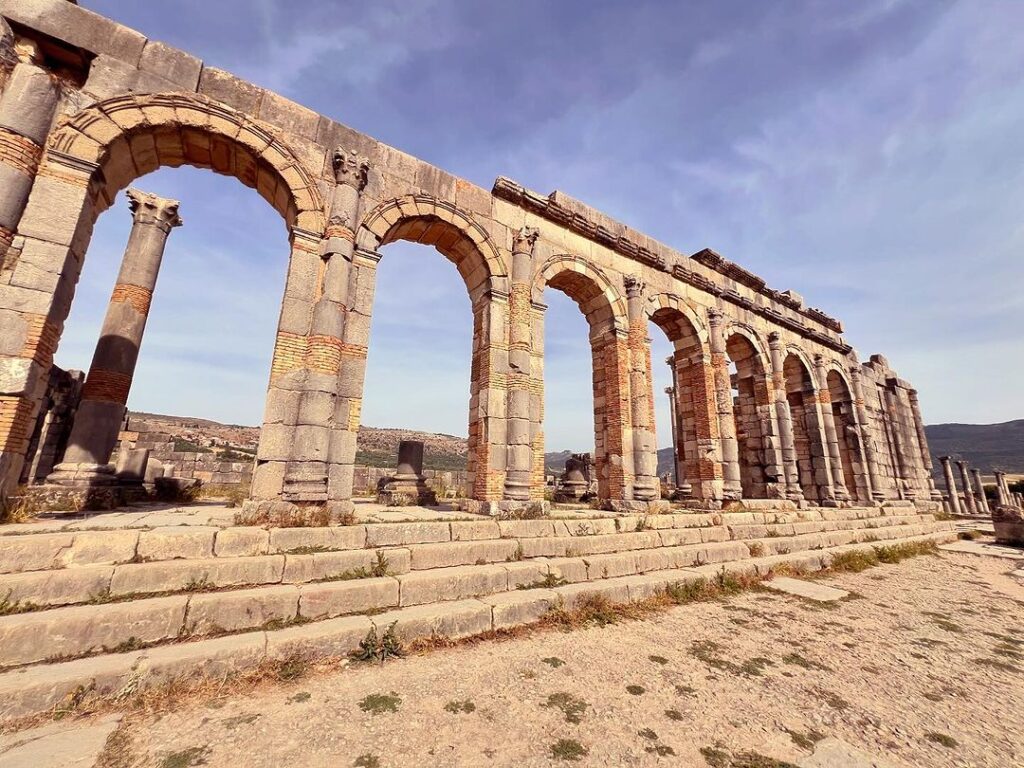
The ancient Roman city of Volubilis is about an hour’s drive from Fez and is one of the best excursions you can take if you have some free time in Fez.
Volubilis is home to an archaeological site that was declared a UNESCO World Heritage Site in 1997. In the Roman town, one can see the remains of a triumphal arch, a 2nd-century basilica, and a temple of Jupiter Capitolinus, among others.
To get to Volubilis from Fez, you can negotiate the journey with a taxi driver for around €30-40, or take a bus to Meknes for €4 and then take a taxi for around €10.
2. Visit Rabat, the capital of Morocco
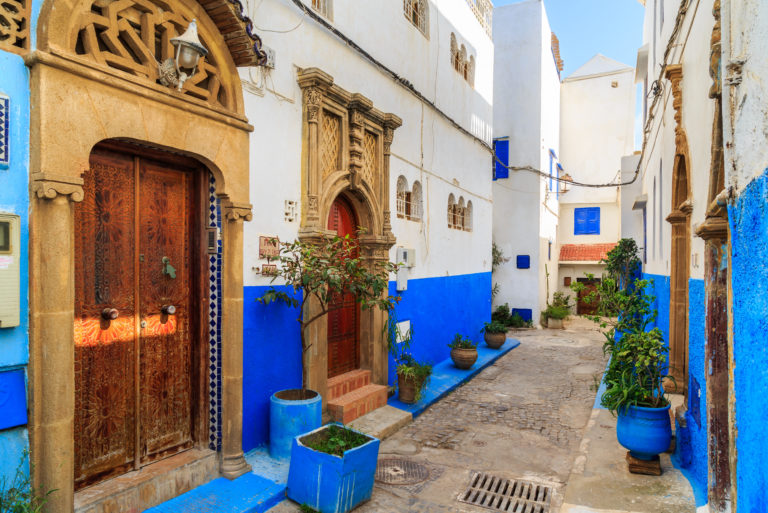
Rabat, the capital of Morocco, is located at the mouth of the Bu Regreg River on the Atlantic coast. The city is not as touristy as Fez, but it is an important cultural center of the country due to its historical heritage. There you can visit interesting museums, such as the Archeology Museum, and see the traces left by different cultures on the city’s buildings, including the Hassan Tower and the Royal Palace.
In Rabat, you can also visit an impressive botanical garden, the Medina, and the Kasbah of the Oudaias district, a historic center with cobbled streets and river views.
From Fez, you can go to Rabat by train for around 20 euros. The journey takes a little over two hours, just like by road. You can also opt for a private tour, but the price can reach 140 euros.
READ ALSO: 12 Best Things To Do In Rabat
Where to eat in Fez?
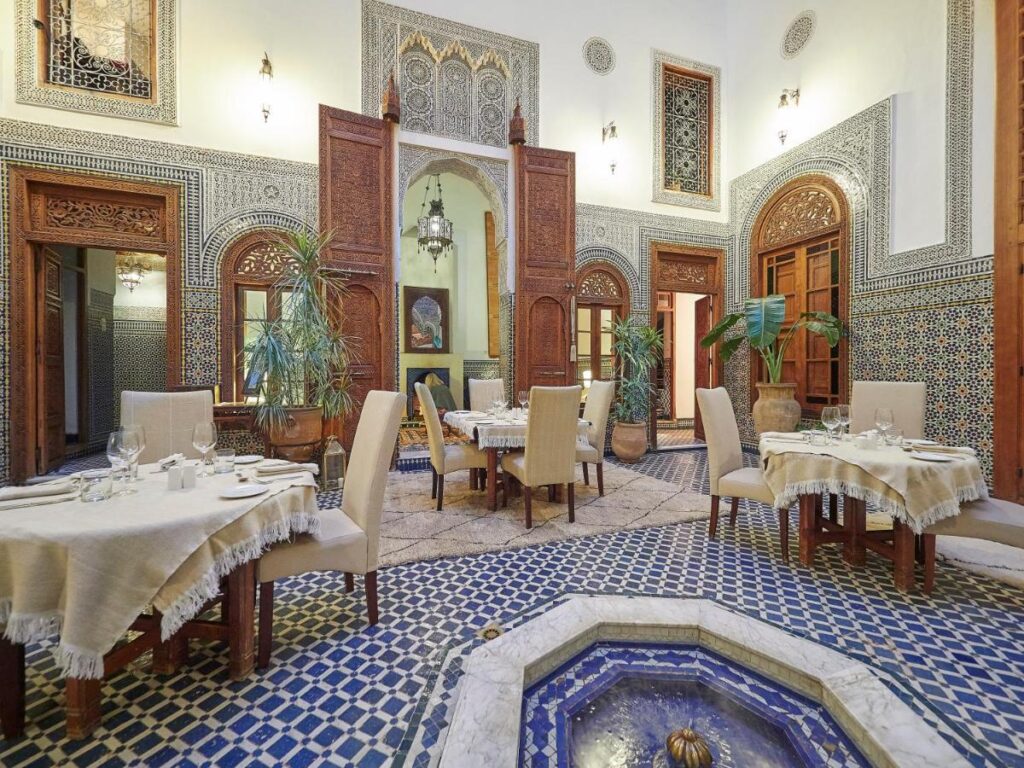
In reality, Moroccan cuisine does not vary much from city to city. In Fez, as in other large cities, you can taste typical dishes such as couscous, tagine, pastela, mint tea, and dried fruit sweets. As a tourist city, Fez also offers international options for the less adventurous.
It is also possible to eat in the riad itself, you just need to notify in advance. This is a very practical option, especially for dinner.
Here is a selection of our favorite restaurants in the city:
- Les saveurs de Riad Fes Maya : A restaurant serving traditional Moroccan cuisine with a beautiful view of the city from its terrace. The perfect place to watch the sunset with a nice dinner. Price range: €25 – €30 .
- Dar Roumana : An elegant riad restaurant. On its menu, where local products are in the spotlight, you will find French-Moroccan fusion dishes, such as roasted pumpkin salad with tahini and braised rabbit with cereal mustard sauce. A real treat. Price range: €30 – €40 .
- Restaurant Les Mystères de Dar Tajine : A warm, family restaurant serving homemade dishes prepared with love and care. From its decoration to the flavor and quantity of the dishes, you will take your breath away. Eating at Mystères de Dar Tajine is, without a doubt, one of the best things to do in Fez. Price range: €14 – €32
| ➡️Fez is full of excellent places to eat, and many of them serve the kind of plant based Moroccan dishes people travel here hoping to find: fragrant couscous, slow-cooked tajines, warm bread. To help you skip the guesswork, here is our guide to the best vegan food in Fez, with 7 restaurants where plant-based eating is genuinely worth planning around. |
Where to stay in Fez?
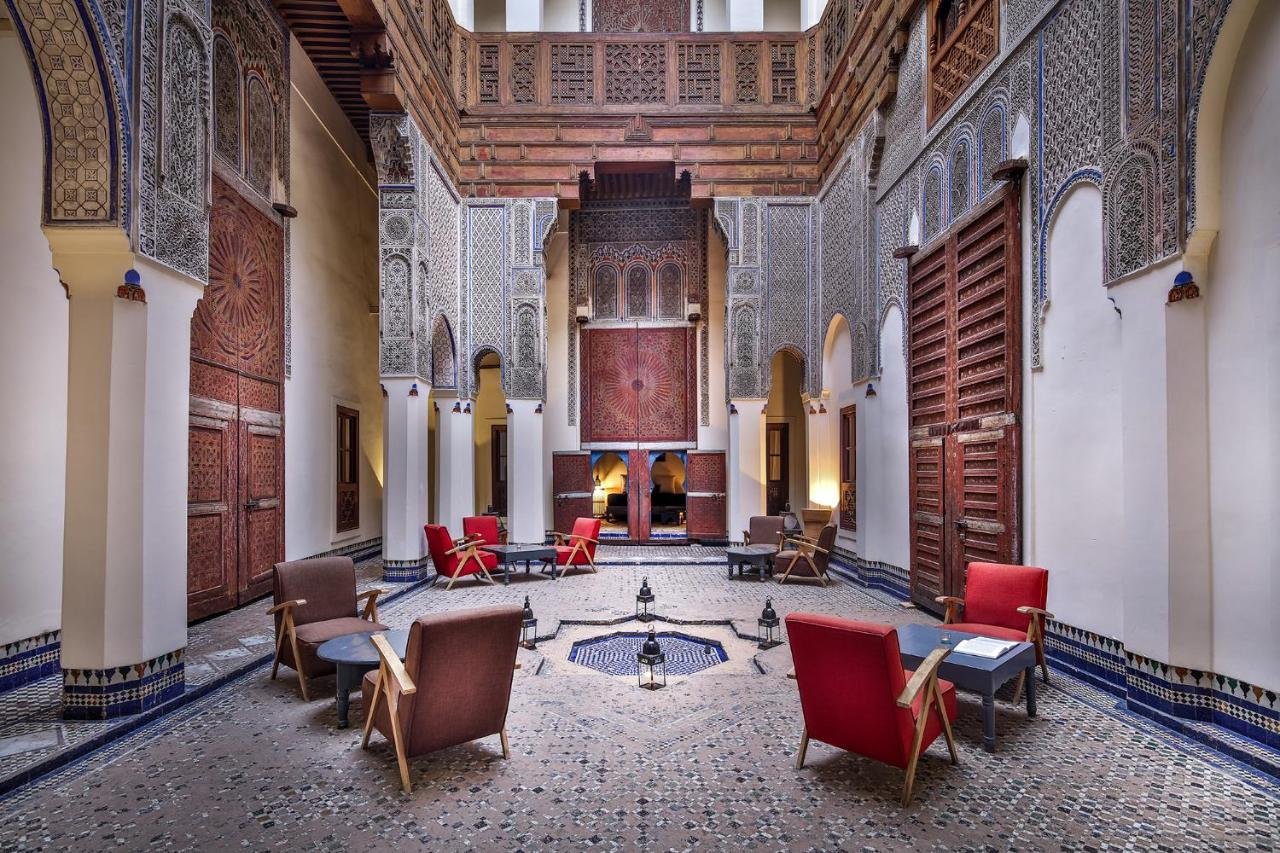
If you are looking for an authentic experience in Fez, we recommend staying in the medina, where you will find many riads of all categories. And if you decide to stay outside the medina, you will also find hostels, hotels, and Airbnbs in different price ranges.
Here are some of the best accommodation options in the city:
- Riad Fes Bab Rcif & Spa: Next to the Medina gate is this magnificent and comfortable riad. In addition to its fantastic rooms, it stands out for its hearty breakfast and its beautiful terrace overlooking the medina. Traditional Moroccan, continental, American, or English/Irish breakfast included. Average price: €60 .
- Hotel Volubilis : A pleasant 4-star hotel with all the comfort in the heart of Fez. It has a swimming pool and a beautiful garden where you can have breakfast in the sun. Average price: €50.
- Riad Hotel & Spa Dar Bensouda : In the heart of the Medina, a 15-minute walk from Place Batha, is this magnificent riad where the rustic-modern style merges with the traditional style of the original palace. It has very comfortable and spacious rooms with large windows, a bathtub, and a living room. It also has two terraces, one on the roof with one of the best views of the medina and the other with views of the Atlas Mountains. Beauty treatments and massages are offered in the riad’s Arab baths.
What to do in Fez in 3 days?
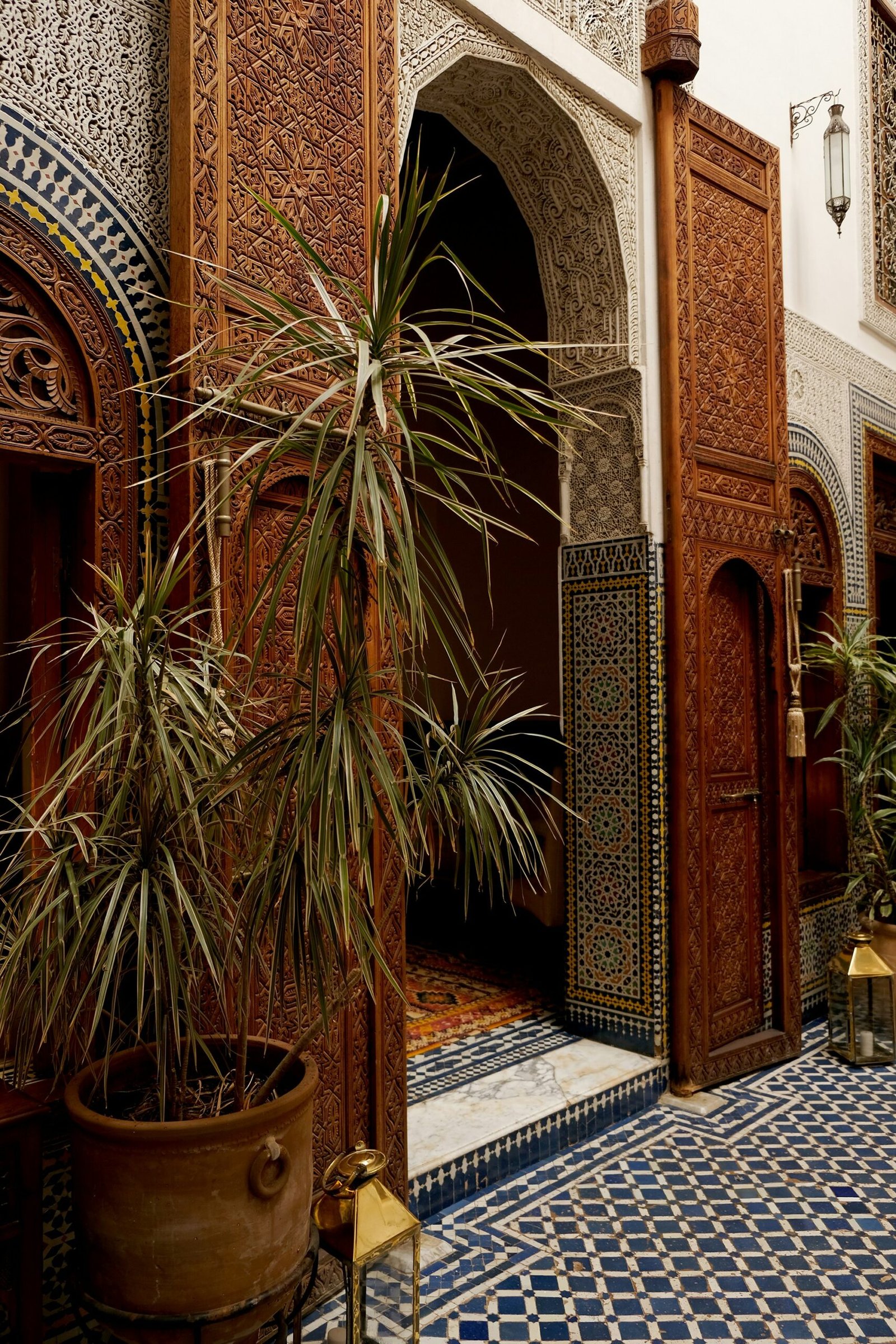
It is usual to spend a minimum of two days in Fez to see the main sights of the city, but it is generally recommended to spend a day or two more to visit the surrounding areas such as Volubilis or the city of Meknes. Below you will find a proposal for organizing your trip per day.
Day 1:
- Enter through Bab Bojeloud
- Walk around Talaa Kbira and Talaa Sghira
- Stroll through the Mellah, its streets, and the cemetery
- Go to the mosque and mausoleum of Mulay Idris II
Day 2:
- Visit to the Chowara tannery
- Visit the madrasas of Al Attarine and Bou Inania
- Shopping in the souks
Day 3:
- Excursion to Volubilis
Tips for your trip to Fez
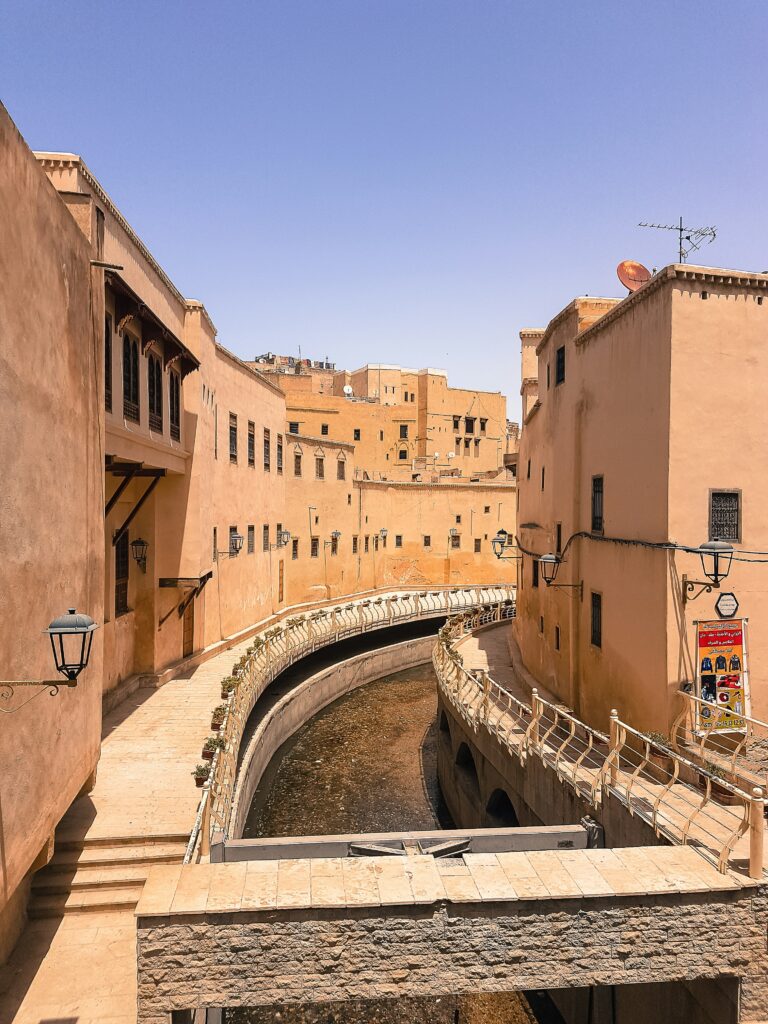
- The currency in Morocco is the Moroccan dirham (1 MAD = 0.096€)
- Bring cash, not all stores have credit cards.
- Bring your money in advance, currency exchange at airports is costly.
- The dirham is a restricted currency, so you must exchange it before leaving the country.
- If you decide to see Fez in summer, always bring water, a hat or cap, sunglasses and sunscreen. Avoid going out during the hottest hours.
- Always drink bottled water and do not put ice cubes in your drink.
- Bargaining is almost institutional in Fez and throughout Morocco, so don’t be afraid always to negotiate to get the best price.
- A large part of the population speaks French, not English in Morocco
- Be prepared for medical emergencies: travel with insurance.
- Wear light but discreet clothing, preferably long, loose, and warm at night.
- Perfect Morocco with kids Itinerary (2026): 25 Days from Tangier to the Anti-Atlas, Coast, and Marrakech
- Where To Stay In Agafay Desert in 2026: Luxury Moroccan Holidays
- 14 Most Beautiful Beaches In Morocco (2026)
- What To Wear In Morocco (2026): Real-World Travel Guide For Female Travellers
- 3 Best Places To Stay in Marrakech Medina [2026 Updated]