

Travel writing based on first-hand experience
Interested in ancient history? These awe-inspiring archaeological sites in Saudi Arabia reveal the region’s deep and often hidden heritage.
Table of Contents
1. Al-Ula
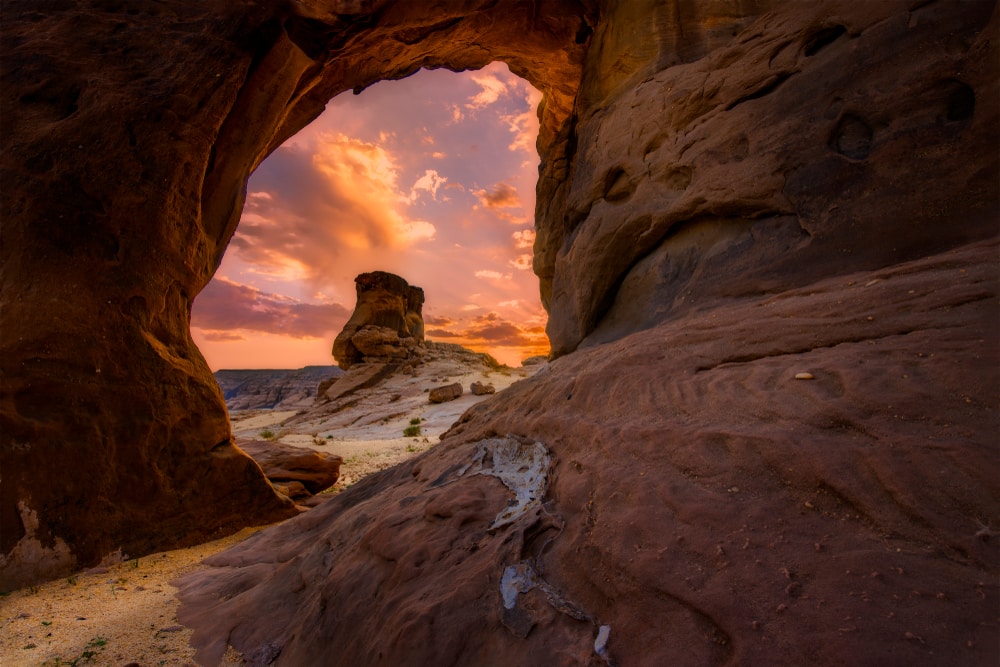
| Condition: ★★★★★ Public awareness: ★★★★★ Historical influence: ★★★★★ |
Al-Ula region in the northwest of Saudi Arabia has such an archaeological heritage that the country has decided to develop a flagship development project there.
So, today, it is a real and immense open-air museum that you can visit. During the excavations, tools dating from the Paleolithic have been found there, as well as traces of the Nabataean, Roman, pre-Islamic and Islamic civilizations. We present here two of the main sites of Al-Ula, but many others are also worth a visit.
Hegra
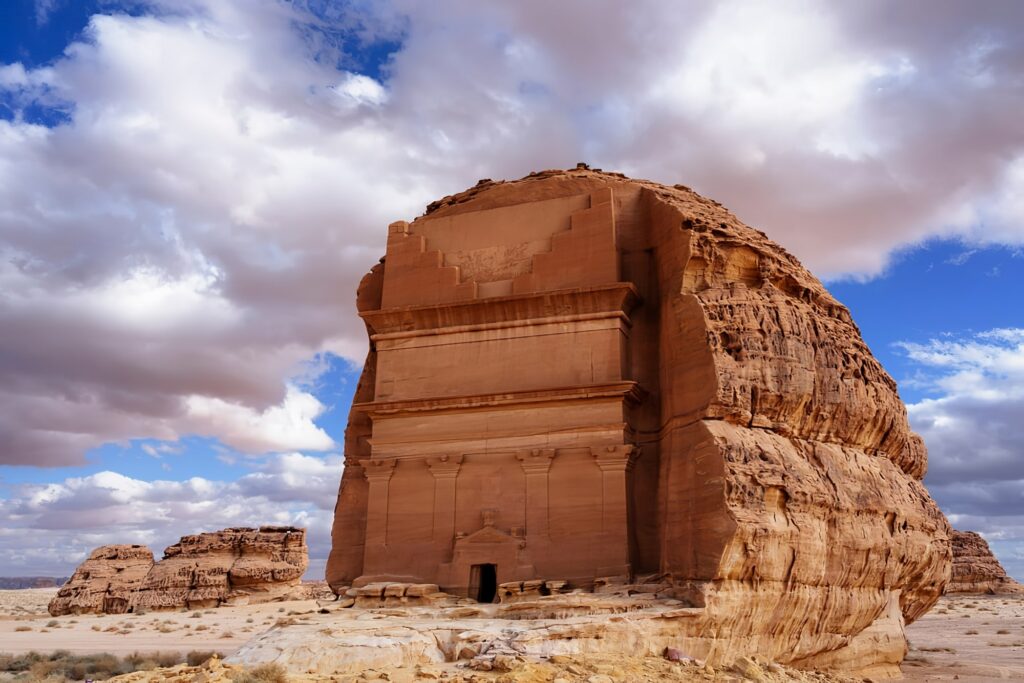
| Condition: ★★★★★ Public awareness: ★★★★★ Historical influence: ★★★★★ |
Hegra is probably the most breathtaking site you will see in Al-‘Ula. It was, like Petra in Jordan , one of the epicenters of the Nabataean civilization. The Nabataeans developed ingenious agricultural and irrigation systems there, traces of which can still be found today.
But Hegra is above all home tospectacular tombs carved into the rock that recall the monuments of Petra. It had been classified as a UNESCO World Heritage Site.
AlUla Old Town
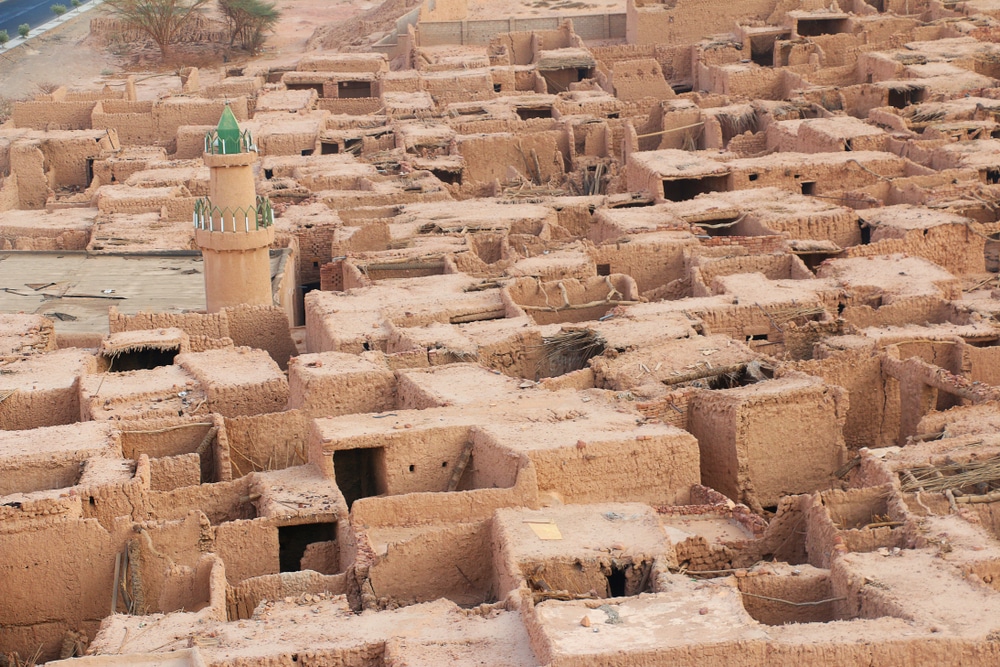
| Condition: ★★★★ Public awareness: ★★★★ Historical influence: ★★★ |
Here is another of the must-see gems that you will be able to discover in the Al-‘Ula region. Much less old than Hegra, the old town of Al-‘Ula still houses buildings that date back to the 12th century.
It was at this time that it became a centre on trade and pilgrimage routes and began a continuous development. Today, the city still hosts 900 old mud houses that form a preserved ensemble and a testimony to the past.
2. Dir’iyah
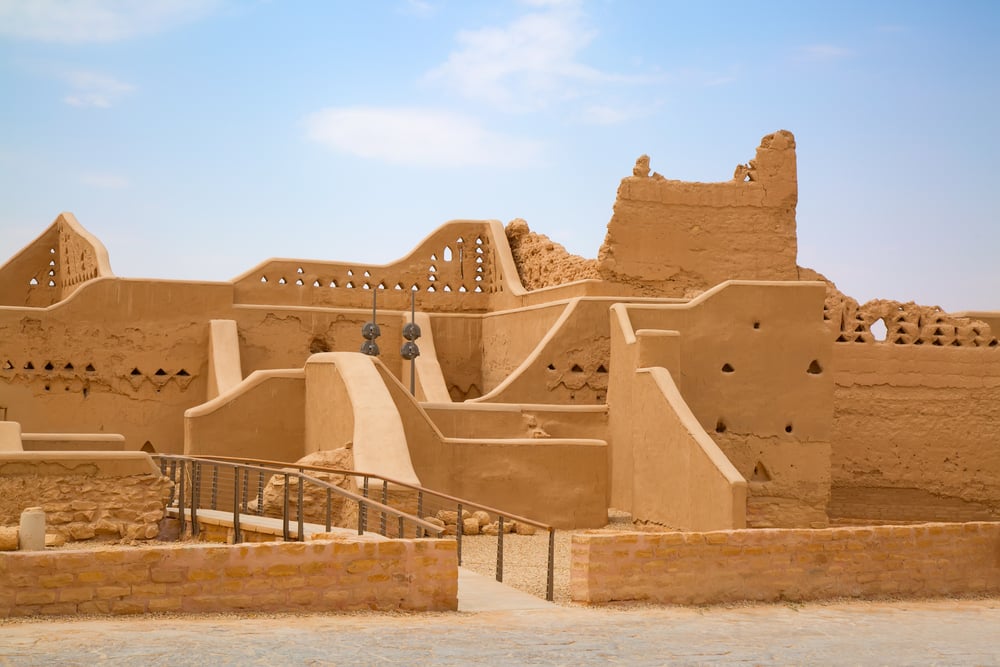
| Condition: ★★★★★ Public awareness: ★★★★ Historical influence: ★★★★ |
Founded in the 15th century, the site of Dir’iyah was home to the first capital of the Saudi dynasty. Even today, the district of At-Turaif is home to an architectural ensemble representative of the Naji style, characteristic of the Arabian Peninsula.
Dir’iyah is one of the most important archaeological sites in Saudi Arabia for several reasons. On the one hand, it was for centuries a place of essential political and religious power, from which the Islamic reform spread in Arabia. On the other hand, the remains of its palaces and dwellings are particularly well preserved and renovated, and constitute a very living testimony to the past.
3. Tayma
| Condition: ★★★★ Public awareness: ★★★★ Historical influence: ★★★★ |
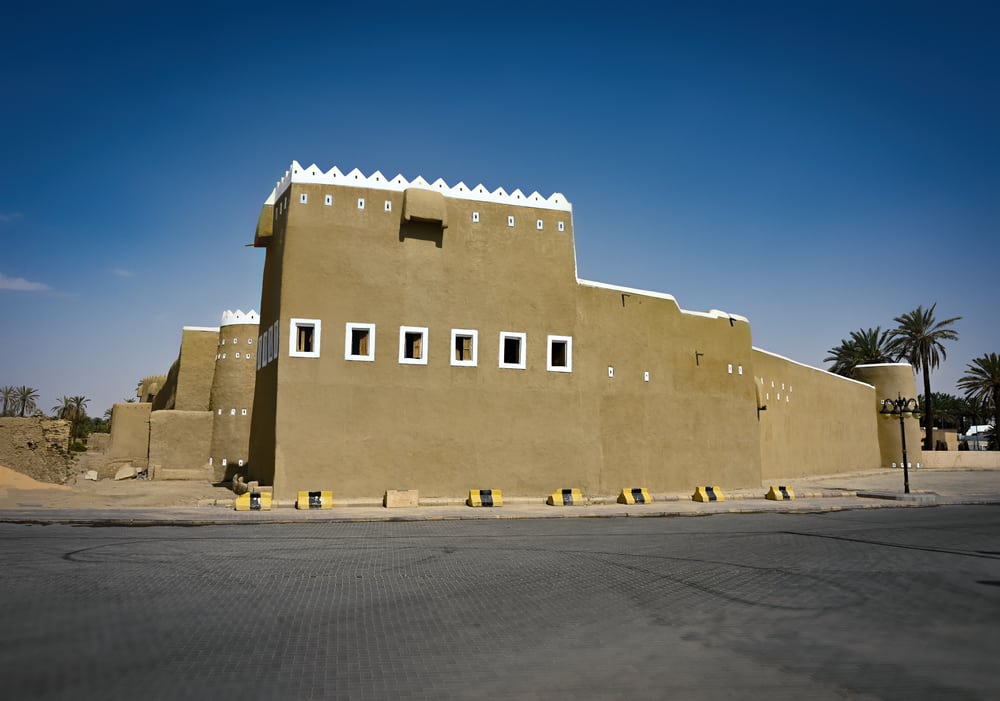
Tayma is one of the oldest sites of human occupation on the Arabian Peninsula. In 2016, a 90,000-year-old human bone was even found there. But many animal fossils as well as cultural and artistic remains from different periods have also been discovered there. It must be said that the place was a clement oasis for a long time, before the desertification of the peninsula.
Tayma was an important seat for various kingdoms, including that of the Babylonian king Nabonidus. Furthermore, the city is mentioned in the Bible, but also in Aramaic inscriptions dating back to the first millennium BC. Today, you can discover a spectacular well there, called Bir Haddaj and built under Nabonidus. In addition, the site hosts an interesting archaeological museum.
Finally, don’t miss the remains of palaces and the astonishing split rock of this important archaeological site in Saudi Arabia.
4. Dumat al-Jundal
| Condition: ★★★★ Public awareness: ★★★ Historical influence: ★★★★ |
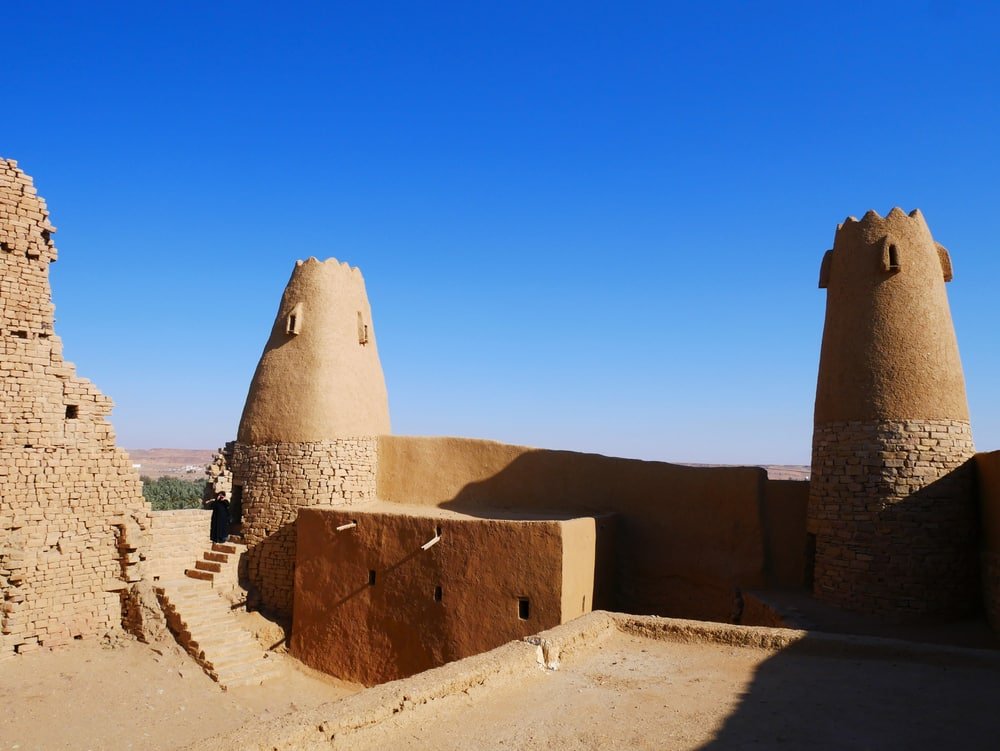
Located in the northwest of Saudi Arabia, Dumat al-Jundal is an ancient city currently being restored. Its location was not left to chance: it was a crossroads of trade routes linking Mesopotamia, Syria and the Arabian Peninsula. This city was an important place of power and already mentioned in writings from the 10th century BC. It was notably in the hands of the Nabataeans and the Romans before being conquered in 633 by the Islamic Empire.
Today, the striking silhouette of the remains of the Qasr Marid fortress marks the landscape. Beside it stands the minaret of the Omar ibn al-Khattab Mosque, built in the 7th century. In addition, the ruins of ancient villages and the wall recall the living past of what was once a dynamic and powerful oasis.
5. Tarout Island
| Condition: ★★★★ Public awareness: ★★★ Historical influence: ★★★ |
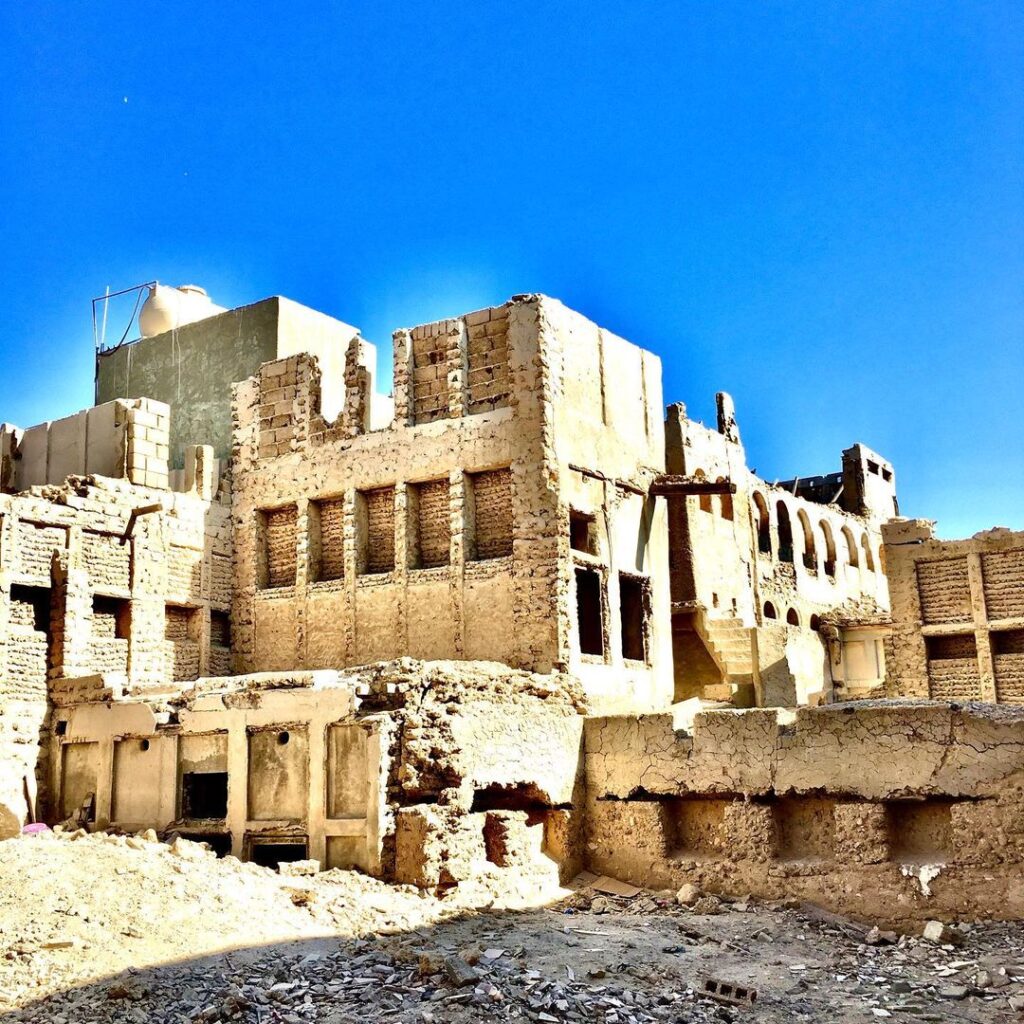
Located on the Persian Gulf, Tarout Island is an important archaeological site in Saudi Arabia. Indeed, it is one of the oldest settlements in the region, already inhabited in 5,000 BC. It was notably at the heart of the powerful Dilmun Empire, which marked History from ancient Mesopotamia.
The island was a major trading hub for millennia. Excavations have uncovered a wealth of statues and pottery, many of which are on display at the Riyadh Museum. The most iconic of these discoveries is a pure gold statue of a goddess.
Beyond these treasures, architectural remains are still numerous on the island today and bear witness to its life at various times. The most emblematic monument is the imposing castle, whose four towers watch over the island and its current inhabitants.
6. Rock art of the Hail region

| Condition: ★★★★ Public awareness: ★★★ Historical influence: ★★★★ |
The rock art of the Hail region is concentrated in two sites: the Umm Sinman Mountain in Jubbah and the al-Manjor and Raat Mountains in Shuwaymis. These contain images that span nearly 10,000 years of human history, which has earned them World Heritage status.
Today desert, the region once offered more clement conditions that allowed the early settlement of populations. Over the millennia, environmental changes have led to changes in human occupation without ever making it disappear.
However, successive populations in the region have documented their existence in the rock and the components of the landscape. Thus, today, Hail is home to the largest and richest collection of rock art in this region of the world. It is, in a way an incredible open-air library, built up by generations of artists and craftsmen over several millennia.
7. Hima Cultural Area

| Condition: ★★★★ Public awareness: ★★★★ Historical influence: ★★★★ |
The Hima Cultural Area is the latest archaeological site in Saudi Arabia to join the World Heritage list in July 2021. Located in the southwest of the country, this mountainous and arid region was once an important stopover on caravan routes.
Thus, for 7,000 years and up until the 20th century, many merchants and soldiers travelled or stayed there. However, they left behind them a multitude of marks, engraved in the rock.
In addition to being very numerous and dating from different periods, these are diverse and generally well preserved. The drawings coexist with inscriptions in a multitude of alphabets ranging from Aramaic-Nabataean to Greek. Thus, it is a long and rich history that is staged in a particularly lively way on the rock walls of Hima. Furthermore, the region has still been little explored but apparently shelters many ancient burials, structures and wells.
- How To Dress In Saudi Arabia As A Tourist in 2026

- Al Ula Saudi Arabia Guide (2026): Top Sights, Best Eats, and Stunning Stays

- The Best Things to Buy in Saudi Arabia in 2026 (That You Can’t Find Anywhere Else)

- Best Restaurants in Mecca – Halal Eats You Can’t Miss in 2026

- 8 Best Cafes in Mecca: Top Spots to Relax and Refuel in 2026