
Travel writing based on first-hand experience
Here’s an intro in your preferred warm, travel-blog style:
The St. Regis Red Sea Resort in Saudi Arabia feels like the kind of place that almost shouldn’t be real. We arrive to absurdly clear, electric-blue water, a private island that seems to exist in its own polished little universe, and a level of service so attentive it borders on telepathic. This is one of the headline resorts of Saudi Arabia’s ambitious Red Sea Project, and naturally, we had questions. Is it really as luxurious as the glossy photos suggest? Does it justify the eye-watering price tag? And what does it actually feel like to stay at a high-end private island resort in a destination that is still very much in its early chapters? In this St. Regis Red Sea Resort review, we’re diving into the villas, the food, the service, the atmosphere, and the little details that make or break a stay like this.
Table of Contents
Resort Overview
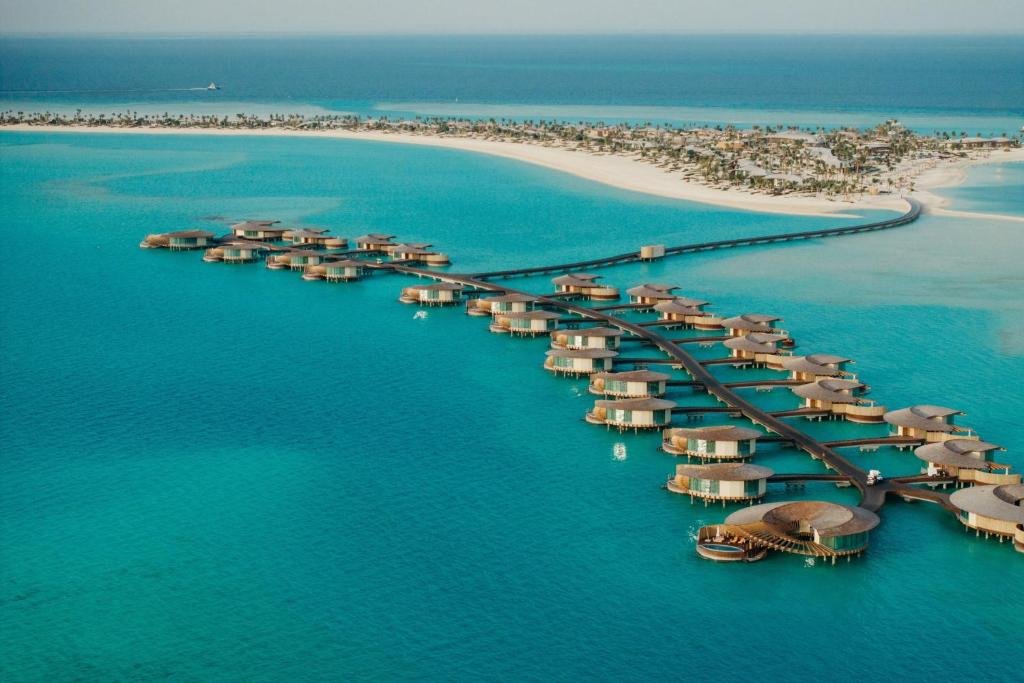
Let’s start with the headline stuff: The St. Regis Red Sea Resort has 90 villas, split evenly between overwater coral villas and beachfront dune villas. Whichever camp you end up in, you are not exactly roughing it. Every villa comes with an expansive sundeck, an outdoor shower, and a private plunge pool, which means even the “base” experience here is still very much in the we-have-our-own-pool-and-nobody-can-perceive-us category.
And then there’s the setting. The Red Sea is home to the world’s fourth-largest barrier reef system, so if you are the sort of person who likes to spend a holiday drifting over coral, peering into impossible blue water, or trying every watersport available just because you can, this place makes a very strong case for itself.
All guests also get St. Regis butler service, which sounds fancy because it is fancy. But in practice, it means there is always someone on hand to arrange, explain, book, fix, or quietly make your life easier before you even realize something needs sorting.
One of the more interesting details about the resort is that the island is powered entirely by 100% renewable solar energy, which ties into Saudi Arabia’s much larger sustainability push. So yes, we are floating around a hyper-luxury island resort, but one trying very hard to position itself as the future rather than just another fossil-fuel fantasy.
The resort also has a sister property nearby: Nujuma, a Ritz-Carlton Reserve, located on a neighboring island. If you’re staying at the St. Regis, your butler can arrange a boat transfer over, and you can use Nujuma’s restaurants and amenities too. We popped over one afternoon for lunch, obviously in the name of research, and it ended up being a very worthwhile detour.
Check-in
About a week before arrival, the resort reached out to ask for our flight details into Red Sea International Airport. From there, they arranged the whole transfer chain: car from the airport to the marina, then boat from the marina to the island.
And honestly? The whole thing ran like an expensive, very well-oiled machine.
Once we cleared passport control, we headed to one of the hotel desks in the arrivals area, where staff help guests connect with their resort transfers. As soon as our reservation was confirmed, we were whisked off to a waiting car.
In keeping with Saudi Arabia’s sustainability angle, all the transfer vehicles are luxury electric sedans, including cars like the Lucid Air and the Mercedes EQS. The drive from the airport to the marina takes about 25 minutes, and the whole experience feels very polished from the start.
At the marina, we were invited into the lounge while the boat was being prepared. There were refreshments laid out: bottled water, coffee, tea, and snacks. Standard enough. But the really striking thing was not the lounge itself. It was the fact that we were the only people in it.
This, we quickly realized, was going to be a theme.
Our flight from Dubai had around 40 passengers on it, but my wife and I were the only ones actually headed to a resort. Everyone else appeared to be arriving for work. Same thing at the marina. Big lounge, zero guests, just us. Then the boat arrived, and once again, it was just the two of us.
There are probably several reasons for this. The prices at Red Sea resorts are eye-watering, the flight network into Red Sea International is still pretty limited, and Saudi Arabia still carries enough baggage as a destination that some travelers are probably not rushing to book their beach holiday here just yet. So while the Red Sea Project is clearly aiming for “next Maldives,” it is not there yet. Not even close.
But here’s the thing: while that may be a challenge for the destination as a whole, for the guests who do make it here now, it creates a very strange and very compelling luxury experience. We are talking about a private island resort that feels so empty it almost seems staged for you.
The resort advertises the sea transfer as a luxury yacht, but because there were only two of us, we were taken by speedboat instead. No complaints from us. Fast, easy, and a little more fun, frankly.
For departure, the resort upgraded us to a seaplane transfer back to Red Sea International Airport, which was a lovely surprise and an extremely elegant final note. It also meant we got to skip the drive back from the marina, which shaved off some time.
When we arrived on the island, we were greeted by a small welcome committee of staff and introduced to our butler, Umar, who would take care of us throughout the stay. St. Regis is known for butler service, and thankfully this was not one of those situations where the brand promises one thing and the reality is a vague WhatsApp number and a smile. Umar was excellent: responsive, thoughtful, and wonderfully on top of things.
In fact, the service across the resort was probably the single most impressive part of the stay. Every staff member we met was warm, conversational, and genuinely lovely. And because the occupancy was so low, the service felt almost comically attentive at times, as though there were multiple people quietly waiting to help each individual guest at any given moment.
From the arrival dock, we got our first look at the island and the water around it. I had heard someone describe the sea here as looking like blue Gatorade, and that description, ridiculous as it sounds, is spot on. The water is so bright, so clear, and so bizarrely clean that it almost stops looking real.
It felt incredibly special to visit this early in the Red Sea Project’s development, before the whole place fills out and starts performing for crowds. Right now, it still feels pristine and untouched.
The island itself stretches about 4 kilometers from one end to the other, so the resort offers a buggy service to shuttle guests around. Each villa also comes with two bicycles, which is a nice touch if you want to pedal your way around paradise like a very hydrated castaway.
Since I had already completed most of the check-in formalities in advance, including payment, we only had to stop briefly at the welcome pavilion to sign a few papers before heading to the villa.
At check-in, we were recognized as Marriott Bonvoy Titanium Elite members. Our benefits included a welcome gift of 1,000 Bonvoy points and a small discount at certain resort outlets.
Breakfast, however, didn’t factor into those elite benefits because it was already included in our paid booking. At the St. Regis Red Sea, paid stays include breakfast for two at Nesma Restaurant, which is excellent news because food here is not messing around when it comes to price.
For our stay, I had booked a standard Dune Villa. I never asked for an upgrade to an overwater villa, and I was a little surprised we weren’t proactively moved up given how empty the resort felt. I would guess fewer than ten of the ninety villas were occupied. Still, we were completely happy with the Dune Villa. In fact, depending on what kind of stay you want, I might actually prefer it.
One detail I loved immediately: room keys come on a bracelet instead of a traditional key card. It is practical, smart, and exactly the sort of design choice you appreciate when you are constantly moving between beach, pool, bike, boat, and villa.
Once we had the formalities out of the way, Umar gave us a tour of the island and ran through the main facilities, restaurants, and activities.
Location
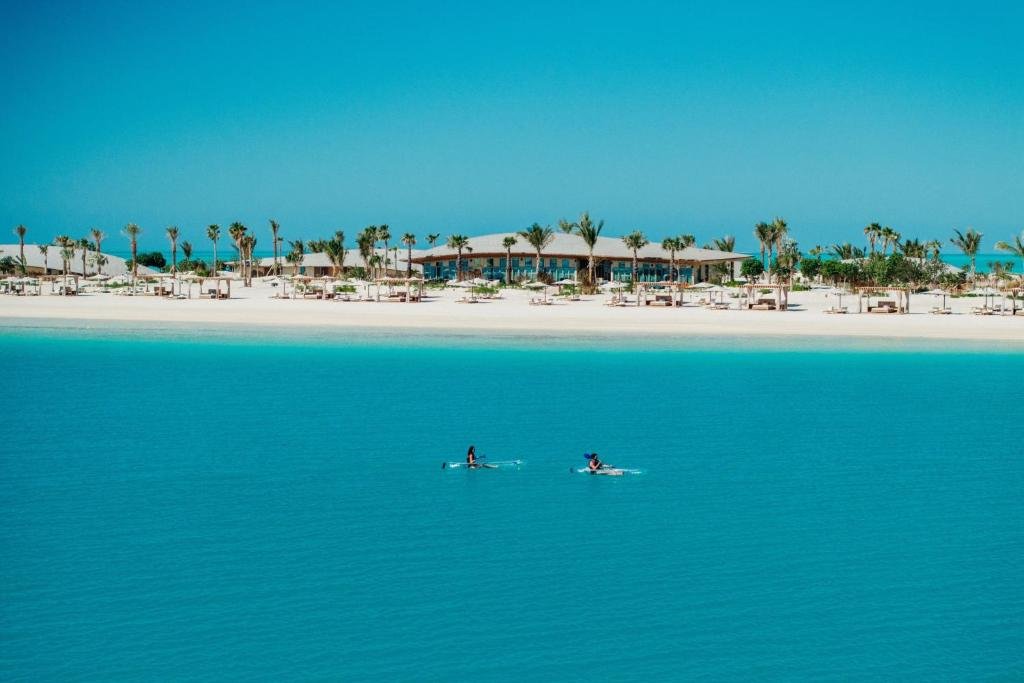
The St. Regis Red Sea Resort sits in the coastal Red Sea region of Saudi Arabia, as part of the country’s enormous and wildly ambitious Red Sea Project. More specifically, it’s located on Ummahat Island 1 in the Ummahat Archipelago.
And yes, it looks exactly how you want a place like this to look: turquoise water, white sand, coral reefs, dramatic sunsets. The surrounding marine environment is protected, which makes the area especially appealing for snorkeling, diving, and anyone who wants their holiday to involve staring into ridiculously clear water for long stretches of time.
Ummahat Island 1 is a private island, and the St. Regis is the only resort on it. You can only get there by boat or seaplane, which immediately gives the whole stay a slightly smug “we are now inaccessible and therefore at peace” energy.
Room – Sunset Dune Villa
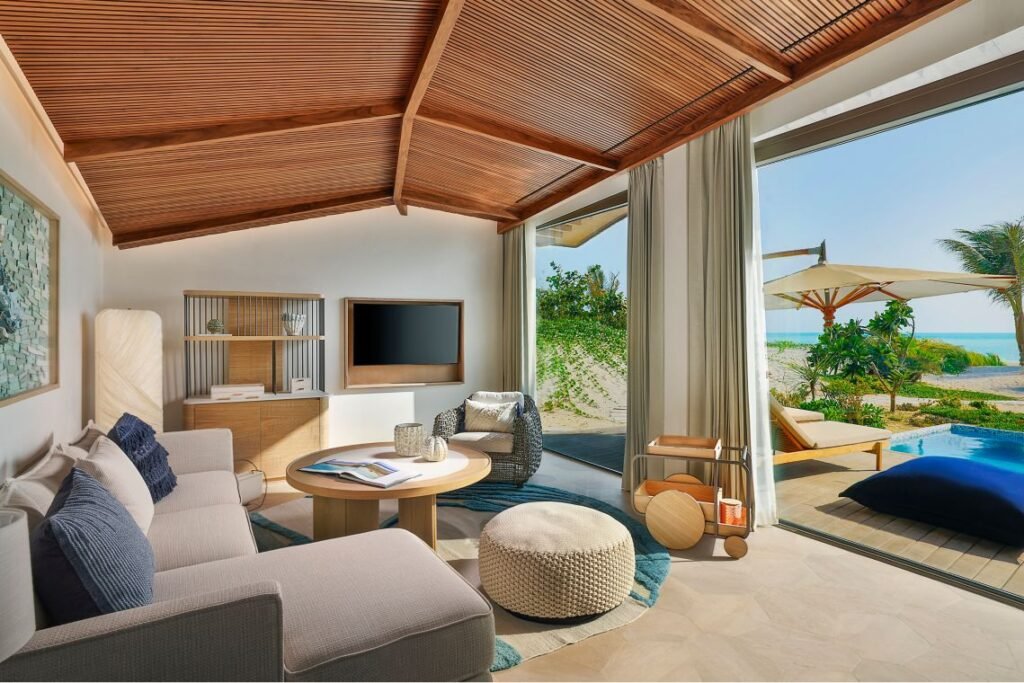
We were assigned Villa 37, which is technically an entry-level room. But calling this a base room feels a bit like calling a yacht “a decent little boat.”
The villa measures over 800 square feet, and that is before you count the outdoor space, which includes a large terrace and private infinity pool.
As soon as you walk in, you enter a generous living area with a large sectional sofa, an armchair, and a coffee table. A flatscreen TV is mounted nearby, though slightly awkwardly positioned. Each time housekeeping serviced the room, they left the TV on the in-house channel displaying weather information and ambient music, which made returning to the villa feel oddly serene.
The design here is very successful. It pulls in the earthy tones of the Saudi desert, then layers them with blue and green accents inspired by the local marine world. There is plenty of texture too: stone, wood, glass, marble, woven fabrics. It all feels expensive, but not cold.
On the coffee table, we found a welcome amenity of dried fruits, nuts, and dates, along with a handwritten note. Nice touch, classic luxury-resort move, still appreciated.
Next to the TV sat the minibar cabinet, with a Nespresso machine, kettle, bottled water, glassware, and a mini fridge stocked with drinks for purchase. Since Saudi Arabia is alcohol-free, there are no alcoholic beverages on the island, but the resort has assembled a long list of 0.0% beers, wines, and spirits instead.
All bottled water in the room is complimentary and replenished daily, which becomes important later when restaurant prices start doing acrobatics.
The entire water-facing side of the villa is lined with floor-to-ceiling glass, and the motorized sliding doors in the living room open fully onto the patio, creating one large indoor-outdoor space.
The bed sits in the center of the sleeping area, backed by a sculptural slatted wooden headboard that doubles as a partition. Behind it, the wardrobe and dressing space are tucked away, which is both practical and visually neat.
On each side of the bed, there’s a nightstand with outlets, USB-A and USB-C ports, and controls for lighting and curtains. Another nice little detail that makes the room easy to live in.
Housekeeping did a fantastic job throughout our stay. Turndown each evening included slippers placed at the bedside, bottled water set out for the night, curtains drawn, and often a small towel animal waiting on the bed. Slightly adorable. Slightly theatrical. Entirely welcome.
Behind the bed, the dressing area includes separate his-and-hers closets, a vanity mirror, and plenty of drawers. One wardrobe held robes, slippers, and an ironing board. The other had the safe, a beach tote, and shoe-care accessories.
And then there was the shoehorn.
Look, I realize this is a weird hill to die on, but this was an absurdly nice shoehorn. Metal, leather-wrapped, perfectly weighted. I am convinced you can learn a lot about a hotel from the quality of its shoehorn, and this one was quietly screaming “yes, we know exactly what we’re doing.”
The bathroom is big and beautifully done, with a dual vanity, soaking tub, enclosed toilet chamber, walk-in shower, and access to an outdoor shower as well. The vanity in particular stood out, with its warm sand-colored marble and blue-green backsplash that echoed the colors of the sea outside.
The oversized tub sits next to another huge window, so even from the bath you can stare out toward the deck and water.
The toilet chamber includes a wall-mounted toilet and bidet, and the shimmering turquoise tiles on the wall look almost like fish scales in the right light.
The indoor shower has both a rainfall head and a wall-mounted fixture. If that somehow still does not satisfy your shower ambitions, there is also the outdoor shower accessible through the bathroom.
But let’s not pretend the patio isn’t the main event here.
This is the villa’s best feature by far: complete privacy, private plunge pool, direct beach access, and your own stretch of Red Sea shoreline. The landscaping and architecture are cleverly designed so that neighboring villas disappear behind dunes, shrubs, and the curve of the roofline. It feels very secluded.
We spent most of our downtime out here: floating in the pool, padding over to the beach, sitting in the sun, doing very little and considering it a major achievement.
And yes, because apparently one must never be more than a few feet from a rinse option, there is a third shower just off the deck, with a lower spray head designed for washing sand off your feet and legs.
From the outside, the villa’s sweeping roofline is meant to evoke the shape of desert dunes, and from the beach, the glassy sea-facing façade looks sleek without feeling too showy.
The beach itself was immaculate. The sand looked filtered. The sea looked fake. And because occupancy was so low, we often had the entire stretch to ourselves, which made the whole experience feel surreal in the best possible way.
Room – Sunset Coral Villa
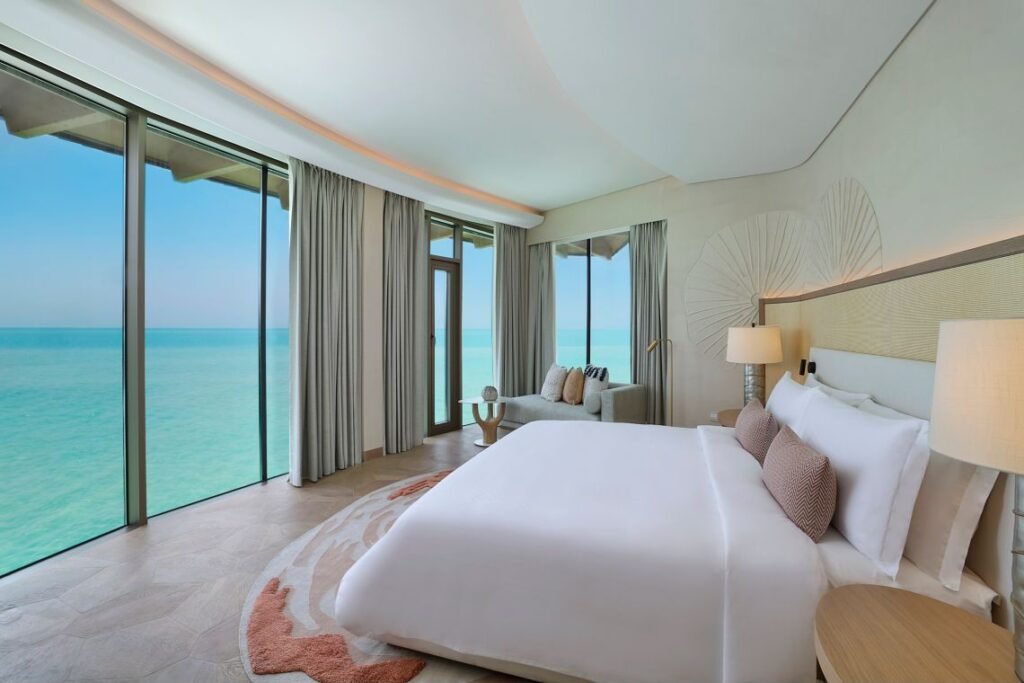
During our stay, we also toured one of the Sunset Coral Villas, the overwater option.
This is the villa category that gets all the glory online, and yes, we can see why. From out here, with the water directly under your deck and surrounding you on all sides, the whole place looks even more wildly photogenic.
But here’s the thing: it’s not a simple “overwater is better” situation.
If you want more privacy, more outdoor space, and beach access, the Dune Villas win.
If you want the iconic overwater fantasy, where you gaze at the sea from every angle and step down a ladder straight into the water, then the Coral Villas are the obvious choice. But you do give up a bit of seclusion and some terrace space.
The coral villas are shaped like sea coral shells, which gives them a more sculptural, futuristic silhouette. Inside, they include the same basics as the dune villas: living room, bedroom, plunge pool, outdoor shower, sundeck.
The living area is clean and elegant, with a sofa, armchair, and flatscreen TV. Huge glass panels give you panoramic water views from nearly everywhere.
The bathroom includes a soaking tub, dual vanity, enclosed toilet chamber, and walk-in shower, while the bedroom makes the absolute most of the overwater position with near-unbroken views of the blue outside.
On the deck, there’s room for loungers, a dining table, and the plunge pool, plus a staircase leading down to a smaller deck with a ladder into the sea.
Both villa types are beautiful. It really comes down to what version of island life you want: private beach hideaway or full overwater fantasy.
Restaurants & Bars
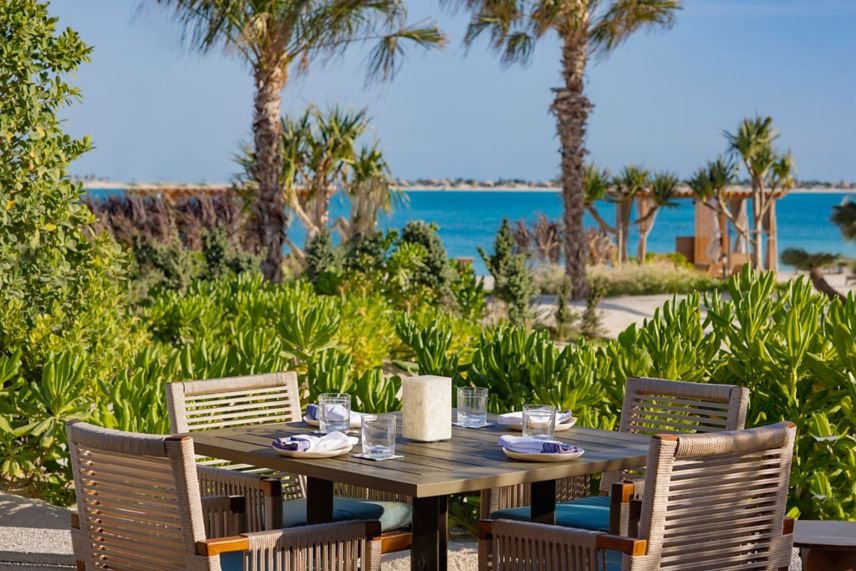
The resort has four dining venues and one bar, plus in-villa dining you can order via your phone through the hotel’s web portal.
And now we must talk about prices, because this is where the fantasy pauses briefly to pick your wallet’s pockets.
Like the Maldives and Bora Bora, this is the kind of private-island setup where food and drink prices are, frankly, outrageous. You are a captive audience and the resort knows it.
To give you an idea:
- burgers hover around $50
- coffee and soda come in around $15
- non-alcoholic cocktails start at about $35
So yes, we adapted accordingly. Breakfast became a strategic operation, and the rest of the day involved sharing dishes and pretending we were being chic rather than budget-conscious.
A useful tip: don’t accept bottled water in restaurants unless you’re happy to pay for it. The exact same water is already waiting in your villa for free.
That said, while the prices are painful, the actual food quality and service are genuinely excellent. Dishes were consistently fresh, flavorful, and beautifully presented, and in many cases the chefs themselves came over to check in.
Nesma Restaurant – Daily Complimentary Breakfast
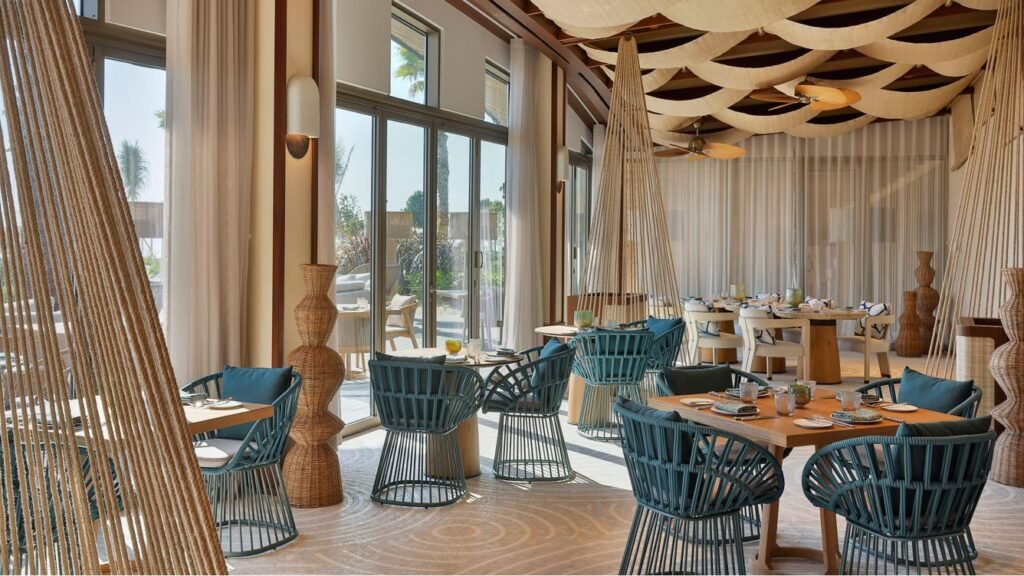
Nesma is the resort’s all-day dining restaurant and the place where breakfast is served every morning from 7:00 AM to 10:30 AM.
On paid stays, breakfast for two is included, which is a blessing because this is one meal you absolutely want to make the most of.
Breakfast at Nesma combines a buffet with an à la carte menu, and many of the dishes lean into Middle Eastern flavors using local Saudi ingredients.
We approached breakfast like professionals. Since it was included, we ordered widely, shared everything, and treated it as our daily opportunity to try as much of the menu as possible.
The buffet had all the usual luxury-resort basics: fruit, pastries, yogurt, nuts, grains, salads, fresh juice, tea, coffee. But the à la carte dishes were where things got really interesting, especially the local egg dishes.
I particularly loved being able to try Saudi-style breakfast items, including the Saudi shakshuka.
And then there was the bread. Staff encouraged us every morning to try the fresh Arabic breads, served piping hot, and they quickly became one of the highlights of breakfast. If you like Middle Eastern food, these alone are enough to put you in a good mood before 9 a.m.
At dinner, Nesma shifts into more of an international menu with Middle Eastern touches. We ate here on our first two nights and, in a noble act of economic self-preservation, shared an entrée and then had one dessert each.
The wagyu ribeye kebab, Red Sea catch, and a particularly memorable black grape and pistachio dessert were all standouts.
The Beach Club at St. Regis
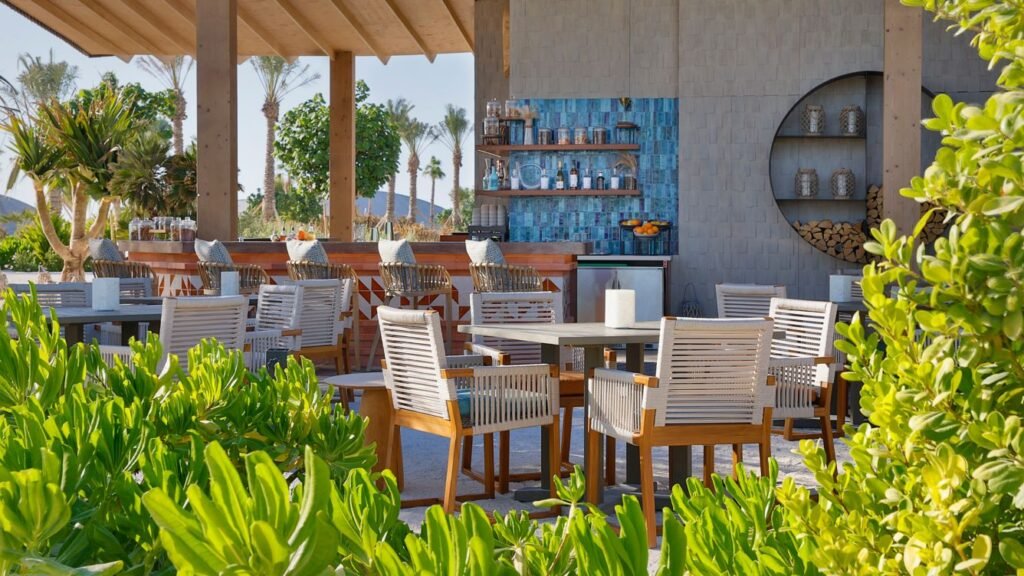
The Beach Club Grill is the casual beachfront spot, serving beachy staples like burgers, tacos, pizza, and other poolside standbys.
This is also where you can really see the resort trying to make the most of its alcohol-free cocktail program. And to be fair, they do a solid job. The drinks are beautifully presented, refreshing, and often more creative than the average mocktail lineup.
That said, some of them still land as very luxurious fruit juice in a fancy glass. And when that fancy fruit juice costs about $35 CAD, you do notice.
Would this stop us from coming back? No. But if you are someone who really values a classic resort cocktail scene, it is something to be aware of.
During the afternoons, we kept things light here, usually sharing appetizers or one small dish. On the recommendation of one of the Italian waiters, who rated the pizza 8 out of 10 for authenticity (bold claim, but we respect the confidence), we gave it a try.
Given how big breakfast was every day, a few shared plates at lunch were more than enough.
Gishiki 45
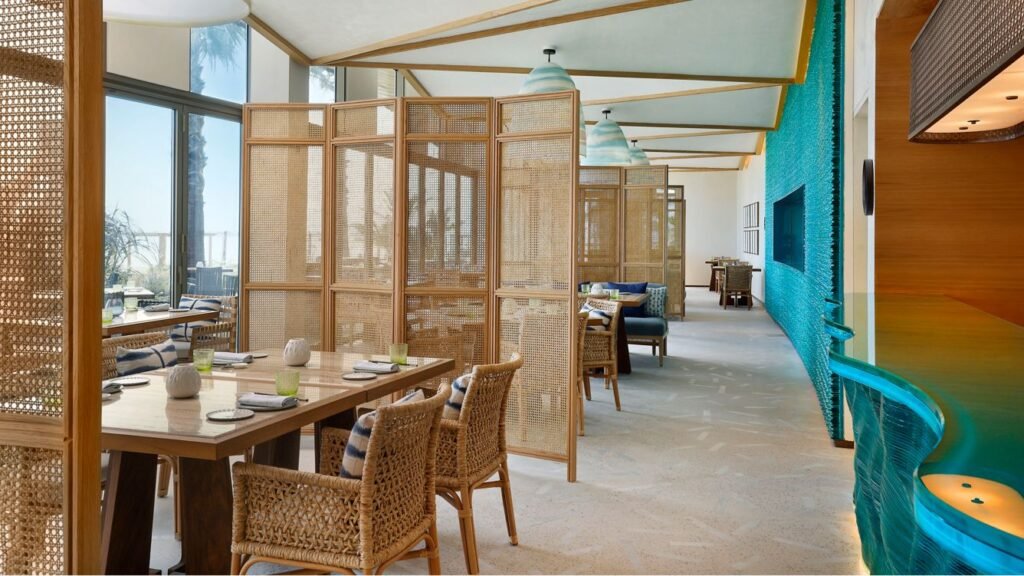
Gishiki 45 ended up being our favorite restaurant on the island.
I’m not usually the first person to get excited about Japanese food, but everything we ate here was excellent. And the service made the whole experience even better. One of the staff members, Sami, took the time to explain the entire menu to us with endless patience, which was especially helpful because we are not exactly Japanese-cuisine experts.
The restaurant has a lovely semi-open-air layout, with seating indoors overlooking the kitchen and outdoors on a terrace.
We ordered a mix of things — gyoza, fried chicken, maki rolls, wagyu striploin — and liked it so much on the first visit that we came back the next night.
The dessert that absolutely stuck with me was the banana chocolate mousse with miso caramel, which was presented like a tiny bonsai tree. Slightly over-the-top? Sure. But also excellent.
After dinner, staff would bring out Saudi coffee, and the manager explained the traditional way it’s prepared, roasted with spices like cardamom and clove and served in small cups, often with dates. It was one of those details that made the resort feel more rooted in place rather than just globally luxurious in a generic way.
The St. Regis Bar
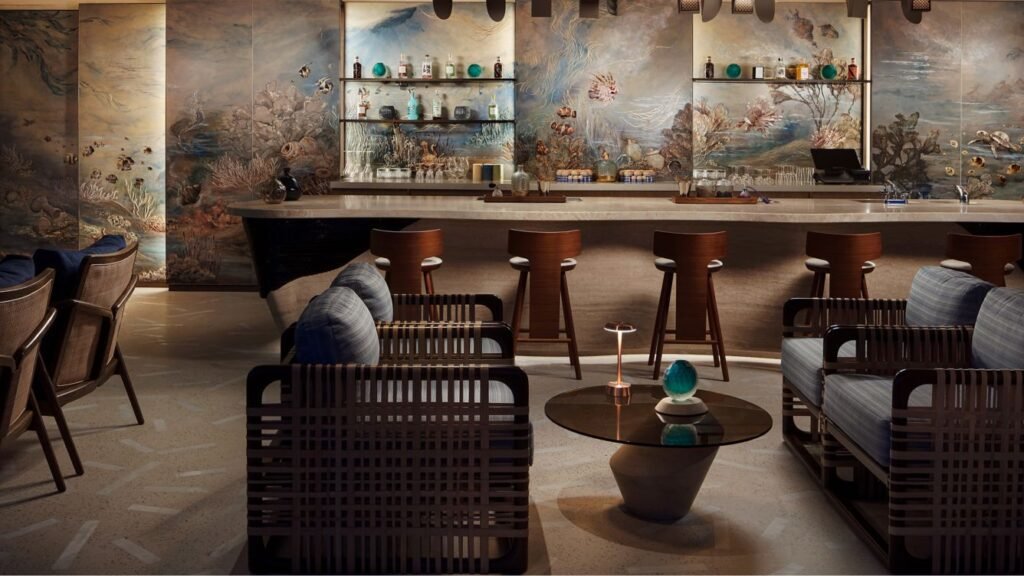
A bar in an alcohol-free country sounds like a joke setup, but the St. Regis Bar actually works.
This is where the evening sabering ritual happens at sunset, except instead of champagne, they serve a non-alcoholic sparkling drink made in Jeddah especially for the resort.
Inside, the atmosphere is easy and relaxed, with high-top seats and armchairs. Outside, there are sofas and lounge chairs set directly on the sand, making it an excellent place to sink into the evening and watch the sky go theatrical.
We ended up here several times before dinner, and while the lack of alcohol is obviously noticeable, the resort does work hard to make the drinks feel special. The creativity and presentation are strong enough that it still feels like a proper ritual rather than a sad compromise.
In conversations with staff, several people mentioned that they believe alcohol may eventually come to some Saudi resorts in the future, especially with the country pushing hard to become a major international tourism destination ahead of events like the 2034 World Cup. That said, this is all speculation for now. Nothing official has been announced.
Tilina
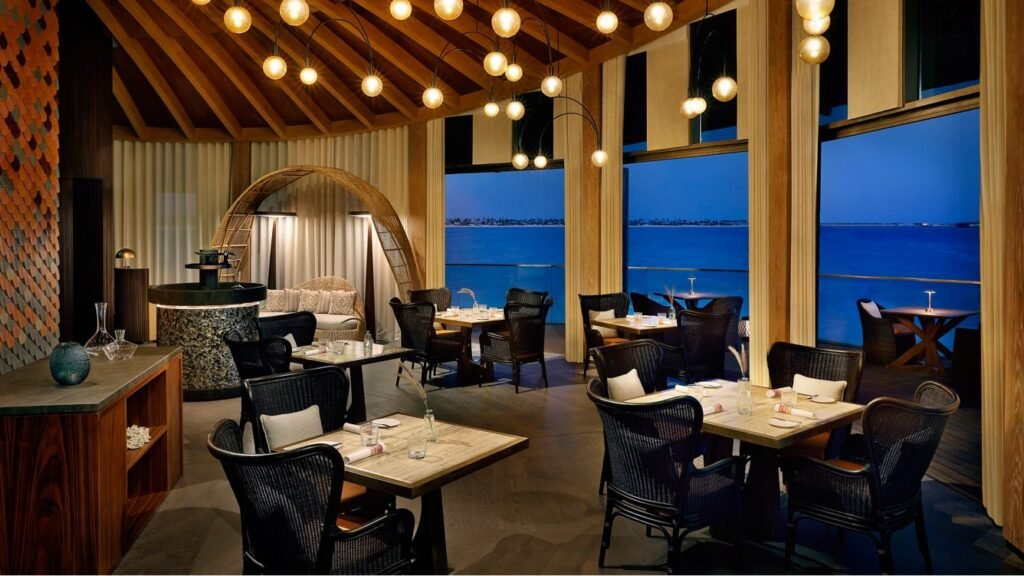
Tilina was the one restaurant we didn’t try, mostly because it wasn’t open during our stay.
Given how low occupancy was, the resort understandably didn’t seem interested in keeping every venue running every night for a handful of guests. Tilina, being the French fine-dining option with a set menu, was closed throughout our visit.
And to be honest, even if it had been open, we probably would have skipped it. We tend to avoid set-menu dining, and considering the pricing at the other restaurants, we can only imagine what Tilina would have done to the bill.
Facilities
Even though you’re on a small private island, there is no shortage of things to do here. Between the gym, spa, beach setup, tennis courts, pools, and water activities, the resort does a good job of making sure you never feel stranded in a “well, now what?” kind of way.
Fitness Center
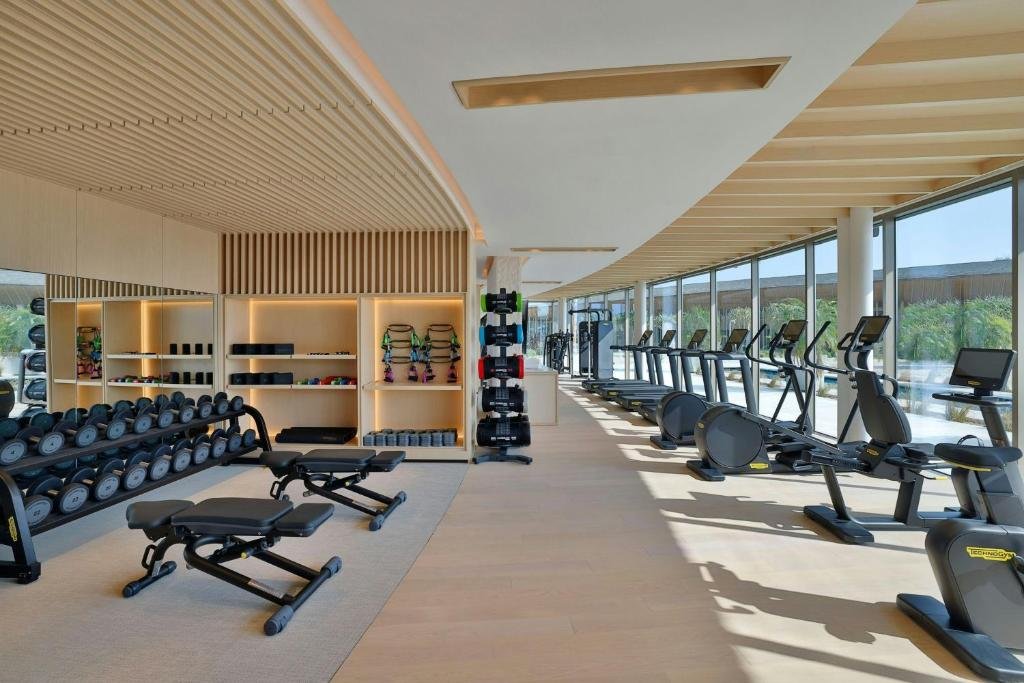
The fitness center here is not just a hotel gym with two treadmills and a sad medicine ball in the corner. It is a full fitness complex, complete with a lap pool, racket courts, and a yoga pavilion.
The gym is open 24 hours, and inside you’ll find bottled water, infused water, and snacks like energy bars and granola bars.
The equipment is excellent, all modern Technogym, with cardio machines, strength equipment, free weights, bodyweight accessories, and a Smith machine.
Right outside is a lap pool, and next door are two tennis courts, with complimentary rackets and balls available.
The last part of the setup is the sunrise yoga pavilion, where the resort appears to run daily complimentary classes.
I went to the gym every morning, and it was one of the best-equipped resort fitness spaces I’ve seen anywhere. Also, true to form, I had it almost entirely to myself.
Pool
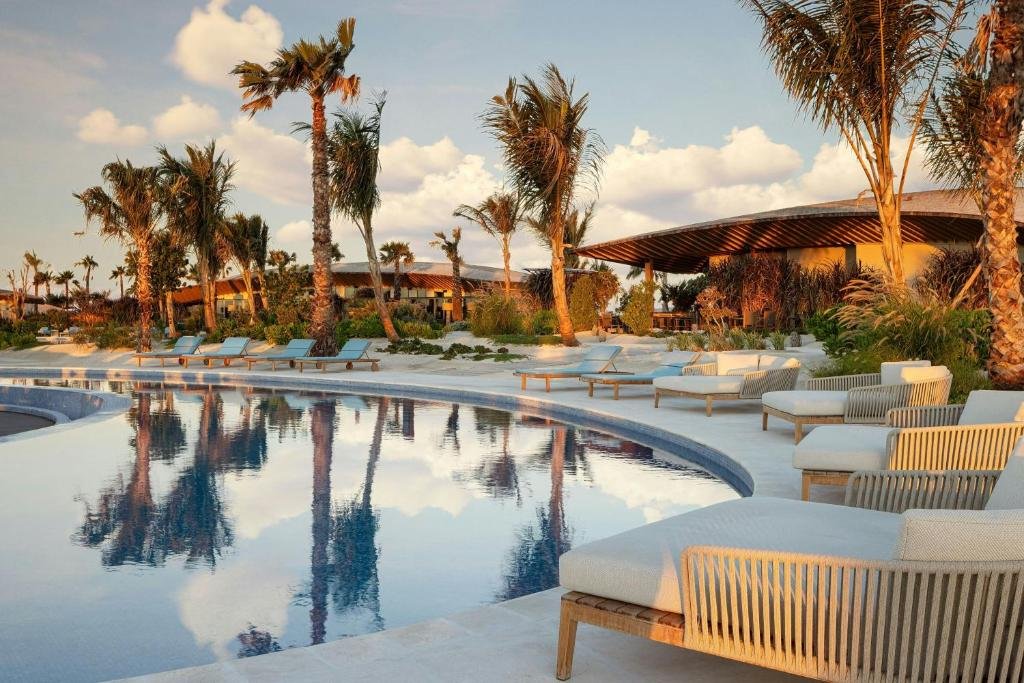
The resort has two public pools on the main beach: one for all ages and one for adults only.
They are lovely, thoughtfully designed, and surrounded by plenty of seating. But here’s the odd thing: they also feel a bit redundant when every villa already has a plunge pool and the sea right outside is so irresistible.
So while the pool area is beautiful, it often sat empty during our stay. One perk, though: the hot tub is located near the adults-only pool if you want a proper soak.
The resort also provides poolside essentials like sunscreen and after-sun lotion, which is a nice, practical touch.
Beach
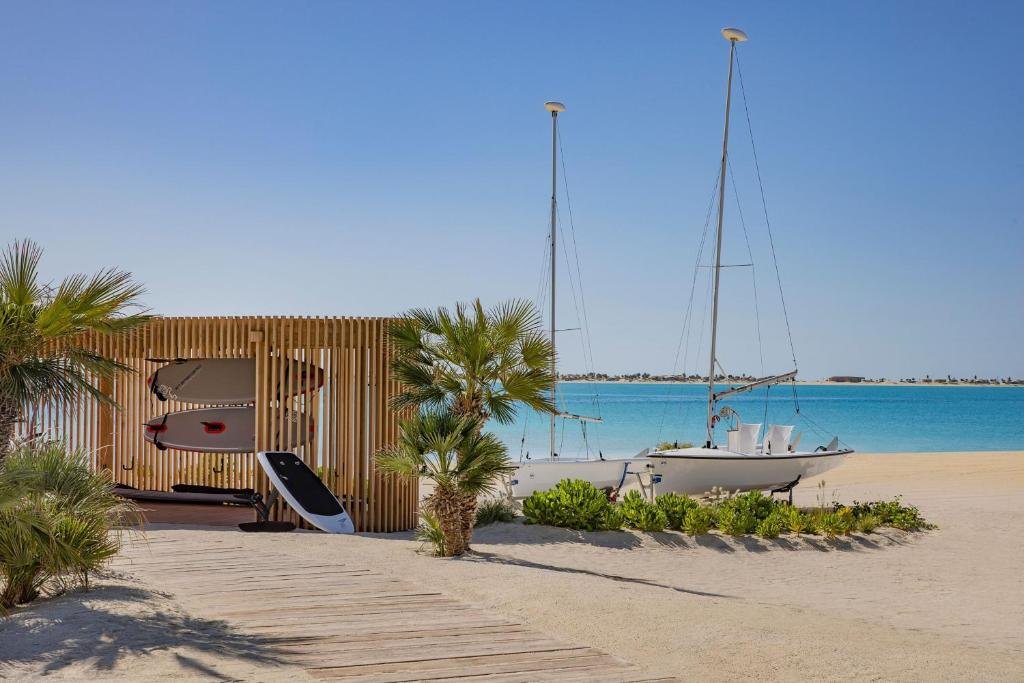
The main public beach is located near the restaurants and pools, on the calmer southwestern side of the island.
Like everything else here, it is immaculate.
Every morning, staff clean the sand using specialized filtering equipment, and the result is beach perfection: soft, spotless sand and crystal-clear water.
Large cabanas with queen-size daybeds line the shore, and each one comes with a ceiling fan, curtains, charging outlets, and plenty of space to sprawl dramatically.
Food and drinks can be delivered directly to your cabana, lounger, or daybed, and there is even a call-attendant button at seating areas, because of course there is.
The spacing between loungers and cabanas is generous too, which helps preserve that sense of privacy.
One detail that really stuck with me: staff would often bring towels right to the water’s edge the moment they noticed someone walking into the sea. Small thing, but very on-brand for the level of attentiveness here.
There are also beach games available, including volleyball and cornhole.
Kids Club
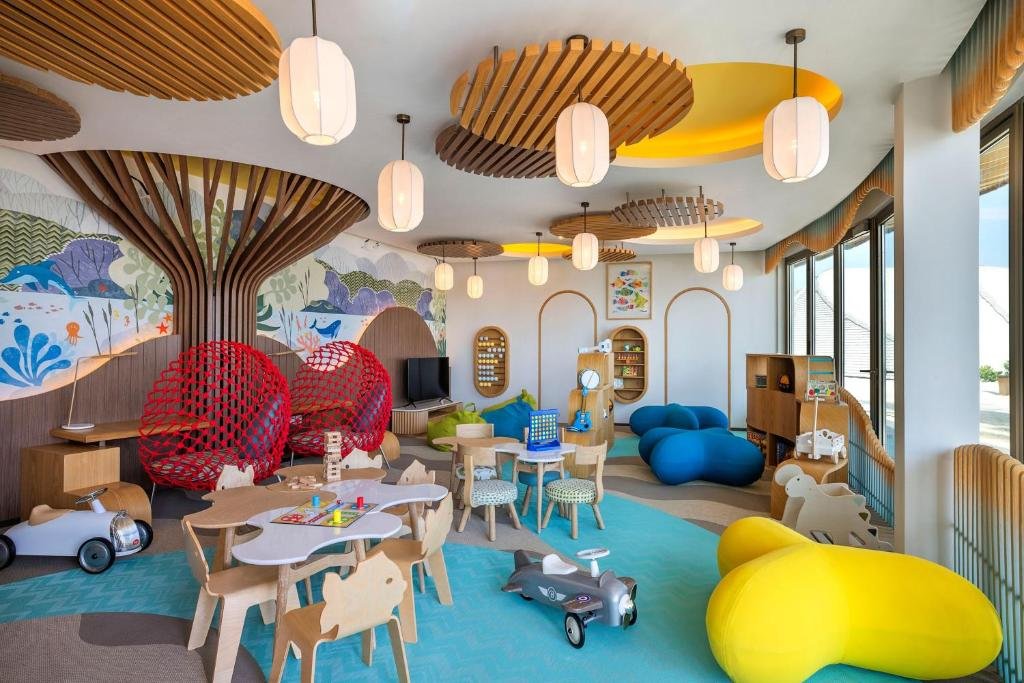
The Kids Club offers babysitting and childcare services, along with an outdoor play area featuring a climbing frame, swings, and a small waterpark.
For families, it’s a genuinely useful addition. This is not the kind of place where you can just wander off-resort for an afternoon distraction.
Spa
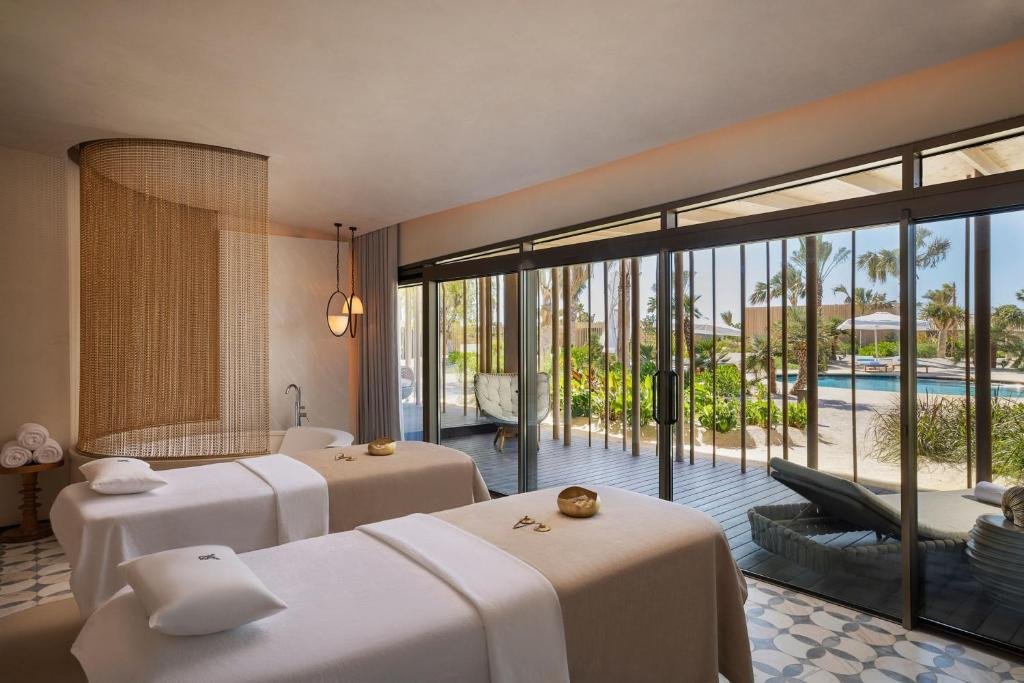
The spa at the St. Regis Red Sea is extensive, and aside from paid treatments, many of the facilities can be used by guests at no additional charge.
The spa is divided into separate male and female sections, each with broadly similar facilities.
There’s also a private salon for haircuts, manicures, pedicures, and other treatments.
The main indoor wellness area includes two hydrotherapy pools and three Sommerhuber heated ceramic loungers, which are exactly as indulgent as they sound.
There’s also a steam room and dry sauna, plus additional outdoor hydrotherapy pools, including a cold plunge and a vitality pool with jets and sprayers infused with essential oils.
In short: if you like spa facilities, this place came prepared.
Activities
The resort offers a decent range of water and desert-based activities.
Some, like kayaking and stargazing, are complimentary. Others are charged either by the hour or as part of a guided excursion.
Available watersports include:
- Stand-up paddleboarding
- Kayaking
- E-Foil
- Windsurfing
- Sailing
- Snorkeling
- Scuba diving
- Seabob
There are also mainland excursions involving hiking, cycling, stargazing, and conservation tours, where guests can learn more about the local desert ecosystem and native flora and fauna.
At our butler’s suggestion, we tried E-Foiling, which neither of us had done before. It was ridiculous fun. Since we were complete beginners, an instructor stayed with us throughout and helped us get the hang of it.
Conclusion
We came away from the St. Regis Red Sea Resort with very little to criticize and a lot to rave about.
The villas are beautiful, the service is exceptional, the food is genuinely strong, and the island itself feels surreal in the best possible way. It is the kind of place where the water looks edited, the beaches feel private, and the staff somehow remember your preferences before you have fully formed them yourself.
At the same time, the Red Sea Project is still in its early chapters. It remains expensive, not especially easy to reach, and nowhere near as established as the Maldives. But maybe that is part of the appeal right now.
Because what you get in exchange is something rare: the chance to experience a destination before it fully arrives. Before the crowds. Before the polish becomes performance. Before paradise starts queueing.
And that, honestly, felt pretty special.
- What to Buy at Khan el Khalili Bazaar (2026): 12 Best Egyptian Souvenirs and Shopping Tips
- What to Wear on a Desert Safari in Dubai in 2026: The Practical Packing Guide

- What to Wear in a Turkish Bath (2026): Ultimate Hammam Dress Code & Massage Etiquette
- 7 Best Family Hotels in Bahrain (2026): From big five-star resorts with mini waterparks to beachfront hotels
- 5 Best Wadis In Oman (2026)