
Travel writing based on first-hand experience
We step onto the ridge at sunrise and Mardin hits us with that honey-stone glow—the kind that makes you forget breakfast and fumble for your camera. You’re looking down over the Mesopotamian plain; call to prayer floats up; someone hands you tea like it’s a sacred rite. This isn’t a “one photo and go” town—it’s a maze of vaulted lanes, monastery bells, rooftop terraces, and kitchens slow-cooking legends (hello, kaburga dolması). In this guide, we show you exactly what to do in Mardin: the must-see medreses and mosque courtyards, the half-day out to Dara Ancient City, easy day trips to Midyat, where to chase the best views, and which cafés to use as stair-climb pit stops. You’ll get simple logistics (dolmuş vs. taxi, airport shuttle, where to stay for views vs. easy parking) and our tight list of eats so you can spend your golden hours on rooftops—not on guesswork.
Table of Contents
Getting Around Mardin
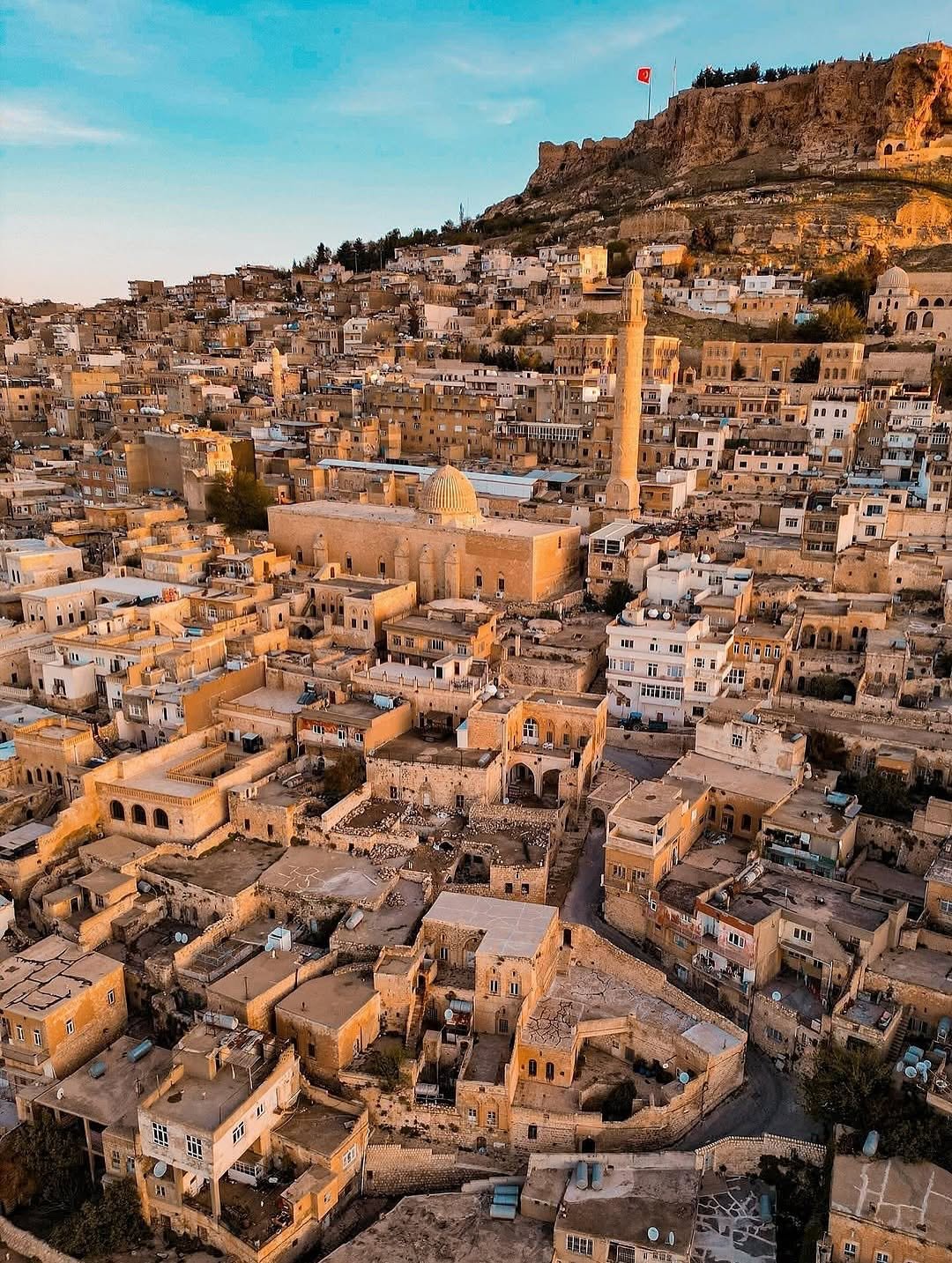
Mardin works like two places stacked together: the Old Town (Eski Mardin) on the ridge and the New Town (Yenişehir/Artuklu) below. You’ll walk in the old town and use vehicles to move between the two.
On Foot (Old Town)
Old Mardin is best on foot. Streets are narrow, many lanes are stepped, and cars can’t reach lots of spots. Wear good shoes and plan for hills.
Pro tip: Go early morning or late afternoon for cooler temps and softer light.
Dolmuş (Minibuses) Old ↔ New
Frequent dolmuş minibuses connect the old town with the new town. They’re cheap, quick, and easy to flag at signed stops (pay the driver in small cash). This is the simplest way to avoid the long uphill/downhill walk.
Taxis
Taxis are useful when you have luggage or it’s late. Ask for the meter or agree on a price before you start. Rides between hilltop hotels and new-town restaurants are short and affordable.
Airport to City
The Havaş shuttle runs from Mardin Airport (MQM) to the new town. From there, take a short taxi or dolmuş up to the old town. It’s the most stress-free option if you’re carrying bags.
Intercity & Day Trips
- Midyat: Regular buses; about an hour. Nice for stone houses and nearby monasteries.
- Kızıltepe: Frequent buses from the Mardin bus station; quick trip.
- Dara / Hasankeyf: Easiest by taxi hire or rental car for flexible timing.
Pro tip: If you liked open-air archaeological sites elsewhere in Türkiye, add Dara—it’s impressive and usually less crowded.
Driving & Parking
Driving around the region is straightforward. Driving in old Mardin is not—streets are tight and many are pedestrian-only. Park in the new town and switch to a taxi or dolmuş to reach the ridge.
What To Do in Mardin: Places to Visit
1) Historical Mardin Houses
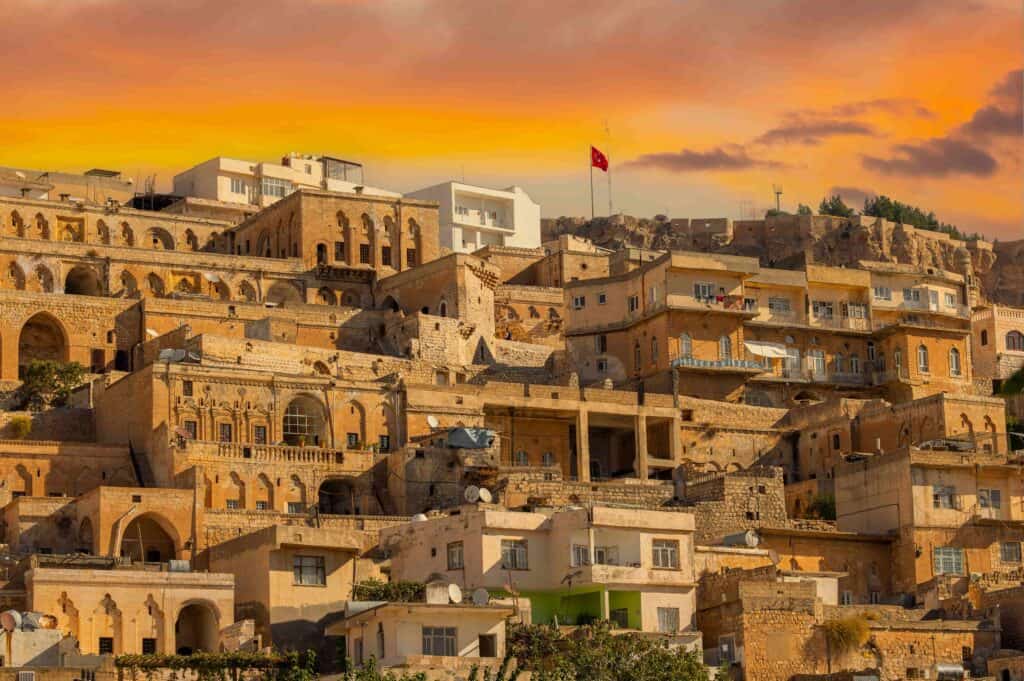
The Historic Mardin Houses, declared an urban protected area in 1979, are among the city’s must-see attractions. Constructed using the abundant yellow limestone found in the region, the houses boast high ceilings to protect against the cold in winter and the heat in summer. Built with terraces overlooking the surrounding area, the Historic Mardin Houses captivate visitors with their picture-postcard beauty.
Historical Mardin Houses location
2) Mardin Streets
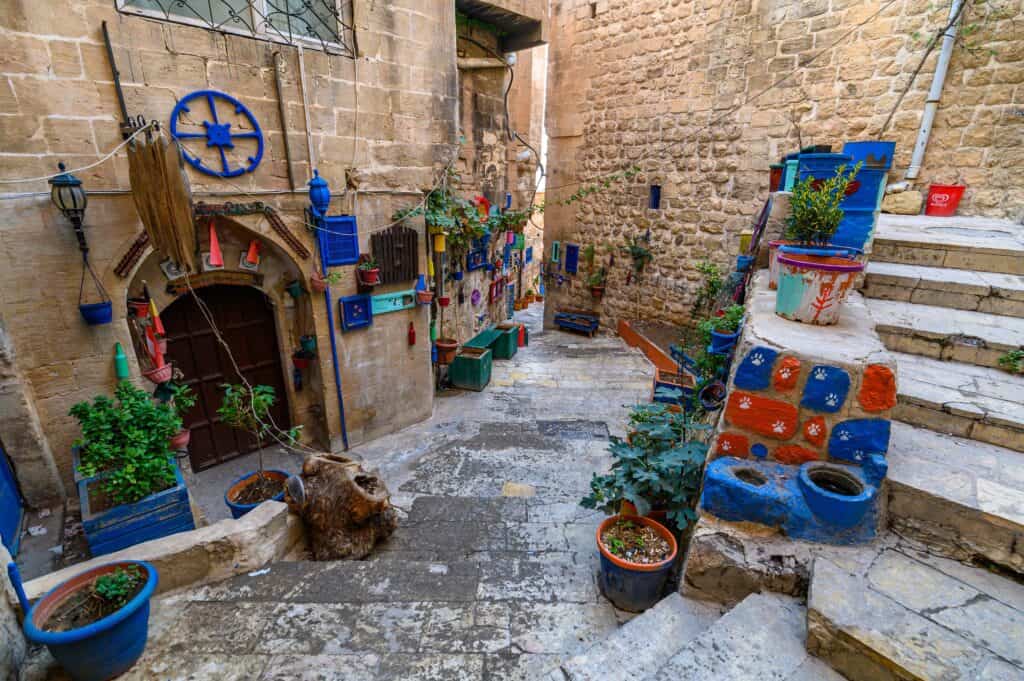
The streets between Mardin’s houses offer a brief journey through time, steeped in history. If you’d like to explore Mardin more, we recommend exploring its narrow, winding streets. You’ll encounter many gems. Don’t forget to capture the beauty of Mardin’s streets and take photos!
3) Mardin Castle
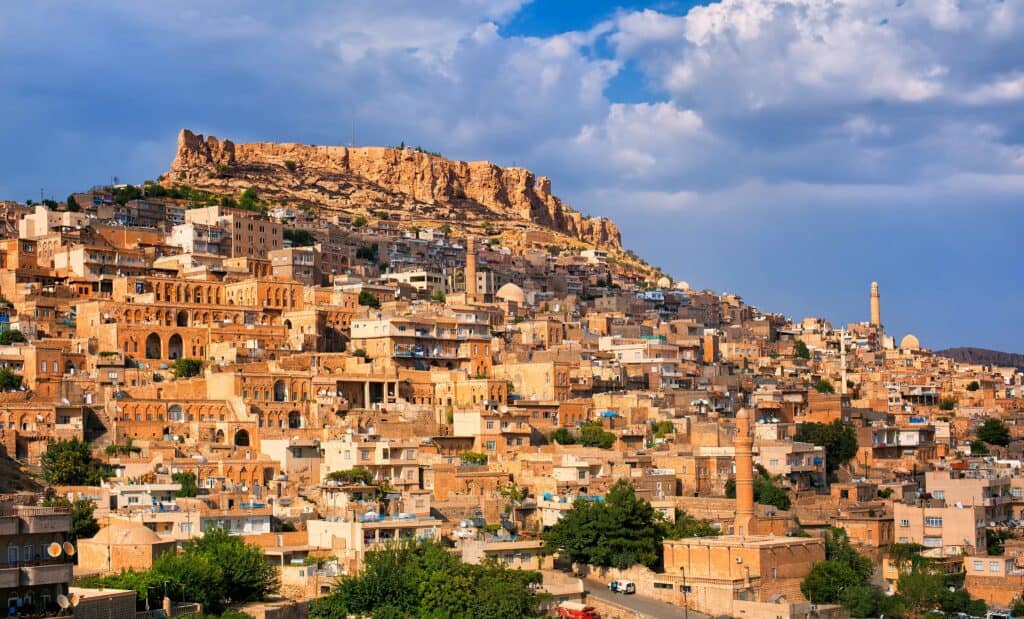
Mardin Castle, also known as the Eagle’s Nest, was built by the Hamdanids in the 10th century. Situated on a hill overlooking Mardin, Mardin Castle is located in the city center. It has been used by numerous civilisations throughout history.
4) Dara Ancient City
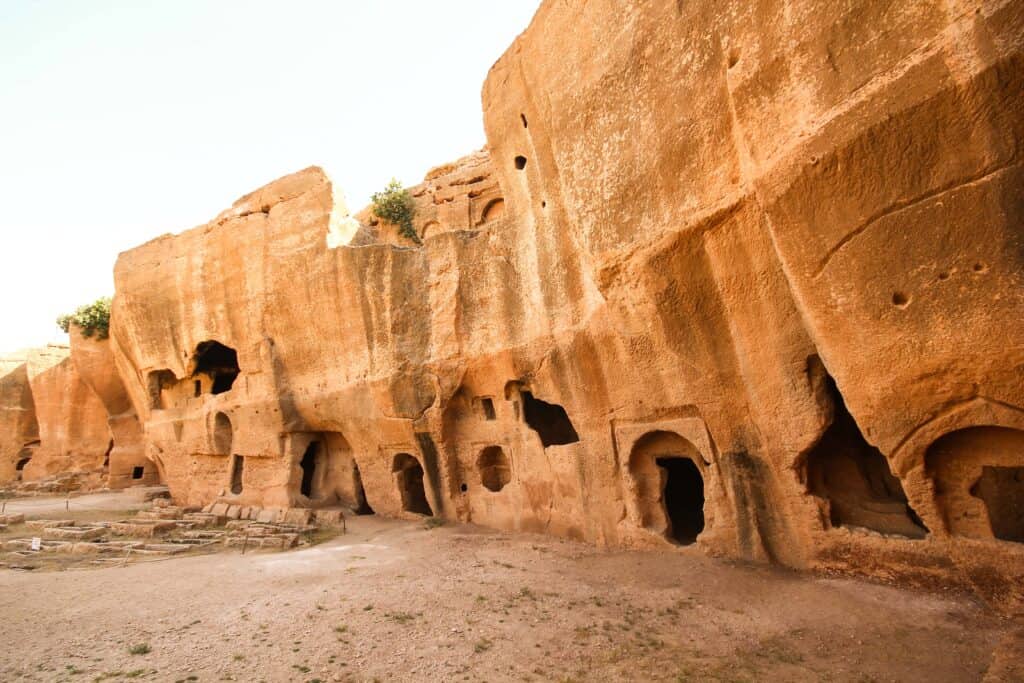
The ancient city of Dara, located in the village of Oğuz, 30 kilometers southeast of Mardin, is historically considered one of the most important settlements in Upper Mesopotamia. Founded in 505 at the initiative of Emperor Anastasius as a military garrison city to protect the Eastern Roman Empire’s eastern border against the Sassanids, Dara was a fortified city.
The ancient city, comprised of structures carved into the rock, is thought to be named after the Persian King Darius. Open every day of the week from 10:00 AM to 7:00 PM, Dara Ancient City is free to visit. For more information about Dara Ancient City, a top historical site in Mardin, we recommend reading our related article.
Author’s note: We recommend spending at least 2 hours visiting the ancient city of Dara. You can also explore the areas where impressive structures, such as the underground water cistern, are located.
5) Grand Mosque
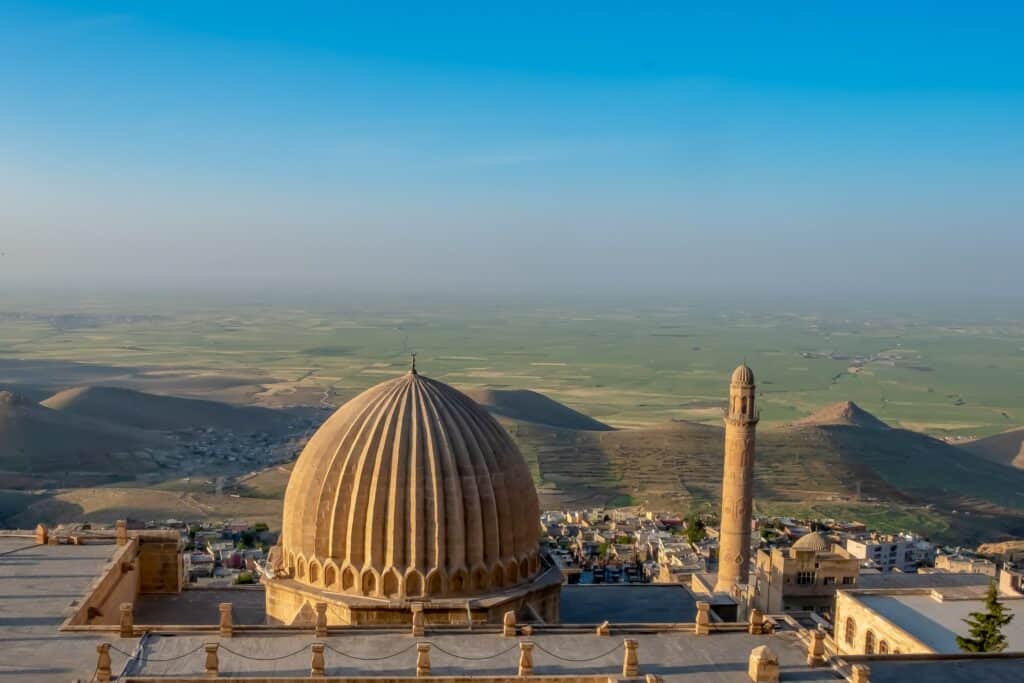
One of the city’s symbols, the Ulu Mosque, reflects the architectural features of the Artuqid period. Located in the heart of Mardin, the Ulu Mosque, with its segmented dome and minaret, stands out. Consisting of a courtyard, a fountain, and a Sakal-ı Şerif (Sakal-ı Şerif) section, the Ulu Mosque is considered the city’s oldest mosque. Don’t leave Mardin without seeing the Ulu Mosque, one of Mardin’s must-see attractions.
6) Zinciriye (İsa Bey) Madrasa
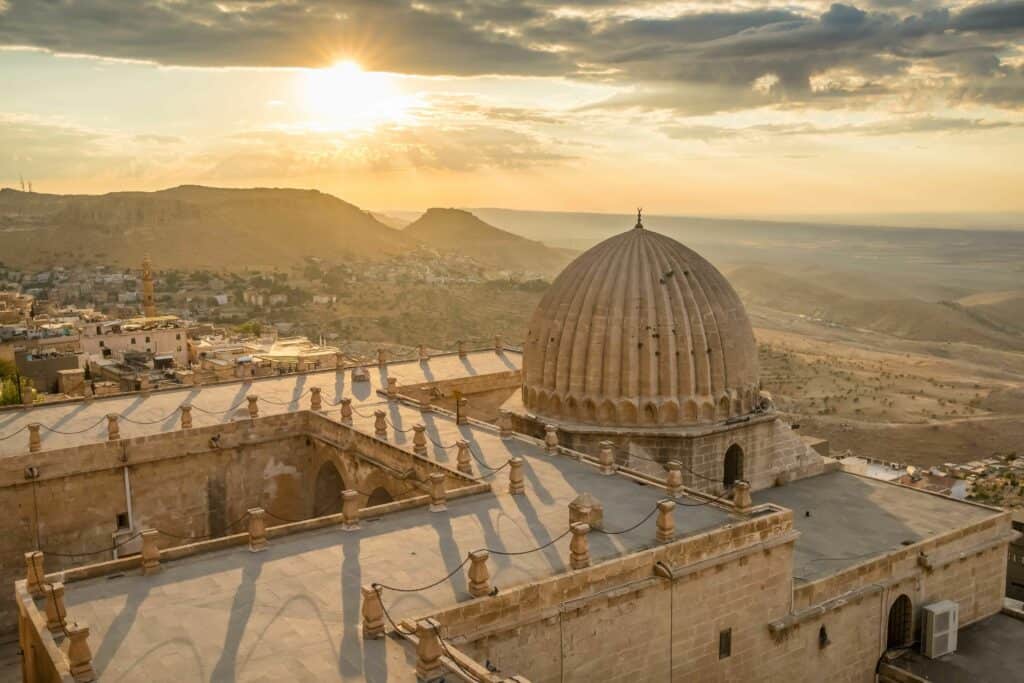
Zinciriye Madrasa, also known as Sultan İsa Madrasa, was built in 1385 by Melik Necmettin İsa bin Muzaffer Davud bin El Malik Salih, the last Artuqid Sultan to reign in Mardin. The Zincirli Madrasa, a rectangular structure covering a large area, comprises two floors, a courtyard, a mosque, a tomb, and various additional spaces. The dome with muqarnas squinches in the centre of the mosque, located south of the corridor, impresses visitors with its impressive appearance.
Location of Zinciriye (İsa Bey) Madrasa
Zinciriye (İsa Bey) Madrasa entrance fee
- Entrance fee: 40 TL
7) Deyrulzafaran Monastery
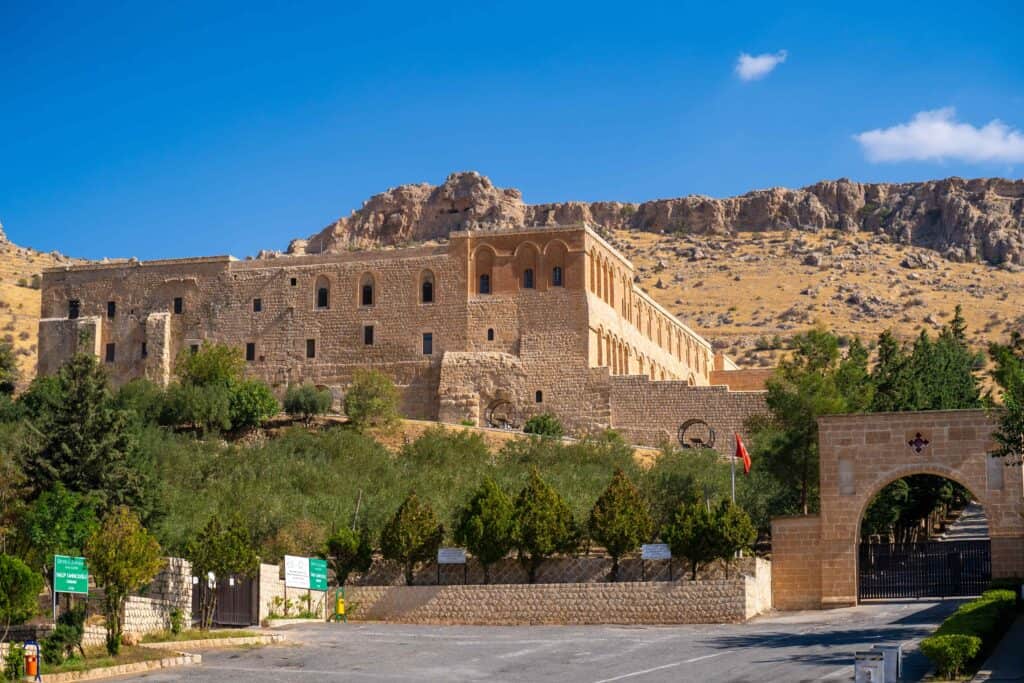
Deyrulzafaran Monastery, located 3 kilometers east of Mardin, is an important center for the Syriac Christians. Built in the 5th century as a Syriac monastery, Deyrulzafaran was included on UNESCO’s Tentative World Heritage List in 2021.
The Deyrulzafaran Monastery contains essential structures, including the Mor Hananyo Church (Domed Church), the House of Saints (Beth Kadishé), the Church of the Virgin Mary, and the Sun Temple. Known as the Deyrulzafaran Monastery because of the saffron plant that grows around it, the structure contains the tombs of 52 Syriac patriarchs.
Deyrulzafaran Monastery location
Deyrulzafaran Monastery entrance fee
- Full entrance fee: 140 TL
- Discounted entrance fee: 70 TL
- The Museum Card is not valid in the monastery.
Author’s note: Visiting hours for the monastery are 08:30 to 12:00 in the summer and 13:30 to 18:00 , while the closing time changes to 16:30 in the winter.
8) Revaklı Bazaar
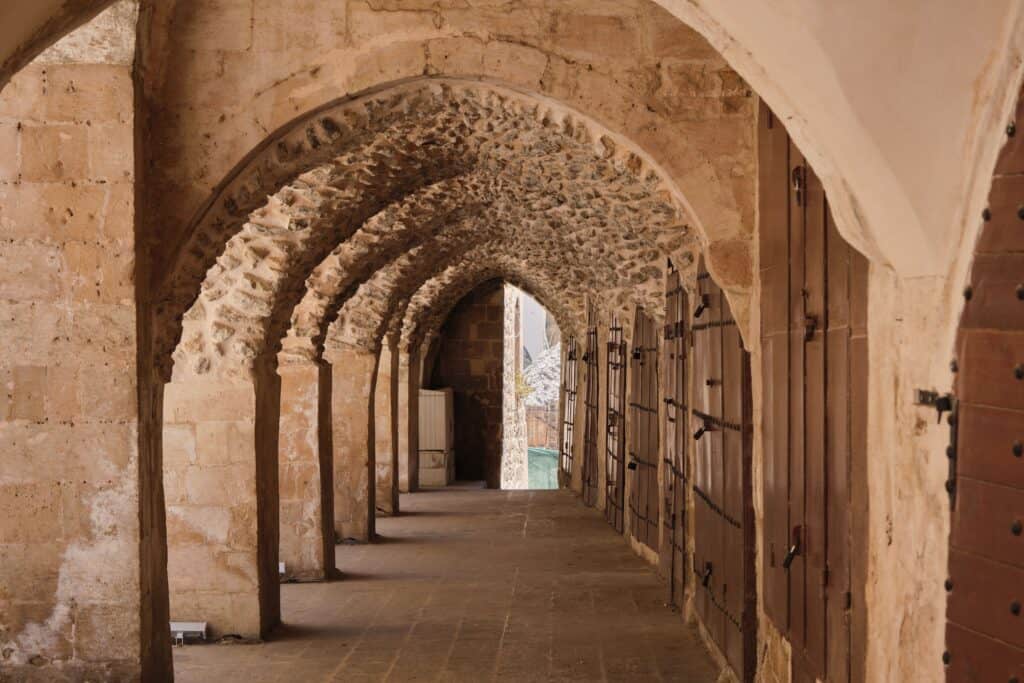
Dating back to the 17th century, Revaklı Bazaar is also known as Sipahiler Bazaar and Tellallar Bazaar. Consisting of porticoes on either side of the road and a row of deep shops behind them, Revaklı Bazaar was constructed using cut stone. Located 150 meters east of the Ulu Mosque in the city center, Revaklı Bazaar is a great place to find souvenirs for yourself and your loved ones.
Author’s note: While wandering around Revaklı Bazaar, be sure to stop by the Marangozlar Kahvesi (Marangozlar Kahvesi). After a coffee break in this historic venue, you’ll also want to keep in mind that you can take some fantastic photos, especially of the Mesopotamian views, in the market’s columned structure.
9) Kasımiye Madrasa
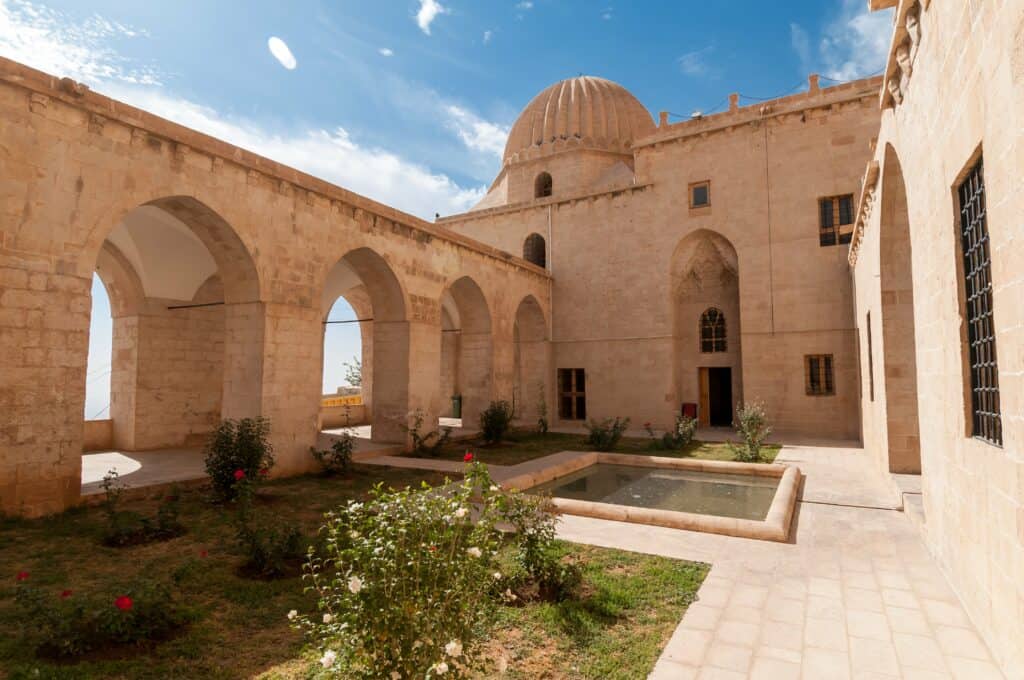
Construction of the Kasımiye Madrasa, begun during the Artuqid period, was left unfinished due to Mongol attacks during the Timurid era. Therefore, the madrasa, completed in the late 15th century during the reign of the Akkoyunlu Sultan Kasım ibn Cihangir, is considered one of the most significant structures in Mardin. Similar in appearance to the Zinciriye Madrasa, the Kasımiye Madrasa houses two mosques, a tomb, and a fountain.
Visiting hours of the madrasah are between 08:30 and 19:00 in the summer and 08:30 and 17:30 in the winter.
Kasımiye Madrasa entrance fee
- Entrance fee: 50 TL
- Entry is free for people under 12, over 65, relatives of martyrs and veterans, and disabled individuals.
10) Mardin Museum
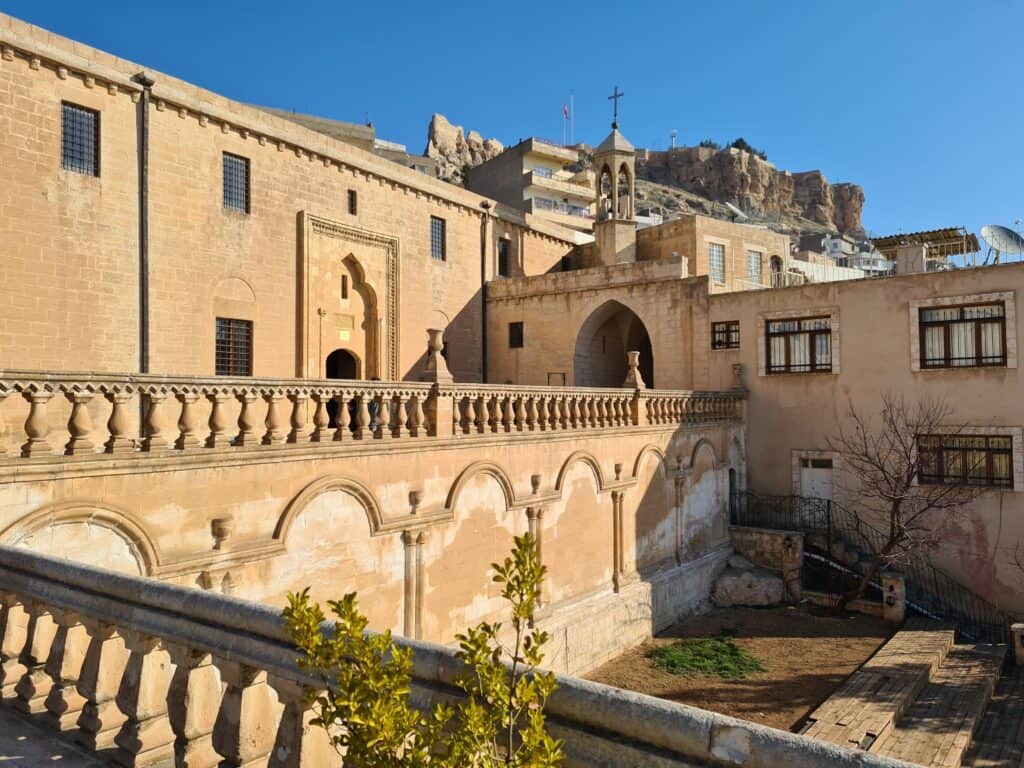
Housed in a former Syriac Catholic Patriarchate, the Mardin Museum impresses visitors with its collection of over forty-five thousand items. The museum displays historical artefacts from the Bronze Age, Assyrian, Urartian, Hellenistic, Achaemenid, Roman, Byzantine, Seljuk, Artuqid, and Ottoman periods.
Mardin Museum is open six days a week except Mondays and can be visited between 08:00 and 16:30.
Mardin Museum entrance fee
- The museum can be visited free of charge with the Museum Card.
- Entry fee without Museum Card: 100 TL
- Student entrance without Museum Card: 25 TL
Author’s note: After visiting the Mardin Museum, you can take a walk in Cumhuriyet Square and take a short break at the surrounding cafes.
11) Church of the Virgin Mary and Patriarchate
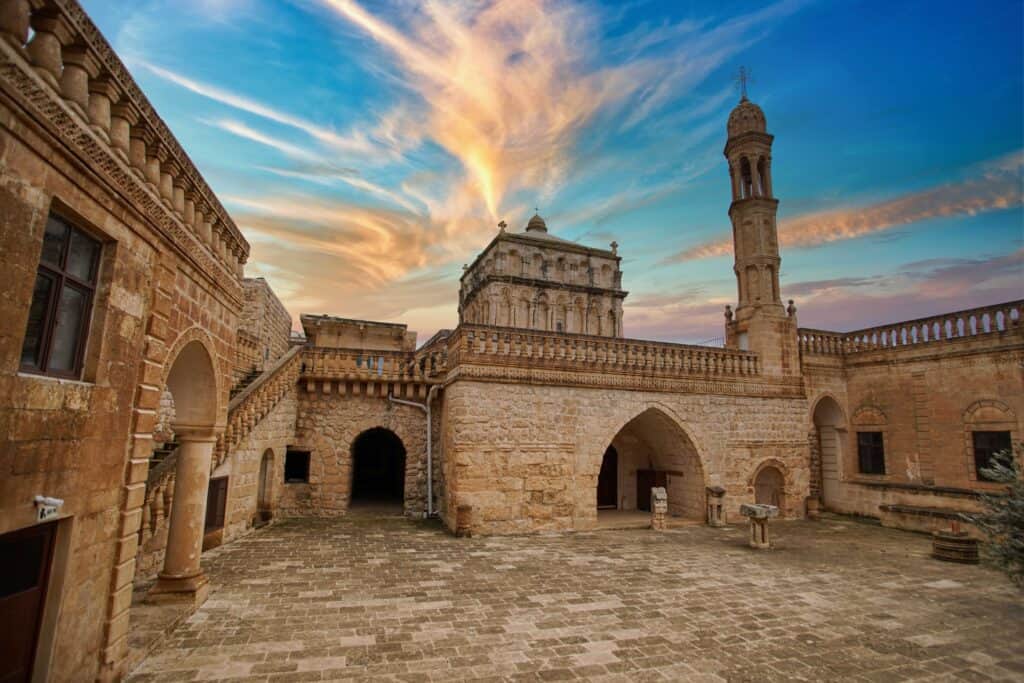
The Church of the Virgin Mary and its Patriarchate in Cumhuriyet Square are Syriac Catholic religious buildings. The Church was commissioned in 1986 by the Patriarch of Antioch, Ignatios Antuhan Semheri. The Patriarchate, built in 1895, now serves as the Mardin Museum, as described above. The Church of the Virgin Mary, adjacent to the museum, features an arch, rounded stone columns, and a courtyard with railings.
Location of the Church of the Virgin Mary and the Patriarchate
12) Forty (Mor Behnam) Church
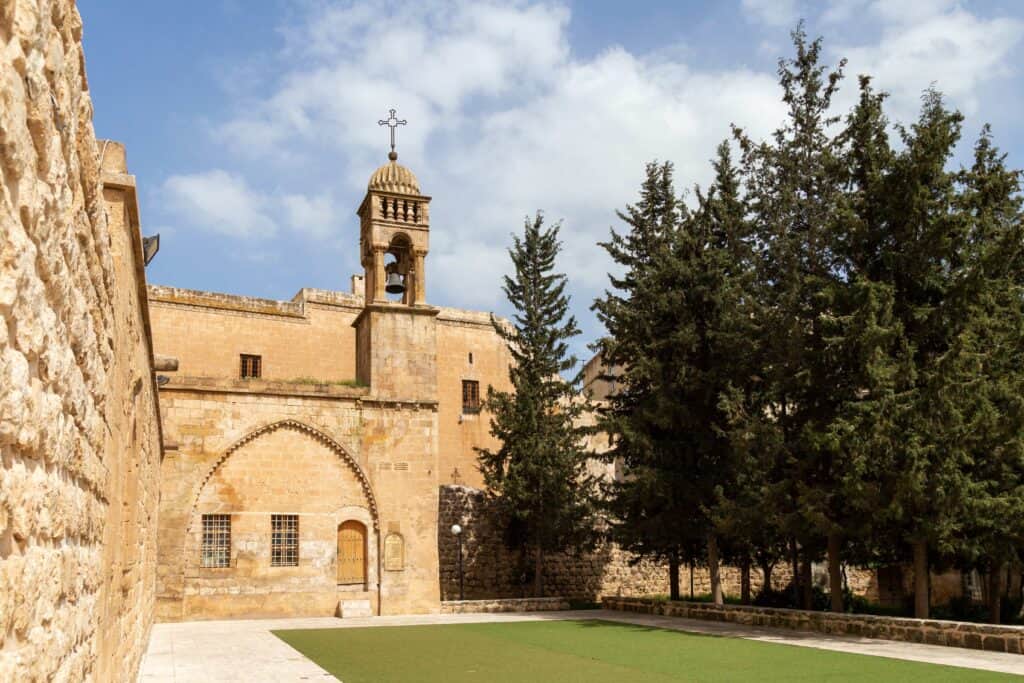
Built in 569 in Mardin, the Church of the Forty Saints is a Syriac church. Formerly known as the Mor Behnam Church, the structure was converted into a mosque in the 12th century and renamed “Kırklar Church.” Built in honour of Mor Behnam and his sister Saro, the church’s detailed stonework is a standout. The Church of the Forty Saints features three entrances, including finely crafted altars, four-hundred-year-old wooden altar doors, 1,500-year-old natural dye-printed curtains, a bell tower house within a spacious courtyard, and lacework-like stone carvings.
Location of the Kırklar (Mor Behnam) Church
13) Sakıp Sabancı Mardin City Museum
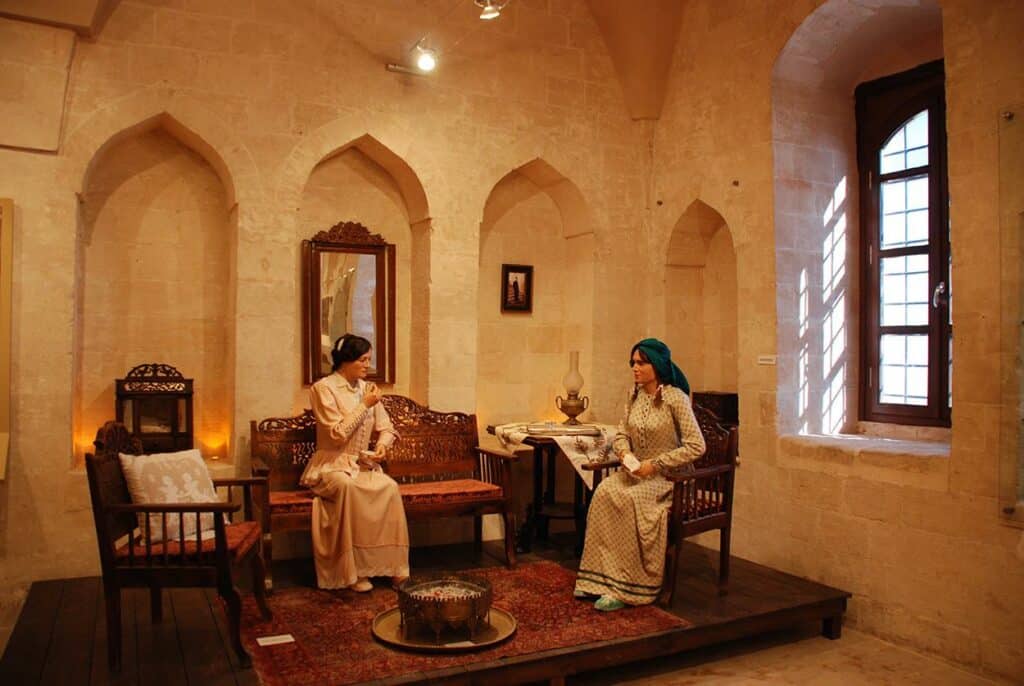
Located in the old Cumhuriyet Square in the Savurkapı neighborhood of Mardin, the Sakıp Sabancı Mardin City Museum opened to the public in 2009. Housed in a building formerly used as the Cavalry Barracks and Tax Office, the museum exhibits artifacts from the crafts, living spaces, social life, and city history that shape the city’s identity.
Sakıp Sabancı Mardin City Museum is open to visitors between 09:00 and 17:00, except on Mondays.
Sakıp Sabancı Mardin City Museum location
Sakıp Sabancı Mardin City Museum entrance fee
- Full entrance fee: 100 TL
- Student entrance fee: 50 TL
- Museum Card is not valid.
- Sakıp Sabancı Mardin City Museum is free on Wednesdays.
14) Mardin Whitewater Stream
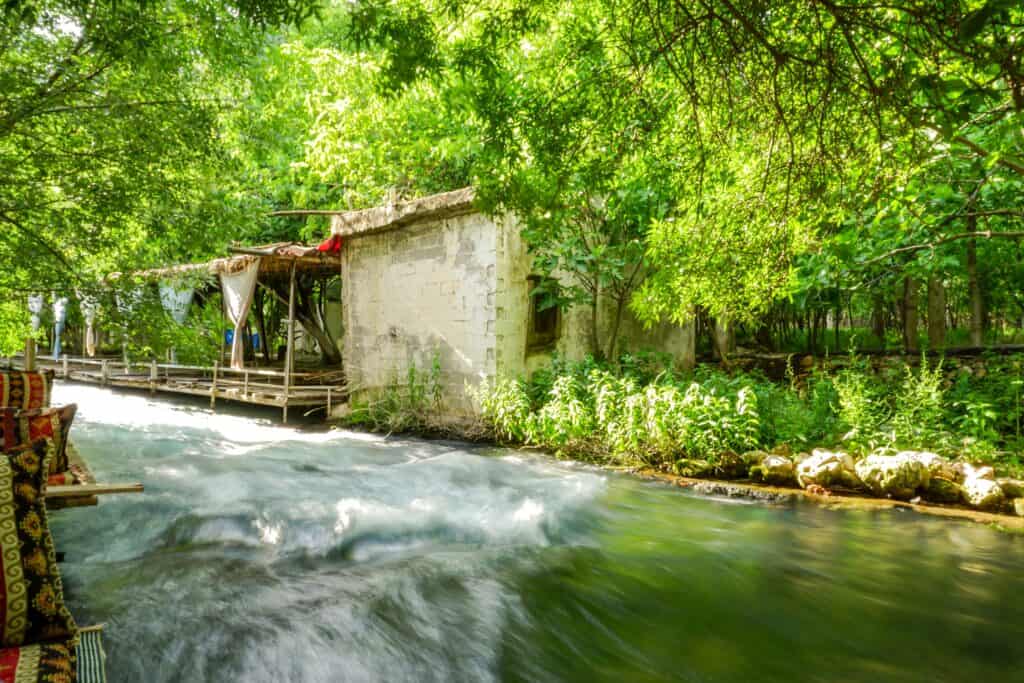
One of Mardin’s natural wonders, Beyazsu Creek, originates from the foothills of the plateaus and hills south of Midyat and flows through a valley toward Nusaybin. Located 20 kilometers south of Midyat and 25 kilometers north of Nusaybin, Beyazsu is located on the highway connecting the two districts.
Beyazsu Creek, which supplies Mardin with water, is used for recreation and dining during the summer months. Fisherman’s restaurants along the Beyazsu River serve fresh fish from the river.
15) Latifiye (Abdullatif) Mosque
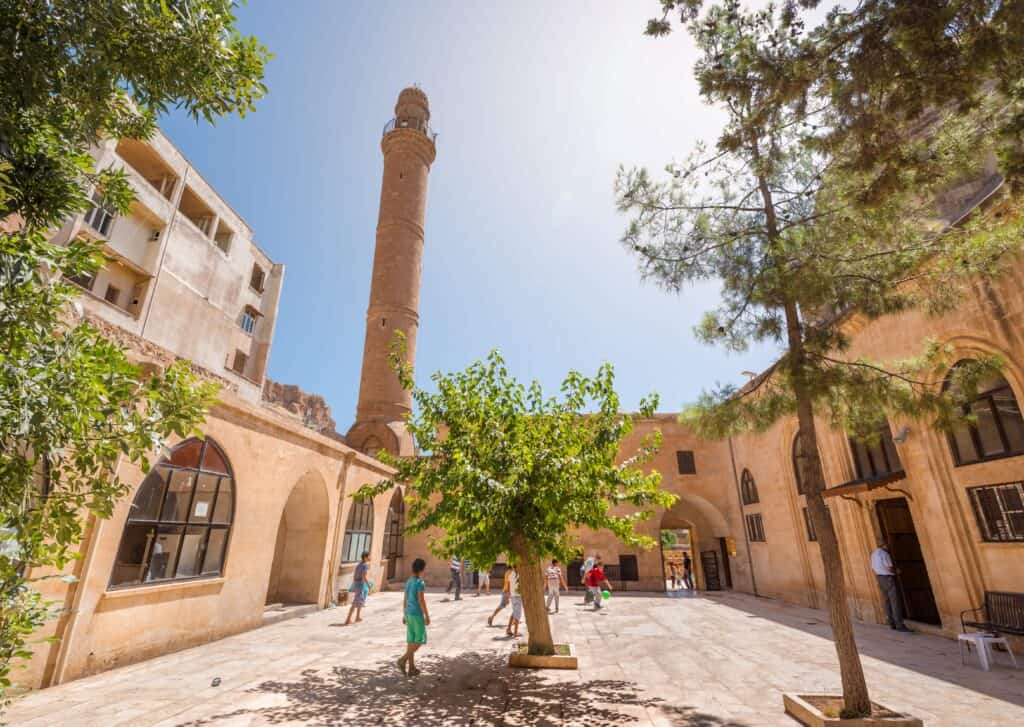
Commonly known as the Latifiye Mosque, the Abdüllatif Mosque was built in 1371 by Abdüllatif bin Abdullah, who served during the reigns of the Artuqid sultans Malik Salih and Malik Muzaffer. One of the last Artuqid structures in Mardin, the Abdüllatif Mosque’s minaret was first built by the Governor of Egypt, Muhammed Ziya Tayyar Pasha. The mosque’s current minaret was built in 1845 by the Governor of Mosul, Gürcü Mehmet Pasha. Located in the southern part of the Republic Square, the Abdüllatif Mosque is one of Mardin’s must-see destinations, boasting authentic examples of late-period Seljuk woodwork at its entrances.
Latifiye (Abdullatif) Mosque location
16) Tur Abdin Plateau
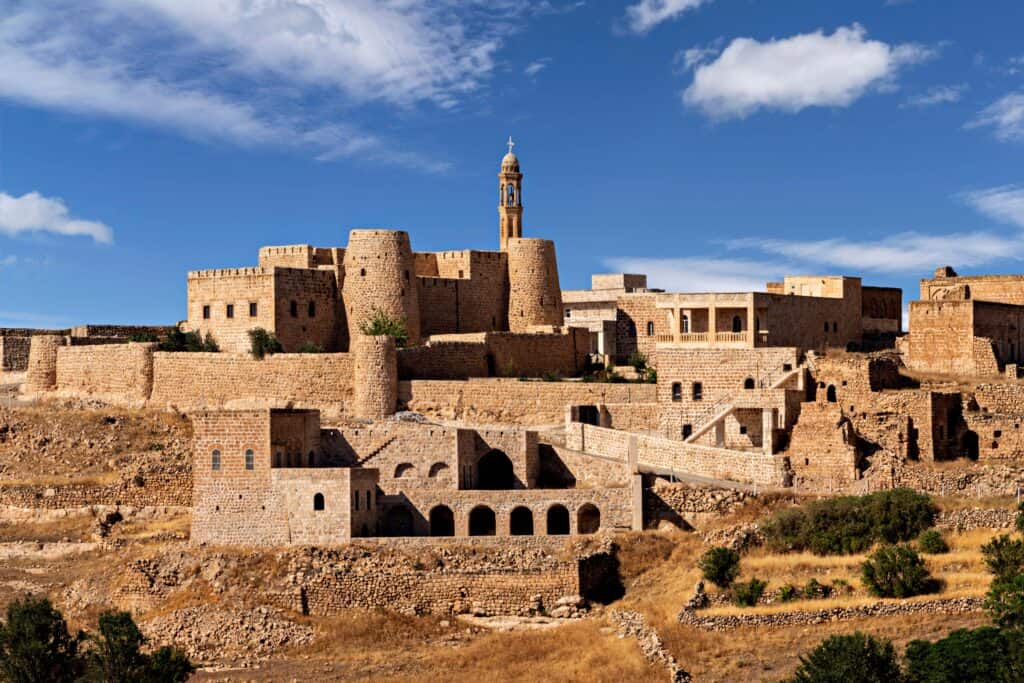
Tur Abdin, a hilly region encompassing Midyat and its surroundings, means “Mountain of Servants” in Syriac. Declared sacred by the Syriac people, the Tur Abdin Plateau is located 30 kilometers southeast of Mardin and 9 kilometers east of the Mardin-Nusaybin road (the historical Silk Road). An important religious and cultural center for the Syriac Orthodox community, the Tur Abdin Plateau houses the Mor Gabriel Monastery (Deyrulumur), the oldest surviving Syriac Orthodox monastery. In this section, we would like to point out that the word “mor” means “saint” in Syriac, so that the rest of this article will be more meaningful to you.
17) Mor Gabriel Monastery (Deyrulumur)
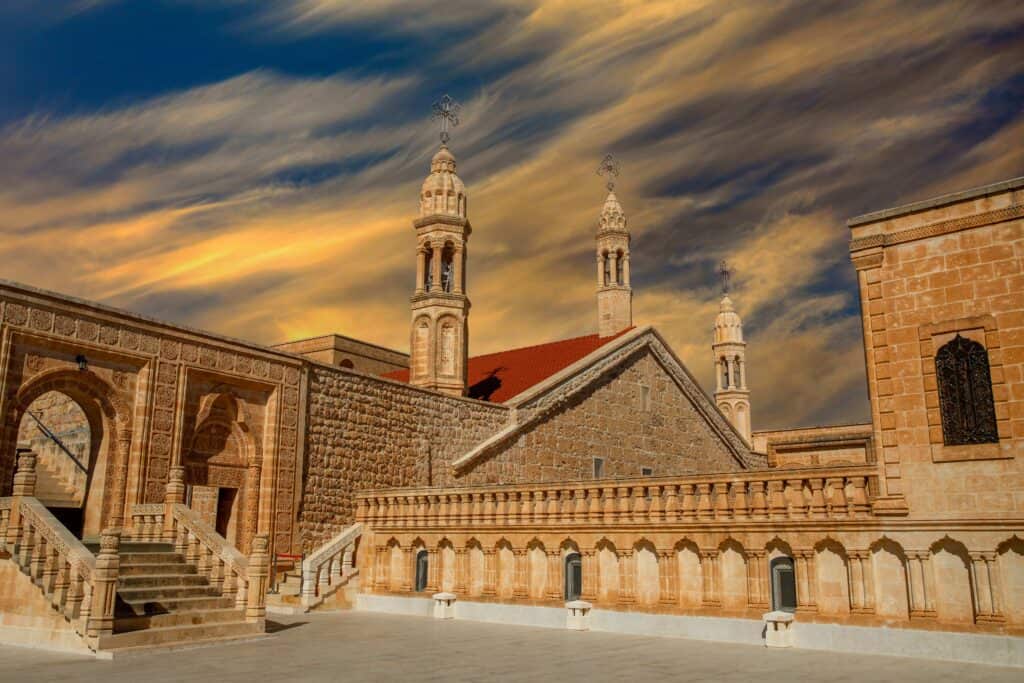
Located 23 kilometers southeast of Midyat, the Mor Gabriel Monastery, also known as Deyrulumur, means “Abode of the Monks.” The oldest surviving Syriac Orthodox monastery in the world, Deyrulumur, was added to the UNESCO World Heritage Tentative List in 2021.
The Mor Gabriel Monastery on the Tur Abdin Plateau was built in 397 by Mor Samuel and his student Mor Simon on the ruins of a Zoroastrian temple. The religious structure, which takes its current name from Mor Gabriel, the Metropolitan of Tur Abdin at the time, is among the historical sites to visit in Mardin.
Mor Gabriel Monastery (Deyrulumur) location
Mor Gabriel Monastery (Deyrulumur) entrance fee
- The Museum Pass is not valid in the Mor Gabriel Monastery.
- Entrance fee: 150 TL
18) Midyat Caves
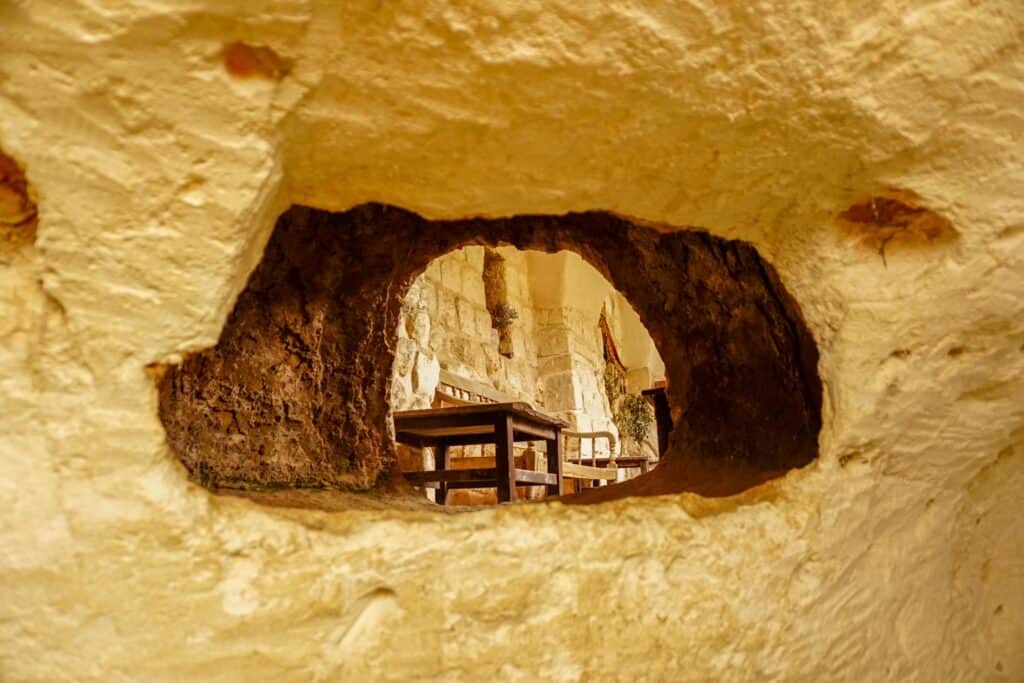
The caves in the Midyat district, a veritable open-air museum steeped in history and culture, attract visitors to Mardin. Standing out with their natural and historical significance, the Midyat Caves are located beneath mansions open to visitors. You too can take a brief journey through time by exploring these caves within the city.
19) Martyrs’ Madrasa
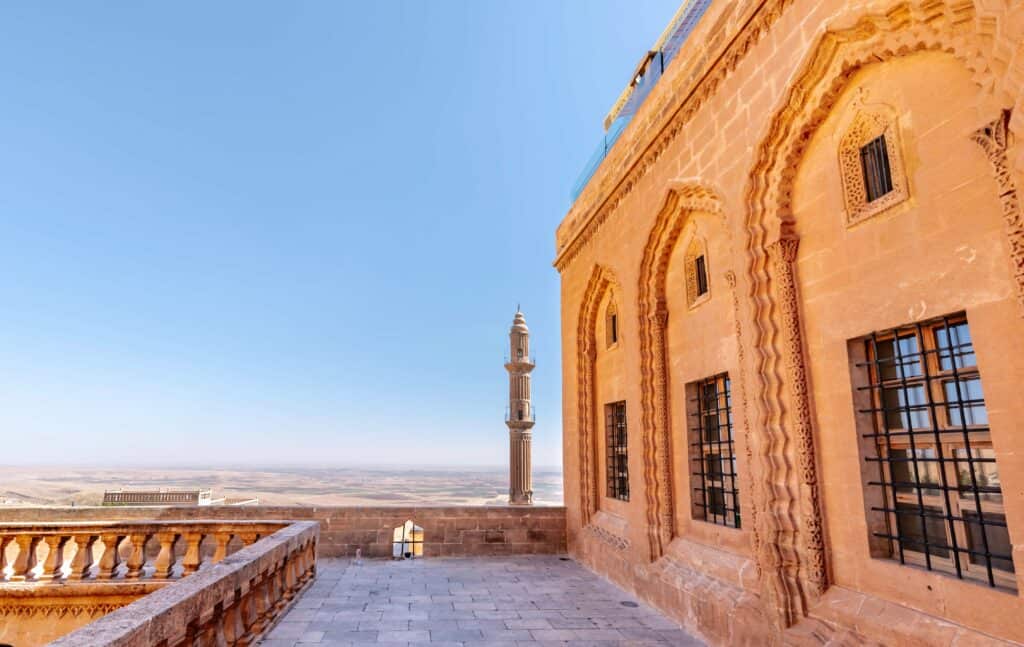
Also known as the Semanin Madrasa, the Şehidiye Madrasa is believed to have been commissioned by the Artuqid Sultan Malik Nasreddin Artuk Aslan in the early 13th century. The Şehidiye Madrasa consists of a series of buildings arranged within a courtyard. Located in the city center, the Şehidiye Madrasa has undergone numerous renovations over time, leaving little of its original state intact today.
Location of the Şehidiye Madrasa
20) Martyrs’ Mosque
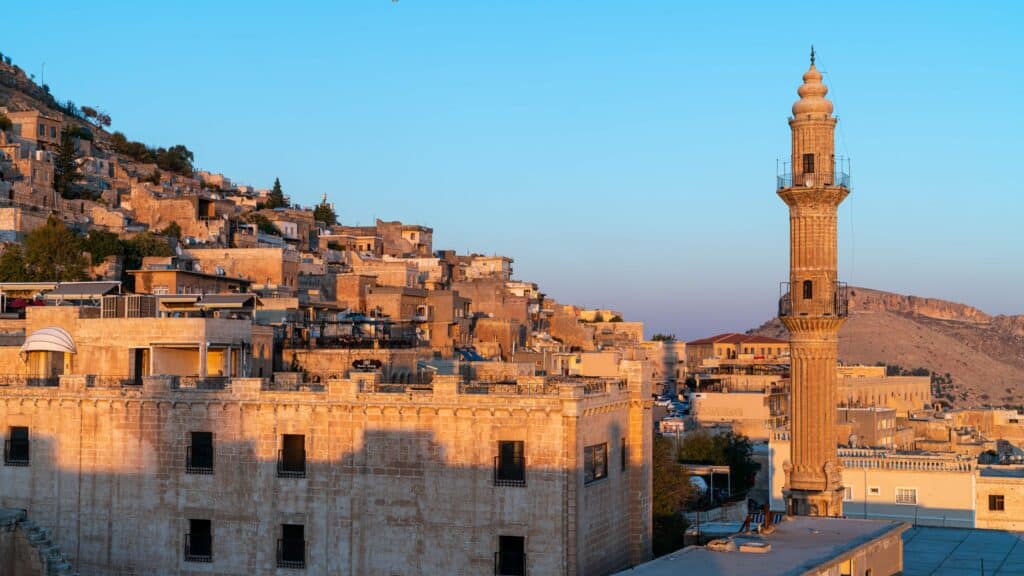
The Şehidiye Mosque, located within the Şehidiye Madrasa, is among the most altered parts of the madrasa. Its ruined minaret was rebuilt without scaffolding in 1916/17 by the Armenian architect Serkis Lole. The minaret of the Şehidiye Mosque is notable for its ornate carvings. Inside, there is a small ornamental pool and prayer areas. The mosque, still in active use today, creates a beautiful spectacle when illuminated at night.
Location of the Şehidiye Mosque
21) Mazıdağı
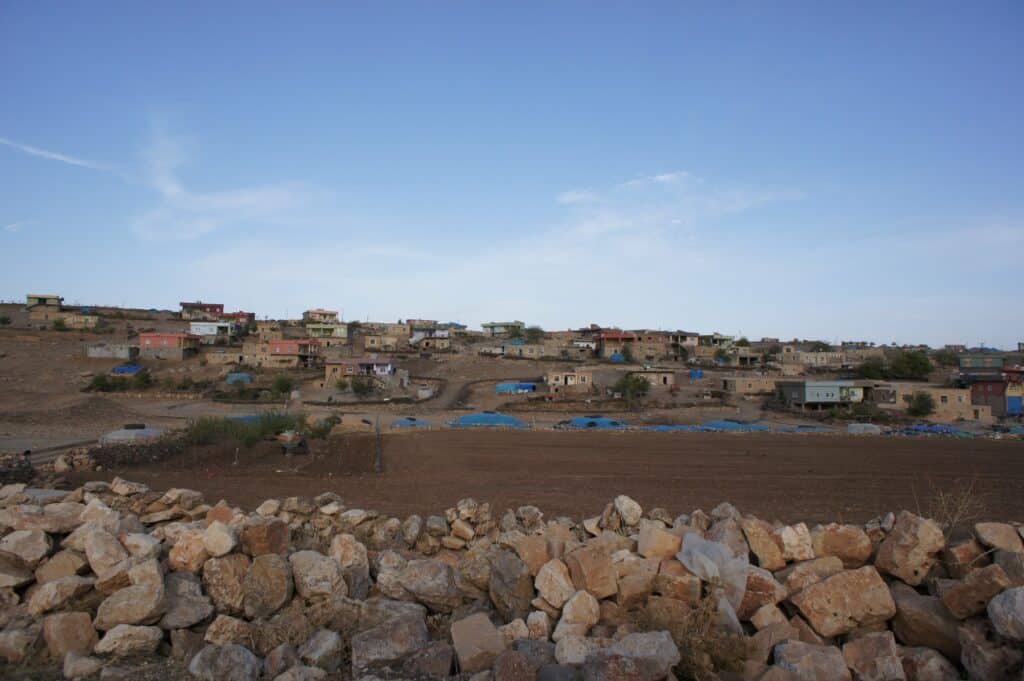
The district of Mazıdağı, formerly known as Şamrah, greets us as a significant historical center in Mardin. With a history dating back to the Sumerians, the Dermetinan Castle, perched atop a 150-meter hill, and the tombs of Sultan Şeyhmus and Pir Hattap are among the district’s must-see attractions. Zarzavan Castle is also among the historical attractions in Mazıdağı.
22) Hatuniye Madrasa
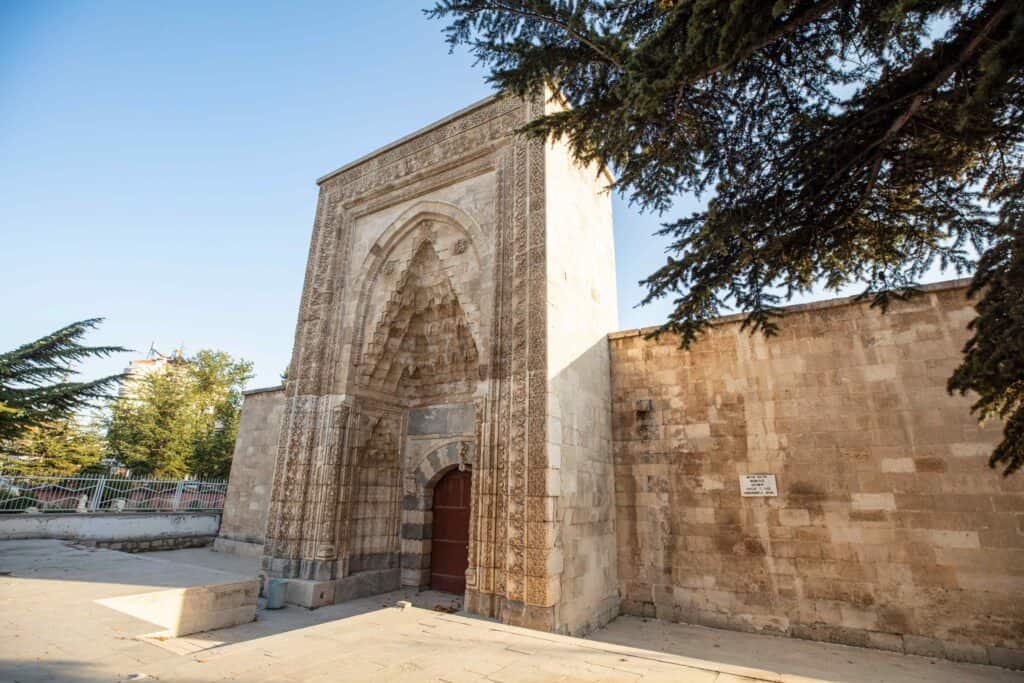
Hatuniye Madrasa, also known as Sitti Radviyye Madrasa, is considered a pioneering example of iwan-based madrassas. Built between 1176/7 and 1184/5, Hatuniye Madrasa can be reached by walking approximately 150 meters southeast from the Sabancı Museum. The mihrab decorations in the madrasa reflect the rich stonework of the Artuqid period, and a footprint of the Prophet Muhammad is displayed in a display case next to the mihrab.
23) Mar Hırmız Chaldean Church
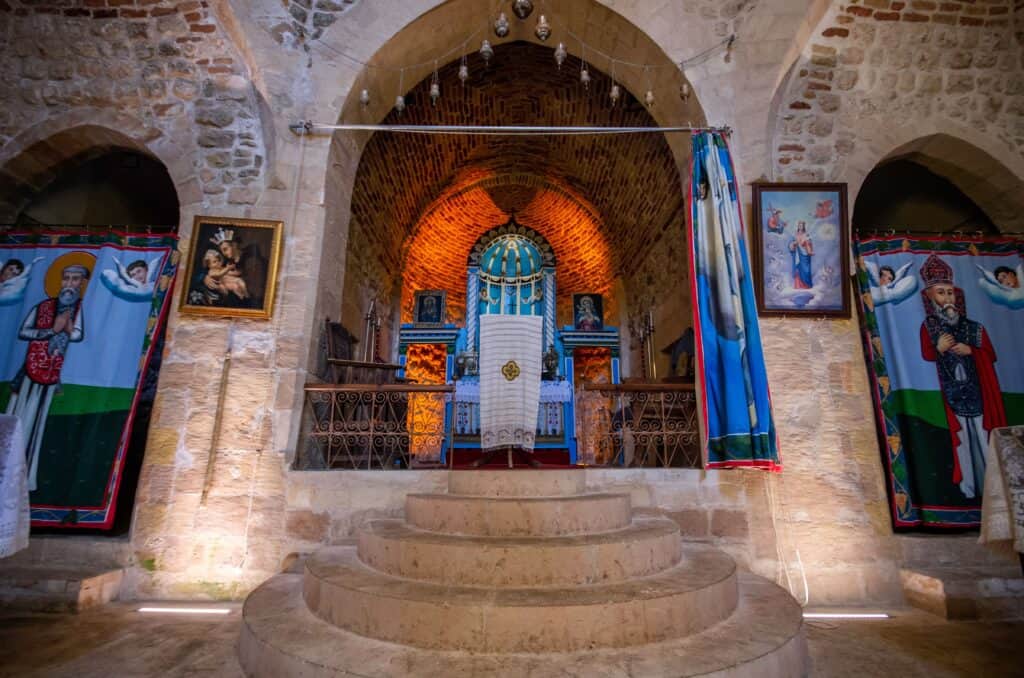
The construction of the Mar Hırmız Chaldean Church in the city center was completed between 397 and 430. The domed Chaldean Church contains the tombs of two metropolises (archbishops). Inside the church’s council chamber, a later addition, is a beautifully decorated fireplace known to have been built in 1902 and bearing the Ottoman signature.
Mar Hırmız Chaldean Church location
24) Kıllıt (Dereiçi) Village
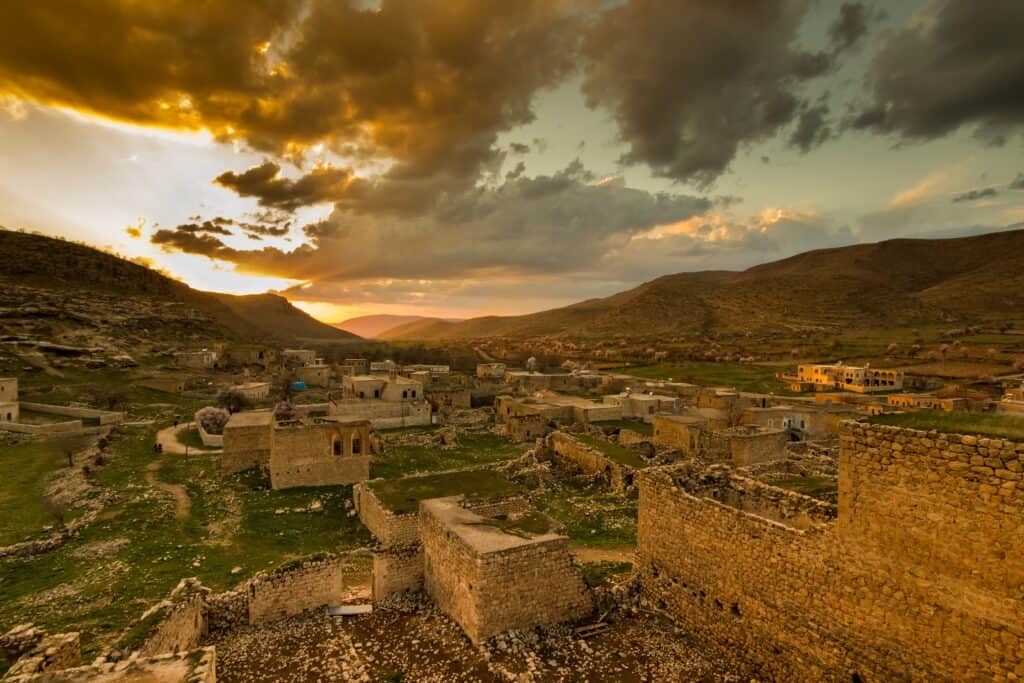
Kıllıt, an ancient Assyrian village 5 kilometers from Savur, is notable for its stone structures. A large and important Assyrian settlement before the exodus, Kıllıt boasts three churches and three monasteries belonging to Orthodox, Protestant, and Catholic communities. Also famous for its wine, the village still cultivates grapes nearby, and the tradition of harvesting continues. The Mor Yuhanon Church within the village dates to the 7th century.
Location of Kıllıt (Dereiçi) Village
25) Nusaybin
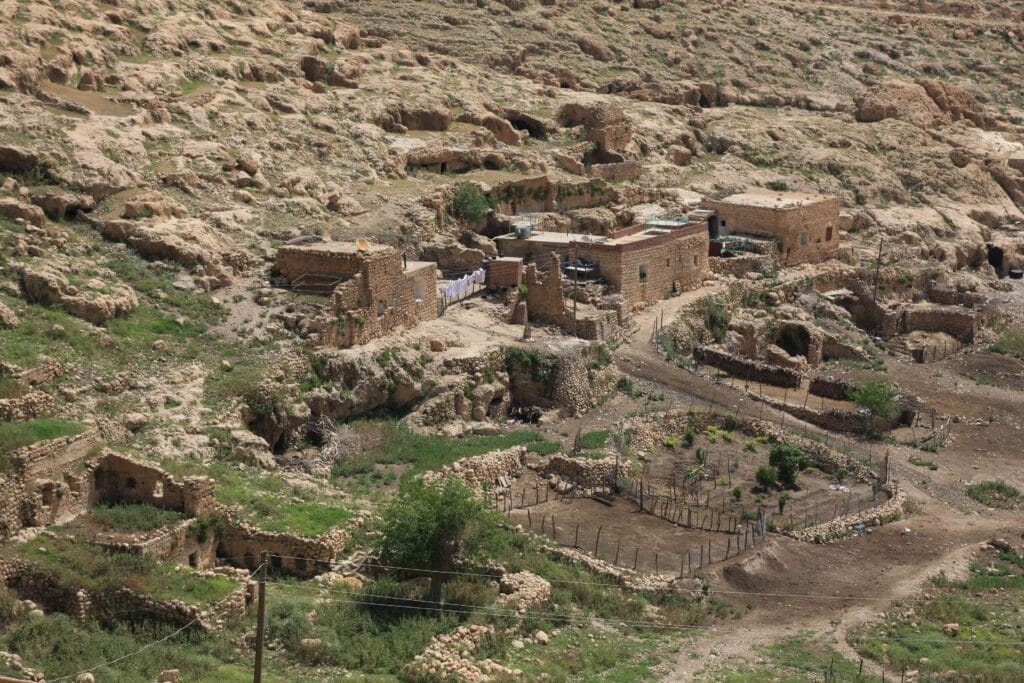
Nusaybin, one of Mardin’s oldest settlements, is located on the Syrian border. The city, whose earliest known name is Nisibis, was home to the Hurrians in 3000 BC. Falling under the rule of the Mitanni Kingdom in the 14th century BC, Nusaybin has hosted many other civilizations over the years. Nusaybin, home to numerous historical ruins, boasts a wealth of must-see sites, including Çağ Valley, the Zeynel Abidin Mosque, Yeni Kale (Saçlı Ali), and Gırnawas.
26) Zeynel Abidin Mosque and Social Complex
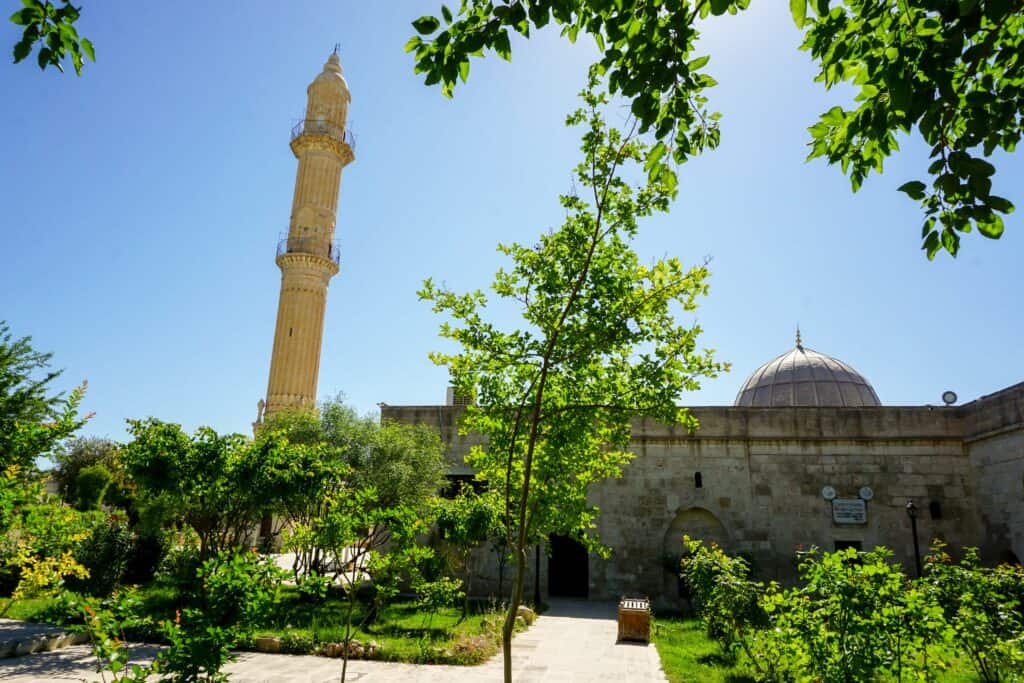
The Zeynel Abidin Mosque and Social Complex in the Nusaybin district comprises the complex, the mosque, the tombs of Zeynel Abidin and his sister Sitti Zeynep, a fountain, a madrasah, a cemetery, and ablution facilities. The Zeynel Abidin Mosque, added to the UNESCO World Heritage Tentative List in 2014, was constructed using cut stone on an L-shaped plan. The minaret on the eastern side of the courtyard was built in 1956.
Location of Zeynel Abidin Mosque and Social Complex
27) Mor Yakup Church
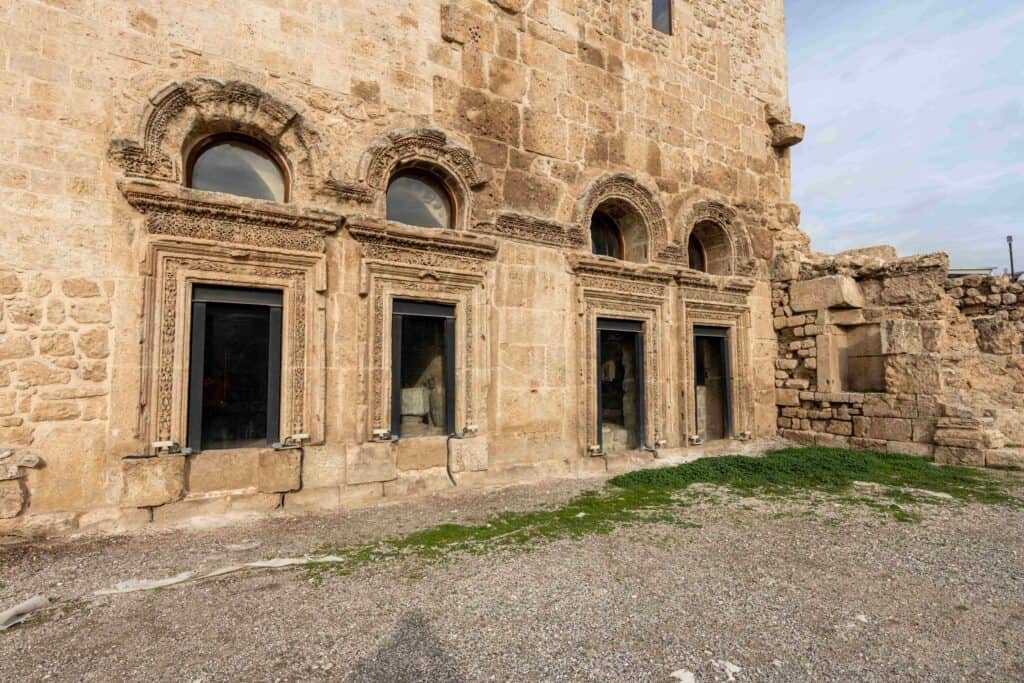
Just 100 meters east of the Zeynel Abidin Mosque, the Mor Yakup Church was added to the UNESCO World Heritage Tentative List along with the mosque in 2014. Construction of the church, one of the oldest in Upper Mesopotamia, began in 313 by Mor Yakup, who was appointed bishop of Nusaybin in 309. The south church, built as a baptistery, features a double staircase designed to facilitate access to and from the enclosure where Mor Yakup’s coffin is kept.
28) Shahkulubey Mansion
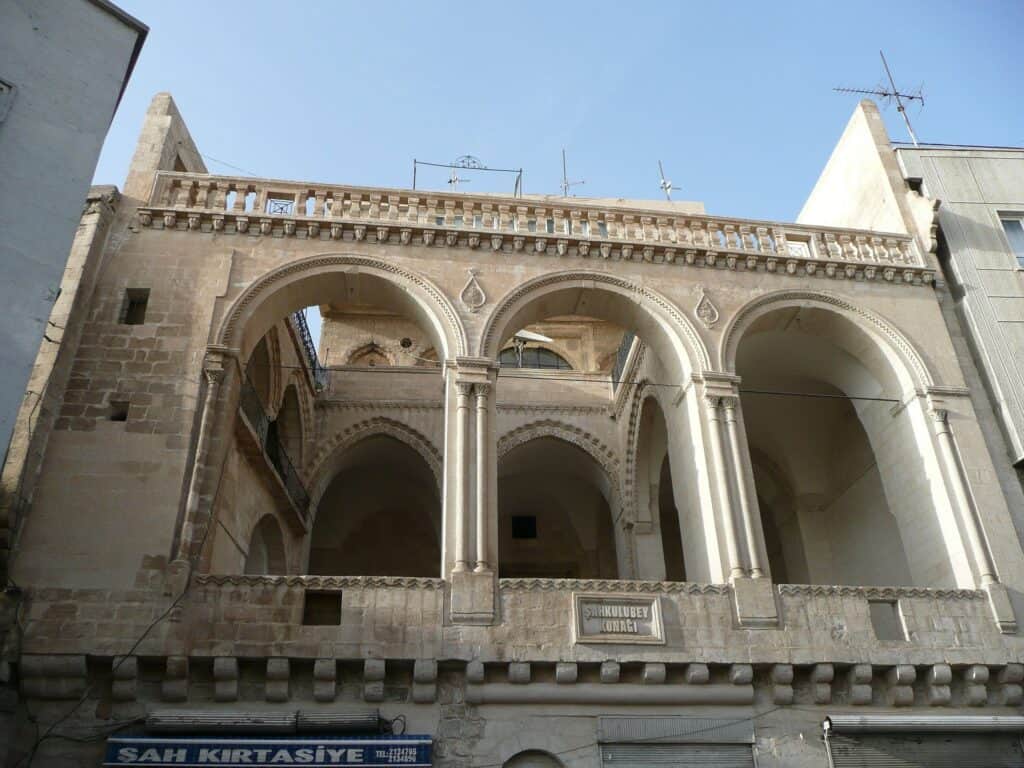
Located near Mardin’s Cumhuriyet Square, the Şahkulubey Mansion is the work of Armenian architect Lole. Inspired by the Şoransa Fasadı Museum building just north of 1st Street, the Şahkulubey Mansion is a three-story structure. Its stonework, striking in its finery, makes it a must-see in Mardin.
29) Old PTT Building (Şatana Family House)
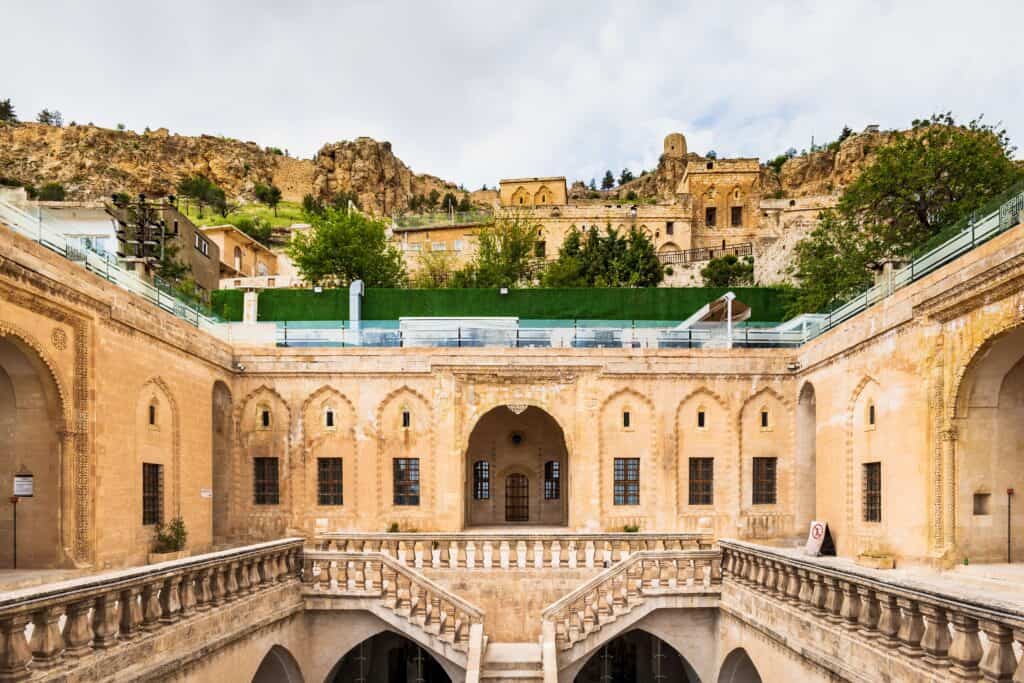
The Şatana Family House, located opposite the Şehidiye Madrasa, was built in 1890 by the Şatana family and commissioned by Armenian architect Lole. A fine example of Mardin’s civil architecture, the Şatana Family House stands out for its rich and magnificent stonework. Used as a post office building since 1950, the building has now been transferred to Artuklu University.
Location of the Old PTT Building (Şatana Family House)
30) Abbaras
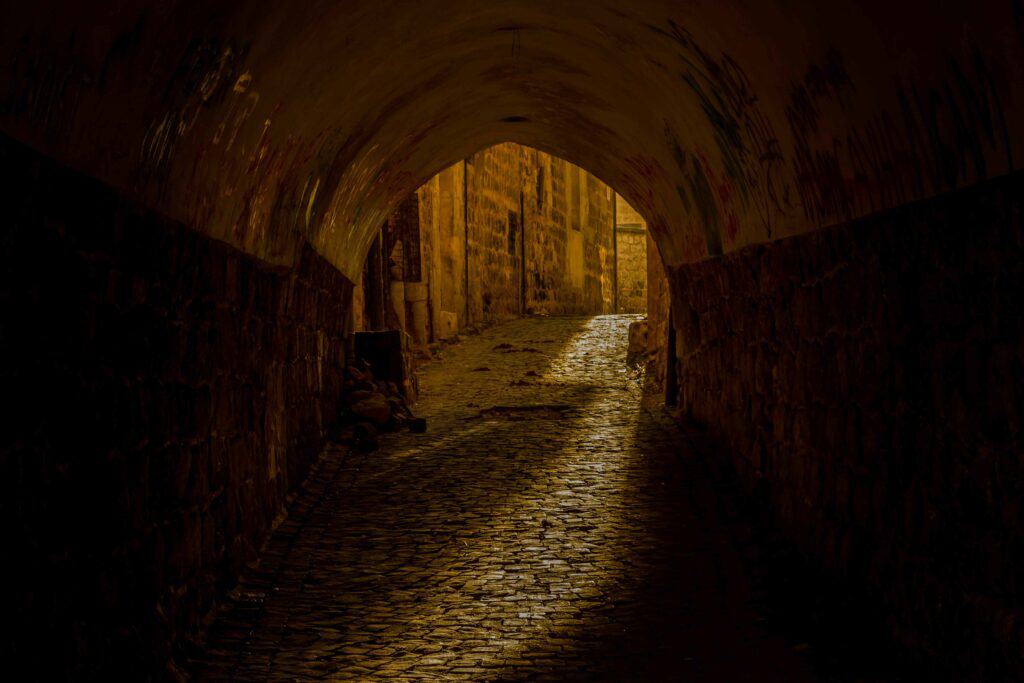
Located beneath some houses in Mardin’s hillside settlement, “abbara” underpasses create surprising shortcuts for urban transportation. Abbaras, one of Mardin’s most distinctive architectural treasures, are found not only in the old neighborhood but throughout the province. Most common in the Savurkapı neighborhood, they also appear in the Teker, Şehidiye, Medrese, and Gül neighborhoods.
31) Mardin Midyat City Museum (Estel Inn)
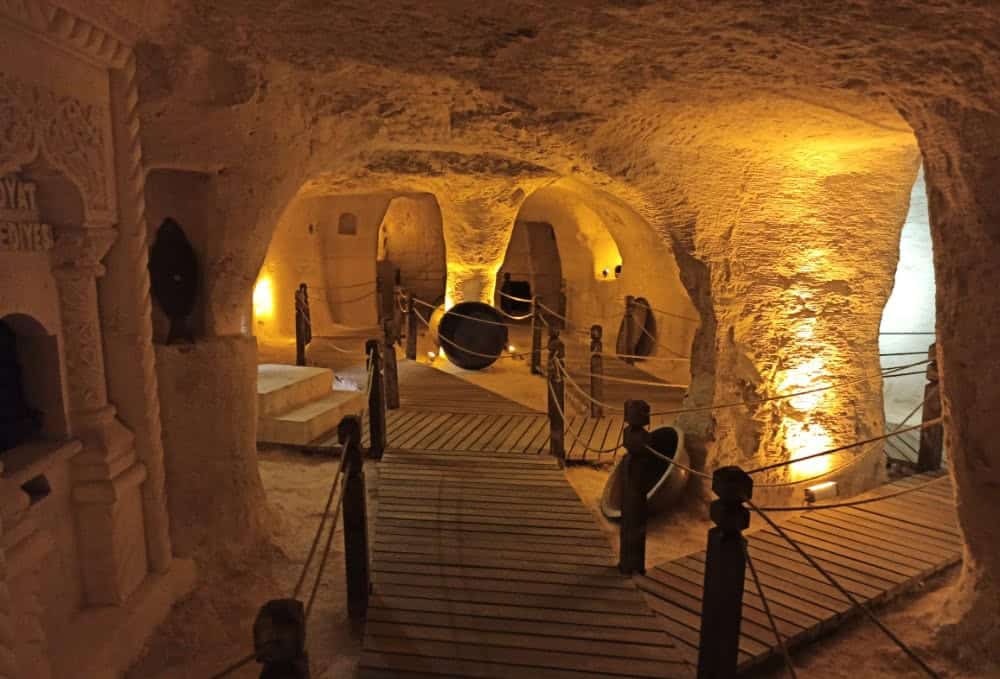
Located approximately two kilometers from Midyat town center, Estel Inn is located in the Ulu Cami neighborhood. Although its exact construction date is unknown, Estel Inn is a three-story, single-courtyard inn. Constructed using cut stone and smooth ashlar, Estel Inn was restored to its original state by the Midyat Municipality in 2021.
Today, the Estel Inn, which serves as the Midyat City Museum, exhibits artifacts from Midyat culture. The City Museum, open daily from 8:00 AM to 5:00 PM, charges 10 TL for admission. The Museum Card is not valid for entry.
Mardin Midyat City Museum (Estel Inn) location
Midyat City Museum entrance fee
- Entrance fee: 20 TL
Author’s note: After visiting the museum, don’t forget to shop at Midyat’s famous Silversmiths’ Bazaar and enjoy local delicacies at a cafe.
32) Midyat State Guesthouse
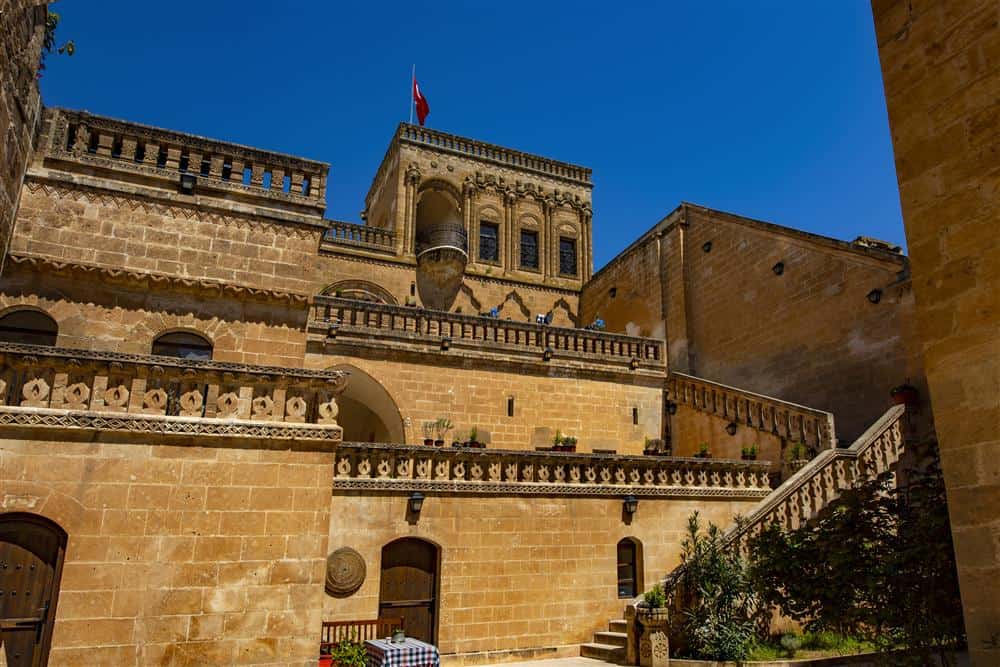
The Midyat State Guesthouse, a must-see in Mardin, consists of three floors. Used as a location in a television series, the guesthouse offers a stunning view of Midyat from its terrace.
The Midyat State Guesthouse, distinguished by its stonework, is open to visitors every day of the week. Weekdays are from 8:00 AM to 8:00 PM, and weekends are from 8:00 AM to 9:30 PM.
Midyat State Guesthouse location
Midyat State Guesthouse entrance fee
- Entrance fee: 50 TL
33) Melik Mahmut Mosque
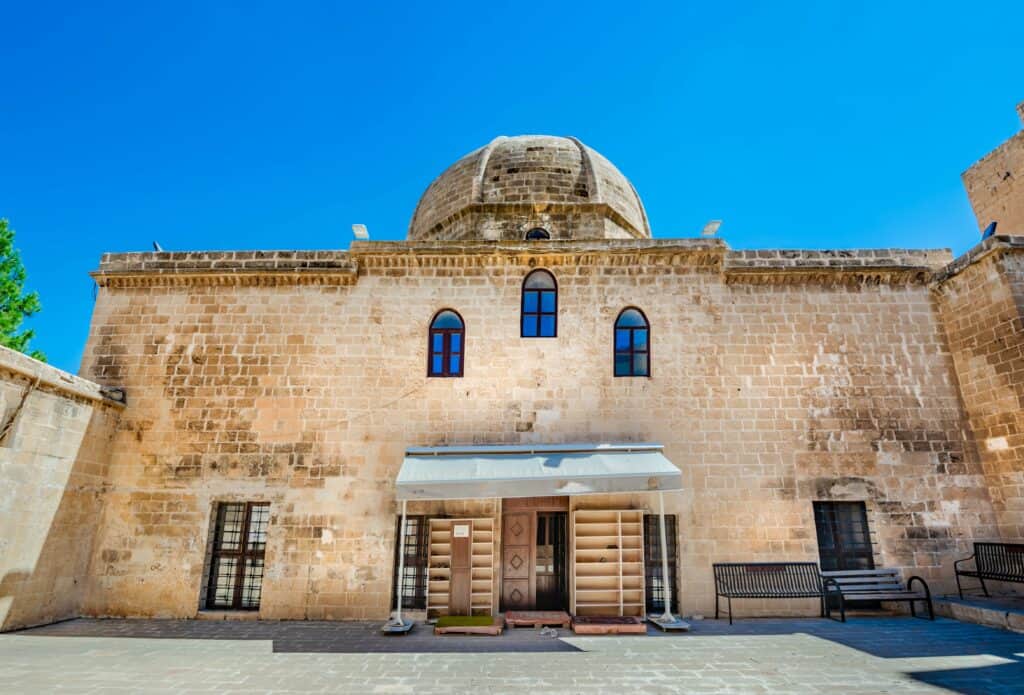
Located on historic 1st Street, the Melik Mahmut Mosque is located north of the road leading to the Savur Gate. Dating back to the 14th century, the Melik Mahmut Mosque was commissioned by the Artuqid ruler Melik Salih. The mosque, which develops horizontally, consists of a central domed section and sections covered with barrel vaults on either side.
Location of Melik Mahmut Mosque
34) Marin (Eskihisar) Ruins
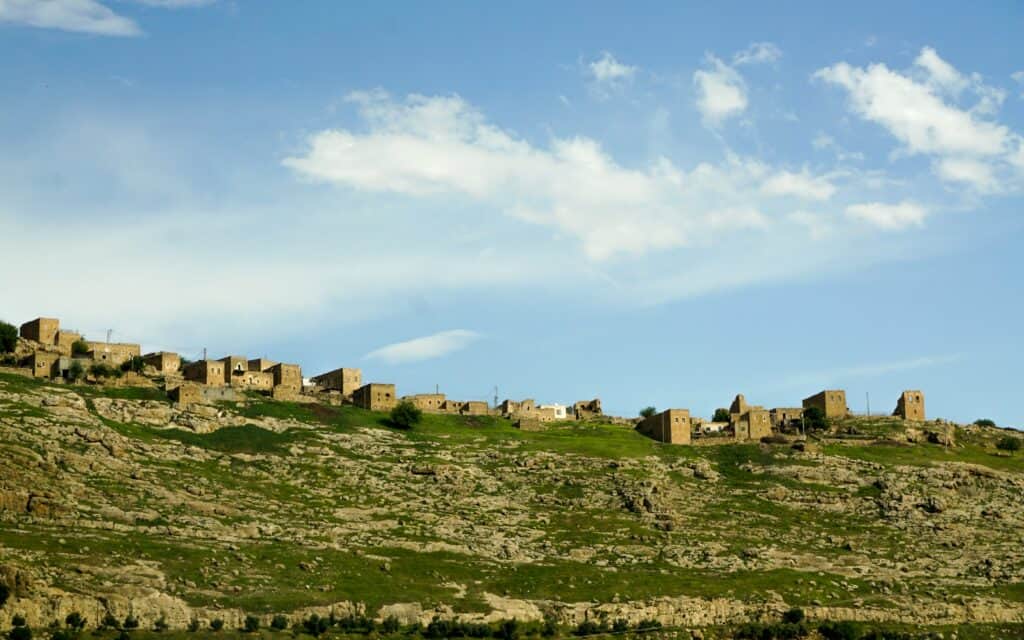
The Marin Ruins in the Nusaybin district of Mardin are located 112 kilometers from the city center and 28 kilometers from the town center. Located on the southern slopes of Mount Bagok, Marin was named “Merdis” by the Assyrians. Today, the Marin Ruins contain the remains of numerous churches belonging to the Roman, Byzantine, and ancient Syriac communities.
Marin (Eskihisar) Ruins location
35) Artuqid
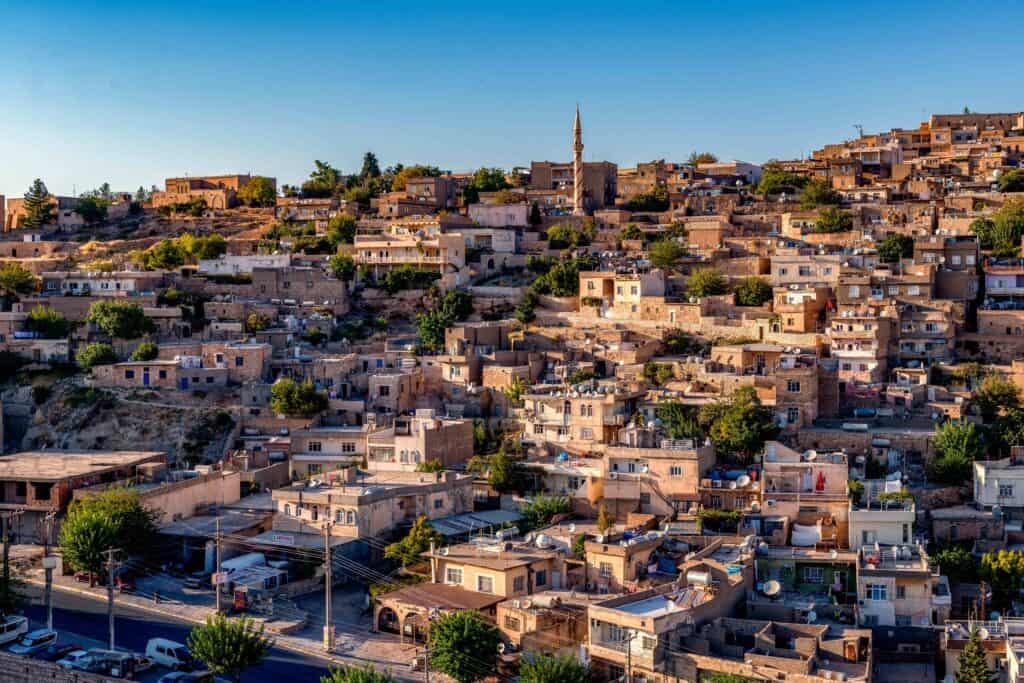
Artuklu, one of the oldest settlements in Upper Mesopotamia, has hosted numerous civilizations throughout history. The houses in Artuklu, home to mosques, tombs, churches, monasteries, and other religious structures, are notable for their carved stone work. The district of Artuklu, where Mardin Castle is located, is an open-air museum with its historic houses typical of Assyrian and Arab architecture, as well as mosques and madrasahs of Islamic architecture.
36) Artuqid Caravanserai
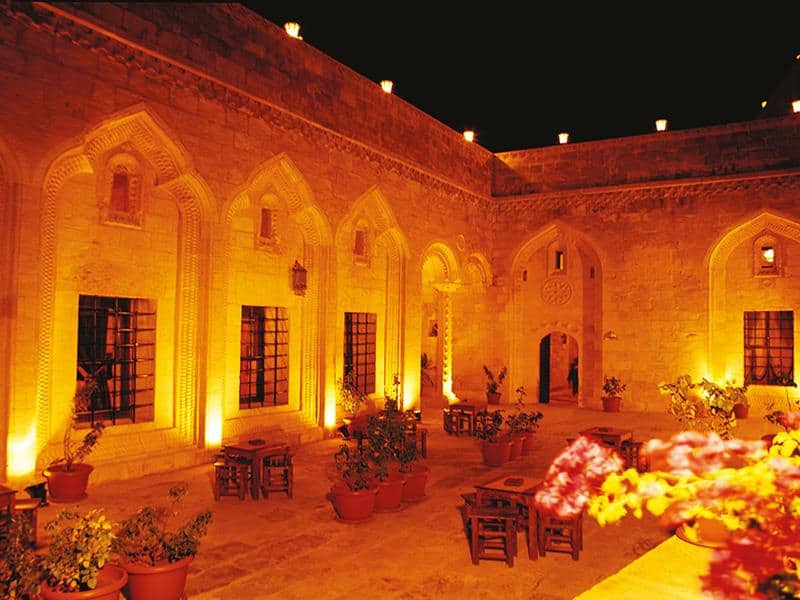
The Artuklu Caravanserai, located next to the Melik Mahmut Mosque on 1st Street , was built in 1275 during the Artuklu period. Used as a school before the Republic, the historic building was later used as a fortress building (Tekel) and a bakery. Converted into a hotel in 2003, the Artuklu Caravanserai is one of Mardin’s oldest accommodation facilities.
Location of the Artuqid Caravanserai
37) Midyat
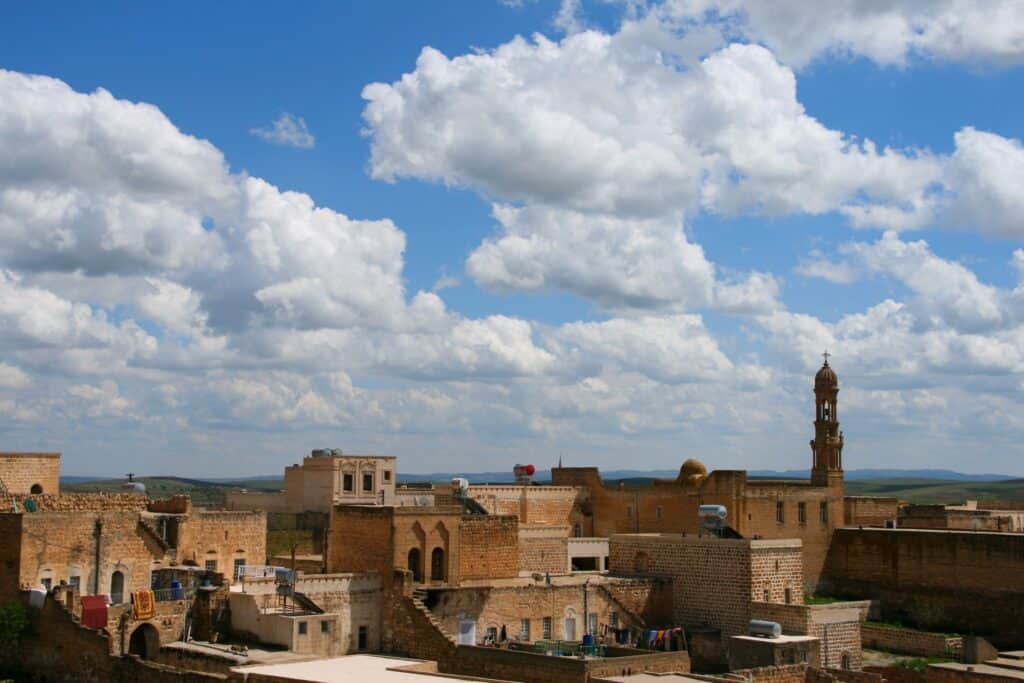
Midyat, a melting pot of religions (Islam, Christianity, and Yazidi) and languages (Turkish, Kurdish, Arabic, and Syriac), is described as “Matiate” in 9th-century BC Assyrian tablets. This word is an Aramaic/Syriac name meaning “homeland.”
Among the places to visit in Midyat, one of the largest and most populous districts of Mardin, are the Mor Gabriel Monastery, Midyat Old City, Virgin Mary Church, Midyat Caves and Beyazsu.
38) Cevat Pasha Mosque
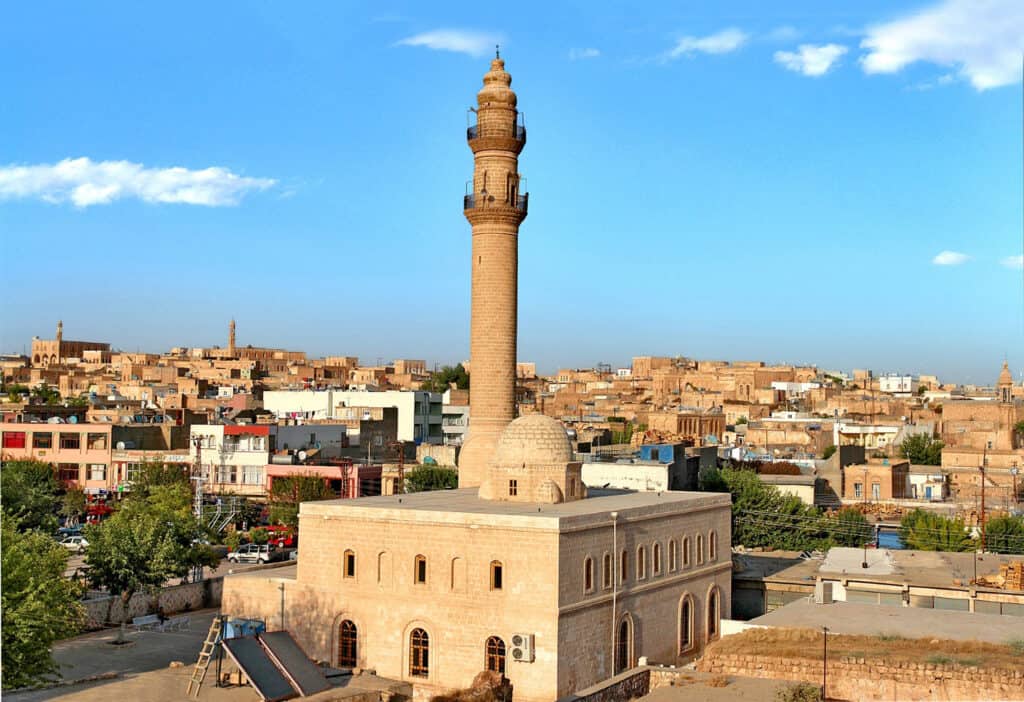
Cevat Pasha Mosque, also known as the Great Mosque of Midyat, was commissioned by Cevat Pasha in 1925. Built of smooth, cut Midyat stone, the Cevat Pasha Mosque features window openings of various shapes. Internally cross-vaulted and externally covered by a dome resting on a polygonal drum, the Cevat Pasha Mosque is particularly notable for the decorative bands of grape clusters and vine leaves found on its arches.
39) Emineddin Complex
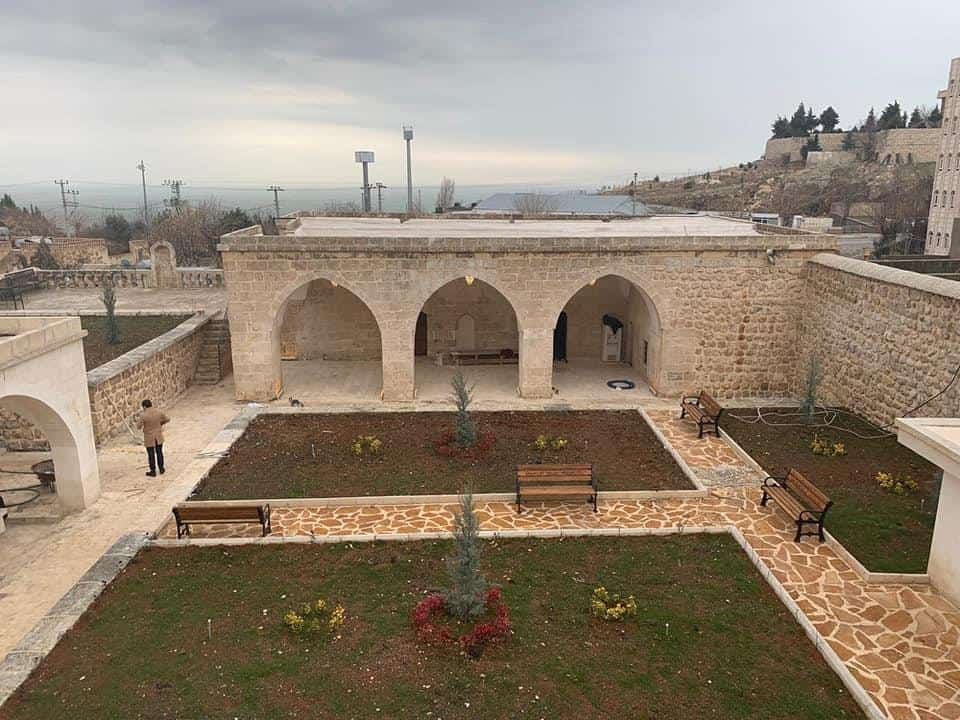
Located in the Mesken neighborhood in the southwest of the city, the Emineddin Complex was commissioned by the Artuqid Sultan Necmeddin İlgazi and his brother Eminüddin. The Emineddin Complex, whose architect is unknown, contains a mosque, a madrasah, a bathhouse, a fountain, and a bimaristan (hospital/rehabilitation center). The Emineddin Complex, which is significant because it was the first known complex in Anatolia dating from the early 12th century, is known as the oldest Turkish bath in Mardin.
40) Firdevs Mansion
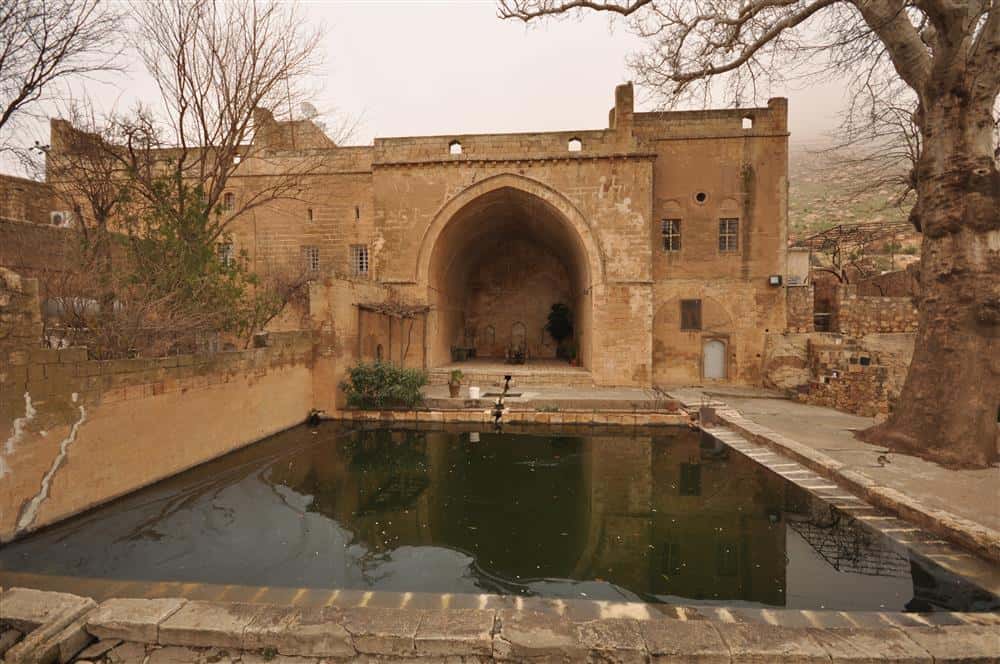
The Firdevs Kiosk on Nusaybin Road is thought to have been built in the 14th century. A magnificent structure in Mardin residential architecture, it was constructed using smooth-cut stone. Overlooking all of Mardin and offering a unique view of the Mesopotamian Plain, it is known to have been used by all the emirs of Mardin.
Top Places to Eat in Mardin
We ate our way up and down those honey-stone steps so you don’t have to guess. Here’s the short list—classic plates, skyline views, and where to caffeinate between monastery hops.
Cercis Murat Konağı (regional classics in a heritage mansion)
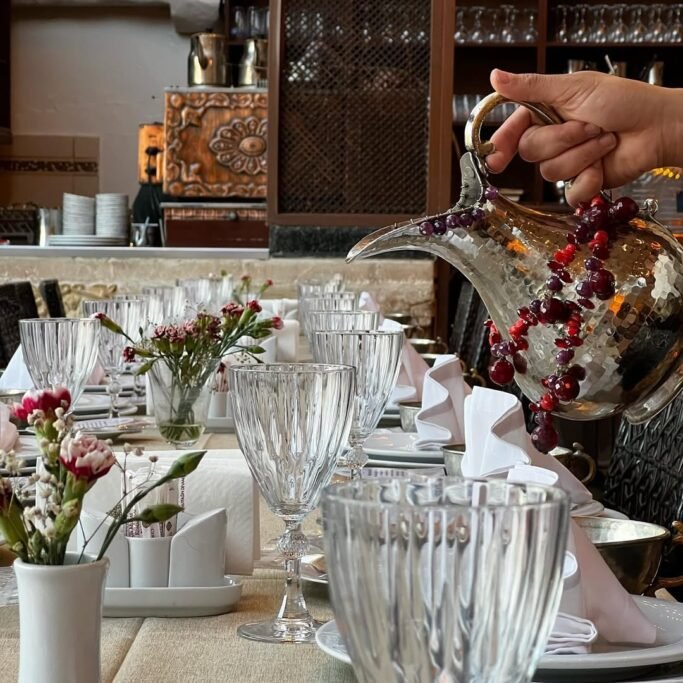
If you try one “proper” Mardin dinner, make it here: mezze parade, stuffed ribs (kaburga dolması), and seasonal dishes in a restored stone konak. Book ahead on busy nights.
Address: Şar, 1. Cadde No:517, 47100 Artuklu/Mardin, Türkiye
What to order: Kaburga dolması, sembusek, meze.
Close to: Cumhuriyet Caddesi (Old Town).
Seyr-i Merdin (view-with-your-meze terrace)
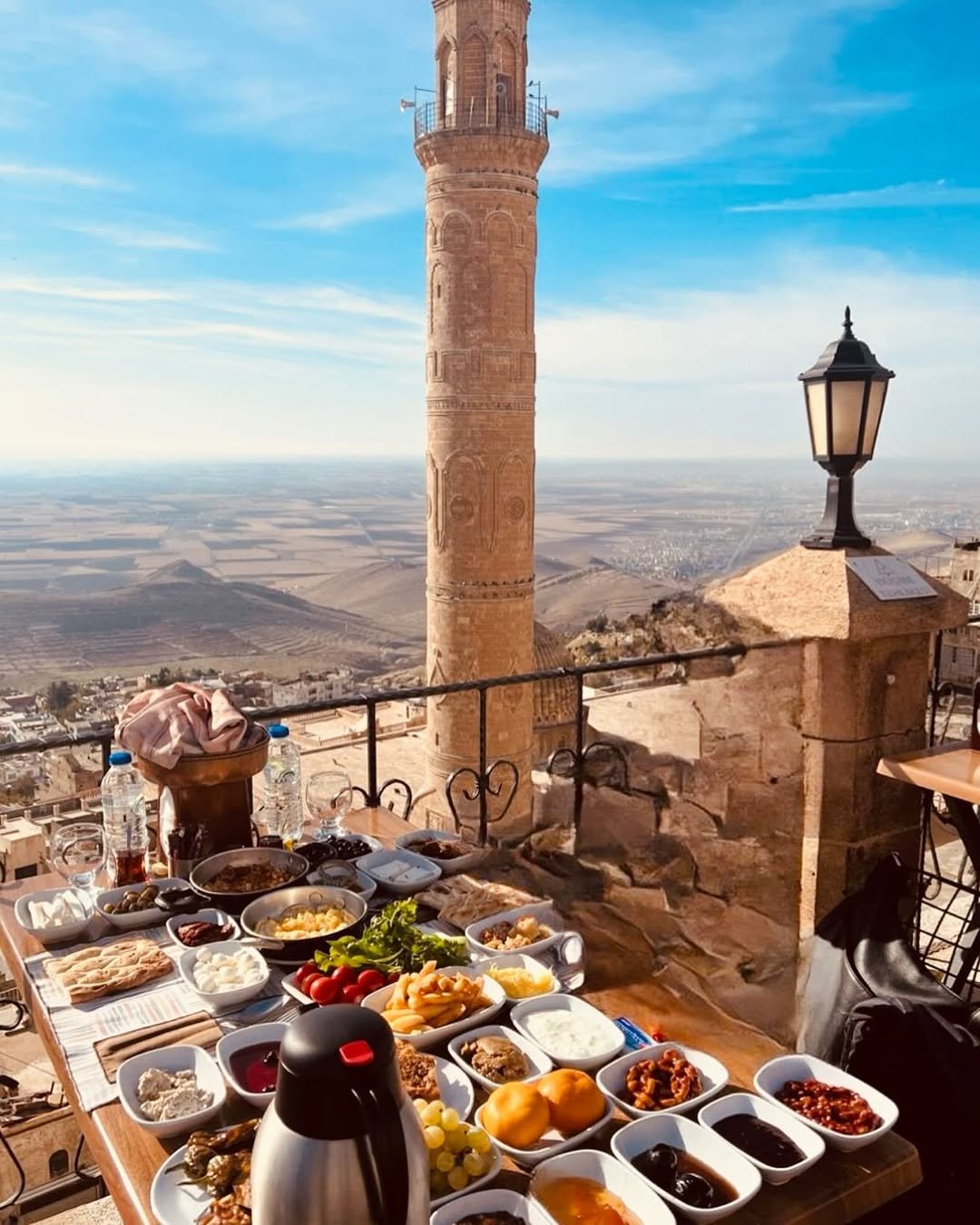
Rooftop terrace staring straight across the Mesopotamian plains—come for sunset, stay for grills and home-style sides. Service is friendly; views do the heavy lifting.
Address: Teker, Cumhuriyet Caddesi No:249, 47100 Artuklu/Mardin,
What to order: Mixed grill, meze set, tea at golden hour.
Close to: Ulu Cami area (Old Town ridge).
Bağdadi (lively modern-meets-local)
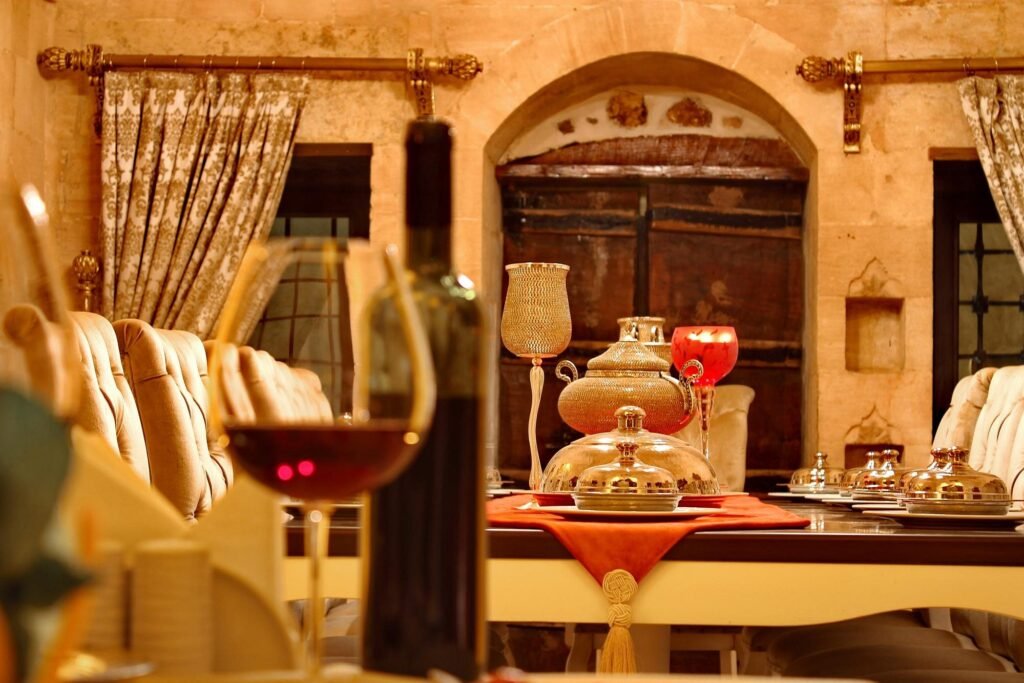
A dependable all-rounder for regional plates, a decent wine list (rare here), and relaxed service—good pick for a longer sit-down meal.
Address: Şar, Vali Adil 228 Sk., 47100 Artuklu/Mardin, Türkiye
What to order: Lamb dishes, mezes; ask about their house wine.
Close to: Old Town main drag.
Kebapçı Yusuf Usta (no-nonsense kebabs)
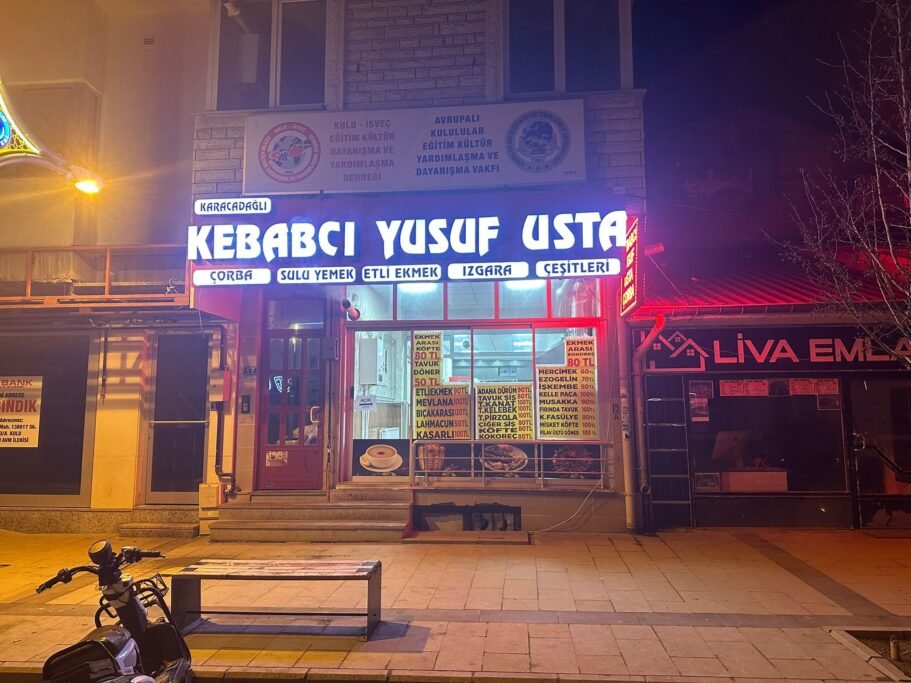
Local favorite for juicy skewers without the frills—fast, affordable, and kid-friendly. Great lunch stop between sightseeing loops.
Address: Yalım Mahallesi Ümitköy Sitesi Altı (Eski Dedecan, 47100 Artuklu/Mardin
What to order: Adana/Urfa kebab, ayran.
Close to: Midyat Caddesi axis (easy taxi from Old Town).
Delmar (coffee, light bites, and a panorama)
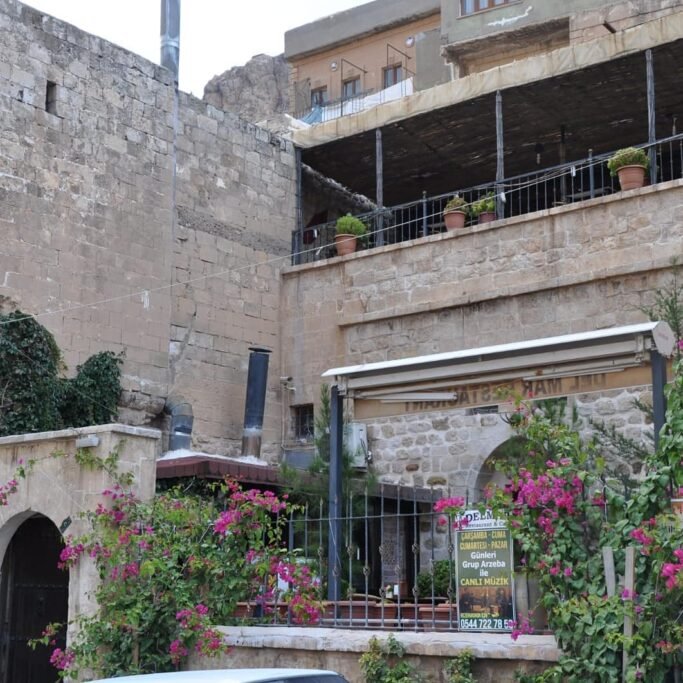
More café than white-tablecloth, but the balcony view is prime and the menu covers easy hits; swing by for a late afternoon refuel.
Address: Latifiye, Haydar 151 Sk. no:223, 47100 Artuklu/Mardin
What to order: Turkish coffee, kaburga dolması if you’re curious, simple grills.
Close to: Upper Old Town terraces.
Tarihi Mardin Kahvecisi (dibek coffee stop)
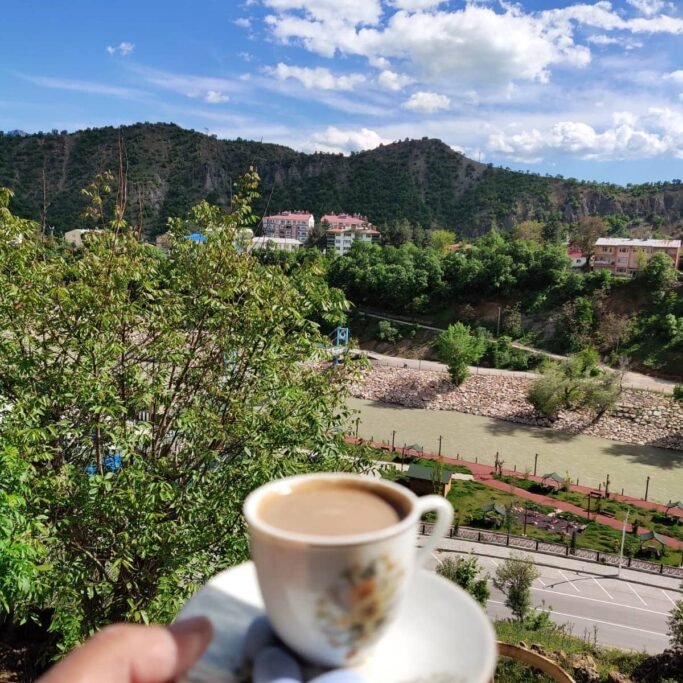
Don’t leave without trying dibek kahvesi—beans pounded in a stone mortar for a round, nutty cup. Perfect souvenir, too.
Address: : Teker, 1. Cadde No:185/B, 47000 Artuklu/Mardin
What to order: Dibek kahvesi; pick up a bag to take home.
Close to: Multiple branches; easiest along main Old Town lanes.
Top Hotel Picks in Mardin (for Every Budget)
We slept, we stair-climbed, we compared terraces—so you can pick fast and go hunt mezze.
Splurge (Heritage Mansions with “wow”)
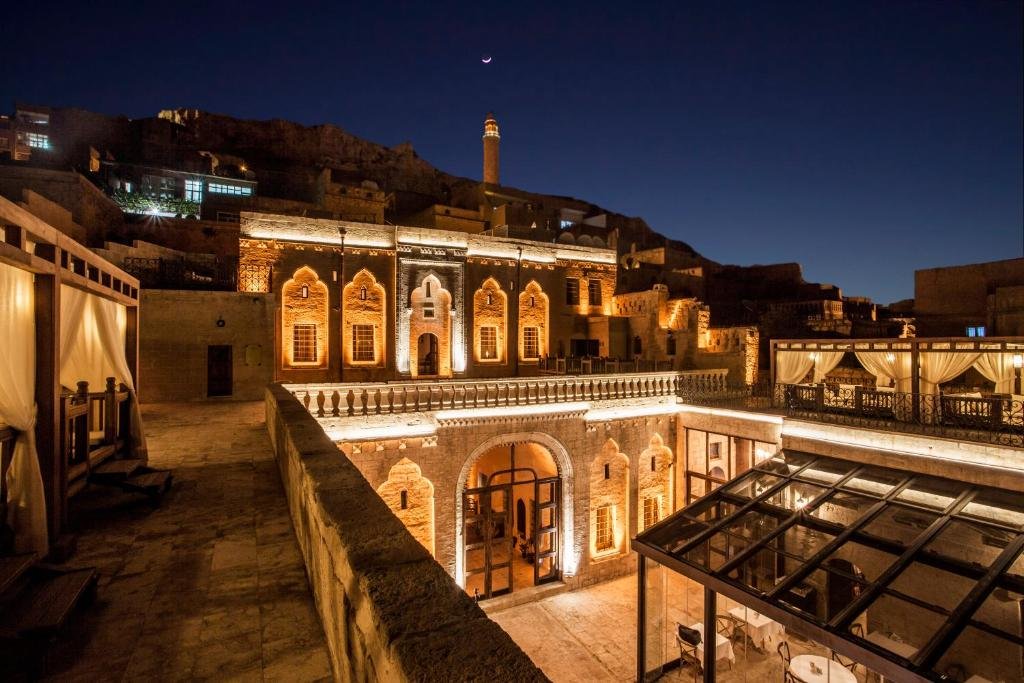
Mardius Tarihi Konak (Old Town)
700-year-old stone konak turned luxury boutique—arched rooms, candlelit nooks, and that Mesopotamia view. Breakfast is a ceremony, not a meal.
Why stay: Romance + history, right on the ridge.
Close to: Ulu Cami & Zinciriye Medresesi.
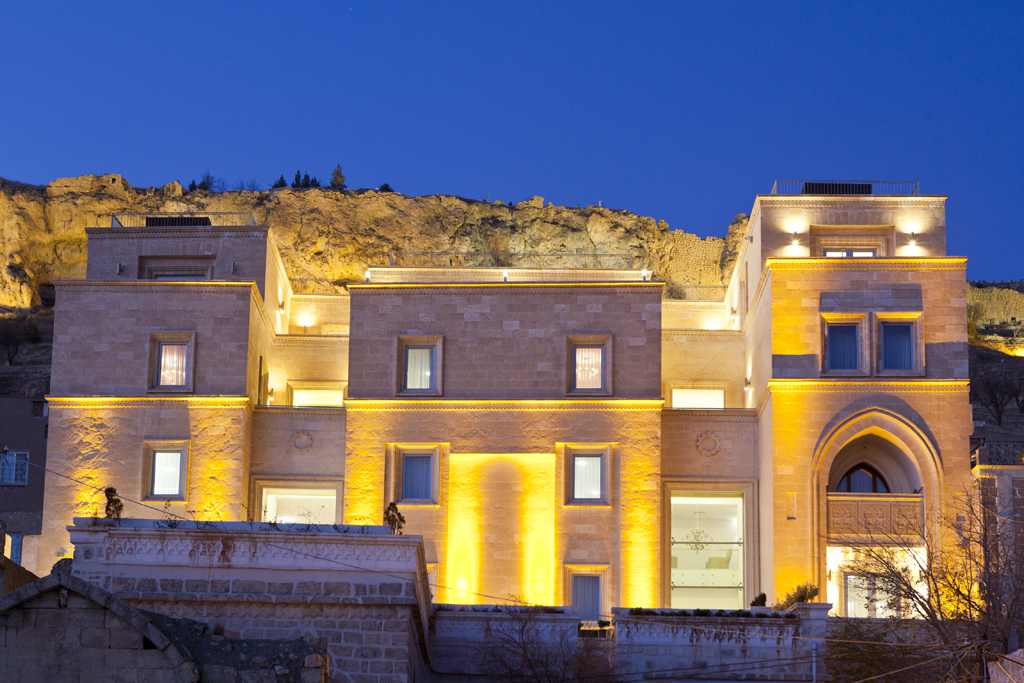
Reyhani Kasrı (Old Town ridge)
Polished boutique options with classic stone architecture and panoramic terraces—great if Mardius is full but you still want that “konak” feel.
Why stay: Boutique vibe without going top-top tier.
Mid-Range (Boutique without the splurge)
Kasr-ı Abbas Hotel (Old Town)
Historic building, terraces, friendly service; easy base for wandering Cumhuriyet Caddesi.
Why stay: Character + value, walkable to everything.
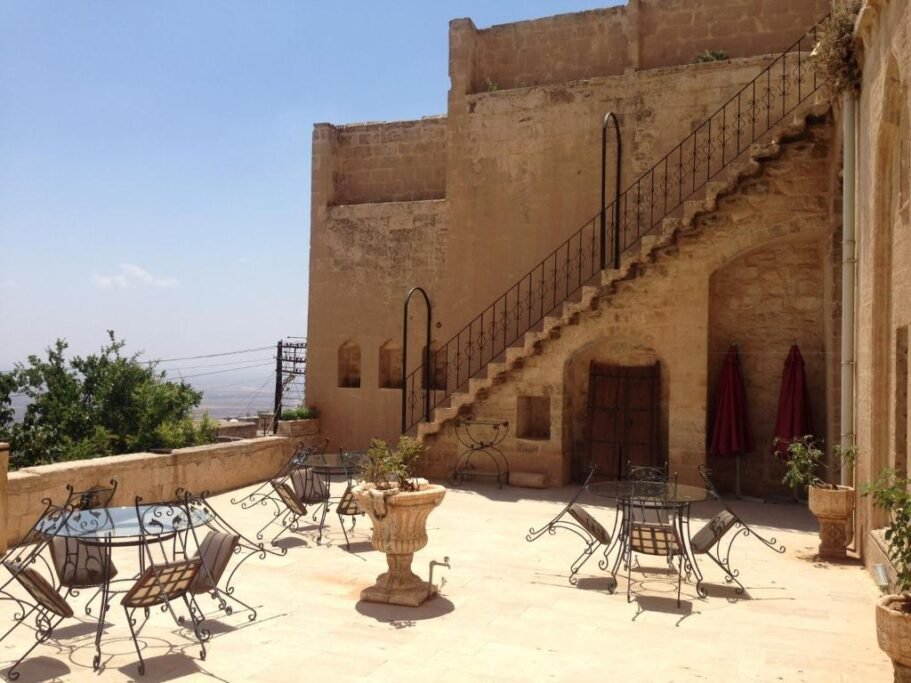
Erdoba Konakları (Old Town area)
Classic stone property frequently listed among Mardin stalwarts; convenient for sights and views.
Why stay: Old-city atmosphere with hotel comforts.
Budget & Backpacker-Friendly
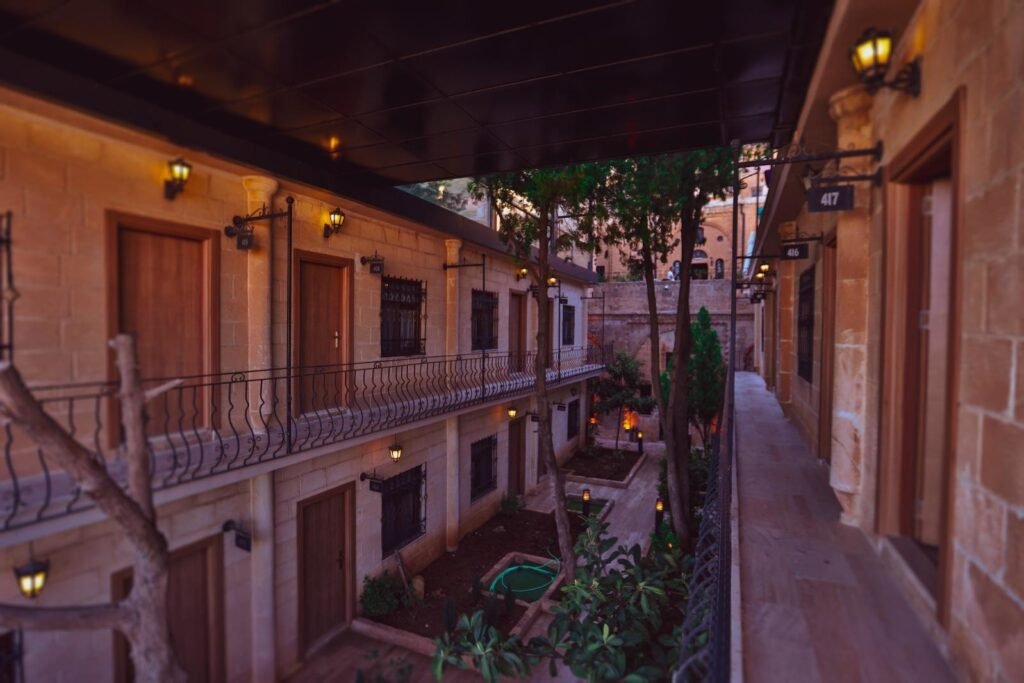
Zinciriye Hotel (Old Town)
Simple rooms in a prime heritage spot—good price-to-view ratio.
Why stay: Budget + location.
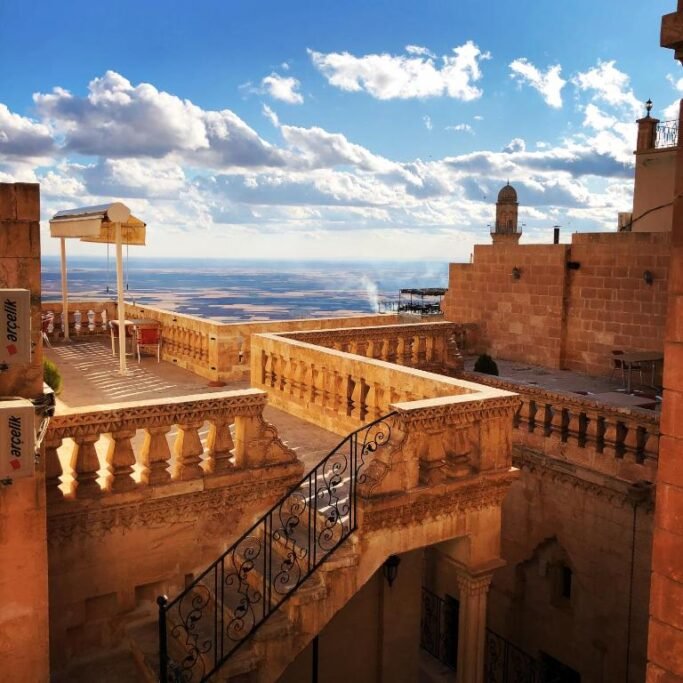
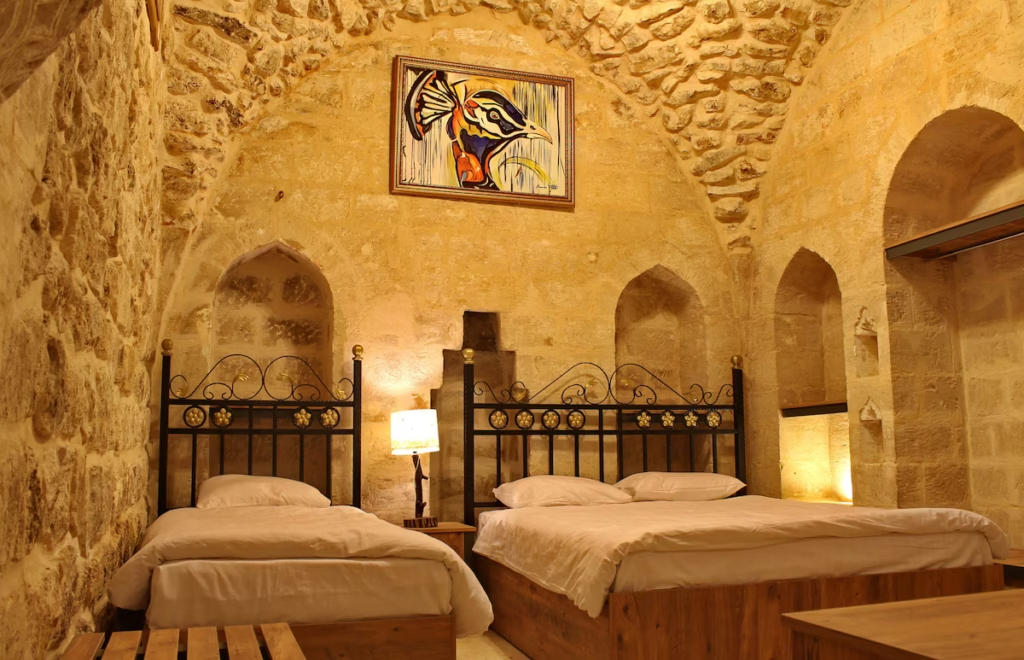
Old City Mardin Hotel & Hostel (Old Town)
Private rooms and hostel setup, breakfast typically included—handy for solo travelers or families on a budget.
Why stay: Cheapest way to sleep in the old town core.
Chain Comfort (New Town, easy parking)
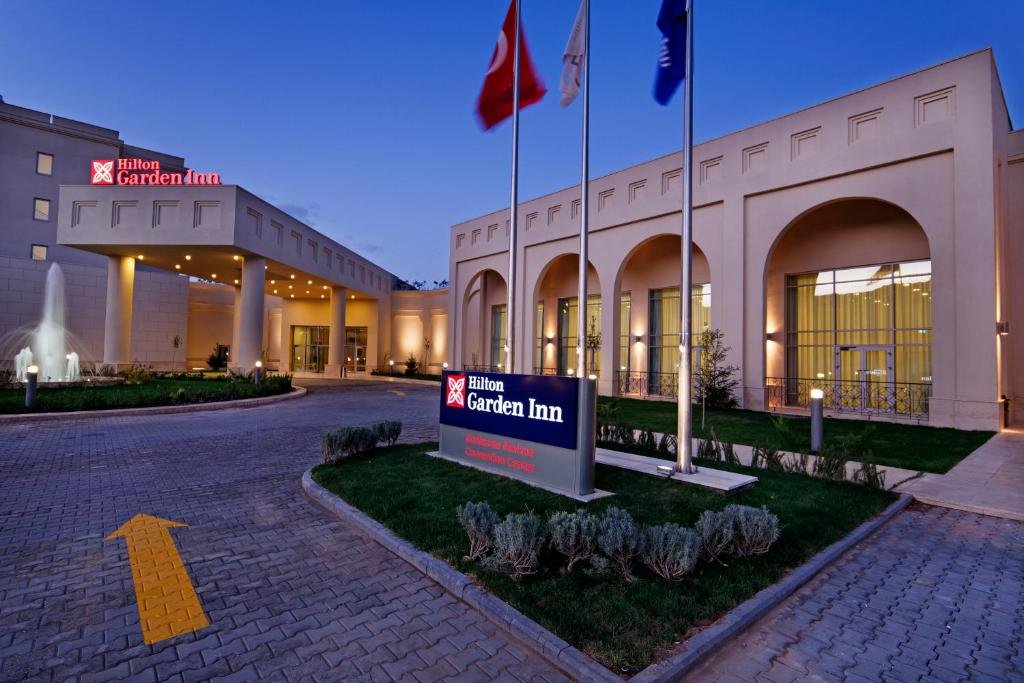
Hilton Garden Inn Mardin (Yenişehir/Artuklu)
Modern rooms, parking, gym, and quick access to the highway; about 4 km below Old Mardin—taxi or dolmuş up for sunset.
Why stay: Reliable amenities, family-friendly, smooth check-in after late flights.
FAQs: What to Do in Mardin
What’s unmissable in Mardin for first-timers?
Start with the Old Town ridge: Ulu Cami, Zinciriye Medresesi, Şehidiye Medresesi, and those jaw-drop terraces over the Mesopotamian plain. Add a half-day to Dara Ancient City for rock-cut chambers and city walls.
How many days do you need in Mardin?
Two full days for Old Town + Dara. Add a third for Midyat (stone houses, filigree workshops) or a monastery loop.
Old Town or New Town—where should we stay?
Old Town = stone mansions, views, stairs. New Town (Artuklu) = easy parking, chain hotels, quick dolmuş/taxi up the hill. If you’re here for vibes, Old Town wins.
How do we get to Dara Ancient City from Mardin?
Easiest by taxi hire or rental car (40–45 min). Public minibuses run, but schedules vary—ask at the otogar same morning.
Can we visit Deyrulzafaran or Mor Gabriel without a tour?
Yes—go by taxi/rental, dress modestly, and check opening hours locally. A short guided explanation is often available on site.
Best time of day for views and photos?
Golden hours—sunrise or late afternoon. Midday light is harsh and the steps are hotter than your kebab.
Kid-friendly things to do?
Short Old Town wandering with frequent café stops, Dara’s tunnels (bring a small flashlight), and a quick Midyat hop for sweets and courtyards.
What should we wear at religious sites?
Covered shoulders and knees; bring a light scarf. Photography rules can change—ask before you shoot indoors.
Airport to Old Town—what’s the simplest route?
Take the Havaş shuttle to New Town, then a short taxi/dolmuş up to the ridge. With big bags, taxi door-to-door is worth it.
Is Mardin safe to walk at night?
Old Town lanes are generally calm; use normal city sense, stick to lit routes, and mind the steps.
Do we need a car, or will dolmuş and taxis do?
For the city itself, dolmuş + taxis are plenty. Rent a car or hire a taxi for Dara/Hasankeyf/monastery day trips.
What day trips pair well with Mardin?
Midyat (architecture, silversmiths), Dara (ancient city), Hasankeyf (river views, ruins). Pick two if you have a third day.
- What to Wear in a Turkish Bath (2026): Ultimate Hammam Dress Code & Massage Etiquette
- 2026 Turkey Travel Tips: Useful Things to Know From A Local
- 2026 Turkey Packing List: Essential Travel Items and Tips
- Where To Stay In Bodrum (2026): Best Neighborhood & Top Hotel Picks
- 22 Top Turkish Cosmetics Brands (2026 Edition)