
Travel writing based on first-hand experience
Walking into a traditional Turkish hammam for the first time can feel slightly intimidating. There is marble everywhere, clouds of steam, people wrapped in striped towels, and an attendant preparing to scrub you with considerably more enthusiasm than you may have anticipated.
And then there is the question nobody really wants to ask at reception: exactly how much clothing am I supposed to take off?
What to wear in a Turkish bath? The good news is that the Turkish bath dress code is surprisingly straightforward. In most hammams, you’ll be given a peştemal (pestemal), the traditional Turkish bath towel, and usually slippers. What you wear underneath depends on the hammam, your gender, and your own comfort level.
Planning more of your Istanbul trip?
- Best Hammams in Istanbul – our pick of historic Turkish baths and more luxurious hammam experiences around the city.
- How to Dress in Istanbul – what to wear for sightseeing, mosques, evenings out and Istanbul’s very changeable weather.
- How to Dress in Turkey as a Tourist – practical clothing and etiquette advice if your trip takes you beyond Istanbul.
- Best Local Experiences in Istanbul – hammams, neighbourhood discoveries and other ways to experience the city beyond the standard sightseeing list.
- Ultimate Istanbul Itinerary – plan one to seven days around Istanbul’s mosques, markets, neighbourhoods, food stops and hammams.
Table of Contents
What To Wear in a Turkish Bath?
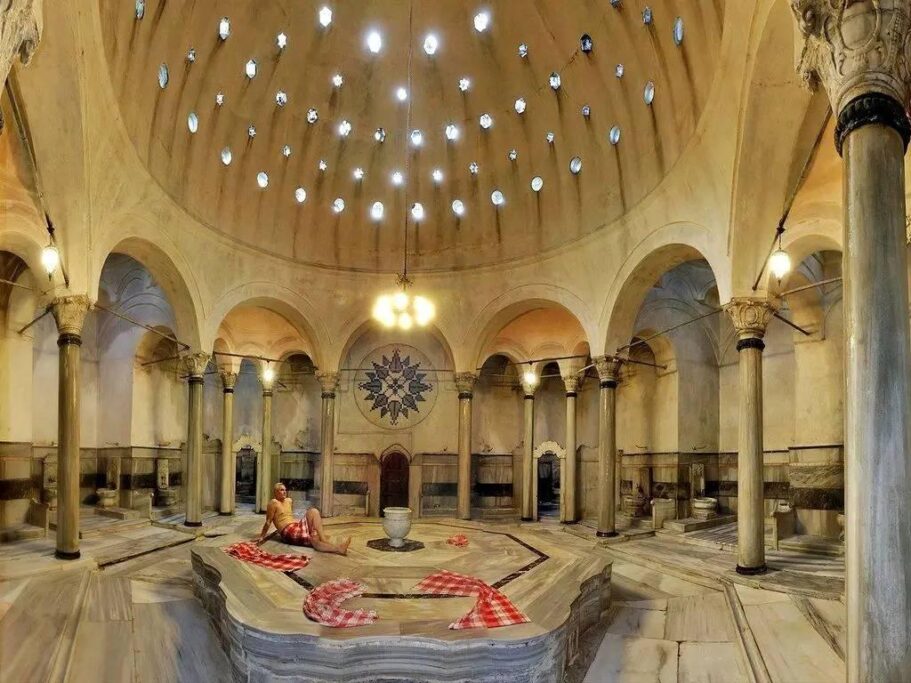
The short answer: a peştemal wrapped around your body, usually with underwear or a swimsuit bottom underneath if you prefer.
Don’t assume that visiting a hammam means wandering around completely naked. Rules vary between establishments, and some traditional hammams specifically require guests to remain covered below the waist.
Modern hotel spas and tourist-oriented hammams can also have slightly different policies, so check the hammam’s dress rules when you book.
1. Peştemal: the Traditional Turkish Hammam Towel
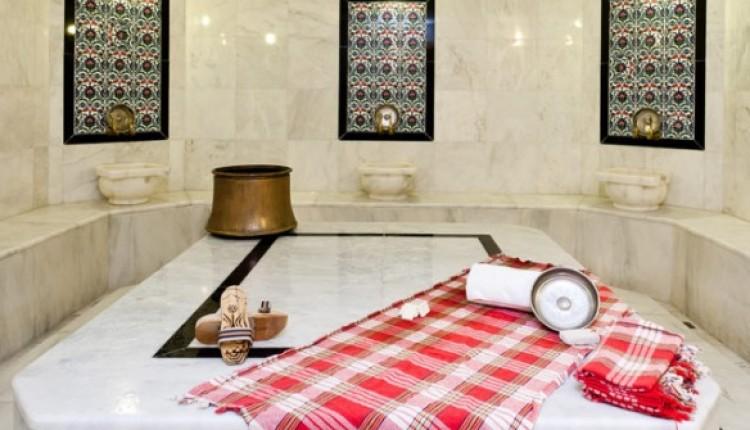
The most traditional thing to wear in a Turkish bath is a peştemal, sometimes written as pestemal. It’s a thin, lightweight cotton wrap that has been part of hammam culture for centuries.
Unlike a thick bath towel, a peştemal is easy to wrap around your body, doesn’t become ridiculously heavy when wet, and dries quickly.
You normally don’t need to buy or pack one. Established hammams generally provide a peştemal as part of the experience, often together with towels, slippers and basic toiletries.
And if you become oddly attached to your striped towel after spending an afternoon wrapped in it, you’ll find peştemals for sale all over Türkiye, particularly in Istanbul’s bazaars and textile shops.
2. Should You Wear a Swimsuit in a Turkish Bath?
You can, but a full swimsuit isn’t necessarily the standard dress code in a traditional hammam.
For women, a bikini bottom or underwear underneath the peştemal is usually the easiest option where permitted. Some people feel more comfortable wearing a bikini or swimsuit, particularly on their first visit.
Men can generally wear underwear or swimming trunks beneath the peştemal, depending on the establishment.
Some hammams also provide disposable underwear.
Our advice? Bring a spare pair of underwear or a swimsuit bottom even if you aren’t sure you’ll use it. It takes up almost no room and avoids the awkward changing-room debate with yourself.
3. Should You Be Completely Naked in a Turkish Hammam?
This is where online advice about Turkish baths often becomes misleading.
There isn’t one universal nudity rule covering every hammam in Türkiye. Traditional establishments have their own policies, and customs can differ considerably from Western spas.
Some historic hammams explicitly require guests to remain covered below the waist.
So don’t arrive assuming that “traditional” automatically means naked.
Best rule: follow the instructions given by the hammam staff. They’ve explained this approximately ten million times before. You will not be their most awkward customer of the week.
What Shoes Do You Wear in a Hammam?
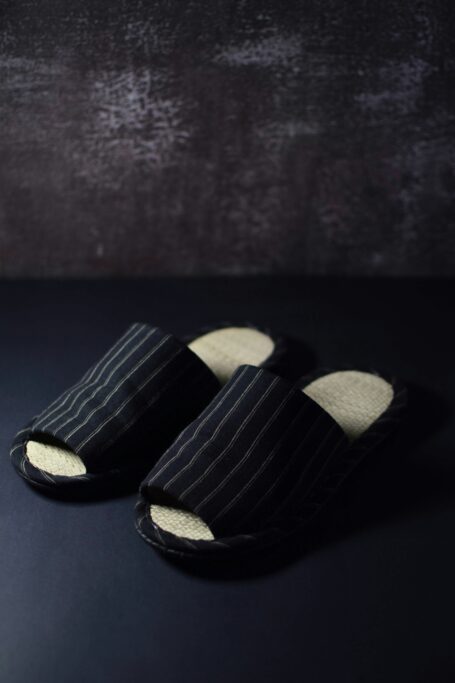
Hammam floors are wet, polished and frequently made from marble. Beautiful? Absolutely. A good place to discover how quickly you can perform an accidental split? Also yes.
Many traditional hammams provide slippers specifically for the wet areas.
If your chosen bath doesn’t provide footwear, ask whether you should bring flip-flops.
We wouldn’t automatically recommend going barefoot simply for a “more authentic” experience. Follow the hammam’s footwear policy instead.
What Actually Happens During a Turkish Bath?
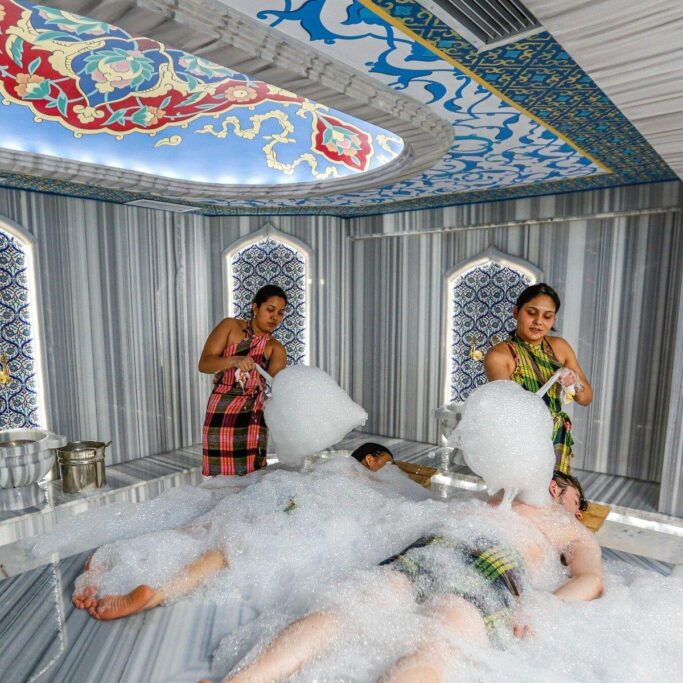
Knowing the sequence makes the dress code make much more sense.
Traditional hammams developed from a mixture of Roman bathing culture and later Islamic and Ottoman bathing traditions. They became places not only for washing but also for socialising and communal rituals.
You’ll typically change in the soyunmalık or camegah, leave your clothes and valuables in a locker, wrap yourself in your peştemal and move into the warm bathing areas.
The classic hammam ritual then involves warming up, exfoliation with a rough kese mitt, washing and a wonderfully excessive amount of soap foam.
You’ll usually spend some time warming your body on or around the heated marble göbek taşı before your treatment begins.
Then comes the kese.
Don’t expect a delicate spa exfoliation involving scented candles and somebody politely asking whether the pressure is okay every thirty seconds. A traditional kese can be vigorous.
The attendant scrubs away dead skin before you’re washed in masses of soap foam and rinsed.
It’s one of those experiences that sounds slightly alarming when described and feels glorious once you’ve done it.
What Should You Wear for a Massage After the Hammam?
If you’ve booked an additional oil or body massage after the traditional hammam ritual, the rules may change once you enter the private treatment room.
The therapist should explain what to remove and how you’ll be draped. Depending on the treatment and spa, you may be given disposable underwear or asked to keep your swimsuit bottoms or underwear on.
Don’t worry about guessing. Tell the therapist what you’re comfortable with before the massage begins.
The hammam scrub-and-foam treatment itself is different from a conventional massage: you’ll normally remain dressed according to the bath’s hammam rules.
What Should You Bring to a Turkish Bath?
You don’t need to arrive carrying half your bathroom cabinet. In a good hammam, most of the essentials are supplied.
The most useful things to pack are:
- Clean underwear or a swimsuit/bikini bottom for underneath your peştemal
- Dry underwear to change into afterwards
- Moisturiser, especially if your skin becomes dry after exfoliation
- Hairbrush or comb
- Hair tie if you have long hair
- Flip-flops, but only if the hammam doesn’t provide slippers
Most established hammams provide the peştemal, towels, slippers and basic washing products.
What NOT to Wear in a Turkish Hammam
Leave your jewellery, watch and elaborate accessories in your locker.
Heat, humidity and water aren’t particularly friendly to watches and jewellery, and accessories can get in the way during the kese scrub.
Heavy makeup isn’t worth bothering with either. You’re about to be steamed, splashed, scrubbed, foamed and rinsed. This is not the natural habitat of foundation.
We’d also skip applying heavy body lotions or oils before your hammam. You’re there to cleanse and exfoliate your skin; moisturising makes considerably more sense afterwards.
Are Turkish Baths Separated for Men and Women?
Traditional Turkish hammams are commonly gender-separated, although exactly how this works depends on the bath.
Some have completely separate men’s and women’s sections. Others use the same historic bathing area at different times of day, with female attendants working during women’s sessions and male attendants during men’s sessions.
Modern hotel hammams and private spa experiences may operate differently, particularly when offering couples’ treatments.
If you’re travelling as a couple and want to experience the hammam together, check before booking. Don’t assume you’ll be able to enter the same bathing area.
Turkish Bath Dress Code: Quick Answer
If this is your first hammam and you just want to know what to pack, here’s the simple version:
Wear the peştemal provided by the hammam and bring a swimsuit bottom or clean underwear to wear underneath. Leave jewellery and your watch in the locker, use the slippers provided, and bring dry underwear for afterwards.
That’s it.
You don’t need a special hammam outfit. You don’t need to buy your own peştemal. And you definitely don’t need to spend the previous evening trying to decipher conflicting internet discussions about Turkish nudity etiquette.
Turkish Hammam Etiquette: A Few Things Worth Knowing
Hammams are relaxing, but they are also cultural spaces with established traditions. Follow the staff’s instructions rather than treating the bath like a hotel swimming pool.
Keep your peştemal positioned as requested, don’t photograph people inside the bathing area, respect gender-separated sections and don’t bring food or drinks into the wet rooms unless the hammam explicitly allows it.
If you’re unsure about something, ask. Staff at hammams popular with international visitors are extremely accustomed to first-timers.
And give yourself enough time.
A hammam isn’t something we’d squeeze between Hagia Sophia at 2 p.m. and a Bosphorus cruise at 3:30 p.m. Part of the pleasure is doing absolutely nothing for a while.
FAQ: What to Wear in a Turkish Bath
Do you wear a swimsuit in a Turkish bath?
You can at many hammams, but you don’t necessarily need a full swimsuit. A bikini bottom, swimsuit bottom or underwear underneath the provided peştemal is often sufficient. Always follow the individual hammam’s rules.
Do you get completely naked in a Turkish hammam?
Not necessarily. Some traditional hammams require the lower body to remain covered with a peştemal.
Are towels provided at Turkish baths?
Usually, yes. Traditional hammams commonly provide a peştemal, and many tourist-oriented historic baths also provide regular towels, slippers and toiletries. Check what’s included when booking.
Can I wear underwear in a Turkish bath?
Yes, depending on the hammam. In fact, many visitors choose to wear underwear or swimsuit bottoms underneath the peştemal.
It will get wet, so bring another dry pair for afterwards.
What should women wear in a Turkish bath?
A peştemal is the traditional covering. Women who want additional coverage can usually wear underwear, a bikini bottom or, depending on the hammam’s policy, a swimsuit underneath.
What should men wear in a Turkish bath?
Men traditionally wrap a peştemal around the waist. Underwear or swimming trunks may be worn underneath where the hammam allows or recommends them.
Do I need flip-flops for a Turkish bath?
Often not. Many established hammams provide slippers for walking around the wet marble areas. Check what’s included before packing your own.
What should I wear for a Turkish massage?
For the traditional kese and foam treatment, you’ll follow the hammam’s normal dress rules, usually involving a peştemal and optional underwear or swimwear underneath.
For a separate oil massage, your therapist will tell you what to remove and provide appropriate draping.
The Bottom Line
The Turkish hammam dress code is much less complicated than it appears from outside.
Bring clean underwear or a swimsuit bottom, accept the peştemal and slippers you’re given, put your valuables safely away and follow the hammam’s instructions.
Within ten minutes, you’ll probably stop worrying about what you’re wearing and start wondering why someone hasn’t installed a heated marble göbek taşı in your bathroom at home.
The hammam isn’t simply another spa treatment. Its architecture, rituals and bathing traditions developed over centuries, combining Roman bathing practices with Islamic and Ottoman culture.
Come prepared, respect the traditions and surrender to the steam.
The vigorous scrubbing is part of the deal.
- What to Wear in a Turkish Bath (2026): Ultimate Hammam Dress Code & Massage Etiquette
- 2026 Turkey Travel Tips: Useful Things to Know From A Local
- 2026 Turkey Packing List: Essential Travel Items and Tips
- Where To Stay In Bodrum (2026): Best Neighborhood & Top Hotel Picks

- 22 Top Turkish Cosmetics Brands (2026 Edition)